

I remember the exact moment I realized AI wasn’t just a tech buzzword—it was an unstoppable reality. Picture this: a family dinner, a home builder with 20 years of experience, and a conversation that changed my perspective. With AI automating more tasks than ever before, even those ‘safe’ in traditional roles are feeling the tremors. If you've ever worried you’d be replaced by a robot (or secretly hoped you could team up with one), you’re not alone. Let’s get blunt: The average isn’t safe, and the wait-and-see strategy is just a fancier way of opting out. But what if the secret isn’t to resist, but to redefine success—by becoming the director, not just the doer? Welcome to your playbook for finding purpose and value in the age of AI.
AI Disruption: Where Middlemen Disappear and System Prompts Rule (With Surprising Winners and Losers)
The AI transformation of 2025 is not just a buzzword—it’s a reality that’s reshaping the very core of how businesses operate. If you’re watching closely, you’ll see a new landscape emerging, where AI business impact is measured not by how many tasks you can automate, but by how well you can design, direct, and leverage AI agents. The days of relying on entry-level or middleman roles are fading fast. In their place, a new kind of value is rising: the ability to craft powerful system prompts and custom workflows. Let’s break down what this means for you, your organization, and the wider world.
AI Outperforms Junior Programmers and Middleman Roles
AI is now outpacing junior programmers and other entry-level professionals in both speed and accuracy. Tasks that once required a team of assistants, paralegals, or junior developers can now be completed by a single AI agent in seconds. This isn’t just theory—it’s happening right now. For example, in the legal industry, routine processes like drafting response letters to patent trolls used to cost $800 or more per letter. Today, AI can generate these responses, complete with relevant case law, for just pennies. The result? Middleman jobs—those that involve passing information, processing paperwork, or performing repetitive tasks—are being replaced by software.
- Legal assistants: Automated document review and response generation.
- Real estate processors: AI-driven contract analysis and compliance checks.
- Mortgage underwriters: AI models that assess risk and process applications instantly.
If your role is primarily about moving information from point A to point B, or following a set process, you’re in the crosshairs of AI operational integration. But this doesn’t mean all jobs are at risk—far from it. The winners in this new era are those who can direct, design, and prompt AI systems to deliver real value.
System Prompts: The New Intellectual Property
Forget the old processes and proprietary business methods. In the age of AI, your system prompts—the instructions, workflows, and custom configurations you use to guide AI—are your most valuable intellectual property. Think of them as the new source code. Organizations are already treating these prompts as trade secrets, protecting them as fiercely as they once protected software algorithms or customer lists.
If you’re good at prompt engineering, you’ll be great in this new world. Your ability to create, refine, and optimize prompts is now a key differentiator. The best prompts don’t just automate tasks—they create new workflows, unlock creative solutions, and enable AI to deliver results that were previously impossible.
“The truth is, your system prompts—your AI prompts—are your new intellectual property.”
This shift is driving a new kind of competition. It’s no longer about who can do the work fastest, but who can best direct and design AI agents to achieve outcomes. The value is in the orchestration, not just the execution.
Massive Capital Investments: The Infrastructure Behind the Revolution
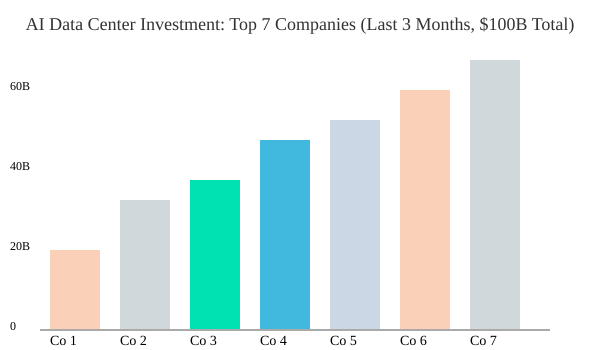
The scale of AI business impact is matched only by the size of the investments fueling it. In the last three months alone, the top seven AI companies have poured a staggering $100 billion into building new data centers. These aren’t just software upgrades—they’re massive infrastructure projects designed to support the next wave of AI operational integration.
“Building the factory is order of magnitude harder than the prototype.” — Elon Musk
This quote from Elon Musk captures the reality of AI at scale. The real challenge isn’t building a clever AI model—it’s creating the infrastructure to run it reliably, securely, and at global scale. The companies making these investments are betting big that AI will be the backbone of every industry by 2025.
Real-World Example: Automating Legal Responses
Consider the story of a business owner who used to receive patent troll letters demanding $1,500 or more in settlement fees. Each time, he would pay his lawyer $800 to draft a response. Now, he’s automated the process: he feeds the letter into ChatGPT, which generates a professional response complete with relevant case law. The cost? A few cents in compute time. The result? Thousands saved, and the “middleman” legal process replaced by AI.
- Before AI: $800+ per legal letter, slow turnaround, reliance on external experts.
- After AI: Pennies per letter, instant response, control stays in-house.
This is just one example of AI replacing middleman jobs. The same pattern is playing out in real estate, mortgage processing, insurance claims, and more.
Surprising Winners and Losers in the AI Transformation
The most surprising winners in this new era are those who embrace AI operational integration and focus on growing markets. If you can identify a sector that’s expanding, AI can amplify your success, not just threaten your job. The losers, on the other hand, are those who cling to routine, process-driven roles or fail to adapt to the new reality.
- Winners: Creative directors, prompt engineers, workflow designers, entrepreneurs in growth markets.
- Losers: Entry-level processors, information middlemen, those slow to adopt AI-driven workflows.
The AI business impact is clear: it’s not about who can do the work, but who can direct and design AI agents to deliver value. Your system prompts are your new competitive edge. The infrastructure is in place, the capital has been invested, and the winners are already emerging.
From Doer to Director: Redefining Valuable Skills in the AI Era
The rise of AI-driven workflows is transforming the workforce at a pace few could have predicted. As AI adoption strategies accelerate, the very definition of “valuable skills” is shifting. Where once the workforce was built on hands-on execution—coding, data entry, repetitive analysis—today’s winners are those who can direct, orchestrate, and creatively leverage AI. The future of work with AI automation is not about doing more, but about knowing what to do, how to ask for it, and how to refine the results.
From Hands-On Execution to Strategic Direction
For decades, the traditional career path started with “doing.” Entry-level roles—interns, assistants, junior programmers—were all about executing tasks set by more experienced team members. The creative direction and decision-making were reserved for those higher up. But AI workforce transformation has upended this model. Today, AI can write code better and faster than most junior programmers. It can draft legal documents, summarize research, and even generate marketing copy. The execution is now automated.
This means the most valuable skills are no longer about rote labor or technical credentials. Instead, the premium is on creative direction, operational insight, and the ability to “build a machine that runs the machine.” In other words, you need to know how to use AI, not just how to do the work yourself.
English: The New Programming Language
One of the most profound shifts in the AI era is the democratization of technical power. Where coding was once a barrier to entry, now English is the new programming language. If you can articulate what you want, you can prompt an AI to generate it. This shift opens doors for non-coders worldwide and levels the playing field. The skill set that matters is not syntax or technical jargon, but clarity, creativity, and the ability to compose effective prompts.
Prompt engineering—crafting the right instructions for AI—is quickly becoming a core competency. Those who can direct AI with precision and imagination are now more valuable than those who simply execute tasks. As a result, the old path of “paying your dues” through years of repetitive work is fading fast. The AI workforce transformation rewards those who can orchestrate, not just those who can do.
Building a ‘Machine That Runs the Machine’
In the new landscape, operationalizing AI is the real millionaire’s move. It’s not enough to use AI for one-off tasks; the leaders are those who can build systems and workflows that harness AI at scale. This means thinking like a director or a conductor—designing processes, setting goals, and continuously refining outputs.
- Directors: Set the vision, define the problem, and guide AI toward creative solutions.
- Prompt Engineers: Translate ideas into actionable prompts, iterating until the AI produces the desired result.
- Operational Architects: Build workflows that integrate AI seamlessly, ensuring efficiency and adaptability.
This is a systemic shift. The gap between doers and directors is widening, and the rewards are flowing to those who can compose, direct, and refine AI outputs. As one expert put it,
"The most dangerous thing in the world isn't AI. It's being average in a world that's changing fast."
Creativity, Experimentation, and Iterative Learning
AI rewards those who experiment, fail fast, and adapt. The most successful professionals in the AI era are not those who avoid mistakes, but those who learn from them quickly. Creativity is now a future-proofed skill set. You need to be willing to try, fail, and try again—using each iteration to refine your approach and improve your results.
This is especially true for recent graduates and interns entering the workforce. The old model—learning by doing repetitive tasks—is obsolete. Instead, you must develop the ability to direct AI, to recognize when it makes mistakes, and to know how to correct course. This requires a blend of operational insight, creative thinking, and the courage to experiment.
Risk Aversion: The Real Threat in the AI Workforce
In a rapidly changing landscape, being “average” is the riskiest position of all. AI is leveling the playing field, removing the need for many traditional skills, and rewarding those who can adapt. If you cling to old ways of working—waiting for instructions, avoiding risk, or simply executing tasks—you risk being left behind.
The winners in the AI workforce transformation are those who embrace change, take calculated risks, and seek out new ways to leverage AI. Risk aversion kills momentum. To stay relevant, you must be willing to step into the director’s chair, experiment with new tools, and continually refine your approach.
Historical Perspective: The Shift Is Systemic
This transformation is not without precedent. Three hundred years ago, over 90% of the population worked in agriculture. Today, that number is less than 2%. The skills that mattered then—plowing, planting, harvesting—are now largely automated. The same is happening in knowledge work. Entry-level programming jobs are shrinking dramatically as AI takes over routine coding tasks. The future of work with AI automation will be defined by those who can direct, not just do.
Traditional Skills vs. AI-Era Skills: A Comparison
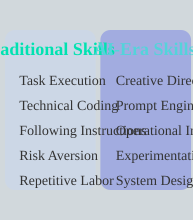
| Traditional Skills | AI-Era Skills (Director/Prompt Engineer) | ||||||||||||||
|---|---|---|---|---|---|---|---|---|---|---|---|---|---|---|---|
| Task Execution Carrying out assigned tasks step-by-step. |
Creative Direction Defining vision and guiding AI to achieve goals. |
||||||||||||||
| Technical Coding Writing code and scripts manually. |
Prompt Engineering Crafting effective prompts to direct AI output. |
||||||||||||||
| Following Instructions Executing predefined processes. |
Operational Insight Designing and optimizing AI-driven workflows. |
||||||||||||||
| Risk Aversion Minimizing mistakes and sticking to the known. |
Experimentation Iterating quickly and learning from failures. |
||||||||||||||
| Repetitive Labor Performing routine, manual tasks. |
System DesignLearning to Dance With Disruption: How to Build Unbeatable AI-Driven HabitsIn the age of AI, disruption isn’t a one-time event—it’s a constant rhythm. To thrive, you need to learn how to move with it, not against it. The secret? Building unbeatable AI-driven habits that turn uncertainty into opportunity. Whether you’re leading a team or just starting out, the way you adopt and use AI will define your value, your growth, and your future relevance. Adopt an ‘AI First’ Mindset: Why Defaulting to AI Is Non-NegotiableImagine this: you walk into your next team meeting, and the first question isn’t “What did you do?” but “How did you use AI to do it?” This isn’t science fiction—it’s already happening in forward-thinking companies. One entrepreneur put it bluntly: "If you don't default first to going to AI, you will be asked or removed from the team."The message is clear: if you’re not defaulting to AI for your everyday problems, you’re already behind. This ‘AI first’ approach isn’t about replacing human creativity or judgment. It’s about recognizing that AI tools for business automation can process, synthesize, and suggest solutions at a speed and scale that no individual can match. When you make AI your first stop for research, brainstorming, or routine tasks, you free up your time and mental energy for higher-value work. Habit Loops: Small AI Solutions Create Big MomentumBuilding new habits is the bridge between curiosity and sustainable value. The most successful AI adoption strategies start small. Think of AI as your personal assistant. For example, use ChatGPT to draft emails, schedule meetings, or summarize documents. These simple actions create a habit loop: the more you use AI, the more you see its benefits, and the more likely you are to use it again.
Each small win builds momentum. Over time, these micro-habits add up to a deep, consistent AI adoption that drives personal and organizational growth. Check Your History: Are You Using AI Deeply or Just Skimming the Surface?It’s easy to say you’re using AI, but are you really? One way to check is to review your own usage history. Are you asking AI deep, domain-specific questions, or just using it for surface-level tasks? Are you building custom prompts and workflows, or sticking to generic queries? Leaders who drive AI business growth don’t just dabble—they dive deep. They use AI education and training to push past the basics and unlock new possibilities. If you want to stand out, challenge yourself to go beyond the obvious. Use AI to solve complex problems, generate insights, and create value that others can’t. Social Media as an Algorithmic Mirror: What Are You Really Learning?Social media platforms are powered by AI algorithms that reflect your interests and biases back to you. Your feed is an uncanny mirror of what you click, like, and share. This can accelerate your learning—or trap you in a bubble.
By being intentional about your digital habits, you can turn social media into a powerful engine for AI education and training. Informal Leadership: The ‘Ask AI First’ RuleIn some high-performing teams, there’s an unwritten rule: if you haven’t already asked AI, don’t bring the problem to the group. This isn’t about being harsh—it’s about efficiency and respect for everyone’s time. As one entrepreneur told his team, “If you don’t default first to going to AI, you will be asked or removed from the team.” This informal leadership style sets a clear expectation: everyone is responsible for their own AI learning curve. It also creates a culture where experimentation and self-service are valued. If you want to lead in the age of AI, model this behavior. Encourage your team to use AI as their first resource, and celebrate those who build strong AI habits. Busy Skeptics: Start Where You Are—Small Wins SnowballYou don’t need a tech background to start building AI-driven habits. Even if you’re a skeptic or feel overwhelmed, you can begin with small, manageable steps. Use AI as a personal assistant for routine tasks. Try out one new AI tool for business automation each week. Share your experiences with colleagues and learn from their successes and failures. Every small win matters. As you build confidence, you’ll find that your skills—and your results—snowball. Over time, you’ll move from basic automation to custom workflows and strategic problem-solving. This is how deep, consistent AI adoption yields outsized results for individuals and organizations alike. Real-World Data: AI Habits and Career Growth
Key Takeaways for Building AI-Driven Habits
Building unbeatable AI-driven habits isn’t about mastering every tool overnight. It’s about consistent, intentional practice that turns disruption into your greatest advantage. The Harsh & Hopeful Truth About AI Disruption in Traditional IndustriesAI disruption in traditional industries is not a distant future—it’s happening now, and it’s happening fast. If you’re a business leader, entrepreneur, or simply someone invested in the future of work, you’re already feeling the tremors. The truth is both harsh and hopeful: AI will upend half of today’s new ventures within three years, and nobody can say for sure which half will survive. Your ability to adapt, pivot, and learn is now more important than any single technical skill. 50% of New AI Ventures Will Fail—And You Can’t Predict Which OnesLet’s start with a reality check. At Martell Ventures, a leading AI venture studio, the team launches a new company every month. When they model out the business, they accept that 50% of these companies won’t exist in three years. Here’s the kicker: nobody can predict which half will survive. This isn’t just a Martell Ventures problem—it’s the new normal for anyone pursuing an AI-first business strategy.
This level of uncertainty is not a sign of failure—it’s a sign of a healthy, rapidly evolving ecosystem. The lesson? Embracing change and adaptability is the single most important skill. If you’re betting on your first idea, you’re already behind. The real bet is on your ability to pivot, to spot new opportunities, and to let go of what isn’t working. Industries Shocked, Then Reshaped: Real Estate, Law, PublishingConsider the industries that have already been shocked—and reshaped—by AI and other disruptive technologies:
These examples show that AI business transformation is not about defending your niche at all costs. It’s about learning faster than the next wave hits. As one CEO put it: "That is the role of a CEO. When was it not your job to have a vision about the future and pivot your business model around it?" History Repeats: From Electricity to the Internet to AIIf this all feels overwhelming, remember: we’ve been here before. When electricity arrived, entire industries disappeared, but new ones were born. The internet wiped out travel agencies, video rental stores, and newspapers, but it also gave rise to e-commerce, social media, and the gig economy. What’s different now is the speed. AI disruption in traditional industries is happening at a pace that makes the internet revolution look slow. The playbook is the same: those who adapt, thrive. Those who cling to the past, fade away. Look at the data: in the 1800s, over 90% of Americans worked in agriculture. Today, it’s less than 2%. The jobs didn’t vanish—they changed. The same is true now. The AI impact on the labor market will be profound, but it will also create new opportunities for those ready to pivot. Optimists vs. Pessimists: Spotting New Markets or Mourning Lost MillsYour mindset matters. Optimists see AI as a chance to spot new markets, create new products, and solve problems that were once impossible. Pessimists focus on what’s lost—the paper mills, the old ways of working, the jobs that no longer exist. The truth is, both are right. Disruption is painful. But it’s also necessary. The painful but necessary act of pivoting becomes a survival skill. If you’re leading a business, your job isn’t to defend the status quo—it’s to anticipate change, experiment, and move faster than your competitors. Which Industry Is Next? The Wild Card Is YouSo, which industries are next? The answer is more personal than you might think. AI doesn’t just disrupt industries—it disrupts roles, teams, and even individual careers. The next wave could hit healthcare, education, logistics, or your own field. The only certainty is uncertainty. Here’s what you can do:
AI disruption in traditional industries is both harsh and hopeful. The winners will be those who accept uncertainty, adapt quickly, and build real value in a world where the only constant is change. Your AI Education Feeds the Future: Social Media Algorithms, Relentless Curiosity, and the Competitive EdgeIn the age of AI, your education isn’t just a personal project—it’s the foundation of your future relevance, your business’s growth, and your ability to stay ahead of disruption. The way you learn, the digital habits you form, and the choices you make about what fills your mind are no longer just background noise. They are the difference between being a leader in AI adoption and being left behind. If you want to build real value and direction in a world shaped by artificial intelligence, you must take charge of your own AI education and training—starting with the very tools you use every day. Your Feed Is Your Future: Rewiring for AI Business GrowthIt’s easy to think of social media as a distraction, something that pulls you away from “real” work. But in reality, your social media feed is a reflection of your choices and a powerful lever for AI business growth. Every time you search, click, or engage, you’re training the algorithm that shapes your digital environment. If you’re scrolling aimlessly, you’re feeding your mind with noise. But if you intentionally search for “AI real estate,” “AI marketing,” or whatever your industry focus is, you’re rewiring your feed to deliver the latest insights, strategies, and breakthroughs in AI adoption. This isn’t just a theory—it’s a practical strategy. By making deliberate choices about what you consume, you can turn your social media platforms into a personalized, always-on AI education and training engine. The more you engage with high-quality AI content, the more the algorithms will surface relevant podcasts, articles, expert interviews, and case studies. Instead of doomscrolling, you’re building a digital moat—one that protects your competitive edge and accelerates your growth. Gary Vaynerchuk’s Rule: Go Deep Before You Expect ResultsOne of the most influential voices in digital business, Gary Vaynerchuk, has a simple but powerful rule for anyone serious about AI strategies for success: dedicate 50 to 100 hours to go deep before you even think about outcomes. This isn’t about dabbling. It’s about making a real investment in your AI education and training. Listen to the podcasts. Read the books. Attend the events. Connect with the experts. If you’re not willing to put in the hours, you can’t expect to reap the rewards. "If you're not willing to go through that learning journey, then don't be upset if it absolutely takes you out of the game." This mindset is more important than ever. The pace of change in AI is relentless. In just a few weeks, entire industries can shift as new language models, robotics, or automation tools are released. Even keynote speakers for major business events find themselves rewriting their presentations multiple times a month to keep up. If you want to avoid being disrupted, you have to make learning a core part of your role—whether you’re a CEO, a manager, or an individual contributor. Learning Isn’t Passive: Relentless Curiosity as a Competitive MoatActive, intentional learning is the new moat in career and business competition. It’s not enough to passively absorb information. You have to seek it out, question it, and apply it. That means going beyond the surface-level headlines and diving into the details. It means listening to long-form interviews, reading in-depth reports, and showing up at events where you can ask questions and build relationships. This kind of learning is sometimes uncomfortable. It takes time away from execution. It forces you to confront what you don’t know. But it’s also the only way to build a foundation strong enough to withstand disruption. The most successful leaders in AI business growth are those who make learning a habit, not a one-time event. They allocate 20 to 25 percent of their time to learning—every week, every month, every year—knowing that this investment pays off in better strategies, faster adaptation, and more innovative thinking. Moat or Trap? The Wild Card of Digital HabitsHere’s the wild card: the same digital tools that can accelerate your AI education and training can also become a trap. If you’re not intentional, your social media feed can fill up with distractions, misinformation, and anxiety-inducing noise. Instead of building a moat, you’re digging a pit. The key insight is that you can’t opt out of the digital world—but you can choose how you shape your digital surroundings. Take control of your algorithm. Audit your feeds. Unfollow accounts that don’t serve your learning goals. Actively search for the best sources in AI adoption and AI strategies for success. Join communities where people are sharing real-world experiments and results. Make your digital environment work for you, not against you. Conclusion: You Can’t Opt Out—But You Can Choose Your DirectionThe age of AI isn’t something you can sit out. The disruption is already here, and it’s accelerating. But you’re not powerless. By taking charge of your AI education and training, by rewiring your digital habits, and by dedicating real time to learning, you can build a competitive edge that lasts. Social media algorithms are not just distractions—they are mirrors and amplifiers of your choices. Success in AI will favor the aggressively curious and purposeful learners. The question isn’t whether you’ll be affected by AI, but whether you’ll shape your future or let it be shaped for you. The journey is relentless, sometimes uncomfortable, but always essential. Your feed is your future. Make it count. TL;DR: AI isn’t just here—it’s accelerating, and the only wrong move is standing still. Learn how to shift from doer to director, harness AI as leverage, and build irreplaceable value, no matter your starting point. |
Post a Comment