

A few years ago, as a casual Twitch viewer, I marveled at streamers racking up tens of thousands of viewers seemingly overnight. It felt like digital magic. But in 2025, that illusion cracked wide open. Twitch’s abrupt bot purge revealed a troubling truth: up to a third of those hyped view counts were smoke and mirrors. The repercussions rippled beyond egos, sending sponsors and entire esports orgs into a spin. Let’s unravel what happens when the numbers we trust suddenly evaporate, and who’s left holding the pixelated bag.
1. When the Viewer Count Isn't Real: The Math Behind the Vanishing Act
In August 2025, Twitch experienced one of the most dramatic shifts in its history. Practically overnight, the platform’s viewership metrics plummeted by up to 24% after Twitch initiated a sweeping purge of fake accounts and bots. This wasn’t just a minor dip—it was a seismic event that exposed the scale of Twitch viewership metrics manipulation and forced the entire industry to reckon with the reality of inflated numbers.
Twitch Viewership Decline: The Numbers Don’t Lie
When Twitch announced its targeted strike against bots, the effects were immediate and impossible to ignore. According to Twitch’s own public statistics, the platform’s average viewers and peak concurrent viewership dropped by as much as 24% within days. To put this in perspective, that’s nearly one in every three viewers vanishing overnight. As one observer put it:
“So, going down 24%... really, this was like a third. Like, one in every three viewers wasn't real.”
This wasn’t just a rounding error or a seasonal slump. Losing a third of your audience in a matter of days is almost unheard of for any digital platform. For Twitch, it was a wake-up call that revealed just how deeply the bot epidemic had taken root.
Understanding the Math: Why 24% Means More Than You Think
At first glance, a 24% drop might seem straightforward, but the math behind it is even more telling. If Twitch’s total viewership fell by 24%, that means the remaining 76% represents the real, human audience. But if you try to “add back” 24% to get to the original number, you don’t actually return to 100%—you’d only reach about 94%. This illustrates that the proportion of fake viewers was even higher than the raw percentage drop suggests.
In simple terms, for every three viewers counted before the purge, one was a bot. The Twitch bot purge effects were not evenly distributed, either. Some categories and streamers saw even steeper declines, with reports of major channels losing up to 50% of their typical audience overnight.
Spotlight on Major Streamers: OTK, FaZe, and the Fallout
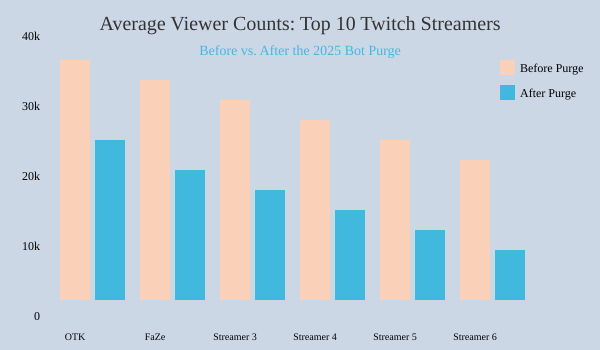
The impact was most visible among high-profile streamers and esports organizations. Public charts comparing average viewer counts before and after the purge showed drastic drops for names like OTK and FaZe. Some of these channels lost thousands of viewers in a single day, sparking widespread discussion about real vs. fake engagement.
- OTK: Notable for losing a significant chunk of its peak concurrent viewership.
- FaZe: Flagged for steep declines, raising questions about the legitimacy of previous metrics.
- Industry-wide: Many streamers—big and small—reported sudden, sharp drops, fueling drama and speculation across social media.
Twitch Bot Epidemic: An Old Problem, Now Unmasked
Twitch has battled viewbotting since its earliest days, but the scale revealed by the 2025 purge was unprecedented. The bot epidemic had artificially inflated numbers, creating hype cycles and misleading brands, advertisers, and viewers alike. With Twitch’s post-purge statistics made fully public, the industry could finally see the true baseline for Twitch peak concurrent viewership and average audience size.
Data Transparency and the New Normal
By making post-purge data public, Twitch fueled both transparency and drama. Streamers, brands, and viewers scrambled to make sense of their “new normal.” For many, the sudden drop in numbers was a shock, but it also marked a return to the platform’s pre-2020 baseline—before the pandemic-driven boom and the surge in bot-driven hype.
With nearly 75% of Twitch’s user base under 35, the platform’s credibility and future growth depend on real engagement. The 2025 bot purge was a necessary step, but it also exposed just how much of Twitch’s recent growth had been built on shaky ground.
Visualizing the Shift: Top 10 Streamers Before and After the Bot Purge
2. Whodunnit? Unmasking the Bot Apocalypse’s Biggest Players (And Scapegoats)
The Twitch viewbotting controversy didn’t just expose a technical loophole—it set the stage for a digital whodunnit. As the platform’s bot purge swept through, the biggest names and organizations in streaming found themselves under the harshest spotlight. The question on everyone’s mind: Who was really behind the manipulation of Twitch viewership metrics, and who was simply caught in the crossfire?
Orgs in the Hot Seat: OTK, FaZe, and the Sudden Nosedive
When the bot crackdown hit, few could ignore the dramatic viewership drops among streamers affiliated with powerhouse organizations. OTK (One True King) and FaZe Clan—names synonymous with top-tier Twitch talent—saw some of their member channels lose up to 50% of their reported viewers overnight. Public Twitch analytics painted a clear before-and-after picture, with spikes and sudden valleys that were hard to explain away as mere coincidence.
The speculation was immediate: Were these orgs orchestrating mass botting to boost their streamers’ numbers? The logic was simple—higher viewership means more lucrative brand deals. As one observer put it:
“If you assume they are acting in self-interest and amoral, you could predict this outcome.”
The data seemed to support the theory. Both OTK and FaZe were among the orgs most scrutinized for drastic variances post-bot purge, and the public was quick to connect the dots.
Subtle Confessions and Shifting Stories
In the aftermath, some streamers gave subtle, almost offhand admissions—acknowledging that maybe, just maybe, their numbers had been artificially inflated. Others pointed fingers at mysterious “third parties,” claiming they had no idea bots were involved. This ambiguity fueled the ongoing debate about fraudulent viewership in live streaming and the ethics of streamers and botting.
Behind closed doors, there was talk of orgs “softly admitting” to number inflation, but outright confessions were rare. The blurred line between deliberate fraud and plausible deniability became a recurring theme. Was the streamer complicit, or simply a pawn?
Brand Collusion: Advertisers and Agencies in the Mix
The botting scandal didn’t stop with streamers and orgs. Allegations surfaced that some sponsors and agencies themselves were juicing numbers—sometimes without the streamer’s knowledge. In an industry where inflated stats can mean the difference between a six-figure sponsorship and being overlooked, the temptation was clear. Some brands were complicit, others were clueless victims of manipulated data.
This created a perfect storm: agencies eager to present impressive numbers, orgs wanting to attract more deals, and streamers caught in the middle. The result was a tangled web of responsibility, with each party quick to shift blame.
Finger-Pointing Frenzy: Fans, Rivals, or the Streamer Themselves?
When pressed, many streamers and orgs claimed ignorance. Some blamed “superfans” or even rivals for artificially inflating their numbers—suggesting that bots could have been deployed by anyone with a grudge or an agenda. Others insisted that non-account lurkers and embedded viewers were skewing the stats, muddying the true picture of engagement.
The lack of transparency only fueled more speculation. Was it really the streamer behind the bots, or was someone else pulling the strings? The Twitch viewership metrics manipulation left everyone pointing fingers, but few willing to take responsibility.
Chart: Viewership Change Percentages for Top 5 Streamer Orgs During Bot Crackdown
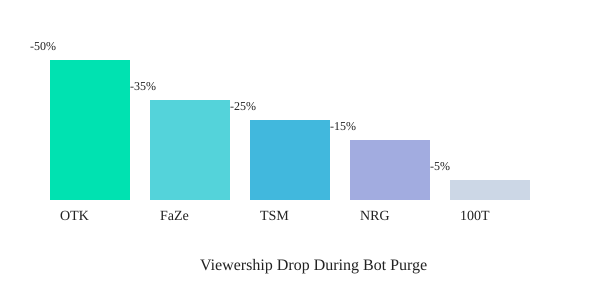
The chart above visualizes the sudden, steep declines in viewership for the top streamer orgs during the bot purge. OTK and FaZe stand out, but the impact rippled across the industry, highlighting just how widespread Twitch viewership metrics manipulation had become.
In the end, the Twitch botting saga revealed a complex ecosystem where orgs, sponsors, agencies, and even fans could all play a role—sometimes knowingly, sometimes not. The lines between deliberate fraud and plausible deniability remain as blurry as ever.
3. The Ethics Lab: Is Everyone Cheating, or Just Trying to Survive?
The Twitch viewership decline and the recent bot detection crackdown have forced the streaming community into a new era of scrutiny. At the heart of this shift are tough ethical questions: Are streamers actively cheating, or are they simply trying to survive in an ultra-competitive environment? The answers are rarely clear-cut, and the fallout is reshaping the culture of streaming itself.
Streamers and Botting Ethics: Walking the Tightrope
For streamers, the ethics of botting are complicated. Admitting to using viewbots can mean instant bans, lost revenue, and public shaming. On the other hand, denying involvement—especially when evidence is ambiguous—can lead to accusations of dishonesty. Many streamers are left with only one real defense: plausible deniability. The situation is further muddied by the fact that not all botting is self-inflicted. Sometimes, outsiders—be they malicious actors or overzealous fans—inflate viewer counts without the streamer’s knowledge or consent.
Nuanced Scenarios: Victims, Villains, and Everyone In Between
The Twitch bot detection crackdown has revealed a spectrum of scenarios:
- Self-botting: Streamers or their teams use bots to boost numbers and attract sponsors.
- Community-driven botting: Fans deploy bots to help their favorite creators, sometimes without their knowledge.
- Malicious botting: Bad actors inflate numbers to sabotage a streamer’s reputation or trigger platform penalties.
This ambiguity creates a unique dilemma. As one popular saying goes:
"If the answer is yes, then they've been maliciously botted by a third party. If you don't like the streamer... he's been doing this for years and now everybody can see him for what he truly is."
Audience perception often determines whether a streamer is seen as a victim or a villain, regardless of the facts.
The Platform’s Role: Twitch’s Hands-Off History
Twitch’s historic reluctance to intervene in botting issues allowed a culture of inflated numbers to flourish. For years, the platform’s hands-off management style meant that botting was an open secret—rarely punished and often ignored. This environment encouraged both opportunistic cheating and weaponized botting, leaving streamers vulnerable to both suspicion and sabotage.
Emotional Fallout: Stress, Stigma, and Lost Opportunities
The consequences of confirmed botting are severe. Streamers report high levels of stress, especially as sponsorships and partnership deals hang in the balance. Public shaming is common, even when direct responsibility for botting is unclear. The stigma is intense, but real accountability remains rare. Many smaller streamers, in particular, have become defensive about sudden drops in audience numbers following the bot purge, struggling to prove their legitimacy.
| Impact Area | Details |
|---|---|
| Average Twitch Viewers | Declined by 8% in August 2025 |
| Top-Tier Streamer Stress | Many expressed stress around personal and professional fallout |
| Community Discourse | Large volume of finger-pointing and debate |
‘Victims’ vs. ‘Villains’: The Role of Audience Bias
The line between victim and villain is often drawn by the audience, not the evidence. If viewers like a streamer, they are quick to believe the botting was the work of a malicious outsider. If they dislike the streamer, any drop in numbers is seen as proof of guilt and long-standing deception. This dynamic means that reputations rise and fall based on perception as much as fact, fueling a cycle of suspicion and defensiveness.
Long-Term Damage: The Future of Vanity Metrics
With the Twitch viewership decline and ongoing debates about botting, some wonder if the next generation of creators will care less about vanity metrics like viewer counts. The recent crackdown has exposed the fragility of these numbers and the emotional toll of chasing them. As trust issues deepen, the streaming community faces a reckoning over what success really means—and who gets to define it.
4. Sliced Sponsorships: The Collateral Damage to Brands and Ad Dollars
The Twitch viewership crisis did not just expose the platform’s vulnerability to bots—it sent shockwaves through the entire advertising ecosystem. As brands and agencies scrambled to make sense of the numbers, the true cost of inflated metrics became painfully clear. The fallout from Twitch advertising and sponsorship issues has left a lasting mark on how brands, agencies, and streamers approach monetization on live streaming platforms.
Fake Viewers, Real Money: The Sponsorship Illusion
For years, sponsors poured millions into Twitch, lured by the promise of massive, engaged audiences. At the peak, in 2025, some sponsors paid up to $100,000 per hour for top streamer spots—often based on numbers that were, in hindsight, artificially inflated. But fake viewers don’t buy products. When Twitch’s bot purge revealed the true scale of viewership inflation, brands quickly realized that much of their advertising spend had been wasted. The effects of botting on advertising spend were immediate: sponsors fled, slashed budgets, or demanded stricter proof of engagement.
When Agencies Bot Their Own Streams
One of the most troubling revelations was that some brand agencies and advertising firms were allegedly boosting sponsored streams themselves. The goal? To make campaigns look more successful to their clients. As one industry insider put it:
"Advertising agencies bot the talent agency's stream, then make it look to the company like the sponsor did really well."
This practice, sometimes referred to as malicious compliance, created a web of plausible deniability. Each party—brand, ad agency, talent agency, streamer—could claim ignorance or technical compliance, even as the system as a whole became less trustworthy.
The Four-Party Problem: Too Many Middlemen, Not Enough Accountability
The complexity of Twitch’s ad ecosystem made full accountability almost impossible. Here’s how a typical sponsorship transaction chain worked:
| Step | Entity | Role | Accountability Risk |
|---|---|---|---|
| 1 | Company (Brand) | Funds the campaign | Relies on agency reports |
| 2 | Advertising Agency | Manages spend, reports results | May bot streams to boost metrics |
| 3 | Talent Agency | Connects streamers with campaigns | Insulated from viewership fraud |
| 4 | Streamer | Delivers sponsored content | May be unaware of botting |
With so many hands in the pot, responsibility for inflated numbers was diffused. Each entity could point fingers elsewhere, and the true performance of campaigns remained murky.
Charting the Collapse: Ad Rates and Industry Trust Plummet
As scrutiny around Twitch monetization challenges increased, ad rates on the platform dropped. Industry anecdotes suggest that after the bot purge, Twitch advertising and sponsorship revenue saw a significant decline, even if exact numbers remain closely guarded. The era of easy money—where a streamer could command six figures for an hour of sponsored play—quickly faded as brands demanded transparency and real engagement.
Esports organizations and major brands, once eager to partner with top Twitch personalities, now evaluate these relationships with fresh skepticism. The exposure of widespread metric inflation forced a reckoning: if viewership can be faked, so can the value of any sponsorship.
The New Reality: ROI Under the Microscope
- Fake viewers don’t buy products: Brands are now hyper-aware that inflated numbers do not translate to sales.
- Sponsors slashed spending: Many shifted budgets away from Twitch or demanded stricter verification of audience authenticity.
- Ad ecosystem complexity: Too many middlemen mean no one is fully accountable for fraud.
- Industry-wide skepticism: Every partnership is now scrutinized, and ROI must be proven, not assumed.
Ultimately, the Twitch botting scandal revealed deep flaws in the platform’s monetization model and the broader world of influencer marketing. As the dust settles, brands, agencies, and streamers alike are left to rebuild trust—and find new ways to ensure that real eyeballs, not bots, are behind every view.
5. The Neverending Whack-a-Bot: Can Platform Policies Actually Fix the Problem?
Twitch’s ongoing battle against fake viewership is often compared to a game of whack-a-mole—or more accurately, whack-a-bot. Despite the platform’s best efforts, the cycle of bot purges and bot comebacks seems endless. The recent Twitch bot detection crackdown and Twitch automated account cleanup made headlines for their scale and speed, but within just 48 hours, the resilience of botting services became clear.
Bot Purges Aren’t Permanent: The Fast Return of Fake Viewers
One of the most striking observations from the latest purge was how quickly some streamers’ numbers rebounded. As one commentator noted:
“Some streamers that have miraculously bounced back after a 3-day plummet to not only where they were, but in some cases even higher.”
This wasn’t due to a sudden change in content or a viral moment. Instead, it highlighted how botting services had already found ways to circumvent Twitch’s new detection methods. In fact, several streamers who saw their viewership drop dramatically during the crackdown returned to their previous numbers—or even surpassed them—within 48 to 72 hours. This rapid recovery raised eyebrows across the community, suggesting that the Twitch anti-bot initiative 2025 faces significant challenges.
The Platform Arms Race: Crackdown vs. Workaround
The adversarial relationship between bot makers and Twitch is a classic tech arms race. Each time Twitch rolls out a new detection algorithm or automated account cleanup, bot developers respond with new tactics. This cycle has played out repeatedly over the years, with every crackdown spawning a fresh wave of workarounds.
For example, after the 2024 purge, some botting services adjusted their methods within days, making it difficult for Twitch to keep up. Even streamers who had no involvement in botting found themselves caught in the crossfire, as bots can target any channel—sometimes to inflate numbers, sometimes to sabotage reputations.
Chart: Timeline of Twitch’s Major Bot Crackdowns Since 2020
| Year | Crackdown Event | Immediate Outcome | Bot Response |
|---|---|---|---|
| 2020 | First Major Bot Purge | Millions of fake accounts banned | Bot services adapt, numbers rebound in days |
| 2021 | Automated Account Cleanup | Temporary drop in viewership stats | New bot tactics emerge, evasion increases |
| 2023 | Advanced Detection Rollout | Spike in streamer complaints, some false positives | Botting services update scripts, recovery in 72 hours |
| 2024 | Largest Purge to Date | Significant drop in suspicious channels | “Phoenix” effect—streamers bounce back almost instantly |
No Easy Fix: Honest Streams Still at Risk
Twitch’s anti-bot initiatives are often designed to reassure advertisers and protect the platform’s integrity. However, the reality is far more complex. Real viewers, lurkers without accounts, and embedded views all complicate detection. Even honest streamers can find themselves “botted” as part of this ongoing arms race, whether by malicious actors or by accident.
The persistence of bots, even after large-scale bans, demonstrates the limitations of platform policies. As long as there is an incentive to inflate numbers—whether for status, sponsorships, or visibility—botting services will continue to innovate. Twitch’s history of crackdowns, followed by rapid bot adaptations, shows that the problem is evergreen and evolving.
Ultimately, the Twitch bot detection crackdown and Twitch automated account cleanup are important steps, but they are not silver bullets. The neverending whack-a-bot game continues, with both sides locked in a constant cycle of purge and return.
6. Twitch in 2025: A Smaller, Realer Pond—Or a Platform in Peril?
The Twitch viewership decline of 2025 has sparked intense debate: Is the platform shrinking into irrelevance, or is it finally becoming a more authentic space for creators and fans? In the wake of the major bot purge, Twitch’s numbers are undeniably smaller, but for many, they’re also more meaningful. As one streamer put it,
“Twitch’s numbers may be smaller now, but the water is clearer—maybe it’s the beginning of healthier growth.”
Twitch Viewership Decline 2025: Smaller, But Truer Numbers
In 2025, Twitch’s peak viewership dropped back to pre-2020 levels, a stark change from the pandemic-era highs. This was not just a slow leak—it was a deliberate draining of the pond. The bot purge, long demanded by creators and advertisers, wiped out millions of fake accounts and inflated viewer stats. The result: a platform with less noise, but more transparency. For many streamers, this shift was liberating. As one noted, “I could lose half of my viewers and I would not stop making any amount. I would still make the same amount of money I do now. And do you know why? It’s because I get so many [loyal fans].”
The analogy fits: Twitch after the purge is like a lake drained of algae—less crowded, but clearer. The focus has shifted from chasing big, often artificial numbers to building real, engaged communities. Authenticity is now the priority, and both creators and brands are adjusting to this new reality.
Twitch User Demographics: Youthful Resilience
Despite the panic over falling numbers, Twitch’s core audience remains strong. Industry data shows that 75% of Twitch users are under 35, a demographic that is both digitally native and highly engaged. This youthful base is a key anchor for the platform’s future growth potential, provided trust and transparency are maintained.
Younger viewers are less concerned with inflated stats and more interested in genuine interaction and niche content. This shift in user expectations is helping Twitch weather the storm, even as headline numbers shrink.
Niche Games and Esports: Bright Spots Amid the Decline
While overall Twitch platform performance dipped, certain categories showed surprising resilience. Counter-Strike and World of Warcraft—longtime esports staples—bucked the downward trend, maintaining or even growing their viewership. Major events, such as those hosted by Ibai Llanos, continued to draw significant crowds and soften the impact of the broader decline.
- Counter-Strike: Stable or rising viewership, thanks to consistent esports tournaments and dedicated fanbases.
- World of Warcraft: Maintained strong engagement through expansion launches and community-driven events.
- Esports tournaments: Remain a cornerstone for Twitch, providing legitimacy and attracting sponsors even as casual streams see fewer viewers.
Competing Platforms: Kick and Rumble on the Rise
As Twitch adapts to its new reality, competitors like Kick and Rumble are seizing the moment. These platforms are positioning themselves as alternatives for streamers and brands frustrated with Twitch’s changes. Their promise: more favorable revenue splits, looser moderation, and a fresh start for creators seeking new audiences.
This competition puts pressure on Twitch to maintain its lead, especially as advertisers and creators weigh their options in a post-bot world.
Trust and Transparency: The Real Test for Twitch Platform Performance
Ultimately, the long-term health of Twitch hinges on legitimacy. If advertisers and fans believe in the platform’s real numbers, sustainability improves. As one industry observer noted, “companies were new to the online space because many companies moved from the traditional media space to the online,” highlighting the importance of trust in digital metrics.
Despite the turbulence, a leaner Twitch could signal the platform’s step toward long-term legitimacy—provided brands, creators, and viewers adapt to the new norm. The next chapter for Twitch will be defined not by the size of its pond, but by the clarity of its waters.
7. Loose Ends and Lingering Questions: What Will Streaming Integrity Look Like Tomorrow?
As the Twitch live streaming platform continues its high-profile crackdown on fake viewers, the future of streaming integrity remains an open question. The recent purges and policy shifts have exposed just how complicated the landscape is—not only for Twitch, but for every platform that relies on viewership numbers to drive culture, business, and trust. The truth is, the battle for real eyeballs is far from over, and the next chapter is still unwritten.
One of the most pressing questions is whether viewership inflation is simply an unavoidable part of digital life. On Twitch and beyond, the temptation to boost numbers—whether through bots, coordinated viewing parties, or other gray-area tactics—has always been strong. After all, high viewership means more attention, more sponsorships, and more perceived influence. But as Twitch platform crackdowns become more frequent and sophisticated, the arms race between platforms and bad actors only intensifies. Can any platform truly stamp out metric manipulation for good, or is the game itself always a step ahead?
This leads to a deeper, almost philosophical dilemma: Do audiences genuinely care about the numbers, as long as their favorite streamer is entertaining? For many viewers, the raw number of concurrent watchers is just background noise. The real draw is personality, community, and content. Yet, for sponsors and ad agencies, those numbers are everything. They are the currency that drives deals, shapes campaigns, and determines who gets paid what. After a major purge, can these stakeholders ever fully trust the stats again? Or will suspicion linger, casting a shadow over every spike and dip in Twitch viewership trends?
The constant battle with bots is not just a Twitch story—it’s a digital media story. Every major platform, from YouTube to Facebook Live, faces the same existential questions. How much of their audience is real? How much is inflated? And what does it mean for the future of online entertainment? Twitch’s ongoing struggles could serve as a case study for other platforms now or in the future. As one industry insider put it, “There are always three, sometimes four. There are four parties involved. Each contract is between two parties. So nobody is getting the full picture of this.” The implication is clear: the system is fragmented, and no single player has all the answers.
Speculation about the future often circles back to the idea of “verified-only” viewership. Imagine a world where every viewer had to prove their identity to count as a real watcher. On paper, this could solve the problem of fake numbers overnight. But at what cost? Such a system could alienate lurkers—those silent fans who watch but never chat or subscribe. It might also stifle growth, making it harder for new streamers to build momentum. The culture of streaming, built on openness and accessibility, could shift dramatically if access becomes gated or overly policed.
Ultimately, the end of the bot era on the Twitch live streaming platform might be overstated. The real debate is whether platforms—and their communities—can ever completely root out metric manipulation, and if they even want to. If 30% of the crowd is fake, but everyone accepts the game, does it really matter? Or does the illusion of popularity serve a purpose in itself, fueling the ecosystem that keeps streaming vibrant and alive?
As Twitch and its competitors grapple with these questions, one thing is certain: the story is far from over. The next wave of Twitch viewership trends will be shaped not just by technology, but by the values and expectations of everyone involved—streamers, viewers, sponsors, and platforms alike. In the end, streaming integrity is a moving target, and tomorrow’s answers may look very different from today’s.
TL;DR: Twitch’s 2025 bot crackdown wiped out millions of fake viewers, exposing inflated metrics and casting doubt over brand deals. The platform, streamers, and advertisers are all reckoning with what real viewership looks like—and what comes next for streaming integrity.
Post a Comment