

Once, during a particularly dull college economics class, I sketched a rocket on the corner of my notes. Little did I know, someone named Elon Musk would redraw what a real launch looked like—right at the edge of the 2008 financial meltdown. This is not just another tenacity tale. It’s about wild gambles, uncomfortable failures, and how a microwaved bowl of instant noodles may have more in common with the Falcon 1 than you’d think.
Crisis Brewing: How the 2008 Meltdown Set the Launch Pad
The Impact of the 2008 Financial Crisis: A Hostile Backdrop for Innovation
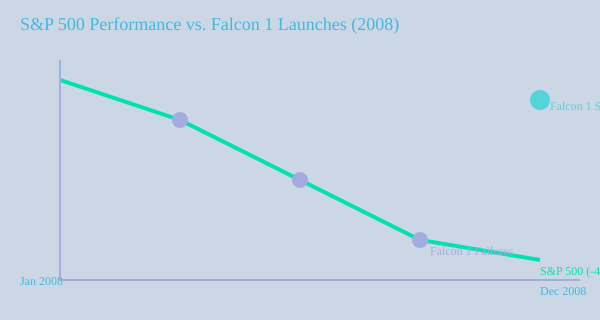
In 2008, the world was gripped by a financial crisis so severe that it nearly brought the global economy to its knees. The impact of the 2008 financial crisis was felt everywhere: Wall Street icons collapsed, the S&P 500 plunged by 40%, and the Dow Jones dropped over 500 points in a single day. In just one year, $600 billion in assets vanished and 2.6 million jobs were lost in the United States alone. Fear and uncertainty dominated the headlines, and the very idea of starting a new business seemed reckless, if not outright impossible.
SpaceX’s Entrepreneurial Challenges: Three Strikes, No Out
Against this backdrop, SpaceX was facing its own crisis. The company had already suffered three consecutive Falcon 1 launch failures. Each attempt to reach orbit had ended in disappointment, and each failure pushed the company closer to bankruptcy. In most industries, three strikes would mean you’re out. But in the world of rocket science, the stakes are even higher—failure means millions lost and reputations shattered.
For Elon Musk, the SpaceX journey was a personal gamble. He had poured $100 million of his own fortune into the company, betting everything on the dream of affordable space travel. At a time when investors were fleeing the market and established companies were collapsing, Musk was doubling down. Friends, advisors, and industry veterans called it madness. Yet, as the world doubted, Musk refused to quit. When asked if he ever thought of giving up after the third failure, Musk replied:
"Never. Why not? I don't ever give up."
Betting It All: Musk’s Mad Gamble Amid Market Collapse
The SpaceX Falcon 1 launch story is not just about rockets—it’s about taking risks when everyone else is running for cover. In 2008, Musk’s personal investments were stretched to the limit: $100 million into SpaceX, $70 million into Tesla, and $10 million into SolarCity. The financial world was in chaos, yet Musk was reading every book he could find on rocket engineering, determined to build a launch vehicle from scratch.
The entrepreneurial challenges SpaceX faced were immense. The company was running out of money, and each failed launch made it harder to attract new investors. The global recession meant that even the boldest venture capitalists were tightening their wallets. Yet, Musk pressed on, convinced that the only way to make space accessible was to do it himself.
Climate of Doubt: When Failure Was the Norm
During this period, the mood in the business world was grim. Memories of past financial collapses resurfaced as markets crashed and companies disappeared overnight. For most, the idea of launching a new company—let alone a rocket company—was unthinkable. But Musk’s vision was different. He saw opportunity where others saw disaster. He believed that the space industry needed a disruptor, someone willing to push the envelope like Steve Jobs had done in tech.
Despite three failed launches, SpaceX prepared for a fourth attempt. The company’s survival depended on it. The world watched, expecting another failure. But for Musk, quitting was never an option. His refusal to give up became the foundation for what would become one of the most remarkable turnarounds in aerospace history.
By the Numbers: 2008 Crisis and SpaceX’s Gamble
| Metric | Value |
|---|---|
| S&P 500 Decline (2008) | Down 40% |
| US Jobs Lost | 2.6 million |
| SpaceX Falcon 1 Launches (Failures Before Success) | 3 |
| Elon Musk’s Personal Investment in SpaceX | $100 million |
| Dow Jones Single-Day Drop | 500+ points |
Visualizing the Crisis: S&P 500 vs. SpaceX Falcon 1
Rocket Rebellion: Inside the Falcon 1’s Wildly Scrappy Engineering
Why the Russians Laughed—and Why Musk Walked Out
In 2001, Elon Musk walked into a Russian office with a simple goal: buy a couple of decommissioned ICBMs and launch them to Mars. The Russian officials, however, saw only a naive outsider. They mocked Musk’s ambition, joking about sending money to aliens and offering him a “bottle of vodka” with his rockets. When Musk tried to negotiate, the price kept rising—from $18 million to $21 million per rocket. Frustrated and insulted, Musk realized he was wasting his time. He left the meeting with a new resolve: build his own rockets instead of buying overpriced ones from skeptical suppliers.
"Reusable rockets will lower the cost of space travel significantly..." – Elon Musk
Falcon 1: The Two-Stage Pioneer of Private Spaceflight
The result of Musk’s defiant walkout was the Falcon 1 rocket—the first privately developed liquid-fueled rocket to reach orbit (September 28, 2008). Falcon 1 was a two-stage rocket, designed for simplicity, cost-efficiency, and reliability. Its first stage was powered by the Merlin engine, developed in-house by SpaceX, while the second stage used the Kestrel engine. This configuration allowed Falcon 1 to deliver small satellites and experimental payloads to orbit, proving that private rocket development was possible with discipline and daring.
- First stage: Merlin engine (kerosene/liquid oxygen)
- Second stage: Kestrel engine (pressure-fed, lightweight design)
- Payload: Up to 670 kg to low Earth orbit
SpaceX Cost Reduction Strategies: The “Idiot Index”
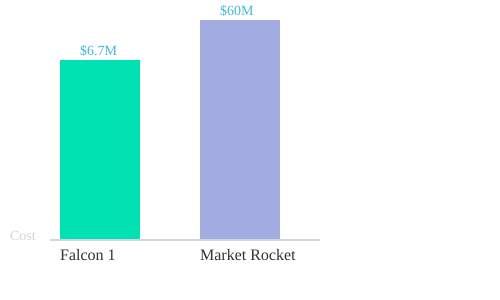
After the failed Russian deal, Musk crunched the numbers. He discovered a shocking truth: the raw material cost for rockets—aluminum alloys, titanium, copper, carbon fiber—was less than 2% of the final market price. For example, a rocket that sold for $60 million only needed about $2–3 million in raw materials. This massive markup inspired Musk’s team to create what he called the idiot index: the ratio of purchase price to raw material cost.
- Market price for typical rocket: $60 million
- Raw material cost: $2–3 million
- Russian ICBM offer: $18–21 million per rocket
- SpaceX Falcon 1 launch cost: $6.7 million
Musk challenged his engineers: Why pay $60 million for something that costs $2 million to build? The answer was to cut out the middlemen, design in-house, and obsess over every dollar spent. The “idiot index” became a guiding principle for SpaceX cost reduction strategies, forcing the team to question every expense and find smarter, cheaper ways to build.
Engineering Innovations: Scrappy, Hands-On, and Relentless
The SpaceX Falcon 1 engineering team was small, young, and unafraid to break the rules. Many lacked formal aerospace degrees. Instead, they learned by doing—testing, failing, and iterating fast. Key innovations included:
- Regenerative engine cooling: The Merlin engine used fuel to cool the engine walls before combustion, boosting efficiency and reliability.
- Vertical integration: SpaceX built most components in-house, from tanks to avionics, slashing costs and timelines.
- Rapid prototyping: The team wasn’t afraid to get their hands dirty, often assembling and testing hardware themselves.
- Cost obsession: Every design decision was weighed against the “idiot index,” ensuring the lowest possible price for the highest performance.
This approach meant Falcon 1 could launch for just $6.7 million—less than one-tenth the price of many competitors. The SpaceX Falcon 1 payload capacity, while modest, proved that private companies could disrupt an industry long dominated by government giants and bloated budgets.
Chart: SpaceX Falcon 1 vs. Traditional Rocket Launch Costs
The Falcon 1 rocket’s wildly scrappy engineering, relentless cost focus, and technical daring made it a true rocket rebellion—one that changed the space industry forever.
Stubbornness Beats Gravity: From Losses to Legend
On September 28, 2008, the world watched as Elon Musk and his fledgling company, SpaceX, faced a moment that would either make history or end in disaster. After three consecutive failures, the fourth Falcon 1 launch was more than just a technical challenge—it was a make-or-break gamble with everything on the line. Musk had poured his entire fortune into SpaceX, Tesla, and SolarCity, betting on industries dominated by giants with decades of experience and billions in revenue. The stakes were clear: success would make him a legend; failure would brand him as the “stupidest businessman in America.” As the countdown ticked away on a remote Pacific island, the world was about to witness a turning point in space history.
Against all odds, Falcon 1 soared into orbit, marking the first time a privately developed, liquid-fueled rocket had ever achieved this feat. As Musk later reflected, “SpaceX became the first to privately develop and successfully launch a liquid field rocket to orbit.” This single victory did more than save SpaceX—it changed the trajectory of commercial spaceflight forever. The stubborn determination that powered Falcon 1’s fourth attempt became the foundation for a new era of space exploration, where private innovation could challenge and even surpass government programs.
The impact of Falcon 1’s breakthrough was immediate and profound. It proved that a small, scrappy team could accomplish what many thought impossible. This success paved the way for the development of the Falcon 9, a rocket that would soon redefine reliability and cost in the launch industry. With an extraordinary 99.79% success rate for its Block 5 variant, Falcon 9 became the backbone of SpaceX’s operations, launching hundreds of missions and setting new standards for orbital access. The Falcon Heavy, one of the world’s most powerful rockets, followed, capable of lifting payloads as heavy as a Boeing 737 and landing multiple boosters simultaneously—a spectacle that once belonged to science fiction.
Central to SpaceX’s rise was Musk’s unorthodox, iterative approach to engineering. Unlike traditional aerospace giants, SpaceX embraced rapid prototyping and relentless testing, blending rocket science with the spirit of a midnight hackathon. Failures were not setbacks but stepping stones, each one fueling the next leap forward. This culture of innovation led to the development of SpaceX’s reusable rocket technology, a game-changer that slashed launch costs and made space more accessible than ever before. The company’s commitment to reusability and continuous improvement didn’t just disrupt the market—it forced the entire industry to rethink what was possible.
By 2023, SpaceX’s dominance was undeniable. The company shattered historic launch records, outpacing even the legendary Soyuz-U/R-7 in annual launches. SpaceX’s market dominance was built on launch frequency, reliability, and the disruptive economics of reusability. The Falcon 9 alone accounted for the majority of global orbital launches, while the Falcon Heavy demonstrated the ability to lift unprecedented payloads. The legacy of Falcon 1’s stubborn ascent radiated through every subsequent achievement, from routine satellite deployments to ambitious Mars missions.
| Rocket | Success Rate | 2023 Launches | Key Feature |
|---|---|---|---|
| Falcon 9 Block 5 | 99.79% | Record-setting (most/year globally) | Reusable first stage |
| Falcon Heavy | High (multiple successful flights) | Several | Lifts payloads as heavy as a 737, lands multiple boosters |
When victory finally came for Falcon 1, it didn’t just rescue a company—it redefined the future of space commerce. SpaceX’s journey from near-bankruptcy to market dominance in 2023 is a testament to the power of stubbornness, innovation, and relentless iteration. The legend of Falcon 1 lives on in every Falcon 9 launch, every booster landing, and every new record set. What began as a risky bet on a remote island became the spark that ignited a revolution, proving that with enough determination, even gravity can be beaten.
TL;DR: Elon Musk’s SpaceX journey wasn’t just about building rockets—it was about daring risk, smart cost rethinking, and reimagining what’s possible, even as the world fell apart. Falcon 1’s launch kicked off a new space era, with reusable rockets, bold innovation, and plenty of doubters left in the dust.
Post a Comment