

Confession: The first time I tried to sell something, it was roses. No, not online—actual, physical roses, tuxedo and all. Was it weird? Absolutely. But that oddball hustle kicked off a journey that eventually crossed paths with Daniel Priestley’s savvy blueprint for building a business that can scale to a million dollars—without the ‘rocket science’ most gurus peddle. This post is a no-BS field guide built on screw-ups, surprises, and a heap of real-world validation—you in?
1. The Apprenticeship: Gaining Unfiltered Business Grit Before You Start
If you’re serious about building a business that actually works, Daniel Priestley’s entrepreneurship framework starts with a step most people skip: the 766 apprenticeship. Forget just reading business books or binge-watching startup podcasts. Real-world, hands-on mentorship in entrepreneurship is the fastest way to upgrade your entrepreneurial firmware.
Why a 766 Apprenticeship Beats Reading Business Books Alone
Priestley’s Business Blueprint for Beginners is clear: spend six months as a direct report inside a profitable small business—one doing at least $1,000,000 in revenue and $100,000+ in profit. You’re not just shadowing; you’re in the trenches, watching sales, money, and chaos flow in real time. This is where you see how decisions get made, how teams of 4-12 people actually build value, and what really moves the needle.
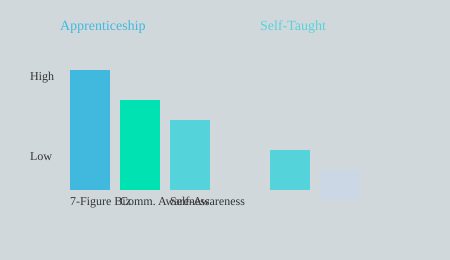
The Three Treasures: Commercial Awareness, Self-Awareness, Access to Resources
- Commercial Awareness: You’ll see how money comes in, how deals are closed, and what keeps the lights on. This is business reality, not theory.
- Self-Awareness: You’ll quickly learn your strengths and gaps. In a small team, there’s nowhere to hide—so you discover who you need around you to win.
- Access to Resources: You’ll figure out how to get what you need—whether it’s tools, talent, or capital—to actually launch and scale.
Small Teams = Entrepreneurial ‘Firmware Update’
Working in a startup-sized team is a total game-changer. Unlike being a cog in a huge company, you’re exposed to every lever: sales, product, marketing, and even the occasional chaos. As Priestley says, “I have so many people who…get this massive firmware update in their own mind.” It’s the difference between reading about swimming and being thrown in the pool.
Personal Anecdote: More Value Than an MBA Semester
I once spent a semester in an MBA program and a summer inside a scrappy, seven-figure startup. The startup taught me more about cash flow, negotiation, and team dynamics in three months than any classroom ever could. That’s the magic Priestley talks about: “I wouldn’t have done that at 22 or 23 years old had I not had a mentor.”
Mentorship Magic: Guidance Over Initial Profit
“There’s something magical that’s happening in that mentorship.”
Priestley’s own track record—and that of his mentees—proves it. Multiple employees who apprenticed under him went on to build seven-figure businesses before turning 30. The secret? Experiential learning and direct mentorship in entrepreneurship, not just theory or solo hustle.
2. 90-Day Side Hustles That Don’t Suck: Uncovering the Power of Fast Experiments
Most people dream of launching a business but get stuck chasing the “perfect” idea. Daniel Priestley’s Business Blueprint for Beginners flips this on its head: your first side hustle should be a 90-day experiment, not a lifelong commitment. Why? Because starting and finishing in 90 days feels scary—and that’s exactly why it works. You get to test, learn, and move on, all without risking your ego or your savings.
Why 90 Days? The Value Creation Loop
Think of a side hustle as an open-and-shut project—a “circle project” that starts and ends in 90 days. This short cycle forces you to focus on side hustle validation through real customer payments, not just supportive words from friends. As Priestley says,
“Validation is such an important word in entrepreneurship.”The only data that matters is money in, not hypothetical support.
My Worst (and Best) Side Hustle Experiments
Priestley’s early hustles were wild and simple. He bought 100 roses at $0.40 each and sold them door-to-door for $4 apiece. Total cost: $40. Revenue: $400. Lesson:
“It was about having an idea, finding a supplier, going out and taking a small risk.”He also ran rogue nightclub parties—finding a venue, filling the room, making money, and shutting it down. These weren’t scalable business models, but they were powerful lead generation strategies for learning what works in the real world.
Drop the Pressure: Treat It Like a Throwaway Experiment
When you treat your first hustle as a throwaway experiment, you drop the pressure to be perfect. Whether you’re selling roses or running a mini-workshop ($100 per attendee), you’re just running a fast experiment. The goal is to complete a value creation loop: have an idea, execute, get paid, and then reflect. Only after the project wraps do you analyze, pivot, or scale.
Consulting for Cash vs. Selling on the Street
Not every side hustle needs to be scrappy. If you have expertise, take on a 90-day consulting project—two clients at $15,000 each, for example. The principle is the same: open-and-shut, with real money changing hands. Whether you’re teaching sales skills to a small group or delivering a report, you’re validating your offer with actual payments.
Remove Ego: Think Like a Mad Scientist
Detach your ego and approach each hustle like a mad scientist. Every failed or successful 90-day project is a data point. Quick cycles and ego-detachment unlock fast business learning, helping you find a scalable business model faster than endless planning ever could.
| Project Type | Cost | Revenue | Customers | Key Lesson |
|---|---|---|---|---|
| Roses | $40 | $400 | 100 | Direct sales, small risk |
| Nightclub Party | $500 | $2,000 | 80 | Event promotion, logistics |
| Workshop | $200 | $3,000 | 30 | Teaching, audience building |
| Consulting Sprint | $0 | $15,000 | 2 | Expertise, B2B selling |
3. The 30 and 150 Customers Rule: Demystifying Market Validation with Real Experiments
When it comes to side hustle validation or building a scalable business model, Daniel Priestley’s entrepreneurship framework gives you a reality check: talking to six people means nothing. If you want real market validation, you need to understand the magic numbers—30 and 150. These aren’t just random figures; they’re rooted in statistical thinking that every founder, from solo hustlers to billionaires, can use to avoid false positives and negatives in early product tests.
Why 30 and 150? The Data Behind the Magic Numbers
Imagine you have a wild idea—say, chili-flavored toothpaste. If you ask five friends and they all hate it, should you give up? Not so fast. According to Priestley, “30 people is the minimum for telling us anything at all and 150 is for fine-tuning.” Here’s why:
- 30 samples: This is your first sigma, the point where you get your first actionable insights. Patterns start to emerge, and you can infer whether your idea has legs.
- 150 samples: This is your second sigma, where you can fine-tune your offer and spot outliers. Now, you’re not just guessing—you’re seeing real trends.
| Sample Size | Insight Level | Spicy Toothpaste Example |
|---|---|---|
| 30 | First meaningful insight | 10% say they’d buy it |
| 150 | Fine-tuning and trend spotting | 12-15% say they’d buy it |
Statistical Significance for Normal Humans
You don’t need to be a mathematician to use this rule. The 30/150 approach applies to every founder, no matter your background. It’s about robust sampling, not complex equations. This is street science—surveying, recording, and iterating with low-cost prototypes to validate your scalable business model or lead generation strategies.
The Spicy Toothpaste Saga: Fail (or Win) Faster
Let’s say you test your chili toothpaste on 30 people and 3 like it. That’s 10%. If you scale up to 150 and 20 like it, you’ve got 12-15%. Now you know you’re onto something—or not. This fast, cheap experimentation lets you pivot or double down before you waste time or money.
Even Billionaires Do It
“Even a billionaire knows 30 sales meetings one-to-one face to face is kind of where it’s at.”
Whether you’re refining BMAT coaching or launching a new SaaS, robust sampling is the secret. Validation isn’t about tiny focus groups—it’s about talking to enough real customers to get statistically meaningful feedback. That’s how you build a scalable business model with confidence.
4. Tech Superpowers on a Budget: The App Prototyping Shortcut
In 2024, you don’t need to be a coder—or even know what a “stack” is—to validate your next big app idea. Thanks to AI-powered tools like Lovable, the process of Minimum Viable Product development has become accessible, fast, and affordable. This shift is a game-changer for anyone following a Business Blueprint for Beginners or looking to test scalable business models without risking months of time or mountains of cash.
Why You Don’t Need to Code to Validate an App Idea
Historically, turning an idea into a working prototype required learning to code or hiring expensive developers. Now, with instant tech tools, you can describe your idea in plain language and see it come to life in minutes. As Daniel Priestley’s team discovered, “If you already know how to code, then Lovable gives you absolute superpowers. And if you don’t…Lovable is a great way to get started.”
From Weekend Sketches to Working Apps: The Lovable Advantage
Lovable’s AI lets you skip the old routine of drawing boxes in Figma or Photoshop. Instead, you simply have a conversation with the tool, and it generates a clickable prototype—sometimes in seconds. This means you can:
- Test new features or business ideas rapidly
- Iterate on feedback without waiting for developers
- Experiment with lead generation strategies by building tools for your audience
Case Study: Voice Pal & Momentum—$70K/Month with Fast Prototyping
Priestley’s team launched two apps in just 12 months using this shortcut. Voice Pal, their first, now brings in over $70,000 in monthly recurring revenue. Their second, Momentum, is a habit tracker that helps users stay accountable. Both were prototyped using Lovable, allowing for playful brainstorming and rapid iteration—without the traditional costs or delays.
How App Prototyping Has Shifted the Business Model
Today, prototyping is cheap and instant—even for non-coders. This means you can validate your Minimum Viable Product and business model with a fraction of the risk. The process has shifted from expensive, developer-led projects to playful, low-commitment experimentation. For anyone following a Business Blueprint for Beginners, this democratization of tech is a massive advantage.
| App | Monthly Recurring Revenue | Apps Prototyped (12 months) | Prototype Screen Conversion |
|---|---|---|---|
| Voice Pal | $70,000+ | 2+ | Hours to Seconds |
In short, you no longer need a CS degree to build an MVP. With tools like Lovable, playful brainstorming replaces expensive development, saving you hours, dollars, and sanity—while opening the door to scalable business models and smarter lead generation strategies.
5. Ego, Failure, and the Scientific Approach: Resilience Lessons from Street-Level Startups
If you’re following the Daniel Priestley entrepreneurship framework, one of the fastest ways to kill your momentum is to let your ego get tangled up in your early business experiments. Priestley’s advice is clear:
Detach your ego from those experiments.This is especially true when you’re running fast, cheap experiments to validate your side hustle ideas. The goal isn’t to prove you’re a genius—it’s to learn, adapt, and move forward, no matter how messy or strange things get.
Embrace the Weird: Playful Validation Beats Perfection
Ever thought of launching chili-flavored toothpaste or a glow-in-the-dark pet leash? In the early stages of side hustle validation, the best entrepreneurs treat even their wildest ideas with a playful, evidence-first attitude. The more you can detach from the outcome, the faster you’ll learn. Non-attachment isn’t just about protecting your feelings—it’s about speeding up your learning curve and business evolution.
Why Your First Six Results Are Almost Always Wrong
Priestley notes that when you first launch, your understanding of what customers want is probably only about 40% accurate—even if you’re an expert.
Only through interacting with customers do you get the other 60%.That means your first six attempts, pitches, or lead generation strategies are rarely reliable indicators of future success. Early rejection isn’t a verdict on your potential; it’s simply data. Don’t let a few “no’s” or awkward silences sink your dream.
Messy Validation Cycles: Turning ‘Bad’ Results Into Gold
Business validation is circular. A failed idea often teaches you more than a modest win. When your first attempts flop, don’t panic. Instead:
- Review your results with curiosity, not judgment.
- Ask customers what didn’t work for them—treat them as partners in your experiment, not obstacles.
- Iterate quickly: tweak your offer, your pitch, or your target segment.
This approach is a form of risk mitigation in business. By failing fast and cheap, you avoid betting everything on untested assumptions.
Channel the Scientist’s Mindset
Think of yourself as a street-level scientist. Your job is to run experiments, gather feedback, and adjust. When you view setbacks as data points, not disasters, you build resilience. Over time, these “failures” become a map—showing you where to pivot, which customer segments to chase, and which lead generation strategies actually work.
Resilience isn’t about never losing. It’s about using every loss to get smarter. In the end, ego-detached, iterative hustling is how street-level startups turn duds into momentum and insight.
6. From Apprentice to Asset Builder: Layering Skills and Brand for Future-Proof Success
Small, Agile Teams vs. Faceless Corporations: The Startup Advantage
When you’re starting out, joining a small, profitable business—what Daniel Priestley calls a 766 apprenticeship—is your secret weapon. Unlike faceless corporations where you’re just a cog, small teams (often under 12 people) let you see the whole engine. You gain commercial awareness (how money flows), self-awareness (your strengths and gaps), and access to resources (tools, contacts, and know-how). This hands-on experience is a massive “firmware update” for your entrepreneurial brain, giving you the confidence to build your own scalable business model.
Why Multi-Layered Business Assets Create Compounding Returns
The real difference between a one-hit side hustle and a future-proof business is systematic asset-building. Think beyond cash flow: business assets framework means stacking content, software, products, and networks. Each asset—like a podcast, a SaaS tool, or a book—adds value and creates new revenue streams. For example, Voice Pal hit $70,000+ in monthly recurring revenue with a lean team, proving that layered assets can outmaneuver even legacy corporations. Over time, these assets compound, making your business more resilient and valuable.
Personal Branding Leverage: Stand Out Without Selling Out
In today’s market, personal branding leverage is your shortcut to trust and influence. Building a personal brand attached to a simple, scalable business model is key to early-stage entrepreneurial success. Your audience follows you—not just your product—so your reputation lubricates sales, partnerships, and future ventures. The goal isn’t to become a celebrity, but to be known for delivering value. This trust makes every new asset you launch more likely to succeed.
Mentorship and Collaboration: The Seeds of Sustainable Growth
Mentorship isn’t just a nice-to-have—it’s a proven shortcut. Working directly with a founder or in a tight-knit startup team exposes you to real decision-making and problem-solving. Many of Daniel Priestley’s mentees have gone on to launch seven-figure businesses before 30. Collaboration networks also multiply your resources and opportunities, helping you build a business that lasts.
Building for Independence: Get Off the Treadmill, Onto Your Own Platform
The ultimate goal is independence—owning your platform, your audience, and your IP. Asset-based thinking means you’re not just chasing cash flow, but accumulating value in the form of audience, intellectual property, and network. This is how you get off the treadmill of trading time for money and onto a path where your business assets work for you, compounding returns year after year.
Building a personal brand attached to a simple, scalable business model is key to early-stage entrepreneurial success.
7. Table: Apprentice, Hustler, Builder—A Comparative Look at Three Stages in the Daniel Priestley Framework
Understanding where you are in the Daniel Priestley entrepreneurship framework is crucial for building your own Business Blueprint for Beginners. Each stage—Apprentice, Hustler, and Builder—demands a different mindset, skillset, and risk tolerance. Choosing the right stage isn’t just about ambition; it’s about self-awareness and smart resource allocation. Here’s a side-by-side look at how these stages stack up, so you can decide which fits your current life situation, risk appetite, and business goals.
| Stage | Typical Activities | Skills & Mindset | Assets Built | Income Potential | Risk Level | Personal Growth | Best For |
|---|---|---|---|---|---|---|---|
| 766 Apprenticeship |
|
|
|
Low (salary or stipend) | Low |
|
|
| 90-Day Side Hustle |
|
|
|
Moderate (project-based profit) | Moderate |
|
|
| Early Asset Builder |
|
|
|
High (compounding returns) | High |
|
|
“It starts with founder opportunity fit.” The Business assets framework is not one-size-fits-all. If you’re still building confidence or learning how a business really works, the 766 Apprenticeship is your launchpad. If you’re ready to test ideas with minimal risk, the 90-Day Side Hustle is your proving ground. And when you’re ready to build a team and grow assets, step up to Early Asset Builder. Chart your journey wisely—your current resources, risk tolerance, and self-awareness should guide your next move in startup team building.
8. Chart: From Six to 150—How Validation Confidence Grows with Your Customer Sample Size
When you’re building a side hustle or testing a scalable business model, your first instinct might be to ask a handful of people for feedback. But here’s the hard truth: six respondents tell you almost nothing. In Daniel Priestley’s real-world framework, validation confidence only starts to become meaningful as your customer sample size grows. This is a non-negotiable for real product-market validation and effective lead generation strategies.
Why You Should Always Go Past Six Respondents
Let’s break down what happens as you increase your sample size:
- 6 Respondents: This is anecdotal territory. If all six say “no,” you might panic, but you shouldn’t. At this stage, your data is high risk for error—personal bias, random chance, or even the mood of the day can skew results. You simply don’t have enough information to make a business decision.
- 30 Respondents: Here’s where you get your first statistical insight. As Priestley puts it,
'You don't know anything until you've spoken to 30.'
At this level, you can start to infer early trends. For example, if 3 out of 30 people are interested in your offer, you can estimate about 10% adoption. This is your first real signal for side hustle validation. - 150 Respondents: Now you’re in fine-tuning mode. With 150 data points, you can see if your initial 10% holds or if it shifts—maybe up to 12-15%. This is where you start to see the real shape of your market and can confidently adjust your scalable business model or lead generation strategies.
How Positive Response Percentages Trend with Sample Size
Imagine a line chart that starts with wild swings at six respondents, smooths out at 30, and becomes reliable at 150. Early results might show 0% or 100% positive feedback, but as you gather more data, the percentage stabilizes. This is the difference between guessing and knowing.
Why Early Results Might Mislead
With only a few data points, you risk making decisions based on outliers. Maybe your first six testers are all friends or share the same background. That’s not your market. Only by pushing past 30—and ideally reaching 150—do you turn ambiguous data into real business direction. This is how you avoid false positives and wasted effort.
Turning Ambiguity into Actionable Insights
In summary, increasing your sample size is essential for true side hustle validation. It transforms guesswork into actionable analytics, helping you spot traction, refine your scalable business model, and build lead generation strategies that actually work.
9. FAQ: Real Answers to Founders’ Most Googled Questions about Daniel Priestley’s Framework
Do I have to do an apprenticeship, or can I jump straight to hustling?
You don’t have to do the 766 apprenticeship, but it’s a proven shortcut. Daniel Priestley’s entrepreneurship framework emphasizes learning from real businesses before risking your own money. If you’re already deeply commercial, you might skip to the side hustle phase. But if you’re unsure about how a scalable business model really works, the apprenticeship gives you commercial awareness, self-awareness, and resource access—three things that save you years of confusion. Jumping straight to hustling is possible, but expect more trial and error.
What if my first side hustle flops?
That’s normal—and expected. Side hustle validation is about learning, not winning on the first try. Most founders’ first projects fail or barely break even. The key is to treat it as a fast, cheap experiment. If your idea flops, reflect on what didn’t work, tweak your approach, and try again. The only real failure is not learning or giving up too soon. Remember: “Numbers are your friend.” Test with at least 30–150 real customers before you judge the idea.
How do I know when to stop experimenting and build long-term assets?
When you consistently get paying customers and positive feedback, it’s time to double down. If your MVP or side hustle gets traction—people buy, come back, or refer others—you’ve found a signal. That’s when you shift from experiments to building assets like a brand, a website, or a team. If you’re still getting crickets after 150+ customer tests, keep iterating.
Can non-techies really launch tech startups with these methods?
Absolutely. The Daniel Priestley entrepreneurship framework is designed for all backgrounds. Tools like Lovable.dev let you prototype apps without code. Many founders start with simple MVPs—landing pages, WhatsApp groups, or free trials—before hiring developers. You don’t need to be technical; you need to be resourceful and willing to learn or partner up.
Is there a magic customer number that works in every industry?
No universal number exists, but 30–150 is a solid benchmark for early validation. Thirty gives you a “first sigma”—enough to spot patterns. One hundred fifty lets you fine-tune and see if your scalable business model holds up. Some industries need more data, but these numbers work for most digital and service businesses.
How relevant is mentorship if I’m outside traditional business circles?
Mentorship is even more important if you lack a business network. The right mentor helps you avoid rookie mistakes, keeps you accountable, and opens doors. You don’t need a famous advisor—just someone a few steps ahead. Many successful founders started with mentors they found online or through communities, not in elite circles.
How do I get started with Lovable or similar rapid-prototyping tools?
Sign up for a free account at Lovable.dev. You get five free credits daily, and with the code aliyt, you unlock a 20% discount on the pro plan. These tools guide you through building MVPs, even if you’ve never coded. Start with a simple idea, use templates, and test with real users. Iterate fast—don’t wait for perfection.
Conclusion: Building on Imperfect Steps—Your Million-Dollar Blueprint, One Scrappy Experiment at a Time
If there’s one thing Daniel Priestley’s entrepreneurship framework makes crystal clear, it’s this: your Business Blueprint for Beginners isn’t about waiting for the perfect moment, the perfect idea, or the perfect plan. It’s about getting your hands dirty, running fast experiments, and learning from real numbers—not just theories. The path to a scalable business model is paved with scrappy execution, not flawless preparation. In fact, the biggest breakthroughs come when you’re willing to test, tweak, and sometimes totally pivot based on what you discover in the wild.
Think about it—most founders don’t start with a polished product or a slick pitch deck. They start with a rough idea, a burning question, and a willingness to try. The first version is almost always “ugly” compared to what comes later. But that’s not a flaw; it’s a feature. Why? Because every experiment, every awkward first pitch, and every failed attempt gives you the real-world feedback you need to improve. Side hustle validation isn’t about getting it right on the first try. It’s about getting a real “yes” from a real customer, even if it’s just one. That first yes is proof that your idea has legs—and it’s the first step toward something much bigger.
Daniel Priestley’s process is refreshingly simple: start with a 90-day apprenticeship, focus on founder-opportunity fit, brainstorm a handful of ideas, and then collaborate. The magic isn’t in the planning; it’s in the doing. You don’t need to be a genius or have boatloads of time to build a million-dollar business. You just need to be willing to start, to experiment, and to keep moving forward—even if your progress is messy and unpredictable.
So here’s the last word: follow the blueprint, but don’t be afraid to embrace the weird, the scrappy, and the imperfect. Go get your first yes, no matter how rough your prototype or how unpolished your pitch. The only way to build something majestic is to start with something humble. Building beat-perfect is an illusion—real growth comes from iteration, resilience, and the courage to keep going when things don’t look perfect.
No matter your background, your schedule, or your starting point, you have what it takes to build a business that matters. The Daniel Priestley entrepreneurship framework is your invitation to start small, stay scrappy, and scale up—one experiment at a time. Your million-dollar journey begins with the next imperfect step. Take it.
TL;DR: You don’t need to be a genius or have boatloads of time to build a million-dollar business. Daniel Priestley’s framework, plus some fast, scrappy experiments, a touch of mentorship, and hard-headed validation, can get you from aspiration to action—no matter your starting point.
Post a Comment