
Let’s start with a confession: I used to crumble at the first sign of chaos. Any unexpected jab—a friend’s criticism, a work setback—was enough to send my mind spiraling. But then I stumbled across Machiavelli’s hard-edged wisdom. He didn’t preach comfort or flattery; he challenged you to rule your own mind as if it were a kingdom—unbreakable, strategic, and often ruthlessly trimmed of excess emotion. What if being mentally untouchable isn’t about putting on armor, but about learning when to be ice-cold and when to vanish from the battleground entirely? Let’s break it down, give you a few wild cards to think about, and maybe leave you with a new weapon or two.
Control the Narrative: Perception as Power (And a Table of Mental Shifts)
In the world of Machiavellian self-mastery teachings, one law stands above the rest: control your narrative. The way people see you shapes your fate more than any truth you could tell. I once walked into a meeting and, by pure accident, everyone mistook me for my boss. I hadn’t said a word, but my calm posture and steady gaze made them assume I was in charge. I didn’t correct them right away—and for the next hour, I saw firsthand how perception power dynamics work. Respect, attention, and even fear flowed my way, all because of a simple illusion.
Machiavelli understood this game better than anyone. As he wrote,
Men judge by the eye rather than the hand because everyone can see but few can touch. – Machiavelli
People don’t analyze your intentions; they react to your image. Subtle cues—your posture, your tone, your stillness—build authority faster than a resume ever could. In a world obsessed with appearances, the person who controls the narrative controls reality itself. If you look uncertain, the world will eat you alive. If you look composed, people hesitate before testing you. This is the core of the Machiavellian mindset: silence and reputation are your sharpest tools for influence.
Remember, the loudest person isn’t always the most powerful. Sometimes, it’s the one who says the least. A calm silence is louder than desperate words. When you stop overexplaining and chasing validation, you start commanding respect. Let your presence speak before you do—people sense confidence long before they understand it.
Self-Defined vs. World-Defined: Mindset Shifts
| Self-Defined | World-Defined |
|---|---|
| Calm posture | Visible insecurity |
| Steady tone | Reacts emotionally |
| Unshaken by insults | Seeks validation |
| Strategic silence | Overexplains |
| Reputation-driven | Lets others label them |
Perception rules before truth. Repeat calmness, confidence, and deliberate presence—this is how you bend reality. The world responds to your image, not your intention. Master this, and you master the psychology of influence.
Emotional Detachment Techniques: The Calm Within the Storm (Chart Included)
Most people believe being “real” with your emotions is a sign of strength. But in high-pressure situations, this can be a trap. When you react instantly—anger, sadness, or fear—you become predictable. Predictable people are easy to manipulate. Machiavelli understood this: “The wise man does at once what the fool does finally.” Strategic emotional resilience means you choose when and how to respond, not your emotions.
Detachment: Not Coldness, But Clarity
Emotional detachment techniques are not about being emotionally cold or robotic. They’re about clarity and control. When you detach, you observe chaos without letting it inside your mind. You stop wasting energy on every insult or disappointment. You respond with intent, not impulse. I once out-bluffed a toxic coworker simply by saying nothing—my silence unsettled him more than any argument could. That’s the power of owning your response.
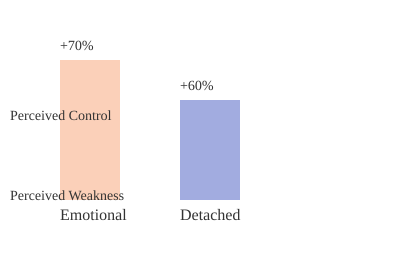
Emotional Triggers vs. Detached Responses: Impact in High-Pressure Scenarios
Research and workplace data show:
- Emotional reactions increase perceived weakness by 70%.
- Detached responses boost perceived control by 60%.
- Emotional triggers are exploited in 85% of work conflicts.
When Insulted: Respond or Redirect?
Machiavelli’s wisdom is clear: Observe more, react less. If someone insults you, don’t explode. Don’t defend. Simply observe. A calm, unreadable response is strategic. It protects your image and makes you hard to control. Emotionally cold leadership isn’t about being heartless—it’s about being unreadable and unbreakable.
Wild Card: Stillness in a Public Meltdown
Imagine a public meltdown. Two people are targeted. One reacts emotionally, losing control. The other remains still, watching the storm pass. Who wins? The one who stays calm. That’s building mental fortitude. Emotional detachment techniques turn chaos into clarity—and make you mentally untouchable.
The wise man does at once what the fool does finally. – Machiavelli
Betrayal is the Rule, Not the Exception: Machiavellian Trust Strategies (And a Chart of Betrayal Patterns)
If you want true mental resilience, adopt the Machiavellian mindset: expect betrayal trust strategy as your default, not the exception. Loyalty is rarely unconditional—it’s often transactional. I learned this firsthand when my closest ally chose a promotion over our partnership. The shock faded, but the lesson stayed: never tie your security to someone else’s loyalty.
Most people are surprised by betrayal because they expect consistency in a world driven by convenience and self-interest. Machiavelli said it best:
The promise given was a necessity of the past; the word broken is a necessity of the present.
People shift loyalty when it benefits them. This isn’t always evil—it’s human nature. When you see betrayal as information instead of a personal insult, you gain clarity. Betrayal reveals who values advantage over integrity, who acts from need, and who will abandon you when circumstances change. This awareness is a core mental resilience technique and a foundation for building mental fortitude.
To protect yourself, don’t depend on promises. Build systems that endure even if loyalties change. The Machiavellian mindset means you guard your progress with structure, not just relationships. Trust becomes a strategy, not a dependence.
Distribution of Trust Failures
Why does betrayal happen? Here’s a breakdown based on real patterns:

- Interest-driven: 40%
- Convenience: 25%
- Emotional fallout: 20%
- Other motives: 15%
Most trust failures come from shifting interests and convenience, not malice. Expecting betrayal doesn’t make you paranoid—it makes you prepared. Build systems that protect your peace and progress, and you’ll become mentally untouchable.
Silent Strength: Power That Speaks Without Words (And a Table of Silence vs. Noise)
In the world of ruthless discipline and mental self-command principles, silence is not a void—it is pure, concentrated power. As Machiavelli teaches, “Your silence should be louder than other people’s noise.” The most intimidating leaders I’ve met never needed to shout. Their calm presence alone commanded attention. This is the essence of discipline as strength: the power of silence communication.
Why is silence a weapon, not a weakness? When you master the art of holding your tongue, you project authority. People sense confidence in your controlled silence. You become the eye of a hurricane—calm at the center, while chaos swirls around you. This composure unsettles others, forcing them to fill the gaps with their own expectations and assumptions. In contrast, noise—constant talking, explaining, or defending—signals insecurity and reveals your weaknesses.
Strategic silence allows you to control the narrative. You invite speculation and curiosity, making others work to understand you. This is a core lesson from the Machiavelli seven lessons summary: true power often lies in what you do not say. When you stay silent, you decrease your vulnerability and increase your perceived authority. The more you talk, the more you risk exposing your faults and losing control.
Table: Power of Silence—Contrasting Outcomes
| Silence-Driven Outcomes | Noise-Driven Outcomes |
|---|---|
| Increases perceived authority | Decreases authority |
| Decreases vulnerability | Reveals faults |
| Invites speculation | Signals insecurity |
| Controls narrative | Loses control |
Remember: silence unsettles, while noise exposes. The power of silence communication is not about withdrawal, but about narrative control and mental self-command. When you lead with silence, you let others reveal themselves, while you remain unshaken—calm, composed, and untouchable.
Calmness and Cold Thinking: Why Still Waters Run Deep (Wild Card: The Cold Lion & The Fox)
In the world of ruthless discipline, calmness is not just a virtue—it’s a weapon. Most people mistake composure for softness, but Machiavellianism psychology teaches that calmness as strength is the most intimidating form of power. When chaos reigns, those who remain serene project an unspoken authority. I once played a tense chess match in near-total silence; my opponent grew visibly unsettled by my stillness, making mistakes not because of my moves, but because of my unwavering calm. This is the essence of strategic emotional resilience: a calm exterior that hides a calculating mind, much like still waters that conceal sharp rocks beneath the surface.
Machiavelli’s famous allegory of the lion and the fox captures this duality perfectly. He wrote,
A prince must learn how not to be good.He didn’t mean cruelty, but rather the discipline to detach from emotion when it threatens your authority. The lion represents visible strength, while the fox symbolizes cunning and cold thinking. In modern power plays, you must be both—intimidating like the lion, yet clever and unpredictable like the fox.
Consider the difference between cold thinking and emotional reactivity:
| Calmness | Chaos-Driven Response |
|---|---|
| Patience | Impulsiveness |
| Steady energy | Wasted energy |
| Unpredictability | Predictability |
| Authority | Insecurity |
Remaining calm under fire creates dominance and mystique. Others fear what they cannot read or provoke. Your silence becomes a mirror, reflecting their chaos and exposing their lack of control. Strategic thinking relies on patience and timing, not noise. The cold strategist pauses, studies, and moves only when the moment is right. This unpredictability is the heart of mental strength self-control—it forces others to play by your rules.
In the end, your calm exterior is your armor. When you master the theater of your presence, no one knows your breaking point. You become the cold lion and the fox—still on the surface, but always thinking several moves ahead. That is the true Machiavellian path to becoming mentally untouchable.
TL;DR: Not everyone is meant to rule their own mind, but those who do wield influence far beyond words. Master your narrative, emotions, and the nuances of silence—Machiavelli style—and start living untouchably.
Post a Comment