

Picture this: you’re logging in to Genshin Impact after weeks of hype for Luna II. You’re expecting endless creative freedom in Miliastra Wonderland, maybe even a digital playground to rival Roblox. But instead of excitement, you’re instantly hit with confusion and a sinking feeling—like you’ve turned up to a fireworks show, only to find someone’s set off a single, sputtering sparkler. That’s not just me being dramatic—it’s the real, raw sentiment rippling through the player community since October 22, 2025.
1. From Sky-High Hype to Crash Landing: The Reality of Miliastra Wonderland
If you’ve been following Genshin Impact, you know that the Genshin Impact 6.1 update—Luna II—was supposed to be a game-changer. The main attraction? Miliastra Wonderland, a brand-new, permanent user-generated content (UGC) mode. When HoYoVerse announced it, the community’s excitement was off the charts. Players imagined a creative playground, something like Roblox but inside the world of Teyvat. The Genshin Impact 6.1 release date of October 22, 2025, was circled on calendars everywhere. Polls showed over 90% of players were optimistic. The hype was real.
But what happened next was something no one expected. The moment Miliastra Wonderland launched, that sky-high excitement didn’t just fade—it vanished. Almost instantly, the mood in the community flipped. Instead of joy and creativity, there was confusion, frustration, and a wave of disappointment that swept across every corner of the fandom.
“This update was hyped up. It was meant to be a new, permanent creative outlet for every player, but the reality...is something else entirely.”
Let’s break down why this backlash was so intense—and why it’s so rare for a game like Genshin Impact, where players usually find something to love in every update.
Community Expectations: The Promise of a Creative Revolution
- All-time high expectations: Players were promised a UGC mode where you could design your own mini-games, puzzles, and custom domains.
- Roblox-style dreams: Many hoped Miliastra Wonderland would be Genshin’s answer to Roblox or Infinity Nikki—a place to unleash creativity and share it with friends.
- Permanent new features: This wasn’t just a temporary event. HoYoVerse said it would be a lasting part of the game, giving everyone new ways to play and express themselves.
The Reality: Backlash and Disappointment
- Excitement evaporated: As soon as players tried the new mode, the positive buzz disappeared. Forums and social media filled with negative posts, and the volume of complaints was estimated to be five times higher than usual.
- Unified backlash: For the first time in years, veteran players and newcomers alike agreed: Miliastra Wonderland was a letdown. This kind of unity in criticism is almost unheard of in the Genshin community.
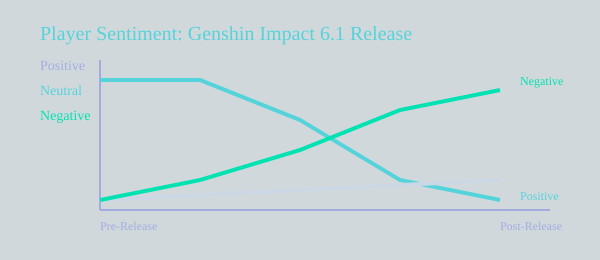
- Player sentiment nosedive: Pre-release, 90% of players were excited. Post-release, that number flipped—over 80% expressed disappointment or frustration.
Players summed it up best: “I was extremely excited for it… until I played it.” Instead of the creative sandbox they were promised, what they found felt restrictive, confusing, and heavily monetized. Many wondered why they’d bother with Miliastra Wonderland when Roblox and other platforms offered so much more freedom and fun. The feeling was so strong, some called it the “letdown of the century.”
What really stung was the sense of broken trust. HoYoVerse had built up expectations for months, only to deliver something that felt like a test of how much players would tolerate. The Miliastra Wonderland backlash wasn’t just about bugs or expensive skins—it was about the entire foundation of the new mode, from its confusing gacha systems to how it respected (or didn’t respect) your time.
“The community realized very quickly that this was not the creative sandbox they were sold.”
With the Genshin Impact 6.1 update, optimism was crushed by player dissatisfaction. The new features didn’t just fall short—they shook the community’s faith in HoYoVerse’s promises for future updates.
2. The Monetization Maze: Shell Games, Currency Conundrums, and Psychological Traps
If you’ve spent any time in Miliastra Wonderland, you’ve probably felt it: the monetization system isn’t just complicated—it’s downright confusing. Genshin Impact’s monetization strategies have always leaned heavily on the gacha system, but Miliastra Wonderland’s approach takes things to a new, frustrating level. Let’s break down why so many players are calling out Miliastra Wonderland monetization issues and how these systems feel almost hostile to your time—and your wallet.
Three-Tier Currency Shell Game
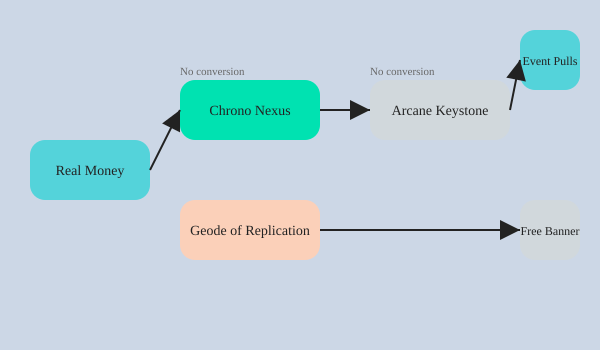
To access the premium parts of Miliastra Wonderland, you can’t just buy what you want. Instead, you’re forced through a dizzying three-step process:
- Real Money → Chrono Nexus: First, you exchange your actual cash for a premium currency called Chrono Nexus. This is similar to Genshin’s Genesis Crystals, but with a catch—there’s no initial top-up bonus here, so you’re getting less value from the start.
- Chrono Nexus → Arcane Keystones: Next, you convert Chrono Nexus into Arcane Keystones. These are what you actually use to pull on the limited-time event banners. Why add this extra step? It’s a classic psychological trick, creating distance between you and your money. You’re not spending $1.97 per pull—you’re spending 160 Arcane Keystones, which just doesn’t feel the same.
- Arcane Keystones → Event Pulls: Finally, you use Arcane Keystones for your gacha pulls, hoping for that rare cosmetic or outfit. But the odds are stacked against you, and the costs add up fast. Players calculated that it takes a minimum of $138 to guarantee a single five-star outfit.
Obfuscated Currency Descriptions
One of the most frustrating aspects of Miliastra Wonderland monetization is how vague the currency descriptions are. Instead of clear, straightforward explanations, you get poetic, lore-heavy text. For example, the Arcane Keystone is described as a “repository of brilliant hues and myriad story sealed”—nowhere does it say, “purchased with Chrono Nexus, used for event pulls.” This isn’t an accident. It’s designed to confuse, especially for new or younger players.
Free Currency? Not Really
There’s a third currency: Geode of Replication. This is what you earn by playing the game, and it’s only usable on the free, standard banner. Here’s the kicker—there’s no way to convert Geodes into Arcane Keystones. This breaks the expectation set by the main game, where grinding can eventually net you premium rewards. In Miliastra Wonderland, the paywall is absolute. As one frustrated player put it:
“You’re selling an outfit for $150 with no way of farming the currency. Is kind of insane for Hoyoverse.”
Psychological Traps and Player Frustration
This multi-currency system isn’t just confusing—it’s psychologically manipulative. By making you jump through hoops, the system hides the true cost of participation. The lack of top-up bonuses, the identical pricing to Genesis Crystals, and the inability to grind for premium rewards all combine to make Miliastra Wonderland monetization issues a hot topic. Even sponsored creators missed these details, leaving many players feeling misled.
SVG Mind Map: Miliastra Wonderland Currency Flow
3. Sticker Shock: Does Cosmetic Pricing Cross the Line? (with Table)
If you’ve spent any time in Genshin Impact’s Miliastra Wonderland since the 6.1 update, you’ve probably felt it: that moment when the hype of new customization options crashes into the harsh reality of the Genshin Impact cosmetic pricing model. Even veteran gacha spenders are calling this system out, and for good reason—the numbers just don’t add up compared to industry standards or even player expectations.
Let’s break it down. To guarantee a single premium 5-star outfit through the new Genshin Impact banners (using the “hard pity” system), you’re looking at 70 pulls. At current rates, that’s about $138 USD—and that’s just for one outfit. Want the recolor or the special particle effect? You’ll need to pull for the same outfit again, meaning you’re spending another $138, for a total of $276 (or more, depending on luck). As one streamer put it:
“Your first $138 gets you the outfit. Your second $138 gets you a recolor, yippee.”
This isn’t just sticker shock—it’s a full-on wallet earthquake. Here’s a quick comparison table to put these prices in context:
| Item / Feature | Miliastra Wonderland Price | Industry/Community Comparison |
|---|---|---|
| 5-Star Outfit (Guaranteed via Banner) | $138 | $20–$40 (Other Gacha Games) |
| Recolor / Particle Effect (Duplicate Pull) | +$138 (Total $276) | Usually Included or $5–$15 |
| Basic Cosmetic (Blush, Eye Shape, Hairstyle) | $5+ per item | $1–$3 (Other Games/Mods) |
| Custom Mod Commission (PC) | N/A | $50–$120 (Full Set) |
The Genshin Impact gacha system explained in this mode is simple: you pay, you pull, you hope. But what isn’t so obvious is how the free and paid currencies are completely separate—there’s no way to grind out enough free currency for these premium items. By the time you realize this, you’re already invested, and that’s when the real costs hit.
What’s even more frustrating is how Miliastra Wonderland monetization locks recolors and minor effects behind full-cost duplicate pulls. If you want to change the color of your outfit or add a ghostly particle effect, you have to pull (and pay) all over again. Players are calling this “insulting value,” and it’s not hard to see why.
And it doesn’t stop at outfits. Basic customization features—like adding blush, changing eye shape, or unlocking new hairstyles—are all paywalled at around $5 or more each. For a mode that’s supposed to be about creativity and self-expression, this feels especially restrictive. Even worse, all outfits are gender-locked, meaning if you want the same look for both male and female mannequins, you’ll have to pay double. Set bonuses also punish mixing and matching, so if you want special effects, you’re forced to buy and equip the entire set—undermining the whole customization pitch.
Compared to other games and modding communities, where a full custom outfit might cost $50–$120 (and usually includes recolors), Genshin Impact’s pricing is way out of line. The community’s reaction? Shock, disappointment, and a growing sense that this is less about fun and more about squeezing every last dollar from players.
4. Wonderland or Wasteland? Why Gameplay Feels Hostile to Players
When Genshin Impact 6.1 introduced the Miliastra Wonderland gameplay mode, the community was buzzing with excitement. But as the hype faded, reality set in—and for many, it wasn’t the magical experience they’d hoped for. Instead, players found themselves facing a mode that felt more like a wasteland than a wonderland, with gameplay issues that left them frustrated and disappointed.
Unfinished and Buggy: The Core Gameplay Experience
Right from launch, Miliastra Wonderland gameplay was plagued by bugs and unfinished features. Reports of UI glitches, broken mechanics, and confusing menus flooded forums and social media. According to community data, bug reports increased five-fold after the 6.1 update, and sentiment ratings dropped by a staggering 80% in post-release polls. One player summed it up bluntly:
“Milli Astrow Wonderland is dogshit so far. It feels unfinished, UI is broken, games are hard to play.”
Many players felt that the mode simply didn’t meet the standards set by previous Genshin Impact updates. Even basic quality-of-life improvements seen elsewhere in the game were missing here, making the experience feel clunky and unrewarding.
Creativity Promised, Creativity Denied
Miliastra Wonderland was marketed as a creative, customizable mode. You’d expect to mix and match outfit pieces, right? Unfortunately, the reality is much more restrictive. If you spend premium currency on a five-star witch outfit, you might assume you can use the hat with a different top or swap out the bottoms for a new look. But the system punishes you for mixing main pieces. The special set bonuses—like unique entrance animations—only activate if you wear the main body pieces together. Swap out the top or bottom, and the effect vanishes.
This design choice directly contradicts the promise of customization. Instead of buying creative parts, players are essentially buying a single costume that only pretends to be modular. Accessories like hats or gloves can be swapped, but the main pieces are locked together if you want the full value of your purchase. For a mode that’s supposed to be about self-expression, this feels like a major letdown.
Hostile to Both Time and Wallet
Players have described Miliastra Wonderland gameplay as “actively hostile” to their time and intelligence. There’s no affordable monthly pass or steady progression system like the beloved Welkin Moon. Instead, premium rewards are locked behind expensive set bonuses and, to make matters worse, gender-locked banners. If you want that five-star witch outfit for both your male and female avatars, you’ll need to pull on separate banners—doubling the cost and frustration.
- No monthly pass: No affordable way to make steady progress.
- Gender-locked banners: Double the spending for the same outfit across avatars.
- Restrictive set bonuses: Full value only if you wear the complete set together.
Gameplay That Fails to Reward
At its core, Miliastra Wonderland gameplay just isn’t as rewarding as other Genshin Impact modes. The bugs, lack of polish, and restrictive design choices make it feel like an afterthought. Players expected a fun, creative playground—instead, they got a mode that seems to punish experimentation and nickel-and-dime their wallets.
With so many Genshin Impact gameplay bugs and Miliastra Wonderland gameplay issues, it’s no wonder the community has pushed back hard. The update backlash is real, and unless HoYoVerse listens to feedback and makes real changes, Wonderland risks becoming a wasteland for good.
5. Free-to-Play Fantasy? The Real Odds and Obstacles (with Table & Chart)
If you’re a Genshin Impact player hoping to enjoy Miliastra Wonderland without spending money, the reality can feel pretty harsh. The Genshin Impact free-to-play experience in version 6.1 has left many players frustrated, especially when it comes to the gacha system and banner rewards. Let’s break down exactly why the odds and obstacles are turning hype into backlash.
F2P Players: Funneled Into the ‘Standard Ode’ Banner
As a free-to-play (F2P) player, you’re not even in the same lane as paying players. Instead, you’re channeled into the so-called ‘standard ode’ banner. This is where you spend your free Geode of Replication currency. But don’t expect to snag a five-star outfit here—the best you can hope for is a four-star cosmetic. On paper, that might sound fair: play for free, get a four-star. But the reality is far from generous.
Four-Star Outfits: Same Odds as Five-Stars, Worse Rewards
Here’s where the Genshin Impact gacha system really stings. The base chance of pulling a four-star outfit from the F2P banner is just 0.6% per pull. That’s the same probability as pulling a five-star on the main paid banner. But instead of a top-tier reward, you’re grinding for something much less valuable.
| Banner Type | Top Reward | Base Pull Chance | Pity Counter | Cost (USD) |
|---|---|---|---|---|
| F2P Standard Ode | 4-Star Outfit (Blueprint) | 0.6% | 70 pulls | Free (with grind) |
| Paid Banner | 5-Star Cosmetic | 0.6% | 70 pulls | $138 |
Pity System: 70 Pulls for a Four-Star, But No Guarantees
Think you can just grind your way to a guaranteed four-star? Not so fast. The pity counter for the F2P banner is set at a steep 70 pulls—the same as the paid banner, but for a much lower-value item. And it gets worse: even after 70 pulls, you’re not guaranteed the specific outfit you want. The system prioritizes items you’ve obtained less than twice, but duplicates are still possible. There’s no guarantee you won’t get a repeat.
Winning Isn’t Really Winning: The Blueprint Problem
Let’s say you finally hit that 70-pull pity. Do you get to use your new outfit right away? Unfortunately, no. As many players have pointed out, “When you ‘win’ that four-star item, you don’t get the item, you get a cosmetic catalog. It is a recipe, a blueprint.” You have to pull the outfit again—or gather more resources—to actually craft and use it. This extra step feels like a slap in the face for F2P players who’ve already spent weeks grinding.
Chart: F2P Pull Odds vs. Paid Banner

Why F2P Value Feels So Poor
- No way to grind into premium (paid) pools.
- Four-star drop chance is extremely low for F2P.
- Pity system is slow and doesn’t guarantee the item you want.
- Winning a blueprint, not the actual cosmetic, adds another frustrating layer.
Compared to similar systems in other games, the Genshin Impact banners for F2P players offer extremely poor value. It’s no wonder the Miliastra Wonderland backlash is growing—many feel the system is “actively hostile” and even “insulting” to non-spenders. The odds and reward structure turn what should be a fun grind into a source of player dissatisfaction and frustration.
6. When a Wonderland Becomes a Warning: Community Unites Against Greed
If you’ve been anywhere near Genshin Impact forums, Reddit, or Twitter since the launch of Miliastra Wonderland, you’ve seen it: the backlash is everywhere. This isn’t the usual round of complaints about a weak banner or a buggy event. The Genshin Impact player dissatisfaction is louder, more unified, and more passionate than anything we’ve seen in years. It’s not just a few angry voices—this is a tidal wave of negative feedback, and it’s coming from every corner of the community.
Unprecedented Backlash: The Numbers Don’t Lie
Right after the 6.1 update, Genshin Impact player community reactions exploded. On Reddit and official forums, the volume of complaints and new posts shot up to five times the usual rate. Trending hashtags on Twitter and Discord discussions all echo the same frustration. Before release, excitement was sky-high, with about 90% of player sentiment positive. But within days, that flipped: now, over 80% of posts and reviews are negative. It’s not just free-to-play (F2P) players, either. Even ‘whales’—the high spenders who usually defend HoYoVerse—are speaking out or refusing to participate.
One Voice: Greed, Disrespect, and Broken Promises
What’s striking is how united the community is. Normally, Genshin Impact update backlash splits players into camps: F2P vs. spenders, casuals vs. hardcore, etc. But this time, everyone agrees. The most common words you’ll see are “greedy,” “anti-creative,” and “disrespectful.” Players feel like Miliastra Wonderland isn’t just a bad update—it’s a slap in the face. The monetization strategies are so aggressive and confusing that even veteran players are lost. As one popular quote making the rounds puts it:
‘This goes beyond expensive. It is an insulting value. This is legit, pure, unabashed greediness.’
People aren’t just upset about the cost. They’re angry that the mode was sold as a creative, player-driven wonderland, but turned out to be a convoluted, paywalled system that punishes creativity. The mode’s design feels like it was made to test how much frustration and confusion players would tolerate before walking away.
Even the Whales Are Out
Perhaps the most telling sign of the Miliastra Wonderland backlash is that even the game’s biggest spenders are saying “enough.” On forums and social media, you’ll find posts from players who’ve spent thousands on Genshin Impact, now refusing to touch the new mode. Some are even warning others not to spend, calling it a “trap” and comparing it to infamous monetization disasters in gaming history.
A Critical Warning for Live Service Games
This isn’t just another bump in the road for Genshin Impact. The backlash to Miliastra Wonderland transcends the usual player divides and unites the entire community around a clear message: this is not okay. The sheer scale and intensity of the response is a warning—not just to HoYoVerse, but to every live service game out there. Players are demanding fairer, more transparent systems, and they’re not afraid to speak with one voice when those expectations are shattered.
7. Out of the Rabbit Hole: How to Fix Wonderland (& Lessons for Gamers Everywhere)
If you’re part of the Genshin Impact player community, you know the launch of Miliastra Wonderland was supposed to be a dream come true. Instead, it turned into a cautionary tale—one that’s packed with lessons for both developers and players. So, how do we climb out of this rabbit hole? Let’s break down what needs to change, and what every gamer (and game studio) can learn from this.
Transparency: Clear, Honest Communication Matters
First and foremost, transparency is everything. If HoYoVerse had been upfront about how Genshin Impact’s new features—especially Miliastra Wonderland’s monetization—actually worked, the backlash would have been softer. The community has seen HoYoVerse improve after criticism before, but this time, the confusion around currencies and rewards felt deliberate. Players want to know what they’re getting into. Clear patch notes, honest dev blogs, and even simple in-game explanations would go a long way.
Reward Real Creativity: Make UGC Open and Community-Driven
Miliastra Wonderland was hyped as a place for user-generated content (UGC), but the reality is, it feels locked down and paywalled. If you want players to be creative, you can’t nickel-and-dime them at every turn. Look at games like Roblox—part of their magic is that players can build, share, and play without constant reminders to spend. For Miliastra Wonderland gameplay to thrive, HoYoVerse needs to loosen the reins and let the community actually shape the experience.
Fairer F2P: Meaningful Rewards Through Gameplay
Right now, free-to-play (F2P) players are stuck grinding for a 0.6% chance at a four-star cosmetic, with no real path to the best rewards. That’s not just stingy—it’s actively discouraging. A healthier system would offer regular, achievable ways to earn cool cosmetics through gameplay, not just through your wallet. This isn’t just about generosity; it’s about respecting your players’ time and effort.
Simplify Currency: Fewer Steps, More Clarity
The current Genshin Impact monetization strategies in Wonderland are a maze of currencies: buy one, convert to another, then spend on a third. It’s confusing by design, and it’s time to stop the psychological tricks. One or two currencies, with clear explanations, would make spending feel less like a gamble and more like a choice. When players understand what they’re buying, trust goes up—and so does satisfaction.
Listen to Everyone: Whales and Newcomers Alike
A thriving game needs both big spenders and casual fans. Right now, neither group feels heard. Whales are frustrated by the lack of value, and newcomers are lost in the confusion. HoYoVerse should open genuine community channels—think AMAs, roadmap Q&As, or even creator summits. Invite feedback, show you’re listening, and act on what you learn. As one player put it,
‘If this is how things stay, Wonderland’s most lasting legacy will be as a cautionary tale.’
My Dream Fix: Real Collaboration and Overhaul
Imagine if HoYoVerse invited top creators and regular players to help redesign Miliastra Wonderland from the ground up. Open betas, transparent roadmaps, and real-time feedback could turn this mode into something truly special. The Genshin Impact player community is passionate and creative—let them help shape the future.
Reflecting on Miliastra Wonderland’s rocky start, it’s clear: honest communication, fair rewards, and genuine community involvement aren’t just fixes—they’re the foundation for any lasting, beloved game mode.
FAQ: Genshin Impact 6.1 Luna II & Miliastra Wonderland
When did Genshin Impact 6.1 Luna II release?
The Genshin Impact 6.1 update, featuring the highly anticipated Luna II and Miliastra Wonderland mode, officially launched on October 22, 2025. This was a major update that HoYoVerse hyped up as a creative breakthrough, promising new ways to play and customize your experience.
How much does it cost to guarantee a 5-star cosmetic in Miliastra Wonderland?
If you’re aiming for a guaranteed 5-star outfit in the Wonderland gacha system, the minimum cost is about $138 USD. This is based on the “hard pity” system, which guarantees a 5-star after 70 pulls. Each pull requires a paid currency called Arcane Keystone, which you can only get by first buying Chronicle Nexus with real money and then converting it. There’s no way to shortcut this process, and there’s no bonus for your first purchase, unlike the main game’s Genesis Crystals.
What’s the difference between free and paid banners in Wonderland?
Miliastra Wonderland splits its gacha banners into two: a paid banner and a free-to-play (F2P) banner. The paid banner uses Arcane Keystones (bought with real money) and offers exclusive 5-star cosmetics. The F2P banner uses Geode of Replication, a currency you earn by playing, but the best you can get here is a 4-star cosmetic. The odds are rough: the chance of pulling a 4-star is just 0.6%, and you need 70 pulls for a guaranteed 4-star. Even then, you only get a blueprint for the cosmetic, not the item itself.
Can players earn premium outfits through gameplay?
Unfortunately, no. Premium 5-star outfits are locked behind the paid banner and cannot be earned through regular gameplay or grinding. The currencies for free and paid banners are completely separate, and there’s no way to convert one into the other. This has been a major source of the Miliastra Wonderland backlash, as many players expected at least some path to earn premium cosmetics without spending real money.
Is Miliastra Wonderland still worth playing after the backlash?
That depends on what you’re looking for. If you’re a free-to-play player hoping for deep customization or a fair shot at premium outfits, the mode will likely feel unrewarding and even hostile. The monetization is aggressive, the odds are low, and the creative freedom is more limited than advertised. Even if you’re willing to spend, the high cost and lack of true modularity in outfits make the value questionable. For many, the Genshin Impact 6.1 update has become a cautionary tale about overhyped features and predatory gacha systems.
Was this update more buggy than usual?
Yes, the launch of Miliastra Wonderland was plagued with technical issues. Players reported broken UI, unfinished features, and confusing mechanics. Many felt the mode was rushed, with core gameplay elements and customization options feeling incomplete. Combined with the confusing gacha system and poor communication, this only fueled the community’s disappointment.
In the end, Genshin Impact 6.1’s Luna II and Miliastra Wonderland promised a creative wonderland but delivered a confusing, expensive, and buggy experience. The backlash is a clear sign that even a loyal community has its limits when hype meets harsh reality.
TL;DR: Genshin Impact 6.1’s Miliastra Wonderland update looked like a dream, but the reality? Monetization schemes, confusing design, and anti-player decisions left the community reeling. The backlash isn’t a blip—it’s a red flag for how games treat their most loyal fans.
Post a Comment