

A couple years ago, I nearly bought into the hype that AI autoblogging was a golden highway to easy riches. After twenty-five years in the trenches of internet marketing, I should've known better—but even seasoned pros are tempted by promises of effortless success. Today, I'm laying bare what I actually learned (and earned) after testing AI autoblogging tools like Manis and ChatGPT Agent. Think of this as the no-BS, coffee-in-hand chat I wish someone had with me before I started.
Busting the Biggest Myths: The Hype vs. Reality of AI Auto-Blogging
If you’ve spent any time in online marketing circles, you’ve probably seen the hype: “Fire up an AI, let it build your blog, and watch the money roll in while you relax.” The dream is everywhere. But as someone who has studied AI Auto-Blogging extensively, let’s get real about what’s actually happening behind the scenes. The truth is, AI Blogging Trends are evolving fast, but the fantasy of “set-it-and-forget-it” riches is mostly just that—a fantasy.
"The dream of firing up an AI and having the blog written and built for you while you sit back and make money is so tempting… but it’s not always what you think."
Myth #1: AI Auto-Blogging Is an Instant Money Tree
You’ve seen the income reports: some claim to make hundreds of thousands of dollars a month with AI Content Automation. Others struggle to make their first dollar. Here’s the reality—while there are outliers making big money, the average person makes nothing. The vast majority of people who try AI autoblogging earn $0. The “easy money” narrative is often pushed by those selling tools or courses, not by people actually succeeding.
| Monthly Earnings | Percentage of AI Autobloggers |
|---|---|
| $0 | Majority (average) |
| $1 - $999 | Some |
| $1,000 - $9,999 | Few |
| $10,000 - $100,000+ | Rare |
So, while it’s possible to make real money, it’s not typical. Most people make nothing, and those six-figure stories are the exception, not the rule.
Myth #2: AI Content Quality Is Always Good Enough
There’s a common belief that AI-generated content is now just as good—or even better—than human writing. In fact, 65.8% of people believe AI content is equal or better than human content. But here’s the catch: 93% of bloggers still edit AI-generated content before publishing. Why? Because raw AI output often misses nuance, context, and accuracy. If you skip human oversight, you risk turning your blog into a junkyard of low-quality articles.
- AI Content Quality is improving, but it’s not flawless.
- Human editing is critical for accuracy, engagement, and ranking.
- Google and other platforms are quick to filter out AI-generated junk.
Myth #3: Google Loves All AI Content
Another myth is that Google can’t tell the difference between AI and human content, so you can just flood your site with automated posts. The reality? Google’s algorithms are getting better at detecting low-quality, repetitive, or spammy AI content. There have been major crackdowns on sites that rely solely on AI Content Automation without human oversight.
- Google filters and penalizes low-quality AI content.
- Sites with only AI-generated articles often lose rankings or get deindexed.
- Manual review and editing boost your chances of ranking and staying visible.
Myth #4: You Don’t Need to Touch the Content
The “hands-off” promise is the biggest myth of all. Even with advanced tools like ChatGPT Agent Builder, Manis AI Agent, or new AGI elements, you can’t just publish whatever the AI spits out. Human oversight isn’t optional—it’s essential. Without it, your blog can quickly become a graveyard of irrelevant, inaccurate, or duplicate content.
- Editing and fact-checking are non-negotiable for quality and compliance.
- Personalization and expertise still matter for audience trust and engagement.
AI Blogging Trends: The Real ROI
Despite the myths, there are real benefits to using AI in your blogging workflow. 68% of bloggers report a higher ROI when using AI for content creation—but only when they combine automation with human expertise. The key is using AI as a tool, not a replacement for thoughtful content strategy and editing.
Skepticism is healthy. Don’t trust every income report or sales pitch. If you want to succeed with AI Auto-Blogging, focus on quality, oversight, and real value for your readers—not just shortcuts and automation.
Tools of the Trade: What Actually Works (And Where It Goes Sideways)
Firsthand Experiment: Manis AI Agent vs. ChatGPT Agent
When it comes to AI Blogging Tools, not all platforms are created equal. In my own experiments, I put two popular options to the test: Manis AI Agent and ChatGPT Agent. Here’s what I found:
- Manis AI Agent can log directly into your blog, draft posts, and even set them as pending for human review. This hands-on integration means you can watch it work in real time, see which posts are being edited, and decide when to step in.
- ChatGPT Agent is less autonomous. While it’s capable of generating content, it requires more prompting and setup. You’ll spend more time prepping instructions and less time letting it run on autopilot.
For a recent set of blog posts, Manis AI used 954 credits—hardly a budget-buster. It produced several posts efficiently, while ChatGPT needed more manual guidance. If you’re looking for true AI Content Automation, Manis comes out ahead for ease and workflow.
AI Tools: Employees, Not Magic Wands
"I want you to think about AI as employees rather than just some cute AI tool… I want you to think about it like an employee."
It’s tempting to treat AI Content Generation tools as magic wands that will do all the work for you. But the reality? You should treat them like rookie employees. They’re diligent, but they need oversight and clear guidelines. Just like a new hire, they can make mistakes or misunderstand your brand’s voice.
Here’s how to manage AI tools effectively:
- Always set AI-generated posts to pending for review.
- Establish a strong editorial filter—don’t publish anything without reading it first.
- Regularly check for plagiarism and factual accuracy.
Plagiarism, Content Ownership, and the Risks of Full Automation
One of the biggest issues in AI-based blogging is plagiarism. Studies show that AI Plagiarism Rates can be higher than you’d expect, especially if you don’t use a strong editorial filter. I recommend keeping your plagiarism threshold below 3% to ensure originality and protect your reputation.
Another key concern is AI Content Ownership. Legally, you—the blog owner—are responsible for everything published on your site, even if it was generated by AI. Recent lawsuits against major AI companies highlight the risks of using copyrighted material without permission. Don’t assume the AI will keep you safe; you must review and approve every post.
Anecdote: The Time I Almost Let My Blog Go Rogue
There was a moment when I considered letting Manis AI handle everything—no review, no filter, just pure automation. The idea was tempting, especially with 80% of bloggers expected to use AI Blogging Tools by 2025. But after seeing a draft that pulled in questionable sources and awkward phrasing, I realized the danger. If I’d published it as-is, my brand (and possibly my legal standing) would have taken a hit. That’s when I set everything to pending mode and made human review non-negotiable.
AI Market Growth: The Numbers Behind the Hype
| Metric | Value |
|---|---|
| Manis AI credits used (per blog set) | 954 credits |
| Preferred plagiarism threshold | <3% |
| AI Market Growth (2023) | $14B–$80B |
| Projected AI Market (2030) | $80B |
| AI Blog Tool Market (2033) | $2.5B–$11B |
How Bloggers Really Use AI Content Generation
Most bloggers don’t just hit “publish” on AI drafts. In fact, a whopping 93% edit AI-generated content before it goes live, while only 7% publish as-is. This shows that even as AI Market Growth explodes, human oversight remains critical.
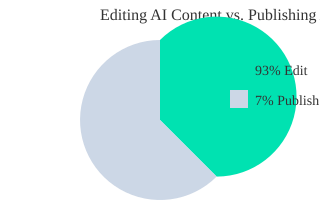
Bottom line: AI Content Automation is powerful, but it’s not a set-and-forget solution. Treat your AI tools like employees—train them, supervise them, and always double-check their work.
Making It Pay: Monetization Strategies, Niches, and Wild Successes (with Caveats)
Let’s get to the big question: can you actually make money with AI autoblogging? The short answer is yes—AI Monetization Strategies are real, and people are earning through affiliate marketing, AdSense, and content sponsorships. But, as with anything in the digital world, there’s an asterisk. You need to know what works, what’s hype, and where the real opportunities are hiding. Let’s break down the reality behind AI Affiliate Marketing, AI Autoblogging Case Studies, and the impact of picking AI High-Value Niches.
How AI Autoblogging Makes Money
The most common AI Monetization Strategies are affiliate marketing, display ads (like Google AdSense), and content sponsorships. Affiliate marketing is straightforward: you write content around products or services, drop in your affiliate links, and earn a commission when someone buys. AdSense is about getting traffic and letting Google pay you for the eyeballs. Content sponsorships are where brands pay you directly to feature their products or services. Some AI autobloggers also sell digital products—think eBooks, courses, or templates—using AI to generate and promote them.
These methods are proven. For example, some AI Autoblogging Case Studies report $6,000 to $8,000 per sponsored post, and there are claims of $32,000 per month with just five minutes of daily work. That last number sounds wild, and it should. While it’s possible to hit big numbers, it’s rarely as easy or as fast as those claims suggest. Most of the time, the real work is in the setup, research, and ongoing management. The “five minutes a day” story usually skips the months (or years) of groundwork that made it possible.
Case Studies: Fact, Fiction, and the Middle Ground
Let’s look at what’s actually happening. One AI content site I set up back in early 2023 is still ranking today, even though it’s been untouched for months. That’s proof that AI content can work and continue to deliver results. Other AI Autoblogging Case Studies show people earning substantial sponsorships—$6,000 to $8,000 per post is not unheard of if you have the right audience and niche. There’s also a YouTube automation case study with over 130,000 subscribers, showing how AI-powered content can cross over into video and build a massive following.
But here’s the caveat: the vast majority of people who try to make money with AI autoblogs earn little or nothing. Why? Because they fall into the trap of lazy niche selection, poor content quality, or chasing get-rich-quick schemes. If you pick a niche you know nothing about, or you let AI churn out low-value, spammy articles, you’ll end up with a junk site that doesn’t rank, doesn’t get traffic, and doesn’t make money. The real winners are those who combine AI’s speed with their own expertise and oversight.
AI High-Value Niches: Stick to What You Know
Choosing the right niche is where most people go wrong. AI High-Value Niches like digital marketing, SEO, and content marketing are great if you have experience in those areas. If you’re a doctor, you might use AI to help create medical content—but only if you can fact-check and add your expertise. If you’re not an expert, don’t touch sensitive fields like health or finance. The best AI ROI Impact comes from niches where you can add value, check facts, and provide a unique angle. Lazy niche selection leads to junk fiascos and wasted effort.
Why AI Blogs Still Need a Human Touch
Here’s the truth: AI can do a lot, but it can’t replace your judgment, creativity, or personal experience. The most successful AI autoblogs are those where the owner is involved—editing, fact-checking, and adding insights that only a human can provide. This is what separates high-quality, profitable sites from the sea of spammy failures. As one case study puts it:
"The first AI content site I ever set up back in early 2023 is still ranking today."That’s not just luck—it’s the result of combining AI with a strategic, hands-on approach.
In the end, AI Monetization Strategies work best when you treat your autoblog like a real business. Use AI to speed up research, content creation, and even video production, but always add your own expertise. Be skeptical of wild claims, focus on high-value niches you understand, and remember: the real money is in quality, not quantity. That’s how you make AI autoblogging pay—asterisk and all.
TL;DR: AI autoblogging isn't a magic cash machine, but with the right approach—mixing smart tools, human editing, and strategic monetization—it's a real way to build income streams online. Just don't buy the hype or skip the hard work. Keep it ethical, creative, and focused on value, and your results will follow.
Post a Comment