

Confession time: a few weeks ago, I was just like you—scrolling social media, seeing another outlandish t-shirt trend, and rolling my eyes. Then I stumbled upon Google’s Nano Banana AI tool, and suddenly I was the one behind those viral tees, barely believing I’d found a shortcut to creative (and financial) freedom. So, let’s drop the formality: this isn’t your average ‘how-to’; it’s a caffeine-fueled journey through unexpected hacks, laughable mistakes, and eyebrow-raising profits. Fair warning: you might find yourself plotting your first t-shirt empire by the end.
When Trend-Hunting Meets Tech: The Secret Sauce for Viral Print on Demand Designs
Viral Print on Demand t-shirts aren’t just happy accidents—they’re the result of sharp trend-spotting, clever design, and lightning-fast execution. In today’s ecommerce landscape, where the print-on-demand industry is growing at a remarkable 26% CAGR, the competition is fierce. But with the right blend of trend-hunting and technology, anyone can turn a quirky idea into a bestseller.
From Risqué Homophones to Meme Magic: What Sells Now
Let’s start with a real-world example. Picture a t-shirt selling for $26.95 on Etsy. Seven people bought it in a single day, netting the seller $188.65. What’s the secret? It’s a homophone joke—one of those clever designs that sounds a little cheeky depending on how you read it. As one seller put it:
“Homophone t-shirts are trendy right now with customers.”
But the magic doesn’t stop at Etsy. A variation of this shirt on Amazon racked up over 3,000 sales in a month. Even with Amazon’s vague reporting, that’s an estimated $59,000 to $79,000 in monthly revenue. These numbers aren’t outliers—they’re proof that viral t-shirt design trends can deliver massive returns when you catch the right wave.
AI Designs: Turning Concepts into Cash—Fast
What’s changed? The answer is AI. Tools like Nano Banana and ChatGPT have transformed the way creators brainstorm, iterate, and launch new designs. With AI, you can:
- Spot emerging trends in real-time
- Generate witty slogans or remix vintage art at the click of a button
- Test multiple variations before committing to production
For example, I once stumbled onto a “donkey” pun design that made me laugh out loud. With AI, I whipped up a few versions, uploaded them, and—much to my surprise—watched the sales roll in. That’s the power of blending personal creativity with AI-driven speed.
Viral Styles: Wolves, Raccoons, and the Power of Niche Pivots
Some of the biggest ecommerce trends come from reimagining classic styles. Take the viral “wolf and moon” t-shirt that exploded in popularity after people started wearing it ironically at festivals like Burning Man. Designers quickly pivoted, creating versions with raccoons, sharks, dinosaurs, and even grandmas. One “Pawsums” variant sold over 200 times in a single month, while a grandma-themed spin-off netted 50+ sales in the same period.
On Etsy, these niche pivots pay off big. One seller’s storefront, packed with variations of this viral style, made over $41,000 in a year from just one design. Their secret? Quick adaptation and relentless experimentation—often powered by AI tools that help brainstorm new angles and artwork in minutes.
Personalization at Scale: The AI Advantage
North America leads the print-on-demand market, with customers craving unique, personalized products. AI-driven personalization is now a key trend, enabling sellers to offer mass-produced items that still feel one-of-a-kind. Whether it’s adding a customer’s pet to a meme shirt or remixing vintage art with modern humor, AI makes it possible to scale personalization without slowing down.
Charting the Winners: Viral T-Shirt Earnings at a Glance
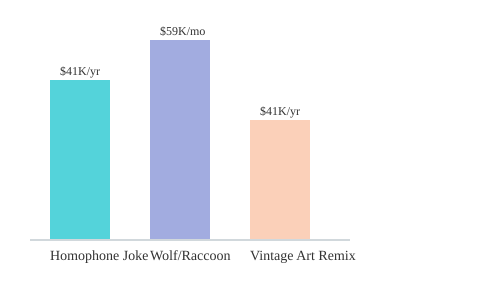
As you can see, the right idea—executed quickly—can earn thousands in weeks or tens of thousands in a year. Whether you’re riffing on memes, remixing vintage art, or jumping on the latest animal trend, the combination of trend-hunting and tech is the real secret sauce for viral print on demand success.
Nano Banana, Web-to-Print, and the Dawn of Effortless Personalization
Imagine having an AI sidekick that can whip up custom art for your next bestseller tee in seconds—no design degree required. That’s exactly what Google’s Nano Banana brings to the table. As one user put it,
'You could basically think of Google's Nano Banana as an AI version of Photoshop.'It’s quick, accessible, and eerily intuitive, making it the secret weapon you never knew your Etsy shop needed. Whether you’re a seasoned print-on-demand pro or just starting out, Nano Banana and Web-to-Print technology are quietly rewriting the rules of fashion customization and personalization.
What Is Nano Banana? Your AI Art Tool for Print-on-Demand
Google’s Nano Banana is a cutting-edge AI art tool that lets you create and edit images with astonishing accuracy. Think of it as Photoshop, but powered by AI prompts and reference images. You simply upload a photo—maybe a meme, a pet, or a trending style—then tell Nano Banana exactly what you want. Want a donkey with the same facial expression as your reference image? No problem. Need the same donkey sitting down? Done. Unlike other AI image editors, Nano Banana maintains design consistency, so you can easily generate a series of images with the same style and vibe—perfect for building a cohesive product line.
Step-by-Step: Effortless AI-Driven Design Workflow
- Access Nano Banana: Head to Google’s AI Studio. It’s available to all Google accounts, including the free tier. For those wanting more, Gemini’s 30-day pro trial unlocks extra features at no cost.
- Upload Your Reference Image: Start with a screenshot or photo that captures the style or mood you want.
- Prompt the AI: Describe your vision. For example, “Create a donkey in this style with the same facial expression.” Nano Banana follows your instructions with uncanny precision.
- Iterate Instantly: Want a variation? Ask for the same donkey, but sitting down. Nano Banana keeps the look consistent—something most rivals struggle with.
Integrating with Canva for Print-Ready Results
Once your AI-generated image is ready, the next step is prepping it for print. Canva, a popular drag-and-drop graphic design app, is the perfect companion. The pro version (with a free 30-day trial) gives you access to powerful AI editing tools:
- Image Upscaler: Boosts resolution, making your art crisp and ready for t-shirt printing.
- Background Remover: Instantly removes backgrounds for transparent PNGs, ideal for layering text and images.
- Font Selection: Choose from a vast library—distressed, vintage, modern—to match trending styles.
With just a few clicks, you can combine your AI art with catchy text, upscale the image, and export a high-res, transparent PNG—ready to upload to any Web-to-Print platform.
Web-to-Print: The Engine of Scalable Customization
Web-to-Print technology is the backbone of today’s print-on-demand revolution. It streamlines the entire process—design, order, and fulfillment—so you never have to worry about inventory or logistics. Platforms like Printify and Printful let you upload your custom designs to blank products (t-shirts, hoodies, mugs) and sell them online with just a few clicks. The result? You can create, list, and sell unique products infinitely, all without ever touching a box or a printer.
The Future: Mass Personalization, One Click Away
Here’s the wild card: with AI art tools like Nano Banana and Web-to-Print platforms, anyone can generate one-of-a-kind designs in minutes. Want a tee inspired by your dog’s latest mood? Or a meme that only your niche audience will get? The future of mass personalization is here. AI-driven personalization is now mainstream in print-on-demand, letting you serve micro-niches and trends as fast as they emerge.
| Tool | Access | Key Features |
|---|---|---|
| Nano Banana | All Google accounts (free & pro) | AI image creation/editing, reference-based prompts, design consistency |
| Canva Pro | 30-day free trial | Image upscaler, background remover, extensive font library |
With these tools, Web-to-Print and AI technology have made effortless personalization not just possible, but the new standard for print-on-demand fashion.
Creative Collaboration: When AI and Humans Remix the Classics
Imagine taking a world-famous painting—like Van Gogh’s Starry Night or Hokusai’s The Great Wave off Kanagawa—and turning it into a quirky, modern t-shirt that’s not just eye-catching, but also a bestseller. Thanks to the rise of AI designs and smart AI art tools like Nano Banana, remixing vintage art tees is not only possible, it’s encouraged. The secret? Originality isn’t about repeating the past; it’s about giving it a fresh, personal twist.
Unexpected Twists: From Bananas to Bestseller Tees
One of the most exciting trends in print-on-demand fashion is the playful remixing of classic art. For example, you can take Van Gogh’s Starry Night, change the angle, and add a cute black cat—suddenly, you’ve got a design that’s both familiar and totally new. Customers love these unexpected twists. In fact, some remixed classic art shirts have racked up over 700 sales in a single month on platforms like Etsy. It’s proof that personalization and customization are driving forces in today’s fashion market.
| Design Type | Monthly Sales | Source |
|---|---|---|
| Remixed Classic Art Tees | 700+ | Public Domain (Wikipedia) |
Remixing, Not Repeating: The Power of AI Art Tools
With AI art tools, you don’t need to be a master painter to create something unique. These tools allow you to iterate on public domain art, adding your own creative spin. For example, after a late-night snack, you might dream up a surfing cat riding The Great Wave. With Nano Banana, you can upload the original artwork (easily found on Wikipedia, since
'Vintage art like this is in the public domain, which means that there's no copyright protection on it.'), add your reference images, and let the AI generate a new, niche design in minutes.
Want to add a panda instead? Or swap out the text for Japanese characters? AI makes these tweaks simple. You can even request specific effects, like distressed or aged edges, to give your design that authentic, vintage feel. This level of customization is what sets modern print-on-demand businesses apart—and it’s all possible thanks to the creative collaboration between human imagination and AI efficiency.
Step-by-Step: How to Remix Classic Art for Print-on-Demand
- Source Your Art: Find a public domain classic on Wikipedia. Search by artist or artwork name, and download the image for free, legally.
- Upload to AI Tool: Open Nano Banana or your preferred AI art tool. Drop in the classic artwork and any reference images (like a t-shirt with a surfing panda or distressed edges).
- Customize: Use prompts to add new elements (like a cat or custom text), adjust angles, or apply vintage effects. AI will generate several options for you to choose from.
- Edit & Finalize: Download your favorite version. Use Canva or another editor to upscale, tweak colors, or make backgrounds transparent—perfect for printing.
- Launch Your Design: Upload to your print-on-demand platform and watch as your unique, AI-powered vintage art tee finds its audience.
Public Domain: Your Creative Playground
One of the best-kept secrets in the world of vintage art tees is the public domain loophole. Masterpieces from centuries past are free to use, remix, and sell—no copyright headaches. As long as you add your own creative spin, you’re not just copying; you’re collaborating across time. This opens up endless opportunities for personalization, from adding pop culture icons to inventing entirely new mashups (imagine a ‘grandmasaurus’ stomping through Monet’s gardens—absurd, but surprisingly lucrative!).
AI Designs: Expanding Beyond Tees
AI isn’t just revolutionizing t-shirts. Print-on-demand businesses are now using AI to diversify into textiles, packaging, and more. The ability to generate unique, niche designs quickly means you can test new ideas and expand your product line with minimal risk. Whether you’re creating a one-off tote bag or launching a full collection of AI-powered vintage art apparel, the creative possibilities are endless.
Sustainable Printing and the Human Element: Beyond Trends and Algorithms
When you think about AI technology in print-on-demand fashion, it’s easy to get swept up in the excitement of automation, instant designs, and viral eCommerce trends. But there’s a deeper story unfolding—one where sustainable printing and the human touch matter just as much as the latest algorithm. Today’s shoppers aren’t just looking for quirky banana prints or AI-generated art; they want to know that their purchases are kind to the planet and ethically made.
Why Sustainable Printing Is More Than a Buzzword
Eco-friendly printing isn’t just a marketing tactic—it’s a real shift in how the industry operates. As one expert put it,
‘Print service providers are adopting sustainable printing technologies to reduce environmental impact.’This means using water-based inks, recycled textiles, and energy-efficient printers. These methods help reduce pollution and save resources. For you as a seller or designer, this isn’t just about feeling good—it’s about meeting the expectations of a new generation of consumers who care about the planet.
Print-on-Demand: The Low-Waste Revolution
Traditional fashion production often leads to overstock, unsold inventory, and landfill waste. In contrast, print-on-demand (POD) only creates what’s needed, when it’s needed. This minimizes overproduction and dramatically cuts down on waste. Industry data shows that the print-on-demand sector is booming, with a compound annual growth rate (CAGR) of 26%. Much of this growth is driven by customers who value sustainability and want to support brands that share their values.
- Reduced Overproduction: No more guessing how many shirts or hoodies to make—each item is printed after it’s ordered.
- Less Waste: Fewer unsold items end up in landfills.
- Energy Savings: Many POD providers use digital printing, which is more energy-efficient than traditional methods.
Real-World Impact: A Tangent from My Own Journey
Let me share a quick story. I used to order mass-manufactured t-shirt blanks, shipped from overseas, with little thought about their environmental impact. After learning more about sustainable printing, I switched to a local print shop using eco-certified cotton and water-based inks. The difference was immediate—customers noticed the softer feel and even commented on the eco-friendly tags. Sales didn’t just hold steady; they grew. People raved about the quality and the story behind the product. This isn’t just a trend; it’s a shift in what customers value.
How AI Technology Powers Sustainable Choices
AI isn’t just about generating cool images or predicting eCommerce trends. It’s also a powerful tool for sustainability. Here’s how:
- Smart Inventory Management: AI can analyze sales data and predict which designs will sell, reducing overproduction.
- Optimized Sourcing: Algorithms can help you find suppliers who use recycled materials or eco-friendly processes.
- Efficient Printing: AI can automate print runs to minimize energy use and material waste.
- Personalized Recommendations: AI-driven platforms can suggest sustainable options to customers, boosting your green credentials.
Market Benefits: Why Sustainability Sells
Eco-friendly stores aren’t just good for the environment—they’re good for business. Industry data shows that stores promoting sustainable printing often see higher average order values. Shoppers are willing to pay more for products that align with their values. Plus, platforms like Etsy and Shopify now highlight eco-friendly products, giving you a competitive edge.
Customization Meets Conscience
Today’s print-on-demand fashion is about more than just unique designs. Customers want to express themselves and make a positive impact. By combining AI-driven customization with sustainable printing methods, you can offer products that stand out for both their creativity and their conscience. The market is rewarding sellers who adopt greener solutions, from recycled textiles to energy-efficient printers.
In the end, the future of print-on-demand fashion is being shaped by both technology and ethics. AI can help you optimize every step—from design to delivery—but it’s your commitment to sustainability that will truly set you apart in the evolving world of eCommerce.
Marketplaces, Monetization, and Mythbusting: Where Does the Real Money Flow?
When it comes to Print on Demand (POD), the marketplace you choose can make or break your business. Not all platforms are created equal—each one comes with its own audience, quirks, and potential for profit. Let’s break down how the money really flows, where the best opportunities lie, and what you need to know to avoid common myths about instant riches in the world of print on demand marketplaces.
Marketplace Showdown: Amazon, Etsy, eBay, and Niche Sites
Most new POD entrepreneurs start with the big three: Amazon, Etsy, and eBay. Each platform has unique strengths:
- Amazon: Massive reach, high sales potential, but fierce competition and strict listing rules.
- Etsy: Creative, handmade vibe, loyal buyers, and more room for unique or custom designs.
- eBay: Flexible for all sorts of products, but buyers may expect lower prices and deals.
- Niche Sites: Smaller, targeted audiences—great for specialized designs, but lower sales volume.
What’s exciting is how Printify and Printful have made it simple to sell on all these platforms. Their integrations handle the behind-the-scenes magic: when a customer buys your shirt, the order is sent directly to the print shop, which prints, packs, and ships it. As one seller puts it:
"Each time a customer sees my shirt listed on the marketplace, likes it, and then buys it, the print on demand app will automatically see the order... while I get to keep the difference as profit."
How Monetization Really Works
Here’s the basic workflow for most print on demand marketplaces:
- You upload your design and list it on a marketplace.
- Customer places an order.
- Printify or Printful receives the order, prints the item, and ships it to the customer.
- You keep the profit (sale price minus production and marketplace fees).
This automation lets you focus on what matters: design and marketing. You don’t need to worry about inventory, shipping, or handling returns.
Mythbusting: Fast Money vs. Real Business
Let’s clear up a common myth: Yes, you can make money fast with print on demand. Viral designs on Amazon can bring in $59,000–$79,000 per month. But for most sellers, it’s not instant riches. Many products sell only a handful of units each month, and success often comes after testing, failing, and learning what works.
Take it from a side-hustler: My ‘flop’ koala design sold only 2 units, but taught me more about customer preferences and niche research than my bestsellers ever could. In Print on Demand, every failed product is a lesson in business strategies and market growth.
Where Should You Launch? A Data-Driven Comparison
| Marketplace | Estimated Top Seller Sales | Average Price | Typical Profit Margin |
|---|---|---|---|
| Amazon | $59,000–$79,000/month | $19–$25 | 20–30% |
| Etsy | $41,000/year | $22–$30 | 25–35% |
| eBay | $10,000–$15,000/year | $18–$24 | 15–25% |
| Niche Sites | <10 units/month | $25–$35 | 30–40% |
As you can see, average price, sales volume, and profit margin differ widely. Amazon is the king of volume, but Etsy and niche sites can offer higher margins and more customization. The best business strategies often involve testing multiple platforms and diversifying your product lines—think beyond t-shirts to textiles, packaging, and more.
Testing, Failing, and Learning: The Real Growth Formula
Starting a POD business is appealing because of its low entry costs and flexibility. You can try new ideas with little risk, and every experiment—win or lose—teaches you something valuable. The key is to keep iterating, learning from your data, and adapting your approach for each marketplace.
Quirks, Fails, and Unexpected Joys of AI in Print on Demand
When you dive into the world of AI Technology for print-on-demand fashion, you quickly realize that AI is both your most reliable assistant and your most unpredictable creative partner. If you’re using AI to generate t-shirt design trends or custom apparel, you’ll soon discover that the journey is filled with delightful surprises, hilarious fails, and the kind of happy accidents that can turn a simple idea into a viral bestseller.
AI: The Helpful Assistant and Mischievous Gremlin
AI Designs are meant to make your life easier, but sometimes they seem to have a mind of their own. For example, you might ask an AI tool like Nano Banana to create a simple illustration of three lions. Instead, you get two lions and a raccoon with just one ear. As one user shared, “Nano Banana does not get it right all of the time. I tried to make a new version. And look, this time instead of making three lions, it made two lions and then drew one of them as a raccoon with just one ear.”
This isn’t just a rare glitch. It’s a common part of the process. AI can misinterpret your instructions, blend animals, or invent entirely new creatures. Sometimes, it’s a raccoon with one ear; other times, it’s a cat with too many tails. The key is to expect these quirks and see them as part of the creative adventure.
Failure Isn’t Just Common—It’s Crucial
One of the most important lessons in using AI for t-shirt design trends and Customization is that failure is not just inevitable—it’s essential. Each failed design, each weird output, teaches you something new. Maybe you learn to tweak your prompts, or maybe you discover a new style that you never would have tried otherwise.
- Document your mistakes: Save those oddball designs. They might inspire your next big hit or become a cult favorite.
- Iterate fast: The beauty of AI is speed. You can generate dozens of variations in minutes, learning from each one.
- Laugh at the chaos: Embracing the unpredictable nature of AI keeps the process fun and creative.
When Mistakes Go Viral: The Upside of Imperfection
Here’s a secret: sometimes, your customers will love your mistakes even more than your polished designs. One friend in the print-on-demand business once sold a t-shirt with a glaring typo. Instead of returning it, people bought it in droves because it was “so bad, it’s good.” The shirt went viral, proving that imperfection can be a powerful selling point.
AI-generated errors—like a misshapen banana or a lion that looks suspiciously like a raccoon—can become conversation starters. They stand out in a sea of perfect, predictable designs, tapping into the current trend of authenticity and humor in fashion.
Prompt Tweaks: The Secret to Unique AI Designs
One of the biggest advantages of using AI Technology in print-on-demand is the ability to experiment with prompts. The more specific and creative your instructions, the more unique (and sometimes bizarre) your results.
- Try hyper-specific prompts: Instead of “cat in a hat,” try “orange tabby cat wearing a polka-dot wizard hat, sitting on a stack of books.”
- Embrace the weird: The best t-shirt design trends often come from the most unexpected results.
- Refine and repeat: Don’t settle for the first output. Tweak your prompt, adjust your settings, and see what happens next.
Embracing Chaos: Your Edge in the AI Era
In the fast-moving world of print-on-demand, your real edge comes from embracing the chaos. AI will throw curveballs, but each one is a chance to learn, adapt, and maybe even laugh. As one creator put it,
“Other AI image editing apps have struggled to do that but Nano Banana does it perfectly.”Sometimes, what AI gets wrong is exactly what makes your brand stand out.
So, document your fails, celebrate your quirks, and remember: in the world of AI-powered Customization, the unexpected is often your best friend.
Bonus: Tools, Tutorials, and Freebies for Getting Started (or Scaling Up!)
Don’t reinvent the (yarn) wheel—when it comes to launching or scaling your print on demand business, there’s a wealth of AI technology, web-to-print platforms, and community-driven resources ready to help you succeed. Whether you’re just curious about how AI is transforming the fashion world, or you’re eager to turn your next banana-inspired design into a bestseller, the right tools and tutorials can make all the difference. Let’s break down the best ways to fast-track your learning curve and boost your business strategies, all while keeping things simple and accessible.
First, take advantage of free trials and offers from industry leaders. For example, Google Gemini offers a 30-day free trial, giving you a risk-free way to explore AI-powered design assistance, content generation, and market research. If you’re looking to create stunning graphics without a steep learning curve, Canva Pro’s 30-day free trial is a must. Canva is a drag-and-drop graphic designer that’s perfect for beginners and pros alike. As mentioned in the source, “Canva, for those of you that don't know what it is, is a drag and drop graphic designer. I like it because firstly, it’s so easy to use.”
For those who learn best through step-by-step guidance, there’s no shortage of video tutorials and eBooks. One highly recommended jumpstart is the free eBook, ‘The Six Steps That Six-Figure Online Stores Follow...’ As I always say,
So, you can go ahead and download a copy of my ebook for free if you're interested.This resource, along with curated YouTube playlists and AR-rich tutorials, can help you master the essentials of print on demand, from design to fulfillment.
Augmented Reality is also making waves in the print on demand space. By integrating AR into your product previews, you can offer customers a more interactive and engaging shopping experience. This not only boosts customer engagement but can also increase conversions—a win-win for anyone looking to stand out in a crowded market. As AI technology and AR tools continue to evolve, expect web-to-print to become even more immersive and customer-focused.
To help you navigate the sea of options, here’s a quick comparison of the top tools and platforms shaping the future of print on demand fashion:
| Tool/Platform | Features | Free/Paid | Main Use Case |
|---|---|---|---|
| Google Gemini | AI content generation, design prompts, market research | 30-day free trial, Paid | AI-powered business strategies |
| Canva | Drag-and-drop design, templates, team collaboration | Free, Pro 30-day trial | Web-to-print graphic design |
| Nano Banana | AI design tools, trend analysis, AR integration | Free/Paid tiers | AI and AR-driven fashion design |
| Printify | Product catalog, global fulfillment, mockup generator | Free, Paid plans | Print on demand fulfillment |
| Printful | On-demand printing, branding, integrations | Free, Paid add-ons | Web-to-print order management |
| Allora | Automated product research, AI trend spotting | Free trial, Paid | AI-driven product research |
If you’re feeling overwhelmed by all the options, remember: most successful print on demand sellers started with a single idea and zero experience. The key is to start small, experiment with free resources, and connect with thriving POD communities for support and inspiration. Whether you prefer learning through videos, reading, or interactive AR tutorials, there’s a path that fits your style. With AI technology and augmented reality leading the charge, the future of web-to-print fashion is more accessible—and exciting—than ever. So, take advantage of these tools and freebies, and let your creativity (and your business) flourish.
TL;DR: With a sprinkle of AI smarts, a dash of clever design, and a willingness to experiment, breaking into print-on-demand has never been so inviting—or so much fun. The barriers are down, the tools are wild, and the trends are yours to remix.
Post a Comment