

Here’s a confession: I used to hit snooze so many times my phone would actually start judging me—seriously, it flashes a little message after the third try. Sound familiar? Most mornings, it felt like I was losing to my bed before my day even began. But then I stumbled on a wild (almost annoyingly simple) idea: what if just one hour—instead of a complete life overhaul—could tip my entire world toward progress? If you’ve been waiting for the right moment, or the magic motivation, pause here. Let’s get radically honest about where our hours go, and plot a future that isn’t just wishful thinking, but honest daily momentum.
One Hour a Day: The Un-Secret Sauce for Personal Growth (Personal development plan secrets)
Why Most People Give Up Hours Scrolling But Won’t Claim 4% for Themselves
Every day, you’re handed 24 hours—1,440 minutes. Yet, if you’re like most people, you’ll spend hours scrolling, watching, or waiting for life to change. But when it comes to investing just one hour—just 4% of your day—into your own growth, it suddenly feels impossible. Why? Because it’s easy to give away time to distractions, but it takes intention to claim it for yourself.
Here’s the truth: One focused hour a day can change your life. Not someday, not eventually, but starting now if you use it right. Most people don’t fail because they lack talent. They fail because they never learned how to use their time in a way that builds them up instead of breaking them down.
The Myth of Instant Transformation vs. The Real Power of Steady, Daily Investment
We’re surrounded by stories of overnight success, but real personal growth isn’t about sudden, dramatic change. It’s about building discipline and consistency—showing up for yourself, every single day. One hour a day may not seem like much, but over time, it’s everything. In one month, that’s 30 hours of self-investment. In six months, it’s 180 hours. In a year, you’ve invested 365 hours into your future, while others are still stuck in the same complaints.
“If you don’t make time for improvement, life will force you to make time for regret.”
Change doesn’t require luck or perfect timing. It requires a decision. If you’re not where you want to be, there’s a good chance you’ve been giving your time to the wrong things. Remember: Discipline beats talent. Consistency and honesty with yourself are more impactful than innate ability.
Personal Anecdote: The Year I Tracked Just One Hour a Day
Let me share a simple truth from my own journey. The year I committed to tracking just one hour a day for personal development, everything shifted. My confidence grew, my sleep schedule improved, and I started to trust myself in ways I never had before. I wasn’t perfect, but I was consistent. That one hour became my anchor—sometimes spent reading, sometimes journaling, sometimes just sitting quietly with a notebook. The tools? A chair, a notebook, a quiet space. That’s it.
The real magic wasn’t in what I did, but in the promise I kept to myself. Every day, I proved that I was worth at least one hour of my own time. That’s how you build self-trust and momentum—by keeping the promises you make to yourself.
Investing One Hour Daily: The Simple Tools for Daily Self-Improvement Techniques
- Pick a quiet space and a set time each day
- Use a notebook to track your progress and reflections
- Focus on one area: reading, learning, planning, or reflecting
- Stay honest—show up even when you don’t feel like it
Ask yourself: Are you using your time to escape, or to evolve? One hour a day is the un-secret sauce in any personal development plan. It’s not about doing everything at once. It’s about doing the right things, consistently.
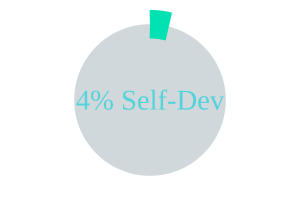
Donut chart: 1 hour (4%) for self-development, 23 hours (96%) everything else
Morning Matters: Why Taking Back Your First Hour Changes Everything (Effective Morning Routines & Time Management Skills)
Waking Up With Purpose: Not Just for 5AM Club Show-Offs
You don’t have to be a morning person or join the 5AM club to claim your first hour. What matters is intentional ownership—deciding to start your day on your terms, not your alarm’s. When you hit snooze, you’re not just delaying your morning; you’re handing over control of your day to distractions, moods, and old habits. The moment you choose to get up when you said you would, even if it’s uncomfortable, you’re making your first act of discipline.
“Getting out of bed when you said you would, even when it’s uncomfortable, teaches you that you have control over yourself.”
This is the foundation of proactive life design. It’s not about perfection or waking up at a magical hour—it’s about making the first hour count, every day, at your own pace.
The Compound Effect: Small Victories, Big Confidence
Every morning, you face a choice: action or hesitation. Research shows that intentional mornings increase your odds of maintaining focus and consistency all day. When your first move is action, your day begins with power. That small victory—getting up when you planned—sets your default confidence level for the rest of the day.
Over time, these early wins stack up. One intentional morning becomes two, then a week, then a month. This is how daily habits transformation happens. You build momentum, and with it, a quiet confidence that you can trust yourself to follow through. The people who consistently show up for themselves in the first hour are the ones who move from talking about change to actually living it.
Wild Card: The ‘Snooze Button Tax’—How Much Time Are You Really Losing?
Most people lose their day at the first ‘snooze’. Those extra five minutes add up—fast. Here’s a quick look at the Snooze Button Tax:
| Snoozes/Day | Minutes Lost/Day | Hours Lost/Month | Hours Lost/Year |
|---|---|---|---|
| 1 | 5 | 2.5 | 30 |
| 2 | 10 | 5 | 60 |
| 3 | 15 | 7.5 | 90 |
Imagine what you could do with an extra 30, 60, or even 90 hours a year. That’s time and momentum leaked away, simply by letting the day lead you instead of leading your day.
Momentum & Identity: The Real Power of Effective Morning Routines
There’s a subtle identity shift when you achieve your first victory within minutes of waking. You stop being a slave to old patterns and start making decisions based on who you want to become. Momentum is what separates talkers from doers. Each early morning is a vote for the person you’re becoming—a person who values time management skills and leads a proactive life.
Attention Is Your Currency: Spending it Where Your 2025 Self Will Thank You (Focus and attention management & SMART goals setting)
Every person wants a better future, but most never get there—not because they don’t try, but because they spend too much time focusing on the wrong things. Your life always moves in the direction of your attention. If your attention is scattered, your life will be scattered. If you want a true personal growth roadmap for 2025, start by treating your attention like a limited budget. Every minute you spend is an investment or a loss. The world profits from your distraction, but only you profit from your focus.
Why Most Distractions Wear Disguises
Distractions rarely announce themselves. They slip in as notifications, endless scrolling, or even “urgent” small tasks. They feel familiar and easy to rationalize—just five minutes here, ten minutes there. But these moments add up, quietly robbing your future focus. If you’re not careful, you’ll spend your energy chasing short-term comfort while your long-term goals fall behind. Your results are a direct map of where your attention habitually goes.
Tracking My Attention: A Real-World Example
One month, I tracked my time spent on social media versus creative work. The results were eye-opening: I lost. The hours I thought I was investing in my growth were actually being siphoned away by distractions. Once I saw the data, I set a SMART goal: limit social media to 20 minutes a day and dedicate a protected hour to creative projects. Within weeks, my output doubled. The lesson? Attention management may matter more than skill; intention is the multiplier.
Creative Analogy: Attention as a Limited Budget
Imagine your attention as a wallet with a fixed amount of currency each day. Every notification, every unnecessary meeting, every mindless scroll is a purchase. Would you spend your last dollar on something that doesn’t serve your future? When you treat your attention like money, you start making better decisions. You invest in continuous learning development, focused work, and meaningful rest. The returns compound over time.
"Your attention is your power. Wherever it goes, your energy follows."
Guarding Your Hour: The Power of SMART Goals Setting
SMART goal-setting only works if you guard your hour from distractions. Here’s how to start:
- Specific: Define exactly what you’ll focus on in your growth hour.
- Measurable: Track your time—how much is spent on growth vs. distractions?
- Achievable: Set realistic, daily targets for learning or creating.
- Relevant: Align your focus with your long-term personal and professional development.
- Time-bound: Commit to a protected hour, every day, no exceptions.
Self-Audit: Reflect and Redirect
Reflect regularly—self-audit your ‘investments’ versus ‘impulsive spending’ of attention. If your life feels scattered, check where your attention lands, and course-correct. Remember: Attention + intention = the actual growth formula for 2025.
| Day | Growth Activities (min) | Distractions (min) | Mini-Goal Progress |
|---|---|---|---|
| Monday | 60 | 90 | Partial |
| Tuesday | 75 | 60 | On Track |
| Wednesday | 90 | 45 | Achieved |
Notice the correlation: the more focused your hour, the closer you get to your monthly mini-goals. No one will protect your attention for you—guard it like it’s irreplaceable currency, and your 2025 self will thank you.
FAQ: Burning Questions on One-Hour Growth Habits (And Honest Answers)
Is one hour REALLY enough if my goals are huge?
Absolutely. It’s easy to feel like an hour can’t possibly move the needle on big dreams. But here’s the truth: small steps add up fast when you show up daily. Personal growth challenges aren’t conquered overnight—they’re won through steady, consistent effort. One focused hour a day is 365 hours a year. That’s over nine full workweeks dedicated to your self-improvement. The secret is momentum. As you keep showing up, you’ll feel progress and confidence build. Remember, consistency beats intensity. Don’t underestimate the power of daily self-improvement techniques, even in small doses.
What if I fall off the habit—do I start over or give up?
Missing a day doesn’t break the chain. You don’t quit, and you don’t beat yourself up. You restart. That’s real strength.
"Strength is showing up again. Don't let one bad day become a bad week or month."The all-or-nothing mindset is one of the biggest personal growth challenges. If you slip, just get back to it the next day. Restarting is normal and expected. Progress isn’t lost by a single missed day—it’s lost when you let one slip turn into a week or a month. Building discipline and consistency means forgiving yourself, learning, and moving forward. Every day is a fresh start.
Any hacks for reclaiming my hour if I live with kids/partners/chaos?
Life is busy and noisy, but your hour is worth protecting. The key is boundaries. Set a specific time and make it non-negotiable. Let your family know this is your hour—no explanations needed. If mornings are hectic, try evenings. If evenings are impossible, carve out time during lunch or while kids nap. Use support systems: swap childcare, ask for help, or involve your family in your routine. Even if you only get 40 minutes some days, it’s better than zero. Small progress is always greater than none. The most important thing is to use your hour with intention. Don’t wait for motivation—motivation shows up after you do.
What are the top barriers to daily self-improvement techniques?
| Barrier | Why It Matters |
|---|---|
| Consistency | Missing days can lead to giving up. Restart instead of quitting. |
| Distractions | Family, work, and technology can steal your hour. Set boundaries and protect your time. |
| Forgetting the ‘why’ | When you lose sight of your purpose, motivation fades. Remind yourself daily why you started. |
Conclusion
This is your life. This is your hour. Claim it, protect it, and use it with intention. If you give yourself just one hour a day, you’ll feel momentum—and momentum builds confidence. Don’t wait for perfect conditions or for others to understand. Start today. Your future self will thank you for every small step you take, every time you restart, and every hour you claim for your own growth. By 2025, you’ll look back and see how far you’ve come—one hour at a time.
TL;DR: If you want lasting change, stop chasing miracles—claim just one hour a day, use it with intention, and watch 2025 become your breakthrough year. Start by reclaiming your mornings and focusing your attention. Growth isn’t about grand gestures; it’s about daily, gritty consistency.
Post a Comment