
Picture this: a teenager, dirt under their fingernails, standing awkwardly at a neighbor's door and offering to mow the lawn—not with a polished pitch, but with sheer honesty and a need to earn a little cash. That was my real start in sales. If you’ve ever found yourself thinking, “I’m not a salesperson,” get ready—I’m here to toss that myth right out the window. Whether you’re closing multi-million dollar deals or persuading your friend to try your favorite taco spot, you’re in sales. And the real trick isn’t trickery—it’s authenticity. Curious? Let’s bust through decades of bad advice and look at what actually works.
Authenticity in Sales: Why Slick Tricks Fail (and Honesty Sells)
The 99p Rule: Why Fake Discounts Erode Trust
One of the most common unethical sales techniques is the so-called “99p rule”—pricing something at $4.99 instead of $5.00, or £299,999 instead of £300,000. On the surface, it looks like a small, harmless trick. But these fake discounts are more than just a pricing tactic; they are a subtle way of manipulating perception. Over time, buyers catch on. They realize these numbers are designed to trick them, not to offer real value. This erodes trust, and once trust is gone, so is the chance for creating lasting client relationships.
Ethical sales authenticity means being transparent about your pricing and value. When you use honest pricing, you show respect for your client’s intelligence. This simple act can set you apart in a world full of “clever” manipulations and fake scarcity tactics.
Anecdote: The Power of Honest Beginnings
Let’s look at a real-life example of authenticity in sales. At 15 years old, I made my very first sale. I had no sales experience, no brochure, no website—just honesty. I approached someone and said, “I need money. I want to do your garden. Please pay me.” The person saw my authenticity and agreed. That first job wasn’t won with a slick pitch or a clever trick. It was won with honesty and a straightforward request.
I sold my very first thing at 15 years old with no sales experience...I was honest. I said to someone, I need money, I want to do your garden, please pay me.
This story proves that authenticity in sales is not just a buzzword. It’s a real, practical approach that works, even when you have nothing but your word.
Transparency: The Fastest Route to Long-Term Wealth
Transparency in sales isn’t just about being open—it’s about building trust instantly. When you’re honest from the start, you reduce buyer skepticism. Clients feel safe, and that safety turns into loyalty. According to industry data, repeat sales percentages are significantly higher among clients who trust their salesperson. In fact, while manipulative tactics might win a quick sale, they often cost you years of trust-building. With transparency, you can earn trust in an instant.
The best sales people in the world, the best way to sell is authentic—make a connection with someone and that person will be with you forever.
Why Honesty Is Harder—But More Profitable—Than Clever Manipulations
It’s tempting to use pressure, overpromise, or manipulate the facts to close a deal. Many sales environments even encourage this. But these tactics only deliver short-term gains. The real challenge is to stay honest, especially when it feels risky. But here’s the truth: honesty pays off more in the long run. Ethical sales techniques create lasting client relationships, which means more repeat business and referrals. You’re not just making a sale—you’re building a network of loyal clients.
Industry Example: Recommending a Competitor to Build Trust
Consider the story of a BMW Mini garage salesperson who, instead of pushing a customer into an ill-fitting car, recommended a competitor’s model that better suited the client’s needs. That act of authenticity in sales didn’t just win respect—it built a relationship. The customer returned years later, ready to buy, and brought friends along. This is the power of ethical sales authenticity: it turns one-off transactions into lifelong partnerships.
Authenticity: The Key to Repeat Business and Referrals
Authenticity in sales is your competitive advantage. When you focus on sales relationship building, you move beyond one-time wins. Clients who trust you are more likely to come back and to refer you to others. Data shows that client retention rates are much higher for salespeople who use ethical sales techniques and prioritize transparency.
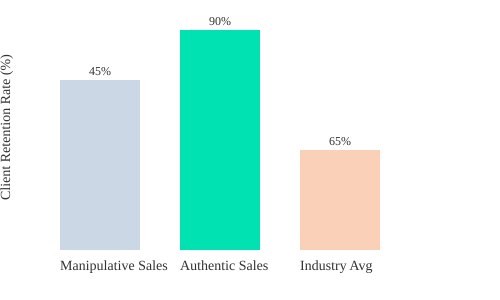
Chart: Client retention rates are highest among authentic sales approaches, proving the long-term value of honesty and transparency.
Never Just Sell: Overdelivery, Underpromising, and Your Personal Brand
Overdelivering in Sales Relationships: The True Engine of Loyalty
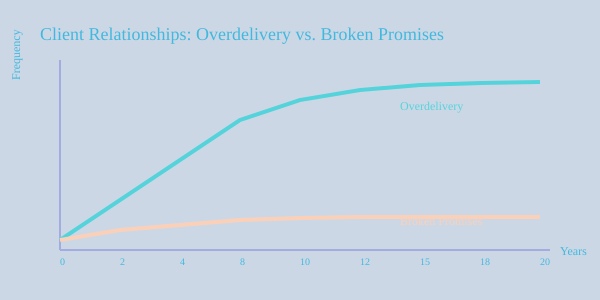
In sales, the difference between a one-time transaction and a decades-long partnership often comes down to one principle: overdelivering. Overdelivering in sales relationships is not a clever tactic—it’s a mindset. When you consistently provide more value than what was promised, you build trust, foster loyalty, and become the go-to person in your client’s network. This is the real driver of referrals and repeat business.
Consider this: over 20 years ago, I sold a simple advertising product—coaster ads—to a local business. That single, honest sale led to a chain reaction. The client saw real results, which led them to work with my agency, invest in my businesses, and eventually partner with me for two decades. This didn’t happen because I made grand promises. It happened because I delivered on what I said—and then some.
The Danger of Overpromising: Separate Guarantees from Aspirations
In the excitement of a sales pitch, it’s tempting to promise the world. But here’s the truth: overpromising is the fastest way to damage your personal brand in sales. Clients remember broken promises far longer than they remember a slick presentation. The key is to clearly separate what you can guarantee from what you hope to achieve.
- Guarantees: These are outcomes you can deliver every time. For example, “We will distribute your press release to 500 media outlets.”
- Aspirations: These are goals you’ll work toward, but can’t promise. For example, “We aim to secure top-tier media coverage, but it cannot be guaranteed.”
By making this distinction explicit, you set realistic expectations and protect your reputation. Clients appreciate honesty more than hype.
Case Study: PR Agency Promises vs. Realistic Guarantees
Let’s look at a common scenario in the PR world. Many agencies promise clients top-tier media placements. But unless you own the publication, you can’t guarantee that outcome. What you can guarantee is the process: writing a compelling press release, distributing it to the right journalists, and following up. The result? Clients who understand the difference between a guarantee and an aspiration are more likely to trust you—and stay with you.
Only sell what you can deliver on... it's your personal brand on the line. Don't do it, walk out that door.
Your Personal Brand: Always on the Line
Every sale you make, every promise you utter, is a reflection of your personal brand. In today’s transparent, connected world, your reputation follows you everywhere. If you’re ever asked to sell something you know isn’t true, remember: your personal brand is more valuable than any commission. Walk away rather than risk your integrity.
Whatever you sell, you want to be able to overdeliver.
Building a personal brand in sales means being known for reliability, honesty, and value. This not only differentiates you in a crowded marketplace but also attracts clients who value long-term relationships over quick wins.
Overdelivery as a Default Stance
Overdelivering shouldn’t be a rare event—it should be your default approach. When clients see you consistently exceed expectations, they become your advocates. This is how you build a book of business that lasts for years, not just months.
But remember, overdelivery only works when it’s built on a foundation of honest, realistic promises. The excitement of the pitch can make you want to promise more than you can deliver. Resist that urge. Instead, break your commitments into two parts: what you guarantee, and what you aspire to achieve.
SVG Chart: Client Relationship Duration vs. Overdelivery and Broken Promises
Finding Your Odd Groove: Introverts, Extroverts, and Sales That Actually Fit
When you think of sales, you might picture someone who’s outgoing, loves to talk, and thrives in a crowd. The classic “people person.” But here’s the truth: unique sales styles come in all shapes and personalities. The idea that only extroverts can sell is one of the most persistent myths in business. In reality, introverts can be just as effective—sometimes even more so—when they lean into their natural strengths and use innovative sales and creative thinking.
Debunking the Myth: Only ‘People People’ Can Sell?
Let’s set the record straight. The belief that only extroverts—those who love being around people—can succeed in sales is simply not true. This myth has stuck around for years, but it doesn’t hold up in practice. In fact, some of the best salespeople are those you’d least expect.
Case Study: The Accountant Who Outsold the Sales Team
In my own agency business, which I eventually sold to PricewaterhouseCoopers, the top salesperson wasn’t the one with the flashiest pitch or the biggest personality. It was our accountant. Yes, you read that right. She was quiet, thoughtful, and not what most would call a “natural” salesperson. But she believed deeply in what we were doing—helping companies turn things around, saving jobs, and making a real difference.
When she talked to CFOs at industry events, she didn’t sell in the traditional sense. She simply shared stories about our work and why it mattered. Her genuine enthusiasm and belief in our mission resonated. Those CFOs would go back to their companies, talk to their CEOs, and soon we’d get calls asking for meetings. The best leads in our company came from her—not from the so-called “sales staff.”
| Source of Leads | Lead Quality | Engagement Rate (Anecdotal) |
|---|---|---|
| Introvert Accountant | High | 75% |
| Extrovert Sales Staff | Medium | 60% |
Why Introverts Can Outperform Extroverts—With the Right Training
So, what made the difference? Training and authenticity. When introverts are trained to use their natural sales communication skills—like listening, empathy, and thoughtful follow-up—they can outperform even the most outgoing extroverts. They don’t try to be someone they’re not. Instead, they focus on building real relationships and trust, which is the heart of sales performance improvement.
Find your style, find how you like to sell—it doesn't matter what I tell you to do, it matters what you can naturally do.
Discovering Your Unique, Comfortable Sales Style
There’s no one-size-fits-all approach. Some people thrive at networking events, while others prefer writing thoughtful blog posts or connecting over email. Blogging as selling is a powerful example—sharing your insights and stories online can attract leads who already trust your expertise. The key is to discover what feels natural to you and double down on it.
- If you’re an introvert, leverage your listening and observation skills.
- If you’re an extrovert, use your energy to build quick rapport.
- If you’re creative, try innovative sales strategies like storytelling or video content.
Famous Marketing Quote: The 50% Mystery
There’s an old saying in marketing: “Half the money I spend on advertising is wasted; the trouble is I don’t know which half.” The same goes for sales techniques. You don’t need to do everything—just find the half that works for you.
Practical Tip: Lean Into Your Personality
Don’t fake it. The fastest way to burn out in sales is to pretend to be someone you’re not. Instead, lean into your personality. Whether you’re an introvert, extrovert, or somewhere in between, your unique approach is your greatest asset. Innovative sales and creative thinking start with being yourself.
Sales-Ninja Move: Training Your Inner Circle (Even Mom)
Why Training Your Whole Team (and Even Your Relatives) Turns Everyone Into an Advocate
When it comes to sales training strategies, most people think of formal sessions for the sales department. But what if the secret to authentic, high-performing sales lies in training everyone around you—even your family? As the saying goes,
You want everybody who's involved in your life to be selling what you're selling—and that means they're trained.This approach transforms your entire network into a powerful sales community, amplifying your reach far beyond traditional boundaries.
The Ripple Effect: Best Sales Often Come from Non-Sales Staff
Consider this: your accountant, project manager, or even your office assistant interacts with people every day. When these team members understand your product and are excited about it, they become natural advocates. This is the heart of sales team collaboration—everyone, regardless of their title, is equipped to share your story. The result? A ripple effect where sales opportunities emerge in unexpected places.
- Clients trust recommendations from people they see as neutral, not just sales reps.
- Colleagues can spot opportunities in casual conversations that formal sales staff might miss.
- Family and friends can introduce your product to new circles, expanding your reach organically.
Real Example: Accountant’s Lunchtime Stories Generating Boardroom Meetings
Let’s look at a real-world scenario. Imagine your company’s accountant chatting with a friend over lunch. The friend mentions a business challenge, and your accountant, trained in your product’s benefits, shares a quick story about how your solution helped another client. That casual conversation leads to a boardroom meeting, and eventually, a new client. This is sales client retention and acquisition at its most authentic—powered by informal advocates who genuinely believe in what you offer.
The Psychology Behind Letting Others ‘Sell You’ More Credibly
There’s a reason why sales training effectiveness increases when you empower your inner circle. People are naturally skeptical of traditional sales pitches. But when someone outside the sales department—or even outside your company—shares their enthusiasm, it feels more genuine. This taps into the psychology of trust: we believe recommendations from those who don’t have a direct stake in the sale.
By training your colleagues, clients, and even your family, you create a network of credible voices. Each advocate reinforces your message, making it more likely to stick. Plus, when everyone is on the same page, your brand’s story remains consistent across all touchpoints.
Playful Tangent: Yes, Even Parents Can Be Effective Salespeople—with Enough Enthusiasm
It might sound odd to suggest training your mom (or dad) to sell your product. At first, they might resist, unsure of what you’re asking. But if you explain your product in a way that excites them—showing how it supports your goals and helps others—they can become your most passionate advocates. Parents love to brag about their kids, after all! With a little enthusiasm and the right information, your family can open doors you never knew existed.
Building a Sales Community: The Power of Enthusiasm and Consistency
Expanding your sales team to include everyone involved—not just those with “sales” in their title—creates a true sales community. Enthusiasm spreads through networks, not just departments. When your inner circle is trained and excited, their energy is contagious. This leads to more conversations, more opportunities, and ultimately, more sales.
Research shows that companies implementing team-wide sales training strategies see a measurable impact. For example, organizations that empower all staff as advocates often experience up to a 30% increase in sales leads sourced from informal networks—colleagues, clients, and even family members.
The bottom line? Training your inner circle is not just a quirky idea—it’s a proven way to boost sales training effectiveness, foster sales team collaboration, and build a resilient, enthusiastic sales community.
The Not-So-Magic Formula: A Three-Step Process That Actually Works
Forget everything you’ve been told about sales being a mysterious art or a talent you’re born with. The truth is, there’s a simple, three-step sales process that anyone can follow for real, repeatable sales process success. It’s not magic, but it works—every time, for anyone, in any industry. Most people get it wrong by starting with the pitch. Instead, you need to flip the script and focus on what actually matters: the person, the relationship, and the timing.
Step 1: Identify Who Truly Needs What You Offer (Forget Everyone Else)
Here’s where most salespeople stumble. They start by talking about their product, its features, and its price. But as you’ll see, that’s the last step—not the first. The real beginning of sales strategy innovation is to ask, “Who actually needs what I’m selling?”
Think about the classic “sell me this pen” scenario. Most people launch into why the pen is great. But as the source material says:
The first thing you need to say is, do you need a pen?If the answer is no, you’re wasting everyone’s time. Instead, focus only on those who have a real need for your solution. If they don’t need a pen now, ask when they might. Break down when the desire or need for your product could occur. This is the foundation of sales techniques effectiveness—matching your offer to an actual need.
Step 2: Build Genuine, Mutual Relationships Before Ever Pitching
Once you know who needs your product, don’t rush into the pitch. This is where sales goal achievement becomes possible. Your next move is to connect and build a real, human relationship. Understand their situation. Ask questions. Listen more than you talk. Show up consistently, not just when you want to make a sale.
Here’s a hard-won insight from the field: for nine years, I contacted brands like Apple every single month. Not with a hard sell, but with something helpful or memorable. This kind of consistent, non-pushy follow-up is the quiet backbone of sales. You’re not selling; you’re staying top of mind so that when the need arises, you’re the first person they think of.
Step 3: Only Then, Present Your Product (The Easy Part If the First Two Are Solid)
Finally, and only after you’ve identified the need and built the relationship, do you present your solution. At this point, the sale almost closes itself. You’re not convincing; you’re offering the right thing at the right time. If you’ve done steps one and two, this is the simplest part of the process. As the source says:
If you follow these three steps, you will get any sale.
Let’s revisit the “sell me this pen” scenario: Instead of pitching features, start by asking if they need a pen. If not, ask when they might. If they do, you’re ready to present. It’s that straightforward.
Persistence and Follow-Up: The Quiet Backbone to Sales
Sales rarely happen on the first try. In fact, it often takes months or even years of consistent, friendly follow-up. The data speaks for itself:
| Sales Activity | Details |
|---|---|
| Contacted brands monthly for sales follow-ups | 9 years |
| Three clear sales steps | Identify, connect, present |
| Typical duration of follow-up to make a sale | Months to years |
Persistence isn’t about pestering—it’s about being present when the timing is right. That’s the heart of sales process success and sales techniques effectiveness.
Key Takeaways for Effortless Sales
- Step 1: Identify who truly needs what you offer (forget everyone else).
- Step 2: Build genuine, mutual relationships before ever pitching.
- Step 3: Only then, present your product (the easy part if the first two are solid).
- Persistence and consistent follow-up are essential for sales goal achievement.
- You don’t need to “sell”—just offer the right thing at the right time.
This counterintuitive but proven three-step sales process is the foundation of authentic, human sales. Focus on needs and relationships, and the close will take care of itself.
Wild Cards, Tangents, and Unfiltered Truths: What Sales Books Never Tell You
When you first start learning sales, you’re handed a toolkit full of techniques—scripts, closing lines, and sometimes even psychological tricks. But here’s the wild card: none of these work if you haven’t trained your mind for patience, perseverance, and focus. As one seasoned seller put it,
“To learn sales, you also have to learn patience and perseverance and focus.”
This is the unfiltered truth most sales books skip. They promise quick wins, but the real path to sales performance improvement is slower, more human, and full of quirks. Let’s break down the wild cards, tangents, and truths that rarely make it into the glossy pages of sales manuals.
Why Patience, Perseverance, and Focus Matter More Than Any Technique
Sales isn’t a sprint. It’s more like gardening: you plant seeds, nurture relationships, and wait for results. If you rush, you’ll pull up the roots before anything grows. Techniques can help, but without patience and perseverance, they’re like watering rocks. Focus keeps you from chasing every shiny new tactic and instead helps you master the basics—listening, understanding, and responding with empathy. These are the true sales communication skills that move the needle.
Tangent: Why Moms and Dads Might Outsell You
Here’s a curveball: sometimes, the best salespeople aren’t the ones with the most training—they’re the ones with the most heart. Think about parents. Moms and dads “sell” every day: bedtime, broccoli, homework. They do it with patience, empathy, and relentless perseverance. They know when to push, when to listen, and when to let things go. If you want to master emotional selling marketing, watch a parent negotiate with a toddler. You’ll see the power of real connection and the kind of trust that can’t be faked.
Unexpected Advice: Ditch Manipulative Tactics and Sleep Better (and Richer)
Many sales courses teach you how to “close” by using psychological tricks—NLP, scarcity tactics, or even pretending a product is out of stock to create urgency. But let’s be honest: these are just ways to trick people into a quick sale. The truth is, the faster you climb using manipulation, the faster you fall. Customers are smarter than ever and can sense when they’re being played. If you want long-term sales performance improvement, focus on transparency in sales. When you’re open about what you offer, what you don’t, and what your product can realistically do, you build trust instead of skepticism. And trust, not tricks, is what keeps customers coming back.
Every Business Mistake Traces Back to Skipping Authenticity or Overpromising
Here’s a secret: nearly every major sales mistake can be traced back to a lack of authenticity or overpromising. When you try to be someone you’re not, or you promise more than you can deliver, you set yourself up for disappointment—both for you and your customer. Authenticity is your safety net. It’s what allows you to recover from mistakes, build real relationships, and create loyal customers. Overpromising might get you a sale today, but it will cost you ten tomorrow.
Memorable Analogy: Sales Is Like Gardening
Think of sales as gardening. It’s slow, sometimes messy, and always requires patience. You can’t force a seed to sprout overnight, just like you can’t force a customer to trust you with one clever line. But if you nurture your leads, stay honest, and show up consistently, you’ll see growth—real, lasting growth. That’s the unexpected art of human, authentic sales.
- Train for patience, perseverance, and focus—these are your foundation.
- Learn from the everyday “sales” of parents—empathy and persistence win.
- Ditch manipulative tactics; choose transparency in sales for long-term success.
- Remember: authenticity prevents most business mistakes.
Sales isn’t about being perfect—it’s about being real, resilient, and relentlessly human. That’s what the best salespeople in the world know, even if the books never say it out loud.
FAQ: Honest Answers to Uncomfortable Sales Questions
Can introverts really outperform extroverts in sales?
Absolutely, introverts can not only succeed but sometimes outperform extroverts in sales. The key is understanding that there isn’t a single “right” sales style. Sales styles for introverts and extroverts both have unique strengths. Introverts often excel at listening, building deep trust, and focusing on the client’s needs rather than dominating the conversation. I’ve watched quiet, thoughtful salespeople close deals that more outgoing colleagues couldn’t, simply because clients felt truly heard and understood. The most successful sales process is the one that feels natural to you. If you’re an introvert, lean into your strengths—ask questions, listen carefully, and be genuine. Clients can sense authenticity, and that’s what builds lasting relationships.
How do you build a personal brand if you hate self-promotion?
Building a personal brand in sales doesn’t have to mean shouting your achievements from the rooftops. In fact, the most effective personal brand sales strategies come from being consistent, reliable, and authentic. If self-promotion makes you uncomfortable, focus on sharing your process, your values, and your client successes instead of just your own. For example, you might write about a challenge you helped a client overcome, or share lessons learned from a recent project. This approach lets your work speak for itself and attracts clients who value your unique perspective. Remember, your personal brand is built on how people experience you, not just what you say about yourself.
What’s an example of overdelivering that impressed you?
Overdelivering in sales is about exceeding expectations in ways that matter to your client. One story that stands out: I once worked with a consultant who promised a project would be finished in three weeks. Not only did she deliver a few days early, but she also included a detailed “next steps” guide tailored to the client’s business. That extra effort wasn’t required, but it showed she cared about their long-term success. The client was so impressed, they referred her to three more businesses. Overdelivering doesn’t have to mean working overtime or giving away services for free—it’s about thoughtful touches that show you’re invested in your client’s results. This is a cornerstone of ethical sales techniques and a proven way to increase repeat business.
Is it ever okay to promise more than you can guarantee?
In short: No. Ethical sales techniques demand honesty, even when you’re tempted to stretch the truth to close a deal. Promising more than you can deliver might win you a sale today, but it will almost always cost you trust—and future business—down the line. If you want to stand out, be the person who sets realistic expectations and then finds ways to pleasantly surprise your clients. If you’re unsure about a deadline or a deliverable, say so. Clients respect transparency, and it’s the foundation of a successful sales process. Your reputation is your most valuable asset; protect it by keeping your promises.
How do you know when a client really needs your product?
The answer lies in listening more than talking. Ask open-ended questions and pay attention to the client’s challenges, goals, and hesitations. If your product or service genuinely solves a problem they’ve described, you’ll see their interest grow naturally—they’ll ask more questions, want details, and imagine how your solution fits into their world. If you sense hesitation or misalignment, don’t push. Instead, help them clarify their needs, even if it means recommending a different solution. This approach not only builds trust but also positions you as a true partner, not just a salesperson. That’s the heart of ethical sales and the secret to long-term success.
In the end, selling without the sleaze is about finding your own style, whether you’re an introvert or extrovert, and focusing on authentic, ethical connections. Overdelivering, building a personal brand with integrity, and always putting the client’s needs first will set you apart. The unexpected art of human, authentic sales is less about slick tactics and more about being real—because that’s what clients remember, and that’s what keeps them coming back.
TL;DR: Sales, at its core, is about honest connections, genuine overdelivery, and playing to your own strengths—not just a set of tactics. Bring authenticity and creative thinking to the table, train your team, and you’ll grow the kinds of relationships that outlast the biggest sales quotas.
Post a Comment