
Let me take you back to being 20—when ambition is massive, mistakes are plenty, and advice flies at you like confetti at a parade. Simon Squibb, once a homeless teenager, is now a multi-millionaire investor who’s founded nineteen companies and helped build the $50M+ HelpBnk platform. This isn’t your usual story of fancy cars and overnight riches—think more sleeping on sofas in expensive cities, learning the hard way that true wealth comes from purpose, not possessions. Ready to hear the lessons I wish somebody had told me back then? Get your tea, sit back, and bring a notebook. These aren’t just tips—they’re real talk from someone who didn’t always get it right (but got where he wanted anyway).
Shaping Success: Why Your Circle Defines Your Outcome
One of the most powerful lessons from the Simon Squibb story is this: “Surround yourself with people whose life you want to live.” It sounds simple, but it’s a cornerstone of purpose-driven entrepreneurship and a truth that shapes your entire journey. Your environment, your mentors, and your closest friends echo in your results—so choose them with intention.
Your Circle: The Mirror of Your Future
On your entrepreneurship journey, it’s tempting to seek advice from anyone who appears successful. But Simon Squibb warns against copying the wrong kind of ‘rich.’ He’s built and sold companies, invested in over 70 startups, and grown HelpBnk to a $50 million valuation in just 12 months. Yet, he’s clear: it’s not just about wealth.
Ask yourself: Do you want the life of the person giving you advice? Too often, people follow ‘gurus’ who may have money but are unhappy, unhealthy, or disconnected from their families. Simon puts it plainly—if you want a healthy, fulfilled life, don’t take advice from unhappy ‘gurus.’ Instead, look for value-based mentors, not just those with status or flashy possessions.
Intentional Influence: Who You Listen to Shapes Who You Become
Your social circle isn’t just about networking; it’s about mirroring values, habits, and outcomes. Simon Squibb’s story proves this. He’s been married for 23 years, prioritizes his relationship with his son, and focuses on giving back. He doesn’t care about owning a yacht—he cares about knowing someone who does. This mindset shift is crucial: possessions aren’t the goal—purpose and people are.
Research shows that the people you spend the most time with directly influence your mindset, health, and even your bank balance. If you surround yourself with driven, positive, and generous individuals, you’re more likely to adopt those traits. If you take advice from people whose lives you wouldn’t want, you risk inheriting their problems, not just their strategies.
Practical Guidance: Choosing Your Influences Wisely
- Audit your circle: Are your friends, mentors, and advisors living a life you’d be proud to have?
- Seek value-based mentors: Look for people who align with your values and desired lifestyle, not just their net worth.
- Be intentional: Who you listen to impacts who you become—not just what you earn.
- Remember the real goal: Simon Squibb skipped the flash, focusing on meaningful relationships and freedom over possessions.
- Real talk: You don’t need to own the yacht; know someone who does!
Surround yourself with people whose life you want to live.
Simon Squibb’s Focus: A Visual Breakdown
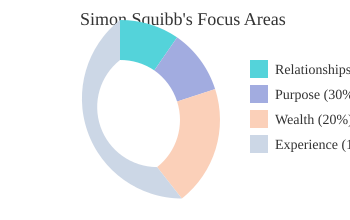
Simon Squibb’s unconventional wisdom is clear: your circle defines your outcome. Choose wisely, and let your environment and mentors reflect the life you truly want to live.
Make Fear Your Fuel: The Art of Risk-Taking for Success
If you’re chasing entrepreneurial success in 2025, you’ve probably heard the old advice: “Work harder and you’ll get luckier.” Simon Squibb, a serial entrepreneur and self-made millionaire, would tell his 20-year-old self that this mantra is more myth than truth. In reality, risk-taking for success is where the real game changes. Hard work matters, but it’s calculated, brave risk that creates wealth and opportunity.
The Myth of Hard Work vs. the Power of Risk
Look around: many of the hardest workers—nurses, police officers, teachers—put in long hours, but that doesn’t always translate to wealth. Simon Squibb’s wealth lessons are clear: you can grind 18 hours a day and still not get rich. Instead, it’s the people who dare to step into the unknown, who pitch bold ideas or move to new cities, that often find the biggest breakthroughs.
| Approach | Outcome |
|---|---|
| One big risk a week (Simon Squibb’s advice) | High chance of breakthrough opportunities and wealth |
| Working 18 hours a day | May lead to burnout; does not guarantee wealth |
Start Small: Build Your Risk Muscle
Risk isn’t about betting your entire future on one wild idea. It’s about building a habit. Simon suggests you start small: take one uncomfortable risk a day. This could be:
- Pitching your business idea to someone new
- Trying public speaking for the first time
- Asking for honest feedback on your product
- Reaching out to a potential mentor
- Moving to a new city for better opportunities
Each small risk strengthens your resilience muscle. The more you do it, the easier it gets. Over time, you’ll find that these daily risks open doors that relentless grind never could.
Fear Is Normal—Lean In, Don’t Run Away
Everyone feels fear. Even experienced entrepreneurs like Simon admit to worrying about failure—whether it’s launching a new product or even posting a video online. The key is not to run away from fear, but to lean into it. When you use fear as fuel, it becomes the driving force behind your boldest moves.
The more risk you take, the luckier you get.
One Bold Move Can Change Everything
You don’t need a dozen wins. Sometimes, just one bold move at the right time can pivot your entire life or business. That’s why Simon’s entrepreneurship advice for 2025 is so powerful: focus on taking meaningful risks, not just working harder. Make it a habit—one risk a day, one big risk a week—and watch how your opportunities multiply.
Simon’s Challenge: What Risk Will You Take Today?
Ask yourself: What’s one risk you can take today to grow your brand, build your business, or put yourself out there? Remember, every risk you take is a step closer to luck and success. Make fear your fuel, and let risk-taking become your greatest asset.
Living Well for Less: Why Reducing Costs Beats Chasing Status
Let’s get brutally honest: most luxuries are just ‘money leaks’ designed to impress people you don’t even care about. If you’re serious about building wealth and freedom, reducing living costs strategies will do more for you than any status symbol ever could. This is one of the core Simon Squibb wealth lessons—and it’s a mindset shift that separates true entrepreneurs from those just playing the part.
Cutting Costs: The Real Power Move
Simon Squibb puts it plainly: “Get your cost down so you can Live Your Dream.” When you spend less, you gain the freedom to take risks, invest in your ideas, and live on your own terms. Every dollar you don’t waste on unnecessary upgrades is a dollar you can put toward your business, your growth, or your next big move.
- Freedom to take risks: Lower expenses mean you can survive lean months and experiment more.
- More control: You’re not tied to a job or lifestyle you hate just to pay for things you don’t need.
- Faster progress: Money saved is money you can reinvest in yourself or your startup.
Frugality: The Secret of the Super-Rich
Look at the world’s most successful entrepreneurs. In the early days, they’re almost never the ones in designer clothes or flashy cars. Simon himself started out sleeping on friends’ couches in Hong Kong—one of the world’s most expensive cities—so he could keep costs low and focus on building his business. Jeff Bezos, after making his first billion, was still driving a 12-year-old car. The lesson? Frugality is a near-universal trait among entrepreneurs before they ‘make it’.
Mindset Shift: Want vs. Need
Most of what you think you need is just clever marketing. Mindset shift want need is about learning to separate what genuinely adds value to your life from what just looks good on Instagram. A bigger house, a new car, or the latest gadget won’t make you happy or successful. Purpose, progress, and meaningful work will.
- Ask yourself: Is this purchase for me, or to impress someone else?
- Focus on experiences and growth, not possessions.
- Remember: Happiness comes from inside, from accomplishing something real.
Real-Life Example: Simon’s Startup Story
Simon Squibb didn’t start with a penthouse or a fancy office. He slept on a friend’s couch, kept his living costs at rock bottom, and poured everything into his business. The result? HelpBnk was valued at over $50 million in its first 12 months. That’s the power of living well for less.
Data-Backed Advice: Live Small, Invest in Purpose
Whether it’s renting instead of buying, sharing accommodation, or skipping the designer brands, the data is clear: early-stage entrepreneurs who keep their costs low have more staying power and more freedom to pursue their vision. The goal isn’t to look rich—it’s to be rich in purpose, time, and opportunity.
Get your cost down so you can Live Your Dream.
Luxury vs. Frugal: Entrepreneur Lifestyle Cost Comparison
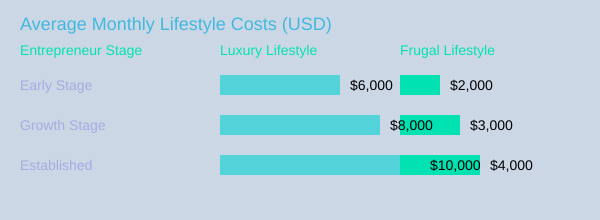
Reducing living costs strategies aren’t just about saving money—they’re about building the life and business you actually want. Purpose beats possessions, every time.
World Experience as Competitive Advantage: Go Beyond the Desk
When it comes to building a real edge in your entrepreneurship journey, nothing beats firsthand world experience. Simon Squibb’s story is a perfect example: he didn’t just travel for the highlight reel—he lived, worked, and hustled in cities like Hong Kong, Shanghai, Beijing, Bali, and England. Each place became a classroom, teaching him lessons no desk job or formal education ever could.
Don’t Just Travel for Instagram—Integrate Work and Life Abroad
Most people see travel as a break, a reward for hard work. But Simon challenges you to flip that script. Instead of spending your spare cash on a quick holiday, make travel part of your life and work. Integrating work travel means moving to new cities, taking on odd jobs, or even starting a small business while you’re there. Simon moved to Hong Kong with almost no money, slept on a friend’s couch, and launched his first venture from the ground up. This wasn’t glamorous—it was gritty, real, and full of lessons.
Navigating Unfamiliar Places Builds Opportunity and Cultural Know-How
When you work and live abroad, you’re forced out of your comfort zone. You learn how markets really work, how people think, and what makes each city tick. Simon’s time in Asia—traveling through China, Indonesia, and beyond—gave him a deep understanding of local business cultures. This knowledge is a rare skill. As Simon puts it,
“Seeing the world and how it works will give you an unfair competitive advantage.”
Understanding the differences between, say, selling in England versus China, opens up market arbitrage opportunities. You spot gaps, needs, and trends that others miss, simply because you’ve seen both sides.
Experience is the Most Underrated (and Portable) Asset
Simon didn’t have a formal business education—he learned by doing. Whether it was waiting tables, starting a “shitty gardening company,” or launching a startup in a new city, every experience added to his entrepreneurial toolkit. The skills you gain from navigating new environments—problem-solving, adaptability, negotiation—are assets you carry everywhere.
Global Connections Last Longer Than Any Single Venture
One of the most powerful outcomes of living and working abroad is the network you build. After his years in Hong Kong, Simon returned to England with a new tribe—people who had shared his experiences and understood his journey. These connections often outlast any single business and can open doors you never expected. The more places you go, the more people you meet, and the more opportunities you create for yourself.
- Live and work abroad—don’t just visit.
- Take on any job to get inside the local culture and economy.
- Build a global network—your future business partners and friends are out there.
- Every city is a new lesson in how the world really works.
Every adventure—no matter how small—adds another layer to your skills, your mindset, and your ability to spot and seize opportunities. That’s the real competitive advantage of world experience in the entrepreneurship journey.
Learning by Doing: From Gardening Gigs to Marketing Mastery
If there’s one piece of unconventional wisdom Simon Squibb would pass to his 20-year-old self, it’s this: “You have to go and do lots of things to find out what you actually like.” When it comes to starting a business young or building a career, there’s simply no substitute for lived experience. Experimentation is the only honest way to unlock your true potential, and Squibb’s own journey is proof that unrelated side hustles can become career-launching moments—if you pay attention to the signs.
Squibb’s First Hustle: The DIY Gardening Company
At just 15, Simon Squibb didn’t wait for the perfect business idea or a fancy website. He simply knocked on doors and told neighbors he ran a gardening company—despite not having a registered business, no online presence, and not even owning gardening tools. His first customer didn’t just say yes; they actually lent him the equipment to get the job done.
But here’s the twist: Simon quickly realized he wasn’t a natural gardener. He wasn’t good at it, and he didn’t enjoy the work. What he did enjoy, however, was the process of pitching his services, talking to people, and convincing them to give him a chance. That first “yes” was a rush, and it was the beginning of a lifelong passion for sales.
Discovery Through Contrast: The Power of Trying Many Jobs
One of the most important entrepreneurial journey lessons is that you often learn as much from what you dislike as from what you love. Squibb’s story shows that sometimes, failing at something is the only way to find your future strength. If he hadn’t tried gardening, he wouldn’t have discovered his knack for sales. If he’d quit after the first “no,” he might never have experienced the high of a “yes.”
- Try many roles: The more jobs and gigs you try—especially when you’re young—the more you’ll learn about your preferences and strengths.
- Stick with it: Don’t give up after one rejection. Sometimes, it takes a few tries to discover whether a role excites you or not.
- Embrace failure: Failing at a job or side hustle isn’t a setback; it’s a clue. It helps you pinpoint what doesn’t fit, so you can move closer to what does.
Persistence Pays: From Odd Jobs to Mastering Skills and Employability
Squibb’s persistence in unrelated gigs—like gardening—eventually led him to see he thrived at sales. That realization kickstarted his entire career, evolving from door-to-door pitches to global marketing mastery. Today, he credits his success to the willingness to try, fail, and try again.
As you explore your own path, keep a running list of what you like, dislike, and what surprises you. The more you try, the clearer your calling becomes. This approach doesn’t just build mastering skills employability; it also gives you the confidence to double down on what truly excites you.
You have to go and do lots of things to find out what you actually like.
There’s no shortcut. The only way to get honest feedback from the world—and from yourself—is to get out there, experiment, and learn by doing.
Monetizing Your Edge: Master a Skill (and Become Indispensable)
One of the most powerful entrepreneurial journey lessons Simon Squibb shares is this: “Learn a skill, be useful, and once you have that skill, you’ll never be out of work.” While schools often focus on fixing your weaknesses, true wealth and employability come from building on your strengths. This is a key insight for anyone serious about mastering skills employability and carving out a unique place in the world.
Why Schools Get It Wrong: The Weakness Trap
Think back to your school days. If you struggled with history or biology, you were told to spend extra hours on those subjects. The system was designed to patch up your “bad” areas, not to help you excel at your natural talents. Simon Squibb’s story flips this thinking on its head. He ignored the pressure to fix every weakness and instead invested in what he was already good at—sales and marketing. That decision became the backbone of his career, leading him to found 19 companies and become a Sunday Times bestselling author.
Double Down on Your Superpower
Simon’s superpower was marketing. He didn’t start out as an expert, but he chose to double down on it. Through repeated practice and real-world experiments, he built mastery over time. This is the secret: Choose something you could see yourself doing for years—even if you’re only average now, practice builds greatness. The world’s best footballers, musicians, and entrepreneurs weren’t born exceptional; they became exceptional by focusing on one thing and practicing relentlessly.
Specialization: Your Ultimate Job Insurance
In today’s rapidly changing job market, being a generalist can leave you vulnerable. Specializing in a core skill creates “job insurance”—you’ll always be useful, no matter how the market shifts. Simon’s mastery of sales and marketing meant he could always find work or start a new business, regardless of economic trends. This is the heart of mastering skills employability: become so good at one thing that you’re indispensable.
Skill Stacking: Multiply Your Value
Once you’ve mastered a core skill, look for ways to stack complementary skills. Pairing expertise areas—like combining marketing with public speaking, or sales with digital analytics—makes you even more competitive. This approach, known as “skill stacking,” increases your flexibility and career value. As Simon’s journey shows, mastery built atop early experiments secures lifetime career value and flexibility.
Ask Yourself: What’s Your One Thing?
- If you had to bet your future on one ability, what would it be?
- What do you enjoy practicing, even if you’re not yet great at it?
- Where do you naturally add value, and how can you double down?
Ignore the urge to fix every weakness. Instead, invest in ramping up your best skill. As Simon Squibb’s story proves, “Learn a skill, be useful, and once you have that skill, you’ll never be out of work.” Focus on becoming a specialist, and you’ll build a foundation for lifelong success and employability.
Zero Money, Zero Excuses: Starting from Scratch Still Works
One of the most persistent myths in entrepreneurship is that you need money to start a business. If you’re telling yourself you can’t launch because you have no funds, it’s time to flip that script. As Simon Squibb’s story shows, starting a business with no money isn’t just possible—it can actually be your biggest advantage.
Scarcity as a Superpower
Having no funds isn’t a drawback—it’s a motivator and, surprisingly, a competitive edge. When you have nothing to lose, you negotiate smarter, hustle harder, and connect more sincerely with clients and partners. Resource constraints force creative solutions that become long-term advantages. Simon Squibb’s HelpBnk valuation—over $50M in its first year, born from nothing—proves that resourcefulness trumps resources.
Bootstrapping: The Advance Payment Formula
Simon’s approach to starting business with no money is simple and repeatable. Whether it was his early gardening company or his marketing agency, Fluid, the model was the same: ask for advance payments to cover your costs. Here’s how it works:
- Pitch your idea or service to a client.
- Set a price that reflects the value you deliver. Don’t be afraid if people say it’s expensive—that means you’re pricing it right.
- Request 50% of the fee up front as a deposit. This covers your initial costs and allows you to start without dipping into savings.
- Deliver on your promise, then collect the remaining 50% upon completion.
Simon started Fluid by pitching a marketing idea to a client, charging £20,000 for the project, and securing a 50% advance. That £10,000 covered all his costs before he even began. The same formula worked for his gardening business, where a 50% deposit funded the work. This isn’t industry-specific—it’s a universal strategy for starting business no money required.
Seek Out Supporters—They Need You
Don’t forget: there are people out there with money who are actively looking for talent and ideas to back. If your business model is profitable or your idea is strong, investors and clients will support you. Your idea is your leverage. As Simon says,
You don’t need money to start a business, it’s a mistake thinking you do.
Start Now—Don’t Wait for Security
Waiting until you have savings or a safety net is just another excuse. Start now, figure out the details as you go, and let your scarcity mindset fuel your creativity. Every time you negotiate an advance or find a way to deliver value with limited resources, you’re building skills that will serve you for life.
| Business/Project | How It Started | Result |
|---|---|---|
| HelpBnk | Launched from scratch, no capital | Valued at $50M+ in first 12 months |
| Fluid (Marketing Agency) | £20,000 project, 50% advance payment | Advance covered all costs |
| Gardening Business | 50% deposit to fund work | Profitable from day one |
Remember, your lack of funds is not a barrier—it’s the reason you’ll find a way to win. Use resourcefulness, not resources, to get moving.
The Unfiltered Truth: What’s Not on the Highlight Reel (Wild Card Wisdom)
When you scroll through stories of Simon Squibb’s wealth lessons or watch highlight reels of entrepreneurial success, you rarely see the messy middle. The truth? There’s no magic tipbook or secret handshake. Sometimes, you just have to keep going—through flops, rejections, and the kind of weird luck that makes you question everything. The world loves a winner, but it rarely shows the pile of “no’s” behind every “yes.”
No Success Tipbook: Persist Through Flops and Weird Luck
Here’s the reality: most of what you see in public is the filtered version. The real journey is full of awkward pitches, failed launches, and moments where you wonder if you’re even on the right path. Simon Squibb’s wild ride proves that persistence isn’t glamorous, but it’s essential. Your past mistakes aren’t dead weight—they’re fertilizer for future growth. If you let them, your setbacks will power you forward, not hold you back.
Health and Entrepreneurship Aren’t Opposites
One of the most overlooked finding your purpose life lessons? Health and entrepreneurship can—and should—coexist. You don’t have to sacrifice your well-being for your business. In fact, the most sustainable success comes when you stay true to your values and protect your health. Flexible, authentic living beats rigid formulas every time. Define your own metrics for success, and you’ll avoid burnout and hollow wins.
Wild Card Wisdom: The Three-Contact Challenge
Here’s a wild card for you: If you had to survive a month with only three contacts, who would you choose, and why? This isn’t just a thought exercise. It’s a way to cut through the noise and focus on what—and who—really matters. Are your relationships built on genuine connection, or just convenience? The people you choose say more about your values and priorities than any public achievement ever could.
Squibb’s Biggest Regret: Chasing the Wrong Metrics
Simon Squibb’s biggest regret isn’t a failed business or missed opportunity. It’s not realizing sooner that happiness isn’t tied to public metrics or admiration. The likes, the headlines, the awards—they’re fleeting. What lasts is the quiet satisfaction of building something meaningful, and the joy of small, daily wins. Don’t forget to celebrate those tiny victories—they add up, quietly, and shape your journey more than any viral moment.
Your Past Is Power, Not a Prison
Whatever your background, it doesn’t preclude you from success. In fact, your unique story is your greatest asset. The setbacks, the struggles, the detours—they’re all part of your toolkit. Use them. Let them inform your decisions and fuel your resilience.
Success is more like gardening than a lottery—daily tending, dirty hands, and unexpected weather.
Think of entrepreneurship not as a lottery ticket, but as a garden. You plant seeds, nurture them, and weather storms. Some days are muddy and hard. Others bring unexpected blooms. The payoff isn’t instant, but it’s real—and it’s yours.
FAQ: Ask Before You Leap—Squibb’s Practical Answers for Aspiring Entrepreneurs
Can I build a business if I’ve failed before?
Absolutely. In fact, Simon Squibb’s journey is proof that failure is not just possible, but often essential. Simon openly shares that he made plenty of mistakes before selling his marketing agency to PWC and launching Help Bank, now valued at over $50 million. He believes that embracing uncertainty and learning from setbacks is the sure path forward for all entrepreneurs. Each failure is a lesson, not a dead end. If you’ve stumbled, you’re already ahead—because you know what doesn’t work. The real failure is never trying again.
How risky is too risky?
Simon Squibb’s entrepreneurship advice for 2025 is clear: take more risks, but make them calculated. He suggests building your “risk muscle” by taking small, regular chances—like pitching a new idea weekly or reaching out to someone outside your comfort zone. However, he warns against risking what you can’t afford to lose, like your health or core relationships. The sweet spot is where you’re uncomfortable but not reckless. Remember, Simon started out sleeping on a friend’s couch in Hong Kong—a risk, but one he could recover from if things didn’t work out.
How do I actually get people to pay me up front?
This is one of Simon’s favorite startup investment hacks. He didn’t wait for capital to fall from the sky—instead, he pre-sold his services. Whether it was his first gardening business or his marketing agency, Simon offered clients a clear solution and asked for a deposit up front. The key is confidence and clarity: explain exactly what you’ll deliver, set expectations, and show genuine belief in your offer. People pay up front when they trust you’ll solve their problem. Start small, build credibility, and let your results speak for themselves.
Is working abroad really worth the hassle?
Simon Squibb’s journey shows that working abroad can be a game-changer. Moving to Hong Kong gave him a unique perspective and a global network—advantages that set him apart. He advises you not to treat travel as a holiday, but as an opportunity to learn, connect, and grow. Yes, it’s challenging. Yes, it’s sometimes lonely. But the discomfort is what builds resilience and adaptability, two qualities every entrepreneur needs. If you want a competitive edge, consider working abroad as an investment in yourself.
Do I have to be good at sales to start a company?
No, but you do need to be willing to learn. Simon admits he wasn’t a natural gardener, but he discovered he loved sales. The lesson? Try many things until you find your strength. If sales isn’t your thing, partner with someone who thrives in that area. Entrepreneurship is about building teams with complementary skills, not being a solo superhero. Focus on what you’re good at, and don’t be afraid to ask for help where you’re weak.
What if I don’t know my passion yet?
This is more common than you think. Simon says your purpose often comes from experience, not theory. List what you enjoy, experiment for 60 days, and see what sticks. Don’t pressure yourself to have it all figured out at the start. The act of trying—whether it’s a new job, a side hustle, or volunteering—will reveal what excites you. Surround yourself with people on a mission, and let their energy inspire you. Passion is discovered in action, not in waiting.
Simon Squibb’s advice is simple: take notes, take risks, and take action. Your entrepreneurial journey will be full of unknowns, but with the right mindset and practical steps, you’ll turn uncertainty into opportunity. The only real mistake is never starting. So leap—your future self will thank you.
TL;DR: In short: Simon Squibb’s wild journey from rock bottom to remarkable heights proves there’s no single formula for entrepreneurial success. Embrace risk, spend wisely, learn relentlessly, and never underestimate the power of the people you keep around.
Post a Comment