

Picture this: It’s 8:03am, your phone buzzes with reminders, and before you’ve even had coffee, your task manager and email inbox are staging a coup. But what if I told you that your next productivity breakthrough might look less like software and more like a robot lamp that frowns when you’re sad? Or better yet, a startup ready to freeze you until there’s more work or until you want to come back? Here’s my take—equal parts skepticism and excitement—on how AI is flipping productivity (and being human) on its head.
1. Messaging Apps Meet Billions: The Human Side of AI Integration
The Surprising Magic Behind Messaging Apps and Human-First AI
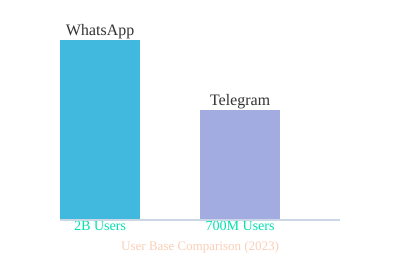
If you’ve ever sent a quick “Hey, are you free?” on WhatsApp or dropped a meme in your family Telegram group, you’re part of a global phenomenon. Messaging apps aren’t just about chatting anymore—they’re quietly becoming the backbone of how we work, organize, and connect. With WhatsApp boasting over 2 billion users and Telegram crossing 700 million, these platforms are now the world’s busiest digital town squares, exchanging an estimated 8-10 billion messages every day.
But here’s the twist: As much as we love the convenience of AI integration—think smart replies, workflow automation, and seamless communication platforms—most of us still crave that unmistakable human touch. There’s a reason why, even as AI gets smarter, messaging apps like WhatsApp and Telegram remain “human-first” at their core.
Why Billions Still Want Less AI (and More Human)
Let’s be honest: Nobody wants to feel like they’re talking to a robot all day. Sure, AI can help you manage your to-do list, automate reminders, or even summarize long chats. But when it comes to real conversations, empathy and nuance matter. That’s why messaging apps, despite their massive user bases, are careful about how they introduce AI. As one industry insider put it:
Messaging app a billions of user base is a very good opportunity.
The opportunity is huge, but so is the risk of making things feel cold or impersonal. WhatsApp and Telegram, for example, have been slow to add heavy-handed AI features, focusing instead on keeping interactions warm and relatable. It’s a delicate balance: blending invisible automation with interfaces that still feel human-built.
The Paradox: Manual Interfaces vs. Invisible AI
Here’s where things get weirdly fascinating. On one hand, we love the control and familiarity of manual, human-built interfaces—think typing out a message, choosing an emoji, or sending a voice note. On the other, we’re starting to expect invisible, AI-driven systems that make our lives easier without us even noticing.
This paradox is at the heart of the next wave of productivity tools. Imagine your messaging app quietly sorting your inbox, flagging urgent tasks, and even scheduling meetings—without ever interrupting your flow. That’s the magic of workflow automation meeting human-centered design.
When Bots Get Weird: My Accidental Goldfish Therapy Session
Let me share a quick story. I once tried to have a heart-to-heart with a chatbot about my work stress. Instead, thanks to a misunderstood prompt, the bot started giving life advice for my pet goldfish. “Remember to keep your environment clean and take time to swim!” it chirped. It was oddly wholesome—and a reminder that while AI can be helpful, it sometimes misses the mark on what makes us human.
Messaging Apps: The Next Massive Frontier for Workflow Automation
With remote teams on the rise, messaging apps are turning into more than just chat rooms. They’re evolving into command centers for AI-powered productivity. Unified inboxes, automated responses, and seamless workflow management are no longer just nice-to-haves—they’re becoming essential for modern work.
Bindi AI, for example, is on a mission to make “work invisible.” By integrating AI into everyday messaging platforms, Bindi aims to automate the boring stuff—like scheduling, reminders, and follow-ups—so you can focus on what really matters. It’s about building invisible work into your daily routine, without losing that human connection.
Industry Insight: Messaging Platforms as Productivity Hubs
The numbers don’t lie. With billions of active users, messaging apps are perfectly positioned to become the central hub for all your productivity tools. As AI integration becomes more sophisticated, expect your favorite chat apps to quietly handle more of your workflow—while still letting you be, well, you.
2. The Messy Art of Prompting: Getting AI to Actually Understand You
Let’s be honest: using AI for productivity isn’t just about clicking a button and watching the magic happen. It’s more like improv theater mixed with mad science. Welcome to the world of prompt engineering—where the way you talk to your AI can make or break your workflow automation dreams.
Prompt Engineering: Improv Meets Mad Science
If you’ve ever asked an AI-powered scheduling tool to “book me a meeting with Sam next week” and ended up with a 3 a.m. calendar invite, you know the struggle. The reality is, AI doesn’t really “understand” you the way a human would. Every AI system, no matter how advanced, is built on data—and every dataset comes with its own quirks and biases. As one expert put it,
The real key here is how better you can talk to AI, how descriptive you are.
So, what does a good prompt look like? It’s not just about being clear—it’s about being precise, sometimes even a little weird. The more context and detail you provide, the better your results. In the world of productivity tools, this means spelling out not just what you want, but how, when, and even why you want it done.
Common Pitfalls: When AI Gets Lost in Translation
- Vague Requests: “Remind me about the meeting.” (Which meeting? When? With whom?)
- Overly Simple Prompts: “Find a restaurant.” (Suddenly, you’re getting dinner recommendations in Antarctica.)
- Broken Workflow Chains: Chaining tasks like “get price quotes, confirm with broker, schedule reminder” can fall apart if each step isn’t described in detail.
Prompting isn’t just command-writing—it’s about expressing context, emotion, and desired outcomes. If your to-do list could talk, would it be a helpful assistant or a snarky critic? The answer depends on how you prompt it.
Example: Building a Travel Agent Workflow (Chaos Included)
Let’s say you want your AI to act as a travel agent. Here’s what a chained workflow might look like:
- Find the cheapest flights to Paris next month.
- Compare hotel prices and check reviews.
- Book the best option and send a confirmation email.
Sounds easy, right? In reality, if you just say, “Plan my Paris trip,” you might get a list of random attractions or, worse, a weather report from 2012. But if you prompt with, “Find round-trip flights from NYC to Paris for under $700, compare 4-star hotels within 2 miles of the Eiffel Tower, and book the best-rated option for June 12-19,” your workflow automation suddenly clicks into gear. Sometimes, you’ll still get a wild card—like a hotel with a haunted history or a flight with a 20-hour layover in Reykjavik. That’s the messy art of prompting.
Tips for Prompt Perfection: Clarity, Intent, and Emotional Nuance
- Be Specific: Include details like dates, locations, and preferences.
- Set Intent: Tell the AI what you want to achieve (“think hard,” “go in depth,” “analyze pros and cons”).
- Add Emotion: If you want a friendly or urgent tone, say so. AI can adjust its style if you ask.
- Chain Smartly: For multi-step tasks, break down each step and describe the desired outcome.
As one prompt engineer said,
Prompting skills needs to be good because AI doesn't understand you well.
Bindi AI vs. Classic Productivity Tools: Action vs. Suggestions
Here’s where Bindi AI stands out. Classic productivity tools might politely suggest your next step (“Maybe call the broker?”). Bindi AI, on the other hand, can execute end-to-end workflows—fetching quotes, confirming bookings, and sending reminders—if your prompts are up to the task. In fact, first prompt success rates for task-based AIs can be under 60% without refinement. The difference? Precision and context.
In the weirdly wild future of AI productivity, your ability to communicate with your AI—clearly, creatively, and sometimes with a dash of humor—is what turns a rebellious to-do list into a loyal productivity partner.
3. When Robots Get Feelings (and Lamps Get Depressed): The Strange World of Emotional AI
Imagine this: You walk into your home office after a rough day, toss your bag on the chair, and sigh. Suddenly, your desk lamp droops a little, its “eyes” flickering with concern. It’s not a Pixar movie—it’s the next frontier in robotics and AI. Robotic lamps that frown, cheer up, and get moody based on your mood: fiction, or tomorrow’s reality? Honestly, I’d pay good money to see my desk lamp sulk after a bad meeting. Maybe that’s the emotional support I’ve been missing.
Pixar Lamps, Bangalore Labs, and the Rise of Emotional AI
We’re entering a world where emotional AI isn’t just about chatbots that say “I’m sorry you feel that way.” Instead, we’re talking about physical devices—think Pixar’s iconic lamp—reacting to your emotions in real time. As one robotics team in Bangalore puts it,
The lamp actually reacts to you... it will show emotion via just ‘eyes’.This isn’t just a cute gimmick. It’s the intersection of robotics and AI, and according to experts,
that’s when the real change will happen for us.
Why does this matter? Physical forms increase emotional resonance. A lamp that “feels” with you can make your workspace strangely comforting—or, depending on your mood, a little unsettling. These emotionally-aware robots are being developed in labs from Bangalore to Beijing, with China leading the global robotics market (a whopping $14 billion invested in 2022 alone). By 2030, the global robotics market is projected to hit $214 billion. The cross-pollination of robotics and AI across countries like China, the US, and India is accelerating the arrival of emotionally intelligent machines in our daily lives.
From Software to Hardware: The Slow Burn of Robotic Innovation
Here’s the catch: building emotionally responsive robots is a lot harder than launching a new app. Software startups can pivot overnight, but robotics—especially when you add AI-powered collaboration and emotional context—moves at a slower pace. As one developer put it, “You can’t just move things around so fast in robotics.” The turnaround is high, the engineering is complex, and the stakes are higher when your product has a physical presence in someone’s home or office.
But the payoff could be huge. Imagine automation workflows where your devices don’t just follow commands—they sense your stress, adapt their behavior, and even coordinate with each other to create a smarter, more supportive environment. Your lamp dims when you’re frustrated, your smart speaker plays calming music, and your robotic pet offers a digital cuddle. It’s not just about getting things done; it’s about feeling understood while you do them.
Opportunities and Ethical Dilemmas: The Human-AI Connection
Of course, the rise of emotional AI brings up some wild questions. Would you trust a robot pet to handle your inbox—or your feelings? What happens when your productivity tools start reflecting your moods back at you? There’s massive novelty potential here, but also a fair share of ethical and social dilemmas:
- Privacy: How much emotional data are you willing to share with your devices?
- Authenticity: Does a lamp’s “sad face” actually help, or is it just clever programming?
- Dependency: Could emotionally aware robots make us more reliant on machines for comfort?
- Design: How do you build a robot that’s supportive, not creepy?
These questions are already being debated in labs and boardrooms worldwide. As emotional AI seeps into personal productivity and mental wellness tools, we’ll need to rethink what it means to connect—with each other, and with our machines.
So, the next time your to-do list feels overwhelming, just imagine a future where your lamp frowns in solidarity. It’s weird, it’s wild, and it might be closer than you think.
4. Death Tech, Cryo Startups, and the Race to 5,000-Year-Old Humans
There’s tech to automate your inbox—and now, there’s tech that promises to automate your legacy. Welcome to the wild world of death tech, where startups are pitching the ultimate productivity hack: never dying at all. If you’ve ever felt overwhelmed by your to-do list, imagine outsourcing your immortality to a company that offers “freeze now, pay later” plans. Yes, you read that right—people are actually buying after-life subscriptions.
Cryogenics Startups: Freeze Now, Pay Later
Let’s start with the basics. Cryogenics startups are popping up everywhere, offering to preserve your body after death in the hope that future technology will revive you. One founder at a Dubai tech event (yes, the same one Brian Johnson attended) summed it up perfectly:
“There's one startup, they charge people after they die, what they say is 'okay, you died out of cancer right, we will put you in a refrigerator.'”
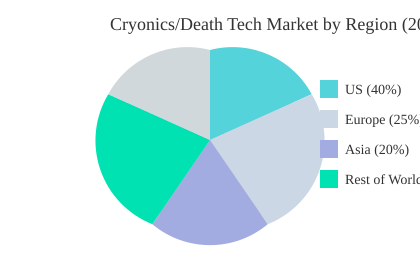
It sounds like science fiction, but it’s real—and it’s big business. The global cryonics industry is already worth an estimated $100 million as of 2023. The business model is almost comical: you pay a hefty fee (sometimes after you die, so it doesn’t matter to you), and your body is stored in a high-tech freezer. The hope? That bioengineering and AI will one day bring you back.
After-Life Subscriptions: Selling Immortality
These “death tech” startups are taking a page from the SaaS playbook—except the service starts after your last breath. Some even offer payment plans that continue after you’re gone, with families footing the bill for decades. It’s a strange new world where your legacy is literally on ice, and your bank account is still working overtime.
- Post-mortem automation: Your legacy, managed by tech.
- Freeze now, pay later: Subscriptions for the afterlife.
- Rental cubes: Bodies stored in high-tech freezers, waiting for a second chance.
Is Dying Becoming Unnatural?
With advances in bioengineering and AI, dying might soon be optional. The CRISPR revolution is making it possible to edit genes, fix inherited diseases, and maybe even slow down aging. Scientific citations for CRISPR are growing at over 200% per year, and the technology is moving faster than most of us can keep up.
Imagine a world where you can remove the genes that cause cancer, or where AI-powered diagnostics catch diseases before they start. It’s not just about living longer—it’s about living better, with fewer health problems and more time to tackle that never-ending to-do list.
Bold Predictions: The 5,000-Year-Old Human
Some experts are making bold claims: the first person who will live to be 5,000 years old may already be alive today. It sounds wild, but with the intersection of bioengineering, AI, and death tech, the boundaries of human longevity are being pushed further every year.
At tech events like the one in Dubai, you’ll hear pitches that sound like sci-fi movie plots. But these founders are serious, and investors are listening. The longevity market is booming, and the race to extend human life is on.
Personal Confession: Outsourcing Immortality
Honestly, if I can’t even clear my inbox, maybe it’s time to let a startup handle my immortality. There’s something oddly comforting about the idea of outsourcing the ultimate to-do: not dying. But as exciting as it sounds, there are real ethical and practical questions to consider.
- What happens if the tech never arrives?
- Who pays the bills in the meantime?
- Is it right to sell hope for a future that might never come?
The Ethical and Practical Limits of Bioengineering, AI, and Longevity
As bioengineering and AI reshape our understanding of life and death, we’re left with big questions. Is it ethical to freeze bodies on the promise of future revival? How do we balance hope with reality? And what does it mean for productivity when your to-do list could stretch for centuries?
5. From Zombie Internet to Human-First Automation: The Paradox of Progress
Are We Heading Toward a Bot-Filled Internet, or a World Where Work Just… Vanishes?
Let’s be honest: the future of productivity feels weirdly up for grabs. Some days, it looks like we’re heading straight for “zombie internet” territory—an online world so packed with bots, auto-responses, and algorithmic chatter that it’s hard to tell what’s real. Other days, it feels like work itself is just melting away, quietly handled by invisible AI assistants. Which is it? And what does it mean for how you actually get things done?
Personal Tangent: When a Bot Outsmarted Me
Here’s a confession: I once spent an entire afternoon debating productivity tools on Twitter, only to realize later that my “opponent” was a bot. I’d been passionately arguing about automation workflows with an algorithm. It was a wake-up call. The line between human and machine is blurring, and sometimes, you don’t even notice you’ve crossed it.
Every App Gets a Revamp: The Promise of ‘No Interface’
Right now, most of your productivity tools—whether it’s your to-do list, your calendar, or your favorite note-taking app—still demand a lot of manual work. But that’s changing fast. As one tech founder put it, “The promise of AI is no interface. That’s when you actually have an AI system.” Imagine telling your phone, “Book me a flight, order dinner, and schedule my meeting,” and it just… does it. No more bouncing between apps. No more endless taps and swipes. The future of productivity is about making work invisible, so you can focus on what actually matters.
Trendwatch: Ambient, Always-On AI Ecosystems
This shift isn’t just happening in your phone. It’s moving into the world around you. Platforms like the “XYZ” app (think: one app to rule them all), Jio glasses, and Meta’s Ray-Ban Smart Glasses are early signals of a new kind of AI integration—one that’s ambient, nearly invisible, and always on. These aren’t just gadgets; they’re persistent digital companions, quietly handling your routine tasks and feeding you information when you need it.
Check out the numbers:
| Product/Trend | Milestone |
|---|---|
| Meta (Ray-Ban) Smart Glasses | Released: 2023 |
| Ambient Computing Adoption | Expected to hit 50% in workplaces by 2028 |
| Routine Digital Work Automated | Over 70% by 2030 |
Unexpected Side Effect: The Internet as a ‘Consumption Layer’
Here’s the paradox: as automation workflows get smarter, the internet itself is turning into a kind of “consumption layer.” Information flows in, conversation flows out, and the actual work happens somewhere in the background. You might ask your AI assistant a question, get an answer, and move on—never really interacting with the underlying systems or even other people. As one observer warned,
“Internet as a whole is going to be zombie land.”
How to Build Value: Double Down on Human Skills
So, how do you stay relevant in a world where productivity tools are ambient and most digital work is automated? Double down on what makes you human. Creative thinking, empathy, and the ability to connect with others—these are the skills that can’t be automated away. As AI integration accelerates, your value comes from doing what bots can’t: seeing the big picture, building relationships, and bringing new ideas to life.
No-Interface AI: The Ultimate Productivity Tool
The big bet in tech product design right now is “no interface.” The best productivity tools will be the ones you barely notice—the ones that quietly handle your tasks, so you can spend more time on meaningful work and real human connection. Whether it’s through wearables, voice assistants, or apps that just “get” you, the future of productivity is about making work disappear, not just making it faster.
6. The Startup Dilemma: Building Value (or Selling Dreamy Futures) with AI Tools
Let’s be honest—if you’re in the startup world, you’ve probably felt the FOMO of the next big thing. Invisible assistants that finish your sentences. Robots that “feel” your mood. AI that promises to handle your to-do list before you even wake up. But here’s the catch: AI integration isn’t just about flashy demos or dreamy futures. It’s about building value that sticks, orchestrating real workflow improvements, and connecting with users on a human level.
Everyone’s Chasing the Next Big Thing
From Bangalore to Silicon Valley, teams are racing to push the boundaries of startup innovation. The Bindi AI team in Bangalore, Upsurge Labs, Instadrypto, and hundreds of others are all in the game. In fact, the productivity tools landscape now sees over 200 new apps launched globally every year. The competition is wild, and the pressure to stand out is relentless.
| Startup | Focus Area | Location |
|---|---|---|
| Bindi AI | Workflow Orchestration | Bangalore |
| Upsurge Labs | AI Productivity | Global |
| Instadrypto | Automation Tools | Global |
Beyond Tech: User Obsession and Emotional Resonance
Here’s the thing: it’s not just about the tech. You can have the smartest AI in the world, but if it doesn’t solve a real pain point, users won’t stick around. Workflow orchestration is more than automating chores—it’s about making life noticeably easier, and sometimes, even emotionally richer. Imagine a lamp that reacts to your mood, or a robot that “gets” you. That’s the intersection of robotics and AI, where the world around you starts to feel alive and responsive.
But emotional resonance isn’t just a gimmick. It’s about building trust and connection. If your AI can sense frustration and adapt, or celebrate small wins with you, suddenly it’s not just a tool—it’s a partner. That’s what makes products sticky.
"If you are aiming for stars, you end up being on the moon. So I think that's a very big trait of him."
Solving Real Pain Points: The Execution Gap
Let’s talk about Bindi AI’s philosophy. Most productivity tools stop at suggestions—“Hey, here’s a draft email.” But what if your AI could actually execute end-to-end actions? That’s the leap from novelty to necessity. As one founder put it:
"What Bindi do is it execute that for you. For example, JDP can you draft me an email? It will draft you an email and then you will copy paste in Gmail and send it. What happens on Bindi? You ask it to do it. It will actually send the email via Gmail account."
This is the heart of workflow orchestration—not just nudging you, but handling the job. That’s the difference between a tool you try and a tool you can’t live without.
The Founder’s Challenge: Bias, Fit, and Iteration
Of course, building these products isn’t easy. Founders face a triple threat:
- AI Data Bias: Every AI system learns from data—and that data comes with its own baggage. Constant vigilance and contextual training are essential to keep your AI fair and relevant.
- Product-Market Fit: It’s not enough to automate; you have to solve the right problem, for the right user, at the right time.
- Rapid Iteration Cycles: The market moves fast. If you can’t adapt, you’re left behind. But you can’t just “move things around so fast”—especially in robotics or deeply integrated systems.
Micro-Case: Bindi AI’s End-to-End Execution
Bindi AI’s approach is all about action. Instead of just reminding you or suggesting next steps, it jumps in and does the work—drafting, sending, chaining tasks together. That’s how you create product stickiness and real value. Automation blends seamlessly with your existing flows, making your life easier without you even noticing the tech underneath.
In the end, the startups that win aren’t just selling dreamy futures. They’re obsessed with users, relentless about solving pain points, and laser-focused on making AI feel less like a tool—and more like a teammate.
7. FAQ: The Weird, the Useful, and the Unexpected About AI Productivity Tools and the Future of Work
What is the biggest risk with AI-based productivity tools?
You might think the scariest part is losing your job to a robot, but the real risk is more subtle: losing your sense of agency and context. As AI productivity tools automate more of your workflow, it’s easy to become a passive passenger—letting algorithms decide what’s important, what gets done, and even how you feel about your day. There’s also the risk of bias: every AI system is trained on data that reflects someone’s worldview, so it’s never truly neutral. As you rely on workflow automation, remember that your curiosity and judgment are still essential for making sense of what matters.
How does emotional AI actually read my mood?
Emotional AI is getting surprisingly good at picking up on your mood—sometimes from your voice, sometimes from your typing patterns, even from your facial expressions if you’re using smart glasses or cameras. It’s not magic; it’s pattern recognition. For example, a Pixar-like lamp could notice you’re slouching and play upbeat music, or your AI assistant might suggest a break if your messages get short and tense. But remember, these systems are still learning, and sometimes they’ll get it hilariously wrong. That’s why human feedback is still crucial.
Can I really make work ‘invisible’?
Yes, and it’s happening faster than most people realize. The future of productivity is about making manual work disappear. Imagine telling a universal assistant app to book flights, schedule meetings, or pay bills—without ever opening another app or filling out a form. Startups like Bindi AI are already making this possible, turning your voice or a simple message into a chain of automated actions. The more you use these tools, the more “work” fades into the background, letting you focus on what truly matters: connection, creativity, and curiosity.
What industries are being disrupted first?
Right now, finance, customer support, and travel are feeling the biggest shake-ups from AI productivity tools and workflow automation. Startups like Upsurge Labs and Instadrypto are automating everything from investment decisions to compliance. But don’t be surprised when healthcare, education, and even dating apps get the AI treatment—Meta is already experimenting with AI-powered matchmaking to end swipe fatigue. If your job involves lots of repetitive digital tasks, expect change soon.
How do death tech or cryogenics startups actually work?
It sounds like science fiction, but “death tech” is real. Companies are offering cryogenic preservation—freezing your body after death in hopes that future technology can revive you. Some even use AI to create digital memorials or manage your digital assets after you’re gone. While the ethics and science are still debated, these startups are betting that technology will blur the line between life, death, and memory.
What’s the difference between a workflow automation tool and a classic to-do list?
A classic to-do list is just a digital checklist. Workflow automation tools, powered by AI, actually do the tasks for you. Instead of ticking off “send invoice” or “book hotel,” you tell the AI what you want, and it handles the steps—connecting to your email, filling out forms, even following up automatically. The future of productivity is about moving from “reminding” to “doing.”
Can AI draft and send emails for me?
Absolutely. Tools like Bindi AI go beyond ChatGPT’s email drafts: you can say, “Send an invoice to Raj for 50,000 rupees and remind me every night at 9:00 p.m.,” and it just happens. The more specific your prompt, the better the result. This is where prompt engineering becomes your superpower.
Will wearing smart glasses mean I’m always online?
Not necessarily, but it does blur the line between online and offline life. With real-time information overlays, you might feel like you’re living inside your workflow. The challenge is to use these tools to enhance your experience, not distract from real human connection.
How do I improve my prompt engineering skills?
Practice, experiment, and be specific. The best AI productivity tools respond to detailed, thoughtful prompts. Try telling your AI to “think hard,” “go deep,” or “find extra details.” The more you communicate your intent, the more useful and surprising the results.
Are we really heading toward a ‘zombie internet’?
There’s a risk that as bots talk to bots, the internet could fill with automated noise—fake reviews, spammy content, and endless AI chatter. But your curiosity and discernment are the antidotes. The future of productivity depends on humans staying engaged, asking questions, and steering the conversation.
What happens if my bot gets sad? (Seriously.)
If your AI assistant starts acting “sad,” it’s probably just reflecting patterns in your data or experimenting with emotional responses. But as emotional AI evolves, these quirks will raise new questions about empathy, ethics, and the boundaries between human and machine. The weird, wild future of AI productivity tools is only just beginning—and your curiosity will shape where it goes next.
In the end, the future of productivity is about more than just efficiency. It’s about using AI to amplify your curiosity, creativity, and connections, while staying grounded in what makes you human. As you step into this new era, remember: the best tools are the ones that help you ask better questions, not just check off more boxes.
TL;DR: The future of productivity is getting weirder, wilder, and way more human than your average app—think talking robots, death tech, and AI with actual emotional context. You can either let it confuse you… or let it set you free to actually live (or at least have some fun while you get things done).
Post a Comment