

I've always envied those effortlessly healthy people—the ones who bounce back from setbacks and seem to sidestep bad habits like they're immune. Years ago, I realized willpower alone wasn’t enough and stumbled upon a mix of Japanese philosophies that honestly, sounded too simple to matter. Turns out, they changed everything. What follows isn’t a pep talk or a rigid plan. Instead, it's a story of the smallest possible actions leading to the biggest changes—sometimes triggered by a glass of water and an awkward moment in a neighbor’s flower bed. If you’ve ever failed at ‘starting over’ on a Monday, this is for you.
Christopher’s Wake-Up Call: Why Willpower Alone Keeps Failing
When it comes to overcoming bad habits, most people believe that willpower is the answer. You might know someone—maybe even yourself—who has made bold resolutions: starting a strict diet, hitting the gym daily, or swearing off procrastination. But, as you’ve likely seen, these efforts rarely last beyond a week. The cycle is painfully familiar: a burst of motivation, a drastic change, and then, when life gets messy, a return to old habits—sometimes even worse than before.
The Cycle of Self-Defeat: Why Resolutions Rarely Last
Let’s break down why this happens. When you rely on willpower alone, you’re fighting a battle against years—sometimes decades—of ingrained behavior. Stress, exhaustion, and emotional triggers quickly drain your resolve. Research shows that willpower is a limited resource; it fades fast, especially when you’re juggling work, family, and personal struggles. Each failed attempt chips away at your confidence, making it harder to try again.
Meet Christopher: The Real-World Struggle
Christopher’s story is a powerful example of this cycle. At 40 years old and weighing 142 kilos, he had spent 15 years as a warehouse stock manager. His days started at 5:00 a.m. and ended at 7:00 p.m. He had two kids, a wife, and a mountain of responsibilities. Like many, he put his family first and neglected his own health. Meals were whatever he could grab—breakfast in the car, lunch at his desk, dinner in front of the TV. Weekends meant pizza, beer, and the couch. He told himself he deserved it after working so hard.
Everyday Exhaustion and Missed Connections
Christopher’s exhaustion was more than physical. He missed out on playtime with his kids. His daughter stopped asking him to play because she learned her father always said no. He made excuses to avoid walks with his wife. The emotional cost was heavy, but he accepted it, telling himself, “That’s just how I am. I’ve always been fat. It’s my genetics. My metabolism is slow. I don’t have time.”
Three Failed Attempts and the Burnout Return
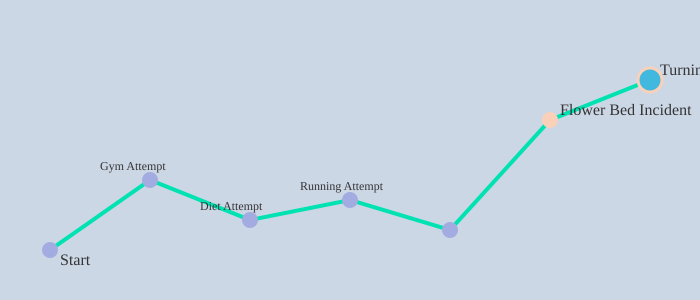
- Two months at the gym—then he quit.
- Three weeks on a low-carb diet—then gave up.
- Five days of morning runs—then stopped.
Each time, Christopher tried to win a “40 year war in a two month battle,” as Dr. Takeishi Yamamoto wisely put it. Each failure left him more resigned, reinforcing the belief that change was impossible.
The Dramatic Turning Point: The Flower Bed Incident
Everything changed one Saturday morning. Christopher’s nine-year-old son kicked a ball into the neighbor’s flower bed and asked for help. Christopher tried to retrieve it, but when he bent down, he couldn’t stand back up. Not from pain, but because he simply lacked the strength. He ended up on all fours, sweating, while his son watched in silence. The neighbor had to help him up.
Emotional Cost: Memories That Push Us to the Edge
That night, Christopher sat on the edge of his bed and cried—not because of the number on the scale, but because his son had seen him at his lowest. He realized he was creating a memory that would last a lifetime. For many, it’s not the physical struggle but the emotional pain—the missed connections, the look in a child’s eyes—that finally sparks the desire for real personal transformation.
You failed because you tried to win a 40 year war in a two month battle. – Dr. Takeishi Yamamoto
Kaizen and the Art of Starting Tiny: Why Small Wins Change Everything
Imagine paying $200 for a doctor’s visit and being told to do nothing but drink a single glass of water each morning. That’s exactly how Christopher’s journey began. After years of failed attempts to lose weight—each lasting only weeks—he found himself in Dr. Takeishi Yamamoto’s minimalist office, expecting prescriptions or a strict diet plan. Instead, Dr. Yamamoto offered something radically simple: “From today onwards, every day when you wake up, before doing anything else, you’re going to drink a glass of water.”
Why Tiny Actions Matter More Than Big Plans
This approach is rooted in the Kaizen philosophy—a Japanese concept meaning “continuous improvement.” Kaizen isn’t about overhauling your life overnight. It’s about making microscopic changes, as small as 1% better each day. Dr. Yamamoto explained, “You failed because you tried to win a 40-year war in a two-month battle.” The wisdom here is clear: your habits and identity took years to form, so expecting instant change is unrealistic.
Kaizen Philosophy for Habit Change: The Power of Small Consistent Steps
Christopher’s assignment—just a glass of water—seemed almost pointless. But that’s the genius of Kaizen. By starting with something so easy, you bypass your brain’s resistance to change. There’s no need for willpower or motivation hacks. Instead, you build behavioral momentum by proving to yourself that you can keep a promise. As Dr. Yamamoto put it:
It will prove to you that you can keep a promise to yourself.
Building Self-Trust: The Foundation of Sustainable Change
For two weeks, Christopher drank his morning water. He didn’t lose weight, but he did something far more important—he kept a promise to himself. This small win laid the groundwork for identity change. If you can trust yourself with one tiny habit, you can trust yourself with bigger ones. This is the core of effective behavior change techniques: start small, succeed, and let that success snowball.
The Compounding Effect: 1% Better Each Day
Kaizen’s magic lies in the math of compounding. Improving by just 1% daily doesn’t seem like much, but over a year, that’s a 3,778% improvement. Small consistent steps aren’t just sustainable—they’re transformative. Unlike drastic efforts that fizzle out, tiny actions stick and multiply.
Keystone Habits: The Domino Effect of Microscopic Actions
Drinking water each morning is a keystone habit. Mastering one small thing often triggers a cascade of other positive changes. Soon, your brain expects success. You start to see yourself as someone who follows through. This is the true power of Kaizen: it’s not just about results, but about becoming the kind of person who can change.
Kaizen in Action: Microscopic Steps vs. Massive Efforts
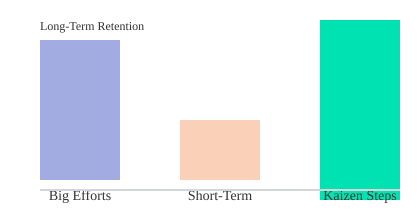
- Big, unsustainable efforts (left): quick results, but low retention.
- Short-term motivation (center): fades fast.
- Kaizen’s small consistent steps (right): highest long-term habit retention.
Kaizen philosophy isn’t just business lingo—it’s a proven path for personal transformation. By starting tiny, you build trust, momentum, and a new identity—one small win at a time.
Hara Hachi Bu and Mindful Moderation: How Japanese Eating Habits Turned the Tide
When you think about changing your eating habits, you might imagine strict diets or counting every calorie. But Japanese wisdom offers a different path—one that centers on mindful eating and moderation. The principle of Hara Hachi Bu, which means “eat until you’re 80% full,” is a cornerstone of Okinawan culture and a powerful tool for sustainable change. This simple practice, paired with mindful eating, can help you reshape your relationship with food and achieve lasting results.
Introducing Hara Hachi Bu: Eat Until You’re 80% Full
Hara Hachi Bu is not about deprivation. Instead, it’s about moderation in eating. The idea is to stop eating when you feel about 80% full and then wait 20 minutes before considering a second helping. This pause gives your body time to send fullness signals from your stomach to your brain—a process that naturally takes about 20 minutes. By practicing this mindful eating habit, you learn to separate real hunger from cravings or emotional eating.
Christopher’s Week of Half-Portions: Brutal Cravings, Unexpected Outcome
When Christopher first tried this approach, he cut his usual portions in half. The first week was tough. After every meal, he found himself staring at the stove, fighting the urge to eat more. His mind screamed, “You’re still hungry!” But he remembered Dr. Yamamoto’s advice: wait 20 minutes. If he was truly hungry after that, he could eat more.
Mindful Waiting: Listening to Your Body’s Signals
This waiting period became a form of mindful eating practice. By giving his body time to catch up, Christopher discovered something surprising. In three weeks, he only went back for seconds twice. Most of the time, the hunger faded, and he realized he wasn’t truly hungry—just used to eating more out of habit. This simple act of waiting helped him tune in to his real hunger cues and break the cycle of overeating.
Shifting from Restriction to Awareness
What makes Hara Hachi Bu so effective is that it’s not about strict rules or feeling deprived. Christopher always had permission to eat more if he needed it, but rarely did. This shift from restriction to awareness is at the heart of mindful eating practices for weight management. It’s about making conscious choices, not following rigid plans.
Okinawan Wisdom in Practice: Why Slowing Down Wins
Slowing down your meals and practicing moderation in eating does more than help with weight loss. It reshapes your hunger cues, breaks the “all or nothing” mentality, and fosters a healthier relationship with food. As Dr. Yamamoto wisely said:
It's not about the weight... It's about the direction.
By focusing on direction rather than perfection, you create space for small, sustainable changes that add up over time.
| Practice | Outcome |
|---|---|
| Half the usual plate at every meal for three weeks | Only twice needed seconds after 20 minutes |
| Mindful waiting before more food | Christopher lost 3 kg at next weigh-in |
Hara Hachi Bu and mindful moderation are more than eating strategies—they are keystone habits that can trigger positive changes in every area of your life. By choosing moderation and mindful eating, you set yourself on a path of continuous improvement, one small step at a time.
Ikigai and the Search for Deeper Motivation: Finding Your ‘Why’ Beyond Weight Loss
When you set out to change a habit—like losing weight—it’s easy to focus on the surface goal. But Japanese principles for overcoming bad habits teach us to look deeper. The concept of Ikigai—your reason for living—invites you to connect daily actions to a purpose that truly matters. This is the heart of purpose-driven habit change and the secret to personal transformation that lasts.
Drilling Down: From ‘Losing Weight’ to Powerful Personal Drivers
Imagine you’re asked, “Why are you doing all this?” At first, your answer might be simple: “To lose weight.” But as Dr. Takeishi Yamamoto explains to Christopher in his journey, that’s not the real answer. When Christopher pauses and truly reflects, he finds his deeper reasons:
- He wants to see his children grow up.
- He dreams of walking his daughter down the aisle.
- He wants more quality time with his wife.
- He longs to feel worthy of himself.
These are not just goals—they are powerful personal drivers. They are Christopher’s Ikigai. As Dr. Yamamoto says:
Your Ikigai isn't about losing weight. It's about being present for your family.
Purpose Over Motivation: Why the Lasting ‘Why’ Trumps Fleeting Inspiration
Motivation is like a spark—it can get you started, but it fades quickly. Purpose, on the other hand, is a steady flame. Research shows that when you attach habits to meaningful internal motivators, you build long-term resilience. Ikigai motivation reframes habit-building as aligning with your life’s purpose, not just chasing external results like a number on the scale.
When you know your ‘why,’ you’re less likely to give up when things get tough. Each small step—choosing a healthy meal, taking a walk, saying no to old temptations—becomes a way to honor what matters most to you.
Christopher’s Moments: Picturing a Life of Meaning
For Christopher, the turning point comes when he pictures his daughter’s wedding, family dinners, and moments of laughter with his wife. These visions are more powerful than any diet plan. They make every micro-action intentional. True transformation—the kind that lasts through setbacks—starts with finding purpose, not chasing appearances.
Identity Shifts: When Your Actions Reflect Your Values
As your habits begin to reflect your Ikigai, your identity shifts. You’re no longer just someone “trying to lose weight.” You become a present parent, a loving partner, a person who values self-worth. This shift from self-preservation to self-actualization is what Japanese wisdom encourages: build habits that fit your life, not just your diet.
From Self-Preservation to Self-Actualization: Habits That Fit Your Life
When you tie small daily habits to meaningful, personal goals, relapse becomes less likely. You’re not just avoiding bad habits—you’re moving toward a life that feels right for you. The Japanese philosophy of Ikigai encourages you to link routine to greater meaning, making every step a celebration of your unique purpose.
Remember, your Ikigai is not about the obstacle—it’s about what lies beyond it. As Dr. Yamamoto reminds us, “Weight is just the obstacle between you and your purpose.”
From Wabi Sabi to Gambaru: Embracing Imperfection—and Endurance—on the Journey
Wabi Sabi Acceptance: Progress, Not Perfection
In Japanese wisdom, Wabi Sabi is the art of appreciating imperfection and finding beauty in the incomplete. When you start breaking bad habits, it’s easy to chase perfection—never missing a day, never slipping up. But Wabi Sabi acceptance teaches you to value each small, imperfect step. Progress is rarely smooth. You might stumble, but each stumble is part of the unique pattern of your journey.
Stumbles and Slips: How Christopher Coped with Setbacks
Consider Christopher’s story. In the early weeks, he faced his first fall—missing a workout, eating late at night, or feeling unmotivated. Instead of seeing these as failures, he learned to view them as part of the process. Each relapse was a lesson, not a defeat. This shift in mindset is crucial: setbacks are information, not indictments. Accepting imperfection makes consistency—and eventual success—achievable.
Gambaru Perseverance: Endurance Over Intensity
Japanese culture also values Gambaru: a relentless commitment to keep going, no matter how small the step. Gambaru perseverance is not about working the hardest for a short time, but about enduring through ups and downs. Research shows that endurance, not intensity, is the real driver of long-term habit change. Christopher’s journey reflected this. After three weight loss relapses, he adopted the Japanese approach—focusing on incremental steps rather than dramatic changes. Over three months, his clothes started to feel loose, and his coworkers began to notice and ask what he was doing.
| Relapses Before Japanese Approach | Weight Lost (3 Months) | Strategy |
|---|---|---|
| 3 | 14 kg | Incremental Steps, Wabi Sabi & Gambaru |
Vulnerability as a Strength: Sharing the Real Journey
Another lesson from Christopher’s experience is the power of vulnerability. When his coworkers noticed his progress, he didn’t just share his wins—he talked about his setbacks, too. This openness built trust and made his journey relatable. In real life, everyone slips. Sharing your journey, not just your successes, gives others permission to be imperfect and persistent, too.
Failing Better: Setbacks as Stepping Stones
Perfection is not part of the deal. The Japanese approach encourages you to fail better—to see each setback as a chance to learn and adjust. Instead of quitting after a relapse, Christopher used each one as feedback. This mindset shift is essential for sustainable habit change. Imperfect consistency is better than flawless but short-lived bursts of effort.
Purpose is not motivation, motivation fades. Purpose is fuel that never runs out. – Dr. Takeishi Yamamoto
Japanese philosophies like Wabi Sabi acceptance and Gambaru perseverance support not just progress, but compassionate endurance. They help you see missteps as part of the journey, not the end. By embracing imperfection and committing to keep going, you build habits that last—even when life gets messy.
Real-World Results: The Ripple Effect—How Small Changes Shape Family and Life
When you think about sustainable health habits, it’s easy to focus only on numbers—steps walked, kilos lost, or calories counted. But the true power of gradual lifestyle changes often lies in the ripple effect they create, touching not just your body, but your relationships, your confidence, and even your family’s future. Christopher’s story is a powerful example of how one small step can transform not just your health, but your entire life.
Unpacking the Cascade: How Walking to the Mailbox Changed Christopher’s Relationship with His Daughter
Christopher started with the simplest of actions: drinking water in the morning, eating half his usual portion, and walking to the mailbox. At first, these micro-actions seemed almost too small to matter. But on the third day, something unexpected happened—his seven-year-old daughter saw him heading out and asked, “Dad, can I come with you?”
That short walk became a new ritual. She held his hand and, for the first time, began to share little stories about school and her best friend—things she never told him before because, as she put it, her father was always too tired to talk. This single keystone habit—a daily walk—opened a door to connection that had been quietly closed by years of exhaustion and routine.
“She talked a little about school and her best friend, things she never told him because her father was always too tired to talk.”
Unexpected Bonus: Improved Self-Image, Lighter Spirit, Restored Connection
The impact of these sustainable habits for health improvement reached far beyond the scale. Yes, Christopher lost 8 kilos in two months and eventually 14 kilos in three. But the real transformation was visible in his eyes—a new light, a sense of pride and possibility. The daily walks grew from 20 meters to longer distances. He found himself going to the corner store, not because a doctor told him to, but because his daughter wanted to join him. For the first time in years, he could do it—without shortness of breath or back pain.
The Ripple Effect: How a Keystone Habit Upgrades Other Life Areas
Keystone habits like Christopher’s daily walk often create a domino effect. As his energy and mood improved, so did his relationships. He became more present at home, more engaged with his family, and even more confident at work. These success stories of gradual lifestyle changes show that when you commit to small, consistent actions, you fuel holistic growth and resilience—not just for yourself, but for everyone around you.
- Confidence: Achieving small goals builds belief in your ability to change.
- Relationships: Shared routines foster deeper connections with children and partners.
- Career: Improved health and mood often lead to better focus and productivity.
Why Children and Partners Benefit from Your Micro-Transformations
When you make positive changes, your family notices. Children, especially, are quick to join in and mirror your habits. Partners feel the renewed energy and optimism in daily life. The ripple effect of your sustainable health habits can inspire healthier routines, more open conversations, and a stronger family bond.
Personal Aside: Recognizing Your Own Journey
Maybe you see a bit of your own story in Christopher’s journey. Perhaps you’ve started a small habit—like a morning walk or a change in your diet—and noticed subtle shifts in your home life or self-image. Remember, the impact of small changes on family dynamics is real and lasting. The most meaningful results often show up not just on the scale, but in the moments you share with those you love.
FAQs: Your Burning (and Slightly Offbeat) Questions on Kaizen & Habit Change
Can you really change your life by just drinking water every day?
Absolutely. But here’s the secret: it’s not about the water. It’s about what the act represents. When you choose to drink a glass of water each morning, you’re sending a message to your brain: “I can change.” This simple act is the first domino in a chain of Kaizen continuous improvement. With Japanese habit change, the action is less important than the proof it gives your mind that you’re not the type to give up. Over time, these small wins stack up, creating real, lasting transformation.
How small is too small to be meaningful?
If your new habit feels almost laughably easy—like putting half the food on your plate, or walking for just two minutes—you’re doing it right. Experts in incremental changes for weight loss say the “microscopic” step is the sweet spot. If you’d feel embarrassed to tell a friend how little you’re doing, you’re on the right track. Consistency, not intensity, is what rewires your brain. As Dr. Takeishi Yamamoto puts it:
If you improve 1% per day for a year, you don’t improve 365%, you improve 3,778%.
What if I mess up—do I have to start over?
Not at all. Welcome to the Japanese concept of Wabi Sabi: embracing imperfection. Both Kaizen and Wabi Sabi teach that mistakes are part of the journey. If you miss a day, simply begin again without guilt. The power of Kaizen continuous improvement lies in getting back up, not in never falling. Each restart is another step toward long-term weight loss strategies without diets or shame.
Aren’t crash diets faster?
They might seem that way—until they crash. Research shows most crash diets last less than a month, while Kaizen-style changes can sustain for years. The math of habit change is on your side: slow, steady, and nearly invisible progress wins every time. Japanese habit change isn’t about dramatic overhaul; it’s about quiet, steady progress that compounds over time.
What if my ‘why’ isn’t as noble as Christopher’s?
Your purpose doesn’t have to be grand. Christopher’s Ikigai was his family, but yours might be fitting into your favorite jeans, feeling more energetic, or simply proving to yourself that you can change. Any honest reason will serve. In Kaizen, honesty beats nobility. The key is to find a reason that matters to you—that’s what fuels consistency when motivation fades.
Can these principles help with addictions other than food?
Yes, and yes again. Whether it’s alcohol, procrastination, or screen time, Kaizen continuous improvement and Japanese habit change work across the board. The same rules apply: start with a step so small it feels silly, repeat it daily, and let your wins build. With patience, these incremental changes for weight loss or any other habit compound into transformation.
While the world chases hacks and instant results, Kaizen’s quiet power is in its gentle, nearly invisible progress. Remember: it’s not about the water, the food, or the step itself—it’s about proving, every day, that change is possible.
Conclusion: Your Life, Reimagined—Why Small Steps Make the Biggest Difference
Imagine standing at the edge of change, feeling overwhelmed by the mountain ahead. It’s easy to believe that only dramatic overhauls or bursts of motivation can lead to real transformation. But as you’ve seen through Christopher’s journey, the true engine of personal growth through habits is not found in grand gestures, but in the quiet, almost invisible power of continuous improvement—just 1% per day. This is the heart of the Kaizen philosophy for habit change: progress is not a sprint, but a gentle, daily walk forward.
Christopher’s story is proof that gradual lifestyle transformation is possible for anyone, no matter how stuck you may feel. He began with a single glass of water each morning—a step so small it seemed almost meaningless. Yet, this tiny act became the first domino in a chain reaction. Each day he kept this micro-promise, he rewired his self-belief. Over time, these consistent, incremental actions became the foundation of major transformations. The lesson is clear: tiny, consistent wins outpace gigantic but unsustainable efforts.
The Japanese philosophies—Kaizen (continuous improvement), Ikigai (purpose), Hara Hachi Bu (moderation), Wabi Sabi (acceptance of imperfection), and Gambaru (perseverance)—work together to support lasting change. They remind you that you don’t need to be perfect. In fact, celebrating imperfection is essential. Give yourself permission to chase progress, not perfection. When you stumble, as Christopher did, remember that every return to your small habits is a victory. This is how you build resilience and self-trust.
Each tiny promise you keep is daily proof that you are capable of change. Over weeks and months, these micro-actions accumulate, quietly reshaping your identity and your life. Success is usually invisible at first, but with patience, it becomes undeniable. Christopher didn’t just lose weight—he transformed his health, his relationships, and his self-image. He became a living example of how gradual lifestyle transformation, rooted in Kaizen philosophy for habit change, can ripple out to inspire others.
Now, imagine if every reader of this guide chose a ‘silly small’ action today—something so easy you can’t talk yourself out of it. What could your life look like in a year? What if, instead of aiming for instant overhaul, you simply believed that change is possible, one micro-promise at a time? The magic lies not in the size of your steps, but in the act of stepping forward, again and again.
You don’t need to overhaul your world overnight. You only need to start. Choose one tiny action—drink a glass of water, take a five-minute walk, pause before eating, or simply acknowledge your intention to change. Embrace the long game. Let the principles of Kaizen, Ikigai, Hara Hachi Bu, Wabi Sabi, and Gambaru guide you. Over time, these small acts will compound, creating a new reality for yourself and those around you.
There is real magic in the smallest steps—each one is evidence that change, no matter how microscopic, compounds and endures. Begin today. Your life, reimagined, is waiting—one tiny, consistent choice at a time.
TL;DR: Don’t chase perfection or overhaul your life overnight. Start ridiculously small—prove to yourself you can keep a promise, and let continuous improvement do the heavy lifting. Japanese philosophies like Kaizen, Ikigai, and Hara Hachi Bu offer refreshingly sustainable ways to win the battle with bad habits.
Post a Comment