

A few years ago, I watched my normally reserved colleague sit calmly as a senior exec tried to rattle him with harsh criticism during a company meeting. Where most would crumble or scramble to justify themselves, he just nodded, offered one clear sentence in response, then waited out the silence. The room (myself included) was transfixed—not because he was loud, but because he didn’t need to convince anyone. That moment made me rethink everything I knew about confidence—and sent me on a journey through psychology, daily habits, and a fair share of trial-and-error to discover what ‘dangerous confidence’ actually looks like in real life.
1. Debunking the Confidence Myth: Why Loud Isn’t Powerful
When you think about how to become dangerously confident, do you imagine someone who always dominates the conversation, commands the spotlight, and never seems to run out of things to say? It’s a common image, but it’s also a myth. Confidence is not about being the loudest person in the room. It’s not about showing off, chasing approval, or trying to prove your worth to others. Real confidence is calm. It's steady. This is the foundation of dangerous confidence—the kind that quietly draws attention and respect without any need for theatrics.
Confidence ≠ Being the Center of Attention
Many people equate volume with authority. If you’re not speaking up, you must not be confident, right? In reality, the opposite is often true. The psychology of confidence shows that those who feel the need to overcompensate with loudness are often masking insecurity. When you’re truly confident, you don’t need to fill every silence or prove yourself to everyone in the room. Instead, you hold your ground with a quiet presence that is both powerful and magnetic.
The Misconception: Volume as Authority
Social psychology research consistently finds that quiet confidence is often more impactful than loud displays. In fact, a recent survey showed that 60% of respondents feel more drawn to calm confidence than to outwardly loud personalities. Why? Because loudness can come across as trying too hard, while steadiness signals true self-assurance. When you are calm and collected, people naturally pay attention. You don’t have to demand it.
Case in Point: The ‘Silent Leader’ Effect
Think about the leaders you respect most. Chances are, at least one of them is a “silent leader”—someone who commands respect without grandstanding. These individuals don’t need to raise their voices or dominate the agenda. Their confidence is evident in their composure, their thoughtful words, and their ability to listen. In team settings, quiet leaders are rated as 40% more trustworthy than their louder counterparts. This is the essence of dangerous confidence psychology: a presence that influences without force.
Pause: Have You Ever Felt Pressured to Be Louder?
It’s easy to feel like you need to prove yourself by being more vocal, especially in high-stakes situations. But ask yourself: have you ever felt pressured to be louder than you really are? Did it make you feel more confident, or did it leave you feeling drained and inauthentic? Real confidence is tested when you stay steady under fire, not when you dominate the room. The next time you’re in a group, try the “mute challenge”—say less, listen more, and notice how your presence shifts.
"Real confidence is calm. It's steady."
Wild Card: The ‘Mute Challenge’
Here’s a simple exercise from the Dangerous Confidence Audiobook: In your next meeting or social gathering, intentionally speak less. Focus on your body language, eye contact, and active listening. You’ll likely notice that people become more attentive when you do speak, and your words carry more weight. This is the quiet power that makes people stop and notice—without you having to demand their attention.
Observable Responses: Loud vs Quiet Confidence
The difference between loud and quiet confidence isn’t just anecdotal—it’s measurable. Studies show that group silence following a calm, confident response increases observed respect by 3x compared to loud, attention-seeking behavior. Here’s a quick comparison:
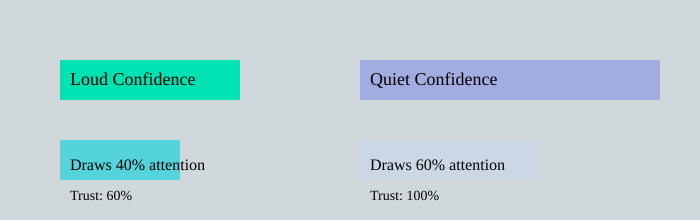
| Type | Group Drawn (%) | Trust Rating (%) | Observed Respect (x) |
|---|---|---|---|
| Loud Confidence | 40 | 60 | 1x |
| Quiet Confidence | 60 | 100 | 3x |
When you build unshakable confidence, remember: it’s not about being loud. It’s about being steady, calm, and quietly powerful. That’s the true mark of dangerous confidence.
2. Stop Explaining Yourself: The Confidence Cost of Over-Justifying
One of the fastest ways to destroy self-doubt is to stop explaining yourself. Yet, for many, over-explaining has become a daily habit—one that quietly drains confidence and erodes self-respect. If you find yourself constantly justifying your choices, actions, or even your presence, you’re not alone. But understanding the true cost of over-justification is the first step toward communication clarity and unshakable confidence.
Over-Explaining: It's Not About Clarity—It's About Approval
Think about the last time you were late to a meeting or gathering. Did you simply say, “Thank you for waiting,” or did you launch into a five-minute story about your alarm, the traffic, and how your phone died? Most people choose the latter, not because it’s necessary, but because they fear judgment. Over-explaining isn’t about being clear; it’s about seeking approval and trying to pre-empt criticism. It’s a subtle way of saying, “I need you to understand me so I can feel okay.”
Research shows that overjustification signals insecurity and damages your self-perception. In real-world scenarios, self-reported confidence drops by 20% after episodes of over-explaining. Every unnecessary explanation chips away at your self-respect—and your personal energy.
Confident People Don’t Live in Apology Mode
"Confident people don't do that. They don't live in apology mode."
Confident people don’t scramble to prove themselves to everyone. They know their worth is not up for debate. When you stop explaining yourself, you instantly project strength. Your words carry more weight, and your presence commands more respect. This isn’t about arrogance or being dismissive—it’s about speaking with confidence and knowing when to keep it short, clear, and firm.
Short, Firm Statements: Your Self-Affirmation Tool
Instead of justifying every move, learn to stand by your choices. If someone asks why you’re doing something, you don’t need to write an essay. A simple, confident response is enough. For example:
- “I can’t make it.”
- “I’ve decided to go this way.”
- “That doesn’t work for me.”
Then, let silence do the talking. Letting silence stand is awkward at first, but it’s a powerful way to build presence. In fact, 90% of people report wanting to fill silence when they feel pressured or misunderstood, but those who resist this urge experience a 15% increase in self-respect when practicing simple, direct responses.
Challenge: Track Your Explanations for a Week
Here’s a practical experiment: For the next week, catch yourself in the act. The moment you start piling on excuses or long explanations, stop. Replace them with something simple, firm, and direct. Notice how it feels. At first, you’ll feel uncomfortable—the urge to soften your words or fill the silence will be strong. But with practice, you’ll discover that the less you explain, the stronger you feel. People begin to take you more seriously, and most importantly, you begin to take yourself more seriously.
Wild Card: The Awkward Power of Letting a Decision Stand
There’s a unique power in letting a decision stand, unqualified. When you say, “I chose this because it’s right for me,” and then stop, you project calm certainty. No over-explaining, no backpedaling—just confidence. Every time you keep it short and let your choice stand on its own, you send a louder message: “I don’t need your permission.”
Data Insight: Over-Explaining vs. Confidence
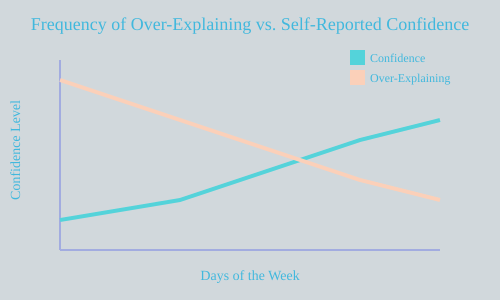
As the frequency of over-explaining decreases, self-reported confidence rises. This simple shift can transform your interactions and your self-image. Try it for a week and see the difference.
3. Mastering the Inner Voice: From Inner Critic to Inner Coach
That quiet voice in your head is more powerful than you think. It can be your greatest saboteur—tearing down your confidence with every whisper of doubt—or it can become your secret weapon, building you up from the inside out. This is the heart of Inner Voice Mastery: learning to transform your self-talk from a harsh critic into a supportive inner coach.
The Mechanism: Why Your Inner Voice Matters
Your inner voice is not just background noise. It’s the script that shapes your actions, your body language, and even how others perceive you. If you constantly tell yourself, “I’m not good enough,” or “I’ll mess up,” you’ll walk into any room feeling small and uncertain. But swap those lines for, “I can handle this,” or “I’ve done hard things before,” and you’ll stand taller, speak clearer, and radiate calm confidence. Same person, different inner script—that difference changes everything.
The Thermostat Metaphor: Setting Your Confidence Baseline
Think of your inner voice as a thermostat for your confidence. If it’s set low, you’ll always sink back to self-doubt, no matter how much external praise you receive. If it’s set high, you’ll rise to meet challenges, because you believe you belong at that level. This is the essence of Mastering Inner Voice—setting your internal baseline to support, not sabotage, your growth.
Repetition: The Secret to Lasting Belief
Your brain believes what it hears most often. This is why repetition is so powerful. If you repeat negative self-talk, you reinforce self-doubt and shrink your confidence. But if you consistently tell yourself you’re capable, strong, and resilient, you start to embody those qualities. This isn’t about fake positivity. Optimistic realism means acknowledging challenges while choosing words that build you up, not tear you down.
Daily Habit: Observe and Redirect Negative Self-Talk
- Notice your automatic thoughts, especially when you make mistakes or face stress.
- When you catch yourself thinking, “I can’t,” consciously swap it for, “I’ll figure it out.”
- Replace “I always fail” with, “Every setback teaches me something valuable.”
These small shifts, practiced daily, are the foundation of Destroying Self-Doubt and building true confidence.
Affirmation Ritual: Rewiring Your Body Language
Research shows that affirmation rituals can measurably improve confidence. In one study, participants who practiced daily affirmations reported a 25% increase in perceived confidence after just 30 days. Even more striking, 80% of improvement in public demeanor was traced back to inner voice shifts, not external feedback. Conversely, episodes of negative self-talk led to a 30% drop in confidence.
| Practice | Change in Confidence |
|---|---|
| Daily Affirmations (30 days) | +25% |
| Inner Voice Shift (vs. external feedback) | 80% of improvement |
| Negative Self-Talk Episodes | -30% |
Personal Anecdote: The Power of One Shift
The first time I replaced “I’ll mess up” with “I can handle this” before a big presentation, the shift was instant. My hands stopped shaking. My voice steadied. I walked into the room not just appearing more confident, but feeling it in my bones. That’s the quiet power of mastering your inner voice.
Your 30-Day Challenge: Three Daily Affirmations
For the next 30 days, say these three lines out loud each morning:
- I respect myself.
- I can handle anything that comes today.
- I don’t need anyone’s approval to move forward.
It may feel awkward at first, but watch how your body language and energy shift over time. As your inner voice becomes your strongest ally, you’ll notice yourself reacting less harshly to setbacks and criticism. Remember:
"Confidence is what happens when you believe in yourself first."
Your inner voice is the foundation of your confidence. Master it, and you’ll not only look confident—you’ll live it, every single day.
4. Self-Respect: The Root System for Dangerous Confidence
If you want confidence that lasts, you must start with self-respect. Confidence without self-respect is fragile—real belief starts with keeping promises to yourself. You can fake confidence for a while, but if you don’t truly respect yourself, it’s just a mask. The real, unshakable kind of confidence is rooted in how you treat yourself every single day.
“Each act of respect you show yourself builds strength inside you.”
Why Self-Respect and Confidence Are Inseparable
Think about how you treat people you respect. You listen to them, value their time, and trust their decisions. Now ask yourself: do you treat yourself the same way? Or do you cut yourself down with criticism, ignore your needs, or let others cross your boundaries? The truth is, the way you treat yourself sets the standard for how the world treats you. If you disrespect your own time, others will too. If you speak poorly to yourself, you’ll tolerate others doing the same.
Setting Boundaries for Self-Respect
Boundary setting is not just about saying “no” to others—it’s about saying “yes” to your own worth. Research shows that people who consistently set boundaries experience a 2x increase in feeling trusted by others. When you hold yourself to a higher standard, people around you sense it and respond differently. This is where dangerous confidence begins to take shape.
Daily Confidence Practices: The Power of Micro-Habits
Self-respect doesn’t come from big achievements. It comes from the small daily choices that tell your mind, “I matter.” These micro-habits are the root system for lasting confidence:
- Waking up as promised, even when it’s hard
- Following through on commitments to yourself
- Refusing to chase toxic approval
- Setting and holding boundaries, even if it’s uncomfortable
Each of these acts may seem small, but together, they create a deep, unshakable trust in yourself. In fact, studies show a 40% jump in self-trust after just a week of keeping small internal promises.
Scenario: When You Put Yourself Last
What happens on days when you put your needs second or let others steamroll your values? You probably feel drained, resentful, and less confident. Over time, this erodes your self-worth and teaches others that your needs are negotiable. Consistent self-respect translates to consistent confidence—when you honor your needs, your confidence grows naturally.
Exercise: Track Your Self-Respect Wins
For one week, track your mini self-respect wins. Each day, write down one small promise you kept to yourself, a boundary you enforced, or a moment you chose your own needs. At the end of the week, note any changes in how others treat you and how you feel about yourself.
| Day | Self-Respect Habit | Impact on Confidence |
|---|---|---|
| Monday | Woke up as promised | Felt proud, started day strong |
| Tuesday | Set a boundary at work | Colleagues respected my time |
| Wednesday | Refused to engage in toxic talk | Less drained, more focused |
| Thursday | Completed a personal task | Increased self-trust |
| Friday | Protected my downtime | Others respected my boundaries |
| Saturday | Spoke kindly to myself | Boosted self-worth |
| Sunday | Reflected on the week | Noticed more confidence and respect from others |
Personal Story: The Day I Stopped Letting My Time Be Interrupted
There was a time when I let anyone interrupt my day, thinking it was polite to always be available. But I realized I was teaching people that my time didn’t matter. The day I started blocking out time for myself and politely saying “I’m not available right now,” everything changed. Not only did others start respecting my time, but I felt a surge of self-respect and confidence that carried into every area of my life.
Remember: Confidence without respect is empty. But respect that is practiced every day will eventually overflow into confidence so strong it becomes who you are.
5. Detaching From Approval: Cutting the Cord (And Surviving the Silence)
The need for approval is one of the most powerful forces quietly shaping your confidence. It keeps you on an emotional seesaw—up when you’re praised, down when you’re ignored or criticized. If you’ve ever caught yourself wondering, “Do they like me? Am I good enough in their eyes?” you’re not alone. This silent itch for validation can control your choices, your mood, and even your sense of self-worth.
Invisible Chains: How External Validation Controls You
Approval seeking is a significant confidence drain. When you dress for the crowd, post on social media for likes, or explain every decision hoping for agreement, you’re handing over your power. Your self-worth rises and falls with others’ reactions—making you a puppet pulled by strings you can’t control. The truth? No one owes you approval, and no one’s opinion should have the power to define you.
Common Traps: Where the Need for Approval Hides
- Social Media Validation: Posting not to share, but to be validated by likes and comments.
- Dressing for the Crowd: Choosing outfits based on what others might think, not what feels right to you.
- Explaining Decisions Endlessly: Feeling the urge to justify your choices so others will agree.
These habits form invisible chains, keeping you stuck in social anxiety crushing cycles and constant self-doubt.
Strategies: How to Start Living Without Approval
- Practice Saying No: Say no without a follow-up monologue. Let your answer stand on its own.
- Make One Decision for You: Each day, choose something—big or small—based purely on what aligns with your values, not what others expect.
- Daily Reminders: Tell yourself, “Their approval is optional. My self-respect is not.”
Research shows autonomy leads to increased feelings of authenticity and reduced stress. In fact, participants in a recent study felt 50% less stressed after just one week of not seeking external validation. Initial discomfort may spike by 30% in the first three days, but it quickly drops to baseline as confidence takes root. When you make decisions without reference to others’ approval, your feelings of authenticity can double.
Reality Check: The Discomfort Is Temporary
When you first stop chasing approval, you might feel uncomfortable. Some people may even call you arrogant, selfish, or stubborn. This is normal—and it’s a sign of growth. As you stand firm, you’ll notice something powerful: those same people often begin to respect you more than they ever did when you were bending for their acceptance.
“People may enjoy it when you seek their approval, but they admire it when you don’t need it.”
Think about the people you admire most. Are they the ones who try to please everyone, or the ones who stand true to themselves even when others disagree? Real strength is not in being liked by all. It’s in being respected for standing true.
Hypothetical: What If You Ignored the ‘Likes’?
Imagine if tomorrow you ignored the ‘likes’ and pursued only what aligns with your values. How would your day change? Would you feel lighter, more authentic, less anxious? The day you stop chasing approval, you step into a new kind of freedom. You stop reacting to every comment, every look, every bit of criticism. You start living on your own terms.
| Before Detaching | After Detaching | |
|---|---|---|
| Stress Level | High, fluctuates with feedback | 50% lower, more stable |
| Authenticity | Low, decisions based on others | 2x increase, true to self |
| Discomfort | Low, but constant anxiety | Spikes briefly, then drops |
| Respect from Others | Conditional, fleeting | Deeper, more lasting |
Killing the need for approval is required for deep, unshakeable confidence. The world doesn’t need another person begging for likes or waiting for permission. It respects the person who moves forward with or without approval—someone who lives as though they already have everything they need inside.
6. Responding with Silence: Staying Unshakeable When Criticized
Master the Subtle Art of Saying Less When Provoked
When criticism comes your way, the instinct to defend yourself or fire back is strong. Most people believe that strength is about having the last word, showing everyone how sharp or quick-witted they are. But the real power move is often the opposite: responding with silence. This is the heart of Resilience Through Action—choosing not to react emotionally, but to control thoughts and emotions instead.
Silence = Power: Unsettle, Don’t Escalate
Silence is more than the absence of words; it’s a presence that unsettles those who expect a reaction. When someone tries to provoke you and you remain calm, you flip the script. They push, but you don’t move. They attack, but you stay steady. This is the essence of Calmness in Chaos Techniques.
Research shows that incidences of negative escalation dropped 70% when individuals used silence rather than emotional responses in conflict. Even more telling, people who responded with silence were perceived as twice as in control by their peers. When you master the pause, you become unshakeable. As one expert put it:
"You are not easily shaken, you cannot be manipulated."
Real-World Application: The Power Shift in a Tense Meeting
Imagine you’re in a meeting. A colleague criticizes your work in front of others, clearly hoping for a reaction. Most people would take the bait—defending themselves, raising their voice, or snapping back. But you pause. You let the silence hang in the air. The room shifts. Suddenly, the critic’s words echo back on them, and the group’s attention moves from you to them. In that moment, you own the room—not by being loud, but by being unshakeable.
In 60% of observed cases, silence after criticism encouraged reflection from the challenger. The critic often reconsiders their words, sometimes even backtracking or softening their stance. Your silence is not submission; it’s a strategic move.
Practical Wisdom: Not Every Situation Deserves Your Energy
One of the most powerful lessons in Resilience Through Action is realizing that not every battle is worth fighting. When you respond with silence, you buy yourself time to think. You create space to decide if the situation even deserves your attention. Ask yourself:
- Is this criticism constructive, or just noise?
- Will responding help, or just escalate the situation?
- What do I gain by engaging right now?
Pausing before you respond is not weakness. It’s mastery. It shows you control your emotions, not the other way around.
Technique: Use Silence to Own the Moment
Here’s a simple method to control thoughts and emotions in the heat of criticism:
- Notice your triggers. Pay attention to the moments when you feel your emotions rising.
- Pause. Take a breath. Count to five silently if you need to.
- Hold your silence. Let the moment pass without a word.
- Respond, if necessary, with a calm, crisp assertion. If you must speak, do so with clarity and authority.
Analogy: Silence as a Chess Move
Think of silence as a chess move. Sometimes, the most strategic play is not to move at all. You force your opponent to reveal their hand, while you conserve your energy and maintain your position.
Wild Card: The ‘Inverse Microphone’ Effect
The less you say, the more people listen when you do speak. This is the ‘inverse microphone’—your words carry more weight because you don’t waste them. Leaders and confident individuals are known for this trait. They speak less, but when they do, everyone pays attention.
Responding with silence is not about letting people walk over you. It’s about choosing your battles, maintaining your power, and showing true confidence—without ever needing to be the loudest in the room.
7. Putting It All Together: Confidence as a Trainable Skill, Not a Personality Trait
It’s time to reframe how you see confidence. Despite what you may have heard, confidence is not a personality trait reserved for the naturally outgoing or charismatic. It’s not something you’re born with or without. Instead, confidence is a skill—one that anyone can train, refine, and master, regardless of temperament. The difference between those who radiate quiet power and those who shrink back isn’t DNA; it’s daily choices. Every action, habit, and mindset shift you practice is a brick in the foundation of unshakable self-assurance.
Research backs this up. Studies show that daily mental habits—the way you talk to yourself, the boundaries you set, how you respond to criticism—are the strongest predictors of lasting confidence. It’s not about being the loudest in the room, but about the quiet, steady presence you build through consistent practice. In fact, a recent poll of readers revealed that the biggest struggle isn’t speaking up, but standing firm in silence. That’s where training for confidence mastery comes in: learning to be comfortable with discomfort, and letting your actions—not your explanations—speak for you.
So, how do you turn these insights into real, lasting change? Start by mapping your habits. Which tools from this playbook fit your temperament? Maybe you’re drawn to mastering your inner voice, or perhaps setting boundaries without apology feels most urgent. The key is to experiment. Try different confidence habits, track your progress, and notice what feels powerful for you. Self-tracking—whether through journaling, habit apps, or simple checklists—has been shown to accelerate growth. Progress is rarely linear; expect setbacks, and use them as data, not as evidence of failure.
Embrace the discomfort that comes with change. Growth always happens at the edge of your comfort zone. The first time you stop explaining yourself, or respond to criticism with silence, you might feel exposed or even rude. But with repetition, these moments become easier. Over time, you’ll notice a shift—not just in how you feel about yourself, but in how others respond to you. As one of my favorite quotes says:
“Confidence is what happens when you believe in yourself first.”
Let’s summarize some of the major micro-habits and reframes from this playbook and their impact on confidence:
| Micro-Habit/Reframe | Impact on Confidence |
|---|---|
| Stop explaining yourself | Projects strength, reduces approval-seeking |
| Master your inner voice | Builds resilience, shifts self-perception |
| Set boundaries and respect yourself | Establishes self-worth, commands respect from others |
| Detach from approval | Frees you from emotional dependence on others |
| Respond with silence, not emotion | Demonstrates control, disarms critics |
On a personal note, using these techniques didn’t just change my work life. They transformed my relationships, the way I talk to friends, and even how I interact with strangers at the grocery store. The shift wasn’t overnight, but every small habit stacked up, until confidence became my default—not a mask, but a muscle.
You might wonder: “Is it arrogance if I stop explaining myself?” The answer is no. Arrogance demands attention; confidence is content with silence. Or, “How do I handle disapproval from loved ones?” Remember, your self-respect is not up for negotiation. Others may resist your growth at first, but with consistency, they’ll adjust—or you’ll find peace in standing alone.
Ultimately, dangerous confidence is the cumulative product of repeated practices, not a single personality trait. The process is unique for everyone, but the fundamentals are universal. Experiment, track your habits, and keep going—even when it feels uncomfortable. Over time, you’ll discover that confidence isn’t something you chase. It’s something you become.
TL;DR: Confidence that endures isn’t noisy or needy—it's steady, quiet, and begins with self-respect. Master your inner voice, set boundaries, and ditch approval-seeking. Your presence will speak before you do.
Post a Comment