

I remember staring at my browser in disbelief with 37 job tabs open, feeling like a contestant in a reality show nobody wants to win: 'Who Gets the Paycheck?' If you've been laid off, offered less money for the same grind, or just doom-scrolling news of the next corporate bloodbath, welcome. You're not alone. The 2025 job market isn’t just about finding work—it's about dodging automation, shareholder greed, and the creeping sense that nobody's really safe. Let's jump into the real, raw, and unexpectedly personal side of surviving work in a world obsessed with efficiency (and robots).
AI Didn't Just Take Your Job—It Changed the Whole Playbook
It’s not just you. The job market in 2025 feels like it’s been flipped upside down, and AI is at the center of it all. If you’ve been laid off recently, you’re not alone—far from it. Corporate Layoffs Statistics 2025 show that a staggering 13.8 million layoffs were reported in the US between January and August alone. But the real numbers are even higher, thanks to the rise of shadow layoffs and contract work that rarely make the headlines.
From 10 Years to Gone Overnight: The Human Side of Mass Layoffs
Personal stories are everywhere. One day you’re celebrating a decade at your company; the next, you’re out the door. As one worker put it,
"I got laid off today. After 10 years."Another shared,
"I told you guys I was let go today after 20 years."These aren’t isolated incidents. Even executives—people with 18 years at tech giants like Microsoft—are being shown the door. No one is safe, not even at the top.
Corporate Giants Are Slashing Workforces—And Fast
Look at the headlines and you’ll see a who’s-who of American business making deep cuts. Amazon layoffs in 2025 alone reached over 14,000 in a single round, with a stated goal to cut 600,000 jobs by 2033. UPS layoffs hit 48,000, and insiders warn that number could balloon to 480,000 as automation takes over. Meta, Ford, Target, GM—each has announced major layoffs, sometimes multiple rounds in just one month. The numbers are dizzying:
- Amazon: 14,000 layoffs in one event; 600,000 target by 2033
- UPS: 48,000 layoffs in 2025; automation could push this to 480,000
- GM: 1,700 layoffs
- Meta, Ford, Target: Multiple rounds, thousands affected
- US Total (Jan-Aug 2025): 13.8 million layoffs
Open Jobs, Lower Wages—Employers Betting on Desperation
Even if you’re lucky enough to get a job offer, it’s likely for less pay than before. Companies know people are desperate. Offers come in with slashed salaries, fewer benefits, and little security. The message is clear: take it or leave it. As one job seeker put it,
"I keep getting job offers that are extremely lowered wages due to them knowing people are desperate."
The Shadow Layoff System: Contract Work and Hidden Job Losses
Not all layoffs make the official stats. The rise of shadow layoffs and contract work means companies are quietly cutting costs by shifting to part-time or contract roles. These workers don’t get retirement plans, healthcare, or severance. Thanks to loopholes in laws like the Warren Act, these layoffs often go unreported. In fact, up to 30% of job losses in 2025 are from these hidden layoffs, making the real impact of Job Market Trends 2025 even more severe.
SVG Chart: Corporate Layoffs Statistics 2025
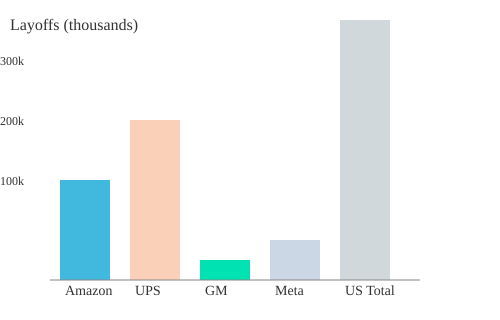
Layoffs are everywhere, and the playbook has changed. AI didn’t just take your job—it rewrote the rules for everyone.
Greed, Growth, and the Shareholder Showdown
If you’ve ever felt like just another number in a spreadsheet, you’re not alone. In 2025, the reality of work is that public companies prioritize shareholder returns over worker security—no matter how profitable they are. The pressure to show growth every quarter, to keep Wall Street happy, has created a ruthless cycle of layoffs, wage cuts, and job offers that feel more like stopgaps than real opportunities. Wage Cuts and Job Offers 2025 are shaped less by company needs and more by what makes investors smile.
Layoffs After Record Profits: The New Normal
It sounds backwards, but Corporate Layoffs Statistics 2025 show that sky-high profits don’t protect workers—they often put them at greater risk. Amazon, for example, raked in $638 billion in revenue in 2024. Microsoft hit $245 billion. Yet, both companies slashed jobs, citing “efficiency” and “operating like a startup.” The message is clear: even when business is booming, your job isn’t safe if it means a slightly better earnings report.
“A company’s job is not to serve as welfare for the public. It solves a problem.”
That’s the line you’ll hear from executives, and it’s not just talk. When Microsoft let go of Ron Buckton—a veteran who spent 18 years building tools like TypeScript (used by over 5 million developers)—it wasn’t because he stopped contributing. It was because, as one insider put it:
“Executives looked at a spreadsheet, saw his salary, and decided that number was too big.”
This is the cold logic driving Job Market Trends 2025. It’s not about loyalty or impact. It’s about numbers, and the only numbers that matter are the ones that make shareholders richer.
Rationality vs. Empathy: When Growth Hits Home
Here’s the uncomfortable truth: we all want growth—until it’s our own paycheck on the line. It’s easy to cheer for efficiency and higher stock prices when it means your 401(k) grows. But when you’re the one getting the layoff email, suddenly the rational arguments feel a lot less fair. The system is designed so that everyone is generous with other people’s money, but ruthless with their own.
Famous Firings and the Efficiency Myth
- Amazon: Laid off thousands, aiming to “operate like the world’s largest startup.”
- Microsoft: Fired Ron Buckton after 18 years, despite massive profits.
- Meta, Google, Facebook: All cut staff while reporting billions in revenue.
And it’s not just about full-time employees. The rise of part-time and contract work is a shadow layoff system. These workers don’t get retirement, healthcare, or severance—and their exits rarely make headlines. In fact, if you count all employment types, 13.8 million layoffs happened from January to August 2025 alone, a staggering figure hidden behind official statistics.
When Executives Say the Quiet Part Out Loud
Some leaders don’t even hide their intentions. Property developer Tim Garner famously argued that unemployment needed to rise by 40-50% to “put workers back in their place.” The goal, he said, is to “remind people that they work for the employer.” It’s a chilling reminder that, for many at the top, efficiency means pain for everyone else.
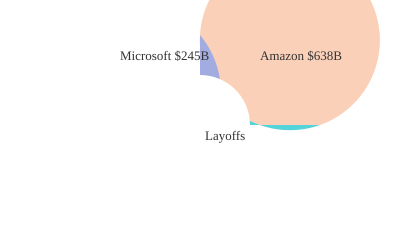
In 2025, the shareholder showdown is real—and for most workers, it’s a losing battle. The numbers, the headlines, and the personal stories all point to the same truth: corporate profitability doesn’t prevent layoffs; it often incentivizes them.
Life in the Robot Lane: Automation Runs Amok
Welcome to the new reality of work, where Automation Replacing Jobs 2025 isn’t just a scary headline—it’s the daily grind. Robots and AI aren’t just coming for the cool jobs; they’re already taking over the dullest, most repetitive, and even the most dangerous ones. If you’ve ever worked in a warehouse or know someone who has, you know these jobs aren’t exactly dream gigs. As one worker put it, “People take these jobs because they have to, not because they want to.”
Robots Don’t Strike, Get Hurt, or Complain
Let’s face it: machines don’t need bathroom breaks, don’t get injured, and definitely don’t organize strikes. Unlike warehouse workers who face overwork, injuries, and even life-threatening conditions (remember the tornado tragedy at an Amazon facility?), robots just keep going. No sick days, no overtime pay, and no complaints. As one exec bluntly put it:
“A robot does the same thing and you don’t have to pay $75 an hour.”
Rebranding Automation: “Advanced Technology”
Here’s a fun twist: companies know that “automation” and “AI” sound scary, so they’re rebranding these terms as “advanced technology” in hiring memos and public statements. It’s a softer way to say, “We’re replacing you with a robot.” But the impact is the same. In a leaked Amazon document, executives openly discussed eliminating 600,000 jobs by 2033 through automation and robotics. That’s not a typo—six hundred thousand.
One Person, Ten Jobs: The Rise of AI Agents
It’s not just about robots moving boxes. The Impact of Robotics on Workforce is reaching into offices, too. AI agents are now being trained to do the work of entire teams. Imagine a 10-person team reduced to just one person managing the AI. That’s not science fiction—it’s happening now. As Amazon’s CEO Andy Jassy told employees, “We have strong conviction that AI agents will change how we work. There will be billions of these agents. We will need fewer people.” The message is clear: job loss isn’t a possibility, it’s a plan.
Who’s at Risk? Not Just Warehouse Workers
It’s not just the folks on the warehouse floor. At Meta (Facebook), AI is being developed to write code at near-human levels. Junior coding jobs are already on the chopping block, and mid-level roles are next. UPS is also eyeing automation, with up to 480,000 jobs at risk if they go fully robotic. The trend is clear: repetitive, hazardous, or low-prestige jobs are first in line.
| Company | Jobs at Risk/Targeted | Automation Details |
|---|---|---|
| Amazon | 600,000 roles | Warehouse automation by 2033 |
| UPS | 480,000 jobs | Potential if fully automated |
| Meta (Facebook) | Unknown | AI agents to write majority of code, replacing some developer jobs |
Personal Tangent: The Golden Retriever Experiment
On a lighter note, I once tried to train my golden retriever to sort packages. Spoiler: it didn’t end well. He ate a shipping label, chased his tail, and then took a nap on the conveyor belt. Maybe robots aren’t so bad after all—at least they don’t drool on the merchandise.
With automation trends expected to displace up to 92 million jobs worldwide, the question isn’t if you’ll feel the change—it’s when. The future of work is here, and it’s running on code, not coffee.
Grads, Good Luck: A Brutally Honest Unemployment Tale
Let’s not sugarcoat it: Unemployment Rates for Recent Graduates 2025 are brutal. If you’re a new college grad, you’re staring at a 15.3% unemployment rate in your first year after graduation—more than double the US average. The classic “get a degree, get a job” path? It’s broken, and the numbers prove it.
| Country | New Grad Unemployment Rate (2025) | Grads Competing per Job |
|---|---|---|
| United States | 15.3% | Data not available |
| United Kingdom | Data not available | 1,220,000 : 17,000 |
Degrees Matter Less, Skills Matter More
Here’s the harsh reality: Over-qualification and underemployment are the new normal. You might have a diploma, but so does everyone else. In the UK, 1.22 million graduates fought for just 17,000 jobs last year. That’s not a typo. The US is seeing similar shocks, with more grads than jobs and no sign of relief.
So what are employers actually looking for? Skills-based hiring is the new gold standard. Nearly 90% of employers now say they care more about what you can do than what’s printed on your degree. If you can’t prove you have the right skills—coding, data analysis, design, or even advanced communication—your application is likely to get ignored.
Student Loans Don’t Wait for a Paycheck
Meanwhile, your student loans are still racking up interest. Many grads are forced to take jobs outside their field—sometimes far outside—just to keep up with payments. That means your first “real” job might have nothing to do with your major, and you might be earning less than you expected. Wages for entry-level grads are stagnant or even dropping, making it harder to get ahead.
Automation: Raising the Bar, Closing Doors
Automation and AI aren’t just replacing senior workers—they’re eliminating junior positions, too. Entry-level jobs are disappearing, and the ones that remain demand more. The bar keeps rising. As technology gets smarter, the market only welcomes those with elite skills or super-high IQs. As one observer put it:
"You can't train a dog to use a typewriter. You can't train a person to do some jobs."
Some roles now require such advanced skills that no amount of training will get you there if you don’t have the right foundation. The more tech advances, the higher the threshold becomes. It’s a tough pill to swallow, but it’s the reality for many new grads.
What Does This Mean for You?
- Be ready to apply for jobs outside your degree.
- Focus on building real, tangible skills—think coding, analytics, or digital marketing.
- Don’t expect your diploma to open doors on its own.
- Prepare for a crowded, competitive market where only the most adaptable survive.
The world of work in 2025 isn’t just tough—it’s tangled, unpredictable, and, for new grads, often unfair. But knowing the reality is the first step to surviving it.
Hidden Workforce: The Shadow Economy and Contract Worker Surge
When you check the latest Labor Market Update 2025 or scroll through headlines about job market trends, you’ll see numbers that sound huge—like 13.8 million layoffs reported in the US from January to August 2025. But here’s the uncomfortable truth: those numbers barely scratch the surface. There’s a hidden crisis happening right now, and it’s all about the rise of contract work, gig jobs, and the so-called shadow layoffs that never make it into the official stats.
The Shadow Layoff System: What’s Really Happening?
Let’s get real. Companies everywhere are quietly shifting away from traditional full-time employees. Instead, they’re hiring more part-time and contract workers. Why? It’s simple—cost cutting. When you’re a contractor, you don’t get retirement plans, healthcare benefits, or even a severance package if you’re let go. And here’s the kicker: the Warren Act doesn’t require companies in every state to report layoffs of part-time or contract workers. That means a huge chunk of job losses—about 30% in 2025—are completely off the books.
“If we account for all employment type, we've actually seen 13.8 million layoffs…”
But if you include the shadow data, the pain is much deeper. That 13.8 million figure? It’s likely missing nearly a third of the real layoffs, because contract and gig workers are invisible in the official count.
What Workers Lose in the Shadow Economy
- No retirement plans: Contractors are on their own for saving for the future.
- No healthcare: Benefits are rare, leaving many scrambling for expensive private insurance or going without.
- No severance: When the contract ends, you’re out—no cushion, no warning.
This isn’t just a numbers game. It’s about real people facing real uncertainty. The so-called “freedom” of the gig economy often means terrifying instability. Sure, you can set your own hours as an Uber driver or freelance designer, but is that freedom if you’re just one canceled contract away from financial disaster?
Who’s Counting the Shadow Workforce?
Official job stats don’t show the full picture. The government’s unemployment rate leaves out millions of people who are technically “working” but living with zero job security. That’s why Job Market Trends 2025 are so misleading. The shadow workforce is growing, but it’s mostly missing from political debates and policy discussions.
Ask yourself: Is your Uber driver really gig-happy, or just out of options? For many, contract work isn’t a choice—it’s the only way to survive after a layoff that never made the news.
AI and the New Precarity
It gets even more tangled with AI. Companies are now using AI agents to do the work of entire teams. Imagine a 10-person team reduced to just one person managing the AI. It’s not about replacing everyone—it’s about replacing nine out of ten, and giving the last one a superhuman workload. The rest? They’re pushed into the shadow workforce, scrambling for contract gigs with no safety net.
The bottom line: Shadow Layoffs and Contract Work are making the real unemployment crisis in 2025 far worse than the headlines suggest. The pain is deeper, the security is gone, and the future of work is more uncertain than ever.
What Now? Adapt, Upskill, or... Move to the Woods? (Conclusions & FAQs)
Let’s be honest—if you’re over 50, the “future of work” might feel less like a promise and more like a threat. The tangled reality of work, AI, and surviving 2025 is hitting older workers especially hard. You might have spent decades building a career, only to find yourself forced out by layoffs, then forced back in by the rising cost of living or lost savings. It’s a cycle that’s become all too common, and it’s not just about pride—it’s about survival.
Age Discrimination in Hiring 2025: The Silent Wall
Trying to re-enter the workforce after 50? You’re not alone, but you’re also not imagining things if it feels harder than ever. Age discrimination in hiring 2025 is real. Employers may not say it out loud, but resumes with decades of experience often get skipped for being “overqualified” or “not a cultural fit.” The result? Many seasoned professionals end up in lower-paying gig work—or, in the worst cases, without a roof over their heads.
Economic Inequality and Job Loss: The New Reality for Older Workers
According to the Department of Health and Human Services, people aged 50 and older are now the fastest growing group of those experiencing homelessness. The numbers are staggering: homelessness among people 50+ is projected to double or even triple by 2030. This isn’t just a statistic—it’s a warning. The richest country in the world is seeing its most experienced workers slip through the cracks.
'According to the Department of Health and Human Services, people aged 50 and older are the fastest growing group of those experiencing homelessness.'
Why is this happening? Many older workers simply don’t have enough saved for retirement. Social Security contributions don’t stretch as far as they used to, and the safety net feels more like a thread. When layoffs hit, there’s often no cushion to fall back on. Returning to work doesn’t guarantee stability, either. Some end up in the gig economy, piecing together income with no benefits or security. Others, heartbreakingly, end up in tents instead of offices.
Labor Market Resilience: Is Upskilling Enough?
So, what are your options? Adapt, upskill, or… move to the woods? It’s a lonely joke, but for some, it’s not far from reality. The push to “upskill” is everywhere, but let’s be real: learning new tech or switching careers at 55 isn’t as simple as a LinkedIn course. Labor market resilience is important, but it’s not a magic fix. The system itself needs to change, but until then, here’s what you can do:
- Stay connected: Networks matter. Reach out to former colleagues, join professional groups, and don’t be afraid to ask for help.
- Keep learning: Upskilling is tough, but even small steps—like digital literacy or remote work skills—can help.
- Know your rights: Age discrimination is illegal. If you suspect it, document everything and seek advice.
- Explore all options: Sometimes, part-time or consulting work can bridge the gap.
FAQs
- Is age discrimination in hiring really that bad in 2025?
Yes. Many older workers report being overlooked or dismissed due to their age, despite experience. - Will upskilling guarantee job security?
Not always, but it can improve your chances. The job market is changing fast, so adaptability helps. - What if I can’t find work?
Seek support from local organizations, government programs, or advocacy groups focused on older workers.
Trading an office for a tent in the woods shouldn’t be the punchline to your career story. But for too many, it’s becoming a reality. The time to act is now—before the statistics double or triple, and before the woods become the new office for America’s most experienced workers.
What Now? Adapt, Upskill, or... Move to the Woods? (Conclusions & FAQs)
Let’s be real: the world of work is shifting under your feet. The days of landing a job and coasting to retirement are fading fast. Instead, you’re facing a future where skills-based hiring rules, and the only constant is change. So, what’s your next move—adapt, upskill, or just disappear into the woods? Here’s what you need to know to survive (and maybe thrive) in 2025 and beyond.
The World of Work: A Moving Target
According to the Future of Jobs Report 2025, adaptability, creative thinking, and ongoing skill development are no longer “nice-to-haves”—they’re essential. Employers are shifting toward skills-based hiring, meaning your degree might open the door, but your ability to learn and pivot keeps you in the room. Staying afloat means adapting, learning new skills, and sometimes just holding on.
Economic Safety Nets: Not as Safe as You Think
Here’s a tough pill: social security, pensions, and traditional retirement plans aren’t the safety nets they once were. The gig economy, automation, and AI are changing the rules. If you’re counting on old-school security, it might be time to rethink your strategy. Building resilience, flexibility, and agility skills is your new insurance policy.
Community, Creativity, and Digital Fluency: Your Survival Kit
When the ground keeps shifting, your best tools are human. Community support, creative problem-solving, and digital fluency can help you weather any storm. Whether you’re collaborating online, learning new tech, or just brainstorming with friends, these skills will keep you relevant—and sane.
- Community: Find your tribe, online or offline. Support networks matter more than ever.
- Creativity: Machines can crunch numbers, but they can’t imagine or empathize like you can.
- Digital Fluency: The more comfortable you are with tech, the more doors you can open.
Wildcard: If Dogs Can’t Code, Can AI?
Let’s face it—AI is getting smarter, but it still can’t replace the human touch. Soft skills like empathy, communication, and adaptability are becoming tomorrow’s prized assets. If you’re worried about robots taking your job, focus on what makes you uniquely human.
'Staying afloat means adapting, learning new skills, and sometimes just holding on.'
Flexibility Pays Off
Don’t underestimate the power of being nimble. As markets cycle and industries shift, those who can pivot quickly will have the edge. Flexibility isn’t just about changing jobs—it’s about changing mindsets, learning new tools, and being open to unexpected opportunities.
FAQs: Your Burning Questions Answered
- Q: What skills should I focus on for 2025?
A: Adaptability, creative thinking, digital literacy, and soft skills like communication and teamwork. - Q: Is it too late to upskill?
A: Never. Continuous learning is the new normal—start small and build from there. - Q: Should I worry about AI taking my job?
A: Focus on what AI can’t do: connect, empathize, and create. Double down on your human strengths. - Q: What if I just want to opt out?
A: Moving to the woods is always an option—but even there, adaptability and community matter.
This is a human moment—raw, uncertain, but not without hope. If we keep learning and supporting one another, we might just rewrite the playbook for the future of work.
FAQs: Scrambling for Answers in the 2025 Job Market
If you’re feeling lost in the chaos of layoffs, automation, and shrinking opportunities, you’re not alone. The 2025 job market is a maze, with new rules written by AI, relentless cost-cutting, and a shifting definition of “work.” Here are the answers to the most urgent questions people are asking right now.
Who’s really at risk for getting laid off in 2025?
It’s not just underperformers or those in declining industries anymore. Job Displacement 2025 is hitting everyone: seasoned professionals with decades of experience, fresh graduates, blue collar workers, and even tech employees. If your job can be automated, outsourced, or replaced by a cheaper contract, you’re on the chopping block. Senior employees are targeted for their higher salaries, while entry-level roles are vanishing due to Entry-level Job Automation.
How does AI decide which jobs to eliminate?
AI doesn’t “decide” with empathy. Algorithms scan for repetitive, predictable tasks and roles with high labor costs. If a machine or software can do your job faster or cheaper, you’re at risk. Companies use data to identify where automation will save the most money—whether that’s unloading trucks, coding, or even customer service.
Are tech and warehouse jobs the only ones in danger?
No. While warehouse workers and junior developers are obvious targets, automation is creeping into finance, marketing, HR, and even creative fields. AI is writing reports, analyzing data, and managing logistics. Hybrid Work Models are also changing the game, allowing companies to outsource or automate remote roles more easily.
Why are high profits leading to layoffs instead of raises?
It’s all about maximizing shareholder value. Even when companies like Amazon and Microsoft post record profits, they’re rewarded for cutting costs. Every dollar saved from layoffs or automation goes straight to the bottom line, boosting stock prices and executive bonuses. Raises are seen as an unnecessary expense in this logic.
What is a ‘shadow’ layoff and what does it mean for workers?
Shadow layoffs happen when companies quietly cut hours, convert full-time roles to contract work, or push employees out through performance reviews. These don’t always show up in official layoff numbers, but they’re just as devastating. Workers lose benefits, job security, and often have no legal recourse.
Does a college degree still guarantee a good job?
Unfortunately, no. The number of graduates far exceeds the number of available jobs, especially as AI takes over entry-level positions. In 2025, a degree is just the starting line—you’ll need Technology-related Skills, adaptability, and a willingness to learn new tools constantly.
What skills are most employable in the AI era?
Critical thinking, creativity, emotional intelligence, and advanced digital skills are in demand. If you can work alongside AI—designing, managing, or improving it—you have a better shot. But even these roles are not immune as AI gets smarter.
How can older workers avoid age discrimination and layoffs?
It’s tough. Age bias is real, and AI-driven hiring tools can make it worse. Stay current with technology, network actively, and consider consulting or freelance work. Sometimes, smaller companies or startups value experience more than big corporations do.
Is gig or contract work a good safety net?
It’s a temporary fix, not a long-term solution. Gig work offers flexibility but little security, and pay is often dictated by algorithms that know exactly how desperate you are. Still, for many, it’s the only option left.
What mental health effects does mass unemployment have, and how do you cope?
The stress is real—anxiety, depression, and burnout are rising. Stay connected with others, seek support, and remember: your worth isn’t defined by your job. In a world where the rules keep changing, resilience and community matter more than ever.
In 2025, surviving the job market means adapting fast, learning new skills, and supporting each other through the uncertainty. The future of work is tangled, but you’re not scrambling alone.
TL;DR: Layoffs aren’t just numbers—they’re your story, my story, and everyone you know. 2025’s work world is automated but unpredictable and sadly unequal. Staying afloat means adapting, learning new skills, and sometimes just holding on. The future? Maybe a little less rosy, but it’s not all doom if we stay creative and connected.
Post a Comment