

Ever wake up convinced you’ll conquer the world, only to hit snooze five times instead? (Yep, I’ve been there—my record is seven. Don’t judge.) The modern motivation game is broken, says Harvard-trained psychiatrist Dr. K, and it’s not just about willpower. Forget what you think you know. Inside, you’ll find fresh insights, awkward confessions, science, and literal charts showing how we mess up motivation—and how to finally get moving, for real.
Motivation Isn’t Manufactured—It’s Wired: The Real Neuroscience Behind Getting Things Done
When you feel stuck, it’s easy to believe your motivation has vanished. Maybe you stare at your to-do list, heart pounding, and think, “Why can’t I just get started?” The common advice is to “boost” your motivation—watch a pep talk, make a vision board, or try to hype yourself up. But this approach is based on a misunderstanding of how motivation works. According to Dr. K (Dr. Alok Kanojia), a psychiatrist and expert in motivation, the real story is much deeper—and far more interesting.
Why Trying to “Boost” Motivation Makes Us Spin Our Wheels
Most people think motivation is something you can manufacture. If you’re not moving, you just need to find more of it. But Dr. K says this is the biggest mistake we make. In his words:
“It’s not that you have no motivation, it’s that you have a very powerful motivation to not move.”
When you feel stuck, it’s not a lack of motivation—it’s a hidden, often unconscious drive to stay exactly where you are. This is why all the irrelevant movement (like rearranging your desk or making endless plans) doesn’t get you unstuck. You’re not lazy. You’re just motivated to avoid discomfort, uncertainty, or failure. This is a crucial insight if you want to unlock your motivation and truly get things done.
Dr. K Motivation: The Power of Hidden Drives
Dr. K’s personal story is a powerful example. During college, he was addicted to video games, playing 16–20 hours a day. He failed out of college with a GPA below 2.0. His parents tried everything—punishment, support, encouragement—but nothing worked. Why? Because his brain was wired for the comfort and reward of gaming, not the stress and uncertainty of schoolwork. The motivation to play was far stronger than the motivation to study.
Here’s the twist: resistance is a form of motivation. When you avoid your to-do list, you’re not unmotivated. You’re highly motivated to avoid anxiety, boredom, or the fear of failing. Neuroscience shows that our brains are constantly weighing rewards and threats, and the “pull” of inaction can be just as strong as the push to achieve.
Neuroscience Twist: Your Wants Might Be Running the Show
Motivation isn’t a single force. It’s a tangled web of desires, emotional states, and avoidance patterns. The brain’s reward system (mainly the dopamine pathways) is designed to seek pleasure and avoid pain. Sometimes, the desire to avoid discomfort is so strong that it overpowers your conscious goals. That’s why you can want to finish a project and, at the same time, desperately want to avoid starting it.
Think about it: If procrastination paid your rent, how hard would you work at avoiding work? The truth is, procrastination is a powerful (but misdirected) motivational engine. It’s not a sign of weakness—it’s your brain’s way of protecting you from perceived threats, even if those threats are just uncomfortable feelings.
The Trap of Letting Wants (Not Plans) Steer Your Life
When you let your wants run the show, you end up reacting to whatever feels most urgent or comfortable in the moment. Plans and intentions get pushed aside. This is why so many people feel stuck—they’re not in control of their motivation; their motivation is in control of them.
Dr. K’s story shows what happens when you shift the source of your motivation. After years of gaming and academic failure, he decided to reapply to medical school. He was rejected 120 times over three years. But his internal drive had changed. He wasn’t just trying to escape discomfort anymore—he was moving toward something meaningful. That shift made him “impervious to the circumstances around you affecting your motivation.”
Stuckness: A Hidden Drive to Stay Put
Feeling stuck is not the absence of motivation. It’s a strong, hidden drive to remain stationary. For example, when your to-do list overwhelms you, it’s not laziness at play—it’s the pull of inaction, powered by your brain’s desire to avoid discomfort. As Dr. K puts it, “It’s not that you have no motivation, it’s that you have a very powerful motivation to not move.”
- Negative motivation: Choosing not to get out of bed, not because you can’t, but because something in you wants to stay put.
- Positive motivation: Applying to 120 med schools, not because it’s easy, but because something in you wants it deeply.
Visualizing Motivation: Dr. K’s “Stuck” Period
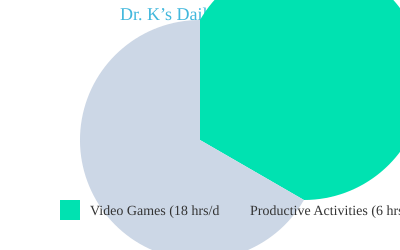
This donut chart shows how, during Dr. K’s “stuck” period, most of his time (about 18 hours a day) was spent on video games—an unproductive activity driven by a powerful hidden motivation. Only a small slice was left for productive work. This isn’t laziness; it’s the brain’s reward system in action.
Key Takeaway: Be in Control of Your Wants
Understanding how motivation works is the first step to unlock your motivation. It’s not about manufacturing more motivation—it’s about noticing which wants are actually steering your life, and learning how to shift them. As Dr. K’s journey shows, when your motivation comes from the right place, you become unstoppable—no matter how many setbacks you face.
From Brain Chemistry to Behavior: How Dopamine, Wants, and Resistance Block Action
When you think about motivation, you probably imagine a sudden burst of energy or inspiration that makes you leap into action. But the truth is, your brain chemistry—especially your dopamine circuitry—is quietly running the show behind the scenes. Understanding how dopamine, pain avoidance, and resistance shape your behavior can help you break free from the endless cycle of waiting for motivation to strike.
Dopamine: Not Just the "Pleasure Chemical," but the Boss of Your Behavior
Dopamine is often called the "pleasure chemical," but that’s only part of the story. In reality, dopamine is the boss of your behavior. It’s the neurotransmitter that drives you to pursue rewards and avoid discomfort. Every time you scroll your phone, check notifications, or eat a snack, your brain gets a little dopamine hit. This is your brain’s way of saying, “Good job! Do that again.”
But here’s the catch: dopamine circuitry is wired to prefer easy, short-term rewards over effortful, long-term gains. That’s why it feels so much easier to binge-watch videos than to start a tough project or hit the gym. Your brain is constantly scanning for the path of least resistance and the quickest pleasure.
Why We Chase Easy Rewards (Hello, Phone Scroll) and Dodge Hard Goals (Bye, Gym Bag)
Think about the last time you avoided a challenging task. Did you find yourself reaching for your phone, cleaning your room, or snacking instead? You’re not lazy—your brain is simply following its programming. Companies know this, too. Modern advertising and short-form content are designed to hijack your dopamine system, shaping what you want and how you spend your time.
When you anticipate discomfort—like the soreness of a workout or the frustration of a big assignment—your brain triggers pain avoidance. It nudges you toward something easier and more immediately rewarding. This is why your gym bag gathers dust while your social feeds get all your attention.
Brain Hack: Use Pain Avoidance to Your Advantage
Here’s the good news: you can use your brain’s pain avoidance system to your advantage. Instead of fighting resistance, work with it. For example, if you dread starting a big project, break it into tiny, manageable steps. Give yourself a small reward after each one. This taps into your dopamine circuitry and makes the process less overwhelming.
Another powerful brain hack is behavioral activation—acting before you feel motivated. Research shows that taking action first can actually change your emotional and physical state. As one expert puts it:
“Taking action creates rapid changes in mood and physical state, with exercise being a particularly effective rapid treatment for depression.”
In other words, don’t wait for motivation to hit. Start moving, and motivation will often follow.
Table: Motivation Myths vs. Neuroscience-Backed Techniques
| Classic Motivation Strategy | Neuroscience Reality | What Actually Works |
|---|---|---|
| Wait for inspiration to strike | Dopamine rewards action, not waiting | Start with small actions (behavioral activation) |
| Fight resistance with willpower | Pain avoidance is hardwired | Break tasks into easy steps; reward progress |
| Blame yourself for procrastination | Resistance is a brain function, not a flaw | Reframe resistance as a signal to adjust your approach |
| Set big goals and visualize success | Dopamine prefers immediate, achievable rewards | Stack small wins to build momentum |
Reframe the Resistance: Does Your "Lazy" Behavior Secretly Have a Function?
Before you judge yourself for procrastinating, ask: what is my brain trying to do for me? Often, so-called “lazy” behavior is your brain’s way of protecting you from discomfort or overwhelm. For example, I once avoided a mountain of work by deep-cleaning my kitchen. Was I being productive? Technically, yes—just not in the way I intended. That dopamine hit from a sparkling counter felt way better than facing a tough email.
Here’s a wild thought experiment: If the only way to access social media was to clean your kitchen first, would your kitchen always sparkle? Probably! This shows how powerful dopamine-driven behavior can be when paired with pain avoidance.
Key Stat: Exercise Gives a Near-Instant Boost to Mood
One of the most powerful motivation techniques is simply moving your body. Studies show that exercise can rapidly improve mood and is a proven treatment for depression—even if you don’t feel like it at first. The act of moving triggers dopamine release, which lifts your mood and makes further action easier.
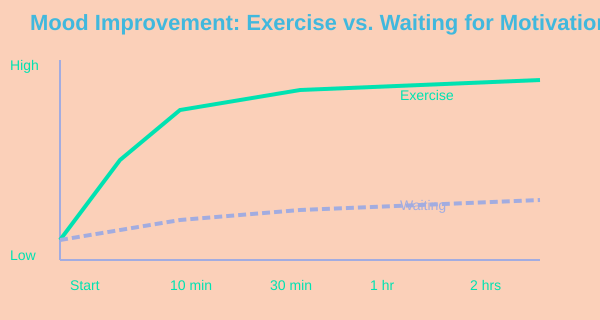
Remember, action often precedes emotion. When you move first, your brain chemistry follows—making it easier to keep going, even when motivation feels out of reach.
Wants vs. Willpower: Who’s Actually Making Your Decisions?
When it comes to behavioral change and getting things done, most people believe they’re in control. But are you really? Or are your immediate wants quietly running the show while you think you’re making conscious choices? This section will help you spot the difference between acting on impulse and acting on intention—and why it matters for your happiness, productivity, and long-term success.
If Your Desires Get to Make All the Calls, Are You Really in Charge?
Let’s start with a simple question: What’s better: for you to be in control of your wants or for your wants to be in control of you? If you’re like most people, you’d probably say you want to be in control. But in reality, many of us let our wants—those fleeting desires and cravings—dictate our actions, especially when motivation is low.
Think about the last time you hit snooze on your alarm. You knew you had a plan to get up early, but in that moment, your want for more sleep won. This is a classic example of how resistance and emotions can override willpower and motivation. If you only act when you feel like it, your wants are making the decisions, not you.
Wants Are Sneaky—They Run the Show While You Think You’re “Deciding”
Wants are powerful because they feel urgent and important in the moment. They’re often tied to comfort, pleasure, or avoiding discomfort. The trouble is, not every want is aligned with your goals or wellbeing. In fact, letting wants always call the shots can drive a person toward avoidance behaviors, procrastination, or even addiction.
It’s easy to believe you’re “deciding” to do something, when in fact, you’re just following the path of least resistance. This is especially true in our tech-filled world, where entertainment and distractions are always just a tap away. The more you give in to wants, the more you reinforce the habit of acting on impulse instead of intention.
The Dark Side: Living by Wants Alone Can Lead to Addiction or Chronic Procrastination
When you let your wants take over, you’re not just risking a lazy morning—you’re setting yourself up for bigger problems. Dr. K (Dr. Alok Kanojia), a psychiatrist and former gaming addict, shares how his own life spiraled when he let his wants dictate his actions:
“All addiction begins with wanting to do something and allowing your wants to be in complete control. I want to eat that thing, I want to play that video game, I want to ignore that obligation… When you start to live a life where your wants and desires in the moment are controlling what you do and what you don't do, you're out of control.”
Dr. K’s story is a powerful example of what happens when wants override willpower and motivation. During his lowest period, he spent 16-20 hours a day gaming, skipping classes, and ignoring responsibilities. Family and friends grew concerned as his wants overtook his plans. The result? Academic failure, social isolation, and a sense of being completely stuck.
Sidebar: Dr. K and Video Games—When Desires Dictated Direction
Dr. K’s experience isn’t unique. Many people fall into similar patterns with food, social media, shopping, or other temptations. The common thread is this: when you let wants steer your decisions, you lose control over your life’s direction. You become reactive instead of proactive, and lasting change becomes nearly impossible.
Test: Who’s Steering—Your Plan or Your Immediate Craving?
The next time you feel unmotivated, try this simple test: pause and ask yourself, “Am I following my plan, or am I just doing what I want right now?” This moment of awareness is the first step toward regaining control. It’s not about denying all your wants, but about choosing which ones align with your goals and values.
Table: Outcomes When Plans Drive Action vs. When Wants Lead
| Scenario | Plan-Driven Outcome | Want-Driven Outcome | Example |
|---|---|---|---|
| Morning Routine | Wake up on time, start day with energy | Hit snooze, rush or skip morning tasks | Alarm rings—follow plan vs. follow urge to sleep |
| Studying/Work | Consistent progress, better results | Procrastination, last-minute stress | Stick to study schedule vs. binge-watching shows |
| Dr. K’s Gaming (16-20 hrs/day) | Academic success, balanced life | Dropout, addiction, family concerns | Following study plan vs. giving in to gaming urge |
| Long-Term Goals | Steady progress, fulfillment | Stagnation, regret | Daily writing habit vs. scrolling social media |
Key Takeaways: Aligning Plans and Wants for Real Change
- Letting wants always call the shots can lead to avoidance, addiction, and unhappiness.
- Not every want is in your best interest—especially in a world full of tempting distractions.
- Plans give structure; wants create impulse. Aligning them is the real challenge for behavioral change.
- Lasting change comes from mastering the interplay between wants, willpower, and consistent planning—not just chasing motivation.
“What’s better: for you to be in control of your wants or for your wants to be in control of you?”
Why Formal Education Forgot to Teach Us About Our Own Minds (and What to Do About It)
Let’s be honest: most of us spent years in school learning about algebra, the French Revolution, and maybe even the mitochondria (it’s the powerhouse of the cell, right?). But when it comes to understanding self-awareness and motivation, or even basic emotional awareness, the curriculum is silent. The result? You can ace calculus, but still have an existential crisis during finals week because you don’t know how to handle your own mind.
Why Schools Skip “How Your Mind Works”
Our educational system is designed to teach you facts, formulas, and frameworks. But there’s a glaring gap: no one teaches you how your mind actually works. As Dr. K (Dr. Alok Kanojia) puts it:
“No one teaches you how your mind works… but you can learn the buttons on the controller that is you.”
Think about it. You learn about marketing, finance, and history, but not about where your desires come from, how motivation rises and falls, or what to do when you feel stuck. It’s as if we’re handed a complex game controller (our mind) but never shown what the buttons do. No wonder so many of us feel lost when it comes to mental health strategies or making real, lasting changes.
Self-Awareness Isn’t Fluffy—It’s Foundational
There’s a myth that self-awareness is just “feel-good” fluff. In reality, it’s the foundation for real progress in life. Without understanding your own mind, you’re left chasing motivation, hoping it shows up when you need it most. But what if you could actually learn how to work with your mind, not just understand it in theory?
- Self-awareness and motivation are skills, not traits. You can train them.
- Emotional awareness helps you recognize what drives you (or holds you back).
- Practical training in mental health strategies is as critical as academics for real results.
Action Idea: Learn Your ‘Controller Buttons’
Imagine if school taught you “Desires 101” or “Motivation Mechanics.” You’d know which buttons to press when you’re stuck, overwhelmed, or unmotivated. Dr. K’s metaphor of the mind as a controller is powerful: if you knew how to hack your own controller, what would you do differently next week? Be honest with yourself—what’s one thing you’d change if you actually understood your own patterns?
Try This:
- Meditation and journaling: Spend five minutes each day noticing your thoughts and feelings. Write down what triggers motivation or procrastination.
- Intention-setting: Before starting a task, set a simple intention (“I’m going to focus for 20 minutes, then take a break”).
- Self-reflection: At the end of the week, review your journal. What worked? What didn’t?
These aren’t just “soft skills.” They’re practical tools that help you build self-knowledge and create sustainable change—something pure intellectual understanding can’t do alone.
East Meets West: Actionable Mental Health Tools
Dr. K’s journey is proof that blending centuries-old wisdom from India with Western science creates powerful, actionable tools for mental health. After spending three months in an ashram and seven years learning advanced practices, he realized that real change comes from working with your mind, not just learning about it.
Western neuroscience might tell you that desire comes from the “nucleus accumbens” in your brain. But as Dr. K points out, “If I tell you your desire comes from the nucleus accumbens, you can’t do anything with that.” What you need are tools you can actually use—like meditation, intention-setting, and journaling—to build self-awareness and motivation in daily life.
| Practice | Exposure | Impact |
|---|---|---|
| Meditation & Spiritual Practice | 3 months in an ashram; 7 years advanced learning | Deep self-understanding, actionable mental health strategies |
| Academic Focus (No Self-Work) | 2.5 GPA | Low motivation, lack of direction |
| Academic + Self-Awareness Training | After self-awareness journey | Growth, improved motivation, better outcomes |
What If School Had “Desires 101”?
Imagine if every Monday started with a class on understanding your own mind. Maybe we’d finally ace Mondays—and life. The truth is, it’s never too late to start learning your own “controller buttons.” Even if your first attempt at meditation lasts just six minutes (been there, got bored), it’s a start. The real win is in practicing, not just knowing.
So, next time you wonder why motivation feels so slippery, remember: you can learn to work with your mind. The tools are out there—sometimes centuries old, sometimes brand new. The only thing missing is the class. But you can teach yourself, starting now.
Getting Unstuck: Unusual Strategies that Actually Work (And the Fails That Don’t)
Why “Waiting for Motivation” Is the Top Fail
Let’s start with the biggest myth: the idea that you need to feel motivated before you can take action. This is a trap. Most people spend days, weeks, or even years waiting for that magical spark of motivation to strike. But research and real-life experience show that behavioral activation—doing the action before you feel like it—works far better. Action precedes emotion. If you want to overcome procrastination, you need to move first, then let your feelings catch up.
Here’s the truth: Emotions often stop action before it even starts. If you wait to feel ready, you’ll stay stuck. Instead, anticipate that discomfort is coming and act anyway. This is how you build consistency and discipline—not by chasing fleeting motivation, but by showing up, even when you don’t want to.
Self-Motivation Hack: Do the Thing You Least Want to Do, First
One of the most effective (and unusual) strategies is to flip your to-do list. Instead of starting with the easy stuff, tackle the task you dread most. This is the opposite of what your brain wants, but it’s exactly what builds focus on action.
- Why it works: Your brain is wired to avoid discomfort. When you do the hardest thing first, everything else feels easier by comparison.
- How to try it: Each morning, pick the task that makes you cringe. Spend just five minutes on it. You’ll often find the resistance fades once you start.
Tiny Wins: Five Minutes Can Change Your Mindset
You don’t need to overhaul your entire day to get unstuck. In fact, tiny wins are the secret weapon for behavioral activation. Set a timer for five minutes and work on the hardest task. Even if you stop after five minutes, you’ve already beaten procrastination.
- Evidence: Studies show that starting—even briefly—reduces anxiety and builds momentum. Action creates motivation, not the other way around.
- Pro tip: Celebrate the start, not just the finish. Every small effort rewires your brain for progress.
Internal Rewards: Skip the Cookies, Give Yourself Credit
Most of us are taught to reward ourselves with treats or distractions (hello, cookies and Netflix). But the most powerful rewards are internal. When you give yourself genuine credit for effort—not just outcomes—you program your brain to crave more action.
- How to do it: After you tackle a tough task, pause and acknowledge your effort. Say it out loud: “I did the hard thing.”
- Why it matters: Research shows that rewarding effort, not just achievement, builds lasting motivation and resilience.
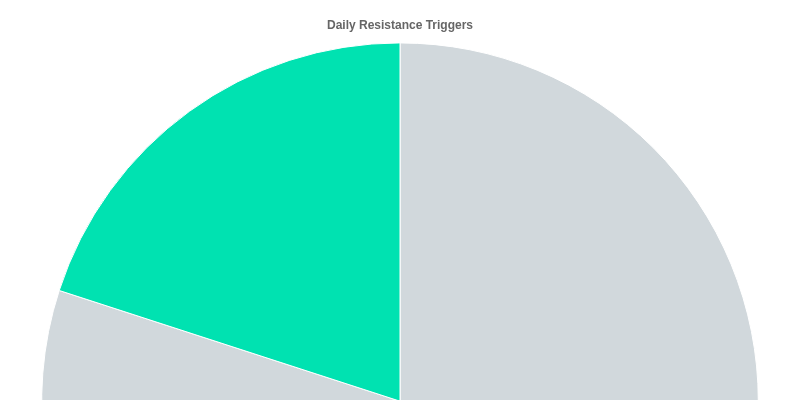
Chart Your Resistance: Track Triggers and Victories
To really understand your patterns, try tracking your resistance over a week. When do you feel most stuck? What triggers avoidance? When do you push through? Here’s a simple way to visualize it:
| Time of Day | Resistance Level (1-10) | Trigger | Action Taken | Outcome |
|---|---|---|---|---|
| Morning | 8 | Big project | Worked 5 min | Felt less anxious |
| Afternoon | 5 | Email overload | Answered 2 emails | Momentum increased |
| Evening | 3 | Low energy | Skipped task | Noted pattern |
Over time, you’ll spot when and why you resist action. For example, you might notice 80% of your resistance happens in the morning. This insight lets you plan your hardest work for when you’re most likely to avoid it.
Personal Story: My “Reward” for Hard Work
Here’s a confession: For years, my reward for finishing a tough task was guilt-free Netflix. Sometimes it worked, sometimes it didn’t. What I learned is that external rewards (like TV or snacks) only go so far. The real shift happened when I started giving myself credit for effort—no matter how small. That internal reward made it easier to show up again the next day.
Sidebar: How “Anticipating the Negative” Makes Tough Tasks Easier
Most people try to avoid thinking about how hard something will be. But anticipating the negative—admitting, “The gym will feel hard tomorrow”—actually makes it easier to start. When you expect discomfort, you’re less likely to be derailed by it.
- Tip: Before a tough task, say to yourself: “This will be uncomfortable, and that’s okay.”
- Why it works: You’re mentally prepared, so resistance loses its power.
"Consistency requires abandoning ‘every day’ thinking: Building sustainable motivation involves changing how we approach daily tasks rather than relying on constant daily motivation."
Motivation in the Age of Algorithms: How Tech Products Hijack Our Desires (And What You Can Do)
When you scroll through your favorite app, it’s easy to forget that what you see isn’t random. Your feed isn’t neutral—algorithms are literally designed to steer your wants, shape your beliefs, and nudge your behaviors. Every swipe, like, and click feeds a system that learns what grabs your attention and what keeps you coming back. This is not accidental. Tech companies have become experts at using motivation techniques to keep you engaged, often at the expense of your own goals and well-being.
Think about how often you compare yourself to what you see online. Happy vacation photos, perfect homes, and endless success stories fill your screen. Your brain, predictably, feels left out. This comparison trap is no accident. Social media and digital marketing intentionally craft dissatisfaction, making you feel like you’re missing out. The next step? They offer you a solution—buy this, sign up for that, click here to feel better. As a result, your internal reward system gets hijacked. Instead of focusing on what truly matters to you, your motivation is redirected toward chasing the next dopamine hit or buying the next “fix.”
It’s important to recognize that these external forces are shaping your internal drives. As one expert put it,
“We’re not equipped with the tools to fight against this external environment shaping us.”The pressure is real, and simply telling yourself to “cut back on technology” isn’t a practical solution. Today, more than 75% of modern communication and family management involves tech touchpoints. School updates, family chats, and even your child’s music lessons now run through digital channels. Unplugging completely isn’t just unrealistic—it can actually make life harder.
So, what can you do? The first step is awareness. Understand that your environment—especially your digital environment—shapes your thoughts, feelings, and motivation. The second step is to set boundaries. You can’t always avoid technology, but you can decide how and when you engage with it. For example, you might choose to check social media only at certain times of day, or you might ask your music teacher to call or text instead of sending another email. These small changes help you reclaim control over your attention and motivation.
It’s also crucial to focus on action, not just feelings. Motivation isn’t something you wait for—it’s something you build by doing. When you act, even in small ways, you reinforce your internal reward system. This makes it easier to stay focused on your own goals, rather than getting swept up in the endless stream of digital distractions. Managing technology is about more than just limiting screen time. It’s about creating intentional habits that support your well-being and help you resist the pull of algorithm-driven content.
To see how this plays out in daily life, consider the following table. It highlights some common tech environment pitfalls and the real coping skills you can use to take back your agency:
| Tech Environment Pitfall | Real Coping Skill |
|---|---|
| Social comparison from curated posts | Practice self-awareness; remind yourself that online images are not reality |
| Constant ads and “solutions” for your problems | Set boundaries for when and how you engage with ads; focus on internal rewards |
| Endless notifications and interruptions | Turn off non-essential notifications; schedule focused, tech-free time |
| Feeling pressure to always be “plugged in” | Communicate your boundaries to others; use tech intentionally, not reactively |
Remember, coping with tech-driven pressure is necessary for real self-directed motivation. External forces will always try to shape your desires, but you can restore your agency by becoming more aware and setting clear boundaries. The goal isn’t to escape technology, but to use it on your own terms—supporting your values, your goals, and your well-being.
In the end, motivation techniques that work in the digital age are less about chasing fleeting feelings and more about building habits that reinforce your internal reward system. Focus on action, set boundaries, and stay mindful of how algorithms try to hijack your desires. When you do, you’ll find it much easier to move forward—on your own terms, not the ones set by your feed.
TL;DR: Still searching for the spark? The answer isn’t chasing motivation; it’s understanding how you work. Get curious about your cravings and resistance, learn new strategies for action, and finally make progress on your terms—not motivation’s.
Post a Comment