

Let me be real for a second—I’ve absolutely frozen in fear before a tough conversation, heart pounding and palms sweaty, just wishing I could ghost the situation entirely. Haven’t you? The scariest talks aren’t always about big betrayals or obvious villains; sometimes, they’re just those tense, spiraling moments with colleagues, friends, or family that leave you knotted for hours. Today, drawing on expert Desmond O’Neal’s hard-won lessons from the world of elite law enforcement and interrogation, I’m breaking down how to wade into these conversational shadows and—no matter who’s waiting on the other side—come out not just in one piece, but with a stronger connection.
Why Labels (Like Narcissist) Short-Circuit Real Connection
When difficult conversations get heated, it’s tempting to reach for quick labels—calling someone a “narcissist,” “gaslighter,” or “self-centered.” But as former Secret Service agent Desmond O’Neal points out, this shortcut actually blocks your ability to connect and understand. In his words:
"If you just blatantly label somebody as being a narcissist, you're not going to be able to really understand who this person is and why they are the way they are."
Labels: The Fast Track to Misunderstanding
Rushing to label someone during a tough conversation might feel satisfying in the moment, but it almost always backfires. When you slap a label on someone, you make it easy to blame them and hard to see the bigger picture. You stop asking questions and start making assumptions. This is especially risky in emotionally charged moments, where your ability to accurately read the other person—what psychologists call empathy accuracy—is already compromised.
| Context | Empathy Accuracy |
|---|---|
| General Interactions | 40% |
| Emotional Conversations | 15% |
Research shows that even in calm situations, we only guess what others are thinking or feeling correctly about 40% of the time. When emotions run high, that accuracy can drop to as low as 15%. So, if you’re in the middle of a difficult conversation, don’t trust your gut alone—especially if you’re tempted to label.
Empathy Is Situational—And Subjective
It’s easy to call someone “low empathy” or “self-centered” when you feel hurt or overlooked. But empathy is not an all-or-nothing trait. O’Neal reminds us that empathy is situational and subjective. Even the most caring person can seem cold in certain circumstances, and even you have moments where your empathy drops. Before you label, ask yourself: Have I ever missed the mark on empathy? Chances are, the answer is yes.
Personal Anecdote: Missing the Bigger Story
I remember a time when I called my boss “self-centered” after being passed over for a promotion. I was frustrated and convinced he didn’t care about my growth. Later, I learned he was under intense pressure from upper management and was actually advocating for me behind the scenes. My label blinded me to the real story—and nearly cost me a valuable relationship.
Gaslighting or Miscommunication?
Another danger of labeling in relationships is confusing genuine misunderstanding with gaslighting. Not every disagreement or memory lapse is manipulative. Sometimes, people simply see things differently or communicate poorly. When you default to a label, you risk escalating the conflict and missing opportunities for clarity.
O’Neal’s Tip: Ditch the Label, Dig Deeper
O’Neal’s advice is clear: Curiosity trumps categorization every time. Instead of labeling, get curious about the real reasons behind someone’s behavior. Ask open-ended questions. Listen for context. By dropping the label, you open the door to empathy, understanding, and emotional resilience—even in the shadowy corners of difficult conversations.
- Key takeaway: Labels make it easy to blame, but hard to connect.
- Empathy accuracy drops as emotions rise—don’t trust your gut alone.
- Stay curious, not categorical, to navigate tough conversations with skill.
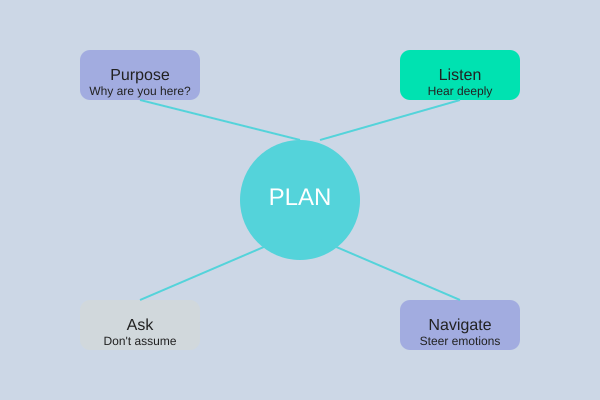
Desmond O’Neal’s ‘PLAN’: A Framework Born from 30 Years of High-Stress Dialogue
When you step into a tough conversation—whether it’s a heated negotiation, a difficult feedback session, or a personal dispute—having a clear structure can make all the difference. Desmond O’Neal’s PLAN method is a communication framework built from decades of experience in high-stress dialogue. This approach is designed to help you stay grounded, focused, and effective, even when emotions run high. Research shows that having a clear conversational plan dramatically increases the odds of a constructive outcome, especially under emotional pressure.
P = Purpose: Know Your Mission
As O’Neal says,
'You need to have a plan. P is for purpose. So, why are you there? What is the goal of the conversation?'Before you say a word, clarify your mission. Are you there to solve a problem, protect a relationship, or set a boundary? In stressful dialogue, it’s easy to get distracted or pulled off course. Your purpose acts as a north star. If the conversation gets heated or the other person becomes aggressive, reminding yourself of your mission helps you stay on track. This is where Multiple Goals Theory comes in: every conversation has task, identity, and relationship goals. If things derail, coming back to your purpose keeps you steady and focused.
L = Listen: Deeply, Even When It’s Hard
Listening is more than waiting for your turn to speak. In emotional conversations, your own feelings might shout over the other person’s words. O’Neal emphasizes that deep listening is essential for effective negotiation and building trust. Try to hear not just what is said, but also what is meant. This step is often overlooked, but it’s crucial for understanding the full picture and responding thoughtfully.
A = Ask: Don’t Assume, Inquire
Most of us think we know what the other person is thinking, but studies show we’re only about 40% accurate. When emotions flare, that accuracy can drop to as low as 15%. This is called empathy accuracy. The solution? Ask questions instead of making assumptions. Simple, open-ended questions like “How do you see this?” or “What’s most important to you right now?” can reveal hidden concerns and prevent misunderstandings. Without asking, you risk missing the real issues and damaging the relationship.
N = Navigate: Manage Emotions—Yours and Theirs
High-stress conversations are emotional by nature. The Navigate step is about managing both your feelings and the other person’s. Notice when frustration, fear, or anger rises, and use techniques like pausing, breathing, or restating your purpose to stay calm. Navigating emotions is not about suppressing them, but about steering the conversation back to your goals and values.
PLAN in Action: A Real-World Example
Imagine a heated team negotiation where tempers flare. By channeling your purpose—say, building a stronger team—you can listen deeply, ask clarifying questions, and navigate the emotional currents. This keeps the dialogue productive and prevents escalation.
Key Takeaways of the PLAN Method
- Purpose: Know your mission before you begin.
- Listen: Hear beyond the words, even when emotions are high.
- Ask: Don’t assume—your guesses are likely wrong.
- Navigate: Steer through emotional turbulence with intention.
Multiple Goals Theory: Why We Talk Ourselves in Circles
Have you ever left a tough conversation at work feeling frustrated, confused, or even a little embarrassed? You’re not alone. Most of us have experienced moments where we talk ourselves in circles, struggling to get our point across or wondering why a simple discussion went sideways. The answer often lies in multiple goals theory—a powerful concept in workplace communication and leadership communication that explains why conversations get tangled, especially when emotions run high.
Three Goals, One Conversation
According to multiple goals theory, every conversation—especially in high-stakes settings—juggles three competing needs:
- Task: What needs to get done? (The practical outcome or objective.)
- Identity: How do I look? (Your self-image and how you want to be perceived.)
- Relationship: How do we get along? (The quality of your connection with the other person.)
When these goals align, communication flows smoothly. But when they clash, you can quickly find yourself talking in circles, repeating points, or getting stuck in awkward silences.
Real-World Example: The Meeting Minefield
Let’s say you’re in a critical meeting, and your boss makes a mistake in front of the team. Instantly, your brain starts juggling:
- Task: Should I correct the error to keep the project on track?
- Identity: Will I look disrespectful or arrogant if I speak up?
- Relationship: Will this damage my relationship with my boss or hurt my career?
I once faced this exact scenario. I hesitated, torn between wanting to help the team (task), protecting my own reputation (identity), and not embarrassing my boss (relationship). I chose to correct the mistake on the spot. The fallout? My boss barely spoke to me for months. The work got done, but the relationship suffered—a classic case of misaligned priorities.
'You have to understand your purpose of being in that meeting because maybe I could let this go. It's not that big of a deal because if I correct my boss, this may affect my relationship with them at a later time.'
Sports Teams and the ‘Ball Hog’ Syndrome
Sports offer another clear example of multiple goals theory in action. Picture a basketball game: the team’s task is to win. But what happens when one player cares more about their own stats (identity) than teamwork? The infamous ‘ball hog’ puts their reputation above the group’s success, creating tension and resentment. The same dynamic plays out in the workplace when someone prioritizes personal recognition over team achievement, leading to miscommunication and fractured relationships.
Why We Get Stuck—and How to Get Unstuck
Most conversational miscues stem from conflicting priorities among task, self-image, and relationships. When you feel yourself talking in circles, it’s often because you haven’t decided which goal matters most in that moment. Are you trying to solve a problem, protect your image, or preserve a relationship? Misaligned priorities—like the ‘ball hog’—lead to confusion and tension.
Practical Tip: Pause and Prioritize
Before speaking up in a tense situation, take a moment to ask yourself:
- What is my main goal here—task, identity, or relationship?
- Which goal matters most for the long-term?
- Am I willing to let one goal take a back seat to protect another?
Understanding multiple goals theory can transform your approach to workplace communication and relationship building, helping you navigate even the toughest conversations with clarity and confidence.
What Not To Say (And What to Do Instead): Three Surprising Mistakes Everyone Makes
When emotions run high, even the most well-intentioned words can backfire. If you want to master effective dialogue and build emotional resilience in high-stakes conversations, it’s crucial to recognize common communication mistakes—and know what to do instead. Here are three surprising pitfalls that almost everyone falls into, along with practical strategies to help you navigate tough talks with more skill and empathy.
1. Stop Telling People “I Understand”—You Probably Don’t (and They Know It)
It’s natural to want to comfort someone by saying, “I understand.” But as research and experience show, this phrase often lands as dismissive or minimizing. As one expert puts it:
'Stop telling people you understand. Telling them you understand.'
When someone is upset or vulnerable, hearing “I understand” can feel like you’re brushing past their unique experience. In reality, you probably don’t fully understand what they’re going through—and they know it. For example, when my friend tried to “calm me down” by comparing her experience to mine, I just wanted to be heard, not to have my feelings measured against someone else’s.
What to do instead: Practice active listening. Reflect back what you hear (“It sounds like you’re really frustrated about what happened at work”) and ask clarifying questions (“Can you tell me more about what’s making this so tough right now?”). This simple conversational swap builds trust and shows genuine care, making your dialogue far more effective than any cliché ever could.
2. Assuming Intent Sets You Up for Resentment and Misfire
Another common communication mistake is assuming you know why the other person acted a certain way. In the heat of the moment, it’s easy to jump to conclusions: “You did this because you don’t respect me,” or “You’re just trying to make me angry.” These assumptions rarely reflect reality and often lead to resentment and misunderstanding.
What to do instead: Get curious, not accusatory. Instead of assuming intent, ask open-ended questions: “Can you help me understand what was going through your mind when you made that decision?” This approach opens the door for honest conversation and prevents you from projecting your own fears or insecurities onto the other person.
3. Avoid Emotional Flooding—It Shuts Down Dialogue for Both Parties
When emotions escalate, it’s tempting to “flood the zone” with your feelings—raising your voice, talking over the other person, or venting everything at once. While it might feel cathartic in the moment, emotional flooding actually shuts down the space needed for honesty and mutual understanding. Both people end up feeling overwhelmed, and real communication grinds to a halt.
What to do instead: Hold space for silence. If you feel yourself getting overwhelmed, pause. Let there be a moment of quiet. Getting comfortable with awkward pauses can actually spur deeper honesty and give both sides a chance to process. Sometimes, the most powerful thing you can say is nothing at all.
- Reflect what you hear instead of offering clichés.
- Ask clarifying questions instead of making assumptions.
- Hold space for silence instead of flooding the conversation with emotion.
By swapping out these common communication mistakes for more mindful strategies, you’ll foster effective dialogue and build the emotional resilience needed for even the toughest conversations.
From Interrogation Room to Living Room: Hard-Won Lessons from Elite Law Enforcement
When you think about law enforcement communication, you might picture tough interrogations or high-stakes standoffs. But Desmond O’Neal’s journey—from corrections officer to SWAT, Secret Service, and polygraph specialist—reveals a surprising truth: the most effective interrogation isn’t about breaking someone down. It’s about building an authentic connection, even when emotions run high. These hard-won lessons translate directly to your toughest conversations at home or work.
Desmond O’Neal’s Path: From Corrections to High-Value Interrogation
| Career Step | Key Focus |
|---|---|
| Corrections Officer | Managing conflict, maintaining safety |
| Police Officer & SWAT | High-pressure teamwork, crisis negotiation |
| Federal Secret Service | Protective detail, advanced communication |
| Polygraph Specialist | Lie detection, psychological insight |
O’Neal’s experience spans over 30 years, and in every role, he discovered the same challenge: most people don’t want to talk, especially when stakes are high. His job? To get them to open up—not through intimidation, but through genuine, persistent connection.
Not Tricks—Just Human Connection
"This is not about interview or interrogation. This is this is human connection."
Forget the Hollywood image of psychological games. O’Neal’s approach, especially as a polygraph specialist, was about transparency and rapport. Polygraph (lie detection) measures both psychological and physiological responses, but the real breakthrough came when he shifted from “catching” people to understanding them. This shift is at the heart of effective interrogation and resilience training.
Techniques from High-Value Interrogation: Patience, Purpose, Curiosity
- Patience: In both the interrogation room and the living room, rushing leads to resistance. O’Neal learned to wait, listen, and let silence do its work.
- Clear Purpose: Every tough conversation needs a mission. Know what you want to achieve—clarity helps both sides feel safer.
- Curiosity: Instead of assuming or accusing, ask open-ended questions. Stay in “information-gathering mode.” This not only uncovers the truth but also lowers defenses.
Personal Reflection: Bringing Law Enforcement Communication Home
O’Neal shares that applying these strategies to family arguments or workplace disputes actually works. When you approach a heated discussion with the same mindset as a high-value interrogation—seeking to understand, not to win—you build trust and resolve conflict faster. This is the essence of authentic connection.
Society’s Evolution: From Coercion to Trust-Based Dialogue
Law enforcement interview techniques have evolved dramatically. Where once there was physical coercion (“the third degree”), the modern approach is science-based and rapport-driven. After 2014, agencies like the High-Value Detainee Interrogation Group (HIG) emphasized research, practitioner training, and the science of human behavior. The lesson? Whether you’re facing a criminal investigation or a family crisis, trust and transparency are your most powerful tools.
Key Takeaways for Tough Conversations
- Leverage law enforcement communication strategies—patience, clarity, and curiosity—in your daily life.
- Focus on authentic connection, not manipulation.
- Remember: effective interrogation is about resilience training and understanding, not control.
The Anatomy of Gaslighting: Recognizing and Responding Without Losing Yourself
Gaslighting is more than just a disagreement or a difference in opinion. It’s a chronic pattern of invalidation, often seen in narcissist relationships, where someone systematically makes you question your own reality. If you’ve ever left a conversation feeling confused, doubting your memory, or wondering if you’re “the crazy one,” you may have experienced gaslighting. As one person described,
“When I bring up how I feel, maybe they make me feel like I’m to blame, like I did something wrong.”This is not a simple misunderstanding—it’s a deliberate attempt to undermine your confidence and sense of self.
Gaslighting vs. Misunderstanding: Knowing the Difference
It’s important to clarify what gaslighting is—and what it isn’t. Occasional disagreements or misunderstandings happen in every relationship. Gaslighting, however, is a repeated pattern where your feelings and experiences are dismissed or twisted until you start doubting your own perspective. O’Neal’s distinction is crucial: before labeling someone’s behavior as gaslighting, clarify specific examples. Ask yourself: Is this a one-off miscommunication, or do I consistently feel blamed and invalidated, no matter what I say?
Recognizing the Pattern: Naming Specific Incidents
One of the most effective ways to interrupt the cycle of gaslighting is to name specific incidents. Instead of relying on vague impressions (“You always make me feel bad”), document concrete moments when your reality was denied. For example:
- “Yesterday, when I said I was hurt by your comment, you told me I was too sensitive and imagining things.”
- “When I brought up my concerns, you said it was my fault and that I was overreacting.”
Specificity challenges manipulative dynamics and helps restore your perspective. It also makes it harder for the other person to twist the narrative.
Practical Steps: Journaling and Consistency Checks
Building emotional resilience in the face of gaslighting starts with protecting your reality. Journaling is a powerful tool. Write down interactions as soon as possible, noting what was said and how you felt. This not only helps you track patterns but also guards against the self-doubt spiral that gaslighting can trigger. Over time, you can check for consistency in the other person’s responses. Do they always shift blame onto you? Do you feel at fault “more often than not” after these conversations?
Resilience Strategy: Reality-Checking with Trusted Allies
Gaslighting thrives in isolation. Create a reality-check system by sharing your experiences with trusted friends, a therapist, or support groups. Sometimes, just hearing someone say, “No, you’re not imagining it,” can be a lifeline. If you notice that you’re always cast as the problem, pause and re-examine the narrative. Ask yourself: Is this a fair assessment, or is it part of a pattern of chronic invalidation?
Confidence Building: Trusting Yourself Again
Overcoming gaslighting is about rebuilding trust in your own perceptions. Regular reality checks—through journaling, talking with allies, and naming specific incidents—help you reclaim your confidence. Remember, gaslighting involves systematic undermining, not occasional disagreement. By anchoring yourself in facts and supportive relationships, you can respond to gaslighting without losing yourself.
Lessons from the Shadows: Turning the Worst Conversations Into Your Greatest Wins
When it comes to effective interrogation and handling the toughest conversations, the most powerful lessons often come from the darkest, most challenging situations. One such case is the interview with Philip Gerrio, the man who kidnapped Jaycee Dugard and held her captive for 18 years. This real-life example offers deep insights into mental toughness, personal development, and resilience training—skills that can transform even your most dreaded personal conversations.
Case Study: Four Days of Preparation for a Breakthrough
In 2009, after Jaycee Dugard was found, the authorities needed answers about other missing children. Vern Pearson, the prosecuting attorney for El Dorado County, California, asked for help in interviewing Gerrio. The expectation was that a few hours would be enough. But, as the interviewer explained, “My goal was to get past the surface, to find something real. That meant planning for days, not hours.”
Elite-level interviews like this require extensive planning and a strategy tailored to the individual. The process involved reviewing Gerrio’s writings, understanding his mindset, and preparing for every possible direction the conversation could take. This level of preparation is a cornerstone of effective interrogation—and it’s just as valuable in our own high-stakes conversations, whether at work or at home.
The Big Reveal: Curiosity and Tenacity Over Outsmarting
Many people think the key to winning tough conversations is outsmarting the other person. In reality, the breakthrough comes from relentless curiosity and tenacity. The interviewer didn’t go in to “win” or dominate Gerrio. Instead, the focus was on understanding—on listening deeply, asking the right questions, and not giving up when answers didn’t come easily. In the shadowiest, most extreme conversations, inward peace and understanding—not winning—should be your guiding objective.
Wild Card: From Criminal Interrogation to Family Arguments
What’s surprising is how these elite techniques can help in our own lives. After the Gerrio interview, the same approach—preparing thoroughly, listening without judgment, and staying curious—proved invaluable in a messy family argument. The lesson: the skills of resilience training and mental toughness are universal. Whether you’re facing a criminal suspect or a stubborn relative, the process is similar.
When the Other Party Won’t Budge: Redefining Your Win
Sometimes, no matter how skilled you are, the other person simply won’t move. In these cases, your greatest win is leaving the conversation without ruminating. You can’t always force agreement or closure. But you can control your own response—choosing to walk away with your peace of mind intact. This is a crucial part of personal development and resilience training.
Bringing Closure: Sometimes Peace of Mind Is Enough
Not every conversation ends with a dramatic breakthrough. Sometimes, the only thing you gain is a sense of closure or clarity. As the interviewer reflected, “My goal was to leave knowing I had done everything possible. Sometimes, that’s all you get—and that’s enough.”
By shifting your objective from “winning” to “understanding,” you can turn even the worst conversations into opportunities for growth and inner peace. These lessons from the shadows are powerful reminders that the real victory often lies within.
Help & FAQs: Navigating Tough Talks – Your Questions Answered
When emotions run high, navigating tough conversations can feel like stepping into the shadows. Whether you’re facing a challenging colleague, a tense family situation, or a difficult friend, the right conflict skills and resilience training can make all the difference. Here are answers to the most common questions about handling these moments, drawn from real-world dilemmas and the latest research-backed strategies.
How do I know if I’m being gaslighted or just misunderstood?
This is a question many people ask when they feel unheard or blamed. Gaslighting is a form of manipulation where someone makes you doubt your reality or feelings. If you consistently walk away from conversations feeling confused, doubting your memory, or like everything is your fault, you may be experiencing gaslighting. However, misunderstandings can also happen, especially when emotions are high. The key is to look for patterns: does this person regularly twist facts, deny things you know happened, or make you question your sanity? If so, it’s likely gaslighting. If it’s a one-off or there’s a willingness to clarify, it may just be a misunderstanding.
What’s the best first thing to do when preparing for a difficult conversation?
Start with a PLAN. There’s no one-size-fits-all approach, but having a clear purpose boosts your confidence and keeps you focused. Ask yourself: Why am I having this conversation? What do I hope to achieve? Setting your intention helps you stay on track, especially if things get emotional or tense. Remember, your mission drives your tactics—if your goal is to deepen understanding, keep that front and center, even if the conversation veers off course.
Tips for regaining composure if you get flustered mid-talk
It’s normal to feel overwhelmed in tough talks. If you find yourself getting flustered, pause and take a slow breath. Remind yourself of your purpose. If needed, ask for a short break: “Can we take a moment and come back to this?” This isn’t weakness—it’s a resilience skill. Refocusing on your PLAN helps you regain control and respond rather than react.
Are some people impossible to reach?
Some people may seem unreachable, especially if they’re defensive or aggressive. But labeling someone as a “narcissist” or “impossible” can close off your own curiosity and empathy. Instead, try to understand their perspective, even if you disagree. Sometimes, despite your best efforts, you may not get through. That’s not a failure—it’s a sign to protect your own boundaries and well-being.
Is there a script for ‘conflict-avoiders’?
If you tend to avoid conflict, having a simple script can help. Start with “I feel…” statements and focus on your needs: “I feel concerned when X happens, and I’d like to talk about how we can work through it.” Keep it short and direct. Remember, you don’t have to solve everything at once—opening the door to conversation is a powerful first step.
How do I adapt these strategies to virtual or remote conversations?
Virtual talks can add another layer of challenge. Be intentional with your words, since body language cues are limited. Use video when possible to see facial expressions. If you sense tension, name it gently: “I notice this feels a bit tense—can we pause and reset?” The PLAN framework works just as well online—clarity of purpose, asking questions, and staying present are universal conflict skills.
In conclusion, navigating tough conversations is never easy, but with the right mindset and practical tools, you can build resilience and strengthen your relationships—no matter how shadowy the corners may seem. Remember, every conversation is a chance to learn, grow, and connect more deeply, both with others and with yourself.
TL;DR: Difficult conversations can actually become turning points for stronger relationships—if you swap labels for curiosity, keep your mission clear, and remember that true leadership shows up most in moments of tension. Small shifts (like purposeful planning, asking instead of assuming, and resisting quick judgments) make the biggest difference.
Post a Comment