

A couple of years ago, I “accidentally” went keto after a week-long camping trip left me with only nuts, greens, and those weird pouches of salmon. What happened next? My mind felt razor-sharp one day—then totally foggy the next. Sound familiar? Maybe you’ve tried keto, or at least heard a friend raving about it—or warning you off with tales of headaches and label lies. In this piece, I’ll unpack my own stumbles (and wins), pick apart common misconceptions, and throw a spotlight on what the data—and actual test results—say. Spoiler: there’s more to keto than bacon, butter, and banishing bread.
Decoding Keto: More Than Meat, Bacon, and Buzzwords
Ketogenic Diet Basics: Low Carbs, Moderate Protein, High Fat—Cue the Leafy Greens
If you ask, what is the keto diet?, the answer is simple on the surface: it’s a way of eating that keeps your daily carbohydrate intake very low (usually under 50 grams), with moderate protein and high fat. The goal? To shift your body into a state called ketosis, where you burn fat for fuel instead of carbs. But here’s the twist—keto isn’t just about piling your plate with steak and bacon. In reality, a well-formulated ketogenic diet is loaded with salads, broccoli, asparagus, and other nutrient-dense, high-fiber veggies.
Common Keto Misconceptions: It’s Not All About Endless Steak and Bacon
One of the biggest keto misconceptions is that it’s a meat-lover’s free-for-all. Many people picture the ketogenic diet as a parade of bacon, cheese, and ribeye. While some may eat that way, it misses the point. True keto emphasizes a balance: lots of green, leafy vegetables, healthy fats like olive oil and avocado oil, and moderate amounts of protein from sources like eggs, fish, and poultry. The foundation is plants and healthy fats—not just animal products.
Keto-Adapted Foods: What’s Actually on the Menu?
- Vegetables: Spinach, kale, arugula, broccoli, cauliflower, and zucchini are all keto staples. They’re low in net carbs but high in fiber and micronutrients.
- Healthy Fats: Olive oil, avocado oil, coconut oil, and real butter provide the fat needed to fuel ketosis.
- Nuts and Seeds: Almonds, walnuts, chia, and flaxseed add crunch and healthy fats, but watch the portions for carb creep.
- Proteins: Eggs, fish, poultry, and moderate portions of red meat round out the menu.
So, if you’re wondering about the ketogenic diet benefits, remember: the real magic happens when you focus on whole, unprocessed foods—especially those green veggies.
Hidden Sugars and Label Trickery: Why You Sometimes Need a Nutrition PhD to Shop for Keto
Walk into any grocery store and you’ll see shelves lined with “keto-friendly” snacks, bars, and shakes. But here’s the catch: many of these products use clever marketing to appear healthy. Food companies often swap out sugar for substitutes like maltitol or other sugar alcohols. Even if the label says “zero sugar,” these ingredients can still spike your blood glucose—undermining your keto efforts.
Another trick? The “net carbs” calculation. Brands subtract fiber content (and sometimes sugar alcohols) from total carbs to make their products seem lower in carbs. But not all fibers and sugar substitutes are created equal. Some can still impact your blood sugar, despite what the label claims.
A Personal Tangent: Surprising Keto Grocery Fails
Let’s get real for a moment. I’ve cycled in and out of keto several times a year, and I use a keto meter to check my blood ketone levels. Once, I grabbed a box of “net carb” bars—same calories, fat, protein, and fiber as other keto snacks. But after eating one, my blood sugar shot up. The lesson? Even foods labeled as “keto-friendly” can have hidden sugars or fibers that act just like carbs in your body.
Demi-Mythbusting: Net Carbs, Fiber, and the True Impact of So-Called 'Keto-Friendly' Foods
The bottom line: not all “keto” foods are created equal. Always check the ingredient list for hidden sugars and questionable fibers. Remember, “A well-formulated ketogenic diet is loaded with salads, broccoli, asparagus, and other nutrient-dense, high-fiber veggies.” Focus on whole foods, and don’t let buzzwords or misleading labels steer you off course.
The Metabolic Switch: From Carbs to Ketones (What Actually Happens?)
Glucose vs. Fat as Primary Fuel: How Lowering Carbs Shifts Your Metabolism
When you eat a typical diet high in sugary, starchy carbohydrates—think bagels, donuts, white rice, and pasta—your body relies on glucose as its main fuel. These foods rapidly elevate your blood glucose, which in turn spikes your insulin levels. As one expert puts it,
“Insulin shuts down fat breakdown… the liver built this amazing mechanism to convert fat to ketone bodies.”High insulin keeps your body in fat-storage mode and blocks fat from being used as energy.
On a ketogenic diet, you dramatically reduce your carb intake (often below 50g per day). This drop in carbs leads to lower blood glucose and insulin levels. With less insulin, your body unlocks stored fat, breaking it down for fuel. This is the core of nutritional ketosis—your metabolism switches from burning glucose to burning fat, producing ketone bodies in the liver.
Insulin Spikes, Fat Storage, and Ketone Production—What’s Really Going On Inside?
Insulin is the gatekeeper of fat metabolism. When you eat carbs, insulin rises, shutting down fat oxidation and promoting fat storage. But when carbs are scarce, insulin drops, and your body starts breaking down fat at a rapid pace. The liver converts these fats into ketone bodies, which can cross the blood-brain barrier and fuel your brain—something long-chain fatty acids can’t do directly.
Why Your Brain Loves Ketones (Sometimes): Evolutionary Roots of Ketosis
Glucose is the brain’s preferred fuel, but what happens if you’re fasting or eating very few carbs? Your body adapts by producing ketones, an alternative energy source for your brain. This metabolic flexibility is a powerful survival mechanism, allowing humans to endure periods of food scarcity. Historically, our ancestors cycled between times of abundance and famine, and ketosis helped them survive when food was scarce. This evolutionary adaptation is still at work when you follow a ketogenic diet today.
Data Deep-Dive: How Quickly Ketone Levels Change with Diet Shifts
After cutting carbs, most people enter ketosis within 2-4 days, with blood ketone levels rising above 0.5 mmol/L. The threshold for maintaining ketosis is typically under 50g of carbs per day, but this can vary. In contrast, eating high-carb foods like oranges or white rice causes rapid spikes in blood glucose and insulin, shutting down ketone production almost instantly.
Practical Example: Measuring Your Own Ketone Levels—What to Expect
- Before starting keto: Blood ketones are usually below 0.2 mmol/L.
- 24-48 hours after reducing carbs: Ketones begin to rise, often reaching 0.5-1.5 mmol/L.
- After a week: Many people see stable ketone levels between 1-3 mmol/L, indicating efficient fat oxidation and metabolic efficiency.
Chart: Blood Glucose and Ketone Body Fluctuation—Fruit vs. Ketosis
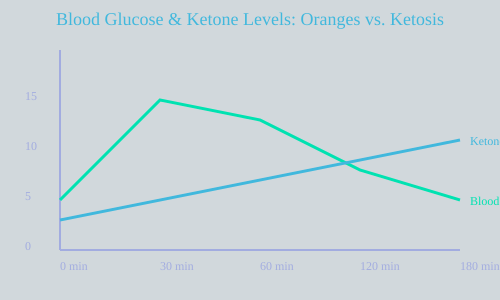
This chart shows how eating fruit (high in carbs) spikes blood glucose and suppresses ketone bodies, while being in ketosis keeps glucose stable and ketone levels elevated—demonstrating the impact of the ketogenic diet on metabolic efficiency and fat oxidation.
Keto and the Mind: Clearer Thinking or Brain Fog?
Personal Story: My Cognitive Performance on Keto (Spoiler: Sometimes Brilliant, Sometimes…Not)
If you’ve ever tried the ketogenic diet, you might have noticed something interesting about your mind. For me, and for many others like podcaster Joe Rogan, the difference in mental performance on keto can be dramatic. There are days when my thoughts are razor-sharp, words flow easily, and I feel like I could host a marathon podcast without missing a beat. Other times, though, I hit a wall—brain fog creeps in, and focus slips away. As I’ve tracked my blood ketone levels, I’ve realized: “I notice high variance in my ability to think and articulate myself for a long period of time based on my blood ketone levels.”
Blood Sugar Swings and Mental Clarity: The Connection You May Never Have Noticed
Why does this happen? The answer often lies in your blood glucose. On a typical Western, higher-carb diet, your blood sugar can swing up and down throughout the day. These highs (hyperglycemia) and lows (hypoglycemia) are not just numbers—they directly affect your emotional function, energy expenditure, and mental clarity. If you’ve ever felt irritable, tired, or unable to concentrate after a meal, you’ve experienced the impact of blood sugar fluctuations.
Symptoms of Blood Sugar Highs and Lows
| Condition | Common Symptoms |
|---|---|
| High Blood Sugar (Hyperglycemia) | Fatigue, irritability, blurred vision, difficulty concentrating |
| Low Blood Sugar (Hypoglycemia) | Shakiness, confusion, lack of concentration, mood swings |
These symptoms mirror what many people describe as “brain fog” or mental sluggishness. It’s no surprise that stabilizing blood glucose can lead to steadier energy and clearer thinking.
Ketone Bodies and Brain Fuel: Why Some Podcasters Swear by Keto for Focus
Here’s where keto therapy for mental illness and cognitive performance comes in. When you’re in ketosis, your brain uses ketone bodies as its main fuel instead of glucose. For some, this switch means more stable energy and fewer mental ups and downs. Many podcasters and professionals report that their ability to focus and communicate improves on keto, possibly because ketone-based energy is steadier than glucose for their brains. This may also reduce brain inflammation, which is linked to cognitive fatigue and mood swings.
It’s Not Always Smooth—When Keto Mental 'Superpowers' Backfire (and What to Do About It)
But it’s not always a mental superpower. Some people experience brain fog, especially when first starting keto or if their ketone levels fluctuate too much. If you’re feeling off, it might be due to low blood glucose, dehydration, or not enough electrolytes. Tracking your blood glucose and ketone levels can help you find your personal sweet spot. Remember, even foods considered healthy—like oranges—can cause blood sugar spikes in people with metabolic dysfunction, leading to mental dips.
“I notice high variance in my ability to think and articulate myself for a long period of time based on my blood ketone levels.”
The cognitive effects of keto are highly individual. Some experience enhanced clarity and mood stability, while others may struggle with brain fog. Understanding your own response to blood glucose and ketone variation is key to unlocking keto’s potential for your mind.
When Fruit Isn’t So Sweet: Carb Myths and the Diabetic Dilemma
Fruit is often praised as the ultimate “healthy” snack, with oranges topping the list as a superfood. Organizations like the American Diabetes Association and USDA recommend fruit as a staple for everyone—including people with diabetes. But is this advice always safe, especially for those who need tight glycemic control or who are following a ketogenic diet? Let’s unmask the truth about fruit, carbohydrate myths, and the real metabolic risks for insulin-sensitive and diabetic individuals.
Oranges: Superfood or Sugar Bomb?
Oranges are loaded with vitamin C and fiber, but their carb content is often overlooked. Consider this:
“Three oranges is probably going to make up around 70 to 90 grams of carbohydrates for me.”For someone with diabetes, or anyone trying to stay in ketosis, that’s a huge number. To put it in perspective, the typical keto diet recommends less than 50 grams of carbs per day. The USDA, on the other hand, suggests that about 55% of your daily calories should come from carbohydrates—often hundreds of grams per day for active adults.
Carb Content in Fruits vs. Keto Threshold
| Fruit (Serving) | Carb Content (g) | % of Keto Daily Limit (50g) |
|---|---|---|
| Orange (1 medium) | 23 | 46% |
| Banana (1 medium) | 27 | 54% |
| Apple (1 medium) | 25 | 50% |
| Three Oranges | 70-90 | 140-180% |
As you can see, just a few servings of fruit can easily blow past the keto-friendly carb threshold, especially for those who need to manage insulin resistance or blood sugar spikes.
Why “Healthy” Foods Can Cause Rapid Blood Sugar Spikes
Even nutritious foods like fruit can destabilize blood sugar in people with diabetes or metabolic issues. When you eat three oranges, your body is hit with a rapid influx of sugar. For someone with type 1 diabetes, this can mean a dangerous spike in blood glucose. In fact, real-world data shows that after eating three oranges, a diabetic’s blood sugar can soar, requiring immediate insulin intervention.
A Real-Life Glucose Experiment
Imagine this scenario: A person with type 1 diabetes eats three oranges (about 70-90g of carbs). Within a short time, their blood sugar jumps dramatically. This isn’t just a temporary inconvenience. Over time, repeated spikes and swings in glucose can lead to insulin resistance, and even more serious complications.
- Brain changes: MRI scans show that children with high and variable glucose levels develop abnormal white and gray matter within just three years, impacting normal brain development.
- Cardiovascular risks: Early signs of atherosclerosis—hardening of the arteries—can appear in children with poor glucose control within four years, increasing future heart attack and stroke risk.
These findings highlight why even “healthy” carbs can be a double-edged sword for those with diabetes or metabolic vulnerabilities. Understanding the real impact of fruit and other carb-rich foods is crucial for anyone managing glycemic control or considering a ketogenic lifestyle.
The Fine Print: Labels, Loopholes, and Keto Confusion
The Food Industry’s Bag of Tricks: Sugar Substitutes and the Great ‘Net Carbs’ Hustle
Walk down any grocery aisle and you’ll see it: “Keto-friendly,” “Zero Sugar,” and “1g Net Carb” splashed across snack bars, cookies, and shakes. But here’s the catch—these claims often hide a complicated reality. The food industry has mastered the art of swapping out sugar for a dizzying array of substitutes, many of which have the same exact metabolic effect as sugar itself. As one expert put it,
“There are about 100 different ingredients they can swap sugar for that have the same exact metabolic effect.”
Field Notes: Testing ‘Keto-Friendly’ Snacks with a Glucose Meter
Here’s a real-world example: You pick up two snacks, both labeled “keto-friendly.” The nutrition labels show similar calories, fat, protein, and even fiber. But when you actually test your blood sugar after eating them, the results can be wildly different. One snack keeps your glucose steady, while the other sends it soaring. This isn’t just theory—it’s what happens to many people who track their glycemic control with a meter. The lesson? Don’t trust the label at face value.
Why You Might Need a Degree in Biochemistry to Decode Today’s Nutrition Labels
If you’ve ever felt lost reading a nutrition label, you’re not alone. Today’s food environment is so complex that it sometimes feels like you need a PhD in nutrition or biochemistry just to figure out what’s really inside your food. Companies employ teams of food scientists to craft products that look healthy on paper but may not be in practice. The “net carbs” calculation is a perfect example. Brands subtract fiber and certain sugar alcohols from total carbs to get a lower “net” number, but not all of these ingredients are truly keto-friendly.
Hidden Ingredients: Maltitol, Maltodextrin, and Other Sugar Alternatives
Flip over that “keto-friendly” snack and scan the ingredients. You might see maltitol, maltodextrin, or other sweeteners. While these aren’t technically “sugar,” your body often treats them the same way. Maltitol, for example, has a glycemic index nearly as high as table sugar and can spike your insulin response. Maltodextrin is even worse, with a glycemic index that can surpass glucose. These hidden sugars are a major reason why strict keto followers sometimes see unexpected blood sugar spikes.
False Promises: Products Labeled as ‘Zero Sugar’ but Spiking Your Blood Sugar Anyway
Labeling laws allow companies to call a product “zero sugar” even if it contains ingredients that act like sugar in your body. This loophole means you could be eating a “zero sugar” snack that still sabotages your glycemic control. Many keto snacks boast “1g net carb” on the front, but a closer look reveals 20g or more total carbs per serving—thanks to hidden sugar alcohols and starches.
A Wild Card: Would You Trust a ‘Keto Food Label Decoder’ or Your Own Meter?
Imagine a device that could instantly decode every ingredient and predict your body’s response. Would you trust it more than your own glucose meter? In the end, your body’s reaction is the ultimate truth. Labels can mislead, but your glucose meter never lies. When it comes to keto-friendly foods, sometimes the only way to know for sure is to test—and trust—your own results.
Keto, Diabetes, and the Brain: Managing the Unmanageable?
Case Study: A 40%+ Drop in Insulin Needs with Keto
Imagine pricking your finger six to ten times a day, just to keep tabs on your blood sugar. For many living with type 1 diabetes, this is daily life. But what happens when you switch your body’s fuel source? In one remarkable case, a person with type 1 diabetes transitioned to a ketogenic diet and saw a profound change: “When I transitioned to a ketogenic diet, almost immediately, my insulin requirements dropped substantially—around 40%.” This wasn’t just a small improvement. It was a game-changer for glycemic control, reducing the rollercoaster of highs and lows that define standard diabetes management.
Standard Care: Why Most Never Achieve Normal Glycemic Control
Despite advances in diabetes care, the reality is sobering. About 99% of people with type 1 diabetes never see normal metabolic control again if they follow standard care. Even with diligent monitoring, most patients experience high and variable glucose levels. This instability doesn’t just affect daily wellbeing—it sets the stage for deeper health risks, including brain inflammation, cellular senescence, and metabolic risks that can last a lifetime.
Uncontrolled Glucose and the Developing Brain
One of the most alarming discoveries in recent years is how poor glycemic control impacts the brain—especially in children. MRI scans reveal that within just three years of diagnosis, children with type 1 diabetes and variable glucose levels show neuroanatomical changes. These changes affect the white and gray matter, disrupting normal brain development. The result? The brain’s wiring is altered, potentially leading to long-term cognitive and developmental challenges. This is a clear sign that metabolic risks go far beyond blood sugar numbers—they reach deep into the core of who we become.
Early-Onset Cardiovascular Risk: Blood Vessels Under Siege
It’s not just the brain at risk. Poor glucose control also triggers early signs of atherosclerotic progression—the process that leads to heart attacks and strokes. Within four years, children with type 1 diabetes can show measurable changes in their blood vessels. The vessels become stiffer, less flexible, and start to accumulate collagen, much like a garden hose that’s been pinched and hardened. This loss of compliance is an early warning sign of future cardiovascular disease, a leading cause of death worldwide.
Chart: Timeline of Brain and Vascular Changes in Type 1 Diabetic Children
| Time Since Diagnosis | Poor Glycemic Control | Good Glycemic Control (e.g., Keto) |
|---|---|---|
| 1 Year | High glucose variability | Stable glucose, reduced insulin needs |
| 3 Years | Neuroanatomical changes (MRI visible) | Normal brain development |
| 4 Years | Early atherosclerotic progression | Healthy, compliant blood vessels |
A Doctor’s Amazement—and a Wild Card Analogy
When the patient’s doctor—then president of the American Diabetes Association—reviewed the blood sugar logs, he was stunned: “I’ve never seen a blood sugar level in the normal range with someone with type 1 diabetes before. What are you doing?” The answer was simple: switching to keto had rewired the body’s metabolic grid, much like a city upgrading its entire power system to run on a new, more efficient fuel. For the brain and blood vessels, this shift can mean the difference between managing the unmanageable and reclaiming metabolic control.
OK, But…Does Keto Work for Everyone? Wildcards, Limitations, Surprises
The ketogenic diet is often praised for its weight loss indicators and mental clarity, but the truth is, not everyone experiences the same benefits. Your unique biology, sex, body weight, and metabolic health status all play a role in how your body—and brain—respond to ketosis. Let’s unmask the wildcards, limitations, and surprises that come with the ketogenic diet.
Individual Responses: Why Keto Isn’t One-Size-Fits-All
Some people report rapid weight loss, improved focus, and steady energy on keto. Others, however, might feel brain fog, fatigue, or even see their progress stall. Why? Genetics, hormone levels, and pre-existing metabolic risks can all influence your experience. For example, if you have underlying insulin resistance, you may see more dramatic ketogenic diet benefits than someone with already balanced blood sugar.
The Role of Sex, Body Weight, and Metabolic Health
Emerging research suggests that females may benefit more from ketogenic diets than males, possibly due to protective effects of estrogen against oxidative stress and cellular senescence. Estrogen seems to offer extra cell protection, which may explain why women sometimes report greater improvements in energy and cognitive function. Body weight and your baseline metabolic health also matter—those with higher body fat or metabolic syndrome may see different results compared to leaner, metabolically healthy individuals.
'Females may benefit more from ketogenic diets than males, possibly due to protective effects of estrogen against oxidative stress and cellular senescence.'
Long-Term Metabolic Risks: Surprising Animal Study Findings
While short-term keto can help with weight loss and blood sugar control, long-term effects are less clear. In mice studies, animals on a ketogenic diet had lower overall body weight but surprisingly, increased fat mass. This means that even if the scale goes down, your body composition could shift in unexpected ways. These findings highlight the importance of looking beyond the scale when tracking ketogenic diet benefits and potential metabolic risks.
Adaptations Beyond Fat: Immune System and Cellular Senescence
Keto isn’t just about burning fat. Research shows it can enhance the function of your adaptive immune system and slow cellular senescence (the aging of your cells). This could mean better immune resilience and healthier aging, but again, these effects can vary. For example, the release of nitric oxide—a vasodilator that helps blood vessels respond to stress, like during exercise—may be influenced by your metabolic state on keto.
Pros, Cons, and Weird Side Effects: What the Research Says
| Pros | Cons | Weird Side Effects |
|---|---|---|
| Weight loss, improved mental clarity, enhanced immune function, slowed cellular aging | Potential for increased fat mass (in animals), nutrient deficiencies, metabolic risks | Brain fog, muscle cramps, changes in blood vessel response, altered menstrual cycles |
When to Skip Keto: Who Should Not Try It?
- Children with Type 1 Diabetes: Research shows keto can impair blood vessel response to exercise-induced stress, which is risky for young people with diabetes.
- Pregnant or Breastfeeding Women: Nutrient needs are higher, and keto may not provide enough variety.
- People with Kidney or Liver Disease: The high fat and protein load can be dangerous.
- History of Eating Disorders: Restrictive diets can trigger unhealthy patterns.
Red flags to watch for include persistent fatigue, dizziness, irregular heartbeat, or mental health changes. Always consult your healthcare provider before starting keto, especially if you have underlying health conditions.
Ketogenic Diet: Real Questions, Straight Answers (FAQ)
What’s the minimum carb intake for ketosis?
To enter and stay in ketosis, most people need to keep their carbohydrate intake below 50 grams of net carbs per day. Net carbs are calculated by subtracting fiber from total carbohydrates, since fiber doesn’t raise blood sugar or insulin levels. This low-carb threshold is what prompts your body to switch from burning glucose to burning fat for fuel, producing ketone bodies in the process. For some, especially those who are more active, the limit might be slightly higher, but staying under 50 grams is the standard target for reliable results.
Can I eat fruit on keto—or just berries?
Fruit is often seen as healthy, but on a ketogenic diet, most fruits are too high in sugar and can quickly push you over your daily carb limit. However, berries—like raspberries, blackberries, and strawberries—are an exception. Thanks to their high fiber and relatively low sugar content, small servings of berries can fit into a keto plan. For example, a half-cup of raspberries contains about 3 grams of net carbs. Still, moderation is key. Oranges, bananas, and grapes are best avoided, as even a single serving can spike your blood sugar and disrupt ketosis.
Do all 'keto-friendly' snacks fit the bill?
Not all snacks labeled “keto-friendly” are truly compatible with a well-formulated ketogenic diet. Many processed products use sugar substitutes like maltitol or maltodextrin, which can raise blood sugar almost as much as regular sugar. Always check the ingredients and net carb count. Whole foods—like cheese, nuts, or hard-boiled eggs—are safer bets. Remember, just because a label says “zero sugar” doesn’t mean it won’t impact your glycemic control.
How do ketone levels affect mental performance?
Many people report sharper mental clarity, better focus, and more stable energy when in ketosis. This is because ketones provide a steady fuel source for your brain, avoiding the highs and lows caused by fluctuating blood sugar. Research and personal accounts, including those from well-known figures like Joe Rogan, highlight improved concentration and reduced “brain fog” on a ketogenic diet. If you’ve struggled with fatigue or irritability on a high-carb diet, you may notice a significant difference once your body adapts to using ketones.
Is the ketogenic diet safe for people with diabetes?
For both type 1 and type 2 diabetes, reducing carbohydrate intake can dramatically improve glycemic control and lower insulin requirements. Studies and real-world experiences show that a ketogenic diet can stabilize blood glucose and reduce the risk of long-term complications. However, it’s crucial for people with diabetes—especially those on insulin—to work closely with their healthcare provider when making dietary changes, as medication adjustments may be needed to avoid hypoglycemia.
What’s the real deal with cholesterol and keto?
A common misconception is that a ketogenic diet will always raise cholesterol to dangerous levels. In reality, many people see improvements in their cholesterol profile, with increases in “good” HDL and reductions in triglycerides. Some may experience a rise in LDL, but the overall risk often depends on the type of LDL particles and other health markers. Regular monitoring and a focus on whole, nutrient-dense foods are important.
Will I lose muscle on a ketogenic diet?
If you consume enough protein and engage in regular resistance exercise, muscle loss is unlikely on a ketogenic diet. In fact, ketones can help preserve muscle during weight loss by providing an alternative energy source. The key is to include adequate protein from sources like meat, fish, eggs, and dairy, while keeping carbs low and fats sufficient for energy.
In summary, the ketogenic diet is more than just a trend—it’s a science-backed approach to improving glycemic control, supporting weight loss, and enhancing mental clarity. By understanding the basics and avoiding common pitfalls, you can harness the full benefits of keto for both body and brain.
TL;DR: The ketogenic diet is so much more than a weight loss trend: it dramatically alters fuel sources, affects metabolic health, and shapes your brain, blood sugar, and even the food industry's marketing games. Done right, keto can offer profound benefits—but myths and individual responses abound. Test, learn, adjust, and don’t believe every label.
Post a Comment