

I’ll be honest: I didn’t believe I could outrun my own laziness until I actually (begrudgingly) started running. If the idea of becoming the kind of person who smiles in the gym mirror sounds laughable, you’re not alone. Most of us have stood bleary-eyed by the snooze button, sworn today would be different, only to collapse back into yesterday’s routine. But here’s the wild part: habit change isn’t witchcraft—there are repeatable, research-backed steps you can take, and your brain is dying to help you do it. Today, we’re getting weird, real, and hopeful—and I promise, no toxic positivity or empty pep talks. Ready?
The Science of Habit Formation: Why Your Brain Loves Patterns (Even the Annoying Ones)
Here’s a wild truth: about 40-45% of what you do every single day is pure habit—not a conscious, heroic decision. That’s right. Nearly half your daily actions are automatic, running on mental autopilot. This isn’t a flaw in your character; it’s the way your brain is wired for survival and efficiency. Understanding the science of habit formation is the first step to real, lasting behavioral change.
Your Brain’s Habit HQ: The Basal Ganglia
Deep inside your brain sits the basal ganglia, a cluster of neurons that acts as your personal autopilot. Every animal on earth has one. Without it, we’d still be struggling to remember how to walk, brush our teeth, or even tie our shoes. The basal ganglia is responsible for storing and automating habits, freeing up your conscious mind for new challenges. This is the neuroscience of automaticity in action.
The Habit Loop: Cue, Routine, Reward
Every habit—good, bad, or just plain weird—follows the same three-part structure, known as the cue-routine-reward loop:
- Cue: A trigger that tells your brain to go into automatic mode (like your alarm clock or a stressful email).
- Routine: The behavior itself (hitting snooze, grabbing a snack, lacing up your running shoes).
- Reward: The payoff your brain gets (a few more minutes of sleep, a burst of pleasure, a sense of accomplishment).
It’s not just willpower that keeps you stuck or helps you change. It’s these loops. Even procrastination, slacking, and stubbornness are just habits in disguise—patterns your brain has learned to repeat.
Why Patterns Rule Your Life (and How to Rewire Them)
As Aristotle put it,
“We are what we repeatedly do. Excellence then is not an act. It’s a habit.”
So is slacking off. So is procrastination. So is running every morning. The real secret? Changing habits isn’t about crushing bad behaviors with willpower. It’s about understanding and rewiring these loops. Research shows that forming a new habit takes, on average, 66 days—but it can range from 18 to 254 days, depending on the person and the behavior. The key is consistency, not perfection.
How Much of Your Day Is Habit?
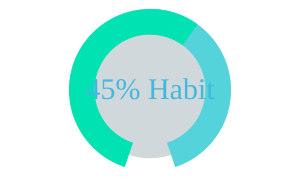
Donut chart: 45% of daily actions are habitual (autopilot), 55% are conscious choices.
Once you see your life as a series of patterns—not a series of failures or successes—you unlock the power to change. The science of habit formation gives you the tools to become anyone you want to be, one loop at a time.
Ripple Effects and Keystone Habits: How Small Wins Unlock Big Life Changes
When you picture changing your life, you might imagine a huge, overwhelming overhaul. But here’s the inspiring truth: you don’t have to fix everything at once. Science shows that changing just one “keystone habit” can set off a chain reaction—like knocking over the first domino and watching the rest fall. These keystone habits are more powerful than others, creating ripple effects that transform your routines, your mindset, and even your identity.
Keystone Habits: The Secret Power Players
Not all habits are created equal. Some, like exercise, sleep, and healthy eating, sit at the top of the habit hierarchy. When you start building these habits, you unlock a cascade of positive changes in other areas of your life—often without even trying. Researchers call these keystone habits because they hold everything else together. As one expert put it,
“When you start to exercise, it sets off this chain reaction that changes other patterns in your life.”
Exercise: The Ultimate Keystone Habit
Let’s look at exercise as an example. You might think a morning run is just about fitness, but research tells a different story. On days when people exercise, they:
- Eat healthier at lunch (hello, salad instead of a sandwich!)
- Procrastinate less at work
- Use their credit cards less
- Start chores like washing dishes 20 minutes earlier
It’s not that you consciously decide to budget better or clean sooner. The act of exercising triggers a ripple effect—your brain and body start aligning with a new, more disciplined version of yourself. Suddenly, you’re not just someone who runs; you’re someone who makes better choices all day long.
| Behavior Change | Effect on Exercise Days |
|---|---|
| Credit Card Use | Decreases |
| Procrastination at Work | Decreases |
| Healthy Eating | Increases |
| Chores (e.g., Dishes) | Start 20 Minutes Earlier |
Identity Alignment: Small Wins, Big Shifts
Here’s where the magic happens: every small win nudges your identity. Run once, and you start to see yourself as “a runner.” Make your bed, and you’re suddenly someone who values order. This identity alignment is the secret sauce behind lasting habit formation strategies. When your actions and self-image match, change feels natural instead of forced.
You don’t need to transform your whole life overnight. Focus on one meaningful keystone habit, and watch the ripple effects unlock big life changes—one small win at a time.
Cue, Routine, Reward: The Habit Loop That Makes (or Breaks) You
Here’s the messy, inspiring truth: habits don’t disappear just because you want them to. Willpower alone is rarely enough. To truly change, you need to break your habits down and meddle with the pieces. Every habit in your life—whether it’s procrastinating, running, or reaching for cookies at 4 p.m.—runs on the same engine: the cue-routine-reward loop.
Let’s break it down:
- Cue: The trigger that sets your habit in motion. It could be a place, a time of day, an emotion, the presence of certain people, or a preceding behavior.
- Routine: The automatic behavior you perform—what you think of as the habit itself.
- Reward: The payoff you get, even if you don’t realize it. Maybe it’s a burst of energy, relief from boredom, or a sense of accomplishment.
About 40–45% of what you do each day is pure habit. You think you’re making choices, but most of your actions are just well-worn loops. Backing out of your driveway, grabbing lunch, or snapping at your kids after work—these are all routines triggered by cues and reinforced by rewards.
“If we can diagnose the cue and the reward for those behaviors, for those routines, we can change that habit or build new ones.”
Diagnosing your cues and rewards is 90% of the battle. Why do you devour cookies at 4 p.m.? Maybe it’s not hunger, but boredom or the need for a break. Once you spot your environmental cues and the real reward you’re chasing, you can swap in replacement behaviors that serve you better. Research shows that when routines are anchored to stable cues and deliver satisfying rewards, behavioral sustainability skyrockets—habit adherence increases by up to 58%.
Habit Formation Strategies: Getting Crafty With Your Loop
Building a new habit isn’t about trying harder—it’s about getting strategic. Pick a cue from one of five categories:
- Location (where you are)
- Time of day
- Preceding action (what you just did)
- Emotion (how you feel)
- People (who’s around you)
Want to run more? Lay out your shoes by the door (location), run right after your morning coffee (preceding action), or join a friend (people). Pair your new routine with a reward you actually crave—a playlist, a smoothie, or even a gold star on your calendar.
Remember: lapses happen. The key is the “never miss twice” mindset. If you slip, don’t let it stall your loop forever. Reset your cues, tweak your rewards, and keep moving forward. That’s how habits become automatic—and how you go from procrastinator to marathoner, one loop at a time.
Exercise Isn’t Just for Athletes: Why Movement is the Ultimate Keystone Habit
Forget everything you think you know about exercise habits. You don’t have to be a marathoner—or even a gym regular—to unlock the life-changing power of movement. In fact, the most profound transformations often start with something as simple as standing up from your desk every 45 minutes. Research shows that even moving for just 10 seconds every hour can spark measurable benefits, both physically and mentally.
Small Wins, Big Shifts: The Power of Micro-Movements
Here’s the secret: exercise isn’t just about fitness. It’s the ultimate keystone habit—a single change that rewires your self-image and daily choices. When you start moving, even in tiny ways, you begin to see yourself differently. Suddenly, you’re not “the kind of person who’s lazy.” You’re someone who gets up, who tries, who cares. These small wins create a ripple effect. On days you move, you’re more likely to eat healthy, save money, and get things done—almost like magic, but it’s really your brain chemistry at work.
'The kind of person who's a runner, they don't use their credit card like wastefully. They don't procrastinate at work. They don't eat unhealthily at lunch.'
Identity Alignment: How Movement Changes Your Self-Concept
For non-athletes, this shift is even more powerful. If you’ve never exercised before, starting with just a walk or a few stretches can change how you think about yourself. Suddenly, you’re “the kind of person who moves.” This new identity makes it easier to make other good choices, from your lunch to your spending habits. It’s not about the miles you run—it’s about the person you become.
Morning Routine Benefits: The Best Time to Move
Want to make your new habit stick? Science says morning is your best bet. Morning exercisers form habits faster and experience stronger ripple effects throughout the day. That’s because morning routines are more resilient—once you’ve moved your body first thing, you’re primed to make better decisions all day long.
- Any movement counts: Walking, stretching, or even standing up regularly all trigger the habit loop.
- Feel-good brain chemistry: Exercise releases neurotransmitters that reinforce your new identity.
- Compounding benefits: Each small win builds momentum, making other habits easier to form.
Remember, habit formation isn’t instant. On average, it takes about 66 days—but even a few weeks of regular movement can make waking up and exercising feel automatic. The real magic is in the identity change: when you see yourself as someone who moves, everything else starts to shift.
The Golden Rule of Habit Change: Replace, Don’t Erase
When you’re trying to change your habits—whether it’s procrastination, late-night snacking, or skipping workouts—the first instinct is often to just stop. “I’m going to quit doing that,” you tell yourself. But here’s the truth: breaking habits doesn’t work if you only focus on stopping. Research and real-life experience show that you need to swap out the old routine for a new one, while keeping the same cue and reward. This is the heart of effective habit change techniques.
'Don't try and extinguish a habit. Rather, we have the power to be the people we want to be by changing our habits.'
Why Erasing Doesn’t Work
Habits are powerful because they’re tied to a cue (like a particular emotion or time of day) and a reward (like feeling relaxed or satisfied). If you try to simply erase a habit, you leave a gap. That gap is uncomfortable, and your brain will push you to fill it—often with the same old behavior. That’s why just “stopping” often leads to relapse or frustration.
Replacement Behaviors: The Smart Swap
Instead of erasing, focus on replacement behaviors. Keep the cue and reward, but change the routine in the middle. For example, if stress at work triggers a snack attack, try replacing the snack with a quick stretch or a glass of water. You still respond to stress (cue) and feel relief (reward), but the routine is healthier.
Habit Stacking: Make Change Stick
One of the most effective habit change techniques is habit stacking. This means pairing a new habit with one you already do. For instance, if you always make coffee in the morning, use that moment to do five squats or review your marathon training plan. Studies show that habit stacking and structural cues can boost habit formation rates by up to 58%, making your new routine much more likely to stick.
Environmental Design: Set Yourself Up for Success
Don’t rely on willpower alone. Environmental design—tweaking your surroundings—can nudge you toward better habits. Put your running shoes by the door, keep healthy snacks visible, or set reminders on your phone. Small changes in your environment make it easier to follow through, often without even thinking about it.
Identity Alignment: Become the Person You Want to Be
The most lasting changes happen when you shift your identity. Instead of saying, “I want to run a marathon,” say, “I am a runner.” Identity-based habits are more sustainable than outcome-based goals because they’re about who you are, not just what you do. Every time you act in line with your new identity, you reinforce it—and the habit becomes part of you.
Tracking, Tweaking, and the Beauty of Imperfect Progress
When you’re building a new habit—like running, walking, or any form of exercise—it’s easy to focus only on the finish line. But the real magic happens in the messy middle, where you track, tweak, and celebrate every imperfect step forward. This is where your habit muscle grows strongest.
Why Tracking Habits Matters
Tracking habits makes your progress visible and real. Even on days when you feel stuck, a habit tracker, journal, or simple checklist gives your brain proof that you’re moving forward. Research shows that tracking the process (not just outcomes) leads to 37% higher habit persistence. It’s not just about whether you ran a marathon—it’s about showing up, lacing your shoes, and logging each effort.
Celebrate Small Wins—They’re Powerful
Every time you mark a day on your tracker, you’re giving yourself positive reinforcement. These small wins are more powerful than you think. Each checkmark is a vote for the person you’re becoming. Over time, these tiny victories build momentum, making your new behavior feel less like a chore and more like a ritual.
Implementation Intentions: Your Secret Weapon
One of the most effective ways to lock in a habit is through implementation intentions. This means making a clear plan: when you’ll do it, where you’ll do it, and how you’ll get started. For example, “After I finish my morning coffee, I’ll put on my running shoes and walk around the block.” These specific plans make your new routine almost inevitable and dramatically increase your chances of sticking with it.
Recovery and the “Never Miss Twice” Rule
Progress isn’t perfect. Life will throw you off track. The key is to recover quickly. If you miss a day, don’t miss two. This simple rule—never miss twice—helps you bounce back without guilt and keeps your habit alive for the long term.
Systems and Accountability: Your Support Network
Going solo is tough. But when you add systems—like accountability buddies, scheduled sessions, or visual reminders—you double or even triple your chances of success. In fact, structured accountability increases habit maintenance by 2.8 times. Surround yourself with cues and support, and you’ll find it much easier to keep going, even when motivation fades.
| Strategy | Improvement |
|---|---|
| Structured Accountability | 2.8x increase in habit maintenance |
| Implementation Intentions | Higher habit formation success |
| Tracking Process | 37% increase in persistence |
“Tracking the process (not just outcomes) leads to 37% higher habit persistence.”
Remember, imperfect progress is still progress. Every tracked step, every small win, and every bounce-back after a slip is a building block in your journey from procrastinator to marathoner.
Why You’ll Never Be Perfect (And Why That’s the Point)
Let’s get this out of the way: you will never be perfect at your new habit. And that’s not just okay—it’s exactly the point. The journey from procrastinator to marathoner (or any new identity) is built on consistency and routine, not on flawless execution. Think about it:
“It doesn’t matter what you eat for lunch today. It matters what you eat for lunch every day.”The magic isn’t in a single perfect choice, but in the process over outcome—the small, repeated actions that add up over time.
Progress, Not Perfection
Perfection is a myth that keeps you stuck. Real change is messy. You’ll miss days. You’ll slip up. But the real win is in how quickly you get back on track. There’s a simple rule: never miss twice. If you skip a run or eat something off-plan, don’t let it spiral. What matters most is your ability to recover, not your ability to avoid mistakes altogether. Research shows that leaders who start with minimal viable habits and scale up are 2.7x more likely to achieve behavioral sustainability—not because they’re perfect, but because they keep showing up, even after setbacks.
Self-Reflection Over Self-Criticism
When you stumble, don’t beat yourself up. Instead, practice self-reflection. Ask: What triggered the slip? What can I do differently next time? This gentle curiosity is what makes habits sustainable. Self-compassion and process focus create resilience, helping you build routines that last. Remember, imperfect adherence is normal and expected.
Identity Shifts: One Imperfect Habit at a Time
Every time you choose to show up—no matter how small the action—you’re casting a vote for the person you want to become. As new behaviors accumulate, your identity shifts. At first, change feels slow and awkward. But each time you get up to exercise, each time you choose a healthier lunch, it gets a little easier. In just a few weeks, you may find that what once felt impossible now feels automatic. Most habits take an average of 66 days to become second nature. It’s not about a single breakthrough, but about small wins that stack up, day after day.
- Focus on process over outcome: build routines, not just results.
- Practice self-reflection after setbacks, not self-flagellation.
- Celebrate small wins—they’re the building blocks of real change.
Perfection isn’t the goal. Progress is. And that’s what keeps you in the game, one imperfect, powerful step at a time.
Conclusion: Your Real-Life Habit Story Starts Now
Here’s the truth: Changing your habits isn’t about being superhuman. It’s about using the science of habit formation—and a splash of stubborn hope—to steer your story in a new direction. If you’ve ever felt stuck, frustrated, or convinced that “this is just who I am,” let this be your reminder:
“You can become any person you want to be. That habit that's been driving you crazy for years, you can change it.”
The latest research on habit formation strategies shows that anyone can change. You don’t need perfect willpower or a flawless plan. What you need is a willingness to experiment, to get a little messy, and to keep coming back, even when progress feels slow. The science of habit formation is clear: small steps, repeated often, create big changes over time.
Keystone Habits: The Ripple Effect
One of the most powerful discoveries in this journey is the idea of keystone habits. These are the habits—like regular movement or daily journaling—that spark positive changes in other areas of your life. When you lock in a keystone habit, you’re not just building good habits; you’re transforming your identity. Suddenly, you’re not just someone who runs—you’re someone who shows up for themselves, even on hard days.
Progress Over Perfection
Forget chasing perfection. Real change happens when you focus on progress, not flawless execution. Tweak your systems. Try new routines. If something doesn’t work, adjust and try again. Every morning is a new shot at change, and every small win counts.
- Start with one small step—maybe a five-minute walk or a single glass of water.
- Track your progress, but don’t obsess over setbacks.
- Celebrate the awkward, imperfect moments. They’re proof you’re moving forward.
Your Identity Is Waiting
Here’s the wild part: your next habit shift might just flip your self-image on its head—in the best way possible. The person who couldn’t run a block becomes a marathoner. The chronic procrastinator becomes someone who gets things done. It’s not magic; it’s the science of habit formation, plus your real effort.
You’ve got the research, some awkward personal stories, and hopefully a new sense of what’s possible. The path isn’t perfect, but it’s yours to walk. Your real-life habit story starts now. Let’s get moving.
Wild Cards: Quotes, Analogies, and Hypothetical Detours
Sometimes, the best habit formation strategies aren’t found in strict routines or bullet journals—they’re hiding in the wild cards: the quotes that stick, the analogies that click, and the playful “what ifs” that make the journey less intimidating. Let’s shake up your approach to behavioral change principles with a few creative detours.
“When you become the kind of person who…”—it’s the script for any new habit.
Think about it: every time you see someone who’s a healthier eater, a regular runner, or a mindful saver, you’re not just seeing their actions. You’re seeing a story they’ve started telling themselves. When you decide to become “the kind of person who doesn’t skip workouts,” you’re not just changing your schedule—you’re rewriting your identity. This is called identity alignment, and it’s a game-changer for lasting change.
Analogy: Habits Are Like Playlists on Shuffle
Picture your brain as a playlist on shuffle. Each habit is a song. Some tracks are energizing, some are a bit embarrassing, and a few you wish you could skip. The good news? You can change the order. Swap out the old tunes for new ones, and suddenly, you’re dancing to a different beat. That’s the heart of habit formation strategies—curating your own mental playlist, one small change at a time.
Hypothetical Detour: What If You Treated Habits Like Experiments?
What if you approached habit change as an experiment, not a test of your willpower? Imagine you’re a scientist in your own life lab. There’s no “failing”—just data. If a new morning routine doesn’t stick, you haven’t failed; you’ve learned what doesn’t work (yet). This playful mindset reduces pressure and makes behavioral change principles feel more like a creative project than a punishment.
Imagine: If Your Pet Had Your Habits
Here’s a fun one: imagine your pet had your habits. Would your dog be snoozing through morning walks? Would your cat be stress-snacking at midnight? Sometimes, picturing your routines through a silly lens helps you spot what needs a remix. Plus, it’s a reminder that even the messiest routines can be changed.
Science Says: It’s Never Too Late
Even if you’ve been playing the same old track for years, research shows your brain is always ready for a new song. Neuroplasticity—the brain’s ability to rewire itself—means it’s never too late to align your identity with the habits you want.
Quick Tip: Name Your Habit
Give your habit a persona. Call your morning run “Captain Energy” or your nightly reading “The Bookworm Ritual.” Talk to it. Encourage it. It might sound weird, but this creative reframing makes the process more engaging—and way less intimidating.
FAQ: Changing Habits Without Losing Your Mind
Let’s be honest—changing habits can feel impossible, especially when you’re stuck in a cycle of procrastination or self-doubt. But you’re not alone, and you’re not broken. Here are the answers to the most common (and secretly embarrassing) questions about habit formation, so you can build consistency and routine without losing your mind.
How long does it really take to form a habit?
Forget the “21 days” myth. Research shows habit formation time can range from 18 to 254 days, with an average of about 66 days. It depends on the habit, your environment, and how often you repeat the action. The key is process over outcome: focus on showing up, not being perfect.
What if I ‘fall off’ or miss a week—am I doomed?
Absolutely not. Missing a day (or even a week) doesn’t erase your progress. Habits are about what you do most of the time, not every single time. Just get back on track. Consistency and routine are built over months, not moments.
Does exercise really matter if I just want to eat better or quit smoking?
Surprisingly, yes. Exercise is a keystone habit: it creates positive momentum that spills into other areas of your life. People who start exercising often find it easier to make healthier food choices or quit smoking, even if that wasn’t their original goal.
What’s the best tracker or method for monitoring habits?
There’s no one-size-fits-all answer, but tracking habits—whether with an app, journal, or calendar—increases your persistence by 37%. Choose a method you’ll actually use. Structured accountability (like sharing your progress with a friend) can improve your odds by nearly three times.
Are morning routines actually more effective?
Yes, for most people. Studies show that morning habits are more likely to stick, partly because your willpower is stronger and there are fewer distractions. But if you’re a night owl, consistency matters more than the clock.
Do I need to start with a keystone habit, or can I just pick anything?
Keystone habits (like exercise, journaling, or meal prepping) can make other changes easier, but you can start anywhere. The best habit is the one you’re most excited to stick with right now.
How do I figure out the real reward I’m chasing in a habit loop?
Pay attention to how you feel before, during, and after the habit. Are you looking for comfort, energy, or connection? Understanding the reward helps you design better routines and swap out unhelpful habits for healthier ones.

In the end, it doesn’t matter what you do once—it matters what you do most days. Embrace the messy process, track your wins, and remember: every marathon starts with a single, imperfect step.
TL;DR: Changing your habits is possible, even if you’ve tried and failed a hundred times—keystone habits create powerful ripple effects, and small, consistent changes (supported by habit science) can redefine your sense of self. The best place to start? Understand your cue-routine-reward, celebrate the tiniest wins, and watch as one shift starts to spark another.
Post a Comment