
Confession time: I used to think productivity was all about mastering the latest hacks or apps. But a few sharp stings (and some late-night rants) taught me otherwise. Let me walk you through how I learned, the hard way, that cutting through the noise and embracing the unglamorous, sometimes unscalable stuff, is the real game-changer—especially as we barrel into 2025. Buckle up for some uncomfortable truths, legendary lessons, and a totally human take on making work actually work.
1. The Brutal Beauty of ‘Signal vs Noise’: My Recursive Wake-Up Call
The ‘Rage Moment’: Realizing Years Lost to Noise
I’ll be honest: I’m pissed off that nobody told me about the signal versus noise principle earlier. If you’re like me, you’ve probably spent years grinding away, only to realize most of your energy went to “noise”—tasks that felt urgent but did nothing to move you forward. That moment of realization is brutal, but it’s also the wake-up call you need to transform your approach to task management signal noise.
Definition and Origins: What Is ‘Signal vs Noise’?
Steve Jobs, as described by Kevin O’Leary, mastered the art of separating the signal—the top three to five things you must get done in the next 18 hours—from the noise, which is everything else. Jobs’ prioritization strategies for entrepreneurs were ruthless: “His vision of signal was the top three to five things you have to get done in the next 18 hours.” This isn’t just a productivity hack; it’s a mindset shift that’s powered some of the most successful people in history.
Spotting Your Signal: Why Most To-Do Lists Are 90% Distraction
Look at your to-do list. Be honest—how many of those tasks are direct drivers of your mission or goals? For most of us, 90% is noise: emails, meetings, “urgent” requests, and notifications that hijack our focus. As Johnny Ive put it,
You can achieve so much when you truly focus.The discipline to say no is what separates high performers from the rest.
Making the 80/20 Split: The Signal-to-Noise Ratio
Steve Jobs operated on an 80/20 split: 80% of his time and energy went to signal, 20% to noise. This 80/20 rule is a proven productivity technique for 2025. Here’s how you can visualize it:
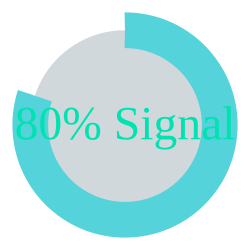
Sample Task Chart:
| Signal (80%) | Noise (20%) |
|---|---|
| Finish product prototype Write investor pitch Close key client deal |
Check emails Routine admin Non-urgent calls |
Column Method in Practice: Sorting Tasks Changed My Day
After a chaotic morning lost to WhatsApp and email, I tried something radical: I split my to-do list into two columns—signal and noise. Every task, thought, or request went into one or the other. Suddenly, my day had clarity. Time blocking and prioritization, as industry research confirms, maximize focus and output. The decision fatigue solutions are real: when you see your true priorities, you act on them.
Why Delegating Noise Isn’t Laziness
Handing off noise tasks isn’t slacking—it’s smart. Delegate routine admin, low-impact emails, and non-critical meetings to someone you trust. This frees up your energy for the signal. As Jobs, O’Leary, and Ive all demonstrate, the discipline to focus on what matters most is the ultimate productivity edge.
2. The ‘Unscalable Action’ Paradox: Why Slow, Manual Hustle Still Wins (Even in AI Times)
Paul Graham’s ‘Do Things That Don’t Scale’: The Foundation of Unscalable Actions for Business Growth
If you want to understand why the biggest companies in the world started with slow, manual hustle, look no further than Paul Graham’s classic essay, Do Things That Don’t Scale. Graham’s core message is simple: unscalable actions drive business growth in the early days. Instead of obsessing over automation or AI tool adoption, you need to get your hands dirty, connect with real users, and learn from every step.
Legendary Unscalable Story: Airbnb’s Door-to-Door Photo Shoots
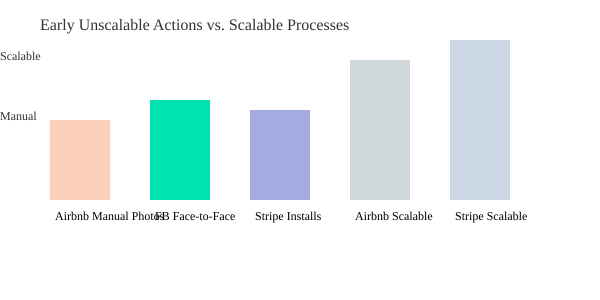
When Airbnb launched, the founders noticed a huge problem: hosts were uploading terrible photos, making listings look unappealing. Instead of building a fancy photo-upload tool or waiting for users to improve, Brian Chesky and his co-founders did something radical. They borrowed a camera, knocked on doors, and took professional photos themselves. This was the definition of unscalable action—manual, direct, and intensely customer-focused.
If they’d obsessed over scale, Airbnb never would have got the feedback from doing it, and they never would have had the $100 billion success that was Airbnb.
This gritty, hands-on approach gave them real feedback, built loyalty, and proved that better photos led to more bookings. Only after this experiment did they automate the process for millions of users.
Manual Pitches: How Mark Zuckerberg Grew Facebook at Harvard
Mark Zuckerberg didn’t start Facebook by launching ads or using AI-driven outreach. He personally pitched students at Harvard, inviting them to join the platform face-to-face. This wasn’t scalable, but it was essential. By talking directly to his first users, Zuckerberg learned what they wanted and how they used the product. This is a perfect example of experimentation for business success—you get insights you can’t find in analytics dashboards.
Stripe’s Founders: Hand-Installing Software for Early Customers
Stripe, now a giant in payments, began with Patrick and John Collison literally visiting customers’ offices and installing software themselves. This manual process was slow and messy, but it let the founders see how real businesses used Stripe, what confused them, and what needed to change. Only after these lessons did they automate onboarding for millions.
Personal Twist: My Own ‘Door-Knock’ Experiment
I once tried a similar approach for a small SaaS product. Instead of sending cold emails, I called local businesses and offered to set up the tool in person. The feedback was instant and raw—some features confused users, others delighted them. This taught me firsthand that first principles reasoning in entrepreneurship means starting with direct experience, not assumptions or automation.
Wild Card Analogy: Planting Seeds by Hand
Think of unscalable actions like planting seeds one by one. Not every seed will sprout, but you can’t automate growth until you know which seeds work in your soil. In business, you have to plant many by hand before you can build a machine to do it for you.
3. Time Blocking and the War on Decision Fatigue: Why Simplicity Beats Complexity Now
The Mystery of the Black T-Shirt: Wardrobe Simplification as a Life Hack
Ever wonder why some of the world’s most productive people wear the same outfit every day? It’s not about fashion—it’s about cognitive load reduction. By automating repetitive tasks like choosing what to wear, you instantly free up mental energy for things that actually matter. As one expert put it:
If you just saved 20 minutes a day on choosing what to wear, and then you saved 1 hour a week on travel and packing—how much of your life would you save?
That’s not just a rhetorical question. It’s a real, measurable productivity boost. Wearing the same clothes each day isn’t about copying Steve Jobs—it’s about letting life push you to the path of least resistance. If picking outfits doesn’t bring you joy, automate it. Use that time for signal, not noise.
Decision Fatigue: Why Even Tiny Choices Sap Energy (and How to Counter It)
Every decision you make—no matter how small—uses up your limited daily supply of willpower. This is called decision fatigue. The more choices you face (what to wear, what to eat, when to work), the less energy you have for deep, meaningful work. The solution? Decision fatigue solutions like routine-building and automation. Simplify your mornings, batch similar tasks, and create default choices wherever possible. The less you decide, the more you can do.
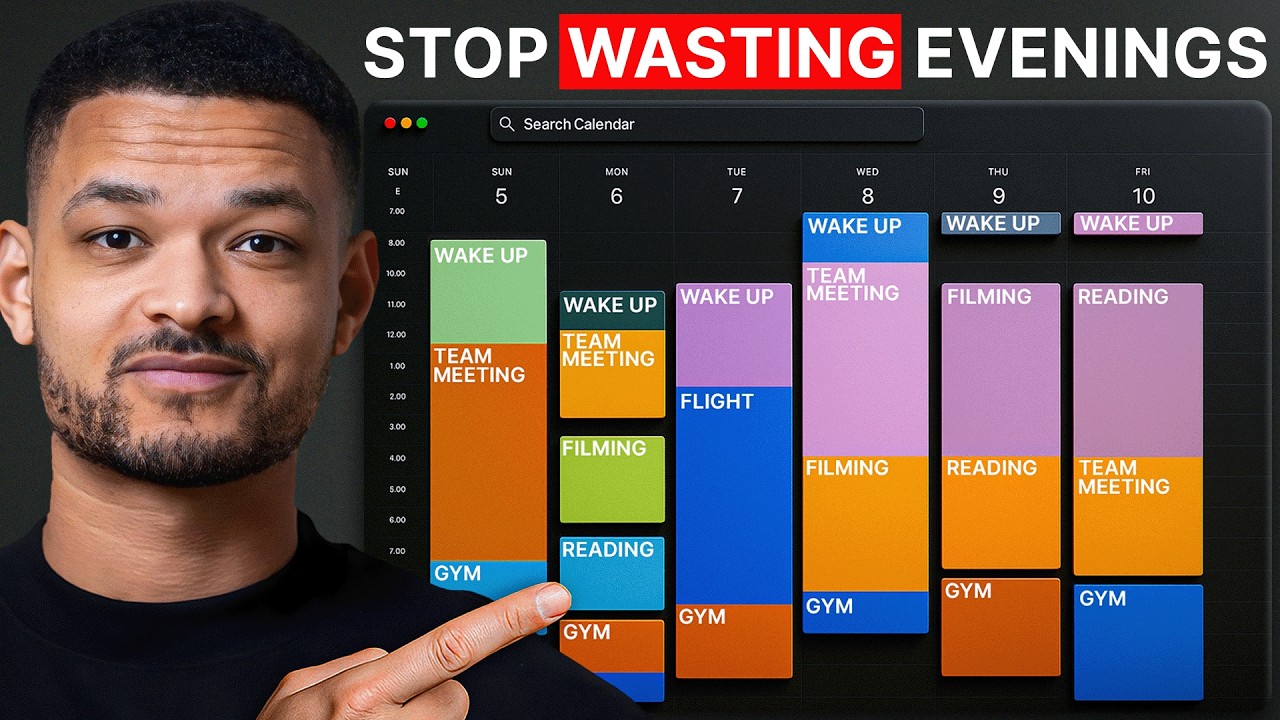
Time Blocking in the Wild: How I Finally Tamed My Crazy Calendar
Enter the time blocking strategy. Instead of letting your day get hijacked by random tasks and meetings, you assign specific blocks of time to your most important work. Here’s how you can do it:
- Pick your top 1-2 “signal” tasks for the day (the work that moves the needle).
- Block out 60-90 minute sessions for deep focus—no interruptions.
- Batch “noise” tasks (emails, errands) into set windows.
- Automate repetitive tasks wherever possible.
This approach isn’t just theory—it’s how I finally tamed my own calendar chaos. By protecting time for deep work, you reduce distractions and boost output.
Quantifying Time Saves: 20 Minutes/Day on Clothes, 1 Hour/Week Travel—What Does It Add Up To?
Let’s run the numbers. If you save 20 minutes a day by not choosing outfits, that’s over 2 hours a week. Add in 1 hour a week saved on packing and travel, and you’re reclaiming over 3 hours weekly. Over a year? That’s more than 150 hours—almost four full workweeks. Here’s a quick breakdown:
| Micro-Optimization | Time Saved (Daily/Weekly) | Annual Hours Saved |
|---|---|---|
| Wardrobe Simplification | 20 min/day | 121 hours |
| Packing/Travel | 1 hour/week | 52 hours |
| Time Blocking (Deep Work Sessions) | 1 hour/day | 260 hours |
Life is a zero-sum game: Time for one thing is always taken from another. Micro-optimizations add up fast.
Practical Template: My Two-Column Daily Agenda (Signal/Noise, as a Routine)
Try this simple daily productivity routine template:
| Signal (High-Value Tasks) | Noise (Routine/Low-Value Tasks) |
|---|---|
| Deep work session (9-11am) | Emails (11-11:30am) |
| Project planning (1-2pm) | Admin tasks (2-2:30pm) |
By separating signal from noise and blocking time for each, you automate focus—and win the war on decision fatigue.
4. When Analytics Meet Instinct: Using Data (and Gut) To Refine Content & Performance
Behind-the-Scenes Experiments: Iterating Podcasts with Actual Audience Retention Graphs
If you’re serious about leveling up your content, you can’t just trust your gut—or your analytics—alone. The real magic happens when you combine both. Here’s how I learned this firsthand: I wanted to create a truly retentive podcast episode. Instead of guessing what worked, I uploaded an unlisted link to our episode in Diary Circle and waited for the YouTube Studio retention graph to come back. This wasn’t just a vanity metric exercise. It was a real experiment to see where listeners dropped off, when they leaned in, and what sections needed tightening.
Balancing Creative Intuition and YouTube Studio Analytics
YouTube Studio data analysis is a game-changer for content creators. The platform offers industry-leading analytics, especially for podcasts and video content. But here’s the thing: analytics are a mirror. They show you what’s happening, but they don’t tell you what to do next. That’s where your creative instinct comes in. For example, if you notice a sharp dip in retention at the 12-minute mark, your instinct might tell you the segment was too long or off-topic. Analytics confirm the “where,” but your gut helps you figure out the “why.”
Actionable Lesson: Change the Process Based on Real Feedback Loops
After running the unlisted link experiment, I realized that integrating real-time feedback into our workflow was powerful—but it also felt clunky at first. Our process was already streamlined, almost like a military operation. Adding manual steps, like uploading to Diary Circle and waiting for retention data, felt slow. But the results were worth it. We started editing episodes based on actual audience behavior, not just assumptions. The lesson? Don’t be afraid to overhaul your process if the data shows it’s worth it. This is how you move beyond productivity hacks and into true content optimization.
Personal Experiment: The ‘Unlisted Link in Diary Circle’ Retention Project
Here’s how you can try this yourself:
- Upload your draft episode as an unlisted YouTube video.
- Share the link with a select audience (like a private group or Diary Circle).
- Wait for YouTube Studio to generate the retention graph.
- Analyze where listeners drop off or re-engage.
- Edit your content based on these insights, not just your initial plan.
This approach combines the best of content creation analytics tools and your own creative instincts.
FAQ: What Analytics Actually Moved the Needle for Me?
- Audience Retention Graphs: Pinpointed exactly where engagement dropped.
- Click-Through Rate (CTR): Helped refine titles and thumbnails for better first impressions.
- Average View Duration: Showed which segments kept listeners hooked.
"It's really difficult to understand success and failure in real-time, but YouTube has the best analytics for that."
Creative Analogy: Analytics as a ‘Mirror’—It Shows, But Doesn’t Dictate Moves
Think of analytics as a mirror in your creative workspace. It reflects what’s happening, but it doesn’t tell you how to style your hair. You still need your gut, your taste, and your willingness to experiment. The best results in 2025’s productivity podcasts and AI workplace integration come from this blend: hard data plus improvisational creativity.
5. The Myth of Multitasking and the Lure of ‘Busy Work’: Spotting (and Dodging) Daily Traps
Why You Probably Accomplish Less Than You Think (And How I Learned This the Embarrassing Way)
Ever ended your workday feeling exhausted, yet unsure what you actually achieved? You’re not alone. I used to think being “busy” meant being productive—until I realized most of my energy was spent on things that weren’t the real signal, just noise. I’d start my day with a clear plan, but one email or WhatsApp message later, I’d be off-track, chasing tasks that felt urgent but weren’t important. It’s a common trap in today’s workplace productivity trends, and it’s costing you focus time efficiency.
Multitasking: The Productivity Vampire of 2025
Multitasking is often praised as a must-have skill, but in reality, it’s a productivity technique that backfires. Research shows that productive time sessions are getting longer, but focus efficiency is slipping. Why? Because multitasking and digital distractions are eating away at your best hours. When you switch between tasks, your brain spends extra energy refocusing, which leads to more mistakes and less real progress.
“Focus time is under pressure due to increased collaboration and multitasking, leading to a decline in focus efficiency from 65% to 62%.”
Warning Signs: Email and Chat Creep (How They Devour Precious Signal Time)
Emails and chat apps are the silent killers of deep work. You might think you’re staying on top of things, but every notification pulls you further from your most important work. This is called “chat creep”—the slow invasion of your schedule by small, seemingly urgent messages. Before you know it, you’ve lost hours of focus time to digital distractions.
Calculating Your Focus Efficiency (With Chart!)
Want to know how much of your day is truly productive? Use this simple formula:
Focus Efficiency (%) = (Time spent on high-value tasks ÷ Total work hours) × 100
Compare your results to the latest industry data below:
| Year | Focus Efficiency Rate | Remote-Only Productive Time (+min/day) | Avg. Workday Change (since 2022) | Productive Time Change | Focus Time Lost to Distractions |
|---|---|---|---|---|---|
| 2022 | 65% | +0 min | 0 min | 0% | 54% |
| 2025 | 62% | +29 min | -36 min | +2% | 56% |
Notice how focus efficiency is dropping, even as productive time edges up. That’s the cost of multitasking and endless collaboration.
Real-Life Fix: My New ‘Morning Audit’ for Task Prioritization
To fight back, I started a simple morning audit. Before opening any inbox, I list my top three “signal” tasks—those that move the needle. Only after blocking time for these do I check emails or chats. This small shift has helped me automate repetitive tasks and reclaim my best focus time for deep work.
Surprising Stat: Remote-Only vs. Office-Only Focus Efficiency
Here’s a twist: Remote-only workers gain 29 more minutes of productive time daily, but office-only workers have slightly higher focus efficiency. Why? Offices may have fewer digital distractions, while remote setups often blur the line between signal and noise. Either way, the key is to spot and dodge these daily traps using proven productivity techniques for 2025.
6. AI, Automation & the ‘Integration Imperative’: Useful Ally or Double-Edged Sword?
The AI Hype (and Reality) in 2025: What Works, What Doesn’t
AI in the workplace is no longer a futuristic promise—it’s everywhere. According to recent data, AI tool adoption in the workplace has accelerated, with 58% of employees using AI tools, doubling since 2022. But here’s the wild truth: not every AI tool delivers on its promise. From my own team’s experiments, the difference between game-changing productivity and total chaos comes down to one thing: integration.
When you bolt on a new AI-powered app without a plan, you risk losing your signal—your focus and clarity. But when you integrate thoughtfully, AI and automation can reduce your cognitive load and free up your best focus for the work that matters most.
When to Automate: Repetitive Processes That Should Go to the Bots
Here’s a simple rule: Automate repetitive tasks that drain your energy but don’t require your unique judgment. Think data entry, scheduling, sorting emails, or generating standard reports. In our team, automating these processes gave everyone at least 29 extra minutes per day for deep work. The key is to identify what’s truly repetitive versus what needs your brainpower.
AI Tool Adoption: Learning Curves, Pitfalls, and How Not to Lose Your Signal
Adopting AI tools isn’t just about clicking “install.” There’s a learning curve. The biggest pitfall? Assuming the tool will magically fix your workflow. Instead, you need to:
- Map out your current processes
- Identify where AI can help (and where it can’t)
- Train your team—not just on the tool, but on how it fits into your day-to-day
Remember, AI workplace integration is only as good as the expertise of the people using it. Poor integration or lack of training is still a killer barrier, even in 2025.
Hardware and Cloud Leaps: Why Performance Isn’t About Software Alone
Here’s something most people miss: Hardware innovation AI is just as important as the software.
Hardware innovations such as specialized chips and distributed cloud computing enhance AI performance, enabling real-time applications and scalability in business.If your laptop or cloud setup can’t keep up, even the smartest AI tool will lag or crash. In our experiments, upgrading to AI-optimized hardware and cloud services made a night-and-day difference in speed and reliability.
Charts/Stats: % of Employees Using AI—Sane Adoption, or Overkill?
| Year | % Employees Using AI Tools |
|---|---|
| 2022 | 29% |
| 2025 | 58% |
Is this sane adoption or overkill? It depends on how well the tools are integrated and whether they actually support your goals.
FAQ: Should You Automate This Task? A Quirky Decision Checklist
- Does this task repeat daily or weekly?
- Would you trust a robot to do it 95% right?
- Does it drain your energy or distract from your main work?
- Could automating it free up time for creative or strategic tasks?
- Do you have the right hardware and training to support automation?
If you answered “yes” to most, it’s time to let the bots take over.
Key 2025 Skills for Thriving with AI in the Workplace
- Analytical thinking
- Resilience
- Leadership
- AI literacy
Master these, and you’ll thrive in the new era of AI workplace integration.
7. Why Failure and Experimentation Should Be Your (Messy) Religion
Storytime: The Cannes Festival, a Botched Experiment, and What Actually Came of It
Picture this: I’m at the airport in LA, about to fly out to Cannes in the South of France for the world’s biggest creativity festival. Every major marketer, creative, and media owner is headed there. It’s a melting pot of wild ideas and even wilder experiments. Last year, I tried a bold campaign activation on the Croisette. It flopped—hard. The tech glitched. The crowd barely noticed. But here’s the twist: that botched experiment led to three unexpected meetings, two new clients, and a viral story that outperformed anything I’d planned. The lesson? Experimentation in business success is rarely neat, but it’s always fertile ground for growth.
Action vs. Overplanning: Why Perfectionism Masks Fear and Crushes Growth
Most people think productivity techniques in 2025 are about getting more done, faster. But the real edge comes from acting before you feel “ready.” Perfectionism is just fear in disguise. When you overplan, you’re protecting yourself from embarrassment—but you’re also blocking innovation. The most iconic creators at Cannes weren’t the ones who played it safe; they were the ones who pressed the “try something crazy” button every single day.
Why Creators and Entrepreneurs MUST Embrace Wild Trial-and-Error
If you want to win in today’s world, you need to make failure and experimentation your messy religion. As I always say,
The first is about failure and experimentation and why this is my absolute religion and why it needs to be yours.The best teams and creators build in “failure sprints”—deliberate cycles of rapid experimentation and iteration. This is first principles reasoning entrepreneurship: break things down, test assumptions, and rebuild smarter. Perfectionism kills momentum. Fast, messy trial-and-error is how you discover what actually works.
Value for Strangers: The World’s Weirdest (But Best) Business Mantra
Here’s a Cannes secret: the most successful creators focus on delivering value for strangers, not just themselves or their followers. When you create without expectation of return, you build luck, networks, and impact. This “value for strangers” mindset is a hidden driver of business breakthroughs. The world rewards those who serve beyond their circle—because that’s where the wildest opportunities live.
Quote Wild Card: The Real Risk Is Not Failing, But Not Learning Anything
The real risk isn’t in failing—it’s in refusing to learn. Every failed experiment at Cannes became a story, a connection, or a new insight. The only way to lose is to stop experimenting.
Practical Experiment: Setting Three Daily Micro-Goals for Failure/Experimentation
Ready to make experimentation your new productivity technique for 2025? Try this: every morning, set three micro-goals that have a high chance of failing. For example:
- Pitch a wild idea to a stranger.
- Test a new tool or workflow, even if it breaks.
- Share an unfinished project for feedback.
Remember, every creative process needs space for things to go wrong before they go right. The world’s best creators are simply those who’ve mastered the art of failing forward, again and again.
FAQ: Burning Questions You’re Probably Itching to Ask (And What No One Else Will Tell You)
What’s the first step to clarifying my ‘signal’ each morning?
Start by grabbing a blank page or opening your favorite notes app. Split it into two columns: Signal and Noise. Before you check email or Slack, ask yourself: “What are the three to five things that, if done today, will move my mission forward?” Write those in the Signal column. Everything else—no matter how urgent it feels—goes into Noise. This isn’t just a productivity technique for 2025; it’s the missing piece most people overlook. Steve Jobs did this, and it’s why he got so much done. Try it for a week. You’ll be shocked at how much clarity it brings.
How do I know if I’m too obsessed with productivity tools?
If you spend more time tweaking your to-do app than actually doing the tasks, you’re in the trap. Productivity tools are only as good as the focus you bring to them. The best time blocking strategy is the one you actually use, not the one with the most features. Ask yourself: “Did my tool help me finish my Signal tasks today, or did it just give me the illusion of progress?”
Can ‘doing things that don’t scale’ work in big companies, or just startups?
Absolutely. The principle is about learning what matters by getting close to the problem—manually, if needed. Even in a big company, you can run a small, hands-on experiment with a few real users or customers. That’s how you find the insights that automation and dashboards miss. The trick is to carve out space for these experiments, even if your org chart is a maze.
Is there real science to the decision fatigue/wardrobe trick?
Yes. Research shows that every decision you make depletes your mental energy. That’s why people like Steve Jobs and Mark Zuckerberg wore the same thing every day. If picking your outfit doesn’t bring you joy or value, simplify it. You’ll have more brainpower left for what matters. That’s a decision fatigue solution you can implement tomorrow.
How do I decide what AI tools to actually use in my workflow?
Don’t chase every shiny AI workplace integration. Start with your biggest friction point—what slows you down or drains your energy? Test one tool that addresses that. If it helps you move more Signal tasks to ‘done,’ keep it. If not, ditch it. The best AI is invisible: it amplifies your focus, not your distractions.
Are remote workers always more productive than in-office ones?
No. Productivity depends on how well you manage Signal vs. Noise, not your location. Remote work can reduce some distractions, but it can also introduce new ones. The key is to set boundaries and rituals—like a daily Signal review—to keep you on track wherever you work.
What do I do if my team resists time blocking or prioritization?
Model it yourself first. Share your Signal/Noise list openly. Invite your team to try it for a week, then debrief together. Often, resistance comes from fear of missing out or losing control. Show them the results—more done, less stress—and most will come around.
How do I recover from a ‘lost day’ stuck in noise?
Don’t beat yourself up. Everyone has those days. The trick is to notice it, reset, and start fresh tomorrow. Sometimes the best productivity technique is self-compassion. Reflect for a minute: What pulled you into the noise? Adjust your Signal list for tomorrow and move on.
Should I focus more on analytics or on creative instinct to grow my content?
Both matter, but analytics are your compass and creative instinct is your fuel. Use data to spot what’s working, but don’t let it smother your experiments. The best creators blend intuition with feedback loops. Try, measure, tweak—repeat.
What if experimentation just leads to constant mess or failure?
That’s normal. The mess is where the breakthroughs hide. The key is to run small, cheap experiments—don’t bet the farm on every idea. Learn fast, fail fast, and keep what works. That’s how every major success story started, from Airbnb to Stripe.
How do I balance learning from failure with still hitting my goals?
Set aside time for both. Block out space for experimentation, but also protect your Signal tasks. Review what you learned each week, then adjust your approach. Progress isn’t linear, but it’s always possible if you keep learning.
What’s a weird but effective way to avoid multitasking traps?
Try narrating your focus out loud or in writing: “Right now, I’m doing X.” It sounds silly, but it snaps your brain out of autopilot. When you catch yourself drifting, say it again. This simple hack can save hours lost to context switching.
In the end, real productivity isn’t about hacks or tools—it’s about ruthless clarity, honest reflection, and the courage to do what others won’t. Start with your Signal, embrace the mess, and remember: the wild truth is that what moves you forward rarely scales at first. That’s where the magic is. Let’s get to work.
TL;DR: Stop obsessing over shiny productivity hacks and start separating the work that truly moves you forward (signal) from everything else (noise). Sometimes, breakthrough progress means getting your hands dirty and embracing unscalable actions. And don’t let tech (even AI) distract you from the core priorities—time spent on true focus will always pay off.
Post a Comment