
I remember bombing my first college presentation so badly that my own professor avoided eye contact for weeks. Looking back, that trainwreck did more for my confidence than any 'A' grade ever could. It burned in me the urge to figure out what I was actually wired for—as if life had a custom instruction manual, but mine was printed upside-down. In this post, I’ll show you how turning inward, tuning out the noise, and (yes) learning to see envy as a secret ally can turn anxiety into confidence. Along the way, you’ll encounter lessons straight from Robert Greene, a man who wandered through 50 jobs before hitting his stride, and learn why sometimes the weirdest thing about you is your greatest asset.
1. The Real Meaning of Self-Mastery: Beyond Buzzwords
When you hear “self-mastery,” what comes to mind? For many, it’s a morning routine, an inspirational meme, or a list of habits to check off. But real self-mastery goes far deeper. It’s not about forcing yourself to wake up at 5 a.m. or repeating affirmations in the mirror. Instead, it’s about understanding who you are, what truly excites you, and building discipline from the inside out. This is the foundation of any personal development roadmap that actually works.
Why Self-Mastery Isn’t Just Another Buzzword
Most people feel stuck—trapped by fear, self-doubt, or a system that encourages them to play small. Schools rarely teach you how to master yourself or even how to discover what matters to you. Instead, you’re often pushed to fit in, follow the rules, and ignore your unique interests. But as Robert Greene, author of Mastery, points out, “You master yourself through learning, through learning something that you love, that interests you, that's how you develop discipline.”
Discipline That Sticks Comes from Within
Here’s the truth: The only discipline that lasts is the kind you build by chasing what lights you up inside. If you’re pursuing a career or a skill just because someone told you it’s a good idea, you’ll struggle to focus deeply. You’ll get distracted, zone out, and never reach your full potential. But when you’re learning something that fascinates you, discipline becomes almost automatic. You want to show up, to practice, to improve—because it feels alive. Greene even compares the thrill of learning to the excitement of sex. That’s how powerful it can be when you’re aligned with your true interests.
Robert Greene’s 50-Job Detour: The Power of Patience and Lifelong Learning
Robert Greene didn’t stumble into success overnight. Before publishing his first book, he worked over 50 different jobs. Each one taught him something, but none felt quite right. It was only when he leaned into his passion for writing and understanding human nature that everything clicked. This winding path is a reminder that self-mastery techniques aren’t about shortcuts—they’re about patience, introspection, and the courage to keep searching until you find your lane.
- Ignoring your true interests makes deep focus and discipline nearly impossible. You can’t fake passion, and without it, mastery is out of reach.
- Rediscovering childhood passions can point you toward your life’s task. Think back to what fascinated you as a kid—those clues are often more honest than what you think you “should” do as an adult.
Self-Mastery Techniques: Start with Self-Awareness
Mastery begins with self-awareness. Take time to reflect on what excites you, what you lose track of time doing, and what you loved before the world told you to be practical. This process isn’t quick. Greene emphasizes that answers take time—sometimes months or even years. But this patience is essential for meaningful lifelong learning and personal growth.
Chart: Time-to-Mastery vs. Job Satisfaction
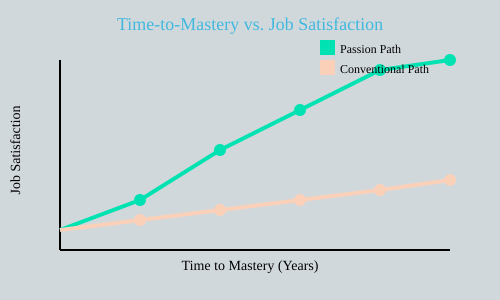
“You master yourself through learning, through learning something that you love, that interests you, that's how you develop discipline.” – Robert Greene
2. Finding (and Accepting) What Makes You Weird: The Path to Unshakable Confidence
Being different often feels risky—especially when you’re young. In school, standing out can attract ridicule or isolation. Society teaches us to fit in, to blend with the crowd, and to avoid drawing attention to what makes us unique. But as Robert Greene points out, “The trick in life is bringing out your uniqueness. Bringing out what makes you weird, what makes you strange, what makes you different, and leaning into it.” This is the foundation for building unshakable confidence.
The Myths of Fitting In vs. The Reality of Success
From an early age, we’re told that fitting in is the safest path. But the real world rewards those who stand out. Most people suppress what makes them unique due to fear of ridicule. Yet, if you look at anyone who has achieved mastery—especially in creative fields—they are celebrated for their individuality. David Bowie, for example, didn’t just accept his quirks; he made them his competitive advantage. There was no one like him, and that’s exactly why he succeeded.
Why Embracing Your Weirdness Matters
- Creativity flourishes: When you stop hiding your quirks, you unlock new ways of thinking and problem-solving.
- Self-awareness and confidence: Accepting what makes you different is the first step toward believing in yourself and finding your true path.
- Resilience against conformity: Overcoming self-doubt strategies often start with resisting the urge to blend in, even when it feels uncomfortable.
Learning from Creative Icons
Icons like David Bowie show us that embracing your unconventional side is not just brave—it’s essential. Bowie’s uniqueness wasn’t just tolerated; it was the reason for his influence and legacy. Greene’s confidence tips echo this: the people who make a lasting impact are those who dare to be themselves, fully and unapologetically.
Greene’s Take: The Journey to Self-Discovery
Many young people feel lost, unsure of what makes them special. Greene explains that this is normal—and that impatience is the enemy. You might want instant answers about your purpose, but discovering your true self takes time. It’s an adventure, not a checklist. The early 20s are a great time to explore, but it’s never too late to start. The key is to be patient and listen to your inner voice, not the noise from others.
The trick in life is bringing out your uniqueness. Bringing out what makes you weird, what makes you strange, what makes you different, and leaning into it. – Robert Greene
Overcoming the Fear of Standing Out
It’s natural to fear being different, especially when conformity is encouraged. But true fulfillment and lasting confidence come from embracing your idiosyncrasies. When you stop worrying about what others think and start focusing on what excites you, you’ll notice a shift. That’s when self-awareness and confidence begin to grow.
Data Insight: Confidence and Uniqueness
Donut chart: 68% feel confident when embracing their uniqueness; 32% when hiding it.
Ignoring conformity may take longer to show results, but the rewards—creativity, resilience, and unshakable confidence—are worth it. Anyone, at any age, can uncover and use their unique traits to thrive.
3. Why ‘Patience’ and Introspection Are the Missing Links in Your Journey
When it comes to how to master yourself and build true confidence, there’s a hard truth that most personal development advice skips: fast answers are a myth. The journey to discovering your life’s task, your purpose, or even your next step isn’t a quick sprint—it’s a patient, open-ended adventure. As Robert Greene puts it,
"Figuring out who I am, figuring out what I love...it's going to take months. It could take years. You have to be patient."
The Myth of Instant Answers
We live in a world obsessed with shortcuts. Every day, you’re bombarded with “hacks” and “blueprints” promising overnight mastery and instant clarity. But the reality? Personal development roadmaps that actually work are built on patience and honest self-exploration—not on quick fixes. No one, not even the most celebrated experts, can hand you a step-by-step guide to your life’s purpose. The discovery process resists simple solutions, and that’s exactly why patience is so vital.
Introspection: The Old-School Hack Nobody Talks About
While the world races ahead, introspection remains the underrated secret to self-awareness and confidence. It’s not flashy, but it works. Greene suggests that you have to be willing to withdraw from the noise—step away from your phone, your friends, and the constant stream of opinions. This solitude is where you can finally hear your own voice, not the echo of everyone else’s expectations.
- Try journaling: Write down what you love, what you hate, and what you remember enjoying as a child.
- Spend time alone: Let your thoughts settle without outside influence.
- Ask yourself honest questions: What activities make you lose track of time? What did you love before the world told you what to value?
Re-Learning How to Listen to Yourself
In a world obsessed with noise, learning to listen to yourself is a radical act. Social media and peer pressure can drown out your authentic voice, making it hard to know what you truly want. The process of introspection—especially through journaling—helps you reconnect with your inner compass. This is where experiential learning benefits come in: by reflecting on your own experiences, you start to see patterns and passions that were always there, just hidden beneath the surface.
Digging Into Childhood Memories: Your Personal Archaeological Expedition
Think of self-discovery like an archaeological dig. Sometimes, the clues to your passion are buried in memories you barely remember. Greene often points out that when you were very young, you probably had a clear sense of what excited you—before life’s noise took over. Revisiting those old hobbies or interests can reveal hidden passions and forgotten dreams. What if your true calling is hiding in a memory from when you were eight years old?
| Insight | Details |
|---|---|
| Discovery Timeline | It can take years to discover your life's task. |
| Self-Discovery Tool | Greene suggests journaling as a tool for self-discovery. |
| Key Qualities | Patience and openness are repeatedly emphasized. |
Answers about purpose emerge gradually, not instantly. Be wary of anyone promising otherwise. The real secret to personal development is embracing patience and making introspection a regular practice. Your journey is unique—and that’s exactly why it’s worth taking the time to explore it fully.
4. How (and Why) Our Schools Get Self-Discovery So Wrong: Unpacking Traditional vs. Hands-On Learning
Walk into almost any classroom, and you’ll see the same pattern: a buffet of subjects, each served in equal measure, with little regard for what actually excites you. This is the heart of the debate around hands-on learning vs traditional education. Instead of helping you discover what makes you tick, schools often force you to “fix” your weaknesses, leaving your strengths and passions untouched. The result? For many, learning becomes a chore—something to endure, not enjoy.
The Endless Buffet: Why Mainstream Education Leaves You Unsatisfied
Traditional education is built on the idea that everyone should sample everything. Algebra, science, literature, history—each given equal weight, regardless of your interests. But as Robert Greene points out, “It’s just like a buffet. You just have to learn all these different things. You’re not focusing on that one thing that really excites you.” This approach rarely leads to mastery or confidence. Instead, it often creates a lifelong aversion to learning, as students are rarely encouraged to pursue what genuinely excites them.
The Backwards Logic of Fixing Weaknesses
Schools are quick to focus on your weaknesses. If you struggle in math, you’re given more math. If you get a D in science, you’re told to double down. The logic is backwards: instead of helping you build on your strengths, the system pushes you to conform. As Greene says, “If you’re never encouraged to go in the direction that excites you, then for the rest of your life, you’re going to be haunted by this feeling of, ‘Oh, learning is boring.’”
Robert Greene: A Case Study in Unconventional Learning
Robert Greene’s story is a testament to the power of experiential learning benefits and career adaptability strategies. His parents wanted him to become a doctor or lawyer, but he was drawn to literature and writing. He wandered through life, working 50 different jobs before finding his calling as a writer. Greene’s journey shows that personalized, passion-driven learning can lead to mastery and success—even if it doesn’t follow the traditional path.
| Data Point | Insight |
|---|---|
| Greene had 50 jobs before becoming a best-selling author | Unconventional paths can lead to mastery and fulfillment |
| The current education system pushes students toward subjects that do not excite them | Natural curiosity is often stifled, reducing motivation |
| Most people view learning as tedious because of early negative experiences | Traditional schooling can create lifelong aversion to learning |
Learning Can Be Addictive—When It’s Personal
Learning doesn’t have to be tedious. When you’re allowed to follow your curiosity, it becomes almost addictive. Greene describes learning as “the most exciting thing in the world,” rivaling even the most thrilling experiences. This is the promise of apprenticeship models in modern education and hands-on, passion-driven learning: higher skill acquisition, deeper motivation, and a true sense of mastery.
Challenging the Myth: More Grades, More Conformity, More ‘Success’
The myth that more grades and more conformity equal more success is deeply ingrained. But real confidence and adaptability come from exploring your interests and building on your strengths. Imagine a school where classes are built around your childhood obsessions—not standardized test scores. This is the future of education that values individuality, creativity, and lifelong growth.
If you’re never encouraged to go in the direction that excites you, then for the rest of your life, you’re going to be haunted by this feeling of, "Oh, learning is boring."
– Robert Greene
5. Understanding Human Nature: The Most Underrated (and Profitable) Skill You’ll Ever Build
If you want to master life, you need to master people. As Robert Greene puts it,
“People are tricky. People are not easy. Learning a math problem or coding, that's kind of easy and simple and linear. People are weird.”Human nature is nonlinear—people rarely say what they mean, often hide their true intentions, and almost always present a carefully crafted front. In the real world, success depends as much on your ability to read people as it does on your technical skills. Social interaction skills and emotional intelligence development are not just “nice to have”—they are essential for navigating the unpredictable world of human relationships.
Why Human Nature Is Harder Than Math (and More Profitable)
Solving equations or writing code is straightforward compared to decoding egos, envy, and hidden agendas. Workplaces are often battlegrounds of subtle power plays, silent rivalries, and unspoken resentments. If you can’t spot when someone is fronting, or when envy is simmering beneath the surface, you’re at a disadvantage. Greene’s Laws of Human Nature reveals that understanding ego and envy is central to thriving in any social environment. Even the most successful people—think Elon Musk or Greene himself—experience envy. Recognizing these emotions in yourself and others is a key part of emotional intelligence development.
Appearances Deceive: Learning to See Behind the Mask
People rarely show you their true selves. Most present a version of themselves they want you to see. If you take everything at face value, you’ll miss the real story. Greene emphasizes that observation is your most powerful tool. Pay attention to nonverbal cues, body language, and tone—these are often more revealing than words. Developing this “X-ray vision” for social cues is a skill that grows only with regular, real-world interaction.
Building Social Acuity: Get Curious About Others
Most of us are naturally self-centered. We love talking about ourselves and assume our own stories are the most interesting. But the truth is, other people are far more fascinating than you might think. They come from different backgrounds, cultures, and experiences. If you want to develop true social interaction skills, start by being genuinely curious about others. Ask questions. Listen deeply. As a wild card exercise, try asking five strangers on the street about their secret dream. You’ll be amazed at the depth and variety of human experience—and you’ll never see the world the same way again.
Empathy and Observation: The Real Superpowers
Empathy and observation eclipse technical skills in most social environments. Greene identifies 18 key human traits in his Laws of Human Nature, from envy to ego to the need for validation. By observing these traits in action, you’ll learn to sense moods, spot hidden motives, and avoid common pitfalls—like stepping on someone’s ego or underestimating envy. Remember, everyone has an ego, and everyone feels envy, no matter how successful they appear.
- Key Point: Human nature is unpredictable—people are weird, secretive, and rarely say what they mean.
- Success Factor: Reading people is as important as solving problems; math is simpler than egos.
- Workplace Reality: Hidden agendas and ego conflicts are everywhere—learn to spot them or get lost in the shuffle.
- Growth Hack: Develop social acuity by caring more about others’ stories than your own.
- Pro Tip: Nonverbal cues and empathy are your human X-ray vision—use them to see behind the mask.
6. Turning Envy and Ego Into Allies: Harnessing the ‘Dark Side’ for Good
When it comes to understanding ego and envy, most people try to hide these feelings or pretend they don’t exist. But as Robert Greene points out, “Envy is an incredibly important thing to understand. Everybody feels it. I feel it. Even Elon Musk feels it.” The truth is, envy and ego are hardwired into human nature. Instead of denying these emotions, you can use them as powerful tools for emotional intelligence development and personal growth.
Why We Compare: The Brain’s Built-In Feature
Our brains are designed to compare. Whether you’re scrolling through social media or chatting with friends, you’re constantly measuring your life against others. This comparison isn’t a flaw—it’s an evolutionary trait that helped our ancestors survive and thrive. Today, it shows up when you see someone vacationing in Tahiti, landing a dream job, or even when a close friend achieves something big. The feeling of envy is simply your brain’s way of highlighting what matters to you most.
Everyone Feels It—Even the Experts
It’s easy to believe that only insecure or unsuccessful people feel envy, but that’s far from the truth. Greene openly admits to envying his own mentee, Ryan Holiday, who has achieved remarkable success. If someone as accomplished as Greene can feel envy, it’s clear that no one is immune. The most powerful people in the world, from Elon Musk to everyday folks, experience these emotions. Recognizing this universality is the first step in overcoming self-doubt strategies and building authentic confidence.
Envy as a Guide: What Do You Really Want?
Instead of suppressing envy, notice it. Ask yourself: What does this feeling reveal about my deepest desires? Envy can act as a compass, pointing you toward goals and ambitions that truly matter. When you see someone achieve something you want, it’s a signal to examine your own aspirations. This is a key Robert Greene confidence tip—turning negative emotions into motivation for self-improvement.
Practical Tips: Handling Envy Productively
- Admit it to yourself: Acknowledging envy is the first step. Denial only gives it more power.
- Use self-deprecating humor: Lighten the mood by laughing at your own envy. This breaks its hold and makes it less toxic.
- Transform envy into action: Let your envy fuel your ambition. Set concrete goals based on what you admire in others.
- Talk about it: Open discussions about envy and ego reduce their power and normalize the experience.
Making Peace With Ego: Ambition Without Reactivity
Understanding ego and envy isn’t about suppressing your ambition. In fact, making peace with your ego allows you to be less reactive and more strategic. When you accept your drive for recognition and success, you can channel it into productive actions rather than letting it control you. This is central to emotional intelligence development—acknowledging so-called “negative” emotions and transforming them into positive outcomes.
“Envy is an incredibly important thing to understand. Everybody feels it. I feel it. Even Elon Musk feels it.” – Robert Greene
By seeing envy and ego as allies, not enemies, you unlock a deeper level of self-awareness and confidence. Instead of letting these feelings corrode your self-esteem, you can use them to uplift your ambitions and connect more authentically with others.
7. Reinventing Yourself: The Art of Lifelong Adaptation (and Why It’s Never Too Late)
Life rarely follows a straight line. What felt right at 22—maybe a certain job, degree, or career path—might not fit you at 32, 42, or even 62. The world changes, industries evolve, and so do you. Reinventing yourself in a changing economy is not just possible; it’s essential for long-term fulfillment and success. Career adaptability strategies, mentorship in personal growth, and experiential learning benefits are all tools you can use to thrive, no matter where you start or how many times you pivot.
Why Reinvention Matters in a Shifting Career Landscape
Today, most professionals change careers several times over their lives. This isn’t a sign of failure—it’s a reflection of how fast industries and economies shift. Learning agility is now a top predictor of long-term success. If you find yourself tuning out in your current role, like sitting through law school lectures that don’t connect with you, it’s a signal to explore new directions. When you discover something you love, your learning accelerates, your skills grow, and you gain the discipline that leads to mastery.
'Your work is going to make you a different person. If it's something that you love, if it's something that excites you.' – Robert Greene
Practical Career Adaptability Strategies
- Experiment with New Roles: Don’t be afraid to try something outside your comfort zone. Flexibility in career paths is a strength, not a weakness.
- Embrace Failure as Feedback: Every ‘failure moment’ is raw material for growth. Many resilient people have built new careers after setbacks.
- Invest in Lifelong Learning: Take courses, attend workshops, or pursue hands-on projects. The benefits of experiential learning far outweigh passive study.
- Seek Out Mentorship and Apprenticeship: Mentorship in personal growth and apprenticeship models lower the barrier to reinvention. Learning from someone who’s been there can transform your trajectory.
Learning by Doing: The Power of Experiential Learning
Reading and listening can only take you so far. When you learn by doing—whether through side projects, volunteering, or apprenticeships—you gain real-world skills and confidence. This hands-on approach is especially valuable when industries are disrupted or new technologies emerge. You’re not just updating your resume; you’re rewiring your brain and building discipline through action.
Mentorship: Your Secret Weapon for Career Pivots
Mentorship, whether formal or informal, is a powerful tool for personal and professional reinvention. A mentor can help you see your blind spots, introduce you to new networks, and provide honest feedback. Apprenticeship models, where you learn directly from experienced practitioners, offer practical, experiential learning benefits that traditional education often misses.
Flexibility: The Key to Surviving (and Thriving) in Disruption
Rigidity can leave you stranded when industries change or economies shift. Flexibility in career paths—being willing to experiment, learn, and adapt—prepares you for whatever comes next. The most successful people aren’t those who stick stubbornly to one plan, but those who evolve with the world around them.
Remember, it’s never too late to reinvent yourself. The art of lifelong adaptation is about staying curious, being open to new experiences, and building the skills that keep you relevant—no matter your age or background.
8. FAQ: Mastery, Confidence, and Finding Your Life’s Task—Answered
What is the ‘life’s task’ Robert Greene talks about?
Robert Greene, author of Mastery, describes your “life’s task” as the unique work you were born to do. It’s not just a job or a hobby—it’s the pursuit that aligns with your deepest interests and natural inclinations. Greene believes everyone has something special within them, shaped by their DNA, upbringing, and early experiences. The challenge is to look inward, reflect honestly, and rediscover what truly excites you. Often, the clues are found in childhood passions or activities that made you lose track of time. This personal development roadmap isn’t about following trends or pleasing others; it’s about identifying and leaning into what makes you “wired differently.”
Is it ever too late to reinvent yourself or pivot careers?
Absolutely not. One of the most empowering lessons from Greene’s philosophy is that mastery and reinvention are lifelong processes. Whether you’re in your twenties or well into your fifties and beyond, it’s never too late to change direction. Greene himself wandered through dozens of jobs before finding his calling as a writer. The key is patience and willingness to learn. Reinvention is not a one-time event but an ongoing journey. Every age is suitable for personal reinvention and growth, so don’t let age or past choices hold you back.
How do I know if I’m on the right path?
You’ll know you’re on the right path when you feel genuine engagement and curiosity in what you’re doing. According to Mastery by Robert Greene, real confidence comes from building skills in an area that excites you. If you find yourself deeply focused, losing track of time, and wanting to learn more, you’re likely moving in the right direction. If you’re constantly distracted, bored, or only motivated by external rewards, it may be time to reassess. Trust your inner voice, not the noise of social media or others’ expectations.
What if my passion seems ‘impractical’ or not profitable?
Many people worry that their true interests won’t pay the bills or seem too unconventional. Greene’s advice is to embrace your uniqueness anyway. The most successful individuals—whether in music, business, or art—are those who leaned into what made them different. The world often rewards originality and authenticity in the long run. While it’s wise to consider practical realities, don’t dismiss your passion just because it doesn’t fit a traditional mold. Often, mastery and fulfillment lead to unexpected opportunities and success.
Any quick tricks for redirecting envy or self-doubt into motivation?
Envy and self-doubt are natural, but they don’t have to be obstacles. Greene suggests using these emotions as signals. When you feel envy, ask yourself what it’s pointing to—what do you admire in others that you wish for yourself? Use that insight to fuel your own growth, rather than letting it turn into bitterness. Self-doubt is a sign you’re pushing your boundaries. Reframe it as a challenge to learn and improve, not a reason to quit. Emotional regulation is a skill, and with practice, you can turn negative feelings into powerful motivators.
How important is mentorship or hands-on experience on this journey?
Mentorship in personal growth is invaluable. No matter how much you read or reflect, real learning happens through doing and interacting with others. Seek out mentors who can guide you, offer feedback, and help you navigate challenges. Hands-on experience is the fastest way to build confidence and mastery. Don’t be afraid to start small or make mistakes—every step is progress on your personal development roadmap. Remember, mastery is built on real, lived experience, not theory alone.
In the end, believing in yourself is not about blind optimism, but about building a foundation of real skills, self-knowledge, and authentic connections. The road to mastery is unconventional, but it’s open to anyone willing to look inward, stay patient, and keep learning.
TL;DR: You build real confidence not by faking it, but by getting curious about yourself, embracing your quirks, and tuning into the social world with new eyes. It takes patience, raw honesty, and sometimes a detour through envy, but the payoff is a life uniquely yours.
Post a Comment