

Let me start with a confession: the most exhilarating thing I've ever done as an entrepreneur wasn't the moment I cashed in or landed that 'big' milestone. It was, unexpectedly, scrubbing cars for pocket money next to a kid launching his rival business—at age twelve. Wild, right? The real thrill was in the competition, the camaraderie, and the scrappiness of doing what nobody else thought to do. Flash forward: some of the most successful founders I know echo the same realization—it's not the endgame that matters, but the mindset that gets you in the game, again and again. If you're tired of business advice that feels sanitized for TED Talks, stick around: we’re diving into stories, screw-ups, and bold habits that make entrepreneurship in 2026 an act of joyful rebellion.
1. Start Scrappy: Why $1,000 and a Good Idea Beat Perfection
There’s a persistent myth in the world of entrepreneurship: that you need the perfect idea, perfect timing, or a big bankroll to start a business. In reality, most successful founders prove the opposite. If you’re searching for startup ideas with no money or want to build a business growth mindset for 2026, the best place to begin is with what you have—however little that may be. As Walt Disney famously said,
“It’s kind of fun to do the impossible.”
The Garage Origins: Apple and 1-800-GOT-JUNK
Consider two giants: Apple and 1-800-GOT-JUNK. Both started with less than $1,000 and a simple, scrappy approach. Steve Jobs and Steve Wozniak launched Apple in a garage with just $1,000. Their first computers were hand-built, their resources were limited, but their vision was huge. Similarly, 1-800-GOT-JUNK began with under $1,000, a beat-up truck, and a bold idea to make junk removal professional and accessible. These stories crush the myth that you need a fortune to start. Instead, they show that action beats perfection every time.
Lessons from Childhood Hustles: The Car Wash Wars
Starting small isn’t just for tech titans. As a kid, you might have seen the value of scrappy beginnings firsthand. Imagine two 12-year-olds launching rival car washes on opposite corners of a busy intersection. They undercut each other’s prices, learned about competition, and discovered the thrill of making money and having fun. With washes priced between $1.75 and $2, they weren’t just earning—they were learning practical economics, marketing, and the joy of building something from nothing. These early lessons are the foundation of a true entrepreneurial mindset 2026: experiment, iterate, and enjoy the process.
Modern Take: Unsexy Businesses, Viral Success
Today, the most profitable and fulfilling ventures often aren’t the flashiest. Take the Maca Twins, who started a cleaning business with little more than enthusiasm and a willingness to tackle jobs no one else wanted. Their viral videos of cleaning the dirtiest corners of London turned an “unsexy” job into a thriving, booked-out business. The lesson? Small business success often comes from doing what others overlook—and doing it with energy and creativity. Even laundromats and cleaning services can become community hubs or social media sensations with the right mindset and marketing.
Leverage AI: Instant Startup Ideas with No Money
Starting a business is more accessible than ever, thanks to digital tools and AI. If you’re unsure where to begin, use platforms like ChatGPT. Dictate your interests—sports, hobbies, favorite activities—and ask for five business ideas you can start today with no money. In minutes, you’ll have actionable inspiration tailored to your passions and skills. This approach removes the barrier of “not knowing where to start” and helps you focus on the smallest, doable next step. The key is to act before self-doubt creeps in.
SVG Chart: Scrappy Starts—Investment vs. Early ROI
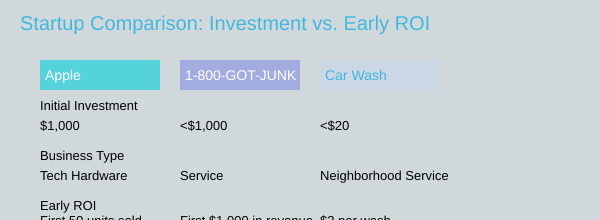
In every case, the pattern is clear: you don’t need perfection, just a willingness to start. Whether you’re launching the next tech giant or a local service, the smallest step forward is more valuable than endless planning. Embrace the scrappy start, and let your journey begin.
2. Embrace the Unsexy: How Boring Businesses Become Sexy in the Right Hands
When you think of small business success, your mind might jump to flashy tech startups or trendy cafes. But the truth is, some of the most reliable paths to business growth are hiding in plain sight—inside so-called “boring” industries. Cleaning services, laundromats, rubbish removal: these aren’t the businesses that make headlines for their glamour. Yet, with the right mindset and a dose of creativity, these overlooked sectors can become viral sensations and engines of wealth. This is where a true business growth mindset comes into play.
From Cleaning Services to Laundromats: The Power of Creative Storytelling
Take a closer look at the cleaning industry. On the surface, it’s repetitive, gritty, and—let’s be honest—unsexy. But the Maca Twins saw an opportunity where others saw drudgery. By embracing the toughest cleaning jobs and sharing their journey through engaging, sometimes jaw-dropping videos, they turned their business into a social media sensation. Their bookings skyrocketed, proving that personal enthusiasm is contagious and a key differentiator in leadership development.
| Business Type | Creative Twist | Impact |
|---|---|---|
| Cleaning Service (Maca Twins) | Viral videos of extreme cleaning jobs | Significant increase in bookings and brand recognition |
| Laundromat Café (Hong Kong) | Added café and plant shop, Instagram-worthy decor | Attracted customers who already owned washing machines |
The Maca Twins’ Journey: Turning Grit into Gold
The Maca Twins didn’t just clean—they made cleaning cool. By documenting their dirtiest jobs and sharing the transformation online, they built a brand that people wanted to follow and support. Their story is a masterclass in how growth-oriented people can use personal excitement and smart marketing to make even the dullest business interesting. As one viral comment put it,
“Unsexy businesses are really quite sexy.”
Personal Anecdote: The Hidden Value of a Dull Business
There was a time when I nearly walked away from a “boring” business opportunity. The numbers made sense, but the industry felt uninspiring. It wasn’t until I experimented with a little branding magic—reimagining the business’s story, updating its visuals, and injecting my own energy—that I saw its true potential. Suddenly, what once seemed dull became a magnet for customers and a source of pride. This experience taught me that businesses aren’t born sexy—they’re made sexy by owners who are genuinely enthusiastic.
Actionable Step: Make Your Energy the Differentiator
If you’re aiming for small business success, don’t overlook the power of your own story and energy. Here’s how you can turn a vanilla industry into a standout venture:
- Document your journey: Share behind-the-scenes moments, challenges, and wins on social media.
- Find your angle: What makes your approach unique? Is it speed, eco-friendliness, or a quirky sense of humor?
- Invest in branding: Even a simple logo or catchy name can elevate perception.
- Engage your audience: Ask for feedback, run contests, and celebrate customer stories.
Wild Card Hypothesis: If Shakespeare Ran a Business Today…
Imagine if Shakespeare chose a business in 2024. Would he write plays, or would he run a quirky laundromat-café, blending storytelling, community, and daily life? The lesson: any business can be a stage for creativity and connection. The right hands—and the right mindset—can turn even the most mundane venture into a local legend.
Entrepreneurs with a business growth mindset shift the energy and perception of “boring” businesses. By embracing the unsexy, you open doors to untapped markets, viral potential, and genuine satisfaction. Remember, it’s not the industry that’s sexy—it’s what you bring to it.
3. Build for the Long Game: Delegation, Partnerships, and the Evolution of the CEO Mindset
Letting Go of Control: Delegate Tasks to Unlock Growth
One of the most pivotal shifts you’ll make as an entrepreneur is learning to let go. Early on, it’s tempting to do everything yourself—after all, you built this from the ground up. But as your business grows, clinging to every task becomes a bottleneck. The modern CEO mindset 2026 is about identifying what energizes you and delegating what doesn’t. This isn’t just about freeing up your time; it’s about creating space for strategic thinking and leadership development.
Ask yourself: What activities light you up? Which ones drain your energy? By focusing on your strengths and delegating the rest, you set the stage for long-term success. As Walt Disney famously believed, “It’s kind of fun to do the impossible”—but it’s only possible if you’re not bogged down by tasks that don’t align with your unique abilities.
The $100M Bottleneck: When Founders Hit Their Limits
Every founder faces a moment when their leadership style no longer fits the company’s needs. At 1-800-GOT-JUNK, the founder reached a revenue plateau at $100 million. The business was thriving, but growth stalled. The reason? The founder had become the bottleneck. Attempting to solve this, he hired an ex-Starbucks executive as COO. The result was nearly disastrous—misaligned values and leadership approaches almost bankrupted the company.
This experience highlights a crucial lesson: Knowing your strengths (and weaknesses) is a leader’s secret weapon. You must recognize when your own skills are no longer enough and be willing to bring in complementary leadership. This is the heart of leadership development—evolving from doer to true leader.
The Power of a Yin-Yang Team: Complementary Partnerships
After the failed COO hire, the founder of 1-800-GOT-JUNK found Eric Church, whose operational strengths perfectly complemented his own visionary style. This partnership was transformative. Over 13-14 years, the company grew from $100 million to $700 million in revenue. The secret? Each leader focused on what they were best at, creating a powerful yin-yang dynamic. As the founder put it:
“Together, two heads are better than one.”
To build systems that scale, you need to match your weaknesses to someone else’s strengths. This is where strategic hiring and partnerships come into play. It’s not about ego—it’s about synergy.
Worksheet: Delegate or Keep? Personal Task Split
Use this simple worksheet to clarify your delegation strategy:
| Good at & Love (Keep) | Bad at & Avoid (Delegate) |
|---|---|
| Vision & Strategy | Bookkeeping |
| Brand Storytelling | Customer Service Emails |
| Building Partnerships | Technical Troubleshooting |
| Product Innovation | Scheduling & Admin |
Regularly update this list as your business evolves. It’s a practical tool for staying focused on your highest-value work and ensuring you delegate tasks that drain your energy.
Case Study: Strategic Partnerships Fueling Exponential Growth
The leap from $100 million to $700 million at 1-800-GOT-JUNK wasn’t luck—it was the result of investing in the right partnership. When you find a partner or COO whose strengths fill your gaps, you unlock new phases of business growth. This is how you build systems that scale beyond your personal capacity.
| Phase | Revenue | Key Change |
|---|---|---|
| Pre-COO | $100 million | Founder-led, bottlenecked |
| Post-COO (Eric Church) | $700 million | Complementary leadership, scalable systems |
A Quick Tangent: Real Leadership Means Stepping Out of the Spotlight
True leadership isn’t about being the hero. Sometimes, your greatest impact comes when you empower others and step back. By focusing on your “why” and letting others shine, you create a business that thrives—long after you’ve left the stage.
4. Redefining Failure: Why Risk Is Your Best Teacher (and the Key to Entrepreneurial Resilience)
Entrepreneurship fears are real, but what if you could reframe failure as your most valuable teacher? The journey of building a business is rarely a straight line to success. In fact, most learning in entrepreneurship comes from failed attempts, not instant wins. When you embrace risk and see setbacks as story fuel, you unlock the mental resilience needed for a long-term vision.
Failure as Story Fuel: Turning Setbacks into Opportunity
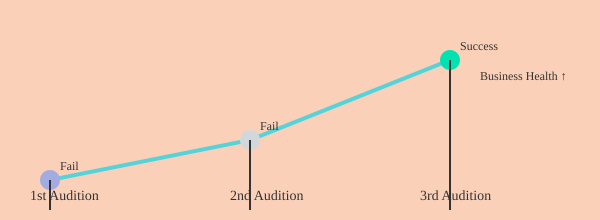
Every entrepreneur has a collection of failures—missed deals, rejected pitches, and ideas that never took off. These moments are not just painful memories; they are the raw material for your future success. Take the example of auditioning for Dragon’s Den. The entrepreneur in our discussion faced rejection not once, but twice before finally making it onto the show. Each failed audition was both a lesson and, in hindsight, a lucky break. Had he succeeded too soon, the business was not ready, and the exposure could have been disastrous. This is a powerful reminder: timing and readiness often trump raw desire.
Three-Time Audition Fable: The Timeline of Resilience
Let’s break down the journey:
- First audition: Rejected. In retrospect, this was a blessing—winning at that stage would have overwhelmed the business.
- Second audition: Another rejection, this time during a business crisis. Again, not the right time.
- Third audition: Success. By then, the company was stable and ready for national attention, which led to significant growth.
This pattern shows that the biggest business mistakes or missed opportunities often pave the way for your greatest wins. The key is to keep moving forward and learning from each attempt.
Chart: Audition Attempts, Outcomes, and Business Health
Wild Card Tangent: The Power of a Failure Journal
Imagine if you kept a failure journal. Every time you faced a setback, you wrote down what happened, how you felt, and—most importantly—what you learned. Over time, you would see a pattern: your biggest breakthroughs often follow your biggest disappointments. This simple habit can help you celebrate real wins and build mental resilience, transforming anxiety into confidence.
Mindset Tip: Reframe Failure for Long-Term Growth
After every flop, ask yourself: “What am I learning?” instead of “What did I lose?” This mindset shift is crucial for anyone serious about entrepreneurship. As the speaker put it,
“Most learning comes from failure.”
When you treat risk as a teacher, you become more adaptable and gritty. Calculated risks—like launching a business with just $1,000 or using AI tools such as BuildYourStore—build your capacity to handle uncertainty. Over time, this approach not only helps you overcome entrepreneurship fears but also strengthens your long-term vision.
Real Talk: Mistakes as Stepping Stones
It’s tempting to see failure as the end of the road. In reality, every mistake is a stepping stone. The biggest business wins often come from the lessons learned in your lowest moments. By reframing failure as both feedback and opportunity, you transform setbacks into the foundation of entrepreneurial resilience.
5. The Power of Why: Energize, Focus, and Future-Proof Your Entrepreneurial Journey
In the world of entrepreneurship, your “why” is not just a motivational buzzword—it is the core driver of your long-term vision, the foundation of your entrepreneurial mindset, and the secret to continuous learning and resilience. Understanding your deep motivation is what separates those who burn out from those who thrive, even decades into their careers. As you build and scale your business, knowing your “why” energizes both your daily work and your long-term business direction.
Your ‘Why’: More Than a Career Cliché
Many business coaching programs talk about finding your purpose, but few explain how essential it is for real-world success. Your “why” is the fuel that keeps you engaged and resilient when challenges arise. As one entrepreneur put it,
“If you focus on the things you love to do and you get good at them, they give you energy.”This is not just theory. When you align your work with your core motivations, you unlock a level of energy and creativity that carries you through setbacks and helps you spot opportunities others miss.
Audit Your Energy: Practical Steps to Focus
To harness the power of your “why,” start with a simple but powerful exercise: an energy audit. Take a blank sheet of paper and split it into two columns:
- Tasks that energize you: List the activities that make you feel excited, fulfilled, or “in flow.”
- Tasks that drain you: List the responsibilities that leave you tired, frustrated, or uninspired.
This practical split-list is more than a productivity hack—it’s a compass for your business decisions and long-term vision. By doubling down on what excites you, you not only improve your daily experience but also set yourself up for sustainable growth and innovation.
Real-World Examples: Following Energy, Not Status
Consider the journey of 1-800-GOT-JUNK. The founder realized that as the company scaled to $100 million, his energy was being sapped by tasks outside his zone of genius. By honestly listing what he loved and what he was bad at, and then partnering with Eric Church (whose strengths were the reverse), the business exploded to $700 million over 13-14 years. This shift wasn’t about chasing status or titles—it was about aligning daily work with personal energy and purpose.
Similarly, the entrepreneur’s repeated auditions for Dragon’s Den (BBC) were not just about getting on TV. Each attempt was a lesson in persistence and self-discovery. The final, successful audition only happened after aligning his business and personal energy with his deeper “why.”
Surprising Insight: Middle Age and the Myth of Burnout
It’s easy to believe that burnout is inevitable as you age, especially in high-pressure roles. But the data and stories say otherwise. The founder of 1-800-GOT-JUNK discovered that after age 55, focusing on energizing work—rather than just profitable work—actually multiplied business success. Burnout is not a given if you center your professional life around meaningful, exciting tasks.
Action Step: Conduct Your Own Energy Audit
Right now, take five minutes to do your own energy audit. List out your daily tasks and identify which ones light you up. Then, make a commitment to delegate, automate, or minimize the draining tasks. This simple exercise can direct both your immediate decisions and your long-term vision, ensuring you stay energized and focused as your business grows.
‘What If?’: Rethinking Business Education
Imagine if business schools taught personal energy management as a core class. The reality is, managing your own energy is foundational for visionary leadership and sustainable growth. Lasting motivation is rooted in big-picture vision and personal joy—not just money or milestones.
By centering your entrepreneurial journey around your “why,” you energize your work, sharpen your focus, and future-proof your success—no matter where you are on your path.
6. Tools, Tactics, and Trends: Making Business Growth Easier in 2026
AI Tools and No-Code Platforms: The New Normal for Business Growth Mindset
If you’re serious about adopting a business growth mindset in 2026, you’re living at the perfect time. The rise of AI tools and no-coding, low-barrier platforms means that anyone can launch a business in minutes—often for free. As one entrepreneur put it,
"You can literally build a Shopify store in just under 2 minutes completely for free."Platforms like BuildYourStore (www.buildyourstore.ai/simon-squibb) are leveling the entrepreneurial playing field. Whether you’re a seasoned founder or an aspiring online business coach, these tools remove historic barriers like coding, design, and product sourcing. AI now handles everything from product selection to page creation, letting you focus on your “why” and your customers.
Digital Platforms and Scenario Planning: Democratizing Entrepreneurship
The digital landscape has fundamentally shifted. In 2026, AI-powered tools and scenario planning are democratizing entrepreneurship. You no longer need a huge budget or technical background to test ideas, iterate quickly, and reach global customers. This is especially powerful for those starting with limited resources—remember, Apple and 1-800-GOT-JUNK both started with under $1,000.
Modern founders can access mentorship, digital tools, and decision frameworks more easily than ever before. As an online business coach, you can leverage AI to generate business ideas tailored to your strengths and interests, accelerating the discovery process that once took years.
Emerging Trends: Agile Teams, Customer Co-Creation, and Well-Being
- Agile Team Strategies: Rapid iteration and experimentation define successful startups in 2026. Small, cross-functional teams use AI to test, learn, and pivot faster than ever.
- Customer Co-Creation: Businesses are involving customers in product development, using digital feedback loops and social media to co-create offerings that truly resonate.
- Emphasis on Personal Well-Being: Founders are prioritizing energy-giving work, aligning business goals with personal values, and building routines that sustain passion and creativity.
Traditional vs. 2026-Ready Startup Tools
| Aspect | Traditional Startup Tools | 2026-Ready AI Tools |
|---|---|---|
| Speed | Weeks to months to launch | Minutes to hours to launch |
| Cost | $5,000+ upfront | Often free or <$100 |
| Features | Manual setup, limited automation | AI-driven product selection, auto-design, instant analytics |
| Learning Curve | High (coding, design, marketing) | Low (no-code, guided by AI) |
| Scalability | Slow, resource-intensive | Instant, global reach |
Action Tip: Supercharge Decisions with AI Tools
Don’t use AI as a crutch—use it to supercharge your decision making and test more ideas, faster. AI can help you analyze trends, generate marketing copy, and even simulate business scenarios before you invest real money. This enables rapid experimentation, a hallmark of the business growth mindset.
Forward-Thinking Advice: Continuous Learning and Iteration
The most successful entrepreneurs in 2026 are those who never stop learning. Even when you hit your stride, keep iterating and experimenting. The landscape changes quickly, and continuous learning—whether through AI-powered insights, customer feedback, or mentorship—will keep your business ahead.
With the right tools, tactics, and trends, you can turn impossible dreams into practical realities, no matter your starting point.
7. FAQ: Challenging Conventional Wisdom on the Entrepreneurial Journey
Is failing really necessary?
You may have heard that failure is a rite of passage in entrepreneurship. But is it truly necessary? The answer, drawn from countless real-world stories, is yes—if you want to grow. Think of Walt Disney, who faced bankruptcy before creating his empire, or the founder of 1-800-GOT-JUNK, who was rejected twice from Dragon’s Den before finally succeeding. Each setback became a lesson, not a dead end. Failure is not about humiliation; it’s about learning what doesn’t work so you can discover what does. When you confront your entrepreneurship fears head-on, you accelerate your confidence and action. Embracing failure as feedback, rather than defeat, is a cornerstone of the entrepreneurial mindset.
What’s the difference between risk and recklessness?
Entrepreneurs are often told to “take risks,” but there’s a crucial difference between calculated risk and blind recklessness. Taking calculated risks means you do your homework, seek advice, and prepare for different outcomes. For example, Apple started with just $1,000 in a garage, but the founders had a clear plan and vision. Recklessness, on the other hand, is jumping in without understanding the landscape or your own motivations. When you learn from a mentor or leverage tools like ChatGPT and BuildYourStore, you’re stacking the odds in your favor. The best entrepreneurs don’t avoid risk—they manage it wisely.
How can I find my 'why' if I’m feeling stuck or uninspired?
Feeling uninspired is more common than you think. The secret is to experiment. Try new things, even if they seem unrelated to business. The founder of 1-800-GOT-JUNK started with a car wash at age 12, which led to bigger ideas. Use AI tools to brainstorm business ideas based on your interests. Sometimes, your “why” emerges from doing the “stuff you don’t want to do”—because it funds the freedom to pursue what you love. Remember, your “why” doesn’t have to be grand; it just needs to energize you. Authenticity and energy matter more than following someone else’s path.
Do I need to be a branding genius to make a boring business pop?
Absolutely not. Some of the most successful businesses started in “unsexy” industries. The Maca Twins turned a cleaning business into a viral sensation by sharing their journey online. 1-800-GOT-JUNK used painted trucks as moving billboards, and a Hong Kong laundromat became a trendy café with clever branding. You don’t need a marketing degree—just creativity and enthusiasm. If you’re willing to embrace what others overlook, you can turn any business into something special. The key is to share your story and find a unique angle that excites you and your customers.
How do I know when to step back and delegate—won’t I lose control?
It’s natural to worry about losing control as your business grows. But holding on too tightly can make you the bottleneck. The founder of 1-800-GOT-JUNK realized this at $100 million in revenue. By honestly listing what you love and what you’re not good at, you can find partners or team members whose strengths complement yours. When Eric Church joined as COO, the company soared to $700 million. Delegation isn’t about giving up control—it’s about multiplying your impact and freeing yourself to focus on what you do best.
Is entrepreneurship only for the extroverted, ultra-ambitious, or wealthy?
This is one of the biggest myths. Many successful entrepreneurs started with little money—Apple and 1-800-GOT-JUNK both began with less than $1,000. Introverts, creatives, and those who simply want more freedom can all thrive. The only requirement is a willingness to experiment, learn, and take calculated risks. There’s no single personality or background that guarantees success. What matters is your drive to enjoy the journey, your willingness to learn from failure, and your commitment to your unique “why.”
In conclusion, the entrepreneurial journey is not about following a rigid formula or waiting for perfect conditions. It’s about challenging conventional wisdom, taking smart risks, and learning from every experience—especially the failures. Whether you’re starting with $1,000 or just an idea, your authenticity, energy, and willingness to experiment are your greatest assets. Embrace the impossible, and you’ll find that the most practical strategy is often the boldest one.
TL;DR: Entrepreneurship isn’t about waiting for the perfect moment—or idea. It’s about starting scrappy, loving the chaos, reframing failure as fuel, and creating a vision that’s so big, it feels a bit absurd. Start with your why, get good at risk, build systems with people you trust, and don’t forget to enjoy that wild, messy journey.
Post a Comment