

Ever had a day where life just feels like it's taking the mickey out of you? Me too. Once, fresh out of luck and living out of a backpack, I ended up by the banks of the Ganges in Rishikesh—torn between thinking I'd just ruined my whole life and laughing at how wildly wrong everything had gone. Oddly enough, it turns out those low points teach us the stuff we never learn when things are easy. Today, after a strange journey from sweeping floors in a temple to running companies worth hundreds of millions, I can say: the lessons you learn when you lose matter more than the wins you tally up. Ready for a handful of truths nobody tells you about failure? Let's dig in—no monk robes required.
Rock Bottom Isn’t The End: It’s Your Launchpad for Change
Turning Failures into Foundations, Not Finish Lines
When you hit rock bottom, it can feel like the end of your story. But what if that lowest point is actually the solid ground you need to build something new? Turning setbacks into lessons is the first step in resilience building strategies. Instead of seeing failure as a tombstone, see it as the foundation for your next chapter. Every hero’s journey, including yours, begins at a moment of defeat. I’ve been there—lost, broken, and unsure of what came next. But those moments didn’t end me. They launched me.
Impressionist Painting on the Ganges: A Lesson in Impermanence
Once, sitting by the river Ganges in Rishikesh, India, I felt completely shattered. My teacher, a wise monk, asked me: “If I gave you watercolors and asked you to paint on this flowing river, how long would your painting last?” The answer is obvious—it would disappear instantly. This is the essence of impermanence, a truth echoed by wisdom traditions worldwide. Hindus call it Maya, Buddhists speak of impermanence, Islam describes the veil of ignorance, and Western faiths remind us that this world is temporary. Personal growth after setbacks begins when you realize nothing lasts forever—not even your pain.
Science Backs It—23 Million Cells Replaced Every Minute
Modern science agrees with ancient wisdom. By the time you finish reading this paragraph, 23 million of your cells have been replaced. You are literally not the same person you were a moment ago. This fact is a powerful reminder that setbacks are best seen as progressive moves toward success, not permanent failures. Even your worst day is just a passing moment in the grand scheme of your life.
Pain and Setbacks Are Heartbreakingly Temporary
When you lose a job, face heartbreak, or see your dreams fall apart, it hurts deeply. But remember the words of Leonard Cohen:
“There’s a crack in everything, that’s how the light gets in.”
Setbacks are not the end. They are cracks in your story where the light of growth and opportunity can shine through. Failure as stepping stone is not just a cliché—it’s a mindset that can transform your life.
Setbacks as Launching Pads, Not Tombstones
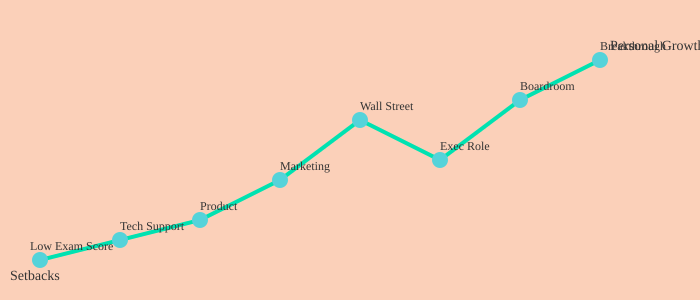
When you hit rock bottom, you’ve found your solid ground. It can’t get any worse, so every step forward is progress. I’ve pivoted more times than I can count—from tech support to product management, marketing, Wall Street, executive roles, getting fired and hired. Each time, it felt like failure, but looking back, each pivot was a step in my evolution. Even scoring 34 out of 700 on my finals became a turning point, not a dead end.
Mindset Trick: Convince Yourself Tomorrow Will Be Better
Here’s a simple but powerful resilience building strategy: Every day, spend a moment thinking about tomorrow. Remind yourself that whatever pain you’re going through is, by its very nature, short-lived. Your current situation is not your final destination. Trick your brain into believing that your breakthrough is inevitable—even if you don’t feel it yet. This is how you turn setbacks into launching pads for personal growth.
Choose Your Wolf: The Surprising Power of Noticing (and Naming) Negative Self-Talk
There’s an old story that sticks with you: A young boy asks his grandfather about the battle inside us all. The grandfather describes two wolves. One is made of anger, ego, envy, and jealousy. The other is love, joy, peace, and confidence. They’re always fighting. The boy asks, “Which one wins?” The grandfather smiles: “The one you feed.”
This simple tale is more than folklore—it’s a blueprint for building emotional intelligence and learning from failure. For years, I lived with a mind that defaulted to feeding the wrong wolf. Maybe you know the feeling: replaying mistakes, doubting yourself, assuming others see only your flaws. Here’s the truth—your brain is wired to notice what’s wrong. Blame evolution! It’s called the negativity bias, and it kept our ancestors alive. But today, it can keep us stuck.
Why Noticing Matters: Self-Awareness and Reflection
Most of us feed the negative wolf by default. The trick is to catch your negative thoughts before they run the show. Self-awareness and reflection are the first steps to change. Research shows that negative self-talk impairs emotional health and makes it harder to recover from setbacks. But you can use cognitive restructuring techniques—catching and reframing thoughts—to shift from self-doubt to self-confidence.
The FIRED Framework: Labeling Your Thought Distortions
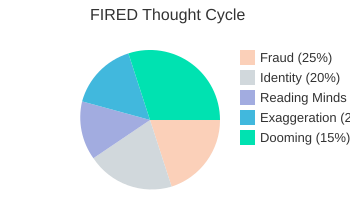
To help myself, I created a simple framework to label my negative thoughts. I call it FIRED:
- F – Fraud: “I’m a fake. I don’t deserve this.”
- I – Identity: “I’m lazy. I’ll never change.”
- R – Reading Minds: “They think I’m incompetent.”
- E – Exaggeration: “I always mess up. I’ll never get it right.”
- D – Dooming: “This ruins everything. I’ll never recover.”
These are the wolves that show up in a self-critical cycle. The goal isn’t to be perfect—no one is Ted Lasso every day. Some days, the negative wolf wins. That’s being human.
Three-Step Practice: Label, Separate, Redirect
- Label: When you notice a negative thought, name it. “That’s fraud,” or “That’s exaggeration.” Use FIRED or your own system.
- Separate: Remember, you are not your thoughts.
“You could either say: I’m not good enough—or: my mind is having the thought that I’m not good enough.”
This small shift is a powerful cognitive restructuring technique. - Redirect: Once you’ve labeled and separated, gently steer your mind toward a more balanced or compassionate perspective. What would you say to a friend in your shoes?
Embrace imperfection. Everyone feeds the wrong wolf sometimes. The goal is to choose the positive wolf at least 51% of the time. That’s how you start learning from failure and building emotional intelligence—one thought at a time.
Mirrors, Monks & Mind Games: How Self-Reflection Smashes Invisible Barriers
Here’s a truth that most people overlook: if you can’t spot it, you can’t shift it. Self-awareness and reflection are the secret weapons behind every major mindset shift for growth. You can’t change what you can’t see. That’s why self-reflection is your superpower.
Mindfulness Works Wonders: Lessons from Monk Training
During my monk training, we were taught to focus on a single phrase for hours. Some monks could do it for four hours straight. I’ll be honest—I could barely manage thirty minutes. But here’s the thing: even a few minutes of honest self-reflection can uproot your deepest blocks. You don’t have to be a monk to build emotional intelligence skills or to start seeing yourself clearly. All you need is a willingness to look inwards, even if it’s just for five minutes a day.
Resting Brain = Busy Brain (Thanks, Neuroscience!)
Modern neuroscience reveals something fascinating: when your brain is “at rest,” it’s actually sorting through signals and noise, making sense of your life. This is when your mind does its most important work—processing, healing, and preparing you for change. But you have to give your brain a chance to do that. That’s where self-reflection and mindfulness come in.
Not Harry Potter’s Mirror—But an Honest One
Forget about magical mirrors that show you only what you want to see. The mirror you need is honest and kind. Self-reflection isn’t about judging yourself harshly; it’s about seeing your thoughts and feelings as they are. This is how you build self-awareness and reflection into your daily life, and it’s the first step to lasting change.
Brainwave Hacks: Alpha, Beta, Theta, Gamma
Your brain operates on different wave patterns. Meditation and mindfulness help you access the ones that reduce stress and reset your mental pathways. Think of it as clearing the cache on your computer—deleting junk files so your mind runs smoother. Here’s a quick look at how meditation affects your brainwaves:
| Brainwave | State | Effect of Meditation |
|---|---|---|
| Alpha | Relaxed, calm | Increases, reducing stress |
| Beta | Alert, focused | Balances, improves attention |
| Theta | Deep relaxation, creativity | Increases, boosts creativity |
| Gamma | Peak focus, learning | Enhances, supports mental clarity |
Start with Five Minutes: Simple, Accessible Practices
You don’t need to meditate for hours. Start with just five minutes a day. Sit quietly, focus on your breath, and use apps like Calm or Headspace if you like. When your mind wanders (and it will), gently bring it back to your breath. It’s not about emptying your mind or repeating a mantra—it’s about training your attention and building emotional intelligence skills.
Self-reflection is your superpower.
If you can observe your thoughts, you can change them. That’s how you smash invisible barriers and open the door to real growth. Try it: five minutes a day. Clear your mental cache and watch your mindset shift for growth, one breath at a time.
Three Minutes, One Mentor: The Outsized Impact of Someone Who Believes in You
Sometimes, personal growth after setbacks begins with a failure so big, you can’t help but feel defeated. Imagine scoring 34 out of 700 on your finals—not out of 100, but 700. That’s not just a stumble; it’s a spectacular crash. In that moment, it’s easy to believe the story your mind tells you: “I’m not good enough. I’ll never get this.” But what if that failure is just the beginning?
Here’s the truth: One friend’s kindness and three minutes of their time can change everything. That’s what happened to me. After failing every single course in my final year, I sat in the cafeteria, drowning in self-doubt and self-pity, sipping chai with my friend Pallavi. I confessed, “I just don’t get this stuff. All this math is gibberish to me.” She looked at me, took a sip of her chai, and said, “It’s not that hard, dude. You’re just overthinking it. Here, let me show you.”
She opened her notebook and, in just three minutes, walked me through a mathematical proof. Step by step, something clicked. For the first time, I saw the beauty and elegance in math. I fell in love with it. That year, I studied like never before—and earned a full scholarship to a master’s program.
‘All it took was three minutes and someone who believed in me more than I believed in myself.’
This is the unexpected power of support and belief from others. Learning from failure is easier when someone stands beside you and says, “You’ve got this.” Sometimes, the most powerful shift starts with a single person who sees what you can’t. That three minutes of kindness? That’s a catalyst.
| Failure | Turning Point | Outcome | Where Mentors Can Be Found |
|---|---|---|---|
| Scored 34 out of 700 | Three minutes of help from a friend | Full scholarship to master’s program | Family, friends, professional and social circles |
You don’t have to go it alone. Guides and mentors can come from anywhere: your family, friends, professional network, neighbors, alumni, or even a stranger at your local café. Overcoming limiting beliefs often starts when someone else sees your potential—especially when you can’t see it yourself.
- Actively seek out those who believe in you.
- Ask about other people’s journeys—curiosity connects us and opens doors to new perspectives.
- Remember, mentorship isn’t magic. It’s tiny moments that matter, like three minutes of genuine help.
If you don’t have that person yet, that’s okay. Put yourself out there in learning environments. Be curious about others’ stories. Ask, “How did you get there?” Learning from others’ perspectives and experiences after failure provides valuable growth insights. Sometimes, all it takes is one moment—and one mentor—to turn your biggest failure into the beginning of something extraordinary.
The ‘To-Be’ List: Character Over Checklists (and Why Your Habits Stick When You Focus on Becoming, Not Just Doing)
When you think about goal setting techniques, what comes to mind? Most likely, it’s your trusty to-do list or maybe a vision board of things you want to have. But what if the secret to real, lasting change isn’t about what you do or get—but about who you choose to become? This is where the power of the ‘to-be’ list comes in, and it’s a game-changer for growth mindset development and adaptive goal adjustment.
Why ‘To-Be’ Beats ‘To-Do’
We live in a world obsessed with productivity hacks and checklists. We chase after achievements, ticking boxes and setting goals for what we want to have. But as Jay Shetty wisely points out, the most important list isn’t what you do or have—it’s who you want to be. Research backs this up: habits stick when they’re tied to your identity, not just your outcomes. James Clear, author of Atomic Habits, explains that when you focus on becoming the kind of person you want to be, your habits become part of you. That’s why saying “I want to be healthy” is more motivating and sustainable than “I want to lose 20 pounds.”
Identity-Based Habits: The Science
Studies show that habits linked to identity motivate consistent progress—even through setbacks. When your goals are about becoming—like being a patient parent, a curious learner, or a resilient entrepreneur—you’re more likely to keep going, even when things get tough. In fact, people who focus on ‘to-be’ lists show higher habit retention than those who only use ‘to-do’ or ‘to-have’ lists (James Clear, research findings).
How to Practice a ‘To-Be’ List
- Start your day with intention: As you sip your morning coffee and jot down your tasks, add one word to your list: How do you want to show up today? Patient. Curious. Present. Helpful. This simple act anchors your mindset and boosts your productivity.
- Focus on what you can control:
'You can only control how you show up, not how the world shows up for you.'
Whether you’re pitching investors, going on a date, or interviewing for a job, you can’t control the outcome. But you can choose to be authentic, prepared, and kind. - Celebrate progress and effort: When your goals are about being, every small step counts. You’re not just checking off tasks—you’re building character and resilience.
Why Achievement Lists Burn Us Out
If you only track what you want to do or have, you miss out on who you’re becoming. Achievement-focused lists can lead to burnout and frustration because they tie your worth to results you can’t always control. But a ‘to-be’ list centers you, reminding you that growth is about the journey, not just the destination.
So tomorrow morning, before you dive into your tasks, ask yourself: Who do I want to be today? Try it for a week. You might be surprised at how much more grounded, focused, and resilient you feel—no matter what life throws your way.
The Comparison Trap: Social Media, Scoreboards, and the Only Contest Worth Entering
Let’s be honest: you’ve probably caught yourself scrolling through social media and thinking, “Why don’t I have what they have?” Maybe it’s someone’s vacation photos, their six-pack abs, or a shiny new car. It’s easy to fall into the trap of comparing your behind-the-scenes to someone else’s highlight reel. Social media has turned this into an art form—everyone curates their best moments, leaving you feeling like you’re always one step behind. This is the heart of the comparison trap, and it’s a major roadblock to overcoming limiting beliefs and making real mindset shifts for growth.
Here’s the truth: even the people who seem to have it all are struggling with their own battles. If external success guaranteed happiness, would Brad Pitt and Angelina Jolie—two people with looks, talent, money, and fame—have split up? On paper, they had everything. Yet, even that wasn’t enough. This is proof that comparing yourself to others based on surface-level achievements is a losing game.
Social Media: The Illusion of ‘Not Enough’
Research backs this up. According to a recent Pew Research study, 25% of teenage girls say social media hurts their mental health, and 45% of teens say it hurts their sleep. If you’ve ever felt drained or anxious after scrolling, you’re not alone. Social media distorts reality and self-worth, making it harder to see your own progress and value.
Progress Over Perfection: The Only Contest Worth Entering
So, what’s the alternative? The only race that matters is the one against yourself. Elite athletes, artists, and entrepreneurs all share one thing in common: they focus on being better today than they were yesterday. “If today is better than yesterday, you’re already winning.” This is the secret to celebrating progress and effort and building self-esteem that lasts.
- Stop measuring your worth by someone else’s scoreboard.
- Start tracking your own growth, no matter how small.
Your Personal Scoreboard: A Practice for Growth
When you catch yourself falling into the comparison trap, pause and ask: What’s one thing I’m better at today than I was last month? Maybe you spoke up in a meeting. Maybe you tried a new recipe. These small wins matter.
- Write down your daily or weekly progress.
- Connect this to your “to-be” list—who you want to become, not just what you want to achieve.
- Use self-reflection to notice patterns of growth over time.
Prioritizing progress over perfection is crucial for long-term satisfaction. Every step forward, no matter how minor, is a victory in the only contest worth entering: becoming the best version of yourself. Remember,
“If today is better than yesterday, you’re already winning.”
The Musk Deer Myth: Stop Hunting for Happiness You Already Hold
Imagine a musk deer, roaming the wild, enchanted by a beautiful scent. It chases this fragrance through the forest, crashing into trees and exhausting itself, never realizing the scent comes from its own body. This ancient story, told in many cultures, is more than a fable—it’s a mirror for how we often live our lives.
Are You Chasing What’s Already Yours?
Like the musk deer, you might be searching endlessly for happiness, believing it lies somewhere just out of reach—a new job, a bigger house, a perfect relationship. Society teaches us that success brings happiness. But what if that’s just a myth? What if, as the story suggests, the happiness you’re hunting for is already within you?
Challenging the Myth: Does Success Really Create Happiness?
We’re told to hustle, to grind, to achieve more—because then, and only then, will we be happy. But research and real-life stories reveal something different. Many monks, who own almost nothing, and millionaires, who have everything money can buy, report feeling unfulfilled. It’s a wild card truth: fulfillment isn’t found in bank statements or even in monk-like simplicity. It’s an internal achievement, not a guaranteed outcome of external success.
Skills, Mindset, and the Positive Reframing Mindset
Here’s a powerful idea:
'Maybe real skills create happiness, and happiness and joy create success.'When you focus on building real skills—like resilience, self-compassion, and a positive reframing mindset—you naturally nurture happiness from the inside out. This inner joy then becomes the fuel for turning setbacks into opportunities. Instead of chasing happiness, you’re creating it through your actions and attitude.
Hustling Joyfully: Lightening the Journey
Pain and setbacks are inevitable. But when you approach your journey with genuine joy, the weight of challenges becomes lighter. Joy doesn’t erase hardship, but it gives you the energy to keep moving forward. Self-compassion and kindness, directed inward, help you bounce back faster and stronger. This is the heart of turning setbacks into opportunities—finding a way to enjoy the process, not just the outcome.
Pause-Before-You-Pursue: The Power of Mindful Reflection
Next time you find yourself chasing after a promotion, a relationship, or a new purchase, pause for a moment. Ask yourself: Am I running through the forest looking for something I already carry? This mindful pause can change everything. It’s a moment to check in with yourself, to see if you’re searching externally for happiness that’s already within you.
Wild Card: Who’s Really Fulfilled?
Look around—how many people who seem to “have it all” are truly happy? How many monks, despite their simplicity, still struggle with inner peace? The answer might surprise you. True fulfillment comes from within, not from what you achieve or acquire. The musk deer’s lesson is clear: stop hunting for happiness you already hold. Instead, nurture it, and let it lead you to genuine success.
Connect the Dots: How These Lessons Interlock (and How to Start, Imperfectly)
When it comes to personal growth after setbacks, it’s easy to feel overwhelmed by advice. But here’s the truth: the seven lessons you’ve just read aren’t commandments you must follow to the letter. Instead, think of them as seven invitations—open doors, not locked gates. You don’t have to walk through every single one. In fact, you only need to choose the one that speaks to you most right now. As the saying goes:
'You don’t have to apply them all, just start with one that speaks to you.'
This is the heart of learning from failure: you don’t need a total life overhaul to begin. Research shows that trying just a single new approach can be enough to shift your momentum after a setback. Maybe that means reframing your story, building a tiny new habit, or reaching out for support. The point is, you start where you are, as imperfectly as you are.
Seven Invitations, Not Commandments
- Each lesson is an invitation to experiment, not a rule to obey.
- Your journey is unique—what works for someone else may not fit you, and that’s okay.
- Pick one lesson that resonates and let it guide your next step.
You Only Need One Lesson to Start Rewiring Your Story
Don’t wait for the perfect plan or the right moment. Just one small shift—one new mindset, one tiny habit—can begin to rewrite your story. Even a few minutes spent trying something different can launch a new trajectory. If you’re stuck, remember: momentum is built one step at a time.
Success Isn’t About Deprivation—Monkhood Not Required!
Forget the myth that you need to shave your head and live under a tree to find clarity or fulfillment. You don’t have to give up your ambitions or comforts to bounce back from failure. In fact, you can have both: monk-like clarity and real-world achievement. Many monks and millionaires alike still struggle with fulfillment. What matters is building the right mindset and rituals for personal growth after setbacks—not following someone else’s script.
Real-Life Journeys Are Messy, Non-Linear, and Deeply Individual
Your path won’t look like anyone else’s, and that’s a strength, not a weakness. Growth after failure is rarely a straight line. There will be detours, backtracks, and unexpected discoveries. Embrace the messiness. Your unique timeline is proof that you’re moving forward, even if it doesn’t feel that way every day.
Wild Card: Try Making Your Own ‘Setback-to-Success Timeline’
Here’s a practical exercise: sketch out your own journey from setback to success. Mark the low points, the turning points, and the small wins. You’ll see how every lesson, every stumble, and every experiment connects. This visual can remind you that progress is real—even when it’s slow or imperfect.
Share What Resonates—Help Others Who Are Stuck
Don’t keep your insights to yourself. Sometimes, sharing what helped you can be the spark someone else needs. Studies show that even a few minutes of encouragement or mentorship can launch a new trajectory for another person. If a lesson resonated with you, pass it on. You never know whose story you might help rewrite.
FAQ: Burning Questions on Bouncing Back from Setbacks
Is failure really necessary for success?
It’s a question everyone asks: do you have to fail to succeed? The truth is, while you can learn from others’ mistakes, your own setbacks are powerful teachers. Failure isn’t a sign that you’re not cut out for your dreams—it’s often the foundation for your biggest breakthroughs. Science and wisdom traditions agree: you are always changing, and what feels like the end is often just the beginning. Learning from failure is not about glorifying pain, but about recognizing that every setback contains the seeds of resilience and personal growth after setbacks. When you embrace your failures, you gain the clarity, humility, and grit needed for real success.
How do I find the right mentor?
Mentorship doesn’t have to be formal or intimidating. Start by looking for people who see your potential, especially when you can’t see it yourself. This could be a friend, a teacher, a colleague, or someone in your community. Reach out with genuine curiosity—ask for advice, share your struggles, and listen. Sometimes, a three-minute conversation can change your direction. Remember, mentors aren’t always older or more experienced; sometimes, they’re peers who simply believe in you. The key is to seek out those who encourage your resilience building strategies and help you see beyond your current setbacks.
What if I keep comparing myself to others, even when I try not to?
Comparison is part of being human, especially in the age of social media. But remember, you’re often comparing your behind-the-scenes to someone else’s highlight reel. When you catch yourself in the comparison trap, pause and ask: “How have I grown since last month?” Focus on your own scoreboard of progress, no matter how small. This shift from comparison to self-reflection is a powerful resilience building strategy. Over time, you’ll find more joy in your journey and less anxiety about others’ paths.
Can you give more examples of a ‘to-be’ list?
Your “to-be” list is about who you want to become, not just what you want to achieve. For example, you might write: “I want to be patient,” “I want to be curious,” “I want to be present with my family,” or “I want to be courageous at work.” Each morning, pick one word or quality and set the intention to live into it. Over time, this practice shapes your habits and your mindset, making personal growth after setbacks more sustainable and meaningful.
How do I start practicing self-reflection if I’ve never done it before?
Self-reflection doesn’t require hours of meditation or fancy tools. Start small: set a timer for five minutes, sit quietly, and focus on your breath. When your mind wanders, gently bring it back. You can also journal about your thoughts or label negative patterns using the FIRED framework. The goal is to observe your thoughts without judgment. This simple practice clears mental clutter, helps you see your challenges more clearly, and lays the groundwork for learning from failure.
What’s the fastest way to recover motivation after a setback?
When you’re knocked down, motivation can feel out of reach. The quickest way to reignite it is to take one small action—something you can finish in a few minutes. This could be reaching out to a supportive friend, writing down one thing you’re grateful for, or simply getting outside for a walk. Action creates momentum, and momentum rebuilds confidence. Remember, setbacks are not the end of your story. Each step forward, no matter how small, is proof of your resilience and your capacity for personal growth after setbacks.
In the end, bouncing back isn’t about never falling—it’s about learning to rise, again and again, with a little more wisdom each time. Your biggest failure could truly be the beginning of your greatest chapter. You have everything you need within you to start again, and you are never alone on this journey.
TL;DR: Falling down isn't losing—it's lesson time. From reframing setbacks to finding fellow travelers and rewriting your own scripts, these seven truths show that what trips you up today could fuel your greatest success tomorrow. Start with just one lesson, get a little uncomfortable, and watch what happens.
Post a Comment