

Ever hidden in a bathroom stall to dodge a soul-sucking conference—only to discover half your company watching you run, shirtless and triumphant, outside the window? I did. But here’s the thing: that accidental spectacle wasn’t just hilarious (and mortifying); it kicked off the wildest personal growth journey of my life. Forget what you’ve heard about relentless hustling or mystical passion. Sometimes you need to run—literally—toward discomfort to finally stop running from yourself. This is a guide for anyone ready to listen to that quieter, inconvenient inner voice, and build a growth plan as unpredictable, messy, and rewarding as real life.
Bathroom Escapes, Red Bandanas, and the Wake-Up Call: Why Growth Begins at Your Weirdest Moments
Sometimes, your Personal Growth Journey doesn’t begin with a grand plan or a motivational seminar. Instead, it might start in the most unexpected, even embarrassing, places—like hiding in a bathroom stall during a corporate offsite. At 27, fresh out of Stanford GSB, you might expect to feel on top of the world. But what if you find yourself grinding away at a “safe” job that doesn’t fit, sitting through endless PowerPoint presentations, and realizing you’re not excited or even good at what you do?
When Blending In Feels Like Disappearing
Trying to blend into the corporate world can sometimes make you feel invisible—even to yourself. During a notorious offsite in Napa, after a day and a half of mind-numbing meetings, you might find yourself plotting an escape. Imagine slipping your notebook under your suit coat, waiting until the break at 10:45 AM, and ducking into the bathroom to hide out. The absurdity of being a 27-year-old vice president crouched in a stall, avoiding your own company, is both comic and telling. It’s a moment of discomfort that signals something deeper: you’re not where you’re meant to be.
The Symbolic Escape Run
Sometimes, breaking free requires a physical act. For this Stanford grad, the escape wasn’t just from the meeting, but from a life that felt stifling. Slipping out, changing into running gear, and tying on a signature red bandana, you hit the Silverado Trail. The run becomes more than exercise—it’s a Transformative Running experience. The playlist is perfect, the weather is warm, and with each step, you feel more alive.
Embarrassment as a Catalyst for Change
Personal development often comes wrapped in awkward packaging. Near the end of the two-hour run, “Eye of the Tiger” blasts through your headphones. Energized, you catch your reflection in a glass building and start shadow boxing, feeling like Rocky. But then, you realize your entire company is watching from the restaurant window. The embarrassment is real, but so is the clarity. Sometimes, it takes a surreal, even humiliating, moment to spark real change.
Finding Your Inner Voice
Physical activity can be a powerful catalyst for self-reflection. During this run, you experience a runner’s high—a state where your mind quiets and your true feelings surface. You hear a voice, clear and insistent: “You don’t have to do this. This isn’t you.” For perhaps the first time, you recognize this voice as your own. As you finish the run, a wave of calm and peace washes over you. You make a promise:
“I was going to listen to that voice.”
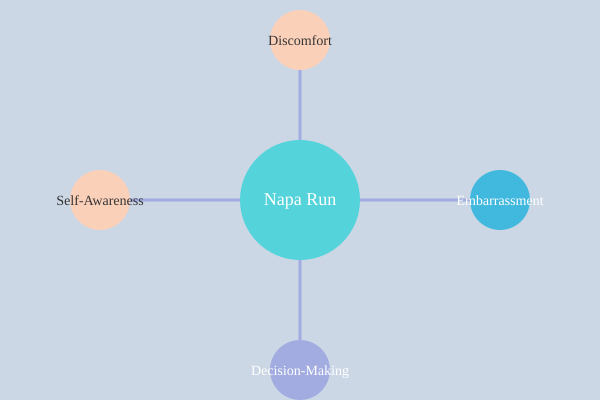
Key Insights from the Napa Run
- Discomfort and embarrassment can trigger self-awareness and growth.
- Physical acts, like running, can break mental routines and spark clarity.
- Listening to your inner voice is essential for authentic Personal Development.
Meet Your Two Inner Voices: Fear vs. Truth (And Why One is Always Yelling)
Every step on your personal growth journey is shaped by an ongoing internal dialogue. If you listen closely, you’ll notice two distinct voices shaping your choices: the loud critic of fear and the quieter guide of truth—your intuition. Understanding these voices is essential for developing self-awareness and a true growth mindset.
The Survival Instinct: Why Fear Is So Loud
For thousands of years, humans have relied on their survival instinct to stay safe. This ancient force is still active in your mind today. It’s the voice that jumps to attention at the first sign of danger, real or imagined. When you hear that mental chatter filled with doubt, worry, or anxiety, that’s your inner critic—your voice of fear. It’s always on, always scanning for threats, and always ready to shout warnings.
This voice is loud because it’s designed to keep you alive. In the past, it protected you from predators or dangerous situations. Today, it often tries to protect you from emotional risks, new challenges, or anything unfamiliar. But as you pursue personal growth, this voice can hold you back, keeping you in your comfort zone and leading you to a life that’s too small.
The voice of fear will lead you to a life that’s too small.
Intuition: The Quiet Voice of Truth
Philosophers, spiritual teachers, and psychologists have written about a second, quieter voice for centuries. This voice is known by many names: intuition, soul, source, inner wisdom, or your true self. Unlike the critic, this voice doesn’t shout. It whispers. It’s not usually found in your head, but in your body—felt as a gentle nudge in your heart, a sense of knowing in your gut, or a calm certainty in your chest.
Modern research on emotional intelligence and self-awareness shows that learning to distinguish between self-doubt and genuine intuition is a key part of a growth mindset. Intuition isn’t just a feeling; it’s your body’s way of processing deep knowledge and lived experience. Trusting this voice, even when it doesn’t seem logical, is foundational for real personal growth.
Signs You’re Ignoring Your Real Self
- You feel persistent tension or dissatisfaction, even when things seem “fine.”
- You sense a conflict between what you’re doing and what you truly want.
- You notice a quiet longing or restlessness that never quite goes away.
These are signals that your inner wisdom is being drowned out by fear. As the philosopher Carl Jung wrote, “Who looks outside, dreams; who looks inside, awakes.”
What If You Always Listened to the Quieter Voice?
Imagine if, instead of letting fear dictate your path, you tuned in to your intuition. What new directions might open up? What dreams might you finally pursue? The path to your full potential is found in that second, quieter voice.
If you want to reach full power in this one life of yours, it’s in the second voice.
Your personal growth journey truly begins when you learn to recognize, trust, and follow your inner truth—even when it’s just a whisper.
The Nail in Your Head: Getting Unstuck Starts With Brutal Honesty
When it comes to overcoming obstacles and moving forward in your personal growth journey, nothing is more important than brutal honesty with yourself. One of the most powerful metaphors for this is the viral “nail in the head” video: a woman complains of headaches and pressure, but refuses to acknowledge the obvious nail sticking out of her forehead. Instead, she wants to discuss everything except the real problem. This might seem silly—until you realize how often we all do the same thing with our own personal challenges.
Unpacking the ‘Nail in Your Head’ Metaphor: What’s Keeping You Stuck?
The “nail” represents the real issue that’s holding you back. Sometimes, it’s glaringly obvious. Other times, it’s hidden beneath layers of excuses or distractions. Growth experts agree: most barriers to progress are self-imposed, and only removed by honest self-reflection. Until you face your “nail,” you’ll stay stuck—no matter how much you talk around it.
The Four Types of ‘Nails’: Habits, the Past, Rules, and Fear
Your nail usually falls into one of four buckets:
- Bad Habits: Behaviors you know are holding you back, but you keep repeating.
- Unresolved Past Experiences: Old wounds or baggage you’ve never truly dealt with.
- Unhelpful Rules or Limiting Beliefs: Assumptions about how life “should” be, often inherited from family or society.
- Fear: The anxiety that keeps you from making necessary changes.
| Type of Nail | Example |
|---|---|
| Bad Habits | Procrastination, unhealthy eating, overspending |
| Past Experiences | Unresolved grief, childhood trauma |
| Rules/Assumptions | “I must always please others,” “I can’t change careers after 40” |
| Fear | Fear of failure, fear of being alone |
Why We Avoid Removing Our Nails: Denial and the Discomfort of ‘Worse First’
There are two main reasons you might avoid pulling out your nail:
- Denial: You haven’t admitted the real problem to yourself. Speaking your truth is the first essential step to self-awareness and change.
- Discomfort: Removing the nail often means things will get worse before they get better. This is the “worse first” principle—everything that you want is on the other side of worse first.
Real-Life Example: Insomnia, Wine, and the Helmet Built to Protect the Problem
Consider the story of a woman who struggled with insomnia. After seeing multiple doctors, she was told the solution was simple: stop drinking several glasses of wine before bed. Instead of addressing the root cause, she rejected the advice and built elaborate routines and medication regimens—a “helmet” to protect the nail, not remove it. This is a common pattern: investing energy in managing symptoms instead of facing the uncomfortable truth.
Speaking Your Truth: The First Step to Removing Fears and Limiting Beliefs
To get unstuck, you must first say out loud what your nail is—whether it’s a habit, a fear, or a limiting belief. This act of honesty is half the battle. The next step is to accept that discomfort is part of growth. Remember: the path to your next breakthrough will almost always feel worse before it feels better.
Wild Card: Helmet-Building as Avoidance—What’s Your Elaborate Armor?
Ask yourself: What “helmet” have you built to avoid facing your nail? Are you protecting your fears or limiting beliefs instead of removing them? True personal growth starts the moment you choose honesty over avoidance.
| Step | Description |
|---|---|
| 1. Admit the Problem | Speak your truth and identify your nail |
| 2. Confront Discomfort | Accept that things may get worse before they get better |
Everything that you want is on the other side of worse first.
Worse First, Better After: The Messy Road to Real Change
On your Personal Growth Journey, it’s easy to dream about the “after” picture—when you’ve achieved your self-improvement goals, conquered your bad habits, or finally started living at full power. But here’s the uncomfortable truth: every real change gets worse before it gets better. Escaping the status quo almost always means stepping into a mess before you find your new balance. This is the universal pattern of meaningful change: plateau, dip, rise.
Why Does Change Feel Worse Before It Feels Better?
Imagine your life as a series of plateaus. You get comfortable, but eventually, you feel stuck—like there’s a “nail” in your head you keep ignoring. The moment you decide to pull that nail out—whether it’s leaving a job, ending a relationship, or tackling a stubborn habit—you enter the “dip.” This is the messy, uncomfortable part where things seem to fall apart. It’s normal to feel fear, discomfort, and even chaos. But this is also the only way to reach your next level of growth.
Everything you want is often on the other side of the thing that you fear right now.
Recognizing the Pattern: Plateau, Dip, Rise
Structured reflection and acceptance of discomfort are critical to lasting transformation. When you know to expect the dip, you’re less likely to give up when things get tough. That “downward path” is not a sign you’re failing—it’s proof you’re on the right track. The key is to recognize your “existential nail”—the thing you fear facing most—and move toward it, not away from it.
Stages of ‘Worse First’: Emotions and Examples
| Stage | Common Emotions | Real-Life Example |
|---|---|---|
| Plateau | Restlessness, boredom, frustration | Feeling stuck in a job or relationship |
| Decision to Change | Fear, anxiety, uncertainty | Deciding to quit, break up, or start a new habit |
| Dip (Worse First) | Discomfort, chaos, regret | Job hunting stress, loneliness, withdrawal |
| Relief | Hope, clarity, energy | Landing interviews, making new friends, first signs of progress |
| Growth (New Plateau) | Confidence, pride, motivation | Thriving in a new role, healthier relationships, sustained habits |
Actionable: How to Face Your Existential Nail
- Identify what you’re avoiding—your “nail.”
- Accept that discomfort is part of the process.
- Reflect on past changes: notice the dip, then the rise.
- Remind yourself: “Everything I want is on the other side of worse first.”
Tangent: My DIY Disasters (And Lessons Learned)
Let’s be honest—my attempts at DIY home improvement are a perfect metaphor for this process. Every project starts with hope, quickly devolves into chaos (holes in the wall, paint everywhere), and only after a lot of mess and learning does it finally come together. Growth is messy, but the mess is proof you’re moving forward.
Ditch ‘Follow Your Passion’: Tune Into Your Energy Instead
Why ‘Follow Your Passion’ Falls Short in Real Life
You’ve probably heard it a hundred times—in graduation speeches, career advice books, and from well-meaning mentors: “Follow your passion.” But here’s the truth: this advice can be more confusing than helpful. It suggests you have just one passion, that you’re supposed to know it early in life, and that you’ll stick with it for decades. For most people, that’s simply not realistic. Even successful entrepreneurs rarely follow a single, lifelong passion. In fact, Alpine, a firm that has invested in over 500 entrepreneurs, found that none of them followed a straight, passion-driven path to success.
Energy: A More Reliable Compass for Your Growth Mindset
Instead of chasing a mythical, singular passion, try tuning into your energy. Energy is a more flexible and honest guide for your personal growth plan and career transitions. Think about it: Have you ever forced yourself to stick with something you thought you “should” love, only to feel drained and uninspired? Now, recall the times you felt truly energized—when work or a hobby made you lose track of time. That’s your inner voice speaking. As one speaker put it,
“Energy is the language of your soul.”
The ‘Nine Lives Exercise’: Creative, Unconventional Life Design
To help you discover what truly excites you, try the Nine Lives Exercise. Here’s how it works:
- Start from today. Imagine you have nine parallel lives, all beginning right now. No rewinding the clock.
- List your current life as Life #1. For example, maybe you’re working in tech, living in the city, paying off debt.
- For Lives 2-9, brainstorm wildly different paths. The only rule: each one must be something that genuinely excites you—something you’d jump out of bed to do. Don’t worry if your ideas seem odd or unrelated. Maybe you’d start a company, become a professor, live as a monk, DJ in Vegas, write a novel, or even farm llamas. The point is to let your curiosity and excitement lead the way.
This creative exercise expands your vision and helps you see that personal fulfillment doesn’t come from a single “right” path. It’s about recognizing what fires you up right now, across many possibilities.
How to Tap Into Everyday Sources of Energy
You don’t need to wait for a grand calling. Start noticing what gives you energy in your daily life. Maybe it’s brainstorming with friends, learning a new skill, or even something quirky like juggling. Your sources of energy might shift over time—and that’s okay. The key is to pay attention to what excites you, no matter how unconventional it seems.
Wild Card: What Would Your Nine Lives Look Like?
If you had nine lives starting today, what would you do? Would one of you be learning to juggle, or perhaps farming llamas in the Andes? Use this exercise to embrace your quirks and explore new directions. Remember, energy is the language of your soul. Let it guide your personal growth journey.
Action Items for Everyday Growth: Micro-Moves, Playlists, and Unexpected Mirroring (with Chart)
Personal growth isn’t always about grand reinventions. Often, it’s the smallest, most intentional actions—micro-moves—that spark the biggest mindset shifts. As you craft your personal growth journey, learning to listen to your inner voice means experimenting with daily habits, playful routines, and even the occasional ridiculous detour. This section of your personal development guide explores how to bring a slice of another “life” into your current path, and how external feedback can reveal surprising progress.
Micro-Moves: Small Shifts, Big Impact
Think of micro-moves as tiny experiments—simple, healthy habits that inject energy into your day. Maybe you’re “cranking away” on your main path, but you can borrow energy from another version of yourself: the musician, the athlete, the writer, the teacher. For example, if you love playing guitar or teaching, carve out five minutes to strum a tune or explain a concept to an imaginary class. As the source material says, “When you’re excited about something, it’s your soul talking to you.” These sparks can inflame the rest of your life with excitement.
How to Bring a Slice of Another ‘Life’ Into Your Routine
- Music Playlists: Curate a playlist that channels your “other self”—whether it’s rock anthems, jazz, or classical. Hit play when you need a boost. Pop culture crossover: “Eye of the Tiger” on repeat can turn a mundane task into a motivational montage.
- Wardrobe Shifts: Dress for the role you want to play, even if it feels silly. A bold shirt or quirky accessory can change your mood and mindset instantly.
- Mini-Experiments: Try a new routine: a midday run, a gratitude journal, or a two-minute dance break. The key is to keep it small and repeatable.
Unexpected Mirroring: The Role of Surprising Feedback
Sometimes, the biggest growth comes when others see you differently than you see yourself. External feedback—whether it’s a compliment on your energy after a dance break or a friend noticing your new confidence—can reveal real progress or highlight blind spots. This is the power of unexpected mirroring: what’s visible to others often teaches you the most about your own transformation.
Chart: Micro-Moves and Their Impact on Mood & Progress
| Micro-Move | Before Mood (1-10) | After Mood (1-10) | Progress Noted |
|---|---|---|---|
| Playlist Change (“Eye of the Tiger”) | 4 | 8 | Motivation boost, increased focus |
| Wardrobe Shift (Bold Shirt) | 5 | 7 | Confidence, positive feedback |
| Public Speaking Experiment | 3 | 6 | Reduced anxiety, sense of achievement |
| Daily Gratitude Practice | 6 | 8 | Improved outlook, more optimism |
| Midday Run | 5 | 9 | Energy surge, stress relief |
Experiment with the Ridiculous
Don’t be afraid to try what feels silly—dance breaks, shadow boxing, or a new dress code. These playful micro-moves not only shift your mood but also normalize the bizarre as part of healthy personal development. Remember, the smallest intentional actions can shift your trajectory, and sometimes, what’s visible to others teaches you the most.
Curated Resources & Table: Tools, Books, and Soundtracks for Real-World Growth
Personal development isn’t just about reading the right book or listening to a single podcast. It’s about finding the unique mix of tools, communities, and experiences that help you silence fear, tap into your deepest dreams, and go all in—just as you would if you knew you couldn’t fail. Whether you’re a graduating student seeking advice, exploring the benefits of coaching, or considering therapy for growth, the right resources can make all the difference. Here’s a practical roundup of the books, exercises, playlists, and communities that have fueled real-world growth for me and others.
Go-To Growth Resources
- Books: Designing Your Life by Bill Burnett & Dave Evans, The Gifts of Imperfection by Brené Brown
- Exercises: Annual Planning Worksheets, “Fear-Setting” by Tim Ferriss, Daily Journaling Prompts
- Playlists: “Focus Flow” on Spotify, “Epic Motivation” on Apple Music
- Apps: Headspace (Mindfulness), Notion (Goal Tracking), Coach.me (Habit Building)
- Communities: Reddit’s r/selfimprovement, Therapy for Growth Facebook Groups, Local mastermind circles
Resource Effectiveness Table
| Resource | Format | Best Use Case | Personal Anecdote/Why It Works | User Rating (1-5) |
|---|---|---|---|---|
| Designing Your Life | Book | Annual Planning, Career Pivots | Helped me map out “what if” scenarios when I felt stuck after graduation. | 5 |
| Fear-Setting Exercise | Worksheet | Overcoming Fear, Decision-Making | Let me name my fears and move forward, instead of hedging my bets. | 4 |
| Focus Flow Playlist | Music Playlist | Deep Work, Study Sessions | My go-to for silencing distractions and getting into a creative zone. | 4 |
| Headspace | App | Mindfulness, Stress Relief | Helped me “take the nail out of my head” and reset my mind before big decisions. | 5 |
| r/selfimprovement | Online Community | Peer Support, Crowdsourcing Wisdom | Reading diverse stories reminded me that growth paths are never linear. | 4 |
Further Reading & Tailored Self-Improvement
- The Gifts of Imperfection by Brené Brown
- Coach.me for habit tracking and coaching benefits
- Notion for annual planning and personal development tracking
Invitation: Share Your Offbeat Growth Tools
What’s the most unexpected resource that’s fueled your journey? Drop your favorite books, playlists, or even tough life lessons in the comments—let’s celebrate the diversity of growth paths together.
My most valuable resource? A tough run on a rainy day—not a textbook. Sometimes, the best growth tools are the ones that push you outside, both literally and figuratively.
Frequently Asked Questions (FAQ) About Bold Personal Growth
Is it normal for real change to feel awkward or embarrassing at first?
Absolutely. When you step into new territory, it’s common to feel unsure, awkward, or even embarrassed. Personal growth isn’t always a smooth or graceful process. You might find yourself thinking, “Should I do this? Should I not?” or feeling uncertain about your job, relationships, or next steps. This discomfort is a sign you’re stretching beyond your comfort zone. Embracing imperfection and allowing yourself to feel awkward is a key part of any Personal Development Guide. Remember, everyone feels this way at the start of something new.
How do I know when to trust my intuition versus fear?
This is a common question on the path to self-improvement. Intuition often feels like a quiet, steady nudge, while fear tends to be loud, urgent, and full of “what ifs.” If you’re stuck in indecision—“I’m not sure if I’m in this job, I don’t know about this relationship”—try pausing and listening to your inner voice. Ask yourself: Is this feeling rooted in genuine curiosity or growth, or is it coming from a place of wanting to avoid discomfort? Over time, as you practice, you’ll get better at telling the difference. Trusting yourself is an ongoing part of a Growth Mindset.
Can I pursue more than one ‘life’ at a time?
Yes, you can. Life isn’t always linear, and you don’t have to choose just one path. Many people explore multiple interests, careers, or relationships at once. If you’re “kind of in” but “kind of waiting,” that’s okay. You’re allowed to experiment and try different things. Embracing plurality is a powerful part of self-improvement goals. Give yourself permission to be a work in progress and to live a multi-faceted life.
What if my nail keeps growing back?
This metaphor speaks to habits or patterns that seem to return, even after you think you’ve moved past them. It’s normal for old habits or doubts to resurface. Personal growth isn’t about erasing every flaw; it’s about learning to respond differently when challenges reappear. Each time you notice the “nail” growing back, it’s another chance to practice self-forgiveness and iterate your approach. Growth is ongoing, not a one-time fix.
Are micro-moves really enough to create change?
Yes. Small, consistent actions—what we call micro-moves—are the building blocks of lasting change. You don’t have to wait for a big, clear sign to start. Even if you’re thinking, “I’m still waiting, maybe it’ll become clear at some point,” remember that taking tiny steps now matters. Over time, these small efforts add up, helping you build momentum and confidence in your personal development journey.
Is it too late to start over after 30, 40, or 50?
It’s never too late. Many people find themselves reevaluating their lives at different ages, wondering if they’ve missed their chance. The truth is, personal growth and self-improvement goals are lifelong pursuits. You can start a new chapter at any age. Your experiences so far are valuable assets, not obstacles. Embrace the complexity of your journey and give yourself permission to begin again—whenever you’re ready.
Conclusion: Why Your Weird Route Is the Right One—For You
Start with the real you, not the safe, expected you.
Throughout your personal growth journey, you may have noticed something surprising: the most meaningful progress rarely happens on a straight, predictable path. Instead, it’s the odd turns, the awkward pauses, and the messy detours that shape you into someone authentic and resilient. This is the heart of self-improvement—choosing to listen to your inner voice, even when it leads you somewhere unexpected.
As Goethe wisely observed, “Until one is committed, there is always hesitancy, the chance to draw back, always ineffectiveness.” Many people spend their lives stuck in this state, waiting for the “right” moment or the “perfect” plan before they act. But the truth is, waiting for certainty only leads to stagnation. Real growth begins the moment you commit to your own quirky, imperfect process.
Embracing discomfort is not about seeking pain, but about welcoming the unfamiliar as a teacher. When you step outside your comfort zone, you discover strengths and passions you never knew you had. Self-honesty is your compass—acknowledging what feels awkward or out of place can actually reveal your deepest self-improvement goals. Those moments when you feel most out of sync with the world may be the very moments that point you toward your true path.
Playful self-discovery is also essential. Growth isn’t just about hard work; it’s about experimenting, making mistakes, and laughing at yourself along the way. When you allow yourself to be imperfect, you open up space for creativity and joy. The “weird” route is often the one that brings the most unexpected wisdom, because it’s tailored to your unique needs and dreams—not someone else’s script.
Research and real-life stories alike show that authentic, unique paths lead to the most fulfilling personal growth. Rigid, one-track approaches can feel safe, but they often miss the richness that comes from embracing change and uncertainty. Your journey might look strange to others, but it’s yours—and that’s what makes it powerful.
So, as you reflect on your own journey, remember: the awkward moments are not obstacles; they are invitations. Each detour, each experiment, each brave act of imperfection is a step toward becoming more fully yourself. Don’t be afraid to question, to try, to fail, and to try again. The path to self-improvement is not about fitting in, but about standing out—by listening inward and running toward the odd, not away from it.
Your weird route is the right one for you because it is honest, brave, and alive. Celebrate the micro-moves, the quirky choices, and the real-life lessons that make your journey yours. In the end, authenticity and the courage to grow off-script will always trump following someone else’s map. Embrace your detours—they are the secret to a life of true personal growth.
TL;DR: You already hold the map to your genuine growth—it’s that faint but persistent voice beneath your fears. Embrace the awkward, the authentic, and even the embarrassing to build a life that actually fits. Start with the real you, not the safe, expected you. Take the nail out of your head, follow your energy, and remember: every transformative run has its own wild twist.
Post a Comment