

Let me tell you a secret that punched me right in the gut the first time I heard it: "You and the world’s richest CEOs get exactly the same 24 hours every day." I grew up in a neighborhood where everyone assumed your destiny was tied to your zip code. But then I watched my neighbors—same jobs, same houses—end up with radically different lives. The culprit? Not talent, not inheritance, but how they spent their hours. In this post, we’ll debunk the time poverty myth, share some strange but true time math, and arm you with the mental tools to take (sometimes imperfect) charge of your hours. Fair warning: this isn’t about guilt-tripping your Netflix nights, but showing you what’s possible when you flip the script on time.
Why Time Poverty Is the Real Thief, Not ‘Bad Luck’
Imagine this: Two people live on the same street, work in the same industry, have the same education, and start with the same opportunities. Fast forward a few decades—one retires wealthy and fulfilled, while the other struggles, wondering where it all went wrong. If you think the difference is luck or circumstances, think again. The real difference is how each person invested their hours. This is the heart of effective time management—and it’s the secret that separates fulfilled lives from frustrated ones.
Time is the ultimate equal opportunity employer—it doesn’t care about your background, your education, or your race.
The ‘Two Neighbors’ Experiment: A Lesson From My Old Block
Years ago, I watched this play out on my own street. Two neighbors, nearly identical in background and opportunity, ended up with opposite outcomes. One neighbor built a thriving business, found time for family, and traveled the world. The other was always busy, always tired, and always behind. What set them apart? It wasn’t money, connections, or luck—it was how they managed the 86,400 seconds each day handed them.
Time Bankruptcy Strikes Before Money Bankruptcy
We talk a lot about being broke financially, but most people are broke in time long before their bank accounts run dry. This is called time poverty: running out of meaningful hours to build your life, pursue your dreams, or simply rest. Unlike money, you can’t borrow time or save unused hours for later. Every morning, you wake up with a fresh deposit of 86,400 seconds—no rollover, no borrowing ahead.
86,400 Seconds: The Daily Currency Everyone Gets
Every day, you receive the same time budget as everyone else. The clock doesn’t care about your status, your upbringing, or your connections. What matters is how you spend your hours. Do you invest them in growth, relationships, and health? Or do you let them slip away in distractions and unstructured busyness?
Economic Equality, Unequal Returns
Here’s the hard truth: While we all get the same daily time allotment, the returns on invested hours are wildly unequal. Some people use time management strategies to multiply their results, while others drift through days without a plan. Research shows that nearly 80% of adults lack a formalized task management system. This leads to massive time sinkholes—lost hours in unstructured workflows, endless scrolling, or reactive firefighting. For busy adults, time poverty is often the silent thief that steals dreams and drains energy.
Time: The Non-Renewable Resource
Unlike money, time is a non-renewable resource. You can always earn more dollars, but you can never earn back a lost hour. Every day is a blank canvas, and how you fill it determines your future wealth, fulfillment, and happiness. The difference between those who thrive and those who struggle isn’t luck—it’s the discipline to invest time wisely, using proven time management strategies that turn hours into assets.
Investing vs. Spending: The Hidden Math of Small Decisions
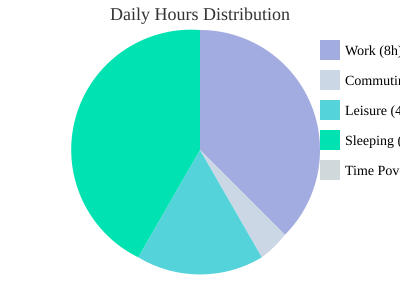
Every day, you’re given 24 hours—1,440 minutes. That’s 86,400 seconds, deposited into your account at midnight, yours to spend or invest. If someone handed you $86,400 each morning, would you let $1,800 slip away on things you don’t even want? Yet, that’s exactly what happens when you let just 30 minutes a day vanish into mindless scrolling, TV you don’t enjoy, or break room complaints. The clock doesn’t care, but the hidden math of your daily schedule adds up in ways most people never realize.
The Compounding Effect of ‘Just’ 30 Minutes
It’s easy to dismiss 30 minutes as harmless. But let’s break it down with some Time Management Statistics:
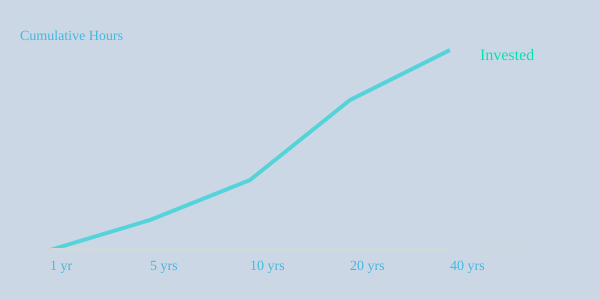
- 30 minutes wasted per day = 182.5 hours per year
- In 5 years: 912.5 hours, or nearly 36 full days
- In 40 years: 7,300 hours—293 days, almost a full year of your waking life
| Years | Hours Lost/Gained | Days Lost/Gained |
|---|---|---|
| 1 | 182.5 | ~7.6 |
| 5 | 912.5 | ~36 |
| 10 | 1,825 | ~76 |
| 40 | 7,300 | ~293 |
These numbers aren’t just statistics—they’re your life, compounding quietly in the background. As the saying goes:
If you want to know where you’ll be in five years, show me how you spend your mornings.
What If You Invested Instead?
Now, flip the script. What if you invested those same 30 minutes each day? Imagine reading in your field, learning a new skill, or building a network. In five years, you could become an expert, develop a thriving business, or transform your health. That’s the compound effect in action—small, consistent investments in yourself that yield exponential returns.
- Reading & Learning: Just 30 minutes daily can put you ahead of 95% of your peers in knowledge.
- Relationships: A daily call or message can build a network that opens doors for decades.
- Health: 30 minutes of exercise a day adds up to over 180 hours a year—enough to change your body and mind.
Swapping Busyness for Productivity Improvement
Not all ‘full’ days are equal. Filling your schedule isn’t the same as investing in your future. Research shows that spending just 10 minutes planning your day can recapture up to two hours of productive time. No wonder 90% of people believe better time management will boost their productivity.
Personal Story: The Morning That Changed My Trajectory
Years ago, I started waking up 30 minutes earlier. Instead of hitting snooze, I read, planned, and set my intentions. That single change didn’t just give me more time—it changed my career, my health, and my relationships. I’ll never say “I don’t have time” again, because I’ve seen how those small decisions compound into real wealth.
From Chaos to Control: Masters Schedule Their Priorities (Not the Other Way Around)
Here’s something you may have noticed: most people don’t design their days—they just react to them. They wake up, check their phones, and let the world dictate what happens next. If you’ve ever felt like a leaf floating down a river, just going wherever the current takes you, you’re not alone. In fact, research shows only 14% of workers fully schedule their tasks in advance; nearly 80% lack any kind of planning tools or task management system. This is why so many end up somewhere they never intended to be.
The Power of Designing Your Day Before Living It
Living reactively is a trap. When you let other people’s emergencies and messages set your agenda, you give away control of your most precious resource: your time. Masters, on the other hand, design their time before they live it. They don’t wait until morning to figure out what matters. They know exactly what they’re going to do with their hours—before those hours even arrive. As one mentor taught me,
“Masters design their time before they live it.”
Reaction-Based Schedules vs. Planned Schedules
| Reaction-Based Schedule | Planned Schedule |
|---|---|
| Scrambles to respond to calls, emails, and requests | Works from a clear, prioritized plan |
| Feels overwhelmed and scattered | Feels focused and in control |
| Ends day with regrets and unfinished tasks | Ends day with clarity and progress |
| 80% of workers | Only 14% of workers |
Wild Card: The Architect Analogy
Would you ever build a house without a blueprint? Of course not. Yet, most people build their days—and their lives—without any plan at all. Effective time management means treating your day like an architect treats a blueprint: with intention, detail, and vision.
The Three-Bucket System: Income, Life, and Time-Wasting Activities
To schedule appropriately, you need to separate what’s truly important from what’s just noise. Here’s a simple system:
- Income-Producing Activities: Directly make you money or build your career.
- Life-Producing Activities: Make you healthier, smarter, or strengthen relationships.
- Time-Wasting Activities: Everything else—usually maintenance or distractions.
Once you see your tasks through this lens, planning tools become even more powerful. Spending just 10 minutes planning can recover up to 2 hours a day—that’s real wealth in time.
Key Practice: The Evening Ritual of Next-Day Planning
My mentor, Mr. Schoeff, taught me a game-changing habit: the evening belongs to planning, the morning belongs to execution. Every night, spend 10-20 minutes designing your next day. Don’t just jot down a massive to-do list. Instead, write down what must get done, what you want to accomplish, and what you’re going to say no to. Ask yourself, “If tomorrow were perfect, what would it look like?”
Breaking the Myth: Why Massive To-Do Lists Kill Productivity
Most people set themselves up for disappointment by making overwhelming lists with 30+ items. That’s not effective time management—that’s a recipe for feeling like a failure. The real skill is learning to focus on the few things that matter most. Strategic time-blocking and nightly planning beat endless multitasking every time.
Schedule your priorities—don’t prioritize your schedule. That’s how you move from chaos to control, and from busy to truly effective.
Sacred Blocks: Why Time Blocking Isn’t Just for Productivity Nerds
Time blocking isn’t just a trick for productivity nerds or people obsessed with color-coded calendars. It’s a powerful way to invest your hours for real wealth—because it’s about honoring what matters most to you. Imagine treating your time as if you were meeting your most important client. Who is that? You are the most important client you have.
Time Blocking Explained: Meeting Your Most Important Client—Yourself
At its core, time blocking means deciding in advance what matters and creating non-negotiable appointments with yourself. Instead of letting your day get filled with whatever comes up, you set aside sacred blocks for what’s truly important—before distractions and demands can steal your focus.
- Exercise time isn’t just “when you feel like it”—it’s blocked.
- Reading time isn’t “if you get around to it”—it’s blocked.
- Planning, learning, and even family time—all blocked and honored.
When these blocks appear on your calendar, you treat them with the same respect you’d give to a meeting with your most valuable client. Because, truthfully, you are.
Steps to Sacred Time Blocking
- Decide in advance: Look at your week and ask yourself, “What actually matters to me?” Block those times first.
- Protect those blocks like gold: When a time block comes up, it’s non-negotiable. If someone asks for that time, you say, “I already have a commitment.”
- Say no—even to yourself: Don’t let your own distractions or impulses break your promise. Treat your block as sacred.
Time Blocking for More Than Just Work
The power of time blocking isn’t limited to work tasks or endless to-do lists. It’s about task management and distractions management for every area of your life. Block time for your family, for writing, for creative projects, and even for relaxation or hobbies. When you honor these blocks, you’re telling yourself—and everyone else—that your priorities matter.
Deep Work, Focus, and Less Fatigue
Time blocking is especially helpful if you juggle multiple projects or get sidetracked easily. It integrates the principles of deep work, letting you focus fully on one thing at a time. This minimizes context switching—the mental fatigue that comes from jumping between tasks. Research shows that employees can save up to 40 hours per month when they manage their time effectively with time blocking. That’s an entire workweek reclaimed, simply by protecting your focus.
You are the most important client you have.
Examples of Sacred Blocks
- Family Dinner: Block it off, phones away, and be fully present.
- Writing Hours: Set a recurring block for your creative work—no interruptions.
- Relaxation: Yes, even downtime deserves a block. Schedule it and honor it.
When you block off time for what matters—and treat those blocks as non-negotiable—you’re not just managing tasks. You’re investing in your real wealth: your time, your growth, and your relationships.
Your Prime Time: Using Your Sharpest Hours for Maximum Impact
What if you could multiply your productivity just by rearranging your schedule? The secret isn’t working longer—it’s working smarter by aligning your most productive hours with your most important work. This is your personal prime time: not the TV kind, but the hours when your mind is sharpest, your energy is highest, and your creativity flows best. For most people, these golden hours are in the morning, before the day’s demands chip away at your focus and willpower.
What’s Your Personal ‘Prime Time’?
Your prime time isn’t whenever you happen to have a free minute. It’s a window—often just 2-3 hours—when your brain is fresh and your decision-making capacity is at its peak. During these hours, you haven’t yet been worn down by meetings, emails, or the endless stream of small requests. This is when you’re best equipped for deep work focus—the kind of work that moves the needle in your business or career.
A Fortune 500 Executive’s Secret
Consider the story of a Fortune 500 executive who guarded his mornings like Fort Knox. He had a simple rule:
“Nothing mundane before 10:00 a.m.”No email. No meetings about office supplies. No busywork. His mornings were reserved exclusively for strategic thinking, important decisions, and creative work. Everything else could wait.
People thought he was crazy. But here’s what happened:
He accomplished more in those three protected morning hours than most people accomplished all week.By scheduling appropriately and using his prime time for prime activities, he unlocked a level of output others only dreamed of. Meanwhile, his colleagues squandered their best hours answering emails or getting lost in office chatter—not on the work that truly mattered.
Why Most People Squander Their Best Hours
The hidden danger is letting others hijack your best hours for their emergencies, or losing them to trivial tasks. Your best hours are easily lost to trivialities—reclaim them for strategic work. Research shows that protecting just 2-3 hours of prime time can quadruple your weekly output. Techniques like Flowtime and Deep Work are designed to help you focus during your most productive hours, multiplying your results compared to filling these windows with menial tasks.
Find and Align Your Time for Maximum Impact
Prime time isn’t universal. For most, it’s the morning, but your golden hours might be in the afternoon or evening. The key is to track your energy, focus, and output at different times for a week. Here’s a simple experiment:
- For one week, jot down when you feel most alert, creative, and focused.
- Note when you tend to feel sluggish or distracted.
- Compare your output during different times of day.
Once you identify your prime time, schedule appropriately: block these hours for your highest-value work. Push admin tasks, routine emails, and meetings to later in the day. Protect your golden hours fiercely—they are your most valuable asset for building real wealth and impact.
Key Takeaways
- Identify your personal prime time by tracking your alertness and focus.
- Use your sharpest hours for deep work and strategic tasks.
- Don’t let others hijack your best hours for their emergencies or trivialities.
- Schedule appropriately to align your time with your most productive hours.
Common Pitfalls: Mistaking Motion for Progress
Have you ever fallen into bed at night, completely exhausted, only to realize you can’t recall a single thing you truly accomplished? If so, you’re not alone. Many of us confuse being busy with being productive. We run around all day, checking things off endless lists, putting out fires, and responding to every email and notification. But here’s the hard truth: Busy doesn’t equal productive. Activity doesn’t equal accomplishment.
The Illusion of Busyness: Activity vs. Accomplishment
It’s easy to mistake motion for progress. You can be busy going in circles, or busy doing things that simply don’t matter in the long run. The real question isn’t “Are you busy?” but “Are you moving closer to what truly matters?”
I remember a time when I spent an entire day ‘busy’—answering emails, attending meetings, and crossing off minor tasks. At the end of the day, I had nothing meaningful to show for it. Sound familiar?
FAQ Table: Top Time Management Mistakes and How to Avoid Them
| Mistake | Solution |
|---|---|
| Confusing activity with achievement | Use the Eisenhower Matrix to prioritize what truly matters |
| Reacting to every notification | Batch process emails and set boundaries for notifications |
| Letting decision fatigue drain focus | Plan your day in advance and categorize tasks by urgency/importance |
| Working without breaks | Try the Pomodoro Technique or Flowtime to maintain energy and focus |
Wild Card: The Inbox Zero Addiction Distraction
Let’s talk about the Inbox Zero addiction. Many of us pride ourselves on replying instantly to every message. But constantly clearing your inbox isn’t a virtue—it’s a distraction. It pulls you away from deep work and meaningful progress. Remember, not every ping deserves your immediate attention.
Decision Fatigue Kills Deep Work—Eisenhower Matrix to the Rescue
Every decision you make throughout the day chips away at your mental energy. This is called decision fatigue, and it’s a silent productivity killer. The Eisenhower Matrix is a powerful tool for prioritizing: it helps you categorize tasks by urgency and importance, reducing decision fatigue and keeping your focus on high-impact work. Research shows that people who use prioritization techniques like the Eisenhower Matrix experience less stress, more energy, and better relationships.
Quick Tip: Use the Pomodoro Technique or Flowtime
When you feel like you’re spinning your wheels, try the Pomodoro Technique or Flowtime. These time management strategies break your work into focused intervals (usually 25 minutes), followed by short breaks. This approach not only improves concentration but also helps you recharge, so you can return to your tasks with renewed energy. Studies show that chunking effort and breaks leads to better focus and less overwhelm.
Busy doesn’t equal productive. Activity doesn’t equal accomplishment.
Remember, the clock doesn’t care how many things you check off your list. Midnight comes whether you’re ready or not. The sun rises on schedule. Real wealth comes from investing your hours in what truly matters, not just staying in motion.
FAQ: Real Questions on Breaking Free from Time Poverty
How is time poverty different from just being busy?
Being busy is about having a packed schedule; time poverty is about feeling powerless over your hours. You can fill every minute and still feel empty if you’re not investing your time in what matters. Time poverty is the sense that you never have enough time for your priorities—your growth, your dreams, your relationships. As one wise mentor put it, “The first step to better time management is admitting you’re already making choices—now you just need to make better ones.”
What’s the first thing I should change to take control over my day?
Start by planning your day with intention. Before you dive into emails or tasks, take 10 minutes to set your priorities. Ask yourself: “What would make today a win?” Use a simple Time Management Strategy like the Eisenhower Matrix—sort your to-dos into urgent/important, and focus on what truly moves you forward. Remember, you’re not just spending time; you’re investing it.
Is time blocking overkill for creative types or parents?
Not at all! Time Blocking isn’t about rigid schedules—it’s about protecting space for what matters. For creatives, blocking out “deep work” time means fewer distractions and more flow. For parents, it can mean carving out 30 minutes for yourself or your side project, even if the rest of the day is chaos. The key is to block time for your priorities, not just your obligations.
What if my job is all interruptions?
It’s tough, but not impossible. Try the Pomodoro Technique: work in 25-minute focused bursts, then take a 5-minute break. Let your team know when you’re in a “do not disturb” block. If interruptions are truly unavoidable, use the Eisenhower Matrix to quickly decide which interruptions are urgent and which can wait. Even in a reactive job, you can claim small pockets of control.
Which tool—Eisenhower Matrix, Pomodoro, or Time Blocking—is best for ADHD brains?
Everyone’s brain is different, but many with ADHD find the Pomodoro Technique especially helpful. The short sprints and frequent breaks keep you engaged. Combine this with Time Blocking for structure, and use the Eisenhower Matrix to avoid getting stuck on low-value tasks. Experiment and see what feels natural—there’s no one-size-fits-all in Task Management.
Does planning kill spontaneity?
Only if you let it! Planning actually creates more room for spontaneity. When you know your priorities are covered, you can say “yes” to unexpected opportunities without guilt. Schedule your must-dos, then leave open blocks for life’s surprises. Remember, “You have all the time there is—what you don’t have is a plan for your time.”
How do I protect my prime time from coworkers or family?
First, identify your “prime time”—when you’re most focused or creative. Then, communicate your boundaries. Use a shared calendar, close your door, or put on headphones as a signal. For family, explain why this time matters. For coworkers, suggest alternate meeting slots. Time Management Tips: Defend your best hours like you would a doctor’s appointment—because your future depends on it.
The first step to better time management is admitting you’re already making choices—now you just need to make better ones.
Conclusion: Aim for Progress, Not Perfection—And Start Tonight
There’s a simple truth at the heart of better time management: you can’t make more time, but you can always make more of the time you’ve got. The clock doesn’t care how you spend your hours, but your future absolutely does. Every day, your hours quietly stack up, becoming days, then years, and ultimately, your life’s story. As the saying goes,
Show me how someone spends their hours, and I’ll show you their future.
It’s easy to fall into the trap of waiting for the “perfect” plan or the “right” moment to start. But progress isn’t about executing a flawless routine—it’s about making consistently better choices, one hour at a time. Most people don’t design their days; they just react to them. They let phone calls, emails, and other people’s emergencies dictate their schedule. They drift like leaves on a river, surprised when they end up somewhere they never meant to go.
But you don’t have to live on autopilot. Masters of personal development and time management techniques know that the secret isn’t in perfection—it’s in intention. They design their time before they live it. They don’t wait until morning to figure out what matters; they decide the night before. Research shows that spending just ten minutes planning your day can create a ripple effect across your months and years. In fact, only 14% of people schedule proactively, but those who do can recover up to 12 hours of wasted effort every month. Imagine what you could build with that reclaimed time.
Think back to the story of the two neighbors: one who invests their hours with intention, and one who simply spends them. Over time, their lives look very different—not because one had more talent or luck, but because of how they chose to use their hours. What will your hours build? Will they quietly construct the future you want, or will they slip away, building a life you never chose?
Here’s the good news: you don’t need a do-over. You get a thousand fresh starts. The clock resets every day, offering you another shot at progress. Tonight, instead of scrolling or letting the evening drift by, try blocking just one intentional hour. Use it to plan tomorrow, learn something new, or work on a project that matters to you. That single, small action can kick off a series of bigger changes. Progress isn’t linear, and you’re allowed to be imperfect. What matters is that you start—tonight.
Time is the one resource we all get in equal measure, regardless of background or bank account. How you invest it determines the wealth you’ll build—not just in money, but in skills, relationships, and fulfillment. Don’t let your hours be spent by default. Choose to invest them with purpose.
The challenge is simple: don’t wait for the perfect plan. Take control of your time, starting now. Design your next hour, and let that be the first step toward a future you’ve chosen. Remember, the clock doesn’t care—but your future self will. Invest, don’t just spend, your next block of time. Your real wealth is waiting to be built, one intentional hour at a time.
TL;DR: If you only take one thing away, let it be this: You can’t save time, but you can invest it. Start tonight by blocking off 30 purposeful minutes for your top priority—and watch as your future quietly transforms.
Post a Comment