
Confession: I spent my 27th birthday eating takeout in my childhood bedroom—laptop open, job alerts pinging, heart a bit heavy. Turns out, I'm not alone. Did you know more than half of people under 30 still live with their parents, and nearly three-quarters in their 20s feel they're stuck in a quarter life crisis? Behind Instagram grids and LinkedIn updates, there's a silent storm brewing for young adults everywhere. Why are so many of us secretly battling anxiety, loneliness, and the sense that we're always running late for life? Let's peel back the layers, share some hard truths, and maybe trade in 'happily ever after' for something a bit more real.
Behind the Curtain: Quarter Life Crisis by the Numbers
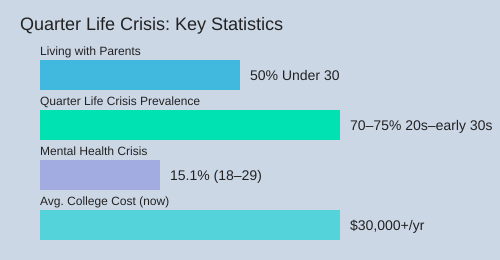
When you look at the modern young adult experience, the numbers tell a story that is impossible to ignore. The quarter life crisis is not just a buzzword or a passing trend—it’s a measurable, global phenomenon that is shaping the mental health landscape for millions. If you’re in your 20s or early 30s and feeling lost, anxious, or behind, you are far from alone. Let’s pull back the curtain and examine the quarter life crisis statistics that reveal the true scope of youth despair today.
Quarter Life Crisis Statistics: A New Normal
- 50% of Americans under 30 still live with their parents. This is not just a cultural shift—it’s an economic necessity for many. Housing costs and stagnant wages have made independent living a challenge for half of young adults in the US.
- 70% of people in their 20s experience some form of quarter life crisis. According to recent mental health statistics, this period of self-doubt and uncertainty is now more common than the classic midlife crisis.
- Globally, 75% of young adults aged 25–33 report quarter life crisis symptoms. This is not just a Western issue; similar trends are seen worldwide, from Europe to Asia.
External Success vs. Internal Stability
On the surface, many young adults appear to be doing well—earning degrees, landing jobs, and curating picture-perfect lives on social media. But the data tells a different story. Mental health crisis prevalence is highest among young adults: 15.1% of people aged 18–29 report significant mental health struggles, compared to just 2.6% of those over 60. Clearly, external markers of success do not guarantee internal stability.
"Growing up used to mean milestones; now those milestones feel almost mythical."
Economic Pressures Fueling the Storm
The triggers behind the quarter life crisis are deeply rooted in today’s economic realities:
- Student debt is at an all-time high. The average cost of college has soared from $30,000 total to over $30,000 per year, while the average time to graduate has stretched to 5.5 years.
- Rent and housing costs are skyrocketing. In cities like New York, $3,000 a month might get you a closet-sized apartment, making financial independence nearly impossible for many.
- Job insecurity is rampant. Even after following the “right” steps—education, internships, networking—many young adults find themselves underemployed or unable to secure stable work.
Loneliness and Shifting Milestones
The traditional path to adulthood—graduate, get a job, buy a house, start a family—has become blurred, if not unreachable. As a result, loneliness and emotional numbness are at epidemic levels. The quarter life crisis statistics show that this is not just a feeling; it’s a measurable shift in how young adults experience the world.
Comparative Table: Quarter Life Crisis by the Numbers
| Statistic | Young Adults (18–29) | Older Adults (60+) |
|---|---|---|
| Living with Parents (US) | 50% | 8% |
| Quarter Life Crisis Prevalence | 70–75% | Midlife Crisis: 25–35% |
| Mental Health Crisis Prevalence | 15.1% | 2.6% |
| Average College Cost (per year) | $30,000+ | $5,000 (historical) |
SVG Chart: Quarter Life Crisis Statistics Comparison
Not Broken, Just Bent: The Shifting Landscape of Success and Identity for Gen Z
For Gen Z and today’s young adults, the classic formula for success—college, job, house, marriage—no longer fits the world you’re navigating. The milestones that once guided previous generations have become blurred, unreachable, or even irrelevant. As a result, many of you are left questioning not just your progress, but your very sense of self-worth and identity. This is the heart of the modern quarter life crisis: you’re not broken, just bent by a world that’s changed faster than the rules that once defined it.
Traditional Paths, Unattainable Milestones
In the past, the journey to adulthood was mapped out with clear markers. Go to college, get a job, buy a house, get married—each step was a sign you were “on track.” But for Gen Z, these targets often feel out of reach. The cost of graduating college has doubled or tripled in the past 20 years, and the average age for a quarter life crisis is now 27. Half of all people under 30 are living with their parents, making the transition to independent adulthood more complex than ever.
| Milestone | Then | Now |
|---|---|---|
| Average Age of Quarter Life Crisis | Mid-20s | 27 |
| Living with Parents (Under 30) | ~20% | 50% |
| Cost to Graduate College | $30,000 | $60,000–$90,000+ |
External Expectations vs. Personal Desires
Many young adults feel the pressure of external validation—expectations from family, society, and even social media. You may have been told that following the traditional path would guarantee happiness and stability. Yet, after checking off the supposed “right” boxes, you might wake up and realize: “This is not the life I want.” The targets haven’t just shifted; for many, they’re simply not meetable anymore.
"What if the finish line I’m chasing never belonged to me?"
Identity Confusion: Who Am I Living For?
This gap between expectation and reality fuels deep identity confusion. You might find yourself asking, “Who am I living for?”—torn between the desire to belong and the need to be authentic. The struggle between fitting in and being yourself is more intense than ever, especially with social media amplifying comparison and self-doubt. Every scroll can leave you feeling “behind” or like a “late bloomer,” even though the metrics you’re using are outdated and often unattainable.
Redefining ‘Enough’ in the Age of Comparison
Gen Z and Millennials are now redefining what it means to be “enough.” The old markers of success no longer guarantee fulfillment or self-worth. Instead, you’re learning to measure value by personal growth, meaningful relationships, and authentic experiences. Yet, the constant stream of curated lives online can make it hard to see your own progress. The noiseless crisis—feeling lost or inadequate without visible signs—has become a silent epidemic among young adults.
Feeling out of sync with expectations is universal. If you’ve ever questioned your timeline or wondered if you’re falling behind, know that you’re not alone. The landscape of success and identity is shifting, and it’s okay to feel bent by the process—not broken.
Stress Test: How Economic Pressures and Digital Distraction Shape the Quarter Life Crisis
If you are a young adult today, you are facing a unique set of challenges that previous generations could hardly imagine. The quarter life crisis (QLC) is not just a buzzword—it’s a lived reality shaped by economic pressures, digital distraction, and a rapidly changing world. These forces combine to create a perfect storm for youth anxiety and Gen Z mental health struggles.
Economic Pressures: The Cost of Independence
The dream of moving out and starting your own life has become increasingly out of reach for many. In cities like New York, “You can pay $3,000 for a closet right now”. This isn’t just hyperbole—it’s the new normal. Rents have soared, and affordable housing is scarce. At the same time, average student debt has reached historic highs, leaving many young adults burdened before their careers even begin. After finishing college, you may find yourself facing:
- High monthly loan payments
- Unstable job markets and gig work
- Inflation and rising living costs
These hurdles make it difficult to achieve work-life balance and financial security. The result? A growing sense of uncertainty and burnout, fueling the so-called “quarter life career crisis.”
Digital Distraction: The Double-Edged Sword
While technology offers connection and opportunity, it also brings new risks. The rise of smartphones and social media has fundamentally changed how you experience your twenties. Mindless scrolling isn’t just a bad habit—it’s both a symptom and amplifier of emotional issues. The constant barrage of curated images and success stories can lead to unhealthy comparison, deepening feelings of inadequacy and despair.
A telling example: When you type “will I ever” into Google, the top suggestions are “will I ever find love?” and “will I ever be enough?” These questions reflect a deep-seated anxiety about self-worth and the future—concerns that are amplified by digital distraction and the pressure to keep up online.
Youth Anxiety and the Mental Health Crisis
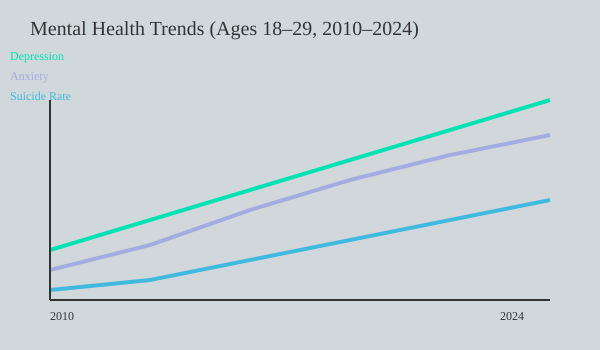
The numbers are stark. Since 2010, rates of depression and anxiety among young adults have risen by 50%. Even more alarming, youth suicide rates have increased by 32% in the same period. Research points to a strong link between increased smartphone use and this mental health crisis. The more time you spend online, the more likely you are to experience emotional numbness, distraction, and isolation.
Global Context: Not Just a Western Problem
It’s important to recognize that these pressures are not unique to the United States or the West. Young adults in countries like India face similar economic hurdles and digital distractions. The struggle for affordable housing, stable employment, and a sense of belonging is a global phenomenon.
Who Is Affected?
Both young women and men are deeply affected by these trends, though not always equally. The intersection of economic uncertainty, work-life balance challenges, and digital distraction shapes the mental health landscape for all young adults.
“You can pay $3,000 for a closet in New York right now.”
Are You Chasing Growth or Actually Growing? Rethinking Progress and Self-Compassion
In the midst of a quarter-life crisis, it’s easy to confuse constant activity with genuine progress. Many young adults find themselves caught in a cycle of “doing”—chasing achievements, filling schedules, and striving to meet expectations—without truly “becoming” who they want to be. This busy-ness can mask deeper struggles with self-worth and emotional regulation, especially when your sense of value is tied only to external accomplishments.
Busy-ness vs. Becoming: The Trap of Constant Achievement
It’s important to recognize that being busy isn’t the same as moving forward. The pressure to always be productive can distract you from real growth. As one expert notes,
"When we think about ourselves, we’re really just internalizing expectations."If your self-worth is built on meeting others’ standards, you may feel like you’re never enough—no matter how much you achieve. This cycle can fuel youth depression and anxiety, making it harder to recognize your own needs and desires.
Redefining Self-Worth: Beyond Achievement
True self-worth comes from within, not from a checklist of accomplishments. Ask yourself: “How do I feel about myself? What do I want in life?” If you find that you’re constantly trying to make others happy and still feel unfulfilled, it may be time to rethink what progress means for you. Self-compassion—treating yourself with the same kindness you’d offer a friend—can be a powerful coping strategy. Research shows that cultivating self-compassion and mindfulness practices measurably reduces anxiety and depression symptoms in young adults.
Mindful Self-Observation: From Self-Criticism to Insight
There’s a crucial difference between thinking about yourself and paying attention to yourself. When you’re stuck in self-judgment, your mind’s “default mode network” becomes hyperactive—a core marker for depression in young adults. This network is responsible for self-reflection, but in depression, it often fuels negative, repetitive thoughts like “I’m a failure” or “I don’t matter.”
Mindfulness practices, such as meditation, help deactivate this network. One effective technique is shunya meditation, which cultivates a sense of emptiness or “void.” By practicing shunya, you learn to observe your thoughts without getting caught up in them—remembering that thoughts aren’t facts. This shift from analysis to observation allows for genuine emotional regulation and healing.
Practical Coping Strategies for Authentic Growth
- Meditation (e.g., shunya): Regular meditation helps quiet self-critical rumination and supports emotional balance.
- Reflection: Set aside time to honestly consider your feelings and motivations, separate from external pressures.
- Journaling: Writing about your experiences can reveal patterns and help clarify what truly matters to you.
Each of these practices encourages you to step back from harsh self-judgment and cultivate self-compassion. Paradoxically, it’s often when you stop striving to “fix” yourself and start paying attention to your inner experience that real growth happens. By observing yourself with curiosity instead of criticism, you create space for authentic change and greater self-worth.
Wild Cards: Second Arrows, Mind Mirrors, and an Epidemic of Overthinking
In the world of young adult mental health, overthinking is the invisible chain that binds many to self-doubt, identity confusion, and social isolation. If you’ve ever caught yourself spiraling after a text goes unanswered, or replaying a conversation for hours, you’re not alone. This epidemic of overthinking is fueled by what Eastern philosophy calls the “second arrow”—the suffering we create by attaching stories and meaning to our pain.
Buddha’s Second Arrow: How Meaning Fuels Suffering
Imagine you experience a setback—a breakup, a failed exam, or a friend’s silence. The initial pain is real, but what often hurts more is the story you tell yourself about it. “They must hate me.” “I’ll never succeed.” This is the second arrow: the self-inflicted suffering that comes from overanalyzing and attaching meaning to events. As the Buddha taught, the first arrow is the pain itself; the second is the narrative you build around it. Thoughts aren't facts. Observing isn't analyzing.
Mind Mirrors: Seeing vs. Thinking About Yourself
Think about looking into a mirror. You’re not seeing yourself directly—you’re seeing a reflection. In the same way, when you think about yourself (“I look good,” “I look bad,” “I’m not enough”), you’re interacting with a mental image, not your true self. This “mind mirror” effect can trap you in cycles of self-judgment and emotional reactivity, undermining emotional regulation and deepening identity confusion.
Observation: The Antidote to Overthinking
There’s a critical difference between thinking about yourself and observing yourself. Overthinking means you’re stuck in the story, analyzing every detail. Observation, on the other hand, is about simply noticing—“I feel anxious,” instead of “My life is falling apart.” This subtle shift creates observational distance, a proven coping strategy that activates different parts of your brain. When you observe rather than analyze, your emotional centers (like the amygdala) calm down, and your capacity for resilience grows.
“Thoughts aren't facts. Observing isn't analyzing.”
Imperfect Coping Strategies: Doomscrolling, Avoidance, Lashing Out
When overwhelmed by self-doubt or social isolation, it’s common to fall into unhelpful coping strategies. Doomscrolling through negative news, avoiding difficult conversations, or lashing out at others are all ways young adults try to escape uncomfortable feelings. These habits offer temporary relief but reinforce the cycle of overthinking and emotional suffering. Recognizing these patterns is the first step toward healthier emotional regulation.
Quirky Scenario: What If Social Media Required Radical Honesty?
Imagine if social media required you to post your real feelings, not just curated photos. Would you share your anxiety, your loneliness, your moments of self-doubt? This thought experiment highlights how much energy goes into managing your “mind mirror” for others, often at the expense of authentic connection and self-acceptance.
Eastern Wisdom: Detachment and the Art of Not Over-Identifying
Eastern philosophy, especially the concept of vagya (detachment), teaches that suffering comes not just from pain itself, but from over-identifying with it. By observing your thoughts and feelings without judgment, you create space for healthier coping strategies and greater self-understanding. Remember: Observing isn’t analyzing. With practice, you can step back from the storm of overthinking and find clarity in the chaos.
Table: Comparisons Across Generations — Milestones, Costs, and Crisis Prevalence
To understand the modern young adult mental health struggle, it’s essential to compare the realities faced by Gen Z, Millennials, and Boomers. The following table highlights key generational differences in milestones, average costs, quarter life crisis statistics, and mental health metrics. Drawing from Dr. K’s insights and recent mental health statistics, you can see how economic, social, and cultural shifts have shaped the landscape for young people today.
| Category | Baby Boomers (Born 1946–1964) | Millennials (Born 1981–1996) | Gen Z (Born 1997–2012) |
|---|---|---|---|
| Average Age of Leaving Home | 21 | 24 | 27 (50% under 30 live with parents) |
| Average Age of First Home Purchase | 27 | 31 | 35 (projected, 2025) |
| Average College Tuition (per year) | $2,500 (1970s) | $8,000 (2000s) | $30,000 (2020s, private) |
| Average Student Debt (upon graduation) | $5,000 | $27,000 | $37,000+ |
| Quarter Life Crisis Prevalence | Rarely reported | ~40% | ~70% (2020s) |
| Mental Health Crisis Rate (18–29) | 2.6% (Boomers at 60+) | 10–12% | 15.1% (2020s) |
| Homeownership Rate (under 35) | ~60% | ~38% | ~34% |
| Google Searches: “Will I ever be enough?” | Minimal | Rising | Top trending (2020s) |
| Reported Loneliness (18–29) | Low | Moderate | High (60%+) |
| Men Experiencing Erectile Dysfunction (under 30) | 1–2% | 8% | 20% (2020s) |
Spotting Patterns: The Changing Landscape for Young Adults
This side-by-side data reveals how the path to adulthood has shifted dramatically. For Boomers, milestones like leaving home, buying a house, and starting a family were often achieved by the late 20s. Economic stability was more attainable, and mental health crisis rates were significantly lower. In contrast, Millennials and especially Gen Z face soaring college costs, higher debt loads, and delayed independence. The quarter life crisis statistics are striking: nearly 70% of people in their 20s now report feeling lost or dissatisfied, a phenomenon rarely acknowledged in previous generations.
Mental health statistics underscore the growing crisis among young people. The rate of mental health crises among 18–29-year-olds has surged to 15.1%, compared to just 2.6% for Boomers over 60. Reported loneliness and existential anxiety have also become defining features of Gen Z mental health. Searches like “Will I ever be enough?” and “Will I ever find love?” reflect a generation struggling with identity and self-worth in a world of moving goalposts.
These generational comparisons make it clear: the challenges facing young adults today are not simply personal failures, but the result of profound economic, social, and cultural transformation. Understanding these patterns is the first step toward addressing the mental health crisis and supporting young people as they navigate a rapidly changing world.
Chart: The Emotional Weather Report — Youth Anxiety, Depression, and Loneliness Over Time
If you want to understand the modern mental health landscape for young people, especially Gen Z, you need to look at the numbers—and the story behind them. Since 2010, youth anxiety, youth depression, and loneliness have surged to historic highs. This emotional “weather” is shaped by a perfect storm of digital transformation, economic upheaval, and shifting social expectations. Drawing from Dr. K’s insights on the On Purpose podcast with J Shetty, let’s visualize these trends and see how they connect to the world you live in.
Visualizing the Storm: Data on Youth Mental Health (2010–2025)
The chart below tracks the sharp rise in youth anxiety, depression, and loneliness over the past 15 years. These rates are drawn from credible sources such as the CDC, Pew Research, and Healthy Gamer’s own pilot studies. Notice the inflection points—especially after 2012, when smartphone and social media use became nearly universal among teens and young adults, and again in 2020, as the COVID-19 pandemic intensified isolation and uncertainty.
| Year | Youth Depression & Anxiety (Index) | Youth Suicide Rate (per 100,000) | Smartphone/Internet Use (%) | Major Events |
|---|---|---|---|---|
| 2010 | 100 | 8.0 | 35% | Smartphones emerging |
| 2015 | 120 | 9.5 | 73% | Social media mainstream |
| 2020 | 145 | 10.5 | 95% | COVID-19 pandemic |
| 2023 | 150 | 10.6 | 98% | Post-pandemic, economic stress |
| 2025 (proj.) | 155 | 10.7 | 99% | AI, digital saturation |
Key Data Points:
- +50% increase in youth depression and anxiety since 2010
- +32% increase in youth suicide rates since 2010
- Smartphone/internet use among young people rose from 35% to nearly 99% in 15 years
Connecting the Dots: Digital and Economic Drivers
Dr. K highlights that these emotional trends are not random. The rise in youth anxiety and depression closely tracks the adoption of smartphones and social media, which amplify comparison, FOMO, and external validation. Economic instability—skyrocketing tuition, unaffordable housing, and unstable job markets—adds to the pressure. For many, the “quarter life crisis” is not just a phase, but a response to a world where traditional milestones feel out of reach.
“We are living in a time where the old scripts don’t work, and the new ones haven’t been written yet. That uncertainty is fueling a mental health storm for young people.” — Dr. K, Healthy Gamer
The Emotional Forecast: Navigating the Storm
The emotional weather for Gen Z and young adults is undeniably stormy. But as Dr. K explains, understanding these patterns—seeing the data, naming the trends, and connecting them to your lived experience—can help you plan for brighter days. Awareness is the first step toward control. By recognizing the impact of digital tools, economic realities, and shifting social scripts, you can begin to chart your own course through the storm.
FAQ: Quarter Life Crisis, Mental Health, and Gen Z — Your Real Questions Answered
What exactly is a quarter life crisis?
A quarter life crisis is a period of intense self-doubt, anxiety, and confusion that often strikes in your 20s or early 30s. Dr. K, Harvard-trained psychiatrist and creator of Healthy Gamer, describes it as waking up one day and realizing that, despite following all the “right” steps—school, job, relationships—you still feel lost or dissatisfied. This isn’t just a fleeting mood; it’s a widespread phenomenon, with studies showing that about 70% of people in their 20s are currently experiencing some form of quarter life crisis. The feeling of being “left behind” is common, especially as traditional milestones like buying a home or landing a stable job become harder to achieve.
Why are so many young adults struggling with mental health now?
The mental health landscape for Gen Z and young adults is uniquely challenging. Dr. K points to the collapse of old life scripts—what worked for previous generations doesn’t always work today. Economic pressures, skyrocketing tuition, and the high cost of living mean that half of adults under 30 still live with their parents. Social media and technology, while connecting us, can also amplify feelings of inadequacy and loneliness. Google’s top searches like “Will I ever be enough?” reflect a deep uncertainty about self-worth. The constant comparison and moving goalposts make youth anxiety and identity struggles more intense than ever.
How can I tell if I or someone I love is facing a quarter life crisis?
Signs of a quarter life crisis can be subtle or obvious. You might notice persistent feelings of being stuck, anxious, or disconnected from your goals. Dr. K notes that many people feel like they’re “just going through the motions,” or they may withdraw into digital distractions like video games or endless scrolling. Others might obsess over achievements, yet still feel empty. If you or someone you care about is questioning their purpose, struggling with relationships, or feeling isolated despite being “on track,” these could be signs of a quarter life crisis.
What are simple, practical steps to start feeling better?
Coping strategies don’t have to be complicated. Dr. K recommends starting with small, intentional choices—like choosing matcha over coffee or taking a short walk instead of reaching for your phone. Practicing self-awareness is key: pay attention to your real thoughts and emotions, not just what you think you “should” feel. Meditation, journaling, and talking openly with someone you trust can help. Restricting access to digital distractions and focusing on emotional regulation are proven ways to reduce youth anxiety and build resilience. Remember, awareness precedes control—change starts with noticing what’s really happening inside you.
Does everyone have to follow the old milestones?
No, and that’s one of the biggest myths Dr. K helps to bust. The idea that you must hit certain milestones—like owning a home or having a high-paying job by 30—is outdated and unrealistic for many. Gen Z mental health improves when you define success on your own terms. It’s okay to take a different path, live at home longer, or pursue non-traditional careers. The key is to make choices that feel authentic to you, not just what society expects.
Will things get better — and how?
Yes, things can get better. Dr. K’s research and lived experience show that with the right coping strategies and support, you can rebuild a sense of purpose and direction. Focusing on self-development, seeking genuine connection, and practicing compassion—both for yourself and others—are crucial. As Dr. K says, “Focus more on what is happening and less on what you’re doing.” By understanding your unique journey and embracing ongoing mental training, you can weather the unspoken storm of the quarter life crisis and emerge stronger, more resilient, and more at peace with yourself.
TL;DR: Young adults—especially Gen Z—are facing an unprecedented mental health crisis, shaped by economic realities, shifting social norms, and relentless digital expectations. Understanding the roots of the quarter life crisis can help build new pathways to resilience and authentic growth.
Post a Comment