

Did you know that over 97% of Malaysian businesses are classified as SMEs, yet only a tiny sliver ever makes it to the big leagues? I’ll never forget the kopi tiam I visited for years — the owner seemed to enjoy being the face of the place, but the menu and faces never changed, even after decades! It made me question: is being small by nature, or is it just easier to stay stuck than face the unknowns of scaling up? In this guide, you’ll discover candid stories, odd truths, and practical steps (with a few wild metaphors sprinkled in) to break free from SME purgatory — and why sometimes, staying small is more trap than choice. Let’s get into what’s holding back Malaysia’s business backbone, and how you, yes you, can change the game.
Section 1: Are You Running a Business, or Just Playing Boss? (SME Growth Challenges Malaysia)
Let’s start with a hard truth: “If you run an SME and that SME is only dependent on you running it, what you have done is you've created a job for yourself.” In Malaysia, this is the reality for most small and medium enterprises (SMEs). You might be the boss, but if your business can’t outlast you, you’re still on the clock. This is one of the most common SME growth challenges in Malaysia—the founder trap. It’s not about being small; it’s about being stuck.
What Is an SME in Malaysia?
Before we dive deeper, let’s clarify what counts as an SME in Malaysia. The official definition covers a huge part of our economy:
- Services sector: Less than RM20 million annual turnover OR fewer than 75 employees
- Manufacturing sector: Less than RM50 million annual turnover OR fewer than 200 employees
With these thresholds, SMEs contribute over 37% to Malaysia’s GDP and employ a significant portion of the workforce. In fact, 97% of all Malaysian businesses are SMEs (source: MSME Outlook 2025, Game of Impossible podcast).
Charming or Stuck? The Kopi Tiam Dilemma
Picture your favourite neighbourhood kopi tiam. The owner is everywhere—taking orders, cooking, chatting with customers. He is the menu, the chef, and the brand. It’s charming, but here’s the catch: if he takes a day off, the business grinds to a halt. This is the classic founder trap. The business is not built to run without him, so it can’t grow beyond its current state.
As Leon and Idris Jala put it:
“Being small for an SME is not the problem. It's being stuck. That is the problem.”Many Malaysian SMEs never move past this stage. They remain exactly as they started, year after year, unable to scale or innovate.
The Founder Factor: Why You’re Holding Your Business Back
Why do so many SMEs get stuck? The answer is simple: founder dependency. When you’re bogged down in daily operations, you have no time for strategy, innovation, or building SME business resilience. You become the bottleneck, and your business can’t grow without you. This is a major barrier to SME operational efficiency and long-term success.
Malaysia’s SME Graduation Problem
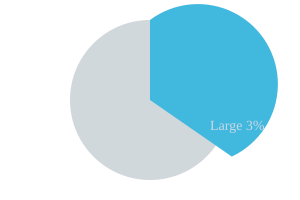
Here’s the sobering data: less than 2% of Malaysian SMEs ever “graduate” to become large businesses. The rest remain small, often for decades. The table below shows the stark reality:
| Business Type | Proportion of Malaysian Businesses | Graduation Rate | Definition |
|---|---|---|---|
| SMEs (All Sectors) | 97% | <2% become large businesses |
|
| Large Enterprises | 3% | — | Above SME thresholds |
SVG Pie Chart: Malaysian Business Landscape
Remember, being small isn’t the issue. It’s being stuck in the founder trap that keeps your business from reaching its potential. The first step to overcoming SME growth challenges is recognising if you’re running a business—or just playing boss.
Section 2: Trapped in the Daily Grind — Why Founders Stand in Their Own Way (Entrepreneurship and Innovation Malaysia)
When you start an SME in Malaysia, you probably wear every hat in the business. You’re the chef, the cashier, the marketer, and the cleaner. This founder-as-chief-everything approach is common, but it’s also the main reason so many SMEs get stuck. As one expert put it,
"Too many of the founders in the business, they get so involved in their daily operation, there's no time for strategy, no time for innovation."
Let’s break down why this happens, and how you can avoid falling into the same trap.
The Founder-as-Chief-Everything Problem
Imagine a 20-year-old kopi tiam (traditional coffee shop) in your neighborhood. The same uncle has been running it for decades, serving the same menu to the same loyal customers. The business is profitable, but it never grows. Why? Because the founder is bogged down in daily operations, leaving no space for SME business innovation or upscaling. There’s no time for strategy, no time to train staff, and no time to think about new markets or products.
Brand Builder vs. Product Maker
Now, compare that kopi tiam to a “rock star” founder who builds a brand, not just a product. Think of celebrity chefs who turn their personal brand into a system—franchises, packaged sauces, cooking classes. They’re still the face of their business, but they’ve institutionalized their best practices, allowing the business to grow without them being present every minute. This is the difference between being a builder and becoming an institutionalizer—a crucial leap for SME business resilience and growth.
Is It Bad to Be the Face of Your SME?
There’s a certain charm in knowing your char kuay teow is always fried by the same person. Some customers love that personal touch. But if you want to move from small SME to a bigger player in Entrepreneurship and Innovation Malaysia, you need to ask: Is your business built to last without you? Or will it stall the moment you step away?
Wild Card: What If Uncle Roger Let Someone Else Fry His Rice?
Imagine if Uncle Roger, famous for his fried rice, trained someone else to cook it exactly the same way. Would his business still thrive? If he systemized his recipe and trained his team, his brand could expand—maybe even become a chain. The secret is not losing the personal brand, but building systems so the quality and experience remain consistent, even when you’re not there.
Getting ‘Unstuck’: From Builder to Institutionalizer
To break free from the daily grind, you need to:
- Delegate operations and train your workforce
- Invest time in strategy and SME business innovation
- Document and standardize your best practices
- Adopt an entrepreneurial mindset that embraces change and growth
Research shows that SME business upscaling depends on innovation and workforce training. Less than 2% of Malaysian SMEs ever grow beyond small-scale, often because founders never make this leap.
| Founder Role | Stagnant SME | Successful SME |
|---|---|---|
| Daily Operations | Founder does everything | Delegated to trained staff |
| Strategy & Innovation | No time, rarely considered | Regular focus, drives growth |
| Workforce Training | Minimal, ad-hoc | Systematic, ongoing |
| Brand Building | Personal touch only | Personal brand + scalable systems |
Being small isn’t the problem—being stuck is. To thrive in Malaysia’s fast-changing market, you must evolve from builder to institutionalizer, making SME business resilience and innovation part of your DNA.
Section 3: Fear, Funds, and the Art of Borrowing Just Enough (Financial Management for SMEs)
Why Malaysian SMEs Stay Stuck: The Reluctance to Borrow
One of the biggest hurdles for Malaysian SMEs is the fear of borrowing money. Many founders prefer to rely only on their own savings, worried that taking a loan could put everything at risk. This fear is not unfounded, but it is also a major reason why so many businesses remain small and struggle to grow. According to recent data, less than 30% of Malaysian SMEs use borrowing as a source of financing. This aversion to loans is unique and deeply rooted, but it can also be a growth killer.
When You Can’t Borrow—Even If You Want To
It’s not always just fear. Sometimes, banks simply won’t lend to SMEs, especially if you lack collateral or a strong track record. This creates a catch-22: you need funds to grow, but you can’t access them. The MSME Business Outlook Survey 2025 highlights that 72% of SMEs struggle with rising operational costs, while 55% face cash flow issues and 50% report reduced customer demand. Without access to SME capital markets or loans, many businesses are forced to grow slowly, relying only on what they can save.
The Dangers of Over-Leveraging: The Cautionary Tale of ‘Loan Larry’
While borrowing is necessary for growth, over-leveraging can be disastrous. Imagine ‘Loan Larry,’ a promising SME owner who borrowed aggressively to expand his kopi tiam chain. At first, things looked great—new outlets, more staff, bigger dreams. But soon, Larry found himself drowning in loan repayments. As he put it,
"If you over leverage, you borrow so much money just servicing the loan, you can just die actually."His cash flow dried up, and he couldn’t cover operational costs. Larry’s story is a warning: borrowing too much, too fast, can turn a thriving business into a cautionary tale.
Step-by-Step Expansion: The Balancing Act Between Equity and Loans
So, how do you find the right balance? The answer lies in careful financial management for SMEs. You need a mix of your own equity and strategic borrowing. Relying only on your savings means painfully slow growth—sometimes taking years to open a second outlet or launch a new product. But borrowing just enough, and not more, allows you to scale at a sustainable pace.
Here’s how you can manage this balance:
- Assess Your Cash Flow: Before borrowing, look at your cash flow, not just your profit and loss statement. Can you comfortably service the debt and cover SME operational costs?
- Borrow in Stages: Don’t take one big loan. Expand step by step, borrowing only what you need for each phase.
- Monitor Debt Levels: Regularly review your debt-to-equity ratio. If repayments start to squeeze your cash flow, it’s time to slow down.
- Explore Multiple Sources: Combine your own funds, bank loans, and government grants for SME financial resilience.
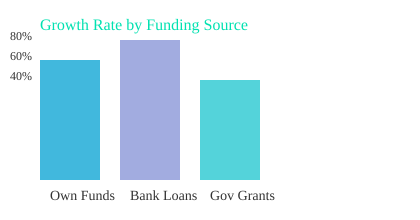
SME Sources of Financing and Outcomes
| Source of Financing | Usage Among SMEs (%) | Growth Success Rate (%) |
|---|---|---|
| Own Funds | 70 | 35 |
| Bank Loans | 30 | 60 |
| Government Grants | 15 | 50 |
Chart: Borrowing Percentage vs SME Growth Rate
Smart financial management for SMEs means knowing when to borrow, how much to borrow, and how to keep your business resilient—no matter what the market throws at you.
Section 4: The Chaos of No Systems — How Lack of Process Blocks Your Big Leap (Strategic Planning for SMEs)
Walk into any traditional Malaysian hardware store and you’ll see it: the owner is the only one who knows where everything is. Ask for a nail clipper, and if the boss isn’t around, good luck finding it. I once spent half an hour wandering aisles because the one person who “knew” was out for lunch. This is not just a quirky story—it’s a warning sign. Many SMEs operate as one-person shows, with all the knowledge and processes locked inside someone’s head. As one business owner put it:
"There's no system. There is no way of putting the thing properly there, so it's very, very complicated."
Why Lack of Systems Blocks Growth
Without documented systems, your business can’t grow beyond what you alone can manage. Strategic planning for SMEs demands more than just hard work; it requires repeatable processes, clear data, and the ability to delegate. When everything depends on a single person, scaling up is like juggling flaming torches while blindfolded—dangerous, unsustainable, and bound to end in chaos.
- No SOPs: Staff don’t know what to do unless you tell them.
- No productivity tracking: You can’t measure or improve what you don’t track.
- No data: Decisions are made on gut feeling, not facts.
- No SME digital tools: Inventory, sales, and orders are managed with pen and paper—or worse, not at all.
Case Example: The Hardware Store Dilemma
Visit a legacy hardware store and you’ll see the problem firsthand. There’s no automated ordering, no searchable inventory, and no way for new staff to learn the ropes quickly. If the owner steps away, the business grinds to a halt. This lack of systemization is the norm for many Malaysian SMEs, and it’s the single biggest barrier to expansion.
How to Transition from Chaos to Systemized Operations
So, how do you break free from this trap? Here’s a practical approach:
- Start documenting: Write down your daily processes, from opening the shop to handling sales.
- Implement SOPs: Standard Operating Procedures make it possible for anyone to step in and keep things running.
- Adopt SME digital tools: Use simple inventory or sales tracking apps to create searchable, shareable data.
- Train your team: Don’t just tell—let them learn by doing. Hands-on labs and real-world experience, followed by reflection, lead to better retention than classroom theory alone.
Hands-On Learning: The Lab Approach
Effective SME training programmes use a “learning by doing” model. For example, in business labs, new team members work alongside experienced staff, facing real challenges. Afterward, they reflect on what worked and what didn’t. This method builds true operational efficiency and innovation—key ingredients for SME growth.
| Elements of Effective SME Systems | Common Pitfalls |
|---|---|
| Documented SOPs | Everything in the owner’s head |
| Digital inventory & ordering tools | Manual, paper-based tracking |
| Regular team training & reflection | No structured onboarding or upskilling |
| Productivity and data tracking | No measurement, no improvement |
Systems aren’t glamorous, but they’re the invisible engine that makes scale possible. By embracing strategic planning for SMEs, investing in SME digital tools, and prioritizing hands-on SME training programmes, you’ll unlock operational efficiency and create a business that can grow beyond the kopi tiam—no matter who’s running the show.
Section 5: Digital Dreams and Automation Nightmares: The Tech Leap Malaysian SMEs Need (Digital Transformation SMEs)
Digital transformation for SMEs is no longer a distant dream—it’s a necessity. In 2025, over 40% of Malaysian SMEs are already investing in digital tools to boost productivity and customer engagement. But for every SME that’s thriving with automation, many others are still stuck in old habits, with operations tied to a few key people and no real systems in place. If you want your business to grow beyond the kopi tiam model, you need to make the tech leap—wisely.
Why Digital Transformation Matters for SMEs
Imagine walking into a traditional hardware store. Only the owner knows where everything is. There’s no inventory system, no standard operating procedures (SOPs), and no productivity tracking. If the owner is away, chaos takes over. Now, picture a modern SME with digital inventory, automated ordering, and clear SOPs—anyone can step in and keep things running smoothly. That’s the power of SME automation and digital transformation.
Government Support: Budget 2025 Digital Incentives
The Malaysian government is making it easier for SMEs to digitalise. Budget 2025 includes:
- RM50 million in Digital Matching Grants
- RM100 million for National Information Dissemination Centres
- Up to RM20 billion in guaranteed ICT financing
As stated in the latest announcement:
“SMEs are encouraged to embrace digitalisation, with accelerated capital allowances for ICT equipment and software, and up to RM20 billion in guaranteed financing available.”
| Incentive | Purpose | Uptake (2025) |
|---|---|---|
| Digital Matching Grants | Support SME digital adoption | RM50 million allocated |
| Information Centres | Disseminate digital best practices | RM100 million allocated |
| ICT Financing | Fund automation, green, and digital projects | Up to RM20 billion guaranteed |
Digital Adoption Rates: Where Do You Stand?
Here’s a quick look at the digital adoption landscape for Malaysian SMEs in 2025:
| Year | SMEs Investing in Digital Tools (%) |
|---|---|
| 2023 | 32% |
| 2024 | 38% |
| 2025 | 40%+ |
Automation Nightmares: When Tech Goes Wrong
Digitalisation isn’t always smooth sailing. If you automate without proper systems or training, you risk chaos. For example, if you install a new POS system but don’t train your staff, operations can grind to a halt. Automation must be paired with clear SOPs, data management, and ongoing learning. Throwing your team into the deep end—letting them learn by doing and reflecting after—often works better than just classroom theory.
Wild Card: Would a Robot Make Better Kopi?
Technology can do a lot, but some things—like the personal touch of a kopi tiam owner—are hard to automate. The lesson? Use digital tools to support your people, not replace what makes your business unique.
Whether you’re eyeing SME government grants or planning your next big tech upgrade, remember: digital transformation is about building systems, empowering your team, and making growth inevitable.
Section 6: The Intentional Small — When Staying Local is a Strategy, Not a Failure (SME Business Diversification)
Not every business owner dreams of running a nationwide chain or exporting to five continents. In fact, for many Malaysian SMEs, staying intentionally small is a strategic decision, not a sign of failure. In the world of SME business diversification, knowing whether you’re choosing to remain local or simply feeling stuck is crucial for your happiness and your business’s future.
Intention vs. Stagnation: Why the Difference Matters
Let’s be clear: there’s a big difference between choosing to stay small and being unable to grow. As one SME owner put it,
“There’s the intention to stay small, but then there’s, like you use the word ‘stuck’ earlier. In order for you to be stuck, assumes that you have intentions to grow.”
When you’re stuck, it often means you want to expand but feel blocked by fear, risk, or lack of resources. But if you’re staying small on purpose—maybe to keep your work-life balance, maintain quality, or simply because you love your current lifestyle—that’s a valid and even admirable choice.
Personal Anecdote: Family Over Franchising
Take my neighbor’s bakery as an example. Every day, they close shop early so the family can play badminton together. They’ve turned down offers to franchise or expand, choosing instead to prioritize family time over business growth. For them, success isn’t measured by the number of outlets, but by the quality of life their business supports. This is a classic case of intentional smallness—a lifestyle business that’s thriving on its own terms.
Export-Readiness and SME Internationalization: Not the Only Path
Of course, many SMEs are now looking at SME export participation and SME internationalization as ways to diversify and build resilience. According to the latest MSME Business Outlook, export readiness is a top trend for 2025, and more local businesses are being encouraged to join global value chains. These strategies can be powerful, but they’re not the only definition of success. If your business is happy and profitable serving your local community, that’s a win too.
Table: Intentional Small vs. ‘Stuck’ SMEs
| Aspect | Intentional Small Business | ‘Stuck’ SME |
|---|---|---|
| Growth Desire | Prefers to stay local and small | Wants to grow but faces barriers |
| Work-Life Balance | Prioritizes lifestyle and family | Often stressed by limitations |
| SME Export Participation | May not pursue export markets | Wants to export but lacks readiness |
| SME Business Diversification | Focuses on core local offerings | Wants to diversify but feels risk-averse |
| Success Definition | Personal satisfaction, community impact | External growth, financial targets |
Self-Awareness: The Key to SME Happiness
Whether you’re eyeing SME export readiness or content with your neighborhood shop, the most important thing is to be honest about your intentions. Are you small by choice, or are you letting fear and risk aversion hold you back? Both paths can be valid, but only one is truly yours.
Lifetime local businesses often provide deep value and satisfaction—not just for owners, but for their communities. In the end, intentional smallness is a strategy worth celebrating, especially when it’s chosen, not forced.
Section 7: FAQ — Breaking Free from SME Purgatory (Common Questions Answered)
What really keeps Malaysian SMEs small?
The main reason most SMEs in Malaysia stay small is that the founder is too involved in daily operations. If your business cannot run without you, you have not built a business—you’ve just created a job for yourself. This is one of the biggest SME growth challenges Malaysia faces. Many founders never transition from being the main operator to building systems and teams that can run things without them. Without this shift, there’s no time for strategy, innovation, or expansion.
How can I tell if I’m intentionally small, or just stuck?
Ask yourself: Do I want to grow, but nothing seems to change year after year? If you’re content with your current size and lifestyle, that’s intentional. But if you have dreams of expansion and keep hitting the same walls—too busy, no time, no systems—you’re likely stuck. Being small isn’t the problem; being stuck is. Less than 2% of Malaysian SMEs ever graduate to become large businesses.
Where do I get support or funding to break out of stagnation?
Funding is a common pain point. Many SME owners fear borrowing money, and banks can be strict. However, Malaysia offers a range of SME government policies and support:
- SME Corp Malaysia – Central hub for grants, loans, and advisory services.
- MDEC – Digitalisation grants and tech adoption support.
- MATRADE – Export assistance and market access programmes.
Explore SME training programmes like those from HRD Corp or local universities. These can help you build new skills and networks to drive growth.
Are government grants worth the paperwork?
Yes, but be prepared. The paperwork can be tedious, but grants can provide a crucial boost for upgrading equipment, digitalising, or expanding. Make sure you read the eligibility criteria carefully and prepare your documents in advance. Many SMEs miss out simply because they don’t apply or give up halfway. If you need help, SME Corp and MDEC offer advisory services to guide you through the process.
How do I avoid over-leveraging but not stall my growth?
Borrowing is necessary for faster growth, but over-leveraging can kill your business. Here’s a simple approach:
- Calculate your cash flow and ensure you can service any new debt comfortably.
- Use a mix of your own equity and loans—don’t rely on just one.
- Expand step by step, not all at once.
“If you over-leverage, just servicing the loan can kill your business.” Always check your profit & loss and cash flow statements before taking on new commitments.
What’s the first system I should implement if I want to scale?
Start with a simple inventory or operations system. For example, if you run a hardware store, create a clear way to track stock and sales so anyone—not just you—can find items and reorder supplies. Standard Operating Procedures (SOPs) and basic digital tools (like POS systems or inventory apps) are a good start. This frees up your time and makes it possible for others to run the business, which is essential for scaling.
For more on building systems, check out SME Corp’s Toolkit and local SME training programmes.
Conclusion: Don’t Be the Kopi Tiam That Forgot to Grow Up (Putting It All Together)
If you run a small business in Malaysia, you know the comfort of being the heart and soul of your operation. Maybe you’re the first to unlock the doors, the last to leave, and the one everyone calls when something goes wrong. But here’s the hard truth: if your SME only works because you’re there every day, you haven’t built a business—you’ve just created a job for yourself. As one wise business leader put it,
"You got to figure out how to make your business not just about you if you want to scale."
This is the core of SME growth challenges in Malaysia. Too many promising enterprises get stuck in the daily grind, never moving beyond the charming kopi tiam stage. There’s nothing wrong with being a beloved neighborhood shop—if that’s your deliberate choice. But if you’re feeling stuck, overwhelmed, or worried about what happens when you’re not around, it’s time to rethink your approach to scaling small medium enterprises.
Let’s be clear: your business isn’t doomed to stay small unless you choose to let it. Stagnation isn’t destiny—it’s a decision. The difference between a business that grows and one that stays stuck is often mindset, smart systems, and the willingness to seek the right support. Strategic planning for SMEs isn’t just about spreadsheets and forecasts; it’s about building a company that can thrive without you hovering over every detail.
So, what does it take to move beyond the kopi tiam mindset? First, you need to get out of the daily grind. That means learning to delegate, trusting your team, and building processes that don’t depend on your constant supervision. Next, leverage funding and resources available to Malaysian SMEs. Don’t be afraid to seek out grants, loans, or partnerships that can help you grow—just make sure you have a plan for using them wisely.
Building systems that outlast you is the real secret to sustainable growth. Document your processes, train your team, and invest in technology (but do it with care—don’t chase every shiny new tool). The goal is to create a business that runs smoothly whether you’re in the office or on holiday. That’s how you make growth inevitable, not accidental.
Remember, being intentionally small is a valid choice. Some businesses thrive by staying lean and local. But don’t let “stuck” become your headline. Stagnation is dangerous because it leaves you vulnerable to competition, burnout, and missed opportunities. The real risk isn’t in trying to grow—it’s in refusing to change.
Here’s my challenge to you: take one bold step this month to make yourself obsolete in your SME for a day. Whether it’s delegating a key task, automating a process, or simply taking a day off, see what happens. You might be surprised at how much your business can handle without you—and how much more you can achieve when you focus on growth instead of survival.
In the end, SME stagnation is fixable. With the right mindset, smart systems, and a willingness to embrace change, you can move beyond the kopi tiam and make growth inevitable. Choose your business size on purpose—grow or stay small, but do it deliberately. Don’t be the kopi tiam that forgot to grow up.
TL;DR: Short on time? Here’s the core: Most SMEs in Malaysia stay small not by accident, but by falling into easy traps — founder-dependent operations, fear of borrowing, and lack of scalable systems. Don’t settle for just running a job; start thinking bigger, systemize, embrace smart risk, and you’ll finally give your SME the chance to break out. Read on for real talk, data, and some advice you can actually use.
Post a Comment