

Picture this: You’re 22, clutching your degree, convinced you’re supposed to have it all figured out. I remember that sinking sensation—lost between what society glorifies about your 20s and the reality that most advice is, frankly, terrible. This isn’t another listicle of empty mantras. Instead, let’s unravel the five biggest mistakes you might unknowingly be making—and how a few wild, uncomfortable choices can transform everything. Sprinkle in some embarrassing truths from my own (messy) journey, a story or two about major career pivots, and you’ve got a guide for more than just surviving your twenties.
Shortcut to Success: Why Mentors Are Your Unfair Advantage
Most people unknowingly sabotage their own career advancement by neglecting one of the most powerful tools available: career mentorship. It’s easy to believe you have to figure everything out on your own, but that mindset can cost you years of progress and missed opportunities. I know this firsthand. After graduating from MIT with a master’s in math, I had no mentors, no guidance, and no clear direction. I simply took the first job that came my way, earning just over $30,000 a year—when my skills could have earned me eight to ten times more in the right industry. My career trajectory was flat until I found the right mentorship programs and CEO coaches who helped me see what was truly possible.
Here’s the hard truth: Only 37% of employees report having a mentor. Yet, those who do are five times more likely to get promoted than those who don’t. That’s a 500% advantage in professional growth—and a massive disadvantage if you go it alone.
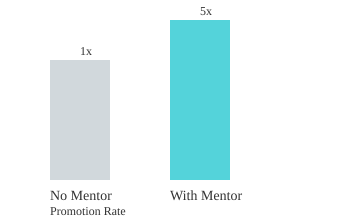
Why does mentoring benefit you so much? Because mentors aren’t fairy godmothers—they’re more like skilled guides who hold up a mirror and help you see both who you are and who you can become. They collapse years of painful trial and error into actionable next steps. As one mentor told me,
“Mentors are like time machines, collapsing years of painful trial and error into a direct path forward.”
This isn’t just my story. Icons like Steve Jobs, Jeff Bezos, and the Google founders all credit their breakthroughs to mentorship. Their mentor, Bill Campbell—known as the “Trillion Dollar Coach”—helped shape the world’s most valuable tech companies. Oprah Winfrey, too, had Maya Angelou as her mentor. Maya’s simple words, “Baby, you are enough,” reshaped Oprah’s worldview and fueled her confidence. These relationships are not just about advice—they’re about transformation, resilience, and clarity.
Research shows that mentorship programs don’t just accelerate career growth—they expand your network, provide real-world industry access, and offer tailored feedback that boosts both confidence and resilience. Mentees gain lifelong learning skills and develop faster than their peers. The benefits are clear, but the first step is often the hardest: finding a mentor.
How to Find a Mentor for Professional Growth
- Look everywhere: alumni networks, community groups, religious organizations, job fairs, or even your extended family.
- Don’t overlook people just a few steps ahead of you—sometimes the best mentors and mentees relationships start this way.
- Ask direct questions: “If you were me right now, what would you do differently?” This single question can save you years of wasted effort.
Don’t wait as long as I did. Mentoring programs are a proven amplifier for your career and personal growth. Start seeking out those who can help you rewrite your story—your shortcut to success is closer than you think.
The Passion Trap: Why "Follow Your Heart" Isn’t Enough (But Grit Is)
If you’ve ever been told to “just follow your passion,” you’re not alone. Celebrities, billionaires, and motivational speakers love to repeat this advice. But here’s the hard truth: chasing passion alone is a road to burnout, insecurity, and unpaid bills. I learned this firsthand as a trained musician in my 20s. Music was my passion—I practiced for hours, traveled the world, and performed concerts. But the more I tried to turn my passion into a paycheck, the less I loved it. What once brought me joy became a source of stress and self-doubt. I had panic attacks wondering if I was good enough, if someone else was better, or if I’d ever make a living. I spent years forcing my passion into every gig, side hustle, and even my first startup. Each time, it failed me.
Here’s the reality: more than 80% of artists, actors, and musicians earn less than $22,000 a year (2018 study). Passion doesn’t guarantee a living. This isn’t just about the arts. Across all fields, those who treat passion as their main career goal are more likely to quit when things get tough. Psychologist Paul O’Keefe’s 2018 research found that people who chase passion alone give up faster when faced with obstacles. On the other hand, people who focus on skill development first tend to stick with their careers longer and thrive. This is a crucial insight for anyone seeking Career Clarity and Professional Growth.
Skill Mastery: The Real Foundation for Career Success
Building skills is the real secret to a fulfilling and sustainable career. As Cal Newport explains in his book, So Good They Can’t Ignore You, passion often follows skill—not the other way around. Most icons didn’t start with a clear passion. Take Steve Jobs, for example. In his 20s, he dropped out of college, quit jobs, and wandered through India searching for meaning. His so-called passion only became clear much later, after years of building skills and succeeding in sales, Apple, and Pixar. Steve Jobs in his 20s did not follow the advice of Steve Jobs in his 40s.
Research backs this up: Skill development leads to longer retention and higher career satisfaction. When you invest in becoming great at something, you build confidence, self-awareness, and a sense of purpose. This is where Career Mentoring for College Students and Mentorship Benefits come in. A good mentor doesn’t just tell you to follow your heart—they give honest feedback about your strengths and guide you toward areas where you can excel. This helps you avoid the dead-end road of chasing fleeting passions and instead focus on Personal Growth and real-world impact.
Effort Over Passion: The Mark Cuban Approach
Don’t follow your passion, follow your effort. — Mark Cuban
Effort and perseverance are better predictors of ultimate satisfaction and impact than passion alone. As Mark Cuban puts it, “Don’t follow your passion, follow your effort.” Your effort reveals what you care enough to work hard for, even when it’s difficult. Focus on building mad skills, and you’ll find that passion often grows from mastery and achievement—not the other way around.
Income Distribution: Artists vs. Other Careers
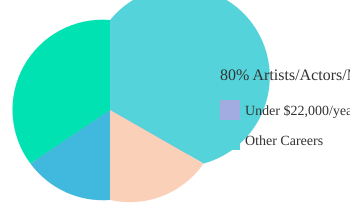
Data source: 2018 study. Over 80% of artists, actors, and musicians earn less than $22,000/year, compared to higher averages in skill-centric professions.
Time, Money, and the High Cost of Impatience (What School Never Told You)
When it comes to financial planning and career development, most of us are taught to work hard, save what’s left, and hope for the best. But there’s a crucial lesson school never taught: impatience is the most expensive habit you can have in your 20s. The real “impatience tax” isn’t just about money—it’s about lost time, missed opportunities, and the compounding effect that could have changed your life.
Early, Consistent Investing Beats Timing the Market
Here’s a hard truth: trying to outsmart the market is a losing game. In my 20s, I believed the stock market was just gambling, so I didn’t invest. When I finally did, I panicked during the 2008 crash and pulled everything out after a 30% drop. That single move cost me about 40% of my long-term net worth. The lesson? Even the smartest people can’t predict the market’s best days.
The stock market is designed to transfer money from the active to the patient. — Warren Buffett
Small Contributions, Big Results: The Ruthless Power of Compounding
Compounding is the secret weapon of personal growth and financial planning. If you invest just $100 every month starting at age 20, you could retire a millionaire. Wait until 30, and you’ll end up with less than half. That 10-year delay? It could cost you over $700,000. This is the time value of money in action—something no one explains in school, but it’s the foundation of lifelong learning about wealth.
| Start Age | Monthly Investment | Value at 65* |
|---|---|---|
| 20 | $100 | $1,000,000+ |
| 30 | $100 | <$500,000 |
*Assuming average market returns and consistent investing.
Panic Selling: The Hidden Cost of Fear
During market drops, fear can destroy decades of progress. In 2008, my portfolio dropped 30%. I panicked, sold everything, and missed the market’s recovery. According to JP Morgan, if you miss just the 10 best trading days in 20 years, your returns are cut in half. Miss the best 30 days, and you lose 90% of your upside. The market rewards patience, not panic.
Forgotten Accounts: Accidental Wealth
Ironically, some of my best investments were accounts I forgot existed. Fidelity found that the best-performing accounts are those people left untouched—by mistake. Compounding works best when you leave your investments alone. This is a powerful lesson for skill development and career path choices too: sometimes, letting things grow quietly beats constant tinkering.
Practical Advice: Spend What’s Left After Saving
- Invest early and consistently—don’t wait for “the right time.”
- Don’t try to time the market. Stay in, even when it’s scary.
- Let compounding do its job. The less you touch, the more you gain.
- Save first, then spend what’s left—not the other way around.
Impatience and fear are the biggest obstacles to building wealth and achieving personal growth. The sooner you start, the more time and money will work for you, not against you.
The Safety Trap: Why Playing It Safe May Be the Riskiest Move of All
When it comes to professional growth and career advancement in your 20s, the biggest danger isn’t making a mistake or taking a leap—it’s standing still. The world tells you to play it safe, but the hard truth is that comfort can be a trap. I learned this firsthand, and the lessons are backed by urban economics and the stories of some of today’s most successful leaders.
The Real Risk: Stagnation, Not Failure
After graduating, I stayed in Boston for 16 years. It was familiar, comfortable, and safe. But while I watched career mentorship and leadership skills blossom in tech hubs like Silicon Valley, I realized the real explosion of opportunity was happening elsewhere. I even moved to San Francisco for a year, but came back because my fiancée matched at Harvard Medical School. Looking back, I had many chances to move west, but I lacked the courage to make that big gamble. I still regret it.
Staying Too Long: The Cost of Comfort
The safety trap isn’t just about geography. I also spent 18 months under a toxic boss who undermined me at every turn. Instead of leaving, I stuck it out, hoping things would improve. All it did was drain my confidence and joy. That’s what risk avoidance does—it’s like carbon monoxide: you don’t notice it at first, but it slowly kills your ambition and self-belief.
If your boss, your city, your environment is draining you, move. You’re not a tree, you can move.
Geography and Environment: Why Location Matters for Career Clarity
Where you choose to live and work has a huge impact on your job satisfaction and career clarity. Urban economics research consistently shows that people who move to opportunity hubs—like San Francisco, New York, London, Mumbai, or Bangalore—see their lifetime earnings and career acceleration grow significantly faster than those who stay in smaller markets.
| Scenario | Outcome |
|---|---|
| 16 years in Boston post-grad | Comfortable but missed out on tech boom and rapid professional growth |
| 18 months under toxic boss | Confidence and joy drained, no advancement |
| Relocating to opportunity hubs (e.g., SF, NY, Mumbai) | Higher lifetime earnings and faster career advancement |
Bold Moves: The Path of Industry Leaders
Icons like Elon Musk and Satya Nadella didn’t get where they are by playing it safe. Imagine if Musk had never left South Africa, or if Nadella had stayed in a random IT services firm in India. Their willingness to take risks and embrace change is what set them apart—and even after achieving success, they keep taking risks. That’s why they and their companies continue to grow.
Stability Isn’t Always Safety
Don’t confuse stability with safety. Ask yourself: Am I growing here, or just standing still? If you’re just coasting, it’s time to take a risk. Go where the opportunities are—especially in your 20s, when you have more freedom and less to lose. Growth requires courage, whether it’s switching jobs, cities, or bosses. The data and the stories all point to one truth: strategic risk-taking leads to exponential career and financial growth.
The Invisible Cage: Breaking Free from Labels and Self-Doubt
When you think about what holds you back in your 20s, you might point to your job, your city, or your bank account. But the real barriers are often invisible. They’re the beliefs and labels you carry inside your mind—many of which you didn’t choose for yourself. This “invisible cage” is built from the words, judgments, and expectations of others, and it can quietly shape your confidence and motivation for years.
Inherited Labels: The Silent Saboteurs of Personal Growth
Most of us don’t realize how much of our identity is formed by labels handed to us by family, teachers, or society. I know this firsthand. In my 20s, I believed I was untalented, shy, and unattractive. Looking back, I see now that these weren’t even my own thoughts—they were echoes of my father’s words. I built my self-image out of someone else’s opinions, and it became an emotional prison that limited my personal growth and self-awareness.
Even after achieving external success—earning degrees, landing impressive job titles, or joining prestigious organizations—those old labels can linger. Decades later, I still find myself peeling away the impact of those early judgments. The truth is, no matter how many new labels you collect (CEO, investor, musician), the question remains: Do you feel worthy without them?
Self-Doubt and Imposter Syndrome: You’re Not Alone
If you’re struggling with self-doubt, you’re in good company. According to the American Psychological Association, 70% of 18- to 29-year-olds frequently doubt themselves and their future. The Journal of Behavioral Science reports that 82% of people experience imposter syndrome at some point in their careers. That means most young adults, even those who seem confident, are wrestling with the same invisible cage.
Baby, you are enough. — Maya Angelou to Oprah
Question the Labels: Are They Really Yours?
The first step toward breaking free is to ask yourself: Are the labels in your head really yours, or did someone else hand them to you? This is where self-awareness and emotional intelligence come in. When you start to identify and challenge these old narratives, you open the door to genuine confidence and motivation.
- Journaling: Write down the labels you believe about yourself. Where did they come from?
- Therapy or Mentoring: Talking with a mentor or therapist can help you see your blind spots and affirm your authentic self-worth. The benefits of mentoring—especially career mentoring for college students—include guidance, support, and a safe space to question limiting beliefs.
- Vulnerability: Share your struggles with trusted friends or mentors. Vulnerability breaks the cycle of shame and isolation.
Self-Compassion: The True Foundation of Confidence and Motivation
External achievements—degrees, job titles, bank balances—can’t fill the gap left by self-doubt. Only self-compassion and self-love can do that. Growth begins when you accept yourself as you are, not as you think you should be someday. Shed the old skin, even if it takes time. Remember, “Baby, you are enough.”
By questioning inherited labels and practicing self-compassion, you lay the groundwork for lasting personal growth, emotional intelligence, and authentic confidence—qualities that will serve you in every area of life and career.
Wild Cards: Stories, What-Ifs, and Things I Wish Someone Told Me
Reflection: Mapping Your Alternate Timeline
Have you ever wondered how different your life might look if you’d taken a shortcut—or a detour—earlier in your career or personal journey? Reflection is one of the most underrated tools for self-discovery and personal and professional success. Try this: sketch out a timeline of your 20s, then draw an alternate path for every “what if” moment. Did you stay in your comfort zone, or did you leap into the unknown? Sometimes, the smallest, most unexpected choices—like accepting a job in a new city or reaching out to a mentor—can have exponential impact. Reflection breaks the autopilot mode and helps you see the ripple effects of your career life choices.
Weird but True: The Forgotten Investment Phenomenon
Here’s a counterintuitive truth: some of the best-performing investment accounts are the ones their owners forgot even existed. A Fidelity study found that accounts left untouched for years actually outperformed those that were actively managed. Why? Because fear and impatience kill wealth, but patience lets compounding do its quiet magic. I once left a small 401k from an early job alone, and years later, it had grown far more than my “actively managed” accounts. The lesson? Sometimes, not fiddling with your plans is the smartest move. Let time and patience be your silent partners in personal and professional success.
Mentorship Impact: The Ripple Effect of Connection
Imagine if Oprah never met Maya Angelou. Would the world be missing one of its greatest mentors? The mentorship impact is real—one conversation, one connection, can change the entire course of your life. Who are your “Maya Angelous”? Have you sought them out, or let fear keep you from reaching out? Sometimes, the wild card in your story is the person you haven’t met yet. Don’t underestimate the power of a mentor to help you rewrite your story.
Labels: Who Do You Think You Are?
What if you journaled every label you carry—how many are actually yours? In your 20s, it’s easy to let others define you: “not talented,” “too quiet,” “not leadership material.” But are those labels facts, or just opinions you’ve absorbed? Take time for reflection: list out your labels, then ask, “Whose voice is this?” Shedding labels that don’t serve you is a key step in self-discovery. As one quote reminds us:
Even if it takes time, and don't be ashamed of who you are while you're in the process, right?
The Risks You Don’t Take: Regret’s Silent Partner
Here’s a hard truth: the risks you regret most aren’t the failures—they’re the chances you never took. Staying in a “safe” job or city can feel like security, but often, it’s the riskiest move of all. Urban economics research shows that people who move to opportunity hubs see their lifetime earnings grow faster than those who stay put. Ask yourself: are you growing here, or just standing still? If you’re not moving forward, maybe it’s time to take a risk. Remember, you’re not a tree—you can move.
- Try journaling your “what ifs” and alternate timelines.
- List the labels you carry and challenge their origins.
- Visualize the ripple effects of untaken risks and unsought mentorship.
Reflection, patience, and courage are the wild cards that can transform your 20s. Don’t let outdated advice or invisible cages hold you back from personal and professional success.
Piecing It All Together: Real Growth is Messy, Meaningful, and Yours Alone
Your 20s are not a straight line. Despite what outdated advice might say, there is no perfect formula for finding your career path or unlocking personal growth. The truth is, life at this stage is unpredictable and often uncomfortable. The sooner you accept yourself as you are, the freer you’ll be to live a life that feels truly yours.
There Are No Shortcuts—But There Are Unfair Advantages
It’s tempting to look for a single hack or a checklist that guarantees success. But real, sustainable growth is always part skill and part self-acceptance. Some advice, however, does give you a head start. Investing in career mentorship, seeking out new skills, and making time for honest reflection are not just buzzwords—they’re the building blocks of a life that feels both meaningful and uniquely yours.
- Career Mentorship: The benefits of mentoring go beyond networking. A good mentor helps you see your blind spots, challenges your assumptions, and supports you through setbacks. They won’t hand you a map, but they’ll help you read your own compass.
- Skill Investment: Learning new skills—whether technical, creative, or interpersonal—opens doors you didn’t know existed. The job market changes fast, but curiosity and adaptability never go out of style.
- Reflection: Taking time to pause, journal, or talk things out with someone you trust helps you notice patterns, values, and dreams that might otherwise get lost in the noise.
Embrace the Mess: Mistakes Are Part of the Process
You will make mistakes. Some will be small and forgettable; others will sting. That’s not a sign you’re failing—it’s proof you’re trying. Let curiosity and self-compassion guide you, not shame or rigid plans. The best lessons rarely come from books or viral advice threads. They’re found in bold decisions, new mentors, and the awkwardness of first attempts.
The sooner you accept yourself as you are, the freer you’ll be to live a life that feels truly yours.
You’re Enough—Right Now
As Maya Angelou said, baby, you’re enough. Before any label, degree, or paycheck, you are already worthy. If you’re 22 and feeling lost, doubting your choices, or comparing yourself to others, remember: you’re not behind. You’re exactly where you need to be to begin. Success is personal—a blend of external growth and internal acceptance. Your journey will never look exactly like someone else’s, and that’s the point.
Rewrite Your Story, One Step at a Time
Question the rules. Take risks. Seek out mentoring benefits and invest in your own growth. But most importantly, give yourself permission to be a work in progress. The messy parts—the detours, the failures, the doubts—are not distractions from your story. They are your story.
- Embrace uncertainty as a sign you’re growing.
- Let reflection guide your next move, not fear.
- Trust that your path is unfolding at the right pace for you.
Your 20s are not about getting everything right. They’re about learning to trust yourself, to accept your flaws, and to build a life that feels like your own—messy, meaningful, and entirely yours.
FAQ: Untangling Twenties—Your Questions, Answered
Should I pick a mentor who’s wildly successful or someone just a few steps ahead?
When it comes to Career Mentorship, both types of mentors can make a huge difference. A wildly successful mentor can offer big-picture wisdom, but someone just a few steps ahead often provides more practical, actionable advice. Proximity often beats prestige—someone who remembers what it’s like to be where you are can help you avoid common mistakes and see shortcuts you might miss. The most important thing is to ask, “If you were me right now, what would you do differently?” That single question can save you years of trial and error. Remember, clarity comes from movement, not waiting for the perfect mentor. Let curiosity and community guide your search for Mentoring Benefits.
How do I know if it’s time to leave my city or job, even if it’s ‘safe’?
Major decisions about your Career Path or location aren’t just about logic—they require a gut-check. If you feel stuck, drained, or like you’re standing still, that’s a sign. Safety can become a trap, slowly killing your growth. Research shows people who move to opportunity hubs see their earnings and personal growth accelerate. Ask yourself, “Am I growing here, or just surviving?” If it’s the latter, it might be time to take the risk. You’re not a tree—you can move.
What if I can’t find my passion or I have too many interests?
This is one of the most common worries in your 20s. The truth is, most people don’t “find” their passion first—they build it through Skill Development and effort. Passion often emerges after you become good at something. Don’t wait for clarity to act. Try things, follow your curiosity, and let your interests evolve. As you build skills, you’ll discover what energizes you. Remember, clarity comes from movement, not waiting for the perfect answer.
Isn’t it too risky to invest early in my 20s?
Actually, investing early is one of the least risky moves you can make. Time is your biggest advantage. The earlier you start, the more you benefit from compounding. Even small, consistent investments can grow into something big. The real risk is waiting too long or trying to time the market. As Warren Buffett said, “The stock market is designed to transfer money from the active to the patient.” Early investing spreads risk and leverages time—don’t let fear or impatience cost you your future wealth.
How can I tell if self-doubt is ‘normal’ or something I should get help with?
Self-doubt is incredibly common—over 70% of young adults feel it, and 82% experience imposter syndrome. It’s normal to question yourself, especially in your 20s. But if your self-doubt paralyzes you, keeps you from taking action, or makes you feel hopeless, it’s time to reach out for support. You don’t have to do this alone. Personal growth is about learning to challenge those labels and stories you’ve inherited, and sometimes, help is the shortcut you need.
Do I need a ‘plan’ for my 20s—or just a willingness to try, fail, and try again?
Having a plan is helpful, but it should be flexible. Your 20s are about experimenting, learning, and pivoting as you go. The willingness to try, fail, and try again is more valuable than a rigid roadmap. Most successful people didn’t have it all figured out—they let curiosity and community guide them, and they adjusted as they learned more about themselves and the world.
What if my mentor leads me astray? Or what if I outgrow them?
No mentor is perfect. Sometimes you’ll outgrow them, or their advice won’t fit your unique path. That’s okay. Mentoring is a two-way street—take what serves you and keep moving forward. If you outgrow a mentor, thank them and seek new perspectives. Your journey is yours to write, and every guide along the way is just one chapter in your story.
Your 20s aren’t about perfection—they’re about progress. Keep moving, keep questioning, and keep rewriting your story. You’re enough, right now.
TL;DR: The fastest lane to fulfillment in your 20s isn’t paved with passion or playing it safe. Get mentors, chase skill mastery, embrace risk, invest early, and break free from inherited labels. The shortcuts are real, the pitfalls are common, and your path is yours to rewrite—warts, doubts, and all.
Post a Comment