

I used to be that person who replied to emails at midnight and swore multitasking was my superpower—until I realized I was just building a prison run by me, for me. (By the way, did you know that running a business without systems is the leading cause of founder burnout? Totally unverified, but it certainly felt true.) This post isn’t another basic listicle; we’ll explore unusual ways to buy back your time, systematize your processes, and avoid the sneaky traps that stall ambitious entrepreneurs. Expect tangents, tools you'll actually want to use, and some hard truths—like why taking out the garbage at 2am isn’t a badge of honor. Ready to crack the code on real business growth? Let’s get weird—and wildly strategic.
1. From Chaos-Builder to Empire-Builder: Diagnose Your Business DNA
The Two Tribes: Chaos-Builders vs. Empire-Builders—Who Are You, Really?
When it comes to business scaling strategies, every founder falls into one of two camps. On one side, you have the Chaos-Builder. This is the entrepreneur who wakes up every day reacting to fires, emails, and urgent tasks. The business runs them, not the other way around. On the other side is the Empire-Builder, the leader who has designed a business machine—one that grows and operates whether they’re in the office, on vacation, or even asleep. Understanding which group you belong to is the first step toward unlocking small business growth.
Common Symptoms of Chaos-Mode
- Answering support tickets at 10pm
- Late-night emails and endless Slack pings
- Personally handling every process, from sales to delivery
- Feeling like you can never step away without things falling apart
- Missing out on life outside your business
If you recognize these symptoms, you’re not alone. Many founders start here, believing that hustle is the only way forward. But this mindset is a trap that stunts growth and leads to burnout.
The Dangerous Myth of Endless Hustle
There’s a persistent myth in entrepreneurship: that working harder and doing more is the key to business growth strategies. In reality, this approach creates a bottleneck—you. The more you do, the less your business can scale. As one founder put it:
"Your business is capped at the speed of your delegation."
Effective delegation is the #1 limiting factor for business scaling. If you’re stuck in chaos-mode, your business will always hit a ceiling—one defined by your personal capacity, not your market’s potential.
Personal Anecdote: The Spreadsheet Breakdown
Let me share a quick story. There was a week early in my journey when I decided to answer every single customer support ticket myself. I thought I was being helpful. Instead, I spent hours buried in emails, missed key meetings, and ended up crying into a spreadsheet at 2am. The lesson? Doing everything yourself isn’t heroic—it’s unsustainable.
Recognizing Your Growth Ceiling
How do you know if your business is capping itself because of you? Look for these signs:
- Growth stalls whenever you take a break
- Team members constantly wait for your approval
- Every new client or project adds more chaos, not more freedom
Surprisingly, most founders hit their ceiling due to poor delegation, not market constraints. The speed of your team is the speed of your growth—if you’re the bottleneck, your business can’t scale.
Empire-Builders: Editors, Not Authors
Empire-builders understand that their value is in editing, not authoring. They design systems, empower teams, and step back so the business can run without them. Letting go is uncomfortable, but it’s the key transition point for scaling business tips that actually work. Your business needs to be a machine, not a manual labor project.
Chaos-Builder vs. Empire-Builder: A Quick Comparison
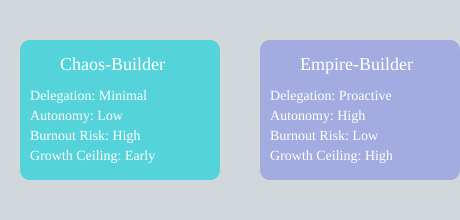
Diagnosing your business DNA is the first step to breaking free from chaos and embracing business scaling strategies that last. Are you ready to let go and build your empire?
2. Buy Back Your Time: The Rebel’s Guide to Delegation and Personal Value
Why Broke Founders Save Money but Lose Years
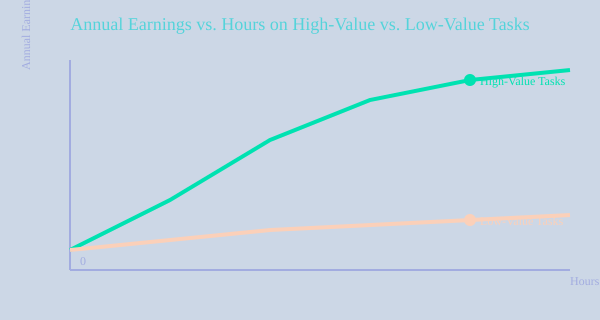
There’s a reason you’re stuck in the weeds: you’re doing $10 tasks and expecting $1,000,000 results. As the saying goes,
“Broke people spend time to save money; rich people spend money to save time.”If you’re still answering customer emails at midnight or approving every invoice, you’re not just working hard—you’re capping your business growth delegation potential. You can’t outwork the math: your business is limited by the speed and quality of your delegation.
Red-Light/Green-Light Audits: Track Your Week (Yes, Even TikTok)
Start with a radical audit. For two weeks, set a timer every 15 minutes and jot down exactly what you did. No cheating—if you scrolled TikTok, write it down. This “red-light/green-light” audit helps you see where your time and energy go. Highlight tasks you love (green) and those that drain you (red). You’ll quickly spot the low-value admin work that’s holding you back from real business scaling automation.
Invented Anecdote: The $100k Admin Trap
Consider Jamie, a founder who insisted on handling every $15/hour admin task to “save money.” At year’s end, Jamie realized those hours added up to over 1,300 hours—costing the business $100,000 in lost growth opportunities. The lesson? Every hour spent on low-value work is an hour stolen from high-impact strategy, sales, or innovation.
Calculating Your Buyback Rate—The Simple Math That Changes Everything
Don’t skip this step. Your Buyback Rate is the secret weapon for business growth outsourcing. Here’s the formula:
Buyback Rate = (Annual Income / Hours Worked) / 4
- Example: $100,000 annual income / 2,000 hours = $50/hr
- Buyback Rate: $50 / 4 = $12.50/hr
If you can pay someone less than your Buyback Rate to do a task, you’re unlocking time for higher-value work. This is the foundation of every effective business growth plan.
Where to Find Affordable, Trustworthy Help: It’s a Global Village
You don’t have to hire locally or full-time. Platforms like Upwork, OnlineJobs.ph, and Fiverr connect you to skilled global talent for $2–$10/hour. Delegate admin, research, scheduling, and other low-dollar, low-energy tasks. This is business growth outsourcing at its most accessible.
The Camcorder Method: Delegate Without Losing Your Mind
Worried about standards? Use the Camcorder Method: record yourself doing a task, then have your hire watch and document the process. This creates repeatable systems, reduces mistakes, and helps you avoid perfection paralysis. Teaching through action is the fastest way to scale.
Delegation Fears 101: Why “I’ll Just Do It Myself” Is Business-Growth Poison
Every founder faces the urge to “just do it myself.” But this mindset is business-growth poison. If you’re still doing everything after three years, you’re not building a business—you’re building a job. Remember: your business grows at the speed you let go.
3. Cracking the Buyback Loop: Audit, Transfer, and Phil (The Holy Trinity of Not Losing Your Sanity)
Scaling your business beyond chaos requires more than just hustle—it demands a repeatable system for freeing your time and multiplying your impact. Enter the Buyback Loop: Audit, Transfer, and Phil. This rhythm is the backbone of modern business growth outsourcing strategies and the secret to never getting calendar-stuck again.
Step 1: Audit—Log Your Time in Wild, Honest Detail
Start by tracking every single thing you do for a week. Yes, even Netflix counts. The goal is radical honesty. Write down each activity and how long it takes. This is your raw data for business growth delegation techniques.
- Audit everything: Emails, meetings, admin, creative work, even doom-scrolling.
- Price every task: Use the $1–$4$ system. Ask yourself: “If I could pay someone $1, $2, $3, or $4 an hour to do this, would I?” It’s not scientific, but it’s wildly practical for identifying what to delegate first.
Systematic delegation starts here. If you skip this, you risk falling back into old habits and never breaking free from low-value work.
Step 2: Transfer—The Camcorder Method & 108010 Rule
Once you know what to delegate, the next challenge is handing it off without losing your mind—or your standards. The Camcorder Method is your shortcut:
- Record yourself doing the task. Use screen recording and narrate your process. Save the video to the cloud.
- Hand the video to your assistant or team member. Have them watch and create a step-by-step document.
- Review the document. This feedback loop ensures they “get it” before you let go.
| Method | Description |
|---|---|
| Camcorder Method | Record screen and voice while executing tasks; use for assistant training |
| 108010 Rule | 10% ideation, 80% execution by delegate, 10% integration/feedback |
| Task Pricing | $1–$4 level for different types of delegation |
Now, apply the 108010 rule for creative or complex handoffs:
- 10% Ideation: Set the vision and outcome together.
- 80% Execution: Let your delegate own the process and create the draft.
- 10% Integration: Review and add your “magic fingerprint.”
This is how business growth leadership works at scale. Think of Steve Jobs and Johnny Ive at Apple: Jobs set the vision, Ive’s team executed, then Jobs returned for the final polish. This is the handoff that creates scalable, repeatable business efficiencies.
Step 3: Phil—Fill Your Time with High-ROI Activities
Here’s the wild card: Don’t just fill your new free time with busywork. The “Phil” phase is about replacing low-value tasks with high-ROI activities, learning, or even rest. If you’re a programmer, write more code. If you’re a founder, focus on sales, strategy, or personal development. This is the heart of business scaling strategies.
- Invest in habits, beliefs, and character traits that support your next level.
- Ask: “What would a $1M, $5M, or $50M leader do with this time?”
- Guard your calendar fiercely—don’t slide back into time-wasters.
You can only scale past your ability to let go. It's scary. It's going to give you anxiety.
But with the Buyback Loop, you create a framework for continual delegation and growth—without losing your sanity.
4. Filling the Vacuum: Don’t Let Free Time Become a Trap (Or: How Not to Binge-Watch Your Profits Away)
So, you’ve finally bought back your time by outsourcing admin work and automating low-value tasks. Now what? The biggest mistake business owners make is letting this newfound freedom slip through their fingers. It’s easy to fall into the trap of mindless scrolling, chatting, or binge-watching, but that’s not how you scale. The next phase of business growth personal development is about reinvesting your hours for exponential returns.
From Free Time to High-Value Activities
Imagine a solopreneur who, after delegating bookkeeping, suddenly has five extra hours a week. Instead of doubling down on sales or product development, they spend it making funny TikToks. Sure, it’s fun, but it doesn’t move the needle. This is a classic example of filling the vacuum with low-impact tasks instead of business growth high-value activities.
Three Questions to Guide Your Next Level
To avoid this trap, ask yourself:
- What habits do I need to change or adopt? Every stage of business growth requires new routines. Maybe it’s blocking time for deep work or daily learning. Remember: “Every new level is going to require you to fight a new devil.”
- What beliefs are holding me back? If you believe you’re not a ‘sales person’ or that scaling means losing control, those mindsets can stall your progress. Business growth mindset is about challenging these assumptions and adopting new perspectives.
- What character traits must I develop? As you scale, leadership frameworks become crucial. Are you decisive, resilient, and focused? Start acting like the leader your next-level business needs—today.
Personal Development: Your Secret Growth Lever
Investing in yourself isn’t just a feel-good activity—it’s a proven driver of business growth. Whether it’s attending seminars, hiring a coach, or even taking a strategic nap to recharge, these actions directly impact your ability to lead and innovate. Research consistently shows that founders who prioritize personal development and leadership training see faster, more sustainable growth.
| Investment | Impact on Business Growth |
|---|---|
| Personal Coaching | Up to 70% higher revenue growth (Source: ICF Global Coaching Study) |
| Leadership Development Programs | 2.4x more likely to be high-performing organizations (Source: CCL) |
| Ongoing Skills Training | Increases productivity by 37% (Source: ATD Research) |
Guard Your Time Like a CEO
As your business scales, your “hourly rate” mentality must evolve. Fill your calendar with activities that either make money or make you better. High-impact actions—like coding, sales calls, or market research—should dominate your schedule. If you’re not sure what to do next, ask: “Is this the highest-value use of my time right now?”
- Replace low-value tasks with high-impact work.
- Block time for learning and reflection.
- Say no to distractions that don’t serve your growth.
Remember, an empty calendar isn’t a badge of honor. True business growth leadership frameworks demand you reinvest your time into learning, high-value work, and personal evolution. That’s how you keep scaling—without letting free time become your biggest trap.
5. Simplicity > Confusion: Refining Strategy and Offer (The 'One Sharp Axe' Principle)
When it comes to building a true business growth engine, there’s one rule you can’t ignore: Simple scales. Complex fails. If your business growth plan is built on saying yes to every opportunity, you’re not scaling—you’re setting yourself up for chaos. Let’s break down why simplicity is the backbone of any sustainable business scaling infrastructure, and how the ‘One Sharp Axe’ principle can transform your small business growth.
You Can’t Scale Confusion
In the early days, it’s natural to say yes to everything. Every new client, every custom request, every shiny opportunity feels like a lifeline. But as you grow, this habit becomes the very thing that breaks you. Suddenly, you’re juggling too many offers, every client deal is bespoke, and there’s no repeatable process. The result? Your revenue might look impressive on paper, but your margins are razor-thin, your team is exhausted, and profit is nowhere to be found.
Simple scales. Complex fails.
The ‘One Sharp Axe’ Metaphor
Imagine you’re trying to cut down a tree. If you swing your axe randomly—here, there, everywhere—the tree will be scarred, but it won’t fall. But if you focus your energy, hitting the same spot with precision, the tree comes down fast. That’s the ‘One Sharp Axe’ principle: focus beats frenzy.
Real-World Example: The Agency That Doubled Revenue by Focusing
Consider the story of a boutique agency with $3M/year in revenue. They did everything: SEO, PPC, branding, PR, even podcasts. But the founder was drowning, and the team was frustrated. When they ran an offer audit, the truth was clear: 80% of their profit came from just one service—paid ads for SaaS companies. They cut everything else. In just 18 months, their revenue doubled to $6M, with fewer clients and much higher margins. This is the power of a focused, repeatable offer as your business growth engine.
Offer Audit: Find and Sharpen Your Axe
To build a sustainable business scaling infrastructure, you need to know exactly what your ‘sharp axe’ is. Here’s how to run a quick offer audit:
- List all your current offers and services.
- Identify which ones generate the most profit, not just revenue.
- Ask yourself: Which offer do you enjoy delivering? Which one does the market want most?
- Double down on the single offer that ticks all these boxes.
This is how you create a business growth plan that’s both profitable and repeatable.
Repeatability: The Secret to Small Business Growth
Repeatability is the antidote to margin-killing complexity. When your offer is clear and consistent, you can build processes, train your team, and deliver at scale. Every new client isn’t a new adventure—it’s a step on a proven path. That’s when your business becomes a true growth engine.
Early-Stage Yeses vs. Scale-Stage No’s
In the beginning, saying yes opens doors. But at scale, saying no is your superpower. Focus is the ultimate growth multiplier. The more you refine and repeat your winning offer, the faster and more profitably you’ll grow.
6. Table: Delegation Matrix—Task Value and Energy Consumption
When scaling your business, chaos often comes from trying to do everything yourself. To build a true business scaling infrastructure, you need a clear, data-driven way to decide what to delegate, outsource, or keep on your plate. The Delegation Matrix is your shortcut to smarter business growth delegation. By mapping each task by both its value (cost to outsource) and energy consumption (how much it drains or energizes you), you can quickly spot the “low-hanging fruit” for delegation—those tasks that cost little to outsource but eat up your time and energy.
How to Use the Delegation Matrix
Start by listing out every recurring task in your business. For each task, assign:
- Value Tier: How much would it cost to pay someone else? Use $ (admin), $$ (skilled support), $$$ (managerial), $$$$ (creative/expert).
- Energy Score: Does this task energize you (green) or drain you (red)?
This simple scoring system is not scientific—don’t overthink it. The goal is to visualize where your time is best spent and which tasks are ripe for outsourcing as part of your business growth outsourcing strategies.
Buyback Rate: The Key to Prioritizing Delegation
Your buyback rate is the hourly amount you’re willing to invest to reclaim your time. Calculate it by dividing last year’s total income by the number of hours you worked (usually about 2,000 per year). Then, take a quarter of that number. For example, if you earned $100,000 and worked 2,000 hours, your buyback rate is $12.50. Any task you can outsource for less than this is a prime candidate for delegation.
Camcorder Method: Mapping Your Delegation
To make delegation even easier, record yourself doing each task (the “Camcorder Method”). This creates a step-by-step training asset, making it simple to hand off tasks without endless explanations.
Delegation Matrix Table: Task Value vs. Energy Consumption
| Task | Value Tier ($-$$$$) |
Energy Score (Green/Red) |
Outsource Priority | Notes |
|---|---|---|---|---|
| Email Sorting | $ | Red | High | Low cost, high drain—delegate first |
| Social Media Scheduling | $$ | Red | High | Easy to train via Camcorder Method |
| Client Strategy Calls | $$$$ | Green | Low | Keep—high value, energizing |
| Bookkeeping | $$ | Red | High | Outsource below buyback rate |
| Team Management | $$$ | Red | Medium | Consider as you scale |
| Content Creation | $$$$ | Green | Low | Keep if core to your brand |
Key Takeaways for Business Growth Delegation
- Batch all red, low-value ($ or $$) tasks for immediate outsourcing—these are your time and energy leaks.
- Use your buyback rate to set a clear threshold for what to delegate first.
- Apply the Camcorder Method to quickly train others, reducing onboarding friction.
- Data-driven delegation matrices make decision-making easier and more objective, supporting sustainable business growth outsourcing strategies.
By organizing your tasks in this way, you can visualize your business scaling infrastructure and confidently delegate for maximum time recovery and growth.
7. Chart: The Growth Ceiling Effect—Why Founders Get Stuck (and How to Break Through)
Every founder hits a wall—a point where business scaling strategies stall, revenue plateaus, and stress skyrockets. This is the Growth Ceiling Effect. It’s the invisible barrier that forms when you try to do everything yourself. Let’s break down why this happens, how it impacts your business growth analytics, and what you can do to break through.
Visualizing the Growth Ceiling: The Delegation Plateau
Imagine a chart with two lines: one for revenue, one for founder stress. In the early days, both lines climb together. You hustle, wear every hat, and see results. But as complexity grows, you reach your delegation ceiling. Suddenly, revenue flattens—no matter how many hours you work. Meanwhile, your stress index keeps rising.
| Phase | Revenue | Founder Stress |
|---|---|---|
| Startup Hustle | Rising | Rising |
| Delegation Ceiling | Flat | High |
| Strategic Delegation | Rising Again | Decreasing |
This plateau is where most founders get stuck. You can’t scale past your ability to let go. As one expert puts it,
"If you don't value your time, nobody else will."
Why Complexity Becomes Your Enemy
As your business grows, so does complexity. More customers, more products, more problems. You might think, “If I just work harder, I’ll break through.” But the truth is, you can’t outwork complexity. You have to outsmart it with proven business growth frameworks.
Letting go of control at the right moment is what triggers a new, higher growth trajectory. It’s scary—anxiety spikes, and you worry things will fall apart. But fear is often just false evidence appearing real. When you delegate, you create space for growth. The magic happens when you shift from doing to editing—from operator to architect.
Inflection Point: The Shift from Doing to Editing
- Doing: You answer every email, solve every problem, and approve every decision.
- Editing: You review results, coach your team, and focus on high-leverage activities.
The chart’s inflection point is clear: when you start editing instead of doing, revenue climbs and stress drops. This is the moment your business becomes self-sustaining. Business growth retention improves because your team handles the day-to-day, freeing you to focus on vision and strategy.
Tangent: Imagine Elon Musk Answering Support Tickets at 2am
Picture this: What if Elon Musk spent his nights answering customer support emails? Tesla and SpaceX would grind to a halt. The lesson? Even the most brilliant founders must let go to scale. Your time is your most valuable asset—guard it fiercely.
Breaking Through: Practical Steps
- Identify tasks only you can do—delegate the rest.
- Build systems and processes for repeatable tasks.
- Trust your team and give them ownership.
- Measure progress with business growth analytics, not gut feeling.
The Growth Ceiling Effect is real, but it’s also breakable. Use targeted delegation and business scaling strategies to raise your ceiling and unlock the next phase of growth.
8. FAQ: Unfiltered Answers to Weirdly Common Business Scaling Questions
Isn’t delegating just for big companies?
Absolutely not. One of the most persistent myths in business growth leadership frameworks is that only large companies can afford to delegate or outsource. The truth? Even small businesses benefit from targeted delegation and focus. Here’s the math: if you made $100,000 last year and worked roughly 2,000 hours, your hourly rate is $50. But to get a four-times return on your time, you should only do tasks worth $50 or more per hour. That means you can—and should—outsource anything that costs you less than $12.50 per hour. This is your buyback rate. If you’re still doing $12.50/hour tasks, you’re holding your business back. Scaling business tips aren’t just for the big players; they’re for anyone ready to stop trading time for tasks that don’t move the needle.
How do I know if I’m ready to scale?
If you’re asking this question, you’re probably closer than you think. The real sign you’re ready is when you’re consistently running out of time to focus on high-impact work. If you’re drowning in admin, customer service, or repetitive tasks, it’s time to buy back your time. Use the buyback rate calculation above to identify what you should delegate first. Remember, business growth outsourcing isn’t about luxury—it’s about survival and sanity.
What’s the biggest mistake founders make when trying to grow?
The most common pitfall is trying to do everything yourself. Founders often believe no one else can do the job as well as they can. But clinging to every task creates bottlenecks and burnout. As one seasoned entrepreneur put it:
“Go create some problems first. Go let go a little bit and see what happens.”Letting go is how you learn what truly needs your attention—and what doesn’t.
How do I pick the right offer to focus on?
Start by looking at what’s already working. Which product or service brings in the most profit with the least friction? Double down on that. If you’re unsure, use the templates and action guides linked earlier in this post to map your offers against profit, ease, and customer demand. Focus is your friend; don’t try to scale everything at once.
Real talk: What if delegation feels like giving up control?
This is a real fear, especially for founders who’ve built their business from scratch. But here’s the thing: holding on to everything is the fastest way to stall your growth. Delegation isn’t about giving up control—it’s about creating space for higher-level decisions. Start small, delegate one task, and see the results. You might be surprised by how much better things run when you let go a little.
Outsourcing fears: Will the quality drop?
Quality can dip if you don’t set clear expectations or provide the right resources. That’s why our business growth leadership frameworks emphasize process documentation and feedback loops. Use the SOP templates and checklists from our resource roundup to ensure your standards are met, even when you’re not hands-on.
Resource roundup: Must-have guides and PDF links for DIY entrepreneurs
Ready to take action? Check out our curated library of scaling business tips, buyback rate calculators, and delegation templates. These resources are designed for DIY entrepreneurs who want to scale smart, not just fast. The links are available throughout this post—grab them and start building your self-sustaining business today.
Scaling beyond chaos isn’t about perfection—it’s about progress. Let go, experiment, and remember: every hour you buy back is an hour you can invest in real growth. The future of your business depends on it.
TL;DR: Don’t let your business hold you hostage. Move from chaos to control using offbeat (but proven) scaling strategies. Buy back your time, systematize smartly, focus your offer, and build the future (instead of just putting out fires). Download the guide and start stacking wins!
Post a Comment