

I once walked out of a high-stakes boardroom shocked: two people, one question, and their answers changed the whole mood. The first overloaded us with slides and jargon. The second? Calm, crisp, powerful—just three sentences. Everyone leaned in. That moment still lingers in my mind—they had presence, not just position. If you feel like your ideas sometimes get lost in the noise, you might just need to borrow a few tricks from the 1% elite. Because, let's face it, some leaders are unforgettable, and others... well, they're still explaining slide 24. Here's how to sound (and feel) like the most powerful person in the room, quirks and all.
Clarity Is King: The Lost Art of Saying More by Saying Less
When it comes to leadership communication skills, clarity is your most powerful tool. Many people believe that explaining every detail makes them sound smarter, but in reality, it often has the opposite effect. Let’s look at a real boardroom moment that highlights the difference between information overload and decisive communication.
Boardroom Answers: The Info-Dumper vs. The Headline Hitter
Imagine sitting in a high-stakes meeting. The CFO arrives with a 60-slide deck, ready to walk everyone through next year’s financial plans. When asked a simple question—“What do you think the margins will be next year because of the new product launch?”—he launches into a sea of details: scenarios, product fit, market signals, internal rates of return, and endless caveats. The answer gets lost in the noise.
Then, the same question goes to the CEO. She pauses, thinks, and responds in just three lines:
- Margins will be a third lower; we’re investing in tech and marketing.
- One risk is the load on our services team, but we’ll have a backup.
- Done.
That’s the difference. As the saying goes:
Employees explain, leaders make the call.
The ‘Headline First’ Mindset: Why CEOs Don’t Answer Like Employees
Elite leaders use decisive communication strategies. They don’t drown their audience in details; they deliver the headline first, then support it with key arguments. This isn’t about ignoring data—execution and numbers matter in every role—but when it comes to effective communication, brevity and clarity win every time.
The 3A Pyramid Principle: Answer, Arguments, Add-ons
To master boardroom communication techniques, use the 3A Pyramid Principle:
- Answer: Lead with your conclusion. What’s the decision or main point?
- Arguments: Offer two or three reasons that support your answer.
- Add-ons: Only provide extra details if asked or if they are critical.
This approach is built for brevity, not boredom. It ensures your message lands with impact and keeps meetings moving forward.
Data: Meetings Suffer from Indecision, Not Lack of Data
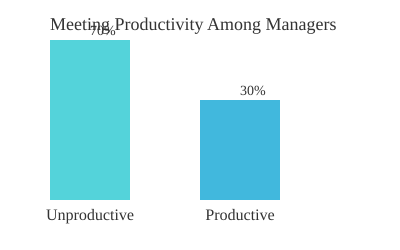
According to classic management reports, 70% of managers say their meetings are unproductive or inefficient. Why? Because nobody makes the call. Meetings drag on, filled with filler words and endless explanations. The result: wasted time and lost momentum.
Think Tweet-Length, But Don’t Sound Like a Bot
Most boardroom answers should fit in a tweet or three concise lines. But genuine brevity isn’t robotic. It’s about removing filler words and focusing on what matters. Research shows people judge your competence in just 100 milliseconds—so make your first impression count with clear, confident, and concise statements.
Quick Tip: Pause Before You Over-Explain
When you feel the urge to over-explain, pause instead. Silence is a tool every powerful communicator uses. It gives your words weight and shows you’re comfortable making the call. Remember: over-explaining doesn’t make you look smart—it makes you look lost.
Mastering clarity, brevity, and decision-making in your communication will set you apart as a leader who commands the room.
Ditch the Doubt: The Underrated Power of Conviction (and Silences that Scream)
Imagine this: A brilliant VP of Product, strategic and respected, is passed over for a Chief Product Officer promotion. He’s stunned. The board’s feedback? He lacked conviction in his vision. The twist: he did believe in his roadmap—he just didn’t sound like it. His words were full of hedges: “I think,” “maybe,” “possibly.” His Executive Presence was drowned by doubt, not by lack of skill, but by how he communicated.
Why Hesitant Language Kills Credibility
Research on Leadership Communication Challenges is clear: when you hedge your words, your audience doubts your authority—even if your ideas are strong. Common filler phrases like “to be honest,” “I think,” or “we might consider” erode your perceived leadership. Your competence gets lost under a flood of uncertainty. Think about it: would Martin Luther King Jr. have inspired millions if he’d said, “Well, to be honest, I kind of have this dream”? Doubt in your delivery makes your message forgettable.
Promotions Prefer Presence Over Precision
It’s a tough truth of the modern workplace: promotions often go to those who sound like leaders, not just those who are qualified. In 2025, Leadership Skills will be measured as much by your clarity and conviction as by your technical expertise. Without clear, confident communication, teams hesitate, investors worry, and customers tune out. Authority in speech—clarity, conviction, and confident pauses—is a prerequisite for trust and advancement.
How to Eliminate Filler Words and Build Authority
- Record Yourself: Use your phone or computer to record your next presentation or meeting. Listen for every “um,” “maybe,” “I think,” or “to be honest.” You’ll be surprised how often they sneak in.
- Track Your Fillers: For one workweek, count the number of filler words you use each day. Awareness is the first step to change.
- Do a Filler Detox: Pick one hedge (like “maybe”) and eliminate it for a week. Once you’ve mastered that, move on to the next. Small changes have an outsized impact on your perceived Executive Presence.
- Swap Fillers for Silence: When you’re unsure what to say, don’t fill the air with “um.” Instead, pause.
“Silence actually builds authority.”
Even a three-second pause before answering a question signals confidence and control. - Practice Like a Pro: Every top performer rehearses—why shouldn’t you? Prep both your message and your silences. The more you practice, the more natural conviction will feel.
Table: Filler Word Tracking & Promotion Insights
| Day | Filler Words Used | Promotion Decision Factor |
|---|---|---|
| Monday | 27 | Perceived Authority |
| Tuesday | 19 | Technical Skill |
| Wednesday | 22 | Perceived Authority |
| Thursday | 15 | Perceived Authority |
| Friday | 13 | Technical Skill |
Notice how often “Perceived Authority” outweighs technical skill in promotion decisions. Your words—and your silences—matter. When you eliminate doubt from your language, you don’t just sound like a leader. You become one.
Bodies Speak Louder: How Your Posture and Pace Replace Half Your Words
Let’s start with a confession: I once gave a big presentation to senior executives, convinced my ideas were strong and my delivery was solid. But when I asked my boss for feedback, he didn’t mention my slides or my strategy. Instead, he said, “Your ideas are very strong, but you looked nervous as hell.” I was stunned. What gave me away? He listed it out: I was nodding like a bobblehead, bouncing my leg, fidgeting with a pencil, and staring at the screen instead of the room. Ouch. That day, I learned firsthand the Body Language Impact on Executive Presence.
Research shows that more than half of people's perception about you comes from your body language.
This isn’t just anecdotal. According to Princeton researchers, people decide how competent you look in just 100 milliseconds. That’s less than the blink of an eye. These snap judgments are so powerful, they’ve predicted election results and shaped history. In the 1960 Kennedy-Nixon debate, Kennedy looked calm and collected on TV, while Nixon appeared sweaty and shifty. Radio listeners thought Nixon won, but TV viewers overwhelmingly picked Kennedy. In 1992, President George H. W. Bush glanced at his watch during a debate—a tiny gesture, but it made him seem disconnected, as if he’d rather be anywhere else. And in 2000, Al Gore’s eye rolls and stiff posture made him look arrogant, while George W. Bush’s relaxed stance made him seem approachable and relatable. These iconic moments prove that Nonverbal Cues Executive Presence can win or lose hearts and minds in seconds.
How to Practice Powerful Body Language
The good news? Leadership Development isn’t just about what you say—it’s about how you show up. Here are practical steps to master your nonverbal cues and project true executive presence:
- Record Yourself: Set up your phone or laptop and record your next meeting or presentation. Watch for nervous habits—leg bouncing, fidgeting, looking away. It’s uncomfortable, but it’s the fastest way to spot what others see. When I did this, I was shocked by my own unconscious tics.
- Slow Down by 15-20%: Most people rush when they’re nervous. Try speaking just a bit slower and pause after big points. This not only makes you sound more confident, but it also gives your words more weight.
- Claim Your Space: Whether you’re sitting or standing, plant your feet, relax your shoulders, and move with intention. Avoid shrinking into your chair or crossing your arms. Practice walking into a room and taking up space—this signals confidence before you even speak.
- Stay Present—No Fidgeting: Challenge yourself to go through a conversation or meeting without touching your face, twirling a pen, or bouncing your leg. Try the “no fidget” challenge in your next meeting. Bet you can’t last ten minutes!
Remember, presence is practiced physically as much as verbally. CEOs and elite leaders “weaponize” their posture, pace, and pauses to command attention and trust. Your body language isn’t just a reflection of your confidence—it’s a tool to build it, shape perception, and lead the room before you say a single word.
Don’t Just Share Data—Tell a Story They Can’t Forget
Elite leaders know that storytelling in business is more than a soft skill—it’s the secret to being remembered, respected, and followed. If you want to sound like the most powerful person in the room, you need to move beyond sharing facts and figures. Instead, use storytelling techniques business leaders rely on to create an emotional connection storytelling can deliver. As one executive put it:
“Facts pass through the brain. Stories go straight to the heart.”
The Heart-Over-Head Moment: Lessons from Hewlett-Packard
Consider the story of a senior EVP at Hewlett-Packard. For 30 years, he delivered presentations packed with data, metrics, and charts. At a major convention, he was reading facts from the teleprompter to thousands. In the wings, CEO Carly Fiorina caught his eye, smiled, and shook her head. She pointed to her heart—a silent cue: Don’t just rely on facts. Tell a story that touches people’s hearts. In that instant, he understood: Emotional intelligence in leadership means connecting, not just informing.
Steve Jobs: Stories That Stick Forever
Think about Steve Jobs. He could have launched the iPod by saying, “We built a hardware device for audio with 5GB of RAM for your MP3 content.” Instead, he said, “A thousand songs in your pocket.” That simple, vivid phrase became legendary. Decades later, people remember the story, not the specs. This is the power of storytelling in business: anchoring data in emotion and narrative.
Stanford’s Recall Research: The Science of Storytelling
It’s not just showmanship—there’s science behind it. In the 1960s, Stanford researchers gave students lists of random words to memorize. One group got just the list. Another group got the same words, but woven into a story. The results?
| Method | Recall Rate |
|---|---|
| List-Only Facts | 13% |
| Story Context | 93% |
Same data, different delivery. Stories anchor data and emotion, driving memory and loyalty. Narrative context turns numbers into action and makes leadership relatable.
How to Build Unforgettable Stories: The Power Trio
- Build Your Three Core Stories:
- Struggle – Share a challenge you or your team faced.
- Turning Point – Describe the moment everything changed.
- Mission – Explain what drives you and your organization forward.
- Translate for the Room: Boards want strategy, teams want execution, customers want value. Use the same story, but adapt the message for each audience.
- Anchor Data in Narrative: Don’t just drop numbers. Make them relatable. For example, instead of saying, “Niagara Falls unleashes 634,000 gallons of water every second,” say, “That’s like emptying a billion bathtubs over the edge every minute.”
Wild Card: Storytelling in Reports
Want to test your skills? Try telling your next quarterly report as a bedtime story. See if it puts people to sleep—or keeps them wide-eyed and engaged. The right story can turn even the driest data into a memorable experience.
Key Takeaway
When you master storytelling in business and use emotional intelligence to connect, you become unforgettable. Facts may pass through the brain, but stories go straight to the heart—and that’s where real leadership lives.
The 'We-First' Switch: How Elite Leaders Build Loyalty and Lasting Trust
Everything else in Building Trust Leadership depends on one thing: your ability to flip the switch from “me” to “we.” You can master clarity, confidence, presence, and storytelling, but your leadership will collapse if you can’t turn every win into a team victory, and every loss into a personal lesson. Elite leaders know that Recognizing Team Contributions and practicing Empathy Leadership are the true engines of lasting influence.
The Moment That Changed It All: Show Up, Don’t Show Off
Years ago, I learned a tough lesson in leadership. On my last day as an SVP, I sat down with one of my VPs and asked, “What should I do differently in my next role?” He paused, then tears rolled down his face. “You’re going to be a great leader,” he said, “I just wish you had invested more time in me.” That moment broke me. I realized I had been showing off more than showing up. Leaders who show up for their people—who invest, listen, and care—build loyalty and lasting trust. That’s the heart of Empathy Leadership.
Flipping the Credit-Blame Switch
This is the hardest adjustment in leadership: it’s not about you. The best CEOs turn the spotlight away from themselves. Amateurs say, “I did this.” Leaders say, “We’re doing this.” And when things go wrong, they say, “That’s on me.” Ownership in failure and generosity in credit create the deepest followership. When you absorb blame, you build trust. When you share credit, you build loyalty.
Recognition: The Secret to Engagement and Retention
Research backs this up. A Gallup study found that when people receive high-quality recognition, they are four times as likely to be engaged and more than 50% less likely to leave. Building Trust Leadership is not about individual brilliance—it’s about making everyone else believe they are succeeding. President Truman put it best:
“It is amazing what you can accomplish if you do not care who gets the credit.”
Borrow This: Name Real Names, Real Contributions
In your next meeting, flip the credit-blame switch. When something goes right, call out real names and real contributions. Say, “Michelle, you crushed it.” At least once a week, publicly recognize someone on your team. Keep it specific, authentic, and tied to impact. Yes, it might feel awkward at first, but this simple act changes the culture. It signals to everyone that you see them and value their work—key to Recognizing Team Contributions.
Feedback Frameworks: The ACE Method
Giving feedback is another moment to build trust. Try the ACE framework:
- Acknowledge the effort: Start by recognizing what went well or the intention behind the action.
- Clarify the issue: Be precise about what needs to change or improve.
- Expand the path forward: Offer support and suggestions for growth.
This approach creates a safe, actionable culture where people feel supported, not attacked. Feedback Frameworks like ACE help you focus on others, even during tough conversations.
Why Trust Is the Bedrock
Trust is the one thing that matters most at the top. When your team trusts you, they move faster, rally in tough times, and stay loyal. When trust is missing, any crisis can take you down in a day. Just look at the CEO of Lehman Brothers—when his company collapsed, he blamed everyone but himself. His reputation never recovered. The lesson? Stop trying to be the most interesting person in the room. Be the most interested person in others. That’s the real switch that builds Empathy Leadership and lasting trust.
Wild Cards: Leadership Techniques You (Probably) Won't Hear in Business School
Elite leaders know that the most powerful communication secrets aren’t always found in textbooks or lecture halls. If you want to master Leadership Trends 2025 and stand out in a world of rapid change, you need to experiment with unorthodox approaches. These wild card techniques will help you develop Adaptive Leadership, build Leadership Agility Resilience, and sharpen your Change Management Skills—all while surfacing hidden strengths and exposing blind spots you didn’t know existed.
1. Speak Last, Not First: The Meeting Flip
In your next team meeting, resist the urge to open with your opinion. Instead, let everyone else share their thoughts first. Only speak at the end. This simple shift disrupts the usual power dynamic and invites fresh insights. You’ll be surprised by the ideas that surface when people don’t feel steered by your initial comments. This technique also reveals who steps up as a natural facilitator or challenger—hidden strengths you might otherwise miss.
2. The Mission Fable: Storytelling Retention Test
Storytelling is at the heart of leadership agility. Try inventing a short, memorable ‘fable’ that captures your company’s mission. Share it with your team, then wait a week. Ask them to retell the story in their own words. This experiment tests not just your storytelling skills, but also the emotional connection your team feels to your mission. If the story sticks, you’re building a culture that remembers and repeats your vision. If not, it’s time to refine your narrative.
3. Outsider’s Mirror: Leadership Perception Check
How do others really see your leadership style? Ask three people outside your organization—clients, partners, or even friends—to summarize your leadership approach in one sentence. Their answers may surprise you. This external feedback exposes blind spots and helps you align your self-image with your actual impact. It’s a fast track to change management skills and self-awareness that most leaders overlook.
4. The ‘No Slides’ Pitch: Storytelling Without a Safety Net
For your next big idea, ditch the slides. Present your pitch using only your words, voice, and presence. This forces you to become a confident storyteller, not just a presenter. You’ll quickly learn where your message is strong—and where it falls flat. This technique builds leadership agility resilience by pushing you out of your comfort zone and making your communication more authentic and memorable.
5. Feedback Wild Card: “Tell Me What I’ve Got Wrong”
Sometimes, the most powerful feedback isn’t praise or polite suggestions—it’s a direct invitation to challenge your thinking. Ask your team, “Tell me what I’ve got wrong.” This question signals vulnerability and curiosity, two traits at the core of adaptive leadership. It encourages honest dialogue and surfaces problems before they grow. Over time, this habit creates a culture where feedback is a tool for growth, not criticism.
6. Quickboard of Creative Leadership Hacks
- Rotate meeting chairs to disrupt habitual seating patterns.
- Start meetings with a “curiosity round”—everyone shares one question, not an answer.
- Host a reverse Q&A: let junior team members quiz senior leaders.
- Swap roles for a day to experience different perspectives.
Deliberately disrupting your communication patterns isn’t just about being different—it’s about inviting new insights, building emotional connection, and future-proofing your leadership for the trends ahead. Experiment with these wild cards and watch your influence grow.
Conclusion: So What Does Power Sound Like? Let the Room Decide (Not Just You)
When you walk into a room, true executive presence is not something you declare—it’s something others feel. You can’t fake gravitas. The most powerful leaders don’t rely on tricks or jargon; they blend clarity, conviction, presence, story, and selflessness. These are the five not-always-pretty leadership skills for 2025 that set the 1% apart. If you want to master effective communication and sustainable leadership development, it’s time to let the room—not just you—decide what power sounds like.
Let’s recap the five core skills that drive real influence:
- Clarity and Decisiveness: Leaders answer upfront, cut through noise, and resist the urge to over-explain. They use the 3A Pyramid Principle—Answer, Arguments, Add-ons—to make every word count. Remember, employees explain; leaders make the call.
- Conviction in Language: Powerful communicators eliminate hedges and filler words. They speak with confidence, even if it means pausing for thought. Each time you swap “maybe” for a moment of silence, you reinforce your authority.
- Commanding Presence: Your body language is your silent ambassador. Slow down, claim your space, and let your posture and eye contact do half the talking. People judge your competence in milliseconds—make those moments count.
- Memorable Storytelling: Facts inform, but stories inspire. Anchor your data in relatable narratives. Build a small library of repeatable stories that connect with your audience’s needs—whether it’s strategy for the board, execution for your team, or value for your customers.
- Selfless Leadership: The most transformative skill is shifting from “I” to “we.” Publicly recognize others’ contributions and absorb setbacks yourself. This is how you build trust, loyalty, and a sustainable leadership presence.
Here’s the challenge: Flip from ‘being interesting’ to ‘being interested’ this week. Instead of trying to impress, focus on drawing out others. Ask more questions. Listen for what’s not being said. Each conversation is a reset—a new chance to practice one small tweak, even if it feels awkward at first. Sustainable leadership development isn’t about grand gestures; it’s about repeated, small shifts. Invite feedback, stay curious, and let the room’s response guide your growth.
“True power is recognized, not announced. It’s earned through consistent, humble communication.”
Every time you flip one of these switches—clarity, conviction, presence, story, selflessness—you set a new direction for trust, clarity, and long-term influence. The real test of executive presence is not how you feel about your own performance, but how others respond, engage, and follow your lead. Let the room be your mirror. If you notice more questions, more engagement, or more trust, you’re on the right track.
Start today. Pick one skill and try it in your next meeting or conversation. Maybe it’s answering upfront, or pausing instead of filling space with “um.” Maybe it’s sharing a story, or publicly recognizing a colleague. Each tweak is a step toward a more authentic, high-impact leadership communication style. Over time, these small changes will compound, helping you build the kind of presence that others remember—and respect.
Frequently Asked Questions (FAQ): Communication & Leadership in the Modern Boardroom
What’s the fastest way to boost my executive presence?
If you want to instantly elevate your executive presence, start by mastering your delivery. Speak with clarity and confidence, and avoid filler words or hesitant language. Research shows that people form impressions of your competence in just 100 milliseconds, so your posture, eye contact, and tone matter as much as your words. Prepare your key points in advance, slow your speaking pace by 15–20%, and use strategic pauses. This not only makes you sound more authoritative but also gives your words greater impact. Remember, leadership communication skills are as much about how you say something as what you say.
How can I stop over-explaining in meetings?
Over-explaining is a common trap, especially when you want to appear knowledgeable. However, true leaders provide clear, concise answers and let their decisions stand. Use the 3A Pyramid Principle: Answer upfront, give 2–3 Arguments to support your point, and add extra details only if asked. Imagine your answer as a tweet—short, direct, and powerful. This approach not only saves time but also builds your authority in the room. If you find yourself rambling, pause, and ask if more detail is needed. This shows respect for others’ time and signals confidence in your expertise.
Can storytelling really turn around team engagement?
Absolutely. Storytelling in business is a proven way to connect emotionally with your audience, whether it’s your board, team, or customers. Facts and data are quickly forgotten, but stories stick. When you share a personal struggle, a turning point, or a vision for the future, you make your message memorable and relatable. Research from Stanford shows that stories can boost recall from 13% to 93%. To engage your team, develop three core stories you can use repeatedly, and always tie your data to a narrative that matters to your listeners. This transforms you from a manager into a leader people want to follow.
What’s the best way to give feedback without losing trust?
Building trust in leadership starts with how you recognize and support others. When giving feedback, use the ACE framework: Acknowledge the person’s effort, Clarify the issue, and Expand the path forward with your support. Publicly credit team members for their successes and take personal responsibility for setbacks. This not only strengthens relationships but also creates a culture of safety and growth. Remember, the best leaders absorb blame and share credit, which makes your team more engaged and loyal.
Is body language really more important than my words?
Yes, your body language often speaks louder than your words. Studies show that more than half of how people perceive you is based on nonverbal cues. Confident posture, steady eye contact, and intentional movement all signal authority and trustworthiness. If you want to improve, record yourself in meetings and look for nervous habits like fidgeting or excessive nodding. Practice being still, using purposeful gestures, and claiming your space. This will reinforce your executive presence and make your communication more persuasive.
How do I balance clarity with being approachable and human?
Clarity and approachability go hand in hand. Be direct and decisive in your communication, but also show empathy and vulnerability when appropriate. Share stories, admit mistakes, and invite feedback. When you combine clear direction with genuine care for your team, you build trust and inspire loyalty. True leadership communication skills are about making others feel seen, heard, and valued while driving results. This balance is the hallmark of memorable, effective leaders in the modern boardroom.
TL;DR: Skip the noise: Speak with clarity, skip the fillers, own your presence, share stories that stick, and flip the spotlight onto your team. That's how you lead like the top 1%.
Post a Comment