

Picture this: it’s 2025, you’ve got the degree, the resume, maybe even some fancy honors, and… nothing. You’re stuck, amazing jobs vanish before your eyes, and even Harvard MBAs are struggling to find stable work. But while others are paralyzed by headlines and doomscrolling, you’re about to get an insider perspective on why the landscape is so wild, why your old playbook might be outdated, and concrete ways to flip the script for your own career. I’ll also throw in a few personal quirks and analogies, like my chronic tab overload (trust me, it’s relevant). Buckle up, because some of these trends are genuinely weird—and surprisingly hopeful.
Chapter 1: When Safe Jobs Aren’t Safe—The "Degree Trap" Nobody Warned You About
Job Market Trends: The Shocking Reality for Top Graduates
If you’re starting your career or rethinking your path in 2025, you’ve probably heard the same advice for years: “Get a good degree, aim for a prestigious company, and you’ll be set.” But here’s the truth—those so-called “safe” jobs aren’t safe anymore. I’ve watched, in real time, as friends and colleagues who did everything right—graduated from top 10 universities, earned highest honors, and landed jobs at elite firms—still found themselves unemployed or underemployed for months on end.
The job market trends are clear: even the most impressive credentials can’t guarantee stability. In fact, layoffs and instability are now hitting the very sectors that once seemed untouchable. Consulting, banking, and tech—fields that used to be golden tickets—are now just as vulnerable as any other.
Unemployment Rate Trends: No Industry Is Immune
Let’s talk numbers. The national unemployment rate in Q3 2024 was 4.2%, and by August 2025, it ticked up to 4.3%. That’s not catastrophic, but dig a little deeper and the picture gets much more troubling—especially for recent grads and those in “safe” sectors.
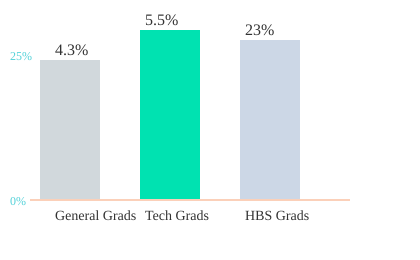
Here’s a statistic that stopped me in my tracks: “The unemployment rate for Harvard Business School grads is 23%.” Think about that. These are some of the most sought-after graduates in the world. If almost a quarter of them can’t find jobs, what does that say about the rest of us?
It’s not just business school grads, either. The unemployment rate for tech graduates is now 27% higher than the general rate. Even as some tech companies continue to grow, layoffs are sweeping through the industry, leaving thousands of highly qualified people scrambling.
The Emotional Toll: When High Expectations Meet a Volatile Market
Unemployment isn’t just a number. It’s a collective feeling of disorientation. You might have grown up believing that if you checked all the right boxes—good grades, top schools, prestigious internships—you’d be rewarded with security. But now, the narrative that degrees = jobs is officially broken.
I’ve seen friends drift through months of unemployment after doing everything “right.” They feel lost, frustrated, and even betrayed by a system that promised so much. Watching this unfold forced me to rethink what “qualified” even means in 2025. The old rules just don’t apply anymore.
Societal Pressure and the Shrinking of Traditional Roles
Despite all these changes, there’s still enormous pressure to pursue traditional roles. Parents, teachers, and even peers continue to push young people toward careers in consulting, banking, and tech. But those fields are shrinking, not growing. The job market growing fields are often outside the traditional paths—think healthcare tech, green energy, and digital content creation.
It’s time to look beyond the degree and focus on skills in demand. Adaptability, digital literacy, and creative problem-solving are becoming more valuable than any diploma. The people I see thriving in this market are the ones who are willing to pivot, learn new things, and let go of the old playbook.
SVG Chart: Unemployment Rate Comparison (2025)
Key Takeaways
- Sudden layoffs and underemployment now hit even graduates from top 10 universities.
- Even ‘golden ticket’ careers in consulting, banking, and tech are no longer guarantees.
- Harvard Business School grads faced a shocking 23% unemployment rate recently.
- Societal pressure still pushes young people toward traditional roles, even as those roles shrink.
- The emotional toll is real—unemployment is more than a statistic; it’s a shared sense of uncertainty.
Chapter 2: Double Trouble—Inflation, High Costs, and the Paradox of Unfilled Jobs
How an 18% ‘Mandatory’ Tip and Rising Living Costs Are Impacting Job Seekers Everywhere
Let’s start with something you might have seen on your last night out: a restaurant receipt. At first glance, the usual food and beverage taxes appear. But then, you spot an 18% mandatory tip—plus a suggested extra gratuity. If you feel your wallet shrinking, you’re not alone. This isn’t just a hospitality industry quirk; it’s a symptom of a much bigger problem. Whether you’re a barista, a software engineer, or just trying to break into one of the job market growing fields, the cost of living is hitting everyone hard.
Why Is Everything So Expensive? The Global Cost-of-Living Squeeze
It’s tempting to blame businesses for passing costs onto consumers, but the reality is more complicated. The price of running a business—rent, supplies, wages—has skyrocketed. According to the World Economic Forum’s 2025 Future of Jobs Report, inflation and supply disruptions are global, not just a US or North American issue. In fact, low-income countries and entry-level workers are hit hardest by rising food prices, climate shocks, and geopolitical tensions. These factors drive up costs for everyone, making it harder for both job seekers and employers to get ahead.
Key Cost Drivers:
- Food price surges due to supply chain disruptions
- Climate shocks impacting agriculture and logistics
- Regional conflicts and geopolitical fragmentation
- Increased business overheads (rent, insurance, wages)
The Paradox: Unfilled Jobs in a Sea of Job Seekers
Here’s where things get strange. Despite the high number of people looking for work, employers across many sectors report they can’t fill open roles. This isn’t just anecdotal—labor market transformation data backs it up. According to the Bureau of Labor Statistics and the IMF, labor shortages have only grown since 2013, with a massive jump during the pandemic.
"There was a big jump during the pandemic in global labor shortages—which hasn't actually decreased."
| Year | Global Labor Shortage Index |
|---|---|
| 2013 | Low |
| 2018 | Moderate |
| 2020 (Pandemic) | High |
| 2024 | Very High |
What’s causing this mismatch? Partly, it’s the rapid pace of technological change. The WEF report notes that AI and data processing technology are the biggest drivers of job market trends. Sixty percent of surveyed companies say technology is changing how they do business—including hiring. But here’s the catch: only about 1% of companies actually have a mature AI strategy. For the rest, the perception that AI will replace jobs is enough to slow down hiring, even if the tech isn’t fully in place yet.
Geoeconomic Fragmentation and Its Impact on Labor Markets
Geoeconomic fragmentation—think trade wars, shifting alliances, and regional instability—further complicates the employment landscape. These factors disrupt supply chains, drive up costs, and make it harder for businesses to plan ahead. The result? More caution in hiring, especially in sectors sensitive to global shocks.
Personal Perspective: The Hiring Headache
To put this in real terms, let me share my own experience. I’ve spent over a year trying to hire a full-time editor and producer. My inbox is overflowing with applications, yet finding the right fit is nearly impossible. And I’m not alone—many business owners report the same struggle. This is the paradox of today’s labor market: plenty of job seekers, but also plenty of unfilled jobs.
Where Is Employment Growth Happening?
Despite these challenges, some employment growth sectors are still expanding. Healthcare, green energy, and specialized tech roles are among the job market growing fields. But competition is fierce, and the skills gap is real. If you’re navigating this landscape, understanding these job market trends is your first step toward finding your place in a rapidly changing world.
Chapter 3: AI, Automation, and the Mirage of Tech Job Security
The Technology Data Revolution: More Than Just Buzzwords?
If you’ve been following the headlines, you already know that AI and automation are everywhere. According to the World Economic Forum’s Future of Jobs report, technology—especially AI and data processing—has become the single biggest macroeconomic trend shaping the job market today. Out of 1,000 companies surveyed across 22 industries and 55 economies, a striking 60% say AI is significantly changing how they do business, including their approach to hiring.
But let’s pause for a reality check. While the technology sector hiring landscape is shifting, the actual impact of AI and automation is far more complicated than the hype suggests. Many companies claim AI is transforming their productivity and operations, but the evidence is mixed. If you dig into the research, you’ll find a big gap between what companies say and what they actually do.
AI Adoption: Perception vs. Reality
Ask almost any company about AI, and you’ll likely hear that it’s revolutionizing their business, boosting productivity, and automating tasks once handled by humans. For a handful of organizations with a well-developed AI strategy, this is true. However, for the majority, it’s more about keeping up appearances. Companies know that talking up their AI efforts makes them look innovative, can boost their stock prices, and gives them a convenient reason to slow down hiring.
The numbers back this up. A recent McKinsey report found that only about 1% of companies actually have a mature AI strategy in place. That means 99% are either experimenting, piloting, or simply talking about AI without real transformation. Despite this, the perception that AI and automation are taking over is enough to make hiring managers think twice before bringing on new staff.
The Irony of Tech Job Security
Here’s where things get even more surprising. You might assume that the technology sector is a safe bet for job seekers, especially with all the talk about the AI and automation revolution. But the data tells a different story. In fact, the unemployment rate for technology graduates is 27% higher than the general unemployment rate.
"The unemployment rate for technology graduates is 27% higher than the general unemployment rate."
This is a direct result of several factors:
- Mass layoffs in the tech industry over the past few years
- Companies using AI adoption as a reason to freeze or slow hiring
- Mismatch between what tech graduates learn and what companies actually need
So, while AI jobs are growing in some areas, not all tech degrees pay off as expected. The technology data revolution is real, but it’s not a guaranteed ticket to job security.
The Divide: Automators vs. Talkers
There’s now a clear split between companies that are genuinely automating and those that are just talking about it. For every business that’s truly integrating AI and automation into their workflows, there are many more that simply use the language of innovation to justify hiring freezes or layoffs.
Some companies even use the idea of AI adoption as a convenient excuse for not expanding their teams. Even if robots aren’t actually running the place, the perceived threat of automation is enough to spook hiring managers and slow down recruitment.
What’s Really Driving Slow Tech Hiring?
It’s not just about technology. High prices, economic uncertainty, and geopolitical tensions (like the ongoing H-1B visa debates in the US) all play a role. But the narrative around AI and automation is a powerful force. Even if only a tiny fraction of companies are truly ahead of the curve, the widespread belief that “robots are coming for your job” is changing how companies think about hiring.
So, if you’re considering a career move in the technology sector, remember: the landscape is more complex than it seems. The promise of AI and automation is real, but so is the mirage of tech job security.
Chapter 4: The Skills Mismatch Mystery—If Everyone’s Unemployed, Why So Many Unfilled Roles?
It’s one of the most puzzling problems in today’s job market: millions of people are looking for work, yet millions of jobs remain unfilled. If you’re searching for a new role, you might wonder—what’s really going on? The answer lies in a growing gap between the skills in demand and what most job seekers actually bring to the table.
Why Are So Many Jobs Unfilled?
The world is changing faster than ever before. New technologies, like artificial intelligence, are reshaping industries at lightning speed. Just a few years ago, hardly anyone was talking about AI as a must-have skill. Now, it’s at the top of many employers’ wish lists. This rapid change means that the career development skills companies need are evolving much faster than traditional education can keep up.
As a result, there’s a growing disconnect. Many people are finishing school or training programs with skills that are already outdated. Meanwhile, employers are desperate for workers who already have the latest technical abilities. This is the heart of the skills mismatch mystery.
Employers Want ‘Plug-and-Play’ Hires, Not Projects
When the economy is shaky, businesses become more cautious. Costs are up, and every new hire is a risk. In tough times, companies are less willing to invest in training new employees. As one employer put it:
“They want people that already have these skill sets. ... as an employer, I absolutely agree with this statement.”
Training a new hire is expensive and time-consuming. Many businesses would rather leave a role vacant than bring on someone who isn’t already up to speed. In fact, some companies are choosing to invest in automation or AI instead of taking a chance on a less-experienced worker. This trend is especially strong when budgets are tight and the pressure to deliver results is high.
Real-World Frustration: The Search for Skilled Professionals
Let’s make this real with a personal story. As a hiring manager, I once spent months searching for an editor who could truly hit the ground running. During that time, hundreds of generic resumes piled up in my inbox. Most applicants had degrees, but few had the up-to-date skills we needed. In the end, I left the position open rather than hire someone who would need months of training. The reality is, it would have been a bigger burden to bring on someone who couldn’t keep pace with the team.
Why the Bar Is So High
- Fast-changing skills in demand: Employers need workers who can adapt quickly to new tools and technologies.
- Economic uncertainty: Companies are more conservative with their investments, including hiring and training.
- Automation as an alternative: It’s often easier and cheaper to invest in AI or automation than to train new employees.
Data: The Growing Skills Gap
Global trends show that the shortage of skilled professionals has been rising steadily since 2013, with a sharp jump during the pandemic. At the same time, employer willingness to train new hires has dropped. This means the expectation is higher than ever: you need to arrive with the right skills, ready to contribute from day one.
What Does This Mean for Job Seekers?
If you’re looking to stand out, focus on building the career development skills that are actually in demand right now. Relying on a degree alone is no longer enough. Employers are searching for candidates who can keep up with the rapid pace of change—people who are already equipped to solve today’s problems, not just yesterday’s.
Chapter 5: What Do Companies Want Now? Hard Truths and Unexpected Skills
Top Skills in Demand for 2025: More Than Just Tech
If you’re wondering what skills in demand will define your career in 2025, the answer is both familiar and surprising. According to the World Economic Forum’s 2025 report, AI and big data top the list of fastest-growing skills. Right behind are networks and cybersecurity, reflecting the surge in digital transformation and the constant threat of cyber risks. But here’s the twist: companies are just as hungry for resilience, flexibility, and agility—skills that have nothing to do with coding or algorithms.
It’s not just about technical skills required for data science analytics or AI and automation. Employers are actively searching for people who can adapt, bounce back from setbacks, and keep learning. As one recent report puts it:
"Skill of lifelong learning is quickly ascending the ranks for the 2025–2030 period."
You’re not just expected to know your stuff—you’re expected to keep learning, always.
Emerging Hybrid Roles: The Rise of Interdisciplinary Talent
The job market is shifting toward hybrid and interdisciplinary roles. It’s not enough to be a specialist in one area. Companies want data analysts who understand business strategy, coders who can lead teams, and technical managers who can communicate across departments. These emerging hybrid roles are growing rapidly through 2030, blending technical know-how with business and people skills.
- Technical managers with leadership and communication skills
- Data/business strategy hybrids who can translate analytics into action
- Fintech specialists who bridge finance and technology
If you’re thinking about your next move, consider how you can combine your technical expertise with soft skills and business sense. That’s what employers are looking for now.
‘Human-Agentic Workforce’: Humans + AI, Side by Side
A new buzzword is making the rounds in HR and leadership circles: the human-agentic workforce. This describes a workplace where humans work alongside AI and automation—not in competition, but in collaboration. According to McKinsey’s AI report, companies are designing roles where people and intelligent agents share responsibilities, optimize workflows, and drive results together.
But not everyone is keeping up. The gap is widening between those who can work with AI and those who can’t. If you want to stay relevant, you’ll need to build at least a basic layer of AI fluency, no matter your role.
Soft Skills: The Make-or-Break Factor
Technical skills required for AI and data science analytics are crucial, but they’re not enough. Soft skills—like communication, leadership, and emotional intelligence—are now make-or-break. Companies need people who can manage teams, resolve conflicts, and influence others, especially as work becomes more collaborative and cross-functional.
- Communication: Explaining complex ideas simply
- Flexibility: Adapting to new tools and workflows
- Leadership: Inspiring teams in uncertain times
These skills are just as valuable as any technical certification.
Chart Time: M-Shaped Managers vs. T-Shaped Specialists
Let’s break down two of the most in-demand profiles for the future of work:
| Profile | Key Features |
|---|---|
| M-Shaped Manager |
|
| T-Shaped Specialist |
|
Both profiles are in high demand, but the common thread is clear: AI is deeply embedded in every workflow, and the ability to blend technical and soft skills is what sets top candidates apart.
Chapter 6: Tools for the New Work Age—Personal Anecdotes & Wildcard Tech
AI Browsers: The Unexpected Game-Changer in the Technology Data Revolution
If you want to thrive in the new work age, you need to do more than just read about AI and automation—you need to get your hands dirty. One of the most surprising tools I’ve used lately is Perplexity’s Comet, a free AI agent web browser. At first, I’ll admit, I didn’t get the point.
“In the beginning, I didn’t really get it—why do I need an AI web browser? Now, I use it daily for everything from investing research to buying supplements cheaper.”But after a few months, it’s become my go-to for learning, job hunting, and even saving money. This is what practical digital literacy looks like: not just knowing what’s out there, but actually using it in your daily workflow.
Hands-On Digital Literacy: More Than Just Knowing Theory
The technology data revolution is moving fast. To keep up, you need to experiment with new tools—even if it means having a dozen browser tabs open at once. Early adopters of AI browsers like Comet are already seeing the benefits: they’re more adaptive in their work searches, more productive, and more creative in how they solve problems.
Real-World Use Cases: How Comet Makes You Nimbler
- Summarizing Research Instantly: When you’re learning something new—like investing or exploring skills in demand—Comet can summarize all your open tabs and pull out key insights from each. I used this feature while researching how AI is impacting investing, and it gave me clear, actionable summaries of online courses, fintech innovations, and market trends, all in one place.
- Promo Code Hunting for Savings: Shopping online for supplements on iHerb, I realized I didn’t have any promo codes. With Comet, I simply asked the assistant to try out different codes for me. It automatically tested several and found one that saved me 20%—a small win, but these add up, especially if you’re working remotely or on a tight budget.
- Image Recognition for Spontaneous Shopping: Ever see a product on Instagram and wonder where to buy it? With Comet, you can ask about the item in a photo, and it will search for the brand and even suggest where to find it. I tried this with a dress I saw online, and Comet traced it back to a specific fashion brand, saving me the hassle of scrolling through endless comments.
Hybrid Work Models Demand New Skills
Hybrid roles today require digital literacy that goes far beyond basic IT skills. You need to be comfortable with AI and automation tools that help you scan markets, organize information, and act quickly. For example, after a long research session, I can simply tell Comet to close all my tabs—no more clicking through each one. This kind of automation doesn’t just save time; it lets you focus on higher-value tasks.
Small Daily Tech Wins Add Up
The real secret to staying current in the technology data revolution is to use new tools in creative, sometimes messy ways. Expect a lot of open tabs, trial and error, and spontaneous discoveries. Each small win—like finding a hidden discount or quickly summarizing a market trend—builds your confidence and keeps you ahead in a shaky job market.
- Market scanning: Use AI browsers to track trends and courses relevant to skills in demand.
- Promo testing: Let automation find you savings while you focus on your main tasks.
- Course summaries: Get instant overviews of educational resources to upskill faster.
- Image-based shopping tips: Turn spontaneous curiosity into actionable information.
In this new era, automation isn’t just about replacing jobs—it’s about making you more nimble, proactive, and ready for whatever comes next in the world of hybrid work models and digital-first careers.
Conclusion: Rethink, Reframe, and Rewrite Your Rules for Work
The job market in 2025 is undeniably challenging, but it’s also full of surprising possibilities. The old “safe path” script—study hard, get a degree, follow a linear career—has broken down. The data is clear: job creation and displacement are happening side by side, and the future of jobs is less about pedigree and more about adaptability. If you want to thrive, not just survive, it’s time to rethink your approach, reframe your expectations, and rewrite your own rules for work.
Let’s start with the facts. According to recent projections, 78 million jobs are expected to be created globally by 2030, resulting in a 7% net employment growth after accounting for jobs lost to automation and transformation. But this net growth isn’t just about numbers—it’s about mindset and flexibility. The fastest-growing roles are in AI, big data, and healthcare, with the health sector alone accounting for 44% of new jobs as of May 2025. Hybrid roles—where technical skills blend with soft skills like resilience, leadership, and lifelong learning—are quickly becoming the norm.
| Key Trend | Data Point |
|---|---|
| Global Jobs Created by 2030 | 78 million |
| Net Employment Growth | 7% (after displacement) |
| Top Skills for 2025 | AI, Big Data, Cybersecurity, Resilience, Flexibility |
| Healthcare's Share of New Jobs | 44% (as of May 2025) |
But here’s the twist: employers are no longer just looking for degrees or traditional experience. They want people who are ready to contribute from day one—those who’ve kept up with the rapid pace of change, who have hybrid skills, and who are comfortable working alongside AI and automation. The “safe” path of waiting for someone to train you is gone. Instead, your edge is your flexibility, your willingness to learn, and your ability to stay relevant.
This is where a mental shift becomes essential. Instead of seeing automation as a threat, view it as a chance to add agility to your career. The most valuable workers are those who can combine technical know-how with creativity, critical thinking, and emotional intelligence. Employers want people who can adapt, who are curious, and who see lifelong learning as part of the job—not just a one-time hurdle.
If you’re feeling anxious, let curiosity take the lead. The 2025 job market trends show that learning never stops. The most in-demand skill, according to the World Economic Forum, is the ability to keep learning—whether that’s mastering AI tools, understanding big data, or building resilience and leadership. The future of jobs is about being a hybrid: part specialist, part generalist, always ready to pivot.
Here’s a playful way to look at it: imagine your career like your browser tabs. Sure, it might feel chaotic—so many interests, skills, and projects open at once—but that’s also where your greatest potential lies. When you combine your unique quirks, passions, and experiences, you create new value that no one else can offer. Employers are searching for the ready, not just the educated. Your weirdness, your wonder, and your willingness to experiment are now genuine strengths.
"Approach your career with agility and curiosity—not fear—and you’ll carve your own path in a landscape full of contradictions."
So as you navigate the shaky job market of 2025, remember: the rules have changed, but so have the opportunities. Rethink what’s possible, reframe your anxieties as curiosity, and rewrite your own script for success. The future belongs to those who are bold enough to embrace the chaos—and creative enough to turn it into something new.
TL;DR: The 2025 job market is a paradox: traditional rules are broken, AI hype meets human need, and skills (not just degrees) are the currency that matters. Approach your career with agility and curiosity—not fear—and you’ll carve your own path in a landscape full of contradictions.
Post a Comment