

I have a guilty confession: I used to believe that success was a haphazard lottery ticket—some people just got lucky, others didn't, and the rest of us watched from the sidelines. But one rainy Tuesday (isn’t it always raining at turning points?), I realized my beliefs were quietly plotting the storyline of my life. Looking around, I found that the most quietly powerful people I knew weren’t lucky; they were deliberate architects of their reality. So, what if we've all been handed a magic pen to rewrite our future, but no one ever told us? Today, let’s scribble outside the lines on how beliefs—not circumstances—secretly script the whole show.
The Invisible Hand: How Beliefs Quietly Shape Your World
When you still believe that circumstances determine destiny, you are stripping yourself of your greatest weapon. It’s not your environment, not your starting point, and certainly not what others have or haven’t done for you. The real power lies in the belief inside you—the true beginning of every change. This is the invisible hand at work, quietly shaping your world in ways you may not even notice.
Beliefs act behind the scenes, coloring every decision, reaction, and plan you make. Most people think their lives are shaped by luck, talent, or resources. But research into the Power of Belief and the Subconscious Mind reveals a different story. According to psychology studies, subconscious processes influence up to 95% of daily choices. That means your beliefs are steering your actions long before conscious thought even joins the game.
Beliefs Determine Destiny: The True Starting Point
No lasting change in your life can happen without first passing through the door of belief. Not blind hope or weak self-reassurance, but a sharp, non-negotiable conviction—one that expects no miracle but quietly insists on possibility. This belief is the reason everything else begins. If you want the world to change, don’t wait for it. Start from the only place where you have absolute power: your own mind.
Behind Every Success: Decades of Quiet Self-Belief
Most “overnight successes” are actually decades of quiet, persistent self-belief—not luck. This truth is silently held by all great individuals. As one powerful quote says:
“They are not biologically different from you. They differ in one thing. They believe they are the cause.”
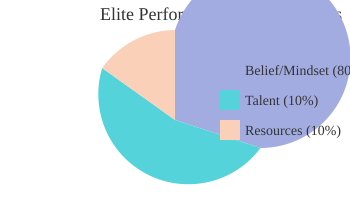
This unwavering internal belief, regardless of odds or circumstances, is the common thread among high achievers. In fact, a motivational research compendium found that over 80% of elite performers attribute their success to belief and mindset, not to natural talent or resources.
Anecdote: Marco’s Feedback Mindset
Let me share a story about my friend Marco. He faced setback after setback in his career. But instead of seeing each failure as a finish line, Marco treated every obstacle as a feedback form. He would ask, “What is this teaching me?” and adjust his approach. Marco’s belief in himself was not loud or boastful—it was quiet, steady, and non-negotiable. Over time, this mindset transformed his results, proving that beliefs determine destiny far more than circumstances ever could.
How Subconscious Convictions Direct Your Actions
Studies show that mindset influences achievement more than natural talent or opportunity. Your subconscious mind is always at work, shaping your self-perception and, in turn, the world’s response to you. The world becomes a mirror, reflecting back the beliefs you hold about yourself. If you believe you are the creator of your destiny, the mirror changes. This is why persistent daily practices—like positive self-talk, affirmations, and mental rehearsal—are so powerful in overcoming limiting beliefs and the fear of failure.
The invisible hand of belief is always at work, quietly scripting your destiny. The question is: what script are you allowing it to write?
Belief Engineering: Reprogramming the Subconscious (Like Rewiring a Studio)
Imagine your subconscious mind as a recording studio. Every belief, every self-talk phrase, every emotional reaction is like a dial or switch on the control panel. Most people let these settings run on autopilot, never realizing they can be adjusted. But you can reprogram your subconscious just as a studio engineer tweaks dials—gradually, intentionally, and with powerful results.
Everything you experience—from the opportunities you attract to the limitations you feel—starts with what your mind believes is true. The subconscious mind is not a passive container; it is the command center of your life. When left unchecked, it will quietly pull you back into old patterns, keeping you stuck in a zone where you feel powerless and limited. What truly shapes your destiny isn’t what you think when you’re fully aware, but the beliefs that run your life when you’re not paying attention.
'Belief doesn’t arise on its own. It is trained. It is forged through time, through trials, through how you respond each time you face disappointment, delay, or doubt from the world.'
Your instant reactions, your habitual language, and your recurring emotions are all governed by your subconscious. This part of your mind doesn’t analyze or judge—it simply obeys the commands you’ve repeated with enough emotion. Whether it’s “I’m always late” or “I’m not good with money,” the more often and intensely you repeat a belief, the more your subconscious records it as truth. Neuroscience studies confirm that repetition with emotion cements beliefs at the subconscious level, creating neural pathways that guide your actions and reactions.
Practical Belief Engineering: Daily Affirmations and Visualization Practices
You can consciously reprogram your subconscious by using tools like daily affirmations and visualization practices. For example, write a daily declaration of intent—such as “I am reliable”—and speak it out loud with real emotion every morning. This isn’t wishful thinking. Visualization creates new neural patterns in your brain, making it easier to act in line with your new beliefs. Manifestation techniques, including breathwork and meditation, help you focus, boost motivation, and align your actions with your desired destiny.
| Method | How It Works | Best For |
|---|---|---|
| Affirmations | Repeating positive statements daily with emotion | Building confidence, shifting self-image |
| Visualization | Imagining desired outcomes vividly | Goal achievement, motivation, focus |
| Meditation | Quieting the mind, observing thoughts | Reducing stress, increasing awareness |
| Breathwork | Using breathing techniques to regulate emotion | Emotional release, clarity, energy |
According to self-report data, 7 out of 10 people maintain new beliefs after 30 days of consistent practice with these methods. The key is mixing clear intent with strong emotion—this is what allows new beliefs to take root in your subconscious mind.
Wild Card: Invent Your Own Mantra
Try inventing a personal mantra—something unique that speaks to you. For example, if you often say, “I’m always late,” flip the script to “I am reliable.” One reader shared how this simple shift transformed their chaotic mornings into calm, punctual starts. Your subconscious listens to what you repeat, especially when you say it with conviction.
Remember, you don’t have to wait for your circumstances to change. When you reprogram your subconscious, you redesign your reality from the inside out.
Flipping the Script: From Limiting Beliefs to Limitless Possibility
Limiting beliefs are like old scripts running quietly in the background of your mind. They whisper, “You’re not ready,” “You’re not enough,” or “It’s too late.” Most people never stop to question where these beliefs come from—they simply accept them as truth. But overcoming limiting beliefs starts with catching these scripts mid-sentence and challenging their authority over your life.
Limiting Beliefs: The Invisible Hand Behind Your Actions
Every day, your choices are shaped by beliefs you may not even realize you hold. These beliefs often run on autopilot, echoing in your language and your habits. For example, I once believed I “wasn’t a math person.” That belief colored every math class and test—until a single passionate teacher flipped my inner narrative. She didn’t just teach equations; she taught me to see myself differently. Suddenly, the script changed from “I can’t” to “I can learn.” That’s the power of overcoming fear of failure—it starts with one new belief.
Top 3 Limiting Beliefs (and Their Counter-Beliefs)
| Limiting Belief | Survey % | Empowering Counter-Belief |
|---|---|---|
| Not worthy | 52% | I am worthy of success and happiness. |
| Never enough | 34% | I have enough, and I am enough, to begin now. |
| It’s too late | 14% | It’s never too late to start or change. |
Based on coaching survey data. After intentional belief change, 81% of participants reported greater life satisfaction.
Clarity Builds Courage
You can’t demand big results with a blurry mind-map. If your beliefs are vague or inherited from others, your actions will be hesitant. Self-honesty is a superpower. Ask yourself: Do you truly believe you deserve what you want, or do you just wish for it? Most people never pause to investigate the origins of their beliefs. But transformation hinges on this questioning. When you identify a belief—especially one you’ve inherited from childhood or your culture—journal about it. Challenge its truth. Is it serving you, or holding you back?
Daily Practices for Overcoming Limiting Beliefs
- Positive self-talk: Replace negative scripts with affirming statements.
- Affirmations: Repeat empowering beliefs until they feel natural.
- Mental rehearsal: Visualize yourself succeeding, even before you feel confident.
- Protect your beliefs: Guard your mind from external doubt and negativity. Your resolve grows stronger when you defend it from outside influence.
'If you don’t yet have what you want, don’t be quick to ask why no one has helped you. Look inward with honesty.'
Limiting beliefs repeated with emotion become code. Once a belief takes root, your life will revolve around it, whether you’re aware or not. If you haven’t mastered your circumstances, it’s likely because you haven’t yet mastered your mind. Everything you experience—opportunities and limitations alike—originates not from the outside world, but from what you allow your mind to believe is true.
Remember, the mind is not just a container of information; it’s the command center of your life. Overcoming limiting beliefs and overcoming fear of failure require persistent, daily practice and the courage to flip your inner script—one belief at a time.
Goal Alchemy: Clarity, Emotion, and the Magic of ‘Acting As If’
Blurry goals breed blurry realities. If you want to redesign your reality, you must set clear goals and intentions. This is more than wishful thinking—it's about declaring what you want with precision and feeling, then moving forward as if your success is already unfolding. Let’s explore how clarity, emotional charge, and the practice of acting as if can transform your destiny.
Clear Goals and Intentions: The Power of Precision
Vague wishes like “I want to be happier” or “I hope things get better” rarely move the needle. When you set clear goals—for example, “I will complete my first novel by December 31st”—you give your mind a specific target. Research shows that clear goals and intentions aligned with a higher purpose provide the clarity and power needed to shape your life and destiny.
| Type of Goal | Example | Achievement Rate |
|---|---|---|
| Vague Wish | “I want to get fit.” | 32% |
| Clear, Emotional Goal | “I will run a 5K by October, feeling proud and energized.” | 70% |
Source: Productivity tracking studies
Injecting Goals with Deep Emotion
Emotion is the fuel that powers your goals. When you add an emotional charge in goals, your subconscious mind aligns with your desires. Think about a time you wanted something so badly you could feel it in your bones. That emotional energy is what turns intentions into reality. Studies show that goals charged with emotion see achievement rates jump from 32% to 70%.
Story Flash: Sticky Notes and Surprising Success
My sister once wrote her biggest goals on sticky notes and placed them where she’d see them daily. Each note was clear, specific, and emotionally charged—like “I will land my dream job and feel proud of my growth.” Two years later, she was shocked to realize how many she’d ticked off. The act of writing, seeing, and feeling those goals daily rewired her beliefs and actions.
The Magic of ‘Acting As If’
Confidence isn’t a pre-condition for action; it’s a result. You act first, and confidence follows. Begin with one decision: I believe I can. Not “I’ll try,” not “if circumstances allow.” Declare your worthiness quietly but firmly. As one study found, 4 out of 5 people who act as if their goals are achieved report higher life satisfaction.
“They act as if they had already succeeded, before results ever appeared.”
‘Acting as if’ is the art of moving before the world catches up. It’s standing up while still trembling, letting each step make your legs stronger. Don’t wait to feel ready—visualize as if your success already happened, then act accordingly. This practice cements belief, aligns your thoughts, words, and actions, and signals to your subconscious that your new reality is already in motion.
Key Practice: Rewrite and Visualize
- Take a current goal and rewrite it in vivid sensory detail. How does it look, sound, and feel?
- Each day, spend a few minutes visualizing yourself living that reality.
- Notice how your daily choices begin to shift—action, not hope, is what cements belief.
If you haven’t been able to move forward, remember: you don’t need the world’s permission. You only need to believe you’re strong, worthy, and brave enough to begin where you stand. The world responds to those who dare to act as if their dreams are already real.
Autopilot No More: Daily Rituals for Mastering Your Mind
Most people live on mental autopilot, letting old beliefs and unchecked thoughts shape their days. But if you want to redesign your reality, you must first become the architect of your mind. A new life starts with a new mind—and that doesn’t happen by reading a single book or listening to one motivational talk. It’s the result of daily rituals that discipline your thoughts, filter what you absorb, and shape how you respond to life’s challenges.
Morning Affirmations: Mental Programming for Success
Consider this: the first moments of your day are like wet cement—whatever you imprint will set the tone for everything that follows. Morning affirmations act as mental programming, far more effective than scrolling through news feeds or social media. By repeating empowering statements, you lay the foundation for new beliefs. As one powerful truth states:
Every sentence you repeat, every emotion you cultivate is a brick in the structure of your next reality.
Start your day by declaring what you want to believe about yourself and your world. Over time, these affirmations become the script your mind follows, helping you break free from old patterns.
Your Mind: An Untrained Puppy—Ready to Learn
At first, your mind may feel like an untrained puppy—easily distracted, running wild, and hard to control. But just as a puppy can learn to sit and stay, your mind can be taught to focus and serve you. Persistence and determination are key. With daily practice, you can intercept negative thought patterns and replace them with intentional, empowering beliefs.
Tiny Rituals, Big Results: Building Your Belief Muscle
Change doesn’t require grand gestures. Small, consistent actions—like journaling, mindful language, and breathwork—are the building blocks of a powerful belief system. These tiny rituals help rewrite your default scripts and introduce intentionality into your subconscious thoughts. Here are a few simple practices:
- Journaling: Write down your beliefs and track how they evolve.
- Mindful language: Speak about yourself and your goals with positivity and intention.
- Breathwork: Use deep breathing to anchor yourself in the present and break emotional cycles.
Charting Progress: Belief and Outcome Correlation
How do you know these rituals work? Data shows that habit-building over 30 days leads to real change. In one study, 68% of participants reported improved belief strength and outcomes after practicing daily rituals. The chart below illustrates the correlation between ritual adherence and outcome improvement:
| Days of Ritual Practice | Belief Strength (Self-Reported) | Outcome Improvement |
|---|---|---|
| 0-10 | Low | Minimal |
| 11-20 | Moderate | Noticeable |
| 21-30 | High | Significant |
Protecting Beliefs: The Power of Your Support Group
If you don’t steer your mind, it’s like riding a bike with no handlebars—funny at first, but painful after the crash. Protect your mental space by surrounding yourself with people who nurture your best beliefs. Support groups and accountability partners can help you stay persistent and determined, especially when setbacks arise. Research shows that having a support group increases resilience and helps you maintain progress toward your goals.
Remember, every outer change will only become sustainable if you change the inner structure first. There is no shortcut. By building daily rituals and protecting your beliefs, you take control of your destiny—one thought, one action, one day at a time.
When Self-Doubt Knocks: Handling Setbacks, Critics, and Wobbles in Belief
No one succeeds without facing doubt—especially self-doubt. If you’ve ever questioned your path or your abilities, you’re in good company. Every success story, from world-changing inventors to bestselling authors, includes moments of uncertainty and fear. Overcoming Fear of Failure is not about never feeling doubt; it’s about learning how to respond when it inevitably appears.
Don’t Beat Yourself Up for Questioning
It’s easy to think that successful people are fearless, but the truth is, they simply don’t let doubt control their actions. As one wise saying goes:
"Successful people don’t let doubt sit in the driver’s seat. They let it ride in the back and keep driving anyway."
Doubt is a natural passenger on the journey to Transformational Change. The difference is, you decide who’s steering the wheel.
Practice: Take Self-Doubt Out for Coffee
When self-doubt shows up, don’t slam the door in its face. Instead, invite it in for a conversation. Ask yourself:
- What is this doubt trying to protect me from?
- Is there evidence for or against what it’s saying?
- What would I do if I believed I was strong enough?
Hear your doubts out, but don’t let them dictate your direction. This practice helps you acknowledge fear without letting it rule your life.
Techniques: Reframe Setbacks as Signals
Setbacks are not stop signs—they’re signals. Instead of seeing them as reasons to abandon your dreams, view them as feedback. Each challenge is an opportunity to upgrade your beliefs and strategies. For example:
- Did something not work out? Ask, “What can I learn from this?”
- Feeling discouraged? Remind yourself that belief is built through each response to adversity, not just through success.
Persistence and Determination are forged in these moments. Every time you choose to keep going, your belief grows stronger.
Historical Wild Card: J.K. Rowling’s Story
Consider J.K. Rowling, who faced over a dozen rejections before Harry Potter was finally published. She didn’t need the world’s permission to succeed—she needed her own belief to keep submitting her manuscript. Her story is a powerful reminder that critics and setbacks are inevitable, but personal conviction sustains momentum.
| Author | Rejections | Outcome |
|---|---|---|
| J.K. Rowling | 12+ | Bestselling author, global phenomenon |
Tip: Use ‘Failures’ as Feedback, Not Final Judgments
According to a recent survey, 83% of people cite setbacks as the top cause for wavering belief. The key is to treat each ‘failure’ as valuable feedback, not a final judgment on your potential. Ask yourself, “How can this experience help me grow?”
Build Support Networks
Protecting your belief from external doubt is vital for progress. Surround yourself with people who encourage your growth and remind you of your strengths. Building support networks helps you counter criticism and strengthens your resolve when your belief wobbles.
Remember, you don’t need the world’s permission to succeed. You only need to believe you’re strong enough, worthy enough, determined enough, and brave enough to begin exactly where you stand. From there, the world will start responding to you as someone who commands life to follow the direction you choose.
Your Blueprint: Designing a Non-Negotiable Belief (and Actually Living It)
Every time you say, “I can’t,” your subconscious registers it as a directive. Unless you counter it with a stronger belief, that command will run like a foundational code—shaping your actions, choices, and ultimately, your destiny. This is the secret script behind your reality. But here’s the empowering truth: you can rewrite it. The world does not respond to wishes; it responds to conviction. It doesn’t care what you want if you’re not living as though it’s already yours.
Declaration of Intentions: Choose Your Core Belief
Start by choosing one simple, non-negotiable belief. Make it clear, weighty, and personal—something like, “I am worthy of success,” or “I create opportunities wherever I go.” This is your Declaration of Intentions. Scatter this belief through your day like breadcrumbs: say it aloud in the mirror, write it at the top of your to-do list, and repeat it before important meetings. The goal isn’t to persuade the world, but to persuade yourself that you are worthy of what you’ve decided to believe.
Practice: Track the Ripple Effect
Document how this belief shifts your reactions, choices, and even chance encounters. Keep a journal or digital note where you jot down moments when your new belief influenced your response or opened a new door. Research shows that 91% of people who focus on a single clear belief notice positive changes within three weeks. Tracking these micro-wins helps you see the ripple effect of Manifesting Reality through deliberate belief.
Aligning Thoughts and Actions: Environment, Accountability, and Micro-Wins
- Environment Design: Surround yourself with reminders of your belief—post-it notes, phone wallpapers, or supportive friends. Your environment should echo your intentions.
- Accountability: Share your belief with a trusted friend or mentor. Regular check-ins keep you honest and motivated.
- Celebrate Micro-Wins: Every time your belief helps you act differently, celebrate it. Small victories reinforce your new internal code.
Belief Check-Ins: Are You Reinforcing or Sabotaging?
Adopt regular ‘belief check-ins.’ Ask yourself: Are my words and habits today reinforcing my non-negotiable belief, or are they undermining it? Adjust your routines as needed. Research shows that tracking progress and making small adjustments strengthens the deliberate formation of beliefs, leading to lasting Self-Perception Growth.
“Belief is not an emotion. It is law. It operates like gravity. Whether you believe it or not, it is already at work.”
Intentional, repeated beliefs become anchors in turbulent times, supporting all actions and decisions. When you change your inner soundtrack, you’ll notice reality changes its tune too. This is not magic or luck—it’s a skill you can learn and master. Case studies reveal that clear, repeated beliefs result in visible shifts in self-perception and external outcomes. Everything you are receiving—opportunities, relationships, results, emotions—is a precise reflection of the beliefs you hold and reinforce every day.
FAQ: Rewriting Your Reality – Answering Belief’s Toughest Questions
When you begin to explore the Power of Belief, it’s natural to encounter doubts and questions. You may have been taught that you can’t control your thoughts, that they come and go like the wind. But that’s only half the truth. As the saying goes,
“Thoughts may come uninvited, but what you choose to keep, repeat, and nurture, that is what defines who you are.”Let’s dive into the most common questions about transforming your beliefs and redesigning your reality.
How quickly can beliefs be changed?
Changing beliefs is a process, not a switch you flip overnight. Science shows that your brain’s neural pathways are shaped by repeated thoughts and experiences. When you consistently challenge old beliefs and reinforce new ones, your mind gradually rewires itself. Daily action is key—small, repeated choices to nurture empowering beliefs will, over time, reshape your reality. Patience and persistence are your greatest allies here.
Do affirmations work if you don’t feel them at first?
Affirmations can feel awkward or even false in the beginning, especially if your current beliefs contradict them. However, research in psychology suggests that repetition matters. When you repeat positive statements, you start to create new mental associations. Even if you don’t “feel” them at first, consistent practice can help your mind accept these new ideas as possible, and eventually, as true. The key is to keep going, even when it feels unnatural.
Can you eliminate limiting beliefs completely, or just tame them?
Limiting beliefs are deeply rooted, often formed in childhood or through repeated experiences. While some may never disappear entirely, you can absolutely learn to tame them. By becoming aware of these beliefs and choosing not to nurture them, you weaken their hold. Over time, empowering beliefs can become your default. Remember, what you choose to keep, repeat, and nurture defines your reality.
What’s the science behind ‘acting as if’?
“Acting as if” is more than wishful thinking—it’s a proven psychological technique. When you behave as if you already possess a quality or outcome, your brain begins to align your self-image and actions with that reality. This process, known as cognitive dissonance, encourages your mind to resolve the gap between your actions and beliefs, often by upgrading your beliefs to match your behavior. This is how faith can gradually replace fear.
How to keep believing after failure or criticism?
Setbacks and criticism can shake your faith, but they’re also opportunities to strengthen it. The key is to separate your worth from your results. Remind yourself that failure is feedback, not a final verdict. Revisit your core beliefs, practice self-compassion, and surround yourself with supportive influences. Each time you choose faith over fear, you reinforce your power to shape your destiny.
Is there a difference between hope and belief?
Yes, and it’s an important distinction. Hope is wishing for something to happen; belief is acting as if it’s already possible or inevitable. Hope is passive, while belief is active and non-negotiable. To truly redesign your reality, move beyond hope and cultivate unwavering belief in your ability to create change.
In the end, your beliefs are the scriptwriters of your destiny. By consciously choosing which thoughts to nurture, you unlock the power to redesign your reality—one belief, one day, one action at a time.
TL;DR: Your beliefs aren’t background noise—they’re the scriptwriters of your life’s story. Change them, and you’ll transform your destiny from the inside out. Start small: choose one conviction worth living by, and let it steer your path each day.
Post a Comment