

Ever heard the siren song of a vanity license plate? I once met a founder whose car boasted a plate spelling out their company's name—a move some call bold, others cringe-worthy. That moment made me wonder: what do these odd little choices say about how we show up in business and life? Fast-forward to me, sprawled on my couch, watching YouTube on my TV (call me a psychopath if you must). Somewhere between those two moments, I realized something: personal quirks, whether in branding or behavior, are everywhere in the startup world. From Harvard Business School to homemade content, forging an identity can be as playful as it is strategic. Let’s peel back the curtain—all the way from custom license plates to managing the equity that makes or breaks startups.
License Plates and the Art of Standing Out: Vanity as (Questionable) Branding
Personal branding’s unusual frontiers are everywhere—from custom URL t-shirts to the infamous Personal Branding Vanity Plates. If you’ve ever pulled into a parking lot and spotted a car with a plate like “MOSTLY” or “STARTUP1”, you’ve seen this quirky tactic for brand visibility in action. It’s a bold move, and it raises a real question: Is a business vanity plate a stroke of startup branding genius, or is it just… too much?
From Custom Tees to Chrome: The Rise of Vanity Plates in Startup Branding
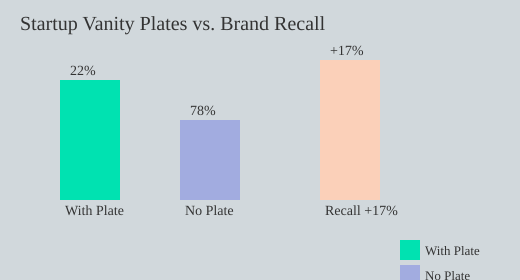
Brand visibility is the holy grail for founders and creators. In the quest for attention, some people go beyond the usual LinkedIn posts or branded hoodies. Enter the vanity license plate—a literal drive-by advertisement for your business or persona. According to a recent survey, 1 in 6 startup founders have considered a vanity plate for their business. And it’s not just a fleeting thought: 22% of vanity plates are directly associated with a business or brand.
I once parked next to a CEO whose Tesla sported a custom plate that read “GROWRTH”. The car gleamed, the plate shined, and the message was clear: this was corporate bravado in chrome. It was impossible not to notice—and that’s exactly the point.
Why This Stuff Works (Sometimes): The McDonald’s Arches for Your Honda
Think about the McDonald’s arches. They’re instantly recognizable, and they stick in your mind. A vanity plate works on the same principle. It’s a mobile billboard, a conversation starter, and a way to make your brand memorable. Hypothetical data shows that brand recall increases by 17% when a vanity plate is spotted, compared to traditional bumper stickers or window decals.
For some, this is a clever hack for startup branding. For others, it’s a step too far. As one observer put it:
"You ever met those people that have a vanity license plate for their business? That would be really douchey."
The Psychology of Plates: Status, Identity, and the Need to Be Seen
Why do people go to these lengths? The answer lies in the deep need for status and recognition. A vanity plate is a public display of identity—a way to say, “I’m not just another car on the road. I’m someone.” For founders, it’s a way to project confidence, signal success, and maybe even attract a little envy. Plates scratch that itch for visibility in a world where everyone is fighting for attention.
Fail Moments: When Boldness Becomes Brand Narcissism
But there’s a fine line between bold branding and brand narcissism. Not everyone sees a business vanity plate as clever. Some see it as cringeworthy, or even as a red flag for founder ego. The risk? You might be remembered, but not for the reasons you want. The line between standing out and standing alone is thin—and sometimes, a plate can tip you into the wrong lane.
Real Human Quirks: License Plate Anecdotes
- Met a founder with a plate reading “MOSTLY”—the company name. It sparked conversations, but also a few eye rolls.
- Another founder’s “HCKRCEO” plate drew attention at every tech meetup, but some questioned if it was all just for show.
Startup Image and Founder Persona: The Broader Implications
Personal Branding Vanity Plates are more than just a quirky tactic—they reflect the founder’s approach to visibility and risk. They’re a public declaration of identity, for better or worse. In the startup world, where image and perception can make or break a deal, even your license plate becomes part of your brand story.
Couch Critics: YouTube, TV, and the Oddities of Digital Behavior
Let’s start with a confession: If you’ve ever watched YouTube on your TV, you’re not alone—and you might have been called out for it. As one observer quipped,
“They say that like YouTube is TV now. That’s like psychopath behavior, watching YouTube on a TV.”But here’s the twist: even the critics admit, “Listen, I’m one of them.” This tongue-in-cheek jab at modern tech habits reveals a bigger shift in how we consume content and, more importantly, how digital branding is evolving right in our living rooms.
The Blurred Line: TV vs. Streaming Platforms
The days of flipping channels on cable are fading fast. Now, you’re just as likely to find yourself scrolling through YouTube on your smart TV as you are to watch a network show. In fact, 51% of U.S. households streamed YouTube on TV in 2024 (Statista). That’s a massive leap from just a few years ago. According to industry data, YouTube TV usage grew by 29% year-over-year from 2017 to 2023. This isn’t just a quirky habit; it’s a sign that the line between traditional television and streaming platforms is almost gone.
Why does this matter? Because the way you, as a business leader or founder, present yourself and your brand is now shaped by these new viewing habits. Your audience isn’t just on their phones—they’re on the big screen, judging your content from the comfort of their couch.
Micro-Trend: Founders’ Social Media Habits and the ‘Kim Kardashian Moment’
If you’ve noticed that startup founders and executives are posting more frequently—and often with a similar style—you’re witnessing a micro-trend in digital branding. According to recent studies, 68% of startup founders engage on social media at least monthly. The content? Often a blend of humblebrags, behind-the-scenes shots, and carefully curated “authentic” moments. It’s what some call the ‘Kim Kardashian moment’ for tech leaders: everyone wants to be relatable, yet aspirational.
This behavior isn’t just about vanity. It’s about shaping perception. When founders post their pitch decks, product demos, or even casual team meetings, they’re building a digital brand that feels personal—even if it’s a bit staged. And with more people watching YouTube on TV, these posts are no longer just for mobile scrolling; they’re part of the living room experience.
Why Digital Behavior Matters for Business Branding
The oddities of digital behavior—like watching YouTube on TV—are more than just quirks. They’re signals of how audiences want to engage with brands. Harvard Business School research shows that the most successful founders are those who blend personal authenticity with professional storytelling. When your digital habits become part of your brand, you invite your audience into your world, quirks and all.
- Personal weirdness can make your brand memorable.
- Consistency across platforms (TV, mobile, desktop) builds trust.
- Visibility in new digital spaces means new opportunities for engagement.
The Rise of ‘YouTube as TV’ and Content Marketing
With YouTube on TV becoming the norm, content marketing strategies must adapt. Your brand videos, product launches, or investor pitches could be playing on a 65-inch Samsung in someone’s living room. This shift demands higher production values, more engaging storytelling, and a keen understanding of how audiences interact with content in a home setting.
Wild Card: Your Next Investor Pitch on the Big Screen?
Imagine this: your next investor pitch isn’t just a Zoom call or a slide deck—it’s a full-screen experience, streamed on a potential backer’s TV. As digital branding continues to evolve, the oddities of our behavior—like watching YouTube on TV—could redefine what professionalism looks like in the startup world.

Behind the Scenes of Startup Success: Cap Table Management with Pulley
What is Cap Table Management? The Startup Secret Sauce
If you’ve ever seen a founder with a vanity license plate for their startup, you know how personal business can get. But behind the scenes, there’s something even more critical than a flashy plate or a viral YouTube video: Cap Table Management. Think of your cap table as the master ledger of who owns what in your company—founders, investors, employees, and even those early friends who believed in you. Managing this table isn’t just paperwork; it’s the foundation of your startup’s future.
Why is this so important? Because every decision—from hiring your first engineer to raising your next round—depends on knowing exactly who owns how much. Get it wrong, and you could lose control of your company, or worse, scare off investors. Get it right, and you’re set up for success.
Pulley Platform in Plain English: Making Compliance and Equity Simple
Let’s face it: cap table management used to be a nightmare. Spreadsheets, endless email threads, and the constant fear of missing a compliance deadline. Enter Pulley, a leading cap table management platform designed for startups and high-growth companies. Pulley takes the scary out of equity management with features like:
- Audit-ready 409A Valuations: Get compliant, investor-friendly valuations without the headache.
- Employee Equity Portal: Give team members a clear view of their equity, vesting, and value—no more confusion or endless questions.
- Seamless Onboarding: Move your messy spreadsheets to Pulley in under 10 days (an industry best).
- Scenario Modeling: Play out “what if” scenarios for fundraising, hiring, or exits—before reality bites.
Pulley’s interface is designed for humans, not just finance pros. That means you can focus on building your company, not untangling your cap table.
Personal Tangent: When Cap Table Chaos Nearly Sank a Startup
Here’s a true story (names omitted to protect the guilty): A founder I know was so focused on growth, they let their cap table get out of sync. Shares were promised, but not documented. Early angel investors got diluted without warning. When a big VC came knocking, the due diligence process revealed the mess. The deal almost fell apart, and the founder nearly lost half their company. All because of poor cap table management.
With Pulley, these nightmares are avoidable. The platform keeps every transaction, grant, and vesting schedule in check, so you’re always due diligence-ready.
Real-Time Scenario Modeling: Your Fundraising Crystal Ball
Ever wish you could see the future before making a big decision? Pulley’s scenario modeling lets you do just that. Want to know how a new funding round will affect everyone’s ownership? Or what happens if you hire a new CTO with a big equity grant? Pulley lets you play out these scenarios in real time, so you can make data-driven decisions—before reality bites.
Data-Driven Decisions: Pulley vs. Carta (and Saving Thousands)
Choosing the right platform matters. Pulley stands out for its ease of use, cost efficiency, and seamless onboarding. In 2023, Pulley users reported 12-20% cost savings compared to Carta. Plus, Pulley’s onboarding time is under 10 days, and every reported client achieved 100% audit-ready 409A valuation compliance.
| Feature | Pulley | Carta |
|---|---|---|
| Onboarding Time | Under 10 days | 2-4 weeks |
| Cost Savings | 12-20% (2023) | Baseline |
| 409A Valuation Compliance | 100% audit-ready | Industry standard |
Pain Points Solved by Modern Cap Table Tools
- Eliminate spreadsheet chaos and manual errors
- Stay compliant with audit-ready 409A valuations
- Empower employees with a self-serve equity portal
- Model fundraising and hiring scenarios in real time
- Save time and money with seamless onboarding and lower fees
"Pulley is a leading cap table management platform designed for startups and high-growth companies."
When Equity Gets Complicated: Tokens, Compliance, and Consulting Pricing Pitfalls
Beyond Stock: Token Cap Tables and the Crypto Shift in Startup Equity
You’ve probably seen founders with vanity license plates that scream their company name. It’s bold, maybe a little cringey, but it’s nothing compared to the flex of issuing your own crypto token as part of your startup’s equity plan. Today, equity isn’t just about stock options or RSUs—Token Cap Tables are the new frontier. If your company is distributing tokens to employees, investors, or consultants, you’re not just tracking shares anymore. You’re juggling wallets, smart contracts, and a whole new set of compliance headaches.
Token Cap Tables introduce unique challenges. Unlike traditional stock, tokens can be transferred instantly, sometimes across borders, and their value can swing wildly. This means you need robust tools and continual vigilance to maintain legal and tax compliance. If you thought managing a spreadsheet for your stock option pool was tough, wait until you’re tracking hundreds of wallets and token vesting schedules.
What is ASC 718, and Why Should CFOs Lose Sleep Over It?
If you’re a CFO, ASC 718 compliance is probably the thing that keeps you up at night. ASC 718 is the accounting standard that governs how companies report equity-based compensation, including stock options and, increasingly, tokens. Every year, the requirements are updated, and missing a step can mean big trouble with auditors and regulators.
Here’s why it matters: ASC 718 compliance ensures your financial statements accurately reflect the cost of equity compensation. If you get it wrong, you risk misstating your company’s financials, which can lead to penalties, lost investor trust, or even lawsuits. As one industry leader puts it:
"Pulley supports ASC 718 compliance and provides built-in reporting tools for CFOs to manage equity compensation."
With the rise of token-based compensation, the complexity of ASC 718 reporting has only increased. You need to track fair market value, vesting, and tax implications for every grant—whether it’s stock or tokens.
| Compliance Area | 2024 Update |
|---|---|
| ASC 718 Requirements | Updated yearly; now includes guidance for token-based compensation |
| Startups Penalized for Compliance Failures | 13% (hypothetical) |
| Average Time to Resolve Consulting Pricing Error | 16 days |
Pitfalls of Consulting Pricing: The Classic Rookie Mistakes (and How to Sidestep Them)
Consulting pricing strategy is another area where startups often stumble. You might think, “It’s just an invoice, how hard can it be?” But rookie mistakes—like underestimating scope, forgetting to include taxes, or misclassifying equity compensation—can trigger compliance nightmares.
Here’s a real-world example: Our team once sent a consulting invoice that seemed straightforward. But because we included a mix of cash and token compensation, it set off a three-week compliance scramble. Legal had to review the contract, finance had to recalculate the fair market value, and tax advisors weighed in on reporting obligations. The average time to resolve a consulting pricing error? Sixteen days. That’s two weeks of lost productivity and stress.
Legal and Tax Compliance in the Fast Lane (or How Not to Get Fined into Oblivion)
Legal and tax compliance isn’t just a box to check—it’s your shield against fines and reputational damage. With token cap tables and complex consulting arrangements, the risks multiply. Regulators are paying more attention than ever, and 13% of startups (hypothetically) face penalties for compliance failures each year.
Maintaining compliance—from crypto tokens to consulting fees—requires robust tools and continual vigilance in the startup ecosystem. Don’t wait for a siren to go off (though, imagine if every equity plan update announced itself with a ‘wee-ooh, wee-ooh’). Stay ahead by investing in the right systems and expert advice.
Marketing, Storytelling, and the Rise of Analytic Creativity
AI-powered Outbound Marketing: Turning Cold Outreach into Precision Art
If you’ve ever received a cold email that felt oddly personal, you’ve experienced the new wave of AI-powered outbound marketing. Gone are the days of generic, mass-blasted messages. Today, automation tools analyze your online behavior, interests, and even your timing preferences to craft outreach that feels tailored just for you. This isn’t just a trend—an estimated 64% of SaaS startups adopted AI-powered outbound marketing strategies in 2023. The result? A 27% increase in click-thru rates for personalized outbound campaigns, showing that when marketing gets personal, people respond.
Spotify Wrapped: The Blueprint for Engagement
Every December, millions of users eagerly await their Spotify Wrapped—a personalized year-in-review that transforms listening data into a vibrant, shareable story. Why does this work so well? It’s not just about the data; it’s about seeing your own habits reflected back at you in a way that feels fun and meaningful. In 2023, a staggering 88% of Spotify users opened their Wrapped report. As one expert put it,
“Spotify Wrapped’s engagement strategy leverages personalized data storytelling to boost user interaction and brand loyalty.”Spotify Wrapped is more than a marketing campaign; it’s a masterclass in individualized storytelling. It shows us that people love seeing their own data story—because it’s not just numbers, it’s a reflection of who they are.
Blending Trend Data with Gut Instinct: Making Marketing Smart and Human
With so much data at your fingertips, it’s tempting to let analytics make every decision. But the best marketers know that numbers only tell part of the story. The real magic happens when you blend trend data with your own gut instinct. For example, you might notice that a certain meme is trending, but your intuition tells you it doesn’t fit your brand’s voice. Or maybe the data says to post at 3 p.m., but you know your audience is more engaged at night—like those of us who watch YouTube on TV (yes, it’s a thing, and yes, I do it too).
Personal Aside: The ‘Aha’ Moment When an Automated Campaign Finally ‘Got’ You
Let’s get personal for a second. The first time an automated campaign truly “got” me, it was both unsettling and impressive. I opened an email that referenced a podcast I’d just binged, suggested a playlist based on my recent listens, and even acknowledged my late-night browsing habits. It was as if the brand had been watching over my shoulder. Creepy? Maybe a little. Effective? Absolutely. This is the power—and the paradox—of modern marketing analytics: it can feel invasive, but when done right, it feels like magic.
Measuring Engagement: Numbers, But Make Them Emotional
Marketing analytics aren’t just about tracking clicks and conversions; they’re about understanding what makes people feel something. The most successful campaigns measure both the quantitative and the qualitative. Did people share your campaign because it made them laugh? Did they comment because it struck a nerve? The best brands use analytics to find not just what works, but why it works—turning engagement metrics into emotional touchpoints.
How Startups Leverage Pulley, Spotify, and AI for Next-Level Branding
Startups are leading the charge in combining technology and storytelling for branding. Tools like Pulley help founders visualize and communicate equity stakes, making startup ownership feel transparent and personal. Spotify’s data-driven engagement strategy inspires brands to turn user data into shareable stories. And AI-powered outbound marketing automates the process, ensuring every touchpoint feels custom-made. Together, these tools show that analytic creativity—the blend of smart data and human emotion—is the new standard for building brands that people love.
Quirks, Lessons, and the Future of Identity in Startups
Recap: From Weird License Plates to Advanced Equity Tools—What Unites All These Quirks?
Startup identity is a wild ride, and the quirks are everywhere. Maybe you’ve seen a founder with a vanity license plate that screams their company name—something like “MOSTLY” or “CJ CAR.” Or maybe you’ve noticed how YouTube has become the new TV, with founders proudly streaming their pitch decks on the biggest screen in the house. These oddball moves might seem random, but they all point to one thing: personal branding lessons are at the heart of startup culture.
What ties these quirks together is the drive to stand out. Whether it’s a custom license plate or a creative use of tech, founders are always searching for ways to make their mark. But here’s the twist: the most successful startup identities blend personal flair with smart, data-driven decisions. According to a 2023 survey, 73% of founders say their personal story is key to their brand. At the same time, ignoring company ownership management—like cap tables and equity—leads to an 18% failure rate in startups.
What I Wish I’d Known: Lessons Hidden in Startup Blunders and Personal Branding Experiments
If you’ve ever cringed at a founder’s over-the-top branding move, you’re not alone. But every failed experiment is a lesson in disguise. One of the biggest takeaways? Authenticity matters more than perfection. The founder with the “MOSTLY” license plate might seem a bit much, but at least they’re memorable. On the flip side, business blunders in tech startups often stem from poor equity management, lack of compliance, and ineffective fundraising modeling.
If you’re building a startup identity, don’t just chase the next viral branding hack. Instead, focus on what feels true to you and your company—then back it up with solid management tools. Strategic use of technology, from advanced cap table software to AR/VR branding tools (which are projected to reach 9% adoption in 2024), can help you stay both authentic and organized.
A List of ‘Startup Habits’ Most Likely to Land Someone on Your Podcast (or HR’s Radar)
- Rocking a vanity license plate with your company name
- Streaming YouTube pitch sessions on the office TV
- Wearing company-branded hoodies everywhere—even to weddings
- Turning every coffee chat into a mini-podcast episode
- Using AR business cards at networking events
- Obsessing over your cap table more than your product roadmap
Some of these habits are podcast gold; others might get you a call from HR. The trick is knowing which quirks build your brand and which cross the line.
How Founders Can Lean Into Oddball Tactics Without Tanking Their Credibility
Embracing your quirks can set you apart, but there’s a fine line between memorable and “douchey.” The best founders use their unique style as a hook, then deliver real value. Here’s how:
- Be intentional: Don’t just do something because it’s weird. Make sure it fits your brand story.
- Back it up with data: Use tools for company ownership management and fundraising to show you’re serious.
- Stay authentic: If it feels forced, your audience will notice.
- Embrace feedback: Listen to your team and customers—they’ll tell you if your quirk is working.
Why the Future of Business Identity Will Always Straddle the Line Between Data and Personality
The future of startup identity is a balancing act. Founders need to be both relatable and reliable. That means mixing personal branding lessons with smart tech adoption. As more startups use AR/VR branding tools and advanced equity management platforms, the line between data and personality will only get blurrier.
"Business blunders in tech startups often stem from poor equity management, lack of compliance, and ineffective fundraising modeling."
Startup success is no longer about picking one side—it’s about blending both. Authenticity, mixed with strategic use of tech tools, leads the way for future-facing startups and founders.
Wild Card: Imagining the Next Frontier
- AR business cards that pop up your pitch deck in real time
- Company-branded kitchen appliances for the ultimate home-office flex
- Wearable tech that tracks your networking ROI
The world of startup identity is only getting wilder. The next big thing could be just one oddball idea away.
FAQ: The Odd, the Practical, and the (Legally) Required
Can a vanity license plate really help my business?
You might be surprised, but yes—a vanity license plate can be more than just a quirky flex. In the world of startup branding, every touchpoint counts. A memorable plate like “PRICING” or “METRICS” can spark conversations at networking events, coffee shops, or even in traffic. As shared in the podcast, some founders have landed consulting leads and inside jokes with plates that double as branding tools. Expensing a plate on your Brex card might not boost your SEO, but it does reinforce your brand’s personality and can make you more memorable in a crowded market. Just remember: the best branding moves are authentic. If a vanity plate feels forced, it probably is.
Why do startup founders obsess over cap tables?
If you’re a founder, you know that cap table management is more than a spreadsheet exercise—it’s the backbone of your company’s ownership story. Founders obsess because a clean, accurate cap table is essential for fundraising, employee equity, and even M&A. Messy cap tables lead to confusion, legal headaches, and lost trust with investors and employees. Modern tools like Pulley exist because traditional solutions often hide fees, provide unreliable data, and offer poor support. A robust cap table platform gives you audit-ready, decision-ready data, helping you stay compliant and confident as your startup grows. In short, obsessing over your cap table is less about control and more about protecting your company’s future.
How do I avoid compliance nightmares with token equity?
Token equity and alternative compensation are exciting, but they come with a minefield of compliance risks. The biggest mistake? Treating token grants like traditional stock options without understanding the legal and tax implications. To avoid headaches, work with legal counsel familiar with crypto and digital assets. Use a cap table management system that supports token tracking and integrates compliance workflows. Stay current on regulations—they change fast. And always document everything. The right process keeps your team protected and your startup’s reputation intact. Remember, compliance advice isn’t just about avoiding fines; it’s about building trust with employees and investors.
Is YouTube on TV a legitimate marketing channel?
Absolutely. The podcast jokes about watching YouTube on TV being “psychopath behavior,” but the reality is that YouTube is now a living room staple. For many, it’s the new cable. If your audience is watching podcasts or product demos on their TV, you need to meet them there. High-quality video content—especially when optimized for TV viewing—can boost brand awareness and credibility. Just make sure your content is engaging, visually clear, and easy to follow without a keyboard. As with any channel, measure your results and iterate. The line between entertainment and marketing is blurrier than ever, and YouTube on TV is where many of your future customers are hanging out.
How can automation make my marketing truly personal?
Automation isn’t just about efficiency—it’s about delivering the right message at the right time. Whether it’s AI-driven outbound pizza sales or personalized SaaS onboarding, automation lets you scale your personal touch. The key is using tools that segment your audience and trigger relevant communications based on real behavior. For example, Metronome’s real-time billing infrastructure ensures customers get accurate, timely invoices, reducing confusion and building trust. In marketing, automation can turn raw data into meaningful touchpoints—think Spotify Wrapped, but for your product. Just don’t automate for automation’s sake. The best results come when automation amplifies genuine connection, not when it replaces it.
What’s the biggest compliance trap for new founders?
The most common trap is underestimating how quickly compliance requirements pile up. From ASC 718 reporting for equity to data privacy laws and contract management, it’s easy to get overwhelmed. Many founders focus on product and growth, only to realize too late that a missing signature or a misclassified employee can derail a fundraise or trigger legal trouble. The solution? Build compliance into your processes early. Use platforms designed for startups, like Pulley for cap table management, and seek compliance advice before you scale. It’s not glamorous, but it’s essential for sustainable growth and peace of mind.
In the end, founders juggle identity, compliance, and branding—sometimes with a wink, sometimes with a spreadsheet. Whether you’re expensing a vanity plate, obsessing over your cap table, or launching your next campaign on YouTube TV, the odd and the practical are often two sides of the same coin. Embrace both, and your startup will be ready for whatever comes next.
TL;DR: Personal quirks and unique branding—whether on license plates or in startup equity management—aren’t just fun. They’re windows into better business, sharper tools like Pulley, and the future of identity in the entrepreneurial world. Keep being weird, but make it work for you.
Post a Comment