

Picture this: you’ve just shown a friend your weird, almost secret way to use AI chatbots, and suddenly their eyes go wide—they just realized they have a brand-new superpower. That’s the experience I want to share here, with a story about how treating AI like an employee (instead of a slot machine) totally flipped the script for me—and how you can do the same.
Why Most People Miss Out: AI as Slot Machine vs. Digital Sidekick
When it comes to AI content strategy and AI content creation, most people are missing out on the real magic. If you’re like most users, you probably treat AI as a kind of digital slot machine: you type in a question, pull the lever, and hope the answer that pops out is a jackpot. But this approach barely scratches the surface of what AI marketing tools and AI-driven content marketing can do for you.
AI is a cool new way to ask questions and get answers, it's the new Google search so to say, but most people stop there, they don't see the power under the hood.
The Slot Machine Mindset: Why Most People Miss Out
It’s easy to see why so many people use AI this way. The interface feels familiar—just like Google, you ask, and you get. But treating AI as a search tool or answer dispenser means you’re only using a fraction of its potential. Most users never go beyond this surface level, so they never unlock the flexibility and power that comes from treating AI as a programmable assistant.
- One-off questions: Most people ask a question, get an answer, and move on.
- No customization: They don’t realize you can give AI detailed instructions, context, or feedback to shape its responses.
- Missed opportunities: They overlook how AI can be integrated into workflows for targeted persona creation, content analysis, and identifying content gaps—key elements of a modern AI-driven content strategy.
The Digital Sidekick Approach: Unlocking Superpowers
Imagine if, instead of hoping for a lucky answer, you could program your own digital teammate. This is the sidekick approach. When you treat AI as a programmable assistant—giving it clear instructions, refining its output, and building on previous interactions—you unlock a whole new level of productivity and creativity.
- Faster business growth: AI can help you build your business faster by automating research, drafting content, and analyzing competitors.
- Accelerated learning: You can learn new skills and understand complex topics more quickly with tailored explanations and step-by-step guidance.
- Advanced content marketing: By integrating AI into your content workflows, you can create highly targeted, engaging content that fits your audience’s needs.
Anecdote: The “Superpower” Moment
The first time I guided a friend past the “Google 2.0” mindset, it was like watching someone suddenly realize they could fly. They’d been using AI to answer trivia and write simple emails, but when I showed them how to give detailed prompts, ask for iterative feedback, and build a workflow, their eyes lit up. They felt like they’d discovered a new superpower—suddenly, they could do almost anything, from building a business faster to mastering new skills in record time.
Why the Hype Faded: Most People Stop Too Soon
When AI first hit the mainstream, there was a wave of excitement. People expected life-changing results. But as the novelty wore off, most users plateaued. They kept using AI like a search engine, never realizing there was more under the hood. That’s why, even though AI marketing tools and AI-driven content marketing have the potential to transform your workflow, only a small minority of users report truly life-changing effects.
- Majority: See no significant change—just another tool.
- Minority: Unlock advanced, tailored workflows and experience dramatic improvements in productivity and creativity.
Chart: AI Impact—Average Users vs. Power Users
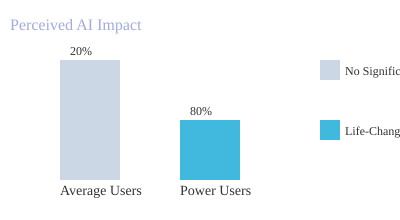
To truly harness AI as your ultimate digital sidekick, you need to move beyond the slot machine mindset. Treat AI as a programmable teammate, and you’ll unlock superpowers that most users never experience.
Stop Copy-Pasting Prompts: Building Your Own AI Framework
If you’re still copy-pasting generic prompts into your favorite chatbot, you’re missing out on the true power of AI content ideation and AI-powered content creation. Short, one-line commands like “Write a viral YouTube script about productivity” might give you something usable, but it’ll be bland, generic, and—let’s be honest—instantly forgettable. This is what we call AI output slop: content that’s just good enough to exist, but never good enough to stand out.
Why Generic Prompts Fail: The Guessing Game
When you use short, vague prompts, you force the AI to guess what you want. The result? It pulls from a sea of average ideas and methods already floating around the internet. You get the same recycled advice, tone, and structure as everyone else. That’s the opposite of effective AI content strategy. If you want your AI-powered content creation to shine, you need to give the AI more to work with—much more.
Your Real Superpower: Train AI Like a Digital Employee
Think of AI as a digital employee. If you want great results, you have to teach it exactly how you’d do the job yourself. As one expert puts it:
You need to teach the AI exactly how you would create the YouTube video.
That means breaking down your process into clear, step-by-step instructions. The more context you give, the better the AI can match your unique voice, style, and requirements. This is where long, detailed prompts—often 500 to 2,000 words—become your secret weapon for AI content research and ideation.
| Prompt Type | Typical Length | Result Quality |
|---|---|---|
| Short/Generic | 1-2 sentences | Low (AI output slop) |
| Detailed/Custom | 500–2,000 words | High (Personalized, on-brand) |
How Top Creators Use AI: Custom Workflows, Not Default Suggestions
Look at creators like Ali Abdal or Alex Hormozi. They don’t just ask ChatGPT for a viral script and hit publish. Instead, they:
- Deconstruct their own creative process
- Feed the AI detailed instructions, examples, and context
- Iterate on the output, giving feedback and corrections until it matches their standards
This approach works for any kind of AI content ideation—YouTube scripts, landing pages, tweets, or blog posts. The key is to build prompts from your own process, not someone else’s template.
Quick Tip: Start With Your Own Process
Before you even open your AI tool, take a moment to outline how you would tackle the task. Imagine you’re teaching a new team member how to write a script, design a landing page, or craft a tweet. What steps do you follow? What tone, structure, or quirks make your content unique? Write all of this down. This becomes the backbone of your prompt.
Example: Refining a YouTube Script Prompt
- Instead of:
Write a viral YouTube script about productivity. - Try:
Write a YouTube script on productivity in my style: conversational, witty, with a cold open, no B-roll, and a focus on actionable tips. Reference my previous videos for tone. Script should be 8-10 minutes, with a personal story in the intro and a call to action at the end.
Notice how much more specific and actionable the second prompt is? That’s what turns AI into your ultimate digital sidekick for AI-powered content creation.
Iterate and Refine: The Path to Repeatable Success
Even the best creators don’t get it right on the first try. They use the AI’s output as a draft, then tweak and refine—sometimes running through multiple iterations. This process not only improves quality but also helps you build a repeatable workflow for AI content strategy. Over time, your prompts become a living framework, tailored to your brand and goals.
- Key Point: The more you personalize and iterate, the less your content sounds like everyone else’s—and the more it sounds like you.
Four Creative Modes: Programming AI for Different Content Needs
So, let's start there, we're going to go over four different options to actually teach the AI how to do what to do.
When you’re building your AI content strategy, you’ll quickly realize that not every project fits the same mold. Sometimes you know exactly what you want; other times, you’re not even sure where to begin. The good news? There are four creative modes—distinct ways to program your AI sidekick for any content ideation, research, or creation task. Let’s break down each mode, when to use it, and how leading brands leverage these approaches to supercharge their marketing automation and customer engagement.
| Prompt Strategy | Best For | Example Use Case |
|---|---|---|
| Detailed Self-Writing | Personalized, creative work | Replicating your unique writing style for tweets or blog posts |
| AI-Created Guides | Structured, logic-based topics | Customer avatar templates, content checklists |
| Expert Breakdowns | Learning from proven methods | Importing Alex Hormozi’s offer PDF to create compelling offers |
| Framework Emulation | Adapting best-in-class examples | Deconstructing a high-converting landing page and applying its structure |
Option 1: Write Detailed Instructions Yourself
If you want AI content creation tools to truly reflect your voice or process, start by writing out detailed instructions. This is a self-teaching challenge that forces you to clarify your own workflow. For example, if you want AI to write tweets like you, break down your process: How do you generate ideas? What structure do you use? What tone fits your brand? The more specifics you give—like sample posts, bullet lists, and output formats—the better the AI can mimic your style. This approach works best if you’re already familiar with the topic or process. It’s also how top creators ensure their AI-generated content doesn’t sound generic.
Option 2: Ask AI to Create a Guide on a Well-Known Topic
For topics that are widely covered and don’t require much creative flair, let the AI do the heavy lifting. Simply prompt it to generate a comprehensive guide or checklist. For instance, if you need a customer avatar template, ask: “Give me a detailed guide on creating the most comprehensive customer avatar.” The AI will deliver a step-by-step process you can use or adapt. This is perfect for structured, logic-based content ideation—think checklists, process outlines, or standard operating procedures. Brands often use this mode to automate repetitive marketing tasks and ensure consistency across campaigns.
Option 3: Import Expert Material and Break It Down
Sometimes, you don’t know the best process—but someone else does. Here’s where AI content research shines. Import authoritative resources (like PDFs, ebooks, or high-performing web pages) into your AI tool. Then, instruct the AI to break down the expert’s method, step by step. For example, upload Alex Hormozi’s offer creation PDF and ask the AI to extract and explain his process. This lets you learn from the best and apply proven strategies to your own projects. Leading brands use this technique to quickly onboard team members and scale expert knowledge across their organizations.
Option 4: Deconstruct and Emulate an Example You Admire
When you find a piece of content you love—a landing page, a viral post, or a compelling email—have the AI analyze it. Ask the AI to break down the structure, tone, psychological tactics, and step-by-step flow. Then, prompt it to help you recreate that framework for your own product or context. For example, copy the content from a standout landing page and instruct the AI: “Deconstruct this, explain why it works, and teach me how to replicate it.” This mode is invaluable for content creators who want to stand out, not just fit in.
Wild Card: Mash Up the Modes
For complex projects or cross-disciplinary workflows, combine these strategies. Use AI-generated guides as a base, layer in expert insights, and refine with your own detailed instructions. This hybrid approach unlocks the full power of AI content creation tools, giving you a competitive edge in both speed and quality.
From Canvas to Catalyst: Tools and Workflows that Actually Scale
When it comes to AI marketing tools and AI content creation tools, the difference between a good workflow and a great one often comes down to how well your tools scale with your needs. Enter Eden—an early-access platform designed to transform how you collect, organize, and create media content for distribution. If you’ve ever felt limited by your current setup or spent hours searching for that one clip or prompt, Eden is about to change your game.
Showcase: Eden—The Next Evolution in AI Content Creation Tools
Eden isn’t just another file storage solution. It’s a full-featured media content creation and management platform, purpose-built for creators who want to work smarter, not harder. Here’s how Eden’s canvas and integrated AI workflows set it apart:
- Universal Content Ingestion: Drop in YouTube links, Instagram reels, tweets, or Substack articles. Eden instantly downloads, transcribes, and auto-tags your content, making it fully searchable.
- Frame-Level Search: Need a specific shot or quote? Eden lets you search for keywords within your video content. As described:
So, if I were to paste this YouTube video into there... it would bring up every frame with a microphone inside of it.
- AI Chat Integration: Connect your ingested content to an AI chat powered by any model you choose. Ask questions, generate summaries, or brainstorm ideas—all within the same workspace.
- Prompt Libraries: Store and organize your favorite prompts. Soon, you’ll be able to execute these prompts automatically inside your canvas or chat, streamlining repetitive tasks.
How Eden Supercharges Content Distribution
Modern content distribution is about more than just posting everywhere. Eden leverages AI to analyze audience behavior, helping you identify the best platforms and optimal times for sharing your content. This automation boosts your reach and engagement, ensuring your work gets seen by the right people at the right moment.
Time-Saving Workflows for Creators
- Instant B-Roll Discovery: Search for visual elements (like “microphone”) across all your videos to quickly find and clip the perfect B-roll for your next project.
- Effortless Research: Transcribe and tag articles, reels, and tweets for easy reference and citation in your work.
- Prompt Management: Build a library of proven prompts for ideation, editing, or publishing—ready to deploy whenever you need them.
Early Access and Exclusive Benefits
Eden is currently in early access, with a special Black Friday opening and discounted pricing for early adopters. If you want to be among the first to experience these advanced AI content creation tools, check the link in the description to sign up for the waitlist or join directly if spots are available.
Eden vs. Cortex: A Leap Forward in AI Marketing Tools
For those familiar with Cortex, Eden represents a major upgrade. While Cortex offered basic AI chat and content management, Eden introduces a dynamic canvas, advanced search, and robust prompt libraries. Here’s how they compare:
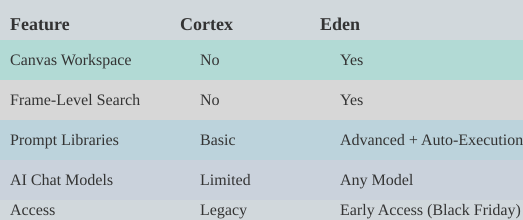
With Eden, your workflow moves from static file storage to a living, searchable, and AI-powered creative hub. Whether you’re managing a content calendar, researching for your next video, or building a prompt library for your team, Eden’s scalable tools are designed to keep you ahead in the fast-moving world of media content creation and distribution.
Transforming Instructions Into Action: Context-Driven Prompts for Maximum Impact
When it comes to AI content optimization and content marketing strategy, the difference between average and exceptional results often comes down to how you communicate with your AI sidekick. Most people start with generic instructions—“Write me a good landing page for a software company”—but quickly realize that this approach falls flat. The secret to unlocking AI’s real power is context-driven prompting. Here’s how you can turn basic instructions into actionable, tailored prompts that deliver maximum impact for your brand.
From Generic Instructions to Brand-Tailored Prompts
Detailed instructions are a great starting point, but they’re not enough. To truly harness AI content personalization, you need to feed your AI more than just a task. Ask yourself: Does the AI know my company’s unique value proposition, my product’s features, my customer avatar, and my brand voice? Without this context, even the most advanced AI can’t produce content that resonates with your audience.
- Generic prompt: Write a landing page for a software company.
- Context-driven prompt: Write a high-converting landing page for [Your Company], a SaaS platform that helps small businesses automate their invoicing. Our target audience is small business owners aged 30-50 who value simplicity and reliability. Use a friendly, trustworthy tone and highlight our 24/7 customer support.
Notice how the second prompt gives the AI everything it needs to create content that’s not just relevant, but compelling. This is the foundation of a strong AI content strategy.
Meta-Prompting: The Secret Sauce for AI Content Optimization
Here’s where things get really interesting. Most people struggle to write effective prompts, especially for complex tasks. Enter the meta-prompt: a “prompt that writes prompts.” Think of it as your AI’s coach, guiding it to ask the right questions and fill in the gaps.
This is the bread and butter, this is the secret sauce.
With a meta-prompt, you can bridge knowledge gaps and ensure every instruction is transformed into a context-rich, actionable prompt. For example:
You are an expert content strategist. Ask me questions to gather all the information you need to write a high-converting landing page for my product. Then, generate a detailed prompt I can use to get the best results from an AI writing tool.
This approach not only saves time, but also helps non-experts create sophisticated, customized instructions—making AI content optimization accessible to everyone.
Building Your Digital Playbook: Save and Reuse Meta-Prompts
Once you’ve crafted an effective meta-prompt, don’t let it slip away. Save it somewhere safe—this is your digital playbook. Reusing and refining these templates means you can tackle new projects faster and with more consistency, whether you’re working on blog posts, email campaigns, or social media content.
- Store your best meta-prompts in a shared document or knowledge base.
- Adapt them for different products, audiences, or content types.
- Encourage your team to contribute their own meta-prompts for collective growth.
Think of your meta-prompts as a library of best practices for AI content personalization—ready to deploy whenever you need them.
Wild Card: Coaching Your AI Sidekick to Challenge You
What if your AI sidekick could do more than just follow instructions? Imagine it challenging your assumptions, asking clarifying questions, and sharpening your thinking. By adding layers of self-reflection and feedback, you can push your AI to deliver even more original and effective content.
- Ask your AI to review its own output and suggest improvements.
- Prompt it to identify gaps or inconsistencies in your brief.
- Encourage it to propose alternative strategies or creative angles.
This iterative process, powered by AI-powered analytics and natural language processing, allows you to fine-tune your content marketing strategy for maximum relevance and impact. The result? Content that not only meets your needs, but also surprises and delights your audience.
Charting the Payoff: How Custom AI Workflows Outperform Slot Machine Users
Why “Slot Machine” AI Use Falls Short
Many people treat AI content creation tools like a slot machine: type in a vague prompt, hit “generate,” and hope for a jackpot result. This approach is fast, but it rarely leads to standout content. The AI gives you generic, surface-level outputs designed to please everyone but delight no one. As a result, your content blends into the noise—lacking originality, engagement, and any sense of your personal brand.
AI content analysis shows that these “slot machine” prompts produce work that’s just “okay.” For example, if you ask ChatGPT to “generate a viral YouTube script on productivity,” you’ll get a basic, uninspired script. It won’t reflect your unique voice, audience, or goals. It’s not the kind of content you’d expect from top creators like Ali Abdaal or Alex Hormozi, who have developed their own frameworks and styles over time.
The Power of Custom AI Workflows
Custom AI workflows flip the script. Instead of settling for generic outputs, you teach the AI exactly how you want your content to look, sound, and feel. This means writing detailed prompts—sometimes 500 to 2,000 words long—that lay out your structure, tone, audience, and brand quirks. You iterate, give feedback, and refine the process in real time.
Custom AI workflows lead to faster content creation, higher engagement, and more authentic personal branding.
With this approach, AI content engagement skyrockets. Your content becomes more original and tailored to your audience. You’re not just outsourcing creativity—you’re scaling it, using AI as a true digital sidekick. AI content scaling becomes possible across formats: blog posts, video scripts, ad copy, and more, all while maintaining your brand’s voice and consistency.
Case Study: Slot Machine Prompts vs. Custom Workflows
Let’s compare the two approaches using hypothetical but representative data from AI content marketing benefits research:
| Metric | Slot Machine Users | Custom Workflow Users |
|---|---|---|
| Content Creation Speed (hours/project) | 2.5 | 1.2 |
| Originality Score (1-10) | 4.1 | 8.3 |
| Engagement Rate (%) | 1.8% | 5.7% |
| User Satisfaction (Likert 1-5) | 2.7 | 4.6 |
As the table shows, custom AI workflows dramatically outperform slot machine-style prompting in every key area: speed, originality, audience engagement, and user satisfaction.
Iterative Workflows: The Secret to Sustained Growth
The real magic happens when you use real-time feedback and prompt iteration. Each time you refine your instructions, the AI gets closer to your ideal output. Over time, this process compounds: your content quality improves, your workflow speeds up, and your brand voice becomes unmistakable. This is the foundation of effective AI content marketing benefits.
Performance Trend: Engagement Growth Over Time
Below is a simplified chart illustrating engagement rates for users who shift from slot machine prompts to custom AI workflows:
| Month | Slot Machine Users | Custom Workflow Users |
|-------|-------------------|----------------------|
|   1   |        1.8%       |         2.0%         |
|   2   |        1.7%       |         3.2%         |
|   3   |        1.6%       |         4.1%         |
|   4   |        1.5%       |         5.7%         |
Notice how engagement for custom workflow users climbs steadily, while slot machine users stagnate or decline. This is the payoff of treating AI as a trainable collaborator, not a one-click content vending machine.
- Faster content creation: Custom workflows cut production time nearly in half.
- Higher engagement: Tailored outputs drive more likes, shares, and comments.
- Authentic branding: Your unique style shines through, building trust and recognition.
By investing in detailed prompts and iterative feedback, you unlock the full potential of AI content creation tools—not just for speed, but for quality, engagement, and brand growth.
Wild Card Q&A: Real-World Troubleshooting & Tangents
When you’re just starting to use AI as your digital sidekick, it’s normal to hit a few bumps. Maybe you’re unsure of your workflow, or you feel creatively stuck, or you worry your content will sound too robotic. This section tackles those real-world questions and creative tangents head-on, so you can turn AI into a true superpower for content ideation, engagement, and strategy—no matter where you’re starting from.
FAQ: What if I Don’t Know My Own Workflow Yet?
It’s common to feel lost when you don’t have a clear workflow. The good news? You don’t need to have everything mapped out before you start using AI. In fact, AI can help you discover your workflow. Try asking the AI to outline a process for you, or to suggest a step-by-step plan for your project. For example, you might prompt: “I want to write a blog post about sustainable travel, but I’m not sure where to start. Can you suggest a workflow?” The AI can break down tasks, recommend research steps, and even help you set deadlines. This is where real-time feedback loops become powerful—by analyzing what works (and what doesn’t), you can refine your workflow on the fly, making your process more efficient with each iteration.
Can AI Help If I Still Feel ‘Uncreative’?
Absolutely. AI thrives on content ideation. If you’re staring at a blank page, try asking the AI for topic ideas, outlines, or even opening sentences. You don’t need to provide a 2,000-word prompt; a simple question or a few keywords can spark a cascade of creative suggestions. If one idea doesn’t resonate, ask for alternatives or variations. The beauty of AI content strategy is its adaptability—AI can generate lists, brainstorm angles, and remix ideas until something clicks. Over time, this process can help you break through creative blocks and build your own creative momentum.
How to Keep AI from Making You Sound ‘Too Robotic’?
One common concern is that AI-generated content might sound stiff or impersonal. The key is to use real-time feedback loops: review what the AI produces, then give it specific feedback. For example, you might say, “Rewrite this in a more conversational tone,” or “Add a personal anecdote.” The more you interact, the more tailored and human your content becomes. Over time, you’ll develop a unique voice that blends your personality with AI’s efficiency, boosting both engagement and authenticity.
Can This Approach Work for Social Media, Not Just Long-Form Content?
Definitely. AI isn’t just for blog posts or articles. You can use the same principles for social media content ideation and engagement. Ask the AI to draft tweets, captions, or even entire content calendars. Use performance data from your posts to create real-time feedback loops—adjusting your strategy based on what gets the most likes, shares, or comments. This dynamic optimization is at the heart of modern AI content strategy, helping you stay relevant and responsive across platforms.
Personal Aside: When AI Pushes Back
The first time I let AI push back against my assumptions, I realized I had my own blind spots. I asked for a content plan I thought was perfect, but the AI suggested a different angle—one I hadn’t considered. That moment was eye-opening. As I explored the AI’s suggestions, I saw new possibilities for content engagement and strategy.
The moment AI challenges your assumptions, you realize its real value is making you a better thinker.Don’t be afraid to let AI surprise you. Sometimes, the best ideas come from unexpected directions.
Conclusion: Embrace the Tangents
Using AI as your digital sidekick isn’t about having all the answers up front. It’s about embracing the unknown, experimenting with new workflows, and letting real-time feedback loops guide you. Whether you’re brainstorming, optimizing, or just trying to sound more human, AI can help you adapt and grow. The more you interact, the more powerful your partnership becomes. So dive in, ask questions, and let AI help you discover your own superpowers in content ideation, engagement, and strategy.
TL;DR: Don’t just ask AI chatbots for quick answers—feed them your way of thinking, leverage detailed workflows, and build a digital sidekick that actually amplifies your creativity, learning speed, and business, leaving the slot machine crowd in your dust.
Post a Comment