

Picture this: You're at a vending machine, craving a cold Coke Zero. Your wallet's empty. Marco owes you $2.50, but he's skint too. Suddenly, you're not just thirsty—you're caught in a real-world lesson about debt and recession. It turns out, understanding money talk isn't just about banknotes and coins. It's about how everyday situations—big or small—are packed with lessons in financial vocabulary. In this post, you'll not only learn what 'in debt' really means, but you'll also discover how the simple saga of Marco’s Coke Zero debt can teach you about economies, downturns, and the language of finance. Let's dive into money matters that go way beyond pocket change.
The Coke Zero Chronicles: How a Soft Drink Explains Debt and Everyday Finances
Real Story: Marco Owes Erica $2.50 for a Coke Zero—Relatable Fun!
Imagine you are sitting with your friend after class. You are thirsty, and your friend, Erica, offers to buy you a Coke Zero. You say, “Thank you!” and enjoy the drink. Later, Erica smiles and says,
"You owe me 250 for a Coke Zero today."This simple, friendly moment is more than just a joke between friends. It is a real-life example of personal finances in action. Even though it is only $2.50, this small loan is a real debt. Marco now owes Erica money, just like people or companies owe money to banks or each other.
Debunking ‘Debt’: It’s More Than Big Business, It’s Everyday Exchanges
Many people think of debt as something huge—like a country borrowing billions, or a company taking out a big loan. But debt is not just for big business. Debt happens every day, even with small amounts, like the Coke Zero debt example. When you borrow $1, $2.50, or $10 from a friend, you are in debt. This is called a personal debt. It is a normal part of finance for beginners and for everyone.
How Small Debts Teach Big Financial Concepts
Why does this matter? Because understanding small debts helps you learn important financial vocabulary and ideas. Here are some key words you can practice with real-life situations:
- Borrower: The person who receives money (Marco).
- Lender: The person who gives money (Erica).
- Debt: The amount of money owed ($2.50 for the Coke Zero).
- Repay: To give back the money you borrowed.
- Owe: To have the responsibility to pay someone back.
When you use these words in daily life, you remember them better. This is why practical financial lessons often start with small, everyday stories.
Linking Casual Chit-Chat to Real Financial Literacy
Think about the conversation between Marco and Erica. It is casual, friendly, and real. But it also teaches you about debt and recession in a simple way. During a recession, people and businesses often owe more money than usual. But even in good times, small debts happen every day. By talking about money with friends, you are building your financial literacy—your ability to understand and use money words in English.
What It Feels Like to Be Both a Borrower and a Lender in Daily Life
Have you ever lent money to a friend? Or borrowed a few dollars for lunch? These moments teach you what it feels like to be a borrower and a lender. You learn about trust, responsibility, and sometimes, the awkwardness of asking for your money back. These feelings are part of personal finances for everyone, not just for experts.
Building Your ‘Financial Vocabulary’ Through Personal Experiences
Every time you borrow or lend money, you can practice financial vocabulary for English learners. Try using words like debt, repay, borrower, and lender in your conversations. Personal stories, like the Coke Zero debt example, make new words easier to remember. Financial literacy is not just about reading textbooks—it is about noticing the money moments in your own life.
Everyday Financial Exchanges: Small Debts, Big Lessons
Let’s look at some typical small debt examples among friends:
- $1 for a coffee
- $2.50 for a Coke Zero
- $5 for lunch
- $10 for a movie ticket
These small amounts are common in daily life and in English lessons about money. They help you understand that debt is not always a disaster. Sometimes, it’s just about a soft drink.
SVG Chart: Typical Small Debt Examples Among Friends
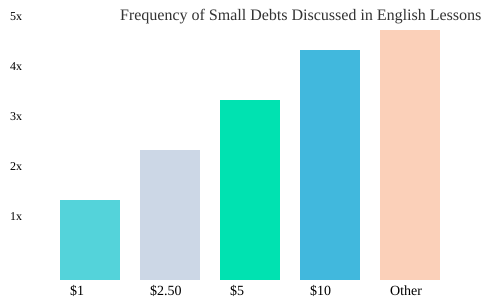
This chart shows how often small debts like $1, $2.50, $5, and $10 are discussed in English lessons. As you can see, these amounts are common, making them perfect for practicing finance for beginners and building your financial vocabulary.
Crash Course: Recession—What Happens When the Economy Stalls?
Defining Recession in Plain English: More Than Just a Scary Word
Let’s start simple. What is a recession? In the words of our source:
"Recession is a period of time when the economy of a country is doing badly. In a recession, the country is making less money."A recession is not just a complicated finance word. It’s a real-world event that affects everyone—workers, families, companies, and even you as an English learner. When you hear “recession” on the news, it means the country’s economy is shrinking instead of growing. People buy less, companies earn less, and the government collects less in taxes.
How a Country Makes Less Money and Why That Matters to You
During a recession, the total amount of money made by businesses and workers goes down. This is called an economic downturn. Imagine a country as a giant store. If fewer people buy things, the store earns less. This means:
- Businesses sell fewer products and services.
- Companies may not have enough money to pay all their workers.
- Governments get less tax money, so they may cut spending on schools, roads, or health care.
Spotting Recession Signs: Job Losses, Falling Stock Prices, Lower Spending
How do you know a recession is happening? Here are some clear signs:
- Job losses during recession: Many people lose their jobs. For example, in the 2008 US recession, unemployment jumped from 5% to 10% in just two years.
- Stock prices recession effects: The value of companies on the stock market drops. The S&P 500 index fell by over 50% between 2007 and 2009.
- Lower spending: People and businesses spend less money. During the Great Recession, the average US household cut spending by 7%.
What Real People and Companies Feel in a Downturn
A recession is more than a headline. It’s something you can feel. Here’s what happens:
- People worry about losing their jobs or having their work hours cut.
- Companies might close or go bankrupt because they can’t pay their bills.
- Families spend less on things like eating out, traveling, or buying new clothes.
- Investors see their savings or retirement funds shrink as stock prices fall.
Global Headlines, Local Impact: Why 'Recession' Is Everywhere in the News
You might see “recession” in news stories from around the world. Why? Because a recession in one big country can affect others. If the US or China has a recession, it can slow down trade, lower demand for products, and hurt jobs in other countries. That’s why understanding financial vocabulary for English learners like “recession,” “bankruptcy,” “unemployment,” and “stock market” is so important.
How to Incorporate 'Recession' into Your English Vocabulary
Here are some ways to use “recession” and related words in your everyday English:
- “Many people lost their jobs during the recession.”
- “Stock prices usually fall in a recession.”
- “Companies can go bankrupt when there is an economic downturn.”
- “Debt and recession are often connected because people have less money to pay back loans.”
Visual Guide: How Recession Impacts Jobs and Stocks
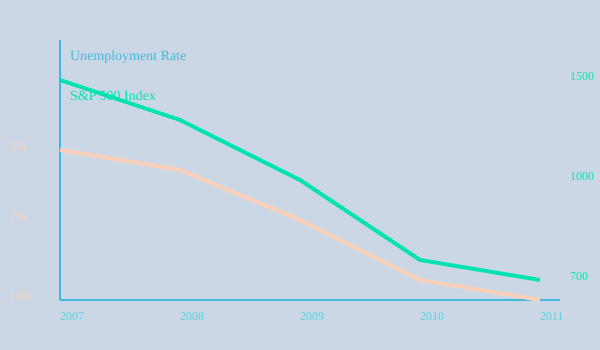
This chart shows how unemployment rates (increasing) and S&P 500 index values (decreasing) moved during the 2007-2009 recession. You can see how job losses and falling stock prices are key signs of a recession.
Table Talk: Financial Vocabulary Demystified (From 'Recession' to 'Stock Price')
Financial terms are everywhere—on the news, in movies, and even at your local café. But what do these common finance words really mean in your daily life? In this section, you’ll discover a curated glossary of financial terms for beginners, learn practical memory tricks, and explore the stories and idioms that make financial literacy vocabulary stick. Let’s break down these concepts, from “recession” to “stock price,” using simple language and real-life examples.
Curated Glossary: Common Finance Words Explained
| Term | Definition | Real-World Example |
|---|---|---|
| Debt | Money you owe to someone else. | If you borrow $2 for a Coke Zero from a friend, you’re “in debt.” |
| Recession | A period when a country’s economy is doing badly, often measured by two quarters of falling GDP. | During a recession, many people lose jobs because companies close or go bankrupt. |
| Stock | A share of ownership in a company. | If you own one stock of Coca-Cola, you own a small part of the company. |
| Stock Price | The current cost to buy one share of a company. | Stock prices can change quickly, especially in a recession. |
| Bankruptcy | When a person or company cannot pay their debts and gets legal help to deal with them. | If a company can’t pay its bills, it might go bankrupt and close down. |
How Definitions Change: Headlines vs. Daily Use
Financial terms definitions can shift depending on where you see them. For example, the word debt in a headline might refer to a country’s billions in loans, but in daily life, it could be as simple as owing your friend for a Coke Zero. Similarly, recession in the news means the whole country is struggling, but for you, it might mean your neighbor lost their job or your favorite store closed. Learning these shades of meaning is key to mastering financial literacy vocabulary.
Stories Behind the Words: Making Finance Personal
- Debt: Remember the quote,
"If I owe you money, I'm in debt."
Even a small loan, like buying a Coke Zero for a friend, is a real-life example of debt. - Recession: In a recession, companies might close or go bankrupt. Imagine your local café shutting down because fewer people are buying coffee. That’s recession in action.
- Stock Price: Think of stock prices like a roller coaster—they go up and down quickly, especially when people panic during a recession.
Memory Tricks: Lock in New Vocabulary
- Associate debt with your own experiences—like owing for a Coke Zero.
- Picture a recession as a storm cloud over the city, making jobs and money “dry up.”
- Imagine stock prices as a heart monitor—always moving, sometimes fast, sometimes slow.
Cultural Quirks: Finance Idioms and Their Origins
- In the red: Means losing money. Origin: Old accounting ledgers used red ink for losses.
- Tighten your belt: Means to spend less money. Origin: People would literally tighten their belts when they had less to eat during hard times.
- Market panic: When everyone tries to sell stocks at once, causing prices to fall quickly—like a crowd running for the exit.
Finance Words in Everyday Life
These common finance words aren’t just for bankers or economists. They show up in your workplace, in conversations with friends, and in the headlines you read every day. Understanding financial phrases and idioms helps you make sense of the world—and maybe even your next Coke Zero purchase.
Can You Lose Your Job Over a Coke Zero? (And Other Ways Recession Gets Personal)
Recession’s Ripple Effect: From Layoffs to Belt-Tightening
When you hear the word recession, you might think of big banks, stock markets, or government decisions. But the real impact of a recession is often much closer to home. It can start with something as small as a missing Coke Zero in the office fridge and end with people losing their jobs. Understanding job losses during recession and the impact of recession on economy is not just about learning business English—it’s about understanding how global events can affect your daily life.
How a Coke Zero Becomes a Lesson in Economic Downturn
Imagine this: You go to work, and every day, there’s a fridge full of free drinks. One day, you open the fridge and notice the Coke Zero is gone. At first, it seems like a small thing. Maybe someone forgot to buy more. But then, you hear rumors that the company is trying to save money. Next, you notice fewer snacks, then fewer people at their desks. Finally, you hear that some of your coworkers have lost their jobs.
This is a real-world example of how a recession’s effects can trickle down. Companies often start by cutting small perks to save money. If things get worse, they may have to lay off workers or even close down. As one expert says:
"Many people lose their jobs because companies might close or go bankrupt."
This is not just about poor performance. Sometimes, even the best workers lose their jobs because the company simply cannot afford to keep everyone.
Debt and Financial Trouble: It’s Not Always Your Fault
During an economic downturn, many people and companies go into debt. You might think debt is always a personal mistake, but often, it’s caused by bigger forces. For example, if your company loses customers because people are spending less, it may have to borrow money to survive. If the economy doesn’t improve, that debt can become too much to handle.
This is why understanding personal finance vocabulary in English is so important. Words like layoff, bankruptcy, debt, and budget are not just business terms—they are words that can affect your life and your choices.
Recession Around the World: Global Examples
Recessions don’t just happen in one country. In 2008-2009, a global recession led to millions of job losses worldwide. In the United States, for example, even soda sales dropped as people cut back on “nice-to-have” items. In Spain, unemployment rates soared above 20%. In India, many families sent fewer children to private schools because of lost income.
Here’s a quick look at how recessions affect both jobs and everyday spending:
| Year | Global Unemployment Increase | Household Spending Change |
|---|---|---|
| 2008-2009 | Millions lost jobs worldwide | Soda sales in US dropped 3% in 2009 |
How Financial Trouble Shapes Feelings and Choices
When people lose jobs or worry about money, it changes more than just their bank accounts. It can make you feel stressed, uncertain, or even scared. You might start spending less, saving more, or looking for new ways to earn money. Even small changes—like skipping a Coke Zero—can remind you that times are tough.
These feelings are normal. In fact, learning the right words in English can help you talk about them, ask for help, or find new opportunities. This is why knowing personal finance vocabulary and economic downturn examples is so useful for your financial well-being.
Why Learning Personal Finance English Matters
Understanding how a recession works, and how it affects people at every level, helps you make better choices. Whether you’re reading the news, talking to friends, or planning your own budget, these words and ideas give you the power to survive—and even thrive—during tough times.
Financial Terms in Conversation: Sound Like You Know What You’re Talking About
"Let's take a look at our vocabulary preview."
Key Financial Verbs and Phrases: Your Conversation Toolkit
If you want to sound confident when talking about money, you need more than just textbook definitions. You need to know how to use key financial verbs and financial difficulties phrases in real conversations. Here are some of the most common and useful words and expressions:
- Borrow – to take money from someone with the promise to pay it back.
- Lend – to give money to someone, expecting they will return it.
- Owe – to have to pay money back to someone.
- Spend – to use money to buy things.
- In debt – to owe money, often to a bank or credit card company.
- Recession – a time when the economy is not doing well and people are losing jobs.
- Going bankrupt – when a person or business cannot pay their debts and has to stop operating.
- Stock prices fell – when the value of company shares goes down.
- Tighten one’s belt – to spend less money because you have less to spend.
Sample Dialogues: Boost Your Fluency and Confidence
Fluency comes from practice and context, not just memorization. Let’s see how these financial vocabulary for English learners can be used in real conversations. Try reading these out loud or role-playing with a friend!
| Situation | Dialogue Example |
|---|---|
| Borrowing Money |
A: Can I borrow $10 until Friday? B: Sure, but don’t forget you owe me from last time! |
| Financial Difficulties |
A: I’ve been in debt since I lost my job. B: That’s tough. I guess you’ll have to tighten your belt for a while. |
| Economic News |
A: Did you hear about the recession? B: Yes, stock prices fell again today! |
Nuanced Vocabulary: Sound More Natural
Using more specific words helps you sound less like a textbook and more like a native speaker. For example, instead of always saying “I have no money,” try:
- “I’m strapped for cash.”
- “I’m living paycheck to paycheck.”
- “I need to cut back on spending.”
These phrases show you understand the practical financial lessons behind the words.
Common Mistakes Learners Make—and How to Avoid Them
- Mixing up borrow and lend: Remember, you borrow from someone, and you lend to someone.
- Using “bankrupt” for people: In English, companies usually “go bankrupt,” but people are usually “in debt” or “broke.”
- Forgetting articles: Say “a recession,” not just “recession.”
'Coke Zero Debt' as a Conversation Starter!
Finance doesn’t have to be boring. Try using humor to make financial topics less intimidating. For example, if you’re out with friends and someone offers to buy you a Coke Zero, you can joke:
“Thanks! Now I’m in Coke Zero debt to you!”
This playful phrase uses real financial decision making language in a fun way. It also shows you understand context cues and can use finance vocabulary beyond the classroom.
Using Humor and Context Cues in Financial Discussions
Don’t be afraid to experiment with new words in real life. Humor helps you remember phrases and makes you sound more natural. If you make a mistake, laugh it off—everyone learns by trying!
Remember, realistic dialogues help bridge the gap between textbook knowledge and natural speech. Try using these phrases in your next conversation, and you’ll sound like you know what you’re talking about in no time.
Banking on Learning: Where to Find More Real-Life Money Lessons in English
Learning financial vocabulary in English is more than just memorizing words like debt or interest. To truly build your financial literacy education, you need to see, hear, and use these words in real-life situations. As you heard in English Pod:
"There's no money here at English Pod! We are in debt here, in debt."This playful moment is a perfect example of how everyday experiences—even a joke about a Coke Zero—can teach you practical financial lessons. But where else can you find these real-world money words and stories?
Top Apps, Podcasts, and Sites for Mastering Finance Vocabulary
Hundreds of financial education tools are available online, each with its own style and audience. Here are some of the best resources to help you master finance vocabulary in English:
- English Pod: Famous for its story-driven lessons, English Pod uses real-life scenarios to teach you words like debt, budget, and spend. The multi-sensory approach—listening, reading, and speaking—makes new vocabulary stick.
- Preply: This platform connects you with tutors who can focus on practical financial lessons tailored to your needs. You can practice talking about money in real conversations.
- ConsumerFinance.gov Youth Financial Education Tools: Created by the U.S. government, these interactive activities help you build financial capability skills through games, quizzes, and real-life examples.
- Podcasts like "Planet Money" and "The Indicator": These shows break down complex financial news into simple stories, making it easier to learn new terms and see how they are used in context.
- News sites and social media: Following financial news on sites like BBC Business or CNBC, or joining finance groups on Facebook and Reddit, exposes you to current vocabulary and real-life financial applications.
Interactive Tools That Boost Retention
Research shows that multi-sensory, story-driven learning produces lasting results. Interactive tools are especially effective for building financial vocabulary and confidence. Try these:
- Online quizzes and flashcards: Websites like Quizlet offer finance-specific decks you can use to test yourself daily.
- Budgeting apps (e.g., Mint, YNAB): These apps use real financial terms and help you apply them to your own life, making learning personal and memorable.
- Role-play activities: Practice negotiating a salary, discussing a loan, or explaining a bill with a language partner or tutor.
How English Pod Compares to Other Resources
English Pod stands out because it makes financial literacy education fun and relatable. Instead of just definitions, you get stories—like the team joking about being "in debt" over a Coke Zero. This approach helps vocabulary stick because you remember the story, not just the word. Other resources, like Preply or government tools, offer more structured lessons or one-on-one practice, which can be great for focused learning. The best results come when you combine these methods: listen to podcasts, use interactive tools, and practice with real people.
Chasing Real-World Stories: News, Interviews, Social Media
Finance education is best when it's grounded in daily experience. Look for stories in the news about recessions, inflation, or personal finance struggles. Listen to interviews with people who have overcome debt or started a business. Join social media groups where people share their money challenges and solutions. The more you see how financial words are used in real life, the more confident you’ll become.
Turning Personal Finance Woes (Like Coke Zero Debt) Into Lifelong Learning Moments
Everyday money problems—big or small—are opportunities to build your financial capability skills. Maybe you’ve argued over splitting a bill, worried about a credit card, or even joked about being "in debt" for a Coke Zero. These moments are perfect for learning. Write down the new words you hear, ask questions, and share your own stories. In fact, we encourage you to submit your own real-life money stories for future posts. Your experience could help others learn, too!
Wildcard: If Marco Was Your Financial Advisor... (A Hypothetical!)
Imagine for a moment that Marco, the friendly and humorous host from the Marco and Erica English Pod, is your personal financial advisor. What practical financial lessons could you learn from someone who jokes about owing “250 for a Coke Zero” and openly admits to being “in debt” on the podcast? At first, it might sound a little risky to take money advice from someone who forgets to pay for a soft drink. But that’s exactly the point: sometimes, the best personal finance vocabulary and financial decision making skills come from real-life, even silly, situations.
Let’s start with Marco’s Coke Zero habit. If you listen closely, you’ll notice that his small debt to Erica isn’t just a joke—it’s a real example of how money moves between people every day. Maybe you’ve borrowed a few coins from a friend for a snack or lent someone cash for a bus ticket. These moments are your first steps in understanding debt, repayment, and trust. If Marco was your financial advisor, he might say, “Don’t let small debts pile up. Keep track, pay back, and keep your friendships strong.” That’s true, ha ha.
But what if you forget to pay back your Coke Zero debt? Marco and Erica’s playful banter shows that mistakes happen, and that’s okay. In fact, every missed payment or forgotten IOU is a chance to learn. Instead of feeling embarrassed, you can use these moments to build your personal finance vocabulary. For example, you now know what it means to be “in debt”—even if it’s just for a bottle of soda. And when you hear about “recession,” “job losses,” or “bankrupt” in the news, you’ll remember how these big words connect to your daily life.
Marco’s approach to financial decision making is refreshingly humble. He doesn’t pretend to be perfect, and neither should you. In the podcast, humor is a tool that makes tough topics easier to talk about. When you laugh about owing money for a Coke Zero, you break down the anxiety that often surrounds money conversations. This playful attitude is a reminder that financial education doesn’t have to be scary or serious all the time. Sometimes, a joke is the best way to remember a new term or concept.
Imagine Marco giving you advice after his Coke Zero mishap: “Next time, write down what you owe. Or better yet, pay right away!” This simple tip is the foundation of good money management. It’s not about big investments or complicated budgets—it’s about being aware, honest, and responsible in your everyday choices. By turning casual banter into lifelong money management skills, you learn that every conversation about money, no matter how small, is a chance to grow.
There’s also value in humility. Marco and Erica never pretend to have all the answers. They admit their mistakes and use them as teaching moments. If you make a financial mistake—like forgetting to pay for a Coke Zero—don’t hide it. Talk about it, laugh about it, and learn from it. After all, one missed Coke Zero debt equals one new term learned! This attitude removes the shame from financial learning and encourages you to keep improving, one step at a time.
In conclusion, if Marco was your financial advisor, you’d discover that practical financial lessons don’t always come from textbooks or experts. Sometimes, they come from everyday mishaps, shared jokes, and honest conversations. The Marco and Erica English Pod shows that learning about money can be fun, social, and full of real-life examples. By paying attention to small debts, big conversations, and the humor in your mistakes, you’ll build a strong foundation for financial decision making—and maybe even enjoy the journey along the way.
TL;DR: Whether it's Marco's Coke Zero debt or big-picture concepts like recession and job loss, real-life examples make financial English easy and memorable. Master essential terms with relatable stories and visuals for every English learner.
Post a Comment