

Let’s start with a confession: I used to think all divorce stories played out like celebrity tabloid drama — until I listened to Lisa’s saga. It turns out, what happens behind those viral headlines is as messy, raw, and complicated as life gets. Picture this: A woman, two small children, a spurned social media post, and a husband missing in action on the very night their premature baby arrived. Intrigued? Strap in for an unfiltered look at the real costs of Malaysian divorce, far past the hashtag trends.
1. More Than Tabloids: The Anatomy of a Viral Divorce (Malaysian Celebrity Divorce Explored)
When you hear about a Malaysian celebrity divorce—like the much-Googled splits of Lisa Surihani or Cake Boss Remy Lisa—it’s easy to think of it as just another tabloid headline. But if you look closer, you’ll see that these stories are more than just gossip. They are a reflection of how social media, cultural expectations, and personal pain collide in the public eye.
Why Do Malaysian Celebrity Divorces Go Viral?
There’s something about a famous breakup that grabs attention. Maybe it’s curiosity, maybe it’s empathy, or maybe it’s just the thrill of drama. In Malaysia, celebrity divorces like Lisa Surihani divorce or the Cake Boss Remy Lisa divorce trend on social media with hashtags like #ViralDivorce and #MalaysiaStories. These stories often become the most searched topics overnight, with every new detail dissected by fans and critics alike.
Social Media: Turning Private Pain Into Public Spectacle
Social media has a way of turning private moments into viral sensations. Take the case of Lisa, who boldly showed up at her ex-husband’s wedding to serve legal documents and read a prayer—reportedly the doa Nabi Yunus. The video of her arrival, riding a motorbike with her child, quickly spread across platforms. Suddenly, what could have been a quiet legal matter became a national talking point.
Lisa’s story is not unique. Many Malaysian celebrity divorces become social media events, with every post, comment, and live stream adding fuel to the fire. The line between genuine support and public spectacle gets blurry. As Lisa herself said,
"Social media made my divorce go viral, but the real pain was navigating life behind the scenes."
When Support Turns Into Spectacle
It’s easy to forget that behind every viral divorce is a real family. Lisa only met her ex-husband once after their split, and that was at their child’s hospital bedside during a critical illness. The rest of their communication played out through lawyers and, at times, on social media. The issue of nafkah (child support) became a public debate, with figures like RM450 per child per month discussed openly. The term penyondol (home-wrecker) was thrown around, reflecting how Malaysian culture often frames infidelity and blame.
Sometimes, social media can complicate things in unexpected ways. Remember that time you accidentally commented ‘Congrats!’ on someone’s divorce post, thinking it was a birthday? Oops. Online, even well-meaning support can turn awkward or even painful.
What If Your Worst Day Went Viral?
Imagine live-streaming the worst day of your life. What would you want people to see—or not see? For Lisa, her viral moment was less about drama and more about seeking justice and closure. But the internet rarely sees the full story. The emotional cost, the impact on children, and the cultural pressures often get lost in the noise.
How Malaysian Divorces Go Viral: A Visual Snapshot
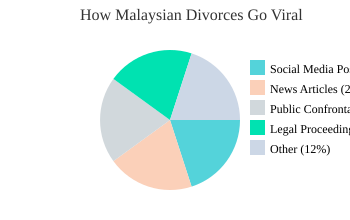
In Malaysia, the anatomy of a viral divorce is shaped by more than just the headlines. It’s a mix of culture, technology, and very real human emotions—often playing out for all to see.
2. Signs and Symptoms: Cheating in Marriage & The Anatomy of Lost Trust
Cheating in marriage rarely starts with a dramatic reveal. More often, it’s a series of small, unsettling signs that build up over time, eroding trust and connection. In Malaysian divorce stories, infidelity is one of the most cited divorce reasons, and Lisa’s experience is a powerful example of how digital clues and daily routines can unravel a marriage.
Lisa’s ‘Aha’ Moment: The 4am WhatsApp Discovery
Lisa’s story is both ordinary and extraordinary. After giving birth to a premature baby (1.3 kg, left in NICU until 1.8 kg), she was exhausted, breastfeeding at 4:00 am. Her husband’s phone, left charging nearby, became a window into a hidden world. Scrolling through WhatsApp, she found messages not meant for her: affectionate texts to another woman, pleading not to be blocked. In her words:
"I found the message while my son nursed — and suddenly everything changed."
This late-night discovery is a common thread in modern infidelity. Digital devices make it easier to hide — and to find — evidence of an unfaithful spouse.
Subtle Infidelity Signs: The Overtime Saga and Digital Footprints
Before the confrontation, Lisa noticed subtle but telling infidelity signs:
- Work-life imbalance: Frequent claims of “overtime” or work-related outings, especially with the same colleague.
- Unexplained absences: Regular late returns, often justified by work or helping a “friend.”
- Odd excuses: Insisting that giving a female colleague a ride home was “normal,” despite Lisa’s discomfort.
- Digital clues: Repeated interactions on TikTok and WhatsApp, with the same woman replying to stories and posts about Lisa’s child.
In Malaysia, social customs sometimes blur the lines between what’s “normal” and what’s a red flag. Sharing rides or friendly banter online may be common, but when boundaries are crossed and secrecy creeps in, suspicion grows.
What Would You Do? The 4am Wild Card
Imagine yourself in Lisa’s place: alone, exhausted, breastfeeding your NICU baby at dawn, and stumbling upon a suspicious WhatsApp message. Would you confront your spouse immediately? Gather more evidence? In Lisa’s case, she recorded a video of the messages for proof, then woke her husband to confront him. This emotional volatility — the shock, the need for evidence, the confrontation — is a reality for many facing infidelity.
Gendered Expectations: Picking Up the Pieces
Lisa’s story highlights a common gendered double standard in Malaysian divorce stories. Women, especially new mothers, are often left to manage the emotional fallout and practical challenges after discovering an unfaithful spouse. The third party (“penyondol”) in Lisa’s case knew about the marriage and child, yet boundaries were ignored. This reflects broader social issues where women bear the brunt of betrayal and its aftermath.
Digital Age, Digital Trust
Lisa’s evidence — WhatsApp chats, TikTok replies, and car backseat arrangements — shows how the digital age has changed the anatomy of lost trust. Infidelity signs are now found in notifications, social media interactions, and late-night messages. Trust, once broken, is difficult to rebuild when every device could hold another secret.
| Key Data | Details |
|---|---|
| Discovery Method | WhatsApp message at 4:00 am |
| Baby’s Birth Weight | 1.3 kg (NICU until 1.8 kg) |
| Marriage Duration Before Discovery | Less than two years |
3. When Enough is Enough: Divorce Reasons Beyond the Obvious (And How Culture Shapes Them)
Malaysian Divorce Reasons: Beyond Infidelity
When you hear about divorce in Malaysia, the headlines often point to infidelity or dramatic betrayals. But if you look closer, you’ll find that divorce reasons are rarely so simple. For many women, the breaking point is not a single act, but a slow build-up of emotional absence, lack of child support Malaysia (nafkah), and clashing priorities. The story of Lisa, a single mother of two, is a powerful example of this hidden reality.
Lisa’s Economic Reality: The Numbers Don’t Lie
Lisa’s marriage lasted just under two years. When she left, it wasn’t because of a scandal—it was because she could no longer ignore the daily struggle to provide for her children. “If I can’t support the school fees, what am I supposed to do with RM450?” she asks. The court-ordered nafkah was RM450 per child, but her child’s school fees alone were RM600 per month. That’s before even thinking about food, transportation, or other essentials.

Chart: Comparing average nafkah (child support) payments with average school fees for single-mother households in Malaysia. Lisa’s case (RM450 nafkah, RM600 school fees) vs. national averages (RM500 nafkah, RM700 school fees).
Parenting Challenges: The Real Family Impact
After divorce, Lisa’s world revolved around her children. She wasn’t fighting for herself, but for their future. “I fight not for money, not to be rich, but for my children. My child needs school. I want to send them to school, to daycare. But with RM450, what can I do?” Her story is echoed by many Malaysian divorce stories, where mothers juggle multiple roles—parent, provider, and emotional anchor—often with little support.
Cultural Quirks: Why Some Women Stay
Culture shapes how you see divorce. In Malaysia, women are often pressured to “forgive” or stay for the sake of the children. Some tolerate endless “overtime” excuses from absent partners, hoping things will improve. Others, like Lisa, reach a point where staying means sacrificing their children’s well-being. The internal tug-of-war—between enduring for the family and leaving for a better future—is a struggle many face in silence.
Legal Side: When Nafkah Isn’t Enough
Legally, the minimum nafkah is often set at RM450 per child per month, but education costs alone can exceed this. The gap between what’s awarded and what’s needed creates hardship, forcing mothers to make tough choices. As one single mom joked, “My neighbor’s cat gets more support from her ex than I do!” It’s a funny line, but the truth behind it is sobering.
“If I can’t support the school fees, what am I supposed to do with RM450?”
Divorce in Malaysia is rarely about just one thing. It’s a web of financial strain, emotional needs, and cultural expectations—each pulling you in different directions. The real stories, like Lisa’s, reveal that the hardest part isn’t always leaving. Sometimes, it’s finding the strength to do what’s best for your children, even when the odds are stacked against you.
4. Family Aftershocks: The Invisible Impact on Children and Parenting Challenges
When divorce happens, the headlines rarely capture what comes next for children and parents. The real stories unfold quietly—often in the hands of single mothers, siblings, and extended family members who step up to fill the gaps. The impact of divorce on children in Malaysia is both immediate and long-lasting, touching everything from emotional well-being to daily routines and education. If you’re navigating divorce and children, understanding these invisible aftershocks can help you support your family through turbulent times.
Missing Parental Bonds: The Unseen Wounds
Lisa’s story is a stark reminder of how divorce can disrupt the most basic bonds. Her youngest child never truly knew their father—he only met the child when he was gravely ill. For many children of divorce, the absence of a parent is a silent ache. They may not have the words to express their feelings, but the emotional effects are real: confusion, sadness, and sometimes anger. Growing up in a single-parent household often means navigating these feelings with limited support.
Parenting Challenges: The Juggle No One Sees
Single mothers like Lisa face a daily balancing act. You might find yourself juggling work, childcare, finances, and your children’s emotional needs—all at once. Lisa’s second child was born prematurely at just 1.3 kg and had to stay in the NICU until reaching 1.8 kg. Even after discharge, the challenges didn’t end. Lisa’s younger sibling now oversees childcare while she works, a testament to how family networks often step in when one parent is absent.
"My sister now looks after my child while I work; it takes more than one person to raise them."
Financial strain is another reality. Lisa receives RM450 per child in nafkah (child support), but as she points out, “School alone costs RM600.” The numbers rarely add up, and single mothers must stretch every ringgit to cover school fees, daycare, and daily necessities. The pressure can be overwhelming, especially when you want to provide your children with stability and opportunities.
Real Heroes: The Uncelebrated Support Systems
Behind every resilient child is often a network of unsung heroes. Siblings, grandparents, and even neighbors may become surrogate caregivers. In Lisa’s case, her younger sibling became the primary caregiver for her fourth child. This kind of intergenerational support is common in Malaysia, where family ties run deep. It’s a reminder that raising children after divorce is rarely a solo effort.
On a personal note, I remember how my own mum juggled two jobs and three kids—yet still made pancakes on weekends. Real heroes rarely go viral, but their impact is lasting.
Emotional Effects and Education Disruption
Children often face sudden changes after divorce: new living arrangements, different schools, and the absence of a parent. These disruptions can lead to psychological distress and academic setbacks. Yet, many children also show remarkable resilience. With the right support, they adapt, grow, and sometimes even thrive despite the odds. The key is consistent emotional support and a stable environment, even if the family structure has changed.
| Child | Birth Weight | NICU Discharge Weight | Caregiver Post-Divorce |
|---|---|---|---|
| Lisa’s Second Child | 1.3 kg (premature) | 1.8 kg | Lisa’s Younger Sibling |
Divorce and children are deeply intertwined, with family impact and parenting challenges shaping every day. By recognizing these invisible aftershocks, you can better support children and single mothers through the journey—one small act at a time.
5. The Emotional Ledger: Accounting for Pain, Resilience & Personal Growth
The Hidden Toll: Lisa’s Emotional State Through Crisis
When you’re dealing with divorce, the emotional effects can be overwhelming, especially when life throws extra challenges your way. Lisa’s story is a powerful example. During her pregnancy, she faced serious complications—cervical incompetence, premature labor before 30 weeks, and multiple surgeries. But perhaps the hardest part wasn’t the medical pain. It was the absence of her husband during the most vulnerable moments. When she went into labor, she was alone. “I held the doctor’s hand while in labor. There were things I never thought I’d do alone.” This simple act—reaching for a stranger’s support instead of her partner’s—captures the hidden toll divorce challenges can take on your heart and mind.
Anecdote: The Night Alone in Labor
Imagine being rushed to the hospital, contractions coming in waves, and knowing your partner isn’t there. Lisa’s labor was long and complicated. She remembers gripping the doctor’s hand, not her husband’s, as she endured the pain of contractions and the fear of the unknown. The medical team became her emotional support, guiding her through a process she always thought she’d share with her spouse. The pain was not just physical—it was the ache of loneliness, the sting of abandonment, and the shock of realizing how much had changed. For many, this is the reality of single motherhood after divorce: facing life’s hardest moments without the person you once counted on most.
How Emotional Effects from Divorce Linger
Divorce isn’t just a legal process—it’s an emotional journey. The grief, anger, and confusion don’t disappear when the papers are signed. For Lisa, the emotional effects lingered long after the hospital stay. She felt the weight of single motherhood, the fear of future complications, and the challenge of rebuilding her life. Yet, in the midst of pain, something else began to grow: resilience. Emotional resilience is a hard-earned survival tool, forged in the fires of adversity. It doesn’t erase the trauma, but it helps you move forward, step by step.
Wild Card: The Letter You Never Send
Imagine writing a letter to your ex, pouring out everything you wish you could say, but never sending it. What would you write? Maybe you’d describe the pain of being alone in the hospital, the anger at being left to face it all, or the gratitude for the strength you found in yourself. This exercise can be a powerful way to process the emotional effects of divorce and begin healing, even if the words are never shared.
Rebuilding Identity: Navigating Single Motherhood
Single motherhood after divorce forces you to reassess who you are and what you want for your future. The journey is slow and often lonely, but it’s also a chance to rediscover your own strength. Lisa learned to rely on herself and to build new support systems—friends, family, even medical professionals. The absence of a partner during crisis cements emotional pain, but it can also ignite a fierce resolve to survive and thrive.
Tying the Knot (and Untying It): New Beginnings
For some, the end of a marriage is also the start of a new chapter. Divorce challenges your sense of self, but it can also be the catalyst for personal growth. As you navigate the emotional effects and rebuild your life, you may find that the end becomes a beginning—a chance to redefine success, embrace resilience, and write your own story.
6. Numbers Tell Stories: Malaysian Divorce Trends, Nafkah, and Support Realities
When you read viral Malaysian divorce stories online, the headlines often focus on drama or blame. But behind the headlines, the numbers quietly reveal the real challenges faced by families—especially when it comes to child support Malaysia, education costs, and the everyday struggle to support children after divorce.
Divorce Rates on the Rise: Urban vs. Rural Realities
Divorce rates in Malaysia have been steadily increasing, with the most significant jumps seen in urban areas like Kuala Lumpur and Penang. According to the Department of Statistics Malaysia, the divorce rate has risen by over 12% in the last five years. Urban families face higher living costs, but rural families often have fewer resources and support systems. This regional divide means the experience of divorce—and the ability to provide for children—can look very different depending on where you live.
What Does Nafkah Really Cover?
Let’s talk about the numbers. The average nafkah (child support) awarded by Malaysian courts typically ranges from RM400 to RM600 per child per month. But is that enough? Consider Lisa’s story, a common scenario: she receives RM450 per child per month in nafkah. Yet, her child’s school fees alone are RM600 per month. That doesn’t even include books, uniforms, meals, or transportation.
“Tapi kalau dapat setakat nafkah RM450 seorang saya nak buat apa? Sekolah pun RM600. Bayar. Wang yuran pun.”
When you add up all the costs—education, food, healthcare, and daily living expenses—the gap between what is received and what is needed becomes painfully clear. As one mother put it:
"Even the government aid doesn’t cover it all. Family helps, but the math is painful."
The Real Cost of Supporting Children After Divorce
- Typical nafkah: RM400–RM600/month per child
- School costs: RM600+/month per child
- Other expenses: Books, transport, meals, healthcare, activities
For many single mothers, nafkah barely covers one major expense, let alone the full cost of raising a child. This is why most single-mother households rely on multiple sources of aid: family, employment, and sometimes limited government assistance. The reality is, the formal support system often leaves a gap that only personal networks can fill.
Wild Card: If Love Was Taxed, Would There Be More or Fewer Divorces?
It’s a question that pops up in social conversations: if love came with a tax, would people think twice before marrying—or divorcing? While it’s a playful thought, the real “tax” is the financial and emotional burden carried by parents, especially mothers, after divorce. The numbers show that the cost of supporting children in Malaysia is often underestimated, both by courts and by society.
Viral Stories vs. Everyday Realities
Viral Malaysian divorce stories can sometimes skew public perception, making it seem like nafkah is either too generous or too little, depending on the case. But when you look at the numbers, you see the real hardship: nafkah rarely matches the true cost of raising children. And while government assistance exists, it’s often not enough. In the end, it’s family, friends, and sheer resilience that keep many single-parent households afloat.
The numbers don’t lie—they tell the hidden truths behind every headline, showing just how far (or not) child support stretches in everyday Malaysian families.
7. From Viral Fame to Private Resolve: Lessons, Recovery, and Moving Forward
When a divorce story goes viral in Malaysia, it can feel like the whole country is watching. For many, like Lisa, the sudden attention brings both a wave of support and a deep sense of isolation. The headlines may fade, but the real parenting challenges, financial struggles, and emotional recovery continue long after the spotlight moves on. This section explores the hidden truths behind viral Malaysian divorce stories, focusing on lessons learned, ongoing recovery, and the power of community support.
Fighting for Your Children’s Futures
Lisa’s advice to women facing divorce is clear: “Don’t just fight for yourself — fight for your children’s futures.” She shares that her struggle was never about personal gain or wealth, but about giving her children the best possible chance. As she puts it:
"My struggle was never about wealth — just ensuring the kids had a chance."
For many single mothers, the real battle is not for public sympathy or viral fame, but for the everyday needs of their children — school fees, childcare, and emotional stability. Lisa’s monthly nafkah (child support) is RM450 per child, but school fees alone are RM600. This persistent gap is a reality for countless parents navigating divorce challenges in Malaysia.
The Double-Edged Sword of Going Viral
Going viral can be empowering — suddenly, your story matters, and strangers offer words of encouragement. But it can also be deeply isolating. The world may watch, but only you live the aftermath. Lisa describes how, after the viral moment passes, the real work begins: arranging childcare, budgeting for school, and managing the emotional fallout for herself and her children.
The Paradox of Public Healing
Sometimes, support comes from unexpected places. Lisa found comfort in online comments, where other single mothers shared advice and encouragement. These digital connections can spark hope, but real healing is lived offline — in the daily routines, the school runs, and the quiet moments of resilience.
Invented Scenario: Turning a Viral Hashtag into Real Support
Imagine if every viral divorce hashtag could be transformed into a scholarship fund for single mothers. How would you design it? Perhaps:
- Each share or retweet adds RM1 to a fund supporting school fees and childcare.
- Local businesses could match donations or offer discounts to single-parent families.
- Community volunteers could provide after-school care or tutoring.
Such creative solutions highlight the importance of building practical support networks — a key lesson from Malaysian divorce stories.
Continuing Struggles: Balancing Finances and Emotional Health
Even with a trusted sibling now handling childcare, Lisa faces daily challenges. The gap between nafkah and actual expenses means constant budgeting and tough choices. Emotional health is another battle — for both parent and child. Recovery after divorce is not a single moment but an ongoing process, requiring endurance, creative problem-solving, and community support.
Inspiring Hope Through Personal Recovery
Lisa’s journey shows that every viral divorce masks a private battle. Her perseverance inspires others facing the unknown, reminding us that real progress is built on small victories, practical help, and the quiet resolve to keep moving forward. For anyone navigating divorce recovery in Malaysia, the message is clear: you are not alone, and your fight — especially for your children — matters deeply.
Frequently Asked Questions (FAQ): Divorce, Malaysian Style
How common is infidelity as a reason for divorce in Malaysia?
Infidelity is one of the most talked-about divorce reasons in Malaysia, especially in viral social media stories like Lisa’s. However, it’s important to understand that every marriage is unique. While cheating is a significant factor in many breakups, other reasons such as financial stress, communication breakdown, and family interference also play major roles. Research and court data show that infidelity is a leading cause, but it is rarely the only reason. In Lisa’s case, signs of infidelity appeared during her pregnancy, but her story also highlights issues of neglect and lack of support, which are common threads in many divorces.
What’s the average child support (nafkah) and how is it calculated?
Child support, or nafkah, is a critical issue for many single mothers in Malaysia. The amount is determined by the court based on the father’s financial ability and the child’s needs. There is no fixed average, but many mothers, like Lisa, receive amounts that barely cover basic expenses. For example, Lisa mentioned receiving RM450 per child, which is often not enough when school fees alone can exceed RM600. The court considers factors like the cost of living, the number of children, and the father’s income. If nafkah is not paid, mothers can file a complaint in the Syariah Court, but enforcement can be challenging.
Does social media always help or sometimes hurt divorce recovery?
Social media stories about divorce can be a double-edged sword. On one hand, sharing experiences online can offer emotional support, raise awareness, and help others feel less alone. Lisa’s viral story, for example, encouraged many women to speak up about their struggles with parenting challenges and child support in Malaysia. On the other hand, public exposure can bring unwanted attention, judgment, and even retraumatization. Not every story goes viral for the right reasons, and sometimes, the pressure of public opinion can make healing harder. It’s important to find a balance and seek professional support when needed.
What should I do if I suspect infidelity?
If you notice infidelity signs—such as secretive behavior, unexplained absences, or suspicious messages—consider gathering evidence discreetly. Lisa’s experience shows the importance of trusting your instincts and documenting what you find. However, confronting your partner should be done calmly and, if possible, with support from trusted friends or family. Seeking legal advice early can help you understand your rights and options, especially if you are considering divorce. Remember, every situation is different, and safety should always come first.
How can single mothers supplement inadequate nafkah?
Many single mothers in Malaysia face the challenge of inadequate child support. Lisa’s story reflects the reality that nafkah often falls short of covering real expenses. To supplement, mothers may seek additional work, rely on family support, or apply for government assistance programs. Community networks and NGOs can also provide resources, from childcare to legal aid. It’s crucial to explore all available options and not hesitate to ask for help—raising children is a shared responsibility, not a burden to bear alone.
Are public divorce stories actually representative of most families?
Viral social media stories, like Lisa’s, often highlight dramatic or extreme cases. While they bring important issues to light, they don’t always reflect the everyday experiences of most Malaysian families dealing with divorce. Many separations happen quietly, with less drama but equal pain and complexity. Every family’s journey is unique, shaped by culture, values, and individual circumstances. Behind every headline is a deeper, more nuanced reality—one that deserves empathy, understanding, and support.
In conclusion, divorce in Malaysia is as complex and diverse as the people who experience it. While social media stories can spark important conversations about divorce reasons, child support Malaysia, and parenting challenges, it’s vital to look beyond the headlines. Every story matters, and every family deserves compassion and practical support as they navigate life after divorce.
TL;DR: Divorce stories are never as simple as they seem. From Lisa’s viral tale to the unspoken struggles of single motherhood and inadequate child support, there’s much more than what makes the news. Remember: Behind every statistic is a real person fighting for their family’s future.
Post a Comment