

Let me tell you about the rogue Saturday morning when I tried to automate my side hustle—armed with coffee, zero lines of code, and a (probably overconfident) YouTube tutorial. Spoiler: I didn’t launch a billion-dollar company that day. But what I learned (and what this post explores) is the fascinating, sometimes awkward dance between solo visionaries, rapidly-evolving AI tools, and the very human business of building something massive from scratch. If you’ve ever asked, “Is AI about to make ME the next unicorn?”—grab your favorite drink. Let’s pull back the curtain on what it actually takes.
From Side Project to Sensation: The Truth Behind the AI-Powered Solo Founder Boom
The AI-fueled rise of solopreneurs is everywhere in today’s business trends. With platforms like Replit, it’s never been easier to turn a side project into a full-fledged AI business. But is it really as simple as sitting down with an AI-powered tool and building your billion-dollar dream? Let’s break down what it really takes, using real stories, hard numbers, and the lessons behind the headlines.
The AI Integration Edge: Why Solo Founders Are Booming
AI integration is flipping the script for solo founders. In the past, the biggest barrier was technical skill. As Amjad Masad, founder and CEO of Replit, puts it:
"The thing that's stopping them is that they don't have the technical skills, or they don't have someone…as a programmer."Now, with AI-powered platforms, you can automate coding, streamline business operations, and launch products faster than ever. This business transformation is real—Replit itself is proof, having grown from a personal itch to a $3 billion company.
Amjad’s Journey: From Idea to $3 Billion Business
Amjad didn’t just want to make coding easier; he wanted to make entrepreneurship accessible to everyone. Replit’s mission is to empower anyone with an idea to build and launch software—even if they can’t code. The results?
"They turned Replit into a $3 billion business."But behind that headline is a relentless focus on operational efficiency and one key metric: ARR (Annual Recurring Revenue). Every team at Replit tracks ARR, and it’s become the north star for their explosive growth.
Anecdote Alert: How a VC CFO Used AI to Change His Life
Here’s a real-world example of AI business transformation. A CFO at a venture capital firm had spent years frustrated by the lack of tools for managing VC funds. He wasn’t a programmer, but he was a domain expert. Using Replit’s AI-powered automation, he built his dream app in just three months. The kicker? He sold it, landed major contracts, and is now on track for $5 million in ARR—all before hiring a single software engineer. He quit his job and became a full-time entrepreneur.
Counting the Cost: The Realities of Solo AI-Powered Building
It’s tempting to imagine overnight success, but the reality curve is steeper. AI integration brings new learning curves. You’ll spend time debugging, learning new tools, and sometimes hitting frustrating dead ends. Some solo founders adapt and thrive; others struggle or quit. The journey is real, and while AI-powered tools boost operational efficiency, they don’t eliminate the grind.
The Numbers: Explosive Growth, But Not Overnight
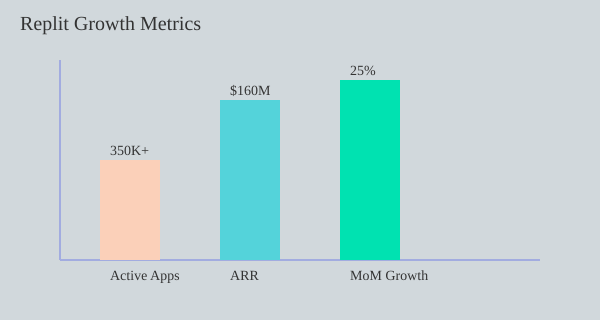
- 350,000+ paid online apps built on Replit
- 25% month-over-month growth in active apps
- $160 million in Annual Recurring Revenue (ARR)
- $3 billion company valuation
These numbers are impressive, but remember: that “hockey stick” growth took years. As Amjad says, “if you plot it from like 10 years, it does that.” Progress is rarely instant, even in the world of AI-powered business.
Wild Card: Treating Your AI Like a Distractible Intern
A key lesson for solo founders: treat your AI agent like a new intern. Be specific. If you’re vague, your AI will get distracted or deliver half-baked results. The more clearly you define your goals and instructions, the better your AI-powered outcomes.
Charting the Reality Curve
If you’re imagining overnight success, it’s time to get real. The AI-powered solo founder boom is transforming business trends, but it still takes grit, learning, and relentless focus on metrics like ARR to build something lasting.
Beyond Code: Why Domain Knowledge (and Grit) Are Still Your Secret Weapon in the Age of Softwarized AI
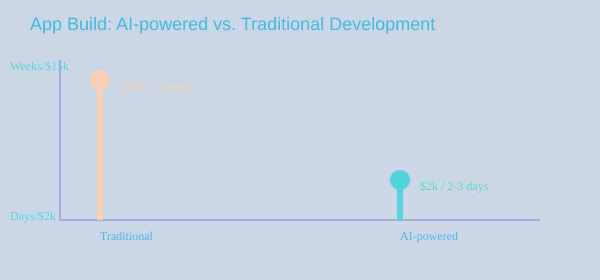
AI integration is rewriting the rules for solo entrepreneurship. With AI-powered tools, you can build apps in days—not weeks—and skip the $10,000+ price tag of traditional development. But here’s the truth: anyone can prompt, but not everyone can win. Your unique experience, domain knowledge, and relentless grit are what turn AI from a generic assistant into a business transformation engine. Let’s break down why your weird expertise and stubbornness are your real edge in the age of domain-specific AI.
Anyone Can Prompt, But Not Everyone Can Win
It’s never been easier to get started. You can ask an AI to write code, analyze data, or even build a website. But building something that actually works—like a tool that analyzes YouTube videos to suggest better titles and thumbnails—takes more than just typing a prompt. You need to know what to ask, why it matters, and how to interpret the results. That’s where your domain knowledge comes in. Your years of experience, your oddball insights, and your understanding of your audience are what give you an edge that no generic AI can match.
Grit vs. Quitting at Bug #17: The 2–3 Day Hurdle
Here’s the reality: even with AI-powered tools, you’ll hit roadblocks. Maybe you’ve already spent six hours wrestling with a bug, or you’re stuck on a weird error when deploying your app. Most people quit at this point. But successful solo entrepreneurs push through. The difference? Grit. The first 2–3 days are the hardest—after that, you’re likely to break through. Before AI, building a custom app could take weeks and cost $10,000–$15,000. Now, it’s possible in a weekend. But only if you’re willing to keep going when things get tough.
Teaching AI Your Specialty: Turning Life Experience into Unbeatable Apps
AI reasoning is powerful, but it’s not magic. The real magic happens when you teach AI your specialty. That means translating your life experience into prompts, workflows, and data that only you can provide. For example, if you know what makes a YouTube thumbnail irresistible in your niche, you can prompt AI to look for those patterns. Over time, your prompts become more precise, your workflows more efficient, and your apps more valuable. This is how you build a moat—a competitive advantage that’s hard to copy.
Quote Break: Paul Graham’s Take on Being ‘Relentlessly Resourceful’
Paul Graham…wrote this essay about being resourceful. And he talks about the qualities of founders and one quality is relentlessly resourceful.
Book Smarts vs. Lived Wisdom: The Unstoppable Combo
Large Language Models (LLMs) have read the internet, but they don’t know your customers, your market, or your quirks. Your lived wisdom—what works, what doesn’t, and why—combined with AI’s book smarts, is unbeatable. Prompt engineering and prompting is not that different than programming. You don’t need to know syntax, but you do need to be precise and persistent. The more you practice, the better you get at extracting real value from AI-powered tools.
Will AI Ever Just…Do It All for Me?
If you’re wondering whether AI will ever just build your business for you, here’s the skeptical reality: AI integration automates the grunt work, but it can’t replace your resourcefulness or your unique perspective. There’s always a learning curve. You’ll need to search, experiment, and iterate—just like any great founder. The secret weapon isn’t just AI. It’s you, wielding AI with domain knowledge and grit.
Teaching an AI to Fish: Mastering Prompt Engineering and Unblocking Yourself
Prompting as the New Literacy: Where Do You Even Start?
In the age of AI-powered business innovation, knowing how to “talk” to your AI assistant is as essential as knowing how to write an email. Prompt engineering—the art of crafting clear, effective instructions for GenAI models—has become the new literacy for solo entrepreneurs. But with so many options and so much hype, where do you begin?
Start with the basics: treat your AI agent like a smart but literal collaborator. If you want predictive analytics, ask for it directly. If you need a business plan, spell out the format and depth. The more specific you are, the better your results. This is the prompt paradox: the better you know your problem, the better your AI performs.
Learning by Doing: YouTube, Developer Content, and Creative Trial
“Replit has a DNA in sort of education, so…these billion developers need to learn.” This quote sums up the reality: there’s a learning curve, but you don’t have to climb it alone. Platforms like Replit, OpenAI, and others have invested in developer relations and content. YouTube is exploding with guides—search “prompt engineering” and you’ll find thousands of videos, with new ones added daily.
Here’s a quick look at the growth:
| Year | Estimated YouTube Guides on Prompt Engineering | Average Build Time Reduction with Prompting |
|---|---|---|
| 2022 | ~500 | From weeks to days |
| 2023 | ~2,000 | From days to hours |
| 2024 | ~8,000+ | From hours to minutes |
Don’t just watch—experiment. Try different prompts, tweak your language, and see how the AI responds. Many founders make accidental discoveries this way, stumbling on new uses for AI integration that spark business innovation.
Invented Anecdote: My First Three Attempts at Explaining My Startup Idea to an AI
When I first tried to explain my startup idea to a GenAI model, I was vague: “Help me build a business.” The AI spat out generic advice. Next, I got more specific: “Write a business plan for a SaaS tool for freelancers.” Better, but still bland. On my third try, I broke down my exact goals, target market, and asked for a step-by-step launch plan. Suddenly, the AI delivered a tailored roadmap. The lesson? The more you clarify your needs, the more your AI agent can help.
AI Training as a Video Game: Leveling Up to Smash Through Knowledge Walls
Think of prompt engineering like leveling up in an open-world video game. Each time you master a new prompt style or discover a shortcut, you unlock new “abilities” for your AI-powered business. You’ll hit knowledge walls—moments when the AI’s output isn’t what you hoped. But each wall is a chance to experiment, learn, and get resourceful.
Paul Graham, founder of Y Combinator, calls this being “relentlessly resourceful.” The best founders don’t stop at the first dead end. They search for guides, ask better questions, and keep iterating until they break through.
FAQ: Prompting vs. Handholding—What’s the Difference?
- Prompting is about giving your AI agent clear, strategic instructions—then letting it generate solutions.
- Handholding means micromanaging every step, which can slow you down and limit the AI’s creativity.
Effective prompt engineering is about finding the sweet spot: enough detail to guide the AI, but enough freedom for it to surprise you with new ideas. This is the core of AI-powered business innovation—and a skill that will set you apart as a solo entrepreneur in the GenAI era.
Reality Check: The (Still) Human Nature of Killer Business Ideas
The Myth of the Self-Made Robot: Why AI Needs a Human Driver
With all the buzz around AI integration and GenAI, it’s easy to imagine a future where machines dream up the next billion-dollar business. But here’s the reality: even the most advanced AI reasoning is still boxed in by its training data. Large language models, for example, learn from the vast library of past internet text, books, and articles. They’re remixing, not inventing from scratch. As one expert put it, “But a net new idea is something that I think still humans have have a special place.”
AI can supercharge your creative workflows, scale your ideas, and even suggest clever combinations you might not have thought of. But when it comes to true novelty—the kind that changes industries or creates new markets—humans are still in the driver’s seat. AI isn’t continuously learning from the evolving present; it’s working within a closed box of historical data. That’s why your unique perspective, lived experience, and intuition still matter more than ever.
Bitcoin as a Case Study: Remixing the Old, Inventing the New
Let’s look at Bitcoin—a perfect example of how killer business ideas are born. For over 20 years, technologists tried (and failed) to build digital cash. Many of the core ingredients—like proof of work and cryptographic security—were already on the table. Proof of work, for instance, was originally invented to fight email spam, not to secure a digital currency.
What made Bitcoin revolutionary wasn’t just remixing these existing concepts. Satoshi Nakamoto introduced a novel solution to the double-spend problem: the blockchain. This was the missing twist that made decentralized digital money possible. AI, with its current limitations, might have suggested combining proof of work and digital cash, but it’s unlikely to have invented the blockchain itself. As the conversation goes, “There’s always one novel insight…it’s something spiritual about having a really novel idea.”
| Year/Period | Milestone | Key Insight |
|---|---|---|
| 1990s-2000s | Attempts at digital cash (e.g., Hashcash, b-money) | Proof of work, cryptographic security |
| 2008 | Bitcoin whitepaper published | Blockchain solves double-spend problem |
| 2009 | Bitcoin network launched | First decentralized digital currency |
The Spiritual Side of Insight: The Unbottled ‘Aha Moment’
Here’s the thing about true innovation: it’s not just about mixing and matching what already exists. There’s a spark—an “aha moment”—that no AI, no matter how advanced, can replicate. This is the spiritual side of creativity, the part that feels almost like divine intervention. Whether it’s Einstein’s theory of relativity or Satoshi’s blockchain, there’s always a leap that goes beyond the sum of the parts.
“There’s always one novel insight…it’s something spiritual about having a really novel idea.”
Quote Break: Why the Next Einstein or Satoshi Is Unlikely to Be a Chatbot
AI reasoning and GenAI are powerful tools for amplifying your vision, but they aren’t visionaries themselves. They don’t live in the present, sense cultural shifts, or feel the urgency of a problem the way you do. As one expert observed, “But a net new idea is something that I think still humans have have a special place.”
If You’ve Had a Flash of Inspiration, Here’s Why You (Not Your AI) Matter
If you’re sitting on an idea that keeps you up at night, remember: AI can help you refine, test, and scale it, but the original spark is yours alone. The future of AI integration in entrepreneurship isn’t about replacing the human creator—it’s about amplifying your unique insights. In the AI future, the most successful solo entrepreneurs will be those who use GenAI to unlock their own creativity, not those who expect the machine to do the dreaming for them.
When AI Stumbles: Bugs, Bottlenecks & the Myth of 1-Click Magic
Let’s get real: AI integration is flipping the script for solo entrepreneurs, but it’s not a fairy tale. If you’re picturing a world where you click a button and your AI-powered business launches itself while you sip coffee, you’re in for a surprise. Even with the most advanced automation landscape, you’ll hit bugs, bottlenecks, and those infamous “service unavailable” errors that remind you—tech is still a team sport, and you’re the coach.
Deployment Fails: From Coffee-Ready Idea to Reality
Imagine you’ve just finished designing a beautiful app layout with AI tools. You’re ready to deploy, but suddenly, you see it: Service Unavailable. That’s the bug I hit most recently. It’s a classic moment for anyone working with AI-powered platforms. The path from idea to operational efficiency is paved with error messages, not magic wands.
Here’s what usually happens:
- You deploy your app.
- The deployment fails. You see an error message.
- You dig into the logs (yes, even AI agents love logs).
- You copy the error and ask your AI assistant for help.
- Sometimes, you get a fix. Sometimes, you get a new error.
As one developer put it:
“On the deployment, so you can go to the logs here and understand why the services are available, so you can see there’s an error.”
It’s a process. Even with AI, you’re still acting like a software developer—and sometimes a software development manager. You’re managing a powerful, but easily distracted, intern. You need to communicate clearly, troubleshoot, and iterate. Human oversight and communication skills are still essential, especially when tech stumbles.
Why Tech is Still a Team Sport (Even with AI Agents)
AI agents are amazing at automating tasks, but they’re not infallible. They can misinterpret prompts, overlook edge cases, or simply crash. When that happens, you need to step in, read the logs, and guide the AI back on track. Sometimes, it feels like you’re arguing with a quirky teammate who just wants a pizza break after fixing your code. (Okay, maybe you needed the snack.)
Here’s the wild card: AI can get you 80% of the way, but the last 20%—the debugging, the deployment, the polish—still needs your grit and patience. Even the best automation landscape can’t replace iterative problem-solving and hands-on troubleshooting.
The Coming Wave: AI Integration with Stripe & Seamless Monetization
Here’s where things get exciting. Monetization pipelines like Stripe are starting to integrate directly with AI-powered platforms. This means you’ll soon be able to launch and monetize your app with just a few clicks—no more wrestling with complex payment APIs. The operational efficiency this brings is a game-changer for solo founders. You can focus on growth and experimentation, not just technical firefighting.
The Upside: Faster Experiments, Lower Costs
Despite the bugs and bottlenecks, AI-driven platforms are shaving thousands off development budgets. You can launch more experiments, test more ideas, and iterate faster than ever. The key is to embrace the process: expect friction, learn from errors, and keep moving forward.
Common Deployment Issues: Data Table
| Issue Type | Average Time to Resolve | Percent Resolved with AI Assistance |
|---|---|---|
| Service Unavailable | 10-30 min | 70% |
| Dependency Errors | 15-45 min | 60% |
| Build Failures | 20-60 min | 65% |
| API Misconfigurations | 30-90 min | 55% |
Bottom line: AI integration is powerful, but it’s not 1-click magic. You’ll need patience, problem-solving, and a willingness to laugh when your AI agent “demands” a pizza break. The future of AI business is bright—but it’s still built on human hustle.
Wild Card Section: The Entrepreneur’s Video Game—Leveling Up with AI and Secret Boss Battles
Building a business with AI integration isn’t just about smart workflows or automating tasks. It’s a wild, open-world adventure—think of it as your own entrepreneurial video game. Every day, you’re dropped into a landscape full of unknowns, hidden quests, and, yes, some pretty tough boss battles. As you embrace AI-powered tools and agents, you’ll find that the journey is less about following a straight path and more about creative problem-solving, resource hunting, and learning from every setback.
"Think of it as like a video game…you're often running into these problems where you don't know how to get to the next level."
Why Entrepreneurship with AI Feels Like an Open-World RPG
When you’re a solo founder, especially in the age of business transformation with AI, your daily grind mirrors an open-world RPG (role-playing game). You have a main quest—your vision or product—but the path is never direct. Instead, you encounter:
- Unexpected side quests: A sudden bug in your AI agent, a new feature request, or a surprising competitor move.
- Resource hunts: Searching for the right dataset, API, or AI-powered tool to unlock the next stage.
- Secret boss battles: Those moments when a technical challenge or business pivot feels insurmountable.
Just like in games, you rarely know what’s coming next. Sometimes, you spend hours chasing a clue, only to find you need to backtrack and try a different approach. This uncertainty isn’t a flaw—it’s a feature of the founder mindset in the AI era. Embracing it is crucial for long-term growth.
Creative Analogy: Bugs as Mini-Bosses, Frustration as XP
Every bug you encounter is a mini-boss. Each time your AI integration fails or your workflow breaks, you’re forced to get creative. Maybe you debug a script for hours, or you spend a morning wrestling with a stubborn API. It’s frustrating, but every defeat is actually an XP (experience points) boost. You learn, adapt, and come back stronger.
Here’s a simple way to reframe your setbacks:
- Bug = Mini-boss: Requires strategy and persistence to defeat.
- Frustrated morning = XP boost: Every struggle adds to your skill set.
- Breakthrough = Level up: Solving a tough problem unlocks new abilities and confidence.
Invented Example: Drawing a “Boss Chart” to Track Progress
Early in my first solo AI build, I literally drew a “boss chart” on my whiteboard. Each time I hit a major bug, pivot, or breakthrough, I added it to the chart. I gave each challenge a name (“Data Dragon,” “API Kraken”) and tracked how many attempts it took to defeat. This visual gamification kept me motivated. Seeing the growing list of conquered bosses reminded me that progress was happening—even if it didn’t always feel like it.
Key Lesson: Progress Isn’t Linear—Expect Dead Ends, Rewinds, and Loot Drops
In both video games and entrepreneurship, progress is rarely a straight line. You’ll hit dead ends, have to rewind, and sometimes stumble on unexpected “loot drops”—a new AI-powered tool, a chance connection, or a sudden insight. The key is to treat each setback as a learning trigger. Success often comes after multiple failed attempts and lessons learned from ‘defeat.’
Chart: Tracking Daily Morale vs. Progress on My First Solo AI Build
| Day | Morale (1-10) | Bugs Encountered | Bugs Solved | XP Milestone (Subjective) |
|---|---|---|---|---|
| 1 | 8 | 2 | 1 | Learned new API integration |
| 2 | 5 | 4 | 2 | Debugged data pipeline |
| 3 | 6 | 3 | 3 | First successful AI agent run |
| 4 | 4 | 5 | 2 | Major setback, learned new workflow |
| 5 | 7 | 1 | 1 | Breakthrough—business transformation insight |
Remember, in the AI-powered entrepreneur’s journey, every challenge is a chance to level up. Stay curious, embrace the uncertainty, and keep tracking your progress—one boss battle at a time.
FAQ: AI Integration, Solopreneurs, and the Road to $1B (or Just a Useful App)
AI integration is changing the game for solo founders and small teams. If you’re dreaming of building a billion-dollar business—or just want to launch a genuinely useful app—chances are you have a lot of questions about what it really takes. Here’s what you need to know to get started, keep going, and thrive in the GenAI-powered future of business innovation.
How much do I actually need to know before using AI tools to build?
The honest answer: less than you think. Today’s AI-powered tools are designed for accessibility. You don’t need a PhD in machine learning or years of coding experience to get started. Most platforms offer intuitive interfaces, drag-and-drop features, and plenty of documentation. What matters most is your willingness to experiment, learn, and iterate. The key is to start small—pick a problem you care about, try out a few AI tools, and see what you can build. Remember, starting the project is often the most obvious and exciting part. The real learning comes as you go.
Is it worth learning to prompt, or will that be automated soon?
Prompt engineering—crafting the right questions or instructions for AI—has become a valuable skill. While some aspects will be automated, understanding how to communicate with AI will always give you an edge. Think of it like knowing how to Google well: automation helps, but a human touch can make all the difference. If you invest a little time in learning to prompt, you’ll be able to get better results, faster, and stand out as AI continues to evolve.
What’s the real cost (time, energy, stress) of founding solo with AI?
AI can dramatically lower the barriers to entry for solopreneurs, but building something meaningful still takes time and energy. You’ll save time on repetitive tasks and get to market faster, but you’ll also face new challenges—like keeping up with rapid changes in AI technology and staying focused amid endless possibilities. Expect some stress, especially when things break or don’t work as expected. The good news? Starting with AI is easier than ever—just keep learning and don’t fear setbacks. Every founder faces bumps in the road, but resilience and curiosity are your best assets.
Can AI help with monetization, or is marketing still all me?
AI can absolutely help with monetization. From analyzing user data to optimizing pricing and automating customer support, AI-powered tools can make your business smarter and more efficient. However, marketing still needs your human touch—at least for now. AI can draft emails, suggest content, and even run ads, but connecting with your audience and building trust is still your job. Use AI to handle the grunt work so you can focus on strategy and storytelling.
What if my AI agent gets stuck—who do I ask?
Even the best AI agents can get stuck. When that happens, don’t panic. Most AI platforms have active user communities, support forums, and detailed documentation. Reach out, ask questions, and share your challenges. Chances are, someone else has faced the same issue. And remember, learning how to troubleshoot is part of the journey. The more you engage with the community, the faster you’ll grow.
Should I be afraid AI will make founders irrelevant?
Not at all. AI is a tool, not a replacement for human creativity and vision. The future belongs to those who can combine AI’s power with their own unique insights and drive. Founders who embrace AI integration will be able to do more, faster—but your perspective, empathy, and problem-solving skills are irreplaceable. AI is here to amplify your impact, not erase it.
Where should I start my journey if I have zero coding experience?
Start with no-code or low-code AI platforms. These tools let you build, test, and launch applications without writing a single line of code. Focus on solving a real problem, and don’t be afraid to learn as you go. The AI future is wide open—your willingness to start is what matters most.
In the end, whether you’re aiming for $1B or just want to build something useful, AI-powered business innovation is within your reach. Keep learning, stay curious, and remember: the journey is as important as the destination.
TL;DR: AI is lowering the barrier to entry for solo founders, but true innovation still demands human creativity, grit, and sharp domain knowledge. Tools like Replit are powerful, yet success means more than just plugging in code prompts – it’s about persistence, smart learning, and leveraging what only you can know.
Post a Comment