

I still remember staring up at MIT's Great Dome in 1994, utterly baffled by the sight of a full-size police car perched on its summit. Little did I know, that bizarre hack was my first crash course in the kind of thinking that turns ordinary students into remarkable entrepreneurs. In this post, I'll spill the five most unpredictable, counterintuitive MIT lessons that shaped my path—not just to survive, but to thrive wildly beyond the classroom.
Frameworks from the Dome: Why Playful Rulebreaking Breeds Creative Geniuses
When you think of MIT hacks creativity, you might imagine wild pranks or clever stunts. But at MIT, these legendary hacks—especially those involving the iconic Great Dome—are much more than mischief. They are a living framework for innovation, teaching you that respectful rulebreaking is at the heart of creative genius and foundational entrepreneurship principles.
The Notorious MIT Dome Hacks and Why They Matter
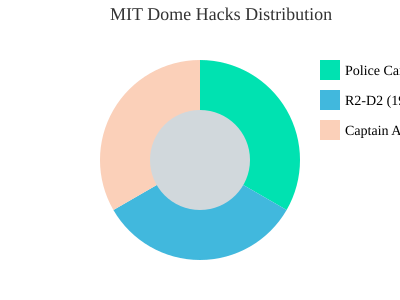
Consider the morning in 1994 when Boston woke up to a police siren blaring from the top of MIT’s Great Dome. Looking up, everyone saw a full-size police car perched on the dome, complete with a mannequin cop and a box of real donuts in the backseat. Campus security rushed up, expecting chaos, but found an engineering masterpiece. The students hadn’t hoisted a car up there—they’d built it piece by piece overnight, using fiberglass, steel framing, and precise calculations to match the dome’s curvature. Not a single scratch. This wasn’t just a prank; it was a demonstration of deep system mastery, the kind you can’t learn from textbooks alone.
Respectful Rulebreaking vs. Reckless Rebellion
MIT’s culture encourages you to understand systems so deeply that you can play with them—without breaking them. This is respectful rulebreaking, not reckless rebellion. The hacks are never mean-spirited or destructive. In fact, MIT authorities have a tradition: if the spirit remains fun and harmless, the hackers are never hunted down. This approach fosters a safe space for experimentation and learning, a key element in any innovation hub.
Creativity Thrives Where Fun and Precision Intersect
These hacks are not just about laughs. They require the same precision and teamwork as any major engineering project. Whether transforming the dome into R2-D2 with perfect colors and sound effects, or turning it into a 28-foot Captain America’s shield, the projects demand technical skill, creativity, and a sense of humor. As Clint Eastwood put it:
I take my work seriously, but I don't take myself seriously because the moment you lose your sense of play, you lose your creativity.
Real-World Hack: Mastery Beyond Exams
Building a police car on the dome required a deeper understanding of physics, materials, and logistics than any exam could test. The students had to map the dome’s exact curvature, design a structure that wouldn’t damage the building, and assemble it all without being caught. This is the essence of technology transfer systems—knowing the rules so well that you can bend them with purpose, not just for fun but for real-world impact.
Invented Anecdote: When a Prank Sparked a Safety Initiative
One year, a group of students planned to cover the dome in glow-in-the-dark tape, spelling out a cryptic message. But during their preparations, they discovered a loose railing on the dome’s access stairs. Instead of ignoring it, they reported it anonymously. The prank was never completed, but MIT launched a campus-wide safety inspection as a result. Sometimes, the unintended consequences of playful exploration lead to meaningful change—a lesson in human-centered design and humility.
Translating MIT Hacks to Business Strategy
What do these hacks teach you about entrepreneurship? Learn the rules, then bend them with purpose. Respectful rulebreaking is about pushing boundaries without burning bridges. Failure isn’t an embarrassment—it’s a learning opportunity. This mindset, rooted in MIT’s culture since the 1950s, is why so many alumni lead innovation hubs and drive technology transfer systems worldwide.
Any Fool Can Drink from a Fire Hose: The Real Lesson Behind Relentless Activity
The Fire Hose Test Workload: Why MIT Intentionally Overwhelms You
If you’ve ever heard about MIT’s “fire hose” approach, you know it’s not just a catchy phrase—it’s a reality. From the first week, you’re hit with a workload that seems mathematically impossible. Here’s a typical week:
| Task | Frequency |
|---|---|
| Problem Sets | 3 |
| Lab Reports | 2 |
| Research Papers | 1 |
| Career Events | Multiple |
| Special Opportunities | Google on campus, Nobel lectures, startup office hours |
| Total Weekly Opportunities | 50+ |
You’re expected to juggle all of this—plus existential fires and once-in-a-lifetime achievements—every single week. The point? MIT’s fire hose test workload isn’t about seeing how much you can do. It’s about forcing you to realize that doing everything is impossible.
The Panic—and the Realization
I remember thinking that if I just worked all night, I’d impress everyone. I pulled an all-nighter, convinced I’d finally get ahead. The next day, nobody noticed. Nobody cared. I was exhausted, and the mountain of work hadn’t shrunk. That’s when it hit me: MIT wasn’t testing for capacity. It was testing for clarity.
You quickly learn that effort alone won’t save you. Every day, you’re forced to make impossible choices—not between good and bad, but between valuable and more valuable. The emotional impact is real: panic, self-doubt, and the uncomfortable realization that you can’t win by brute force.
The Three I Model Prioritization: Filtering Chaos for Critical Actions
The real lesson behind the fire hose is learning to filter. I developed what I call the Three I Model for impactful decision-making, a framework that’s become essential in both leadership in startups and entrepreneurship courses:
- Important: Will this matter a year from now?
- Impactful: Does this actually move the needle, or is it just busy work?
- Irreversible: If this goes wrong, can it be fixed later?
Before saying yes to anything, run it through these three filters. This is how you separate activity from genuine progress in entrepreneurship.
Capacity vs. Clarity: The True Test
It’s easy to confuse being busy with being effective. But in startups—and in life—the fire hose never shuts off. There’s always more to do, more to chase, more to prove. If you don’t develop a filter, you’ll drown in activity and miss out on real progress.
MIT wasn’t testing for capacity. It was testing for clarity.
The most valuable entrepreneurs aren’t the ones who can handle the most tasks—they’re the ones who can see through the chaos and focus on what truly matters.
Practical Steps: Building Your Own Filter
- List your opportunities and obligations.
- Run each through the Three I Model.
- Say no to anything that doesn’t pass all three tests.
- Review weekly to adjust your focus as things change.
This approach, rooted in MIT’s fire hose test workload, is the secret to impactful decision-making and sustainable leadership in startups. It’s not about how much you can do—it’s about what you choose to do.
Deconstruction, Not Duct Tape: First Principles Thinking for Real-World Problem Solving
Why P-Sets Are Less About Answers, More About Thinking from Scratch
If you’ve ever tackled an MIT problem set (P-set), you know they aren’t about memorizing formulas or copying solutions from lecture notes. P-sets are intentionally designed to force you out of the comfort zone of “plug and chug.” Each one is a multi-step, open-ended challenge that can take 15+ hours to crack. The goal? To teach you first principles problem solving—breaking problems down to their core elements and rebuilding solutions from the ground up.
The Whiteboard Graveyard: 15 Hours and a Dozen Failed Approaches
I remember staring at a whiteboard for hours, surrounded by failed attempts and empty coffee cups. After a dozen dead ends, I’d start to wonder if I even belonged at MIT. But this is exactly the point: it’s not about getting the answer quickly, it’s about learning to deconstruct the problem. The real lesson is in the process, not the solution.
| Challenge | Details |
|---|---|
| P-set Complexity | Multi-step, open-ended, can take 15+ hours per problem |
| Company Case Study | Four product lines cut to one, revenue doubled in 18 months |
Breaking Down Big Problems: Elon Musk, Rocket Costs, and Why Most Assumptions Are Wrong
First principles problem solving is the secret behind every major invention in history. Take Elon Musk: instead of accepting that rockets must cost $65 million, he deconstructed the problem to its raw materials—aluminum, titanium, carbon fiber. He discovered the real cost was closer to 2% of the industry standard. By questioning every assumption, Musk didn’t just make rockets cheaper—he rebuilt the product development process from scratch.
My Invented Team Retreat: How Pausing 3 Days Saved Our Company (and Doubled Revenue!)
I once joined a company as COO where we were juggling four products, missing deadlines, and running out of resources. Panic was setting in. Instead of rushing to patch things up, I called a three-day pause. We didn’t brainstorm solutions—we deconstructed the problem. We mapped out what we truly knew, what we were assuming, and what was missing. The result? We cut down to one product, launched quickly, and doubled revenue in 18 months. We weren’t smarter or working harder—we just used a better decision-making framework.
Step-by-Step: The Facts/Assumptions/Next Step Framework
- Write the problem down in two sentences.
- Draw three columns: Facts, Assumptions, Next Step.
- Pick one test—run it this week.
This simple framework is the backbone of entrepreneurial mindset development. Validating assumptions instead of believing them can be the difference between collapse and exponential growth.
Remember, every complex problem in your career, in your business, in your relationships can be broken down into small solvable parts.
Wild Card: If Your Startup Had to Cut 75% of Its Products Overnight, What Would You Choose and Why?
Imagine your startup had to cut 75% of its products overnight. Which would you keep? Why? This is the ultimate test of first principles problem solving and product development process clarity. It forces you to confront what’s essential, what’s based on real data, and what’s just an untested assumption.
Learning by Building: The 'Mind and Hand' Doctrine and the Joy of Imperfect Prototypes
At the heart of MIT’s entrepreneurial education programs lies a simple but powerful idea: learning by building. This “Mind and Hand” doctrine isn’t just a motto—it’s a daily practice that shapes how you learn, create, and ultimately succeed. At MIT, you’re not expected to just think about solutions; you’re expected to build them, test them, and learn from what breaks. This practical hands-on learning approach is what sets MIT’s startup ecosystem engagement apart from traditional education.
MIT IAP: Four Weeks, No Classes—Only Building
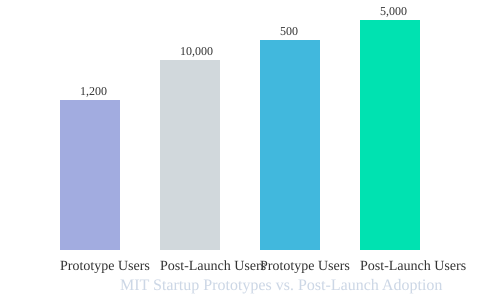
Every January, MIT hits pause on lectures for four weeks during the Independent Activities Period (IAP). The only rule? Build something real. It doesn’t matter if it’s a robot, a web app, or a business prototype—what matters is that you put your ideas into action. When I was a student, my team and I built a startup called EMIT, designed to connect MIT entrepreneurs with venture capitalists through a private online network. We didn’t write a business plan. We just built the first version, invited people to use it, and watched as over 1,200 users joined to test it out.
The Origin of 'Learning by Doing'—And How Failure Powers Faster Learning
MIT’s approach to practical hands-on learning is rooted in the belief that you learn faster by failing forward than by waiting for the perfect plan. Our first EMIT demo was a disaster—half the features crashed, and the interface was barely usable. We spent the night before launch retooling everything. But that scramble taught us more about real-world product development than any textbook ever could. This is the core of serial entrepreneurship: rapid prototyping, quick feedback, and constant iteration.
"You learn faster by failing forward than by waiting for the perfect plan."
What Makes a Minimum Viable Product Truly 'Viable'?
In MIT’s startup ecosystem, the minimum viable product (MVP) isn’t about perfection—it’s about learning. An MVP is the smallest version of your idea that lets you gather real feedback from real users. It’s not supposed to be flawless. Instead, it’s a tool for learning what works, what doesn’t, and what to build next. The faster you get your MVP into someone’s hands, the faster you learn and improve.
From Greyhound Bus to Billion-Dollar Dropbox: Grit and Small Experiments
This principle isn’t limited to student projects. Drew Houston, the founder of Dropbox, built the first version of his product on a Greyhound bus from Boston to San Francisco. No team, no funding—just a laptop and an idea. That first prototype was far from perfect, but it was enough to test the concept and eventually build a company now worth billions. This story is proof that speed and experimentation trump perfection, especially in the world of serial entrepreneurship.
How to Apply: Make Something This Week, No Matter How Small
- Build the smallest version of your idea. Don’t wait for the perfect plan—start now.
- Get it in someone’s hands this week. One user, one customer, one honest review is all you need to start learning.
- Rebuild based on what breaks. Let feedback and failure guide your next steps.
Ditch the Lone Genius Myth: Collaboration, Impostor Syndrome, and the Secret to True Leadership
At MIT, there’s a saying that every student hears early and often: “You cannot graduate alone.” This isn’t just a warning—it’s a core principle that shapes how MIT alumni entrepreneurs, engineers, and leaders approach every challenge. The myth of the lone genius—the idea that one brilliant mind can change the world in isolation—gets debunked fast. Instead, you learn that collaborative learning isn’t just helpful; it’s absolutely necessary, especially when facing the relentless pace and complexity of startup life challenges.
The Power (and Discomfort) of Teamwork at MIT
Imagine a study group where everyone was “the smartest kid back home.” Suddenly, you’re all in the same room, staring at a problem set that nobody can solve alone. The discomfort is real. You’re used to having the answers, but now, you’re just as stuck and sleep-deprived as everyone else. This is where MIT’s collaborative ethos kicks in. You form alliances, share insights, and tackle problems together. The shared struggle isn’t just about surviving the coursework—it’s about building the trust and resilience that MIT alumni entrepreneurs carry into their careers.
When Rivals Become Allies
In this environment, competition turns into collaboration. Your “rivals” quickly become your most valuable allies. You learn to rely on others, to ask for help, and to offer it in return. This shift is what makes collaborative learning so powerful: it transforms a group of high achievers into a team that can adapt, innovate, and thrive—qualities that are essential for entrepreneurs in residence and anyone leading in the tech world.
Impostor Syndrome: The Hidden Advantage
But there’s another layer to this story. When you’re surrounded by brilliant minds, it’s easy to start doubting yourself. This is impostor syndrome—the nagging belief that you’re not as capable as everyone else thinks. At MIT, the majority of students experience this at some point. But here’s the twist: recent MIT research shows that impostor syndrome isn’t a flaw. It helps you grow something even more valuable: emotional intelligence.
Impostor syndrome isn't a flaw. It helps you grow something even more valuable: emotional intelligence.
According to these studies, people who feel like impostors often become better leaders. Why? Because when you’re not convinced you’re the smartest person in the room, you listen more, ask better questions, and collaborate more openly. You develop empathy and humility—traits that define emotional intelligence leadership.
Empathy in the Age of AI
Today, when artificial intelligence can outthink any human in raw computation, it’s empathy and emotional intelligence that set high-impact leaders apart. MIT’s collaborative culture doesn’t just prepare you to solve technical problems—it teaches you how to lead people. In startups and businesses, this means building teams that are adaptive, resilient, and capable of weathering any storm.
- Collaborative learning builds trust and adaptability
- Impostor syndrome can drive emotional intelligence leadership
- MIT alumni entrepreneurs credit teamwork for their success
- Empathy and humility are now essential leadership skills in tech
So, the next time you feel like you don’t have all the answers, remember: it’s not a weakness. It’s the secret ingredient that turns competition into collaboration and transforms good leaders into great ones—especially in the world of startups and entrepreneurs in residence, where the challenges are as relentless as they are rewarding.
Wild Cards & Tangents: Quirky MIT Traditions and Offbeat Lessons for Every Entrepreneur
What Campus Pranks Actually Teach About Risk, Failure, and Resilience
At MIT, the word “hack” means something very different than in most places. Here, legendary campus pranks—like placing a police car on the Great Dome or transforming hallways into ball pits—aren’t just about laughs. They’re a masterclass in risk, resilience, and respectful rulebreaking. Every hack demands engineering precision, teamwork, and a deep understanding of the system. The unwritten rule? Pull it off without causing harm, and do it so cleverly that nobody knows who did it.
These traditions teach you to embrace uncertainty and recover from setbacks. If a prank fails, you regroup, learn, and try again. It’s a safe space to experiment, fail fast, and iterate—exactly the mindset you need for innovation-driven entrepreneurship. The lesson: smart doesn’t have to be serious, and resilience is built by taking calculated risks.
Startup Success Stories: Scavenger Hunts as Product Testing
One of my favorite stories from the Entrepreneur in Residence program involves a startup that wanted to test new feature ideas for their app. Instead of a traditional focus group, they organized a campus-wide scavenger hunt. Teams raced to solve clues, each one unlocking a different prototype feature. The feedback was instant and honest—if a clue stumped everyone, the feature needed work. If a team found a clever shortcut, it revealed unexpected user behavior.
This offbeat approach turned product testing into a game, lowering the stakes and encouraging creative risk-taking. It’s a reminder that the best entrepreneurial education often comes from playful, real-world experiments rather than rigid classroom exercises.
Heart, Hands, Home, Hustle: The 4 H’s of MIT Entrepreneurship Explained
MIT’s approach to entrepreneurship is built on what I call The 4 H’s:
- Heart: The drive and passion to solve meaningful problems.
- Hands: The practical skills to build, test, and iterate.
- Home: A supportive community that shares knowledge and resources.
- Hustle: Relentless persistence in the face of setbacks.
The 4 H’s guiding principles at MIT are Heart, Hands, Home, and Hustle, emphasizing mindset, action, community, and persistence.
These four pillars are woven into every aspect of MIT’s entrepreneurship programs—from startup competitions to late-night hackathons. They foster the risk tolerance and resilience essential for startup success stories.
Random but Relevant: Lessons from the MIT Cafeteria
Some of the most valuable insights come from unexpected places. I once overheard a heated debate at the MIT cafeteria about how to optimize the salad bar. It wasn’t just about lettuce—it was a live case study in systems thinking, user experience, and resource allocation. That conversation sparked an idea for a logistics algorithm that later became a core part of my company’s product.
At MIT, you learn to listen everywhere. Innovation often starts with a random comment or a quirky observation.
Unexpected Takeaways: The Power of Unlikely Sources
MIT’s culture proves that the best solutions sometimes come from the least likely sources. Whether it’s a prankster’s clever workaround or a cafeteria conversation, value is found in unexpected connections. This is the true spirit of innovation-driven entrepreneurship: stay curious, embrace the wild cards, and never underestimate the power of a tangent.
Conclusion: The MIT Playbook for Building, Breaking, and Belonging (Even When It Feels Impossible)
When you think of MIT Entrepreneurship, you might picture world-changing inventions or legendary startup success stories. But the real lessons from MIT run deeper—and they’re available to anyone willing to learn. If you want to build a truly exceptional career or startup, embrace the MIT mindset. Here’s what that really means, and how you can start applying it today.
The Five Core Principles from MIT
After years immersed in MIT’s unique blend of innovation and entrepreneurship, I’ve distilled five core principles that outlast mere knowledge:
- Depth: Go beyond surface-level understanding. Dive deep, ask “why” five times, and don’t settle for easy answers.
- Clarity: Break complex problems into simple, actionable steps. Clarity is your superpower in chaos.
- Deconstruction: Don’t be afraid to take things apart—ideas, products, even your own assumptions. The best breakthroughs come from questioning the rules.
- Action: Move quickly, test early, and learn by doing. Progress beats perfection, every time.
- Empathy: Success is built with people, not just code or capital. Listen, connect, and care—especially when it’s hard.
Why Imperfect, Human Approaches Win
MIT’s Entrepreneur in Residence program taught me that lasting success isn’t about being flawless. It’s about blending technical skill with creative rulebreaking, empathy, and resilience. Startups—and careers—thrive when you embrace your own humanity and the messiness of real life. The best entrepreneurial education comes from failing, learning, and trying again, not from getting everything right the first time.
An All-Nighter That Changed Everything
Let me share one last story. During my second year, I pulled an all-nighter with two classmates to finish a project. We spilled coffee, argued over code, and missed the deadline by hours. But in that failure, we discovered something more valuable: trust, vulnerability, and a shared sense of purpose. Years later, the three of us co-founded a company that succeeded—not because we were perfect, but because we knew how to build, break, and belong together.
Feeling Like an Outsider? That’s Your Edge
Here’s a surprising insight: At MIT, almost everyone feels like an outsider at some point. That discomfort is actually the first step to truly belonging—and leading. When you feel out of place, you’re forced to see things differently, ask better questions, and connect with others who feel the same. That’s where innovation starts.
Your Next Step: Pick an MIT Lesson and Go
So, what will you do with this playbook? Here’s your challenge: Pick one MIT-inspired mindset or tool this week and put it into action. Will you dive deeper into a problem, break something apart to understand it, or reach out to someone new with empathy? The path to startup success stories and personal growth is paved with small, imperfect steps.
If you want to build a truly exceptional career or startup, embrace the MIT mindset.
MIT taught me that building, breaking, and belonging—even when it feels impossible—isn’t just for engineers or founders. It’s for anyone ready to take action, learn from failure, and connect with others. Your journey starts now. Which lesson will you try first?
FAQ: Living the MIT Mindset (Even If You Never Set Foot in Cambridge)
What’s the difference between respectful rulebreaking and just breaking the rules?
MIT is famous for its “hacks”—clever pranks and creative solutions that push boundaries without causing harm. The difference between respectful rulebreaking and just breaking the rules comes down to intent and impact. At MIT, the entrepreneurial mindset encourages you to question the status quo, but always with respect for people and the system. If your actions improve something, solve a problem, or spark innovation without hurting others, you’re in the spirit of respectful rulebreaking. If you’re only breaking rules for personal gain or at someone else’s expense, you’re missing the point. In innovation-driven entrepreneurship, the best breakthroughs often come from challenging assumptions, but never from disregarding ethics or empathy.
Is an elite education what matters most for startup success?
Not at all. While an MIT education can open doors and teach you how to think differently, it is not a requirement for success. What matters most is your willingness to learn, adapt, and persist. The entrepreneurial mindset is about curiosity, resilience, and action. Many successful entrepreneurs never attended elite schools. They succeeded by seeking knowledge everywhere—through books, mentors, trial and error, and by building things themselves. MIT entrepreneurship is less about the campus and more about the approach: experiment, iterate, and never stop learning.
How do I handle impostor syndrome as an entrepreneur or in tech?
Impostor syndrome is common, especially in fast-moving fields like tech and entrepreneurship. Even at MIT, surrounded by brilliant minds, many feel like they don’t belong. The key is to remember that everyone is learning, even the experts. Focus on your progress, not perfection. Celebrate small wins and seek feedback. If you’re building, experimenting, and growing, you’re already living the MIT mindset. Don’t let self-doubt stop you from taking action—most innovators feel uncertain at times, but they keep moving forward anyway.
What’s the fastest way to learn outside the classroom?
Learning by doing is at the heart of MIT’s culture. The fastest way to learn is to dive in—build something, join a project, or start a small venture. Read widely, ask questions, and don’t be afraid to make mistakes. Find communities online or locally where people share your interests. Innovation-driven entrepreneurship thrives on experimentation, so treat every project as a learning experience. The more you practice, the faster you’ll grow.
Are pranks and weird traditions actually worth paying attention to?
Absolutely. At MIT, pranks (or “hacks”) and quirky traditions aren’t just for fun—they teach creativity, teamwork, and problem-solving under pressure. They remind you not to take yourself too seriously and to see challenges from new angles. Even if you’re not at MIT, embracing playful thinking can help you approach problems with fresh eyes. Sometimes, the best business ideas come from seeing the world a little differently.
How can I develop an entrepreneurial mindset if I’m surrounded by non-entrepreneurs?
You don’t need to be at MIT or in Silicon Valley to think like an entrepreneur. Start by asking questions, seeking out challenges, and connecting with others who share your curiosity—even online. Read about innovation-driven entrepreneurship, join virtual communities, and experiment with small projects. The MIT mindset is about action, learning, and resilience. No matter where you are, you can build these habits and turn them into your own path to success.
In the end, living the MIT mindset is about curiosity, creativity, and courage. Whether or not you ever set foot in Cambridge, you can hack your own success story—one experiment at a time.
TL;DR: If you want to build a truly exceptional career or startup, embrace the MIT mindset: understand systems deeply, filter relentless input for real value, break problems down, build before you’re ready, and know when to lean on others—imperfectly, and always with a sense of play.
Post a Comment