

So there I was, hesitating in front of a poorly lit university lecture hall, stomach churning. The speaker—Jack Ma! I’d read the success stories: dirt-poor beginnings, dozens of rejections, the stuff of tech legend. But nothing prepares you to hear, in person, how the world's largest e-commerce force was built on failures, wild ambition, and unconventional thinking. If you’ve ever felt like an outsider or worried you’ve missed the best opportunities, his story is both an antidote and a call to action. Today, let’s break down how Alibaba’s journey shatters clichés—and how your next big thing might start with not getting things right.
Wild Stumbles, Wiser Paths: The Real Story Behind Alibaba’s Wins (and Fails)
If you’re passionate about entrepreneurship and innovation, Alibaba’s journey is a masterclass in turning wild stumbles into wiser paths. You might look at Alibaba’s current market cap—over $450 billion—and imagine a story of smooth, unstoppable growth. But the real story is far more inspiring and accessible. It’s about failing, learning, and persisting, even when the world says “no.”
From Rejection to Relentless Drive
Jack Ma, Alibaba’s founder, is no stranger to rejection. He failed his university entrance exams not once, but three times. He wasn’t a top student, and he didn’t come from privilege. In fact, he often jokes about not being “good at learning schools.” But here’s the lesson for every innovator: your setbacks don’t define you—your response does. Jack Ma’s story proves that getting used to failure is essential, but getting used to giving up is not.
- Three failed university attempts
- Rejected from dozens of jobs, including KFC
- Started Alibaba in a small Hangzhou apartment with 18 people and almost no money
Jack Ma’s early experiences are a reminder that small business empowerment often starts with humble, even messy beginnings. You don’t need a perfect resume or a big bank account to launch something world-changing.
Learning from Mistakes: The Alibaba Business Model
One of the most powerful ideas Jack Ma shares is that mistakes aren’t garbage—they’re the seeds of future success stories, if you don’t quit. In his words:
“If you succeed, every mistake becomes a legendary story. If you fail, it’s just garbage. Everybody has great stories, but only a few are heard—when you become successful, people listen.”
This mindset is woven into the Alibaba business model. The company didn’t become a global giant overnight. Every product, every new service, and every market expansion was built on a foundation of trial, error, and relentless learning. Alibaba’s ecosystem—now spanning e-commerce, digital payments, logistics, cloud computing, and entertainment—grew from a willingness to experiment and accept failure as part of the process.
Teamwork Over Lone Genius
You might think innovation is about lone geniuses with brilliant ideas. Jack Ma disagrees. He credits Alibaba’s success to teamwork and perseverance, not individual brilliance. He says:
“I’m not a smart person, but I work with a lot of smart people. Most smart people want quick, easy success. But it’s not easy to be successful quickly. Every time, everything we do, we prepare for 10 years.”
This long-term approach is a core reason Alibaba has accelerated product development and outpaced competitors. Instead of chasing quick wins, Alibaba invests in 10-year cycles, preparing for the future while learning from the past. If you want to build something that lasts, focus on the journey, not just the destination.
Persistence Earns Support—Not Entitlement
Jack Ma’s story also teaches that you don’t earn support by expecting it—you earn it through persistence. He reminds us:
“You should earn the right to be helped. Don’t give up. My opportunity has not come yet. When everybody complains, that is the opportunity.”
This is a powerful lesson for anyone in entrepreneurship and innovation. When you face setbacks, don’t expect others to rescue you. Instead, keep pushing, keep learning, and keep showing up. That’s how you earn allies, investors, and customers.
Turning Stumbles into Stories
Alibaba’s journey is filled with mistakes—some small, some spectacular. Jack Ma is candid about making “stupid decisions almost every day,” even now. But the difference is, he and his team never stop learning. They don’t blame others for failure; they look inward, adjust, and try again. This attitude is what transforms mistakes into stepping stones.
- Every failed product launch became a lesson for the next one
- Every market misstep informed a wiser strategy
- Every rejection fueled a stronger resolve to empower small businesses
If you’re building something new, remember: mistakes are not the end. They’re the beginning of your story—if you choose to keep writing it.
Alibaba’s Growth: From 18 People to Millions Empowered
Alibaba’s impact is measured not just in revenue, but in the lives changed. The company started with 18 people and almost no resources. Today, it supports over 30 million jobs (directly and indirectly) and aims to create 100 million jobs and serve 2 billion consumers. This is the power of a business model built on learning, teamwork, and long-term vision.
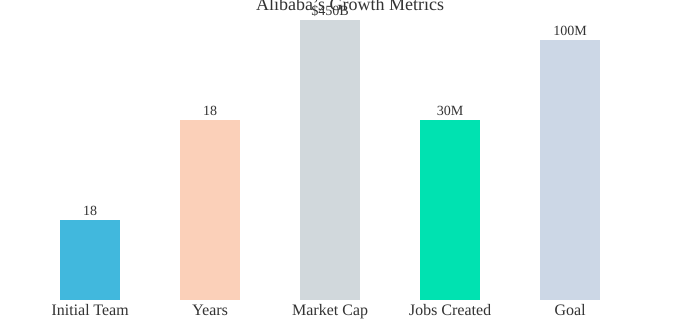
Let Alibaba’s story remind you: every stumble can become a stepping stone. Prepare for the long game, embrace your mistakes, and build with others. That’s how you accelerate product development and empower not just yourself, but millions of others.
The Expanding Universe: Where Alibaba’s Global Ambitions Meet Local Challenges
When you look at Alibaba today—a company with a market cap surpassing $450 billion and nearly 60,000 employees worldwide—it’s easy to forget its humble beginnings. As Jack Ma once said,
“Alibaba start[ed] from no money, no technology, no people in my apartment. Eighteen people decide that we want to use Internet technology to help small business—that was the idea.”This spirit of serving small businesses didn’t just shape Alibaba’s early days in China. It became the foundation for its journey into international business expansion, transforming Alibaba from a local e-commerce giant into a global ecosystem spanning cloud services, payments, and logistics.
From Local Roots to a Global Ecosystem
Alibaba’s story is about more than just selling products online. It’s about building digital infrastructure that empowers entrepreneurs and communities across the world. The company’s reach now extends far beyond China, with Alibaba Cloud operating 91 availability zones in 29 global regions as of September 2025. Strategic data centers have launched in Brazil, France, the Netherlands, and more are coming in Mexico, Japan, South Korea, Malaysia, and Dubai. This cloud services expansion is vital for Alibaba’s global ambitions, enabling businesses everywhere to access world-class technology and data solutions.
But Alibaba’s vision goes further. The company aims to serve 2 billion consumers and create 100 million jobs worldwide. To achieve this, Alibaba focuses on more than just technology—it invests in local infrastructure, adapts to regional needs, and partners with local talent. As Ma puts it,
“We should make the money serve the world, serve this century. Only thinking in that way can we do more.”
Russia: Alibaba’s Fastest Growing E-Commerce Market
Nowhere is Alibaba’s international business expansion more visible than in Russia. Russia stands out as Alibaba’s fastest-growing e-commerce market outside China, with a remarkable 14.4% CAGR (compound annual growth rate) from 2021 to 2026. While Aliexpress is a household name in Russia, it represents less than 1% of Alibaba’s total business. The real story is about how Alibaba is helping Russia build the digital backbone for a modern economy.
When Alibaba first entered Russia, delivery times could stretch to 45 days. Through relentless focus on logistics, that number has dropped to just 15 days—and the goal is to reach 48 to 72 hours, anywhere in Russia. This isn’t just about speed; it’s about unlocking opportunity for local businesses and consumers. As Ma observed after meeting Russian customers:
“I met some Russian girls two years ago. I said, ‘Do you use Aliexpress?’ They said, ‘Yes.’ I asked, ‘What about the speed of delivery?’ They said, ‘It’s great—only 45 days!’ I mean, great is 45 minutes, not 45 days. Now we reduce from 45 days to 15 days, but that is not enough.”
Empowering Local Businesses: Logistics and Payments
Alibaba’s approach in Russia is not to become just another e-commerce company. Instead, the focus is on empowering local businesses by building the infrastructure they need to thrive:
- Logistics: Russia’s vast geography makes delivery a challenge. Alibaba is investing in logistics systems to ensure that anyone, anywhere in Russia, can receive goods within 72 hours. This opens up the e-commerce market for small businesses and consumers across the country.
- Payments: In China, mobile payments are so common that even street vendors accept them. Alibaba wants to bring this level of convenience to Russia, building payment systems that allow every young person to send and receive money at the lowest cost, and access financial services easily.
Building for the Future: Cloud, Talent, and Innovation
Alibaba’s global ambitions are not just about today’s markets, but about building the future. The company recently announced a $15 billion investment in global research labs—including partnerships with leading universities in Russia. By working with Russian mathematicians, physicists, and computer scientists, Alibaba hopes to solve the world’s toughest problems in cloud computing, big data, artificial intelligence, and more.
Ma’s message to young innovators is clear:
“We have technology, we have data, we have consumers, we have a little bit of money. You have talents. We work together, we can do something really big.”This spirit of collaboration is at the heart of Alibaba’s international business expansion. It’s about building bridges—between countries, between companies, and between people.
Alibaba’s E-Commerce Growth Trajectory in Russia
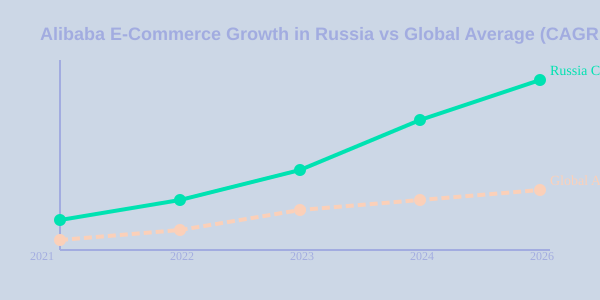
Alibaba’s journey shows you that international business expansion is never just about size or speed. It’s about understanding local realities—like Russia’s unique logistics hurdles—and building solutions that empower people. Whether you’re a startup founder or a global leader, Alibaba’s story reminds you: dream big, but always build with the world in mind.
Cloud and Data: The Hidden Engine of Alibaba’s Next Leap
If you want to understand the real force behind Alibaba’s global ambitions, look beyond the headlines about e-commerce and payments. The true engine is invisible but powerful: cloud services expansion and the smart use of data. This is where Alibaba Cloud steps in, driving not just the company’s growth, but also the digital transformation of businesses and innovators like you around the world.
Alibaba Cloud International Expansion: Building the Digital Backbone
Alibaba Cloud’s journey is a lesson in thinking big and acting bold. In just a few years, Alibaba has committed a record-setting $53 billion to AI infrastructure investment—the largest private project of its kind in the world. This isn’t just about servers and storage. It’s about building the foundation for the next generation of business, powered by artificial intelligence, machine learning, and big data.
Today, Alibaba Cloud operates 91 availability zones across 29 global regions, with new data centers launching in Brazil, France, the Netherlands, and plans for Mexico and Japan. This global reach is not just for show. It’s a strategic move to bring cloud infrastructure protection and advanced digital tools to every corner of the world, enabling startups, solopreneurs, and Fortune 500 companies to innovate at scale.
| Key Metric | Value |
|---|---|
| AI-related product revenue growth (YoY) | +13% |
| Projected AI product revenue by 2028 | 240 billion yuan |
| AI infrastructure investment | $53 billion |
| Availability zones | 91 |
| Global regions | 29 (as of Sep 2025) |
| Strategic data center launches | Brazil, France, Netherlands, future: Mexico, Japan, etc. |
AI Infrastructure Investment: Fueling the Next Wave of Innovation
Why such a massive investment? Because the demand for AI and cloud is exploding. Every day, more businesses—big and small—are looking for ways to use AI, big data, and machine learning to solve real-world problems. Alibaba Cloud’s CoCreate program, for example, empowers solopreneurs and startups to build, test, and scale their ideas using world-class infrastructure. This is the same backbone that powers Alibaba’s own platforms, now open to you.
But it’s not just about technology. Alibaba Cloud’s international expansion is built on smart partnerships and a deep respect for local rules. For example, the partnership with Shiseido, a global beauty giant, shows how Alibaba Cloud delivers secure, AI-driven digital operations tailored for each region. This approach makes Alibaba Cloud a trusted partner for companies navigating the complex world of data localization and sovereign cloud requirements.
Cloud Infrastructure Protection and Regionalization: Trust at the Core
As you look to the future, you’ll see that cybersecurity and compliance are woven into every Alibaba Cloud solution. Each international data center is designed to meet strict regional regulations, ensuring that your data stays protected and local when needed. Whether you’re in Europe, Asia, or the Americas, Alibaba Cloud adapts its offerings to fit your country’s laws and your customers’ needs.
- Data localization: Ensures your data stays within your country, meeting compliance needs.
- Sovereign cloud: Tailored solutions for governments and regulated industries.
- AI-powered security: Real-time threat detection and response for peace of mind.
Empowering Innovators: From Solopreneurs to Global Enterprises
What does this mean for you as an innovator? It means you have access to the same tools that power Alibaba’s global business. Whether you’re a student, a startup founder, or a CTO at a multinational, you can tap into Alibaba Cloud’s AI, machine learning, and big data services to build your dream. The company is actively seeking young talent, especially in science and mathematics, to join this journey—no matter where you live.
We have technology, we have data, we have consumers, we have a little bit of money. You have talents. We work together, we can do something really big. In this way, we can make Alibaba the company of the century.
From cloud services and cyber-secure infrastructure to international expansion and hyper-localized data centers, Alibaba Cloud is the invisible backbone behind Alibaba’s retail and tech future. The next leap isn’t just about selling more products—it’s about building a world where anyone, anywhere, can innovate and succeed.
The Human Side: Empowerment, Diversity, and the Unexpected Leaders of Tomorrow
When you look at Alibaba’s journey, it’s easy to focus on the technology, the numbers, and the global reach. But the real story—the one that can inspire every innovator—is about people. It’s about how empowerment, diversity, and unexpected leaders are shaping the future of business. Today, you’re witnessing a shift: women, Gen Z founders, and solopreneurs are not just participating in innovation—they’re setting the pace, especially in fields like AI adoption startups and women-focused innovation.
Women-Focused Innovation: A Rising Force
Across the world, women entrepreneurs are rewriting the rules of business. The data is clear: 32.7% of CoCreate 2025 submissions are from female founders. In the United States, women-owned businesses have surged by 39%—almost double the growth rate of male-owned businesses. This isn’t just a statistic; it’s a movement. Women are leading the charge in small business empowerment, bringing fresh ideas and new energy to industries that once seemed closed off.
Alibaba recognizes this shift and is actively supporting it. As Jack Ma once said:
“We want to make this company supporting global young people and we want to make this company to making sure women can have more jobs online because people don’t care your woman or man online.”
On digital platforms, gender becomes less of a barrier. Online jobs and e-commerce create opportunities where skills and creativity matter more than stereotypes. This is the heart of women-focused innovation: giving everyone a fair shot, no matter where they start.
Gen Z Founders and Solopreneurs: The New Wave of Innovation
Younger generations are redefining what it means to be an entrepreneur. Gen Z founders are digital natives, comfortable with AI, big data, and cloud computing. They’re not waiting for permission—they’re building, launching, and scaling their ideas now. In Alibaba’s CoCreate program, 63.5% of projects are AI or machine learning-driven, and over 400 projects apply AI to real-world needs. This shows how AI adoption startups are becoming the norm, not the exception.
Solopreneurs—individuals running businesses on their own—are also on the rise. They’re agile, creative, and resilient. With digital tools, even a single person can launch a global business. This is small business empowerment at its finest, and it’s changing the face of innovation.
Diversity as a Strategic Priority
Alibaba’s approach goes beyond gender and age. The company is investing in talent development worldwide, building bridges between countries and cultures. For example, Alibaba recently announced a $15 billion investment in global research labs, including a new partnership in Moscow. The goal? To bring together young scientists, mathematicians, and physicists from China and Russia. By fusing brainpower across borders, Alibaba hopes to solve the world’s toughest problems—economic, social, and scientific.
This cross-border collaboration is about more than technology. It’s about diversity of thought, background, and experience. When you bring together people with different perspectives, you spark creativity and innovation that no single group could achieve alone.
Unpredictable Paths: The Rise of the Unexpected Leader
If you look at Jack Ma’s own story, you see that the path to leadership is rarely straight. He started as an English teacher, failed the college entrance exam twice, and faced countless rejections before founding Alibaba. Today, the company’s CTO is traveling to Moscow to recruit young talent, encouraging them to join Alibaba’s mission—whether in China, Russia, or anywhere else.
This is the new reality: organic, unpredictable career paths are becoming the norm. In the digital era, what matters most is not your credentials, but your skills, creativity, and resilience. The leaders of tomorrow may come from anywhere—a small town, a university lab, or even a solo startup. What unites them is their willingness to learn, adapt, and innovate.
Empowering the Next Generation
Alibaba’s vision is clear: empower young people, women, and anyone with a bold idea. By investing in digital platforms, global labs, and inclusive hiring, the company is creating a space where the next generation of leaders can thrive. Whether you’re a woman entrepreneur, a Gen Z founder, or a scientist with a dream, the message is simple: your background doesn’t define your future—your ambition does.
| Key Metric | Data |
|---|---|
| Women-led CoCreate 2025 pitches | 32.7% |
| Growth in women-owned US businesses | 39% |
| AI/ML-driven CoCreate projects | 63.5% |
| AI real-world application projects | 400+ |
The future of innovation is diverse, unpredictable, and powered by people like you. Whether you’re building the next AI adoption startup, launching a women-focused innovation, or simply dreaming big, remember: the human side is where true progress begins.
The Tech Anxiety Paradox: Why Tomorrow’s Jobs (and Joy) Look Different
Recurring Fears: Why Every Tech Leap Feels Like the End—But Isn’t
If you’re feeling anxious about the rise of AI Essential Infrastructure and the future of work, you’re not alone. Every major wave of technology—whether it was the steam engine, electricity, or the internet—sparked the same fears: “Will this take away my job?” Yet, history shows us something remarkable. With each leap, jobs didn’t vanish; they evolved. New roles appeared, old ones transformed, and society moved forward. The lesson? Worry is natural, but it’s rarely productive—unless it spurs you to creative action.
Machines Are Fast—But They’ll Never Be You
Let’s be honest: Machines are already better than you at memorizing facts, crunching numbers, and repeating tasks at lightning speed. But here’s the twist—they can’t match your creativity, empathy, or grit. As Jack Ma famously put it:
Do not try to memorize things hard and more because computer can remember things hard and more than you.
Instead, your edge lies in what makes you human. Machines don’t have a heart, belief, or the ability to dream. They can’t improvise, tell stories, or connect with others on a deep level. Entrepreneurship and innovation thrive on these very qualities. The future belongs to those who can solve problems in new ways, bring people together, and see opportunities where others see only risk.
AI Isn’t Stealing Jobs—It’s Replacing “Stupid” Ones
It’s true: AI adoption solopreneurs and big companies alike are automating repetitive, rule-based tasks. But this isn’t the end of work—it’s the end of boring work. Think about it: When the steam engine arrived, people feared mass unemployment. Fifty years later, it had created more jobs than it destroyed. The same happened with electricity. Now, as AI Essential Infrastructure becomes part of daily life, we’re seeing the same pattern.
Yes, there will be a 20-30 year adjustment period. Some jobs will disappear, but many more—jobs we can’t even imagine yet—will emerge. The key is to focus on digital transformation security and adaptability. If you’re willing to learn, experiment, and embrace change, you’ll thrive.
Productive Paranoia: Opportunity Hides Where Others Worry
Here’s a secret: When everyone else is anxious, opportunity is born. Jack Ma’s own journey with Alibaba started when few believed in the internet’s potential. He didn’t have money or technology to lose—just a vision and the willingness to try. In his words:
Try to be creative, try to be innovative, try to be constructive. These are the things...
This is the heart of productive paranoia. Instead of letting fear paralyze you, let it sharpen your senses. While others hesitate, you can spot gaps, invent solutions, and build something new. Imperfection and uncertainty aren’t weaknesses—they’re the birthplace of resilience and great stories.
Focus on Your Puzzle, Not the World’s Problems
It’s easy to get overwhelmed by headlines about global crises, political shifts, or the next big tech disruption. But here’s the truth: You shouldn’t worry about macro-geopolitics; focus on the puzzle in front of you. Presidents and prime ministers can worry about the world. Your job is to ask:
- How can I make a living in this new landscape?
- What can I do that’s different, fun, and helpful to others?
- How can I use my unique quirks and skills to create value?
By zeroing in on what you can control, you turn anxiety into action. You become an innovator—not a worrier.
Creativity and Adaptability: The Ultimate Human Advantages
Future prosperity doesn’t hinge on how many facts you can memorize or how fast you can calculate. Those are machine skills now. Instead, your value comes from creative skills, cross-discipline thinking, and understanding local context. Machines might be faster and stronger, but they’ll never be as wise as a human being. Why? Because you have belief, intuition, and the ability to care.
So, as you navigate the world of AI adoption solopreneurs, digital transformation security, and entrepreneurship and innovation, remember: Don’t try to out-compute the computer. Out-create it. Out-connect it. Out-dream it.
Embrace Imperfection—And Enjoy the Ride
Being imperfect and embracing uncertainty isn’t just okay—it’s your superpower. The best careers (and the best stories) come from those who dared to try, failed, learned, and tried again. In a world where machines do the predictable, your unpredictability is your edge.
So, don’t worry about the future. Prepare for it. Make your own future—one creative leap at a time.
Geopolitics, Tech, and the Echoes of the White House: Navigating Scrutiny and Opportunity
Imagine building a company from scratch, only to find yourself at the center of a global storm. That’s the reality Alibaba faced as it grew from humble beginnings to a market capitalization exceeding $450 billion. When you reach this level, you don’t just compete with other businesses—you find yourself under the microscope of governments, regulators, and the world’s most powerful institutions. The White House and other global powers have intensified their scrutiny of Chinese tech firms, including Alibaba, raising concerns over security, competition, and data integrity. This is the new normal for innovators with global ambitions, and it’s a landscape filled with both challenge and opportunity.
You might wonder: how can any company thrive when every move is watched, every partnership questioned, and every innovation tested against new rules? The answer lies in adaptation, resilience, and a willingness to turn scrutiny into a springboard for growth. Alibaba’s journey offers a masterclass in navigating White House Tech Scrutiny and the broader wave of Geopolitical tech scrutiny that shapes today’s digital economy.
Turning Scrutiny Into Strength: The Power of Localized Strategies
As governments tighten export control expansion and demand greater transparency, Alibaba has responded not with retreat, but with bold, localized strategies. The company’s launch of region-specific clouds and data centers is more than a compliance exercise—it’s a statement of intent. By investing in sovereign cloud solutions and regionalized tech ecosystems, Alibaba is showing the world that it can adapt to any rulebook, anywhere.
This approach is about more than ticking regulatory boxes. It’s about building trust. When global brands like Shiseido choose Alibaba Cloud for their operations, it’s a sign that Alibaba’s infrastructure is seen as secure, reliable, and future-ready. These strategic partnerships are Alibaba’s answer to geopolitical and regulatory challenges, proving that collaboration and innovation can flourish even under intense scrutiny.
Cloud Infrastructure Protection and the New Rules of Global Tech
Today, cloud infrastructure protection is at the heart of every tech conversation. Governments want to know where data lives, who controls it, and how it’s protected. Alibaba’s rapid expansion—91 availability zones in 29 regions by September 2025 and a $53 billion AI infrastructure initiative—shows that it’s not just keeping up with these demands, but setting the pace.
Every new layer of technology brings a new set of rules. The challenge is to adapt faster than your rivals. Alibaba’s ability to pivot quickly, invest locally, and build region-specific solutions is a lesson for every innovator. The company’s shares surged the most since 2022 after a strong AI revenue report, showing that investors still believe in Alibaba’s vision—even when the political winds are unpredictable.
Supply Chain Diversification: The End of One-Size-Fits-All
The days of a single, global supply chain are over. Supply chain diversification is now essential, driven by both necessity and opportunity. Alibaba is investing in regionalized infrastructure, ensuring that its operations can withstand shocks—whether from trade disputes, regulatory changes, or shifting consumer demands. This is especially clear in fast-growing markets like Russia, where Alibaba’s cloud business is expanding at a 14.4% CAGR, the fastest in the world.
By building regionalized tech ecosystems, Alibaba is not just protecting itself—it’s opening new doors. Localized offerings mean you can serve customers better, comply with local laws, and build deeper relationships with governments and partners. It’s a strategy that turns geopolitical risk into a competitive advantage.
Lessons for Every Innovator: Adapt, Invest, and Dream Big
What can you take from Alibaba’s rollercoaster journey? First, don’t fear scrutiny—embrace it. Every question, every challenge, is a chance to prove your value and build trust. Second, invest in local solutions. Whether it’s sovereign clouds, regional data centers, or diversified supply chains, the future belongs to those who can adapt to local realities while thinking globally. And finally, never lose sight of your ambition. As Jack Ma once said:
“We have technology, we have data, we have consumers, we have a little bit of money, you have talents. We work together, we can do something really big. In this way, we can make Alibaba the company of the century.”
The collision of tech ambition and political reality is not a roadblock—it’s a crossroads. You can choose to see scrutiny as a threat, or as an invitation to innovate, localize, and lead. Alibaba’s story proves that with the right mindset, every challenge can become an opportunity. As you build your own path, remember: the world is watching, but that’s exactly where the greatest opportunities are found.
TL;DR: Alibaba’s explosive growth is a masterclass in turning setbacks into stepping stones, with innovations in AI, cloud, and global e-commerce that stretch far beyond China’s borders. The secret? Aim for the long game, embrace collaboration, and never be afraid to start small (or make mistakes).
Post a Comment