

I’ll level with you—three years ago I was absolutely, hopelessly wrong about AI. I assumed it was another Silicon Valley fad, like dog-walking apps or smart toasters. But fast forward (whoosh!) to today: venture capitalists have thrown $160 billion at AI startups, Meta is spending $65 billion reinventing itself, and everywhere you look, someone’s building a smarter, quicker tool. Here’s the part nobody tells you: this new AI gold rush isn’t locked away inside glass towers. Early birds—think startup founders, freelancers, even regular folks—are already seizing opportunities you could be missing. Here’s what you really need to know, and what you can do about it now.
1. Reality Check: AI Is Moving at Warp Speed (and No, You’re Not Too Late)
If you’ve been watching the headlines, you already know: AI is moving at warp speed. But here’s the reality—no matter how fast things are changing, you’re not too late to ride this wave. In fact, the biggest opportunities are still ahead. According to a recent report by a former OpenAI researcher, “AI will reshape society more than the Industrial Revolution did” by 2027. That’s not just hype. It’s a wake-up call.
AI Investment Trends: The Money Is Pouring In
Let’s talk numbers. In the last 18 months alone, top venture funds—think Andreessen Horowitz, Sequoia Capital, Greylock, and Costla Ventures—have invested a staggering $160 billion into AI startups. That’s not just a blip; it’s one of the largest and most transformative funding surges in tech history. Even Meta (formerly Facebook) is betting big, spending $65 billion to transition into an AI-first giant. These AI statistics for 2025 and beyond show that the smart money is all-in on artificial intelligence.
AI Market Forecast: Unprecedented Growth Ahead
The global AI market size is projected to hit $800 billion by 2030 and a jaw-dropping $3.5 trillion by 2033. These aren’t just abstract numbers—they represent a tidal wave of new products, services, and business models. If you’re thinking about AI business adoption, now is the time to act. Early movers are already capturing the lion’s share of future wealth, just like the industrialists of the 1800s.
AI will reshape society more than the Industrial Revolution did.
AI Job Market: More Opportunity Than Loss
Worried about jobs? Here’s the good news: AI job creation is set to outpace displacement. By 2030, AI is expected to create 170 million new roles worldwide, even after accounting for 92 million jobs displaced. That’s a net gain of 78 million jobs. The AI job market is booming, with new opportunities in fields you might not have even heard of yet.
Personal Reflection: Change Is Hard, But It’s Also a Doorway
I know what it feels like to see your job disappear overnight. Years ago, I watched my old role evaporate when automation swept through my industry. It was tough. But it taught me something crucial: technology moves fast, and you have to move even faster. The people who adapt early are the ones who thrive. The same is true with AI right now.
AI Business Adoption: The Early-Stage Advantage
If you’re thinking you’ve missed the boat, think again. Most of the future’s AI-driven wealth will go to those who move now. The AI market forecast is clear: we’re still in the early innings. Whether you’re a founder, investor, or professional, there’s still time to carve out your place in this new era.
2. The AI Investment Tsunami: Who’s Surfing the Big Waves?
You’re living through a historic moment—an AI investment tsunami that’s sweeping across the globe. The numbers are jaw-dropping, and the pace is unlike anything tech has ever seen. The money pouring in proves it's real. In just the last 18 months, top venture funds have collectively poured $160 billion into AI startups. This is not just a trend; it’s a seismic shift in how wealth, innovation, and opportunity are being created.
Andreessen Horowitz, Sequoia, Greylock, Costla: Whales in the AI Pool
When you look at AI investment trends, a few names dominate the headlines. Andreessen Horowitz, Sequoia Capital, Greylock, and Costla Ventures are the “whales” making the biggest splashes. These venture capital giants are betting big—often leading the fastest and largest early-stage funding rounds in tech history. Their involvement signals confidence, but it also opens doors for others to follow.
Snapshot: Where the Smart Money Flows
| Venture Fund | Estimated AI Investment (2023-2024) | Notable Startup Focus | AI Trends They’re Betting On |
|---|---|---|---|
| Andreessen Horowitz | $35B+ | OpenAI, Character.AI, MosaicML | Generative AI, AI infrastructure, developer tools |
| Sequoia Capital | $40B+ | Anthropic, Cohere, Harvey | AI safety, enterprise AI, language models |
| Greylock Partners | $20B+ | Adept, Inflection AI | AI agents, workflow automation |
| Costla Ventures | $15B+ | Runway, Perplexity AI | Creative AI, search, content generation |
Globally, AI startup funding is surging. In 2024 alone, private investment in generative AI reached $33.9 billion. These numbers show that investment in AI startups is not slowing down—it’s accelerating, and the biggest funds are leading the charge.
Not Just Giants—You Can Ride the Wave Too
Here’s the inspiring part: AI wealth strategies aren’t reserved for the giants. Yes, the whales are making headlines, but the ocean is vast. There’s plenty of room for solopreneurs, small teams, and bold founders to carve out their own slice of the future. The real opportunities aren’t locked in by the giants. If you’re agile and ready to spot gaps, you can ride these waves with niche tools, creative solutions, and good timing—before the market becomes saturated.
- Find underserved niches in AI applications.
- Leverage open-source models and APIs to build unique products.
- Partner with larger players for distribution while keeping your edge.
Wild Card: Where Would You Place Your Bet?
Imagine you had $10 million to invest in the AI ecosystem right now. Where would you put it? Would you back the next generative AI platform, invest in AI-powered healthcare, or focus on tools that help small businesses harness AI? The landscape is wide open, and the next wave of AI startup funding could come from anywhere—even from you.
The money pouring in proves it's real.
The AI investment tsunami is here. Whether you’re a giant or a nimble newcomer, the opportunity to surf the big waves—and maybe even create your own—is more real than ever.
3. Early Movers Win: Timing, Wealth, and the Entrepreneur’s Paradox
There’s a blunt truth in the latest AI adoption reports: “Early movers capture almost all the wealth.” If you’re watching the generative AI adoption numbers, you already know the landscape is changing at lightning speed. The AI market growth is not waiting for anyone—and the window for easy wins is closing fast.
AI Market Growth: The Surge You Can’t Ignore
In 2023, only 32% of businesses had adopted generative AI. By 2024, that number doubled to 65%. Even more striking, 78% of organizations now use some form of AI, up from just 55% last year. This is not a slow-moving trend—it’s a tidal wave. The data is clear: those who move first in AI business adoption are reaping the biggest rewards.
| Year | Generative AI Adoption | Overall AI Adoption |
|---|---|---|
| 2023 | 32% | 55% |
| 2024 | 65% | 78% |
Early adopters aren’t just getting ahead—they’re multiplying their investment. For every $1 invested in generative AI, early movers are seeing $3.70 in return. That’s not just good business. That’s a once-in-a-decade opportunity.
The Paradox: Why Waiting Feels Safer (But Isn’t)
Here’s the paradox every entrepreneur faces: waiting feels safe. You want to see how the market shakes out, watch what the big players do, and avoid costly mistakes. But in the world of AI adoption rates, waiting is the biggest risk you can take. The report is clear—if you hesitate, you’ll be too late.
Early movers capture almost all the wealth. Waiting might mean you’ll be too late.
Real-World Proof: The Power of Jumping Early
Let me share a quick story. A friend of mine spotted a gap in the market last year. He launched a basic AI business in just three months. Because he moved fast, he grew his revenue by 600% in less than a year. The secret wasn’t a fancy product—it was timing. He was at the forefront of his own problem, built a tool people actually needed, and rode the wave before the crowd arrived.
But here’s the twist: the same friend missed his window in the last tech cycle because he waited too long. He thought he was being cautious, but by the time he jumped in, the easy wins were gone. In AI, speed isn’t just an advantage—it’s the difference between leading and losing.
Chart: The AI Adoption Rocket
Visualize the timeline: from 2023 to 2024, AI business adoption didn’t just climb—it soared. The sharp surge in generative AI adoption is a clear signal. The early phase is ending. The next wave will be more crowded, more competitive, and less forgiving.
- 2023: 32% generative AI adoption
- 2024: 65% generative AI adoption
- 2024: 78% of organizations using AI
- ROI for early adopters: $3.70 for every $1 invested
If you’re at the forefront of your problems, now is your moment. The AI market rewards those who move fast, spot the gaps, and build what people actually need. The imperfect truth? In AI, waiting is the biggest risk of all.
4. Not Locked Away: Niche and No-Code AI Business Ideas Anyone Can Launch
Think AI startups are only for coders and PhDs? Think again. The new wave of no-code AI agents and GPT wrappers is breaking down the walls, letting anyone with expertise and a problem-solving mindset build real businesses. You don’t need to invent the next ChatGPT—you just need to remix it with your own know-how. The field is wide open, and your unique experience is your secret weapon.
GPT Wrappers: Your Expertise, Supercharged
Let’s talk about GPT wrappers. Imagine taking a base AI like ChatGPT and wrapping it with your own prompts, workflows, and industry smarts. As basic as it sounds, this simple remix has become a goldmine for many entrepreneurs. Why? Because when you “wrap it with your own expertise,” you create a tool that solves a specific problem better than any generic bot ever could.
If you’re deep enough in the field, your GPT wrapper is so much better than the original GPT.
For example, a standard chatbot might answer questions, but a GPT wrapper built for real estate agents can handle listings, schedule showings, and even write property descriptions—saving hours every week. That’s the power of combining AI with your real-world know-how.
No-Code AI Agents: Build, Automate, and Sell—No Coding Required
Platforms like Zapier, Bubble, and Make.com are making AI business applications accessible to everyone. With no-code AI agents, you can drag, drop, and automate workflows, then package and sell your solution. No endless hacking. No advanced degrees. Just your creativity and a willingness to solve real problems.
- Healthcare: Build a symptom checker for clinics.
- Marketing: Automate social media posts and campaign analysis.
- Design: Create a tool that generates client-ready mockups in seconds.
The best part? Niche tools are grabbing real revenue. In 2024, 78% of organizations are already using AI in their business. By 2032, AI-driven sales are projected to hit $1.3 trillion. And with 56% of businesses using AI conversational tech for support, the market is hungry for specialized solutions.
Anecdote: From Side Project to Surprising Success
Let me share a quick story. I once built a GPT wrapper for graphic designers. It automated client feedback, suggested design tweaks, and even generated project briefs. I launched it as a side project, thinking it might help a few friends. Within months, it was making more than my “real job.” I was shocked—but it proved that even basic, niche-focused AI content creation tools can become serious businesses when you solve a real pain point.
Wild Card: Your Side Project, Their Whole Department
Imagine a world where your AI-driven side project replaces an entire department’s workload (except the cake on Fridays—robots can’t eat cake!). That’s not science fiction. With today’s tools, you can automate customer support, streamline HR onboarding, or even manage sales pipelines—all with a few clicks and your unique expertise.
The takeaway? The AI business revolution isn’t locked away in Silicon Valley. It’s happening in your browser, right now. With no-code AI agents and GPT wrappers, you can launch a niche solution, help real people, and build a business—no coding required.
5. AI and the Job Market: Transformation, Opportunity, and Human Adaptation
Imagine standing at the edge of a new era—one where AI job market trends are reshaping society even more profoundly than the Industrial Revolution. You’re not just witnessing history; you’re part of it. The numbers tell a powerful story: by 2030, AI is creating 170 million new jobs, even as it displaces 92 million. That’s a net gain of 78 million jobs globally. Yes, the transition is real—and sometimes messy—but it’s also packed with opportunity for those ready to adapt.
AI Job Creation: More Than Just Replacement
It’s easy to focus on what’s being lost. Entire departments may be replaced by automation, and some roles will vanish. But here’s the truth: AI job creation is outpacing the losses. The jobs of tomorrow are already taking shape—roles that didn’t exist a decade ago, from AI ethicists to prompt engineers and data storytellers. In fact, 66% of US physicians now use AI in their daily work, showing how even traditional fields are evolving.
Sector-by-Sector: Where Jobs Are Lost and Gained
The impact of AI business adoption isn’t uniform. Some sectors will see more jobs displaced, while others will experience explosive growth. Here’s a snapshot:
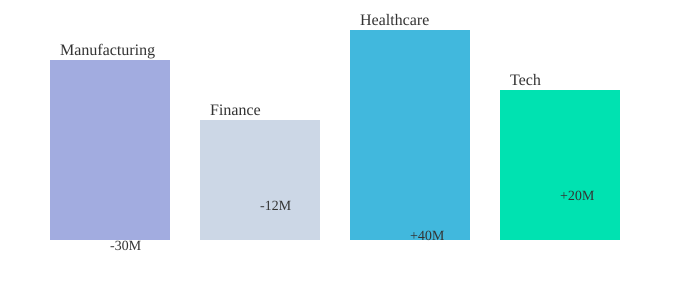
| Sector | Jobs Lost | Jobs Gained |
|---|---|---|
| Manufacturing | -30M | +10M |
| Finance | -12M | +8M |
| Healthcare | -5M | +40M |
| Tech & Data | -2M | +20M |
As you can see, AI automation risk is highest in repetitive roles, but the biggest job growth is in areas that demand creativity, empathy, and problem-solving.
AI: A Productivity Powerhouse
AI isn’t just a job destroyer. It’s a productivity powerhouse. By automating routine tasks, AI frees you to focus on higher-value, more creative work. My cousin, once a traditional accountant, now manages an AI-driven consulting shop. She told me, “Robots do the grunt work—I get to do the thinking.” That’s the new reality: your unique human skills are more valuable than ever.
Adapting to the AI Job Market
- Embrace lifelong learning—reskilling is your superpower.
- Seek out roles that blend tech with human insight.
- Remember, AI narrows skill gaps and boosts productivity, but it also challenges you to keep evolving.
AI is creating 170 million new jobs by 2030, despite displacing 92 million jobs.
The AI job market is a landscape of transformation. If you’re ready to adapt, the future is full of promise.
6. Healthcare, Voice, and Autonomous Tech: AI’s Big Wins Outside Silicon Valley
When you think of artificial intelligence, you might picture Silicon Valley giants pouring billions into futuristic software. (Meta alone has spent over $65 billion reinventing itself as an AI-first company.) But here’s the real story: AI’s most life-changing victories are happening far beyond the world of code and cloud servers. If you think big AI wins are just for software startups, think again. The real gold rush is in practical fields—like medicine, transportation, and even the way you talk to your devices.
AI Healthcare Applications: From Diagnosis to Drug Discovery
Imagine walking into your doctor’s office and knowing that behind the scenes, AI is working to keep you healthier. Today, 66% of U.S. doctors utilize AI in their daily practice. That’s not just a statistic—it’s a revolution. AI healthcare usage is transforming how diseases are detected, diagnosed, and even treated. My grandma’s doctor, for example, uses AI-powered software to spot rare patterns on X-rays that old-school human eyes sometimes miss. This isn’t science fiction—it’s happening right now in clinics and hospitals across the country.
But it doesn’t stop at diagnosis. AI is accelerating drug discovery at a pace never seen before. As one expert put it:
“AI-developed drugs are showing promising results.”
By analyzing massive datasets, AI can identify potential therapies in months instead of years, opening the door to new treatments for diseases that once seemed untouchable. The impact? Faster cures, more personalized medicine, and hope for millions.
AI Voice Market Earnings: The Rise of Conversational Technology
AI conversational technology is changing how you interact with the world. From smart speakers in your living room to virtual assistants in your car, voice tech is everywhere. The AI voice market earnings are set to explode, especially as self-driving cars become mainstream. By 2035, experts project that self-driving vehicles and AI-driven services will generate a staggering $400 billion in annual earnings.
This isn’t just about convenience. Voice-powered AI is making transportation safer and more accessible. Imagine telling your car where to go, hands-free, while it navigates traffic and avoids hazards—all powered by advanced AI conversational technology.
Autonomous Tech: Beyond the Valley
Autonomous vehicles are another area where AI is making waves outside the traditional tech bubble. These cars aren’t just futuristic—they’re practical. They promise to reduce accidents, ease traffic, and give mobility to people who need it most. The autonomous sector’s growth is set to skyrocket, with projections showing exponential increases in adoption and revenue year after year.
Chart: Projected Growth in AI Healthcare Usage, Voice Market Earnings, and Autonomous Sector
| Year | AI Healthcare Usage (%) | AI Voice Market Earnings ($B) | Autonomous Sector Growth (%) |
|---|---|---|---|
| 2023 | 66 | 120 | 15 |
| 2025 | 75 | 200 | 30 |
| 2030 | 85 | 300 | 60 |
| 2035 | 90 | 400 | 90 |
So, whether you’re a healthcare professional, a commuter, or just someone who loves technology, AI’s biggest wins are making your world safer, healthier, and more connected—no Silicon Valley zip code required.
7. Rapid-Fire FAQs: Entrepreneur’s Guide to AI’s 2025 Tsunami
What’s a GPT Wrapper and Why Would Anyone Pay for It?
A GPT wrapper is simply a custom layer you build around a powerful AI like ChatGPT. Think of it as taking the raw intelligence of GPT and tailoring it for a specific job—like legal research, medical advice, or even resume writing. You add your own expertise, prompts, and workflows. That’s what makes it valuable. People pay for GPT wrappers because they solve real problems faster and more accurately than generic AI tools. As one entrepreneur put it,
The best time to start is now, before AGI.If you know your field well, your GPT wrapper can outperform the original, and that’s what customers want: results that feel made just for them.
Do I Need a Coding Background to Launch an AI Business?
Absolutely not. The AI business opportunities of 2025 are wide open to non-engineers. Thanks to No-code AI platforms, you can build, launch, and scale an AI-powered product without writing a single line of code. These platforms offer drag-and-drop tools, pre-built models, and easy integrations. What you really need is domain expertise—your unique knowledge of a problem or industry. If you can spot a pain point and imagine a better way, you’re halfway there. The technical barriers are lower than ever, so don’t let a lack of coding skills hold you back.
How Do I Spot a Gap in the AI Business Market?
Start by looking at your own frustrations or the inefficiencies in your industry. What tasks are repetitive, slow, or error-prone? Where do people wish things “just worked”? AI is best at automating boring, time-consuming work. Early movers and niche-solvers are thriving because they focus on specific problems, not broad, vague ideas. Listen to your customers, read forums, and keep an eye on what people complain about. If you can build a GPT wrapper or use a no-code AI platform to fix that pain, you’ve found your gap.
Is AI Going to Take My Job… or Give Me a Better One?
AI is changing the job market, but it’s also creating new roles and opportunities. If you’re proactive, AI can actually give you a better job—one where you automate the boring stuff and focus on creativity, strategy, and human connection. Entrepreneurs who embrace AI are finding ways to work smarter, not harder. The key is to learn how to use these tools, not fear them. Remember: the best time to start is now, before AGI changes the game even further.
Are the Big Funding Rounds Still Open for Small Startups?
Yes! Investors are actively looking for fresh ideas, especially from founders who understand a niche problem and can use AI to solve it. You don’t need to be a Silicon Valley insider to raise capital. What matters is your vision, your traction, and your ability to show real-world results. If you can demonstrate that your GPT wrapper or AI solution is solving a real pain point, funding is absolutely within reach.
Can I Ride This Wave If I’m Not in Silicon Valley?
Definitely. The AI revolution is global. With remote work, cloud tools, and no-code AI platforms, you can launch and grow your business from anywhere. Many of today’s most exciting AI startups are being built far from traditional tech hubs. What counts is your insight, your hustle, and your willingness to start now. The AI business opportunities of 2025 are open to everyone—no matter where you live.
Conclusion: The Human Edge—Why Guts, Speed, and Creativity Still Matter
In a world where AI tools multiply by the day and statistics like “generative AI delivers $3.70 for every $1 invested” light up headlines, it’s easy to believe the secret to startup gold is just plugging into the latest tech. But the real story—the one that matters for you, right now—is that human adaptability, creative intuition, and the courage to act fast are the winning mix for riding the 2025 AI wave.
Let’s be honest: AI business adoption is exploding. By 2024, 78% of organizations were already using AI in some form. But the biggest breakthroughs aren’t coming from the biggest companies or the deepest pockets. They’re coming from people like you—those who see AI business opportunities not as a threat, but as a blank canvas. The early adopters aren’t always coders or tech wizards. They’re creative risk-takers who pick up new tools, experiment, and run with fresh ideas before anyone else even sees the opportunity.
Think about the rise of “GPT wrappers”—simple businesses built by taking a tool like ChatGPT, adding your own expertise, and repackaging it for a specific audience. As basic as it sounds, this approach has already turned into a goldmine for many. Why? Because when you wrap AI with your unique insights, you create something better than the original. You don’t need to invent the next big algorithm; you just need to see the gap and move quickly to fill it. That’s the real edge in today’s AI business landscape.
Here’s the wild card: Imagine a future where your AI outsmarts you at research, writing, or data analysis—but still brings you coffee in the morning. That’s the sweet spot. Let the tech do the heavy lifting, but never forget it’s your vision, your creativity, and your speed that set the direction. AI is the engine, but you’re the driver. The most successful founders and creators aren’t just watching from the sidelines. They’re building, testing, and adapting faster than anyone else.
This is where human adaptability becomes your strategic advantage. AI can process data at lightning speed, but it can’t dream up the next big idea or pivot when the market shifts overnight. That’s your job. The world is moving faster than ever, and the window to turn AI wealth strategies into real results is wide open—but it won’t stay that way forever. The best time to start is yesterday. The next best is right now.
The best time to start is now, before AGI.
So, whether you’re a non-techie with a bold idea or a seasoned pro ready to level up, don’t just watch this revolution—be part of it. Pick up the tools, trust your instincts, and move with urgency. The AI business adoption wave is here, and the gold goes to those who dare to ride it with guts, speed, and creativity. Your move.
TL;DR: AI is reshaping society and business faster than the industrial revolution, with trillions at stake and wide-open opportunities for adaptable entrepreneurs. Move fast, leverage new tech like GPT wrappers and no-code agents, and be part of the wealth wave—before it crests.
Post a Comment