
Remember when the internet felt like an unopened present—full of mystery, excitement, and hope? These days, every scroll feels more like eating stale chips you can’t stop grabbing. I tried to ‘just check Instagram’ before dinner last night, only to resurface an hour later—annoyed, anxious, and less aware of what I was even looking for. Sound familiar? It’s not just you. Welcome to the wild world of social media fatigue—where your brain is both the player and the prize.
When Social Media Goes Stale: Real Stories from the Scroll-Weary
Do you remember when the internet felt like a treasure hunt? Every click was a new adventure, every post a surprise. Now, for many of us, that spark is gone. Social media fatigue is real, and it’s sweeping through feeds everywhere. If you’re feeling digital exhaustion, you’re not alone. In fact, recent research shows that 32% of adults report social media fatigue, and a staggering 40% feel isolated because of their online experiences. Let’s dive into what happens when social media goes stale—and how you might find hope in the scroll.
The Day My Feed Became One Endless Dance Trend
Picture this: You open your favorite app, ready to unwind. But instead of feeling entertained, you’re hit with a wall of sameness—one dance trend after another, prank videos that all blur together. You scroll, hoping for something new, but it never comes. That was the day my feed left me numb. The excitement that once came with logging on now feels like ancient history. For so many users, the thrill of discovery has faded, replaced by a sense of déjà vu and digital exhaustion.
Why Excitement Online Feels Like Ancient History
It’s not just you. The early days of the internet were filled with wonder. Everything was new, and every post felt personal. Now, algorithms push the same content to millions, and originality gets lost in the noise. You might find yourself thinking, “Because nothing feels exciting anymore, like it used to when the internet first came around.” This nostalgia is common among the scroll-weary, and it’s a sign that your brain is craving something real—something more than endless loops of recycled trends.
How Anxiety Creeps In: The Endless App Check
Even as the excitement fades, it’s hard to pull away. You tell yourself, “I’ll just check Instagram.” Minutes turn into an hour. You’ve opened every social app at least three times, searching for something that never appears. The digital slot machine keeps you hooked, but the payoff is empty. As one user put it:
“Tired of the digital slot machine increasing anxiety and depression across the board.”
This cycle is more than just a waste of time—it’s a drain on your mental health. Social media anxiety builds as you chase notifications, only to feel oddly hollow after each session. The numbers back it up: 32% of adults experience social media fatigue, and the constant scrolling can leave you feeling more isolated than ever.
Positive Pockets: Creators Who Still Spark Joy
But it’s not all doom and gloom. There are still bright spots in the digital landscape. Maybe you, like me, still love watching YouTube. Certain creators manage to cut through the noise, offering real value and genuine connection. These positive social media experiences remind us why we logged on in the first place. They’re the exceptions in a sea of sameness, and they prove that joy is still possible—even if it takes a little more effort to find.
When Did Screens Start Feeling Obligatory?
There’s been a subtle shift. What once felt optional—logging on to catch up or be inspired—now feels like a chore. You keep Instagram installed, just in case something exciting actually happens. But deep down, you know you’re mostly opening the app out of habit, not hope. This sense of obligation is a key sign of digital exhaustion, and it’s affecting more and more people every day.
Attention Hijacked: The Loop of Deja Vu
It’s easy to feel like your attention is being robbed, ten seconds at a time. The same videos, the same jokes, the same trends—over and over. This endless loop can leave you feeling drained, anxious, and alone. But recognizing these feelings is the first step toward reclaiming your time and your joy.
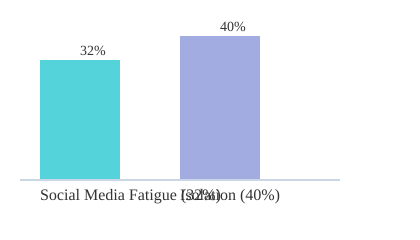
Bar chart: Percentage of adults reporting social media fatigue (32%) and those feeling isolated due to social media (40%) in 2025.
Fast Food for the Brain: How Social Media Eats Away at Your Reward System
Let’s start with a wild card: Social media is the fast food of socialization. If you’ve ever found yourself mindlessly scrolling, you’ve probably noticed the similarities. Instagram is the fries—salty, addictive, and gone before you know it. TikTok is the milkshake—sweet, smooth, and designed to go down easy. And Facebook? Well, sometimes it’s the day-old burger—still there, but maybe not as fresh as you remember. This is the fast food analogy social media has earned, and it’s at the heart of why so many of us feel social media fatigue and digital exhaustion.
Your Brain: Built for Scarcity, Not Infinite Scrolling
Here’s the thing: your brain didn’t evolve for this world of endless feeds and notifications. For over 300,000 years, Homo sapiens lived as hunter-gatherers, where every moment was about survival. Our reward circuits evolved to help us find scarce resources—like fat, sugar, and salt. When we stumbled upon a honeycomb or a berry patch, our brains released dopamine, signaling, “This is important! Remember this!”
But now? We’re not foraging for fruit. We’re hunting for likes, comments, and shares. Instead of a rare treat, we get a constant stream of digital dopamine. The result? Our brains are overwhelmed, tired, and anxious—classic symptoms of social media addiction and digital exhaustion.
Personal Tangent: From Sugar Cravings to Like Cravings
I remember being a kid and craving sugar. The thrill of finding a hidden stash of candy was unbeatable. Fast forward to adulthood, and I catch myself craving ‘likes’ in the same way. That little red notification lights up my brain just like a piece of chocolate once did. The difference? Candy was a rare treat. Notifications are everywhere, all the time. The craving never really stops.
Industrial Revolution: The Dopamine Floodgates Open
Here’s a quick data point to put things in perspective:
| Event | Approximate Date |
|---|---|
| Emergence of Homo sapiens | ~300,000 years ago |
| Start of Industrial Age | ~300 years ago |
| Fast Food Chains & TV Era | 1950s |
That means the modern world—mass media, fast food, and now social media—has only existed for about 1/1000th of our evolutionary history. Our brains are ancient, but our environment is brand new. This is what scientists call an evolutionary mismatch.
Fat, Sugar, Salt vs. Digital Dopamine: The Pleasure Formula
Fast food companies have spent decades perfecting the right mix of fat, sugar, and salt to keep you coming back for more. Social media companies do the same thing with your attention. They test and tweak algorithms to maximize your pleasure response—serving up content that’s just the right mix of funny, shocking, and relatable. Every swipe, like, and share is engineered to spike your dopamine, just like every bite of a perfectly salted fry.
But here’s the catch: our brains aren’t designed for unlimited, high-frequency dopamine hits. What was once a survival tool now leads to burnout, anxiety, and a constant sense of social media fatigue. The endless scroll is like an all-you-can-eat buffet for your reward system—and it’s exhausting.
Why This Mismatch Matters
When you see a notification, your brain treats it like a primal survival signal. It’s as if every ping is a potential berry patch or a sign of danger. But in today’s world, those signals never stop. The result? Digital exhaustion sets in, and real joy becomes harder to find.
"Social media is the fast food of socialization."
Understanding this mismatch is the first step to reclaiming your joy. Your brain is wired for scarcity, not for infinite scrolling—and that’s nothing to be ashamed of. It’s simply how we’re built.
Algorithmic Junk Food: How Social Feeds Became a Digital Casino
The Advertising Shift: Rage and Shock Became Dollar Signs
Imagine this: social media started as a place to connect with friends, share moments, and discover new ideas. But something changed. The evolution of social media algorithms took a sharp turn when internet companies realized they could study the reward mechanisms in our brains. They saw that every like, comment, and share triggered a small burst of dopamine—a chemical that makes you feel good. And that’s when the advertising model took over.
Social platforms discovered that the most polarizing or inflammatory headlines—those that made you angry, shocked, or outraged—captured and held your attention the longest. The more you engaged, the more ads they could show you. Suddenly, your feed wasn’t just about friends or interests. It became a battleground for your attention, optimized for whatever kept you scrolling.
Personal Scenario: Trapped by the For You Page
You know the feeling. You open your favorite app, thinking you’ll just check in for a minute. But soon, you’re endlessly scrolling the For You Page, drawn in by headlines that make your blood boil or your jaw drop—against your better judgment. You might even ask yourself, “Why am I still here?” The answer: algorithms are working overtime to keep you hooked.
"And that's how the For You page was born, and now here we are."
This is the digital casino effect. Every swipe is like pulling a lever on a slot machine, hoping for a hit of something exciting or outrageous. It’s not your fault—these platforms are designed to hijack your attention.
Chart: Polarizing Content Rises, Meaningful Connection Drops
| Year | Polarizing Content (%) | Meaningful Connection (%) |
|---|---|---|
| 2012 | 15 | 65 |
| 2016 | 35 | 45 |
| 2020 | 60 | 25 |
As algorithms prioritize what’s most engaging—often the most divisive—meaningful human connection gets crowded out. The result? Content saturation, where your feed is stuffed with more of the same, and genuine moments feel rare.
How Algorithms Create Content Saturation and Reward Addictive Behaviors
The evolution of social media algorithms means that every post, video, or meme is fighting for your attention. The more outrageous or emotional, the better. This leads to content saturation—an endless stream of similar, repetitive posts. You start to feel overwhelmed, even numb. This is one of the key social media addiction effects: your brain craves the next hit, but it never truly satisfies.
- Algorithms reward divisive content with more visibility.
- Content creators chase trends, losing originality.
- You experience user fatigue, feeling drained and disconnected.
User Fatigue in Advertising: The Ad Treadmill
It’s not just the content that wears you down. The advertising treadmill is relentless. As you scroll, you’re bombarded with repetitive and often irrelevant sponsored posts. User fatigue in social media advertising is real—your brain tunes out, but the ads keep coming. This constant barrage adds to psychological stress and makes it harder to find content that feels authentic or meaningful.
| Algorithm Behavior | User Effect |
|---|---|
| Prioritizes inflammatory/popular content | Increased stress, attention hijacking |
| Ad overload and repetition | User fatigue, loss of interest |
Industry Insight: The Race for Your Fleeting Attention
Behind the scenes, brands and creators are scrambling. As content loses its unique flavor and everyone competes for just seconds of your attention, the pressure mounts. The result? More of the same, less of what matters. The digital world starts to feel like fast food for your brain—quick, addictive, and ultimately unsatisfying.
You’re not alone if you feel exhausted by it all. The evolution of social media algorithms, content saturation, and user fatigue are not just buzzwords—they’re the reality of today’s digital landscape.
The End of the World As We Click It? Mental Health in the Digital Age
Over the past five years, you’ve probably felt it too: social media just keeps getting more overwhelming, more exhausting, and somehow, less joyful. You’re not alone. The mental health impact of digital exhaustion is now a measurable public health issue, with social media anxiety and depression rates rising across every generation. But before you imagine quitting social media and moving off-grid, let’s be real—most of us can’t (and shouldn’t have to) abandon the digital world entirely. Instead, let’s explore how the worsening state of social media could change the world as we know it—and what you can do to reclaim real joy.
Wild Card: What If Bots Outnumber Humans by 2027?
Imagine a future where bots outnumber humans on every platform. It sounds like science fiction, but the rise of AI-generated content is already blurring the lines between real and fake. If every scroll brings you more noise and less connection, the risk is not just digital exhaustion—it’s a world where authentic human interaction gets drowned out. This isn’t just about technology; it’s about your mental health and the very fabric of society.
Your Brain on Social Media: The Slot Machine Effect
Why does scrolling feel so addictive? It’s not an accident. Your brain evolved to seek out rare rewards—like fat, sugar, or salt—by giving you a dopamine rush. Social media platforms hijack this ancient wiring, turning every notification and like into a digital slot machine. The result? You get stuck in a cycle of increasing stress, anxiety, and less joy from real life. Social media addiction isn’t just a buzzword; it’s a real, measurable phenomenon.
"Social media fatigue is linked to anxiety, depression, and decreased mental well-being."
Data Table: The Mental Health Toll of Social Media
| Age Group | Anxiety (%) | Depression (%) | Burnout (%) | Desire to Disconnect (%) |
|---|---|---|---|---|
| Teens | 48 | 42 | 37 | 48 |
| Gen Z | 52 | 45 | 41 | 81 |
| Millennials | 46 | 38 | 33 | 78 |
| Adults | 34 | 29 | 25 | 62 |
*Data: 48% of teens believe social media negatively impacts them; 81% of Gen Z and 78% of millennials want to disconnect more easily. Social media fatigue significantly increases symptoms of anxiety and depression.
FoMO and the Vicious Loop
The Fear of Missing Out (FoMO) is more than a buzzword—it’s a vicious loop. The more you scroll, the more you crave something better, and the more you fear missing out on what everyone else seems to have. This bidirectional link between FoMO and social media fatigue keeps you coming back, even when you know it’s making you anxious or unhappy. It’s a cycle that feeds itself, leaving you feeling more isolated and less satisfied with real life.
Platform Inertia: Why It’s So Hard to Just ‘Unplug’
Ever wondered why you can’t just log off? It’s not a lack of willpower. Social media platforms are designed to keep you scrolling, liking, and posting. The more you use them, the harder it is to break free—a phenomenon known as platform inertia. This inertia leads to inaction, even when you desperately want to disconnect and find more offline fulfillment.
Refusing to Quit: A Rebellion Against Digital Nihilism
Here’s a personal opinion: refusing to quit social media isn’t weakness—it’s a quiet rebellion against digital nihilism. You don’t have to disappear into the woods to reclaim your mental health. Instead, you can choose to engage more mindfully, set boundaries, and seek real joy both online and offline. Remember, you’re not alone in wanting more from life than endless scrolling. The desire to disconnect is a powerful first step toward real change.
Reclaiming Joy: Unconventional Strategies for Navigating Digital Challenges
Digital exhaustion is real, and it’s not just you. As we move toward 2025, half of all consumers say they plan to reduce their time on social platforms. Gen Z, in particular, is leading the way, reporting a rise in offline rituals to buffer against user fatigue. If you’re feeling like social media is fast food for your brain—quick, addictive, but ultimately unsatisfying—you’re not alone. The good news? There are unconventional, inspiring ways to reclaim real joy and start navigating digital challenges with confidence.
From Doomscrolling to Delight: One Small Step
Let’s start with a simple, invented example: The day I swapped doomscrolling for a wildly unproductive sunset walk—my mood transformed. I left my phone at home, wandered aimlessly, and watched the sky change colors. No likes, no notifications, just the gentle reminder that joy can be found in the real world, not just on a screen. This single act broke the cycle of digital exhaustion and reminded me that navigating digital challenges sometimes starts with stepping away.
Strategy Spotlight: Silent Notifications and Social Media ‘Fasts’
One of the most effective ways to tackle user fatigue is to reduce the constant barrage of alerts. Try setting your notifications to silent, or better yet, schedule regular social media ‘fasts’—periods where you intentionally stay offline. Research shows that these breaks can help reset your brain, reduce anxiety, and improve sleep. While it may feel strange at first, you’ll quickly notice how much mental space you reclaim. As one expert puts it:
"Effective strategies to combat social media fatigue include reducing content volume, improving content relevance, and encouraging offline engagement."
Why Deleting Isn’t Always Better: Curate, Don’t Cut
It’s tempting to delete every app and disappear, but that’s not always the answer. Instead, focus on curating your feed. Unfollow accounts that drain you, mute topics that spike anxiety, and seek out creators who inspire, educate, or uplift. Navigating digital exhaustion doesn’t mean severing all ties—it means making your digital space work for you. Ask yourself: Does this content serve my happiness, or sabotage it?
Offline Rituals: Analog Hobbies and the Joy of Missing Out (JOMO)
Gen Z is showing us the power of offline rituals. Analog hobbies—like journaling, painting, gardening, or playing an instrument—are making a comeback. These activities offer a tangible antidote to digital challenges, helping you reconnect with yourself and the world around you. Embrace JOMO, the Joy of Missing Out. Instead of fearing what you’re missing online, celebrate the peace and presence you gain offline. Organize a board game night, take a tech-free hike, or simply enjoy a meal without your phone in sight.
Surprising Upside: Social Media’s Potential—On Your Terms
It’s easy to forget that social media still holds potential for discovery and connection—if you fight to use it on your terms. Join niche communities that share your passions, use platforms to learn new skills, or connect with friends across the globe. The key is intentionality. By setting boundaries and being selective, you can transform your online experience from draining to delightful.
Chart: The Rise of Offline Wellbeing Practices Among Digital Natives (2020-2025)
| Year | % Practicing Offline Rituals |
|---|---|
| 2020 | 28% |
| 2022 | 36% |
| 2025 (projected) | 50% |
Source: Industry research on digital challenges 2025 and Gen Z wellbeing trends.
Remember, navigating digital challenges in 2025 is about more than just cutting back—it’s about choosing what truly brings you joy. With a blend of reduction, relevance, and offline engagement, you can reclaim your happiness and thrive in a digital world.
FAQ: Your Burning Questions About Social Media Fatigue Answered
What exactly causes social media fatigue?
Social media fatigue happens when your brain gets overwhelmed by the endless stream of posts, notifications, and updates. Think of it like eating fast food all day—quick hits of satisfaction, but no real nourishment. Platforms are designed to hijack your attention, pulling you in with likes, shares, and trending topics. Over time, this constant stimulation leads to digital exhaustion. You start to feel tired, irritable, and even anxious, but you can’t stop scrolling. It’s not just about too much screen time; it’s about the quality and intensity of what you’re consuming. The more you try to keep up, the more drained you feel.
Is social media really affecting my mental health, or am I overreacting?
You’re not overreacting. Research shows that social media fatigue and content saturation can have a real mental health impact. When your attention is constantly hijacked, your brain doesn’t get a chance to rest or process. This can lead to anxiety, low mood, trouble sleeping, and even feelings of loneliness—even though you’re “connected” all the time. If you notice yourself feeling more stressed, comparing yourself to others, or struggling to focus, these are real symptoms of digital exhaustion. Your feelings are valid, and you’re not alone.
How can I spot when my screen time becomes a problem?
It’s easy to lose track of time online, but there are clear signs that your screen time might be tipping into unhealthy territory. Watch for these social media addiction symptoms:
- You reach for your phone first thing in the morning and last thing at night.
- You feel anxious or restless when you can’t check your feeds.
- Your real-life relationships or responsibilities are suffering.
- You keep scrolling even when you’re bored or unhappy.
- You lose track of time and feel guilty afterwards.
If any of these sound familiar, it’s a sign to pause and reflect on your habits.
What’s the difference between healthy online time and addiction?
Healthy online time is about balance and intention. You use social media to connect, learn, or relax—and you can step away without stress. Social media addiction symptoms show up when you feel out of control, use it to escape problems, or it starts to harm your well-being. The difference is in how you feel: energized and inspired, or drained and anxious. Ask yourself: “Am I using this to add value to my life, or am I just filling time?” If it’s the latter, it might be time to rethink your habits.
Can I really ‘enjoy’ the internet again, or is it all chaos now?
Absolutely, you can rediscover joy online! The internet isn’t the enemy—it’s how we use it that matters. By setting boundaries and being mindful, you can filter out the noise and focus on what truly uplifts you. Curate your feeds, unfollow accounts that drain you, and seek out content that sparks real interest or happiness. Remember, you’re in control of your digital experience. It’s possible to find inspiration, connection, and even peace online, once you reclaim your attention.
Top three actions to immediately feel better about your digital life
- Set intentional limits: Use app timers or schedule “no screen” hours. Give your brain time to rest and reset.
- Curate your content: Unfollow, mute, or hide accounts that make you feel anxious or inadequate. Fill your feed with positivity and inspiration.
- Reconnect offline: Make time for real-life joy—walks, hobbies, or face-to-face conversations. Notice how your mood shifts when you step away from the screen.
You have the power to break free from digital exhaustion and reclaim your joy, one small step at a time.
Conclusion: Beyond the Digital Slot Machine—You Are Not Powerless
If you’ve made it this far, you already know that social media fatigue and digital exhaustion are not signs of personal weakness. They are the natural, predictable results of platforms engineered to hijack your attention and keep you coming back for more. Like fast food for your brain, these apps are designed to be irresistible, but not necessarily nourishing. If you feel tired, anxious, or even bored after scrolling, you’re not broken—you’re simply human, living in a world where your ancient brain is up against modern machines built to keep you hooked.
Let’s acknowledge something important: Social media had so much potential, and it still has so much potential. The promise of connection, discovery, and community is real. There are great people here, sharing ideas, art, and support. But somewhere along the way, the platforms themselves changed. The algorithms got smarter, the feeds got faster, and the dopamine-driven design started to shape not just what we see, but how we feel. The result? A growing epidemic of digital exhaustion, with real mental health impacts that ripple through our lives.
Here’s a bit of unorthodox wisdom: your boredom is a clue. That restless urge to refresh, to scroll, to check just one more notification—it’s not a personal failing. It’s the soundtrack of an attention economy gone wild, where your focus is the product and your peace of mind is collateral damage. If you find yourself anxious or empty after another hour online, it’s not because you’re doing something wrong. It’s because these platforms are working exactly as designed.
But here’s the hopeful truth: you are not powerless. User agency is the secret ingredient in overcoming digital exhaustion. You can choose to step back, to set boundaries, and to reclaim your attention. You can decide what you consume, who you follow, and how you engage. You can even decide to log off and do something gloriously analog—like doodling, taking a walk, or calling a friend. These small acts are not just escapes; they are powerful ways to reset your brain and rediscover real joy.
I’m not here to tell you that social media is evil, or that you should quit cold turkey. Instead, I’m inviting you to join me in a personal experiment: I’m reclaiming my joy—one silly analog distraction at a time. Care to join? Whether it’s reading a book, baking bread, or just sitting quietly with your thoughts, every moment spent away from the digital slot machine is a chance to reconnect with yourself and the world around you.
Let’s reframe the narrative. The worst effects of social media are not a reflection of your willpower or character. They are the byproduct of ancient brains trying to survive in a hyper-connected world. Recognizing this is not an excuse—it’s a call to action. You can shape your digital diet—moment to moment, scroll to scroll. Every choice you make is a vote for the kind of life you want to live, and the kind of mind you want to nurture.
"You can shape your digital diet—moment to moment, scroll to scroll."
Social media fatigue and digital exhaustion are real, but so is your ability to create positive social media experiences. The end of the world isn’t inevitable, even if sometimes it feels that way. You have the power to pause, to reflect, and to choose what comes next. The next time you feel that familiar urge to scroll, remember: you are not powerless. You can close the app, step outside, and reclaim a little bit of joy—one moment at a time.
TL;DR: You’re not imagining it—social media really is getting more exhausting. By understanding its fast-food-for-the-brain design, the way it hijacks our ancient instincts, and the growing mental health costs, you can start to reclaim your focus and find joy both on and offline.
Post a Comment