

Have you ever wondered why some people seem to turn wild dreams into reality while others stay stuck, trapped by invisible barriers? I’ve been that person too: skeptical, drowning in negative thoughts, sure that the universe was conspiring against me. It was only after hearing Bob Proctor’s story—complete with career failures, massive debt, and a tattered copy of Think & Grow Rich—that I started to get it. There’s a hidden art to manifestation, and it’s less about cosmic magic and more about personal renovation. Let’s ditch the fluffy language and dig into the raw, offbeat lessons that matter.
1. Bob Proctor’s Wake-Up Call: How a Messy Mind Sparked a Million-Dollar Idea
When you think of Bob Proctor visualization and the power of a success mindset, it’s easy to picture the polished speaker and bestselling author. But Bob’s story didn’t begin with confidence or clarity. In fact, it started with chaos—a messy mind, a string of firings, and debt that felt impossible to escape. If you’ve ever felt stuck or wondered if your circumstances are just “how things are,” Bob’s journey is proof that a paradigm shift can come from the most unlikely beginnings.
A Not-So-Glamorous Beginning: Fired, Broke, and Lost
At 26, Bob Proctor was earning less than $4,000 a year and owed $6,000—a debt he couldn’t see his way out of. He’d never finished high school, couldn’t hold a job, and admits he did “just enough so I wouldn’t get fired, but I got fired a lot.” If you’ve ever felt like you’re just going through the motions—waking up, working, and going to bed without purpose—you’re not alone. Bob was there, too.
Ray Stanford’s Unexpected Challenge: “Why Don’t You Change Your Results?”
Everything shifted when Bob met Ray Stanford in Toronto. Ray’s question was simple but world-shaking:
“Why don’t you change the way you’re living?”For Bob, the idea that he could change his results had never crossed his mind. Like most people, he was stuck in a routine, never questioning if more was possible. Ray’s challenge was the spark for Bob’s paradigm shift—a reminder that sometimes, it takes an outside nudge to see what’s possible.
Why Do Some People Pivot While Others Settle?
Think about your own life. Have you ever hit rock bottom? Why do some people pivot and others settle? Research shows that major paradigm shifts often come after hitting a personal or financial low. For Bob, it was the combination of debt, dissatisfaction, and Ray’s belief that pushed him to try something new. Sometimes, the only way to move forward is to admit your way isn’t working and be open to a new approach.
Embracing What You Don’t Know: Your Secret Superpower
Bob didn’t know the “rules” of success, and that became his superpower. When Ray asked if he read, Bob replied, “No, I can’t read”—not because he literally couldn’t, but because he’d never developed the habit. Ray handed him a book (the same one featured in “Think and Grow Rich”), and Bob started reading it every day. He didn’t know what would happen, but he was willing to try. Sometimes, not knowing the limits lets you dream bigger.
Low Expectations: The Hidden Barrier
I’ll admit, I once blew a job interview because I didn’t think I deserved more. We all underestimate the impact of low expectations. Bob’s story is a reminder that overcoming limiting beliefs is the first step to a success mindset.
The $25,000 Goal: Writing Down the Impossible
Ray told Bob to write down what he wanted. Bob’s answer? $25,000—a sum so huge it felt as unreachable as a billion dollars. He didn’t know anyone with that much money, and he didn’t believe it was possible. But Ray’s conviction was contagious.
“Your way’s not working, mine is.”With nothing to lose, Bob decided to try. That experiment—writing down a wild, impossible goal—became the first step in his transformation.
Wild Card: Write Down Your Craziest Goal
Have you ever tried writing down the craziest goal you can imagine, just for the heck of it? Try it. You might be surprised at what your mind starts to believe is possible.

2. The Physics Behind Manifestation: Why the Law of Vibration Isn’t Just Mystical Fluff
The Law of Vibration Explained in Plain English (and Awkward Analogies)
If you’ve ever tried to tune into a jazz station while stuck on a news frequency, you know it’s impossible to get the music you want. That’s the Law of Vibration in a nutshell: everything—your thoughts, your goals, even your coffee cravings—vibrates at a certain frequency. As Bob Proctor puts it, “The Law of Vibration is the primary law; the Law of Attraction is secondary.” You can’t attract what you want unless you’re vibrating on the same wavelength.
All Action Starts with a Thought—But Belief Fuses You to Your Idea
Manifestation isn’t just wishful thinking. When you write down a goal, you create a mental picture. But it’s belief—mixed with emotional involvement—that fuses you to your idea. Without belief, your thoughts are just static. William James, the father of modern psychology, nailed it:
“Believe and your belief will create the fact.”When you truly believe, you’re not just hoping—you’re aligning your mind, emotions, and actions with your goal.
Every Object and Thought Has a Frequency: Vibrational Harmony in Action
Think of your mind as a radio. Every thought you have emits a frequency. If you’re stuck thinking about debt, you’ll keep attracting more debt, because that’s the frequency you’re tuned into. But when you shift your focus to abundance or opportunity, you start attracting those things instead. You attract what matches your subconscious wavelength—this is vibrational harmony in action.
Physical Analogies: Texting, WiFi, and the Magic of Frequencies
- Texting Across Continents: You can send a photo from Toronto to Romania in seconds. Why? Because your phone operates on invisible frequencies that connect instantly, just like your thoughts can connect with opportunities worldwide.
- Radio Frequencies: You can’t hear jazz on a news channel. Likewise, you can’t manifest wealth while vibrating on a frequency of lack.
- WiFi Invisibility: You can’t see WiFi, but you trust it’s there. The Law of Vibration works the same way—unseen, but always operating.
Emotional Energy + Thought = Magnetic Force for Manifestation
Here’s where the magic happens: when you combine emotional energy with a focused thought, you create a magnetic force. That’s when manifestation moves from theory to reality. As Proctor explains, “You fuse with the idea.” Your body, mind, and spirit operate as a magnet, drawing in people, opportunities, and resources that match your frequency.
Personal Tangent: Manifesting a Coffee (and Why Belief Matters)
Once, I tried manifesting a free coffee. The times it worked? I was genuinely excited and knew it was coming. When I was skeptical or just hoping, nothing happened. This quirky experiment taught me: belief isn’t just mental—it’s emotional involvement that flips your frequency.
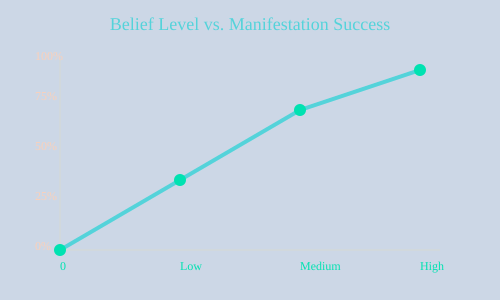
Introducing the Chart: Belief Level vs. Manifestation Success
Below is a simple chart showing how the level of belief correlates with successful manifestation. The higher your belief (and emotional involvement), the more often you see results. This isn’t just mystical fluff—scientific minds like Wernher von Braun and Andrew Carnegie recognized that belief, when mixed with emotion, sets natural laws in motion.
3. Visualization Techniques: How to Paint Your Goal Into Reality (No Artistic Talent Required)
Visualization isn’t just wishful thinking or idle daydreaming. According to Bob Proctor, it’s a deliberate, multi-sensory exercise that can turn your thoughts into gold. You don’t need to be an artist to “paint” your dreams into reality—you just need the right daily habits and a willingness to engage your senses. Let’s break down Bob Proctor’s visualization techniques and see how you can use them to activate your inner magnet.
Visualization Isn’t Daydreaming—It’s Deliberate, Multi-Sensory Immersion
Bob Proctor’s approach to visualization is all about intention. When you visualize, you’re not just imagining a better future; you’re creating a vivid, detailed “mental movie” of your goal as if it’s already real. This process isn’t passive. It involves seeing, feeling, and even touching your goal in your mind and in your daily life.
Why Writing Down Your Goal on a Card (and Carrying It Everywhere) Actually Works
One of Bob’s most famous visualization exercises is the goal card ritual. He explains, “When you write your goal, you create a picture in your mind. That picture is impregnated into cells in your brain.” By writing your goal on a card and keeping it with you, you create a physical symbol that deepens your emotional attachment to your dream. Every time you touch or see the card, you reinforce the mental image and activate your brain’s pattern recognition system.
The Daily Ritual: Rereading Goals Creates ‘Mental Movies’
Bob Proctor read and visualized his goals daily for over 55 years. This daily habit isn’t just about repetition—it’s about embedding your goal into your subconscious. Each time you read your goal card, you replay your “mental movie,” making the outcome feel more real and attainable. Over time, your mind starts to accept this vision as reality, guiding your actions and decisions toward making it happen.
Bob’s Gold Card Ritual – Connecting Tangible Actions with Intangible Dreams
Here’s how you can practice this visualization technique:
- Write your specific goal on a small card (your “gold card”).
- Carry it with you at all times—in your wallet, pocket, or even as your phone wallpaper.
- Read it multiple times a day, especially in the morning and before bed.
- As you read, close your eyes and imagine the sights, sounds, and feelings of achieving your goal.
- Touch the card and let the sensation anchor your vision in your mind and body.
Sensory Involvement: Touching, Seeing, Feeling Your Goal Triggers Brain Activation
Science backs up Bob’s method. Multi-sensory visualization—engaging touch, sight, and emotion—activates your brain’s neural pathways. When you touch your goal card, your sensory system sends signals that reinforce the mental image. This physical connection helps “paint” your goal into your subconscious, making it easier for your brain to recognize opportunities and solutions that align with your dream.
Personal Visualization Exercise: The Power of Physical Reminders
I once set my dream trip’s destination as my phone wallpaper. Every time I unlocked my phone, I saw the image and felt a surge of excitement. Despite doubts, I found myself researching flights and eventually booking the ticket. That’s the power of a daily, visual reminder—it nudges your brain to take action, even when your conscious mind hesitates.
Key Visual: Comparing Visualization Methods
| Method | Sensory Engagement | Impact |
|---|---|---|
| Goal Card (Bob Proctor) | Touch, Sight, Emotion | Deep subconscious imprinting, daily activation |
| Vision Board | Sight, Emotion | Broad visual stimulation, motivation boost |
| Affirmations | Hearing, Emotion | Reinforces belief, moderate subconscious effect |
| Guided Meditation | Hearing, Imagination | Relaxation, mental rehearsal |
“When you write your goal, you create a picture in your mind. That picture is impregnated into cells in your brain.” – Bob Proctor
4. The (Not-So-Secret) Power of Affirmations and Daily Habits
Affirmation practice isn’t about tricking yourself or brainwashing your mind. Instead, it’s a deliberate way of reprogramming your subconscious mind, shifting your beliefs, and raising your mental frequency to match your goals. As Bob Proctor’s story shows, the real magic happens when you change what you focus on—moving from thoughts of debt to thoughts of earning, from limitation to possibility. This shift doesn’t happen overnight, but through the steady repetition of new ideas and the cultivation of daily habits that support your vision.
Affirmations: Repetition Is the Secret Ingredient
Most people underestimate the power of affirmation repetition. You might feel awkward at first—like when I stuck sticky notes with mantras on my bathroom mirror. I’ll admit, it felt silly repeating, “I am worthy of abundance,” while brushing my teeth. But over time, those words started to feel less like a lie and more like a possibility. As Bob says, “You tell yourself a lie often enough, you’re going to start to believe it.” That’s not delusion—it’s the process of impressing new beliefs onto your subconscious mind.
“Affirmation, repeated daily, helps ingrain new beliefs and raise your vibrational frequency.”
Frequency matters. The more often you repeat your affirmation, the faster your subconscious mind accepts it as truth. This is why successful people don’t just set goals—they repeat them, visualize them, and talk about them every single day. It’s not glamorous, but it works.
Daily Habits: The Unseen Engine of Change
Extraordinary transformation is built on the back of mundane daily habits. Bob Proctor didn’t become an international business owner by accident. He started with small, consistent actions—borrowing money for a floor machine, cleaning one office, then another, and another. In under five years, his cleaning business grew from zero to multi-city international success. The secret? He changed his daily habits and stuck with them, even when it felt uncomfortable or uncertain.
- Affirmation practice: Repeating positive statements daily, even when you don’t fully believe them yet.
- Personal rituals: Sticky notes, morning routines, or even talking to yourself in the mirror.
- Oddball habits: The little things—like visualizing your goals while commuting or journaling your progress—that add up over time.
Why Most People Aren’t Inspired by Their Goals
Most people set goals they think they can achieve, not goals that truly excite them. No wonder they give up quickly. If your target doesn’t spark real emotion, your subconscious mind won’t buy in—and you’ll quit at the first sign of resistance. As Bob puts it, “When you believe it, there’s no quitting. You never quit. Quitting is never an option.” That level of belief is built through daily affirmation repetition and habits that reinforce your vision.
Habit Chart: Affirmation Frequency Among High Achievers
| Individual | Affirmation Frequency | Types of Affirmation |
|---|---|---|
| Bob Proctor | Daily (morning & night) | Wealth, self-worth, business growth |
| Successful Entrepreneurs | 2-3 times daily | Goal achievement, confidence, abundance |
| Personal Development Coaches | Daily + written journaling | Gratitude, health, relationships |
Remember, affirmation repetition and daily habits may feel awkward or insignificant at first, but they are the foundation for lasting change. The more you practice, the more your subconscious mind accepts your new beliefs—and the more your outer world begins to reflect your inner transformation.
5. Why Most People Quit (and How Not to Become a Statistic)
Have you ever heard the story of being “three feet from gold”? It’s the classic tale of someone digging for treasure, giving up just before striking it rich, and walking away—only for someone else to come along and find gold just a few feet further. This is the reality for most people when it comes to goal setting and chasing their dreams. According to Bob Proctor, over 90% of people are “lost” or aimless, not because they lack ambition, but because they quit too soon or never truly connect with their goals in the first place.
Why Most People Quit: The Real Reasons
- Uninspiring Goals: Most people pick goals they think are practical or achievable, not what they truly desire. If your goal doesn’t excite you, you won’t stick with it when things get tough.
- Lack of Emotional Connection: The #1 reason people quit is a lack of deep, emotional resonance with their goal. If you’re not in love with your idea, you’ll abandon it at the first setback.
- Focusing on the Wrong Outcome: As Bob Proctor says,
'If your goal is to get out of debt, you’ll probably stay in debt forever, because that’s what you’re thinking about.'
Your mind attracts what you focus on, so goals based on fear or lack keep you stuck. - Conditioned Limiting Beliefs: From childhood, you’re taught to let go of dreams if you don’t know “how” to achieve them. This conditioning makes you settle for what seems possible, not what you truly want.
The ‘Locked Door’ Scenario: Persistence Pays
Imagine you’re pushing against a locked door. Most people give up after a few tries, assuming it will never open. But what if the door only opens for those who refuse to quit? This is how overcoming limiting beliefs and developing a success mindset works. The breakthrough often comes just after the moment you feel like quitting.
Inspired Goals vs. Safe Goals: The Paradigm Shift
There’s a massive difference between goals chosen for practicality and those chosen for passion. Safe goals are uninspiring—they don’t light a fire inside you. Inspired goals, on the other hand, come from your core desires. When you’re emotionally invested, you “fuse” with your idea, as Proctor puts it. This fusion is what keeps you moving forward, no matter how tough the journey gets.
- Inspired goals = Relentless pursuit, fueled by love for the idea.
- Safe goals = Easy to abandon, because there’s no deeper connection.
Reframing Setbacks: Checkpoints, Not Dead Ends
Setbacks are inevitable, but they aren’t signs to quit. Instead, see them as checkpoints—opportunities to learn, adjust, and keep moving. The people who succeed aren’t “lucky.” They’re the ones who keep going, no matter what. They combine belief with emotion, creating a powerful force that attracts the right circumstances and people into their lives. This is the essence of the Law of Attraction: alignment, not just wishful thinking.
Key Takeaways for Not Becoming a Statistic
- Set goals that genuinely excite you—don’t settle for what seems possible.
- Get emotionally involved with your vision. Fall in love with your idea.
- Persist through setbacks. Remember, the door often opens for those who refuse to give up.
- Shift your paradigm: focus on what you want, not what you fear.
6. Rewiring Reality: The Secret Sauce of Subconscious Reprogramming
Here’s a quirky truth that Bob Proctor hammered home for over 55 years: your subconscious mind is both lazy and incredibly impressible. It doesn’t argue or analyze—it simply accepts whatever you feed it, especially if you repeat it often enough. This is the hidden engine behind every paradigm shift and the real “secret sauce” for reprogramming your reality.
Everything Is Created Twice: Mind First, World Second
Think about this: every goal, every dream, every result you want is created twice—first in your mind, then in the physical world. As Bob Proctor often explained, it took Napoleon Hill 29 years to bring his vision to life, but it all started as a mental image. The process is universal: you imagine it, you impress it upon your subconscious, and then you act it out in the world.
How the Subconscious Mind Shapes Reality
Research shows that subconscious programming drives over 90% of your daily actions. That means your habits, reactions, and even your self-image are mostly on autopilot, running on old mental programs—what Bob called “paradigms.” These paradigms are like invisible scripts that control your habitual behavior, often without you realizing it.
“The subconscious mind accepts and acts on images and beliefs that are repeatedly impressed upon it, driving behavior and attraction.” — Key finding, insights
Visualization, Affirmation, and Gratitude: The Power Trio
So, how do you reprogram reality? The answer lies in simple but powerful daily rituals:
- Visualization: See yourself already living your goal. Picture the details, feel the emotions, and make it as real as possible in your mind.
- Affirmation: Speak your desired reality out loud. Use present-tense statements like “I am financially abundant” or “I am confident and successful.”
- Gratitude: Give thanks for your goal as if it’s already achieved. Gratitude amplifies belief and accelerates transformation.
Repeating these practices faithfully re-patterns your subconscious. Over time, your outer results begin to shift—often before you consciously notice what’s changing.
Personal Paradigm Shift: An Invented Anecdote
I used to think of myself as “bad with money.” No matter what I tried, my bank balance always seemed to dip into the red. Then I started visualizing my bank account in the black every morning. I’d see the numbers, feel the relief, and say, “Thank you for my growing abundance.” Within weeks, my spending habits changed—almost automatically. The results followed soon after.
Paradigm Shifts: The Core of Mental Reprogramming
Changing your core beliefs—your paradigms—leads to automatic shifts in your experience. When you set goals based on what you truly want (not just what you think you can do), you tap into your spiritual DNA, which is always seeking growth and fuller expression. As Bob put it, “If you’re not growing, you’re dying.”
Sneaky Tip: Motivate Your Subconscious on Repeat
Here’s a simple hack: listen to motivational recordings or affirmations on repeat, even if it feels cheesy at first. The repetition impresses new beliefs and images onto your subconscious, making change almost inevitable.
Remember, the subconscious is lazy but loyal. Feed it the right thoughts, and it will rewire your reality—one belief, one habit, and one inspired action at a time.
7. Your Questions Answered: Real Life, Real Manifestation (FAQ)
Is the Law of Attraction Scientifically Valid?
This is the big question. Law of Attraction methods are rooted in the idea that your thoughts and feelings shape your reality. Skeptics argue there’s no hard scientific proof that simply thinking about something will make it appear. However, proponents point to research in psychology and neuroscience showing that visualization techniques and positive thinking can influence your actions, habits, and even your brain’s wiring. For example, studies on the manifestation subconscious mind show that repeated thoughts can prime your brain to notice opportunities and act on them. So, while you won’t find “manifestation” in a physics textbook, there’s real science behind the power of mindset and intention.
How Can You Tell If You’re ‘Fusing’ Belief and Emotion With Your Goals?
Bob Proctor often said that the secret is to decide what you love to do and dedicate your life to it. That’s more than just wishful thinking—it’s about feeling your goal as if it’s already real. You’re ‘fusing’ belief and emotion when:
- You feel excitement or joy when you imagine your goal.
- You catch yourself acting as if your dream is already happening.
- Your daily choices start aligning with your vision, almost automatically.
Try this: Use visualization techniques daily. Picture your goal in detail and notice how your body feels. If you sense a spark—however small—you’re on the right track.
What Do You Do When Reality Throws Setbacks?
Setbacks are part of every journey, even for the most dedicated manifestors. Bob Proctor’s story is full of moments where things didn’t go as planned. The key is persistence. When you hit a wall:
- Pause and reconnect with your vision. Remind yourself why you started.
- Adjust your approach, but don’t abandon your goal.
- See setbacks as feedback, not failure. Your manifestation subconscious mind learns from every experience.
Remember, progress doesn’t require perfection. Even if you stumble, you’re still moving forward.
Can You Use These Methods for More Than Just Money?
Absolutely. While many discover Law of Attraction methods hoping to improve their finances, manifestation works in all areas of life. People have used these principles to attract loving relationships, better health, creative opportunities, and personal growth. The process is the same: clarify your desire, visualize it, and take inspired action. Bob Proctor himself shifted from running a cleaning business to teaching others, simply by following what he loved.
Do You Need to Believe 100% for This to Work, or Can Doubt Tag Along?
Here’s the truth: Doubt is normal. You don’t need to be doubt-free to make progress. Research shows that even partial belief, combined with consistent action and visualization techniques, can create real change. The key is to keep going, even when your inner critic pipes up. Over time, small wins will build your confidence and quiet the doubt.
Wild Card: What If Everyone in Your Family Thinks You’ve Lost Your Mind?
Trying something new—especially something as quirky as manifestation—can raise eyebrows. Bob Proctor faced skepticism too. The best approach?
- Stay true to your vision. You don’t need everyone’s approval.
- Let your results speak for themselves. Success is the best proof.
- Find a community of like-minded people for support and encouragement.
Remember, every big change starts with someone willing to think differently.
8. Conclusion: The Unpredictable Art of Living
Unlocking your inner magnet, as Bob Proctor reveals, is less about chasing perfection and more about embracing the unpredictable, quirky art of living. If there’s one lesson that stands out from this deep dive into Bob’s journey and philosophy, it’s that manifestation is not a straight line. It’s a wild blend of grit, daily rituals, and a willingness to believe in what others might call impossible. This is the heart of the success mindset—not just thinking positive thoughts, but daring to act on them, even when the outcome is uncertain.
Bob’s story is proof that your background, education, or current circumstances don’t define your future. The real magic begins when you allow yourself to dream out loud. Writing down what seems impossible—your wildest goals and desires—isn’t just a motivational exercise; it’s half the battle. This act of “belief fusion,” as Bob describes it, is what sets the wheels of personal development in motion. The more vividly you imagine and emotionally connect with your goals, the more you shift your paradigm and tune into the Law of Vibration, attracting opportunities that match your new frequency.
But here’s the unconventional truth: the process is messy. Real outcomes rarely follow a neat, predictable path. You might stumble, feel awkward, or even doubt yourself. That’s not a flaw—it’s a feature. Bob encourages you to embrace the awkwardness and let your quirks shine. After all, the most remarkable breakthroughs often come from moments of uncertainty and experimentation. As you practice daily habits—writing goals, reflecting on gratitude, seeking guidance, and learning from mentors—you’ll notice that growth is rarely linear. Sometimes, it’s the detours and setbacks that teach you the most about yourself and your potential.
If you’re still skeptical about whether these principles work, Bob’s advice is refreshingly simple: treat it like an experiment. For one week, commit to the routines he recommends. Write down your main goal, focus on gratitude, send positive thoughts to those who challenge you, and spend a few minutes each day in quiet reflection. Chart your results, however small or strange they may seem. You might be surprised at how quickly your mindset—and your reality—begin to shift.
Remember, the value of this journey isn’t just in theorizing or waiting for the perfect moment. It’s in the trying, the doing, and the willingness to keep going, even when things get messy. As Bob and his mentors like Earl Nightingale have shown, success is about deciding what you love and dedicating your life to it, no matter how unpredictable the road may be.
‘Simply decide what you love to do and then dedicate your life to it.’ – Earl Nightingale
So, as you step forward, keep things real. Let your dreams be bold, your habits consistent, and your belief unshakeable—even if it feels a little awkward at first. The unpredictable art of living is where true transformation happens. Trust the process, embrace your quirks, and remember: every imperfect step is a vital part of your personal development and paradigm control. The gold you seek is found not in perfection, but in the courage to live—and manifest—on your own terms.
TL;DR: Bob Proctor’s approach to manifestation is less woo-woo than you might think. Visualize with emotion, change your inner dialogue, and make a habit out of going after what you love—not just what’s safe. The real gold is in sticking with your goal even when it’s a mess. Small daily rituals + unwavering belief = results.
Post a Comment