

A few years ago, if you told me my job might be replaced by an animated talking head that never blinks, I’d have laughed over my morning coffee. Yet here we are, gearing up for 2026—and not only is my virtual doppelganger the talk of the digital town, but friends of mine are banking six figures helping businesses use these AI avatars. In this post, I’ll take you through the real stories, surprising lessons, and occasional face-palms of building a business (or a side hustle) with AI avatar tools. Whether you're a skeptic, a fan, or somewhere in between, let’s peek behind the curtain of this very real, very weird, and fast-growing industry.
1. So, What Does an AI Avatar Even Do? Debunking the Basics and Hidden Talents (AI Avatar Creation Essentials)
Let’s start at the top: What exactly is an AI avatar? You’ve probably heard the term everywhere, but it’s easy to get lost in the hype. As one expert put it,
“At the highest level, an AI avatar is essentially any AI powered digital version of a human.”In simple terms, an AI avatar is a digital human—sometimes based on a real person, sometimes completely fictional—that can act, speak, and interact online on your behalf. If you’ve ever chatted with a virtual assistant, watched a faceless explainer video, or seen a digital spokesperson, you’ve already met an AI avatar.
AI Avatars: Not Just Sci-Fi Robots
One of the biggest misconceptions about AI avatars is that they all look like futuristic robots or animated cartoons. In reality, many are designed to look just like your next-door neighbor, a trusted teacher, or even a beloved pet (more on that in a minute). AI avatar creation today is about blending in as much as standing out. Some avatars are indistinguishable from real people, while others are stylized or cartoonish, depending on the purpose.
How Does AI Avatar Creation Work?
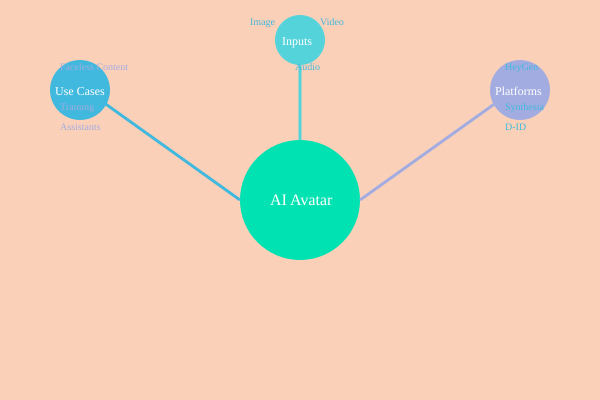
Here’s where the magic happens. To create an AI avatar, you need at least two out of three essential ingredients:
- Image (a photo or digital portrait)
- Video (footage of a person or character)
- Audio (a voice recording or synthetic voice)
Combine any two, and you can generate a digital persona that can speak, move, and interact. For example, upload a photo and a voice sample, and an AI avatar generator can animate your image to deliver messages in your own voice. Add video, and you can create a full-motion digital twin. This is the core of modern AI avatar tools—and it’s easier than ever to get started.
Types of AI Avatars: More Than Meets the Eye
- Character Avatars: Custom-designed personalities for games, entertainment, or social media.
- Professional Avatars: Digital clones of real people, often used for business presentations, training, or customer service.
- Stock Avatars: Pre-made digital humans you can use as spokespeople or presenters in your content.
And yes, fictional avatars are just as valid as real-person avatars for content creation. The possibilities are wide open.
Leading AI Avatar Maker Platforms in 2026
The landscape of AI avatar generators is rapidly evolving. In 2026, the top platforms include:
- HeyGen – Realistic video avatars for business and marketing.
- Synthesia – Professional avatars for training and explainer videos.
- D-ID – Photo-to-video animation and talking head avatars.
- Avatarify – Real-time face animation for live streaming.
- CapCut – Easy avatar creation with video and audio tools.
- Artbreeder – Creative character and portrait generation.
- AI Studios – Advanced avatars for enterprise and creative projects.
Each AI avatar tool offers unique features, from real-time animation to video-to-avatar conversion and photo-to-avatar animation. Whether you want to create a lifelike digital clone or a stylized character, there’s a platform for you.
Unexpected Paths: My Hilarious Pet Avatar Fail
To show you how flexible these tools are, here’s a personal story: I once tried building an avatar of my childhood pet, thinking it would be a fun way to bring old memories to life. I uploaded a photo and paired it with a synthetic voice. The result? Let’s just say the “talking cat” avatar was more nightmare fuel than nostalgia. But that’s the beauty of today’s AI avatar maker 2026 platforms—you can experiment, iterate, and sometimes laugh at the unexpected results.
Where Are AI Avatars Used?
- Faceless content creation for YouTube, TikTok, and Instagram
- Training portals and e-learning modules
- Digital assistants and customer service bots
- Brand spokespeople and marketing campaigns
Not all avatars are animated; many are video-based replicas or synthetic video actors. The setup doesn’t always require real-time input—sometimes, a simple image and audio file is enough to get started.
AI Avatar Creation Essentials: Mind Map
2. Not Just Gimmicks: Where Real Money Flows in AI Avatar Services (AI Avatar Monetization Tips)
AI avatars are everywhere—scroll through TikTok, YouTube, or Instagram, and you’ll spot faceless content: digital characters talking about trending topics or sharing stories. While these videos are fun and eye-catching, they’re not always the best path to real revenue. If you’re serious about building an AI avatar business, it’s time to look beyond the hype and focus on where businesses and brands are actually spending money. Here’s how you can tap into the most profitable AI avatar services and what’s working for real creators today.
Faceless Content: Fun, Not Always Profitable
Faceless AI avatar content is easy to produce and can go viral, but it rarely pays the bills. Most of these videos are generic and don’t offer much value to advertisers or brands. As cool as it is to watch a digital character talk about random topics, monetization opportunities are limited unless you build a massive following or land sponsorships. Instead, focus on high-demand content that solves real problems for businesses.
Where the Real Money Flows: Lucrative AI Avatar Use Cases
- E-Learning and Training: Large companies spend huge amounts on HR and training content. Traditionally, this means hiring actors, renting studios, and long production cycles. With AI avatars, you can quickly create training modules, onboarding videos, and compliance guides at a fraction of the cost. B2B training portals are a major cost center that avatars can disrupt, making this a high-value opportunity.
- Social Media Content Creation: If you don’t have time to record or don’t like being in front of the camera, you can use an AI avatar to replace that process. Short-form Instagram Reels, TikTok clips, and even long-form YouTube videos can be generated using avatars. This is especially powerful for brands or creators who want to scale content production without being on camera all the time.
- Interactive Agents: Imagine an AI avatar running your customer support at 3 AM—and customers actually preferring it. Interactive agents powered by avatars can answer FAQs, guide users through courses, or provide coaching support. This dynamic use case is growing fast, especially for online education and SaaS companies.
- Product Demos and Personalized Outreach: SaaS companies and marketers can use AI avatars to create hundreds of personalized product demos or outreach videos. Instead of generic emails, you can send a custom video message to each lead, increasing engagement and conversion rates. This scalable approach removes the bottleneck of manual video production.
- Virtual UGC Influencers: User-generated content (UGC) is everything in e-commerce. Now, brands are turning to virtual UGC influencer avatars to test risky marketing ideas with less liability. These avatars can promote products, model clothing, or review gadgets, all without the risks that come with real influencers. UGC influencer avatars are trending fast on TikTok and are a smart way for brands to experiment with new campaigns.
Real Story: Hasha’s $100,000 AI Avatar Business
Take Hasha, for example. By focusing on high-demand B2B services—like training content, product demos, and branded avatar campaigns—Hasha made over $100,000 selling AI avatar services to businesses. The key was offering solutions that saved companies time and money, not just creating viral videos for fun.
You can use AI avatars for social media content... if you don't have the time to record or don't like being in front of camera all the time, you can essentially use an AI avatar to replace that process.
AI Avatar Monetization Tips: What Works Now
- Target B2B clients who need training, onboarding, or HR content.
- Offer personalized video outreach for SaaS and marketing teams.
- Create branded avatar campaigns for social media marketing agencies.
- Develop UGC influencer avatars for e-commerce brands looking to scale content safely.
- Build interactive agents for customer support or online education platforms.
| Data Point | Details |
|---|---|
| $100,000 | Earnings by Hasha selling AI avatar services to businesses |
| Popular Verticals | Training, product demos, marketing, HR |
| Trending | UGC influencer avatars on TikTok (anecdotal) |
In short, the most successful AI avatar monetization strategies focus on solving real business problems, not just chasing views. If you want to build a sustainable AI avatar business, look for high-demand content and services that companies are already paying for—and use avatars to deliver them better, faster, and at scale.
3. Agency Life: How to Set Up (and Survive) the AI Avatar Agency Rollercoaster (AI Avatar Agency Setup Guide)
Welcome to the wild ride that is running an AI avatar agency. If you’re picturing a smooth, automated business where you set up a few avatars and watch the money roll in, let’s hit pause. The reality is a mix of opportunity, chaos, and a surprising amount of client hand-holding. Here’s your practical AI avatar agency setup guide—from choosing the right tools to surviving the endless feedback loops.
You Don’t Need to Reinvent the Wheel
The biggest myth? That you need to build your own AI avatar tech from scratch. In truth, there are already powerful platforms and tools out there—Synthesia, HeyGen, DeepBrain, and others—ready for you to leverage. Your job is to master these tools, not to code new ones. This shortcut lets you focus on what matters: delivering results for clients, fast.
Agency as the Bridge: Businesses Want Avatars, But Don’t Know Where to Start
Most business owners know AI avatars are the future of media, but they have no idea how to implement them. That’s where your agency comes in. You’re the bridge between cutting-edge avatar tech and the real-world needs of companies. Your expertise in AI avatar agency setup—from tool selection to workflow design—becomes your main value proposition.
Key Agency Lessons: 1/3 Setup, 2/3 Relentless Refinement
A third of it is the development and the setup, and then the majority is actually the refinement and optimization in order to get results.
Here’s the hard truth: Setting up an AI avatar system is only about 30% of the job. The remaining 70%? That’s the grind of refining, optimizing, and iterating. Most businesses want turnkey solutions, but the magic happens in the details—tweaking scripts, adjusting voices, and reworking avatar gestures based on client feedback. If you’re not ready to revise the same avatar video 18 times for a picky client, this may not be your ride.
Top Opportunities for AI Avatar Agencies
- Outreach Video Systems: Personalized avatar videos for cold outreach, lead gen, and sales funnels. These can be automated and scaled with template libraries and multilingual support.
- UGC Avatars: User-generated content avatars for brands, influencers, and e-commerce. These are in high demand for social media and product demos.
- Training and Internal Content: AI avatars for onboarding, compliance, and ongoing staff training. Companies love the cost savings and consistency.
Knowing which use cases actually move the needle for your clients is where you create outsized value. Don’t try to be everything to everyone—pick a niche and become the go-to agency for that avatar solution.
AI Avatar Agency Setup: Tools, Strategy, and Optimization
- Know Your Tools: Get hands-on with leading avatar platforms. Build a template library for common requests (sales, support, training, etc.).
- Implementation Strategy: Map out how avatars will fit into your client’s workflow. Start with a clear, ROI-focused offer—like a lead-gen video campaign or onboarding series.
- Iterative Optimization: Expect multiple rounds of feedback. Use automation tools to streamline revisions and track what works. Patience is your secret weapon.
Many agencies build trust by starting with a small, high-impact project (like a lead-gen avatar video) before moving deeper into a client’s operations. This “land and expand” approach works because it proves value quickly and opens the door to larger, ongoing contracts.
AI Avatar Client Acquisition and Pricing Models
Client acquisition is all about showing clear ROI. Outreach with sample avatar videos, case studies, and transparent pricing. Typical agency earnings include:
| Service | Fee |
|---|---|
| Setup Fee | $500–$2,000 |
| Per-Lead Fee | $100/booked call |
| Monthly Management | $250–$500/month |
Automation, template libraries, and multilingual support help you scale both client acquisition and delivery. But remember: most of your time will be spent in the trenches, refining and optimizing to hit client goals.
Survivor Tip: Embrace the Iteration Loop
AI avatar agency life is a rollercoaster—equal parts agony and comedy. You’ll laugh (and sometimes cry) as you revise the same video for the 18th time. But if you stick with it, the rewards are real. The agencies that thrive are the ones who embrace the feedback cycle, optimize relentlessly, and never stop learning.
4. Show Me the Money! Pricing, Packages, and Real-World Numbers (AI Avatar Pricing Features)
When it comes to AI avatar services pricing, the landscape is as dynamic as the technology itself. Whether you’re launching an AI avatar agency setup or shopping for avatar-driven solutions, understanding how agencies and platforms monetize these services is crucial. Let’s break down the real numbers, business models, and what you can expect to pay—or charge—in 2026.
AI Avatar Business Models: How Agencies Monetize
AI avatar monetization isn’t just about selling a one-off video. Agencies and creators have developed several revenue streams to maximize value and ensure sustainable growth:
- Setup Fees: Charging an initial fee for building out automations, templates, or custom avatars tailored to the client’s brand or workflow.
- Recurring Retainers: Monthly management fees for ongoing support, content updates, or optimization of avatar messaging.
- Per-Conversion/Lead Pricing: Charging for each qualified action, such as a booked sales call or appointment generated by AI avatar outreach.
- Project Packages: Bundled video packages or full-scale projects, such as training courses or HR video libraries.
- Annual Contracts: Long-term agreements for continuous avatar content creation, updates, and management.
Real-World AI Avatar Services Pricing Examples
Here’s what you’ll see in the market today:
- $3,000 for 30-Video Packages: User-generated content (UGC) or marketing video bundles are a popular entry point. Clients receive a set number of branded avatar videos, often with basic customization.
- $250–$500/Month Management Fees: For ongoing support, content tweaks, or new product launches, agencies typically charge a monthly retainer. As one expert puts it:
You can charge per booked call... and you can also have a monthly management around $250 or $500 a month.
- $100 Per Booked Appointment: In automated outreach systems, agencies often charge per qualified call or lead generated. This value-based model is easy to sell, as clients see direct ROI: “Pay us, and we’ll get you more appointments.”
- B2B Training Video Projects ($15,000+): Full course production or HR video libraries can command high-ticket prices, especially when custom avatars and advanced scripting are involved.
- Annual Contracts: Some agencies offer yearly agreements for ongoing avatar content and updates, providing predictable revenue and long-term client relationships.
Value-Based vs. Package-Based Pricing
AI avatar services pricing can be structured in two main ways:
- Value-Based: Charge for results—like per lead, booked call, or conversion. This model is especially attractive to business clients who want clear ROI.
- Package-Based: Offer bundles of videos or monthly management. This is ideal for clients who need regular content or ongoing support.
Quick tip: Charge for the value you deliver, not just the hours you spend. Clients care most about outcomes, not input time.
Custom Solutions vs. SaaS Avatar Tools
Off-the-shelf SaaS avatar tools (like HeyGen or Tavis) offer lower-cost, self-serve options—often with free plans or low monthly fees. However, these lack the customization, integration, and ongoing support of a dedicated agency. Custom solutions command higher prices but deliver more tailored results, especially for complex automations or branded content.
SVG Chart: AI Avatar Service Pricing Models Comparison
Key Takeaways for AI Avatar Agency Setup
- Mix and match pricing models to suit your client’s needs and your agency’s strengths.
- Transparency and clear ROI make selling AI avatar services easier to business clients.
- Recurring packages and value-based fees create sustainable, scalable revenue for your agency.
5. Use Cases Unpacked: What Actually Works (and What’s a Headache) in Avatar Content Creation (AI Avatar Video Creation & Training)
Customized Outreach Videos: Scalable, High-ROI, and CRM-Ready
If you want to see AI avatar video creation drive real business results, start with personalized outreach videos. These are short, customized clips where an avatar addresses each prospect by name, mentions their company, and even references specific pain points or website details. With the right automation, you can scale this to hundreds of unique videos daily and plug everything into your CRM for automated follow-ups.
The monetization model is clear: charge a setup fee for building the automation, then bill per booked call (often $100 each), plus a monthly management fee ($250–$500) for ongoing tweaks. As one expert put it:
The pros are that I would say it's probably the highest revenue potential per client, right? Because you're charging per lead.
The pros include a direct, easy-to-sell ROI—clients see more meetings on their calendars, not just vague time savings. But the headaches? This space is crowded with SaaS tools and SDR services, making it tough to stand out or charge premium rates. Plus, you’ll need real sales know-how to deliver credible results.
UGC Avatar Influencers: Fast, Flexible, and Still Under the Radar
AI avatar user-generated content (UGC) is one of the fastest-growing opportunities. Here, you create diverse avatar “influencers” who generate product reviews, testimonials, and educational videos. These avatars let you A/B test creative angles at scale and keep brand messaging consistent—no need for expensive talent agencies.
You can package this as a bundle (e.g., 30 videos for $3,000) or offer a monthly retainer for ongoing content. The pros: less competition, rapid fulfillment using tools like Sora or Arc Ads, and easy management with platforms like Notion or Monday.com. The cons: many clients need education on what AI avatar content creation can do, and results are less tangible than direct sales.
A clever tactic: launch UGC avatar accounts that are external to your brand. This lets you test bold or controversial messaging with less risk—perfect for brands wanting to experiment without direct liability.
HR & Training Videos: High-Ticket, High-Effort
AI avatar training videos are in demand for HR, onboarding, and e-learning. You can convert old manuals into dynamic, multilingual video modules—no need for expensive studio reshoots when updates are needed. This is a high-ticket service (think $15,000+ for a full course), but it’s also time-consuming. One contributor described a 45-video training manual project as a “nightmare” due to the sheer volume and complexity.
The pros: cost savings over traditional video, easy updates, and global reach. The headaches: every client’s needs are unique, making it hard to templatize, and the production workload can be intense.
Social Media & Faceless Content: Volume and Virality
On TikTok, Instagram, and YouTube, AI avatar content creation is powering a wave of faceless channels and brand accounts. Avatars enable high-volume posting, rapid creative testing, and consistent branding—even for individuals who don’t want to appear on camera. This is a low-barrier, high-output use case, but standing out requires sharp creative strategy and constant iteration.
Wildcard: Testing Risky Messaging with Externalized Avatars
One unexpected path: use externalized UGC avatars to test controversial or edgy marketing hooks. By keeping these avatars separate from your main brand, you gain freedom to experiment and gather real-world feedback—without risking your core reputation.
AI Avatar Content Creation: Use Case Comparison Table
| Use Case | Typical Fee | Pros | Headaches |
|---|---|---|---|
| Customized Outreach | $100/call, $250–$500/mo | Scalable, high ROI, CRM integration | Competitive, sales expertise needed |
| UGC Avatar Package | $3,000/30 videos | Fast, less competition, easy fulfillment | Client education, less direct ROI |
| Training Course | $15,000+ (e.g., 45 videos) | High-ticket, easy updates, multilingual | Time-consuming, complex delivery |
When you’re planning your next move in AI avatar video creation, weigh these real-world pros and cons. Each use case offers unique opportunities—and unique headaches—so choose the path that fits your skills, your clients, and your appetite for innovation.
6. Where Trends Break: 2026 AI Avatar Marketing, Automation, and Out-of-the-Box Innovations (AI Avatar Marketing Trends)
AI avatars are no longer just digital spokespeople—they’re transforming how businesses create, scale, and automate content across every industry. In 2026, the landscape is shifting fast. If you’re looking to spot where trends break and new opportunities arise, AI avatar marketing trends are the place to watch. Let’s dive into how automation, integration, and bold creative risks are redefining what’s possible.
AI Avatars: The New Engine for Scalable Content
Today’s AI avatar generator tools are more than just novelty apps. They offer rapid, scalable, and even multilingual solutions for brands that need to produce content at volume. Whether you’re in e-learning, social media, or customer support, AI avatar content creation is now the backbone of systemized media production. As one industry expert put it:
“AI avatars are the key to systemizing and scaling media.”
With the right AI avatar automation tools, you can generate hundreds of personalized videos, interactive guides, or branded messages in minutes. This isn’t just about saving time—it’s about unlocking new creative formats that were impossible before.
Personalized Video at Scale: Outpacing Email and Text
One of the most disruptive AI avatar marketing trends is the rise of personalized video at scale. Instead of sending generic emails or text blasts, brands are leveraging avatars to deliver tailored video messages to thousands of customers—each one unique, engaging, and on-brand. Imagine a CRM that triggers a custom avatar video for every lead or customer milestone. This level of personalization is quickly becoming the new standard for customer engagement.
Out-of-the-Box Brand Stories and Interactive Agents
Marketing agencies are pushing boundaries with avatar-based storytelling. In 2026, you’ll see campaigns featuring wild, fictional brand ambassadors—sometimes entirely invented characters, sometimes digital twins of real people. These avatars can host live Q&As, star in product launches, or even become the face of a virtual UGC (user-generated content) brand. The best agencies are using AI avatar integration tools to connect these characters with social platforms, websites, and even live customer service channels.
- Dynamic interactive agents: Avatars that answer questions, guide users, or provide real-time support.
- Virtual UGC brands: Entire brands built around AI avatars, with zero real-world actors involved.
- Riskier creative: Clients are more willing to test bold ideas when avatars—not real employees—are in the spotlight.
Automation Tools: Putting Avatar Acquisition on Autopilot
The real magic in 2026 is happening behind the scenes. AI avatar automation tools—like advanced video APIs and CRM integrations—let you put avatar-driven campaigns on autopilot. Need a multilingual product demo? The right tool can generate, translate, and distribute it automatically. Want to A/B test different avatar personalities or scripts? Automation makes it easy to iterate and optimize at scale.
Success now depends on:
- Rapid production cycles and large template libraries
- Seamless integration with marketing and sales systems
- Continuous refinement and optimization based on real results
“Being able to scale that using AI avatars is an incredibly powerful tool.”
2026 Prediction: The Rise of Virtual UGC Brands
Looking ahead, expect to see a surge in virtual UGC brands—companies that use only AI avatars as their public face. These brands can launch campaigns, interact with fans, and even build entire communities without a single real-world actor. It’s a bold move, but with automation and integration tools, it’s not just possible—it’s profitable.
Bonus Idea: Your Next Brand Ambassador Could Be Fictional
Here’s a playful thought: What if your next brand ambassador isn’t a celebrity or influencer, but a completely fictional AI avatar—on payroll, with its own backstory and personality? In 2026, this isn’t just a marketing gimmick; it’s a serious strategy for brands looking to stand out and connect in new ways.
As AI avatar marketing trends continue to evolve, agencies that master automation, integration, and creative risk-taking will lead the way. The future is wide open—and avatars are driving the change.
7. FAQ: The Unfiltered, Slightly Unusual Questions About AI Avatar Agencies & Content (AI Avatar Business Guide)
Welcome to the section where we answer the questions you might not find in a typical AI avatar business guide. If you’re thinking about AI avatar agency setup, curious about AI avatar monetization tips, or just want to know what really happens behind the scenes, you’re in the right place. Here’s a candid look at the quirks, challenges, and realities of running an AI avatar agency in 2026.
What’s the single weirdest avatar project you’ve worked on?
Every AI avatar agency has at least one story that makes you question reality. One pro shared, “I once made a digital pet version of myself for a client’s virtual event. It was supposed to be cute and interactive, but honestly, never again.” The lesson? Sometimes, just because you can create something doesn’t mean you should. Custom agency avatar solutions can open doors to creative projects, but they also require more management and iteration than you might expect.
Are businesses upfront with customers about using avatars?
This is a hot topic in the AI avatar business guide world. The answer: it depends. Some businesses are transparent and let customers know when they’re interacting with AI-generated content or avatars. Others choose not to disclose unless required by law or platform policy. As one agency owner put it,
I let the client know what's going on, and the client can choose to have that as a disclaimer or not.Ultimately, transparency often depends on the market, region, and the type of AI avatar services being offered.
Do client businesses actually care if an avatar is obviously AI as long as it works?
Surprisingly, many businesses care less about the “realness” of the avatar and more about the results. If the AI avatar delivers engagement, conversions, or solves a problem quickly, most clients are happy. However, overpromising on avatar realism is a common rookie mistake. Remember, clients will notice if the avatar feels off, so set expectations early and focus on measurable outcomes.
What are the most common rookie mistakes in AI avatar agency setup?
Two pitfalls stand out: overestimating how realistic your avatars can be, and underestimating the ongoing management and revision work. Many new agencies think they can just set up a SaaS tool, pump out content, and walk away. In reality, even with tools like Sora or Arc, you’ll spend time tweaking prompts, iterating on avatar personalities, and managing content strategy with platforms like Notion or Monday.com. The slog of revisions is real, and it’s where custom agency avatar solutions add value—but also more work.
How does pricing compare: SaaS platform vs. custom agency work?
Pricing is a big factor in AI avatar monetization tips. SaaS platforms typically charge a monthly fee, making them accessible for quick, templated user-generated content (UGC). Custom agency work, on the other hand, commands higher per-project rates due to the hands-on management and bespoke solutions. Here’s a quick comparison:
| Service Type | Typical Pricing Model | Pros | Cons |
|---|---|---|---|
| SaaS Platform | $49–$299/month | Fast, scalable, low barrier to entry | Limited customization, less personal |
| Custom Agency | $500–$5000+/project | Tailored solutions, higher perceived value | More management, longer timelines |
Where do you even find your first clients?
Even in 2026, the basics haven’t changed: LinkedIn outreach and cold DMs still work. Many agencies land their first deals by showcasing clear, measurable results and offering strategic packages that undercut traditional talent agencies. Networking in niche communities, attending virtual events, and leveraging your own network are also effective. The key is to offer value and demonstrate ROI from the start.
In conclusion, the AI avatar boom is full of unexpected paths and real stories—some quirky, some challenging, but all part of a rapidly evolving industry. Whether you’re just starting your AI avatar agency setup or looking to refine your AI avatar services pricing, remember: transparency, realistic promises, and a focus on measurable results will set you apart. The future of AI avatars is bright, but it’s the agencies willing to go beyond the hype that will truly thrive.
TL;DR: AI avatars are taking over content, marketing, and training—giving savvy early adopters new ways to create value (and cashflow). From outreach videos to UGC influencers, the business models are multiplying as fast as the avatars themselves. Want in? Learn the trends, hear the pitfalls, and snag some unconventional wisdom before 2026 rolls in.
Post a Comment