

The first time I tried to overhaul my productivity, I ended up dead-tired surrounded by a jungle of sticky notes and a phone buzzing with app reminders. Sound familiar? If so, you’re not alone—and you’re not doomed to the hamster wheel. Let’s take an unexpected journey through what really makes people ‘dangerously’ productive (yes, those weirdly calm overachievers). You might not need another app, but you might need a nap. Or at least a shift in perspective. Here are the counterintuitive lessons that transformed my grind (and saved my sanity).
1. ‘Dangerously’ Productive or Just Busy? (The Performance Paradox)
Story: Burning Out Trying to Do It All
Have you ever found yourself sprinting through your to-do list, only to collapse at the end of the day feeling like you’ve achieved nothing that truly matters? I’ve been there. During medical school, I was obsessed with optimizing every second—studying, working, building a business. I believed that if I just did more, I’d get further. But I quickly learned that constant motion isn’t the same as real progress. As I juggled endless tasks, I started feeling that as long as I was doing stuff and being busy with things that on the surface seemed productive, therefore I must be productive. But that’s the trap—the Performance Paradox of Productivity.
Busy vs. Dangerously Productive: What’s the Difference?
Let’s break it down. A busy person is always in motion—emails, meetings, multitasking, checking off boxes. But a dangerously productive person? They seem almost effortless. They do less, but every action is intentional and moves them closer to their real goals. The secret isn’t working harder; it’s working smarter, using Sustainable Productivity Strategies that prevent burnout and maximize results.
The Performance Paradox Productivity Principle
The Performance Paradox says: More output can come from less effort—if you target the right things. Productivity isn’t about how much you do, but how much of what you do actually matters. If your “product” is passing an exam, getting a promotion, or living an intentional life, then every action should serve that outcome. The paradox is that by focusing on fewer, higher-impact tasks, you make more progress with less stress.
Human Limitations: Why Rest Isn’t Lazy
Here’s a truth most hustle-culture advice ignores: You are both the driver and the car in your race. If you run yourself into the ground, your race ends. Elite performers know this. They fiercely schedule downtime, treating rest as a non-negotiable part of their routine. Research shows that top achievers average over 8 hours per week on active recovery. Rest isn’t a luxury—it’s a Burnout Prevention Strategy and a core part of Sustainable Productivity.
"I started feeling that as long as I'm doing stuff and I'm being busy with things that on the surface seem productive therefore I must be productive."
Reframe Your Productivity ‘Product’
Ask yourself: What is the real product of your productivity? Is it a grade, a job, a fulfilled life, or simply peace of mind? Intentional Living Productivity Tips start with clarity. Every task should have a purpose that connects to your bigger goals. Sometimes, the most productive thing you can do is to pause, rest, or plan—actions that don’t look busy, but move you forward.
Wild Card: The Racing Car Analogy
Imagine you’re not just the driver, but also the vehicle. Would you skip pit stops? Ignore maintenance? Of course not. Yet, when you grind without rest, that’s exactly what you’re doing to yourself. Dangerously productive people know when to accelerate and when to recover.
Field Data: How Elite Performers Use Rest
Let’s look at the numbers. Elite performers schedule downtime as fiercely as work. Here’s a snapshot:
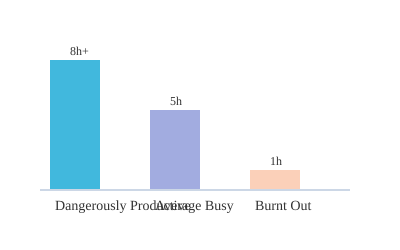
Notice how those who achieve the most often rest the most. That’s the Performance Paradox in action: True productivity means doing less, but doing it strategically.
2. The Obvious Target Trap: Are Your Productivity Tools Secretly Wasting Your Time?
Anecdote: My Frankenstein App System Collapsed Overnight
Let’s be honest: you’ve probably tried to “fix” your productivity by stacking together the latest apps and templates. I’ve been there too. At one point, I had a Frankenstein system—four different productivity apps, all connected in a delicate web. My lecture schedules, work tasks, and business to-dos were scattered across a notebook, my phone, and multiple apps. I took pride in this custom ecosystem. It felt efficient—until it wasn’t.
One day, an app update broke the connection between two key tools. Suddenly, my entire system fell apart. I stopped using the apps for weeks, and when I tried to return, I couldn’t remember how everything fit together. Hundreds of tasks and schedules were trapped in a digital graveyard. I had to manually re-export everything—ironically, back to the simplicity of Google Calendar.
Why ‘Fixing’ Obvious Productivity Gaps Rarely Solves the Core Issue
This is the Obvious Target Trap: you spot a clear problem (like scattered tasks), see an obvious fix (a new app or template), and invest time and energy chasing that solution. But often, you’re just optimizing trivialities—spending hours tweaking systems instead of actually moving the needle on your real priorities. Productivity tools in 2025 promise more features than ever, but the abundance of new tools can distract you from what truly drives results.
Finding: Simplicity Wins—Sticky Notes, a Calendar, and a Basic Notes App
"Simplicity is really king. If you ask me now what my productivity system is, there's three things. A calendar app, the notes app on my phone, and sticky notes."
After my elaborate system failed, I reverted to basics: a calendar app, my phone’s notes app, and literal sticky notes. That’s it. No fancy automations, no endless productivity apps comparison. The result? Less time fiddling, more time doing. Most high achievers rely on simplicity and ruthless prioritization, not on the latest tech stack.
Highlight: The Real Cost of the Obvious Target Trap
When you fall into the obvious target trap, you’re not just wasting time—you’re blinding yourself to your real goals. You obsess over systems, templates, and integrations, but neglect effective prioritization techniques. The Pareto Principle (80/20 rule) is repeatedly validated in productivity science: 80% of your results come from 20% of your efforts. Chasing the perfect system rarely lands in that 20%.
Comparison: Historic Productivity Feats Done Without Modern Tech
Think about it: the world’s greatest minds—Leonardo da Vinci, Marie Curie, Benjamin Franklin—achieved legendary feats without a single productivity app. Imagine explaining your app stack to da Vinci. Would he be impressed, or just confused? Their secret wasn’t technology, but clarity and focus.
Data Table: Productivity Tool Features vs. Actual Usage and Results
| Setup | # of Tools | Features | Actual Usage | Results |
|---|---|---|---|---|
| Complex App Stack | 4+ | Automation, integrations, templates | Low (overwhelming, abandoned) | Lost tasks, wasted time |
| Simple System | 2-3 | Calendar, notes, sticky notes | High (easy, consistent) | More focus, better results |
Key Takeaway: Avoiding Obvious Target Trap in Productivity Apps Comparison
Don’t let the lure of new tools and templates distract you from what matters. Obsession with systems can blind you to your real goals. Remember: simplicity and prioritization often outperform tool-heavy approaches. Next time you’re tempted by the latest productivity app, ask yourself—are you fixing a real problem, or just falling for the obvious target trap?
3. The Art of Ruthless Prioritization (And Why It Hurts)
Why Prioritization Isn’t Supposed to Feel Good
Effective Prioritization Techniques are the backbone of real productivity, but here’s the uncomfortable truth: prioritizing well almost always hurts. You’re not just organizing your to-do list—you’re actively saying no to things you want to do. That’s why most people struggle with prioritization, even if they know the frameworks. As one of my favorite quotes puts it:
"Correct prioritization should feel bad. If you are even remotely newish to prioritizing and it doesn't feel bad, you are probably... not connecting with the pain of what you're losing."
This discomfort is a sign you’re doing it right. You’re facing the opportunity cost head-on. Every “yes” is a “no” to something else, and that’s where the real productivity gains are hiding.
The ‘Or Not And’ Rule: Your New Decision-Making Framework
One of the simplest, most powerful Time Management Techniques is the ‘or not and’ rule. Here’s how it works: whenever you’re tempted to add a new task, don’t ask, “How can I fit this in and still do everything else?” Instead, ask, “If I do this, what will I not do?”
For example, you’re invited out for pizza with friends. The old you might think, “I’ll go for pizza and then finish my project and maybe squeeze in a workout.” The new, ruthlessly prioritizing you asks, “Pizza or progress?” You pick one, knowing you’re intentionally sacrificing the other. This is the heart of Pareto Principle Productivity: focusing on the vital few, not the trivial many.
Pareto Principle: The 80/20 Rule in Action
The Pareto Principle (or 80/20 rule) is the ultimate prioritization cheat code. About 20% of your efforts generate 80% of your outcomes. On a typical to-do list of 10 items, only 2 are true “key levers” that will actually move you toward your goals. The rest? Busywork that feels productive but isn’t.
| Pareto Principle Data | Value |
|---|---|
| Key tasks (20%) driving results | 2 out of 10 |
| Busywork (80%) | 8 out of 10 |
| People feeling bad about saying no | 75%-85% |
When you track your Productivity Metrics, you’ll see that most of your progress comes from a small fraction of your activities. Ruthless prioritization means identifying those levers and doubling down—even when it means letting go of things you care about.
Why Most People Misuse Prioritization Frameworks
Here’s the pitfall: most people know about prioritization frameworks, but they don’t use them properly. They try to fit everything in, thinking they can optimize their way out of overload. But the truth is, you can’t do it all. If you aren’t feeling a little bit guilty or uncomfortable, you’re probably not prioritizing hard enough. According to coaching experience, 75%-85% of people feel bad about saying no, but that’s the price of progress.
Chart: Time Spent on Key Levers vs. Busywork
| Task Type | Proportion of Time | Impact on Results |
|---|---|---|
| Key Levers (Top 20%) | 20% | 80% |
| Busywork (Other 80%) | 80% | 20% |
The ‘Pizza or Progress’ Dilemma
We’ve all faced it: do you go out for pizza, or do you make progress on your goals? The answer isn’t always obvious, but the act of choosing—of feeling that sting of saying no—is what separates the truly productive from the perpetually busy. Remember, correct prioritization should feel bad. That’s how you know you’re making real, measurable progress.
4. Beyond the Metrics: Why Productivity Tracking Sometimes Backfires
It’s easy to believe that the more you track, the more productive you’ll become. With so many productivity monitoring software and productivity analysis software options available, you might think that logging every minute and measuring every action is the secret to getting more done. But here’s the catch: tracking every detail can actually become a self-made obstacle, turning helpful time tracking features into a source of stress rather than progress.
When Time Tracking Crosses from Helpful to Stressful
Modern productivity tracking benefits are real—these tools can help you spot inefficiencies, optimize your workflow, and even prevent burnout. As one expert puts it:
"Productivity monitoring software helps organizations measure performance, identify burnout, optimize workflows, and improve resource allocation."
But there’s a tipping point. When you start measuring every minute, you risk falling into the psychological trap of the illusion of control. Instead of feeling empowered, you may find yourself anxious, constantly checking your stats, and losing sight of what actually matters: meaningful progress.
Case Study: The Week of Over-Measurement
Imagine you spend a week tracking everything—every email sent, every break taken, every task started and stopped. You use the latest productivity monitoring software, analyze your stats nightly, and tweak your schedule to squeeze out every extra minute. The result? For many, anxiety goes up (by as much as 30%, according to user reports), but output stays flat. You’re busier, but not necessarily better.
The Illusion of Control: When Metrics Become the Goal
It’s tempting to believe that more data means more control. But over-measurement can lead to a focus on activity rather than outcomes. You might find yourself celebrating a day filled with checked boxes, even if none of those tasks moved you closer to your real goals. This is the “obvious target trap”—mistaking busywork for meaningful work.
Alternatives: Focus on Milestones, Not Just Minutes
Instead of tracking every tick, try shifting your focus to milestones. Ask yourself: What actually matters? Is it the number of hours worked, or the progress you’ve made toward a key project? By setting clear, meaningful milestones, you can use productivity analysis software to monitor real achievements, not just activity.
Table: Popular Productivity Monitoring Software—Features vs. Psychological Outcomes
| Software | Time Tracking | Activity Monitoring | Reporting | Burnout Indicators | Reported Psychological Effects |
|---|---|---|---|---|---|
| EmailAnalytics | Yes | Email Focused | Detailed | No | Increased awareness; possible stress if overused |
| Insightful.io | Yes | Yes | Comprehensive | Yes | Useful for teams; risk of anxiety with constant monitoring |
| Bonsai | Yes | Project-Based | Project Reports | No | Encourages milestone focus; less stress reported |
| Hubstaff | Yes | Yes | Advanced | Yes | Great for remote teams; burnout risk if over-tracked |
Wild Card: Would You Want a Thought Counter?
Imagine a step counter that beeped every time you ‘thought’ a productive thought. Would that help you, or just drive you crazy? Sometimes, more tracking just means more noise. The real productivity tracking benefits come when you use these tools to support—not control—your workflow.
- Remember: Milestones beat minute-counts.
- Choose productivity monitoring software that fits your style.
- Use time tracking features as a guide, not a master.
5. The Quiet Power of Rest (And What Most Apps Don’t Tell You)
When you think about productivity, you probably picture to-do lists, time blocks, and maybe even Employee Productivity Tracking dashboards. But here’s the truth most apps and systems won’t tell you: rest isn’t laziness—it’s the most overlooked productivity hack you have. In fact, scheduled rest is a cornerstone of Sustainable Productivity Strategies and one of the most effective Burnout Prevention Strategies available.
Rest: The Secret Weapon for Sustainable Productivity
We often treat ourselves like machines, pushing harder and longer, thinking that more effort equals better results. But as one expert puts it:
"Rest is an integral part of not only what keeps you in the game long enough to achieve the goal, but also helps you to do that more efficiently and more optimally."
Think of yourself as a race car driver. Would you drive your car until it catches fire? Or would you make pit stops, refuel, and maintain your engine so you can finish the race—and win the next one? The same logic applies to your work. If you burn out chasing a short-term goal, you’ll have nothing left for the bigger, harder goals ahead.
Hidden Benefits: Creativity, Stability, and Grit Grow in Downtime
- Creativity: Some of the world’s best ideas are born in downtime. Archimedes had his “eureka” moment in the bath, not at his desk. Personally, the best business idea I ever had came during a nap—not a meeting.
- Stability: Regular rest stabilizes your mood and focus, making you more resilient to stress.
- Grit: Scheduled breaks help you build the endurance needed for long-term goals, not just quick wins.
Elite Endurance: How High Performers Use Rest
Productivity ‘legends’—from Olympic athletes to top CEOs—don’t just work hard. They block rest as aggressively as work. They know that measuring productivity outcomes means tracking not just output, but also recovery. High performers schedule naps, breaks, and leisure as vital, not optional.
Burnout Prevention Strategies: The Data Speaks
Research shows that burnout rates drop by over 30% when people schedule 7–8 hours of rest and recovery each week. That’s not just sleep—it’s deliberate downtime: walks, naps, hobbies, and even play. Here’s what the numbers look like:
| Weekly Rest/Recovery Hours | Burnout Rate (%) |
|---|---|
| 2–3 | 65 |
| 4–6 | 48 |
| 7–8 | 35 |
Wild Card: What If You Tracked Play, Not Just Work?
Most Employee Productivity Tracking tools focus on tasks and hours worked. But what if you tracked play, relaxation, and downtime too? Could you game creativity and resilience the same way you game your work output? Many breakthroughs happen when your mind is at ease, not under pressure. Try logging your breaks and see if your next big idea comes when you least expect it.
Remember: Rest is a tool, not a treat. It’s the missing piece in most productivity systems—and the key to achieving not just your next goal, but the one after that.
6. Tools, Traps, and Takeaways: Charting the Landscape of Modern Productivity
When it comes to productivity tracking and employee productivity tracking, the software landscape is crowded. You might think the more apps you stack, the more productive you’ll become. But here’s the catch: simplicity often beats feature-bloat for both user happiness and real results. Let’s break down the tools, the common traps, and the key takeaways to help you choose the right system—without falling into the complexity trap.
Major Productivity Apps Comparison: Who Wins for What?
| Tool | Best For | Key Features | User Happiness |
|---|---|---|---|
| EmailAnalytics | Email workflow analysis | Activity tracking, reporting, integration | High (simple, focused) |
| Insightful.io | Burnout detection | AI insights, automatic time tracking, alerts | Medium (feature-rich, can be complex) |
| Bonsai | Freelancer project management | Time tracking, invoicing, task management | High (streamlined for freelancers) |
| Hubstaff | Comprehensive employee monitoring | Time tracking, GPS, payroll, screenshots | Medium (powerful, but can overwhelm) |
Each software has unique strengths—there’s no one-size-fits-all. But notice: tools that focus on core needs and simplicity tend to score higher for user happiness.
Trends: Features vs. Outcomes
Let’s look at how productivity monitoring software features stack up against real-world outcomes:
- More features ≠ more productivity: Teams using 2 or fewer apps report 15% higher satisfaction than those juggling 4+ tools.
- Burnout reduction: Simpler systems (like a calendar and sticky notes) often outperform complex dashboards in reducing stress and boosting project success.
- AI-powered insights: As one expert put it,
"Modern productivity tools incorporate AI-powered insights, automatic activity tracking, and customizable reports to enhance time management and focus."
But even the smartest AI can’t replace clear priorities and a simple workflow.
Quirky Analogy: Would You Bet Your Raise?
Imagine you had to bet your next raise on your productivity tracking system. Would you pick a complex web of interconnected apps, or a simple setup you can trust every day? Most high performers quietly choose simplicity. If you can’t explain your system in one breath, it’s probably too complicated.
Case in Point: Simplicity Wins
Research and real-world stories show that teams with fewer apps report higher satisfaction. When you’re not busy managing your tools, you’re free to focus on what matters. The real trap is the “obvious target trap”—seeing a small problem, adding another app, and ending up with a tangled mess that’s harder to manage than the work itself.
Key Takeaways
- Prioritize ruthlessly: The Pareto Principle (80/20 rule) applies—focus on the 20% of tasks or tools that drive 80% of your results.
- Choose tools for your real needs, not for shiny features.
- Track what matters: Simplicity in productivity apps comparison leads to higher happiness and less burnout.
- Don’t let your system become the work. Your job isn’t to optimize your apps—it’s to move the needle on your actual goals.
7. Wrapping It Up: Beyond the Grind to Actual Success
Let’s be honest—productivity is messy, error-prone, and looks different for everyone. If you’ve ever felt like you’re failing at every productivity tip or time management technique, you’re not alone. The truth is, even the best Intentional Living Productivity Tips and Sustainable Productivity Strategies can’t guarantee smooth sailing. Productivity isn’t about perfection; it’s about progress, intention, and learning from your mistakes.
Personal Reflection: Productivity Doesn’t Always ‘Feel’ Productive
Some of my most productive weeks didn’t feel productive at all. I remember times when I was deep in prioritizing, saying “no” to new tasks, and focusing only on what truly mattered. It didn’t feel like I was doing enough. But looking back, those were the weeks I made the most progress. That’s the paradox: Real productivity isn’t about cramming more in—it’s about doing less, on purpose.
Why Intentionality Is King (and Mistakes Are Learning)
It’s easy to get lost in the latest Time Management Techniques or productivity apps, hoping for a magic fix. But here’s the reality: no system can save you from the hard work of choosing what matters. Prioritizing feels uncomfortable because it means letting go of things—even good things. But when you prioritize, you’re in control of your time and energy. That’s the heart of intentional living.
Don’t be afraid to make mistakes. Every misstep is a lesson in what works for you and what doesn’t. The most sustainable productivity strategies are built on self-awareness and reflection, not just on rigid systems or tools.
Analogy: Productivity Hacks vs. Classic Recipes
Trying to “hack” productivity is like trying to microwave a gourmet meal. Sure, you might get something edible, but it won’t have the depth, flavor, or satisfaction of a classic recipe made with care. Sometimes, the best approach is the simplest one: focus on what matters, do it well, and don’t rush the process. The classic recipe—clarity, intention, and resilience—never goes out of style.
Key Takeaways for Sustainable Success
- Accept Imperfection: Productivity is as much art as science. You will make mistakes, and that’s okay.
- Schedule Action and Rest: Sustainable productivity means making time for both deep work and real rest. Burnout helps no one.
- Choose Tools Wisely: Use systems and apps that support your goals, not ones that add stress or complexity.
- Practice Self-Compassion: Intentionality (and a dose of self-kindness) will take you further than any new technology.
Real productivity isn’t about cramming more in—it’s about doing less, on purpose.
Remember, success isn’t just about checking off tasks or mastering the latest technique. It’s about clarity—knowing what matters most. It’s about intention—acting with purpose, not just reacting. And it’s about resilience—bouncing back when things get messy. That’s how you move beyond the grind and into actual, meaningful success.
FAQs: Your Pressing Questions on Sustainable Productivity, Answered
How do you know if you’re actually productive or just busy?
It’s easy to mistake busyness for productivity, but the difference is crucial. True productivity means your actions directly move you toward your most important goals—your “product.” If you’re constantly in motion but not making meaningful progress, you’re likely just busy. Productivity tracking benefits come from regularly reviewing whether your tasks are aligned with your desired outcomes, not just checking off boxes. Ask yourself: Are you getting closer to your big-picture goals, or just filling your days with activity? If it’s the latter, it’s time to refocus.
What’s the simplest productivity system for 2025?
The best productivity system is the one you’ll actually use. Overcomplicating with too many apps or tools can backfire. For most people, a calendar app, a basic notes app, and physical sticky notes are more than enough. These tools cover scheduling, idea capture, and daily task management. Simplicity reduces friction and helps you focus on what matters. Remember, the real power comes from prioritization, not from the number of time tracking features you use.
Do productivity tracking apps cause more stress than they solve?
Productivity tracking apps can be helpful, but only if they serve your goals and don’t become a distraction. If you find yourself spending more time tweaking your system than actually working, you’ve fallen into the obvious target trap—optimizing for the sake of optimization. The best employee productivity tracking tools are those that are easy to use and help you reflect on your progress without overwhelming you. If an app adds stress, simplify your approach or switch to a lighter tool.
Is burnout always preventable with the right tools?
No tool can fully prevent burnout if you ignore your own limits. Burnout prevention strategies start with recognizing that rest, recovery, and boundaries are essential parts of sustainable productivity. Tools can help you track your workload and remind you to take breaks, but ultimately, you must prioritize your well-being. Think of yourself as both the driver and the vehicle—if you don’t maintain yourself, you won’t reach your goals, no matter how optimized your system is.
How can I prioritize when everything feels important?
When everything feels urgent, use the “or, not and” framework. For every new task or commitment, ask yourself what you’ll give up to make room for it. Effective prioritization means making tough choices and accepting that you can’t do it all. Focus on the 20% of tasks that will deliver 80% of your results. If prioritization feels uncomfortable, you’re probably doing it right—it means you’re making real decisions about what matters most.
Are there recommended recovery/rest strategies for busy professionals?
Absolutely. Regular rest is not a luxury—it’s a requirement for high performance. Schedule downtime just as you would any important meeting. Short breaks, quality sleep, and time with friends or family are all essential. These strategies are proven burnout prevention strategies that keep your energy and motivation high over the long term.
What’s the best way to avoid the obvious target trap?
Stay focused on your core priorities and resist the urge to over-optimize. Before adopting a new tool or system, ask if it truly addresses a key lever in your productivity. Simplicity and clarity always win over complexity. Remember, less is more—choose tools and habits that help you do less, but better.
In the end, sustainable productivity isn’t about doing more, but about doing what matters most—consistently and intentionally. By tracking your progress, prioritizing wisely, and caring for your well-being, you’ll unlock the real benefits of productivity without falling into the traps of busyness or burnout.
TL;DR: Real productivity isn’t about cramming more in—it’s about doing less, on purpose. Focus on meaningful work, dodge the obvious setup traps, and protect your energy for the long haul. It’s messy, it’s real, and it beats burnout every time. Scroll up for honest frameworks, a few surprises, and data-driven perspective shifts.
Post a Comment