

Picture this: You’re sipping your (second) coffee at a noisy coworking space when an excited friend bursts in, ranting about how AI just destroyed their to-do list...and possibly their job. Sound familiar? If not—it will soon. Artificial intelligence isn’t gently nudging the workforce; it’s upending it. But instead of bracing for doom, what if you approached this AI wave like a free-spirited surfer, ready to ride unpredictable currents and maybe even invent a trick or two along the way? Let’s get real about what’s happening to jobs, skills, and careers, with a few awkward personal missteps thrown in for good measure.
Why AI Isn’t Just Replacing Jobs—It’s Reinventing Work Entirely
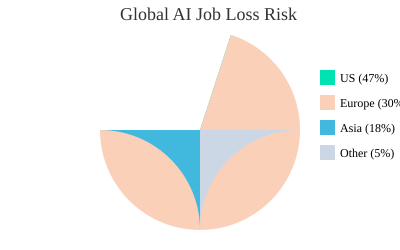
When you hear about AI replacing jobs, it’s easy to picture robots taking over factories or software automating away office work. And yes, the numbers are huge: experts predict up to 300 million jobs could be lost globally to AI-driven automation (explodingtopics.com). In the US alone, 47% of workers’ roles are potentially threatened within the next decade. But here’s the twist: AI isn’t just about job loss. It’s about a total AI job market transformation—and that can be a good thing, if you know how to ride the wave.
From Repetition to Reinvention: The Real AI Impact on Employment
Let’s be real: a lot of jobs today are, well, boring. If your daily grind involves dragging numbers from one spreadsheet to another, you’re in the AI crosshairs. As entrepreneur Daniel Priestly puts it:
“AI...does a lot of automation. It does a lot of the functional work...And that frees us up to be plural, to be working on all sorts of different things.”
AI is expected to cause major wage shifts and job automation, especially for repetitive tasks. But it’s not just about AI job displacement. It’s about freeing you to explore more creative, strategic, and hybrid roles—jobs that didn’t even exist five years ago.
History Repeats: The Great Shift from Farms to Factories… to AI
Think back 250 years. Most people worked on farms. Then came the Industrial Revolution, pulling millions into cities and factories. It was a massive shock—nobody could have imagined “real jobs” would one day mean sitting in an office, moving numbers around. Today’s AI job market changes are just as dramatic. If you told your past self that “real-world” skills from your first summer job would be automated by AI, you’d probably laugh. But here we are.
AI’s Pull: More Than Just Jobs—A Push Toward Plural Careers
Here’s what’s wild: AI isn’t just pushing people out of old jobs. It’s pulling us toward new opportunities. There’s more money and more possibilities than ever before. The catch? The old rules don’t apply. Our schools still train us for factory and office jobs that are disappearing fast. Meanwhile, AI is making it easier to start side hustles, freelance, or launch your own business. Plural careers—where you mix and match roles, gigs, and entrepreneurship—are on the rise.
- Entrepreneurship: AI tools let you launch and scale businesses faster than ever.
- Hybrid roles: Combining tech, creativity, and human skills is the new normal.
- Personal branding: Standing out matters more than fitting in.
Personal Tangent: That Summer Job? AI Would’ve Nailed It
Remember your first “real” job? Maybe it was data entry, customer service, or stocking shelves. You thought you were learning skills for life. But let’s be honest—AI would automate most of those tasks today. The lesson? The future belongs to those who adapt, not those who cling to routine.
Who’s Most at Risk?
Not all jobs are equally threatened. Data-rich industries—think finance, logistics, and admin—are moving fastest. By 2025, 43% of workers expect major role changes. If your job is repetitive, functional, or easily described in a step-by-step manual, it’s time to rethink your path.
From Land to Enterprise: The New ‘Moats’ of Career Security
If you ever sat through a high school economics class, you probably learned about the classic “moats” that protected people’s wealth and security. For centuries, land ownership was the ultimate moat. If you owned land, you had power, food, and a future—no matter what else changed. But in today’s AI-driven economy, land is no longer the ticket to career security. The world has moved on, and so should your strategy for staying ahead.
The Four Moats: A Quick History Lesson
Classical economics described four main moats that protected people’s livelihoods:
- Land – The foundation of wealth in the agricultural age.
- Labor – Your ability to work and produce value.
- Capital – Having money to invest and grow wealth.
- Enterprise – The ability to spot opportunities, build teams, and create value.
For thousands of years, owning land was the best way to secure your future. Then, during the industrial age, labor and capital became the new moats. Factories needed workers and investors. But now, as AI transforms the job market, enterprise is the moat that matters most.
Why Enterprise Skills Are the New Career Moat
Here’s the twist: AI doesn’t just replace labor—it rewards rapid experimenters. In the age of AI career adaptation, it’s not about what you own or even what you know. It’s about how quickly you can spot an opportunity, assemble a team, and launch something new. Daniel Priestly puts it perfectly:
"So enterprise mote means that you know how to spot opportunities, assemble teams, and commercialize opportunities at speed."
Think about it: Today, you can spin up a Slack channel, launch a no-code app, or start a side hustle before your morning coffee goes cold. Your high school economics teacher probably never predicted that. But this is the reality of the AI job market—speed, creativity, and adaptability are your best defense against wage erosion and job risk.
Speed Is the New Moat: How to Thrive in an AI-Driven Economy
In this new landscape, enterprise skills are more valuable than ever. Here’s what sets successful people apart:
- Spotting Ideas Fast: See trends and gaps in the market before others do.
- Forming Diverse Teams: Bring together people with different skills—often from around the world—at lightning speed.
- Rapid Experimentation: Test ideas, launch prototypes, and pivot quickly if something doesn’t work.
- Commercializing Quickly: Turn experiments into real businesses or income streams—sometimes in days, not months.
This is the heart of AI and entrepreneurship. It’s not about building a single career path. It’s about running fast experiments, launching micro-businesses, and adapting on the fly. The people who thrive are those who treat their careers like a portfolio of projects, not a single job title.
Enterprise Skills: Your Best Defense Against AI Job Risk
So, what does this mean for you? It means soft skills and hybrid skills—like creative problem-solving, team building, and rapid prototyping—are now the real moats. In the world of AI career adaptation, these are the skills that protect you from automation and keep you in demand.
Forget waiting for permission or climbing a single corporate ladder. The new moat is enterprise: spotting opportunities, assembling teams, and commercializing ideas at speed. That’s how you build career security in the AI era.
Soft, Weird, and Wild: The Unstoppable Rise of Hybrid AI Skills
If you’re trying to future-proof your career in the age of AI, you might be surprised to learn that the most in-demand AI job skills aren’t just technical. In fact, the real game-changers are the “soft, weird, and wild” hybrid skills—think pitching, visioning, ideation, and running quick experiments. These are the skills that don’t always have neat names or fit into a tidy resume box, but they’re exactly what employers are scrambling to find as AI skills demand explodes.
Daniel Priestly says, “The skills that are the most relevant skills right now are these kind of soft skills, these entrepreneurial skills, things like pitching, things like visioning, things like ideation, rapid testing…”
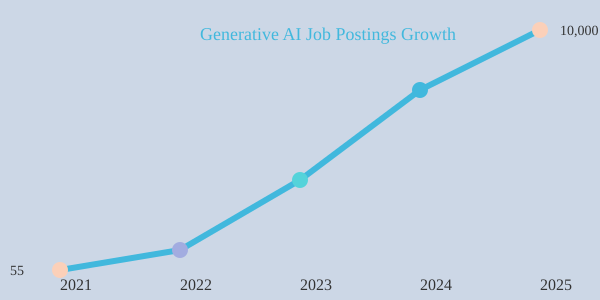
Let’s be real: the world of Generative AI skills is moving so fast, the job market can barely keep up. According to Lightcast, there were just 55 generative AI job postings in 2021—but by mid-2025, that number will rocket to nearly 10,000. And here’s the kicker: jobs exposed to AI are seeing their skill requirements change 66% faster than other roles. If you want to stay ahead, you need to think beyond code and embrace a wild mix of practical, creative, and people-focused abilities.
Hybrid Roles: Where Coding Camps Meet Improv Classes
Today’s most valuable AI skill transformation happens at the intersection of disciplines. Imagine a world where coding logic meets improv comedy, or where a knack for storytelling fuses with data analysis. That’s not science fiction—it’s the new reality. Employers want people who can jump between worlds, connect ideas, and experiment quickly. The ability to run fast, cheap experiments, pitch new concepts, and adapt on the fly is what sets you apart.
Loops and Groups: Entrepreneurial Cycles Over Static Knowledge
Here’s a secret: mastering cycles of idea-to-product (what I call “loops”) and learning how to assemble and align teams (“groups”) is far more valuable than memorizing static knowledge. For example, my kid’s lemonade stand outperformed my old part-time job—not because he had a better recipe, but because he learned to spot an opportunity, plan, build, test, and adapt. (And yes, AI could run the math, but it can’t replace that hands-on hustle.)
- Crafting experiences: Creating memorable moments for users or customers.
- Building communities: Bringing the right people together around a shared goal.
- Personal branding: Shaping your digital presence and reputation.
- Culture shaping: Fostering innovation and alignment within teams.
Why Soft Skills Matter More Than Ever
In a world where AI can regurgitate facts, it’s your ability to experiment, connect, and create that stands out. Coding logic is important, but the thinking behind the code—ideation, rapid testing, and cross-disciplinary curiosity—matters even more. The most “future-proof” AI job skills are the ones that blend the soft, the weird, and the wild.
Outrunning the Assembly Line: Schools, Skills, and the Industrial Age Hangover
Ever wonder why adapting to the AI job market feels so tough? The answer is surprisingly simple: our schools are still stuck in the past. For over a century, education has been designed to churn out workers for factories and offices—jobs that, thanks to AI, are vanishing or transforming faster than ever. If you feel like you spent 12 to 15 years training for an economy that barely exists anymore, you’re not alone. Ouch, right?
Here’s the real kicker: most of us were taught to be efficient, reliable, and good at following instructions. That’s exactly what machines—and now AI—do best. The result? A massive mismatch between what schools teach and what the AI-powered job market actually needs. This is the heart of the AI skill transformation challenge.
Why It Feels So Hard: The Industrial Age Hangover
- Schools still train for factory jobs, not AI-powered plural careers.
- 12–15 years of training for an economy that’s mostly obsolete.
- AI job displacement is real—especially for “functional” roles.
Think about it: you spent years learning how to be a “human large language model”—memorizing facts, following rules, and writing essays. But now, the real large language models (LLMs) are beating you at your own game. As Daniel Priestly puts it:
"We trained you as a large language model that's not as good as the current version."
It’s not just a joke. In fields like law and accounting, basic AI models are already performing at the 80th percentile. That means unless you’re in the top 20% of your field, you’re at risk of being replaced—or at least outperformed—by AI. The AI impact on employment is relentless, and adaptation is no longer optional.
AI Job Market Changes: Competing with the World
But here’s another twist: you’re not just competing with AI. Thanks to digital globalization, you’re also up against people worldwide who are using the same tech. They might be earning globally and spending locally, which means they can often work for less. The competition is fierce, and the playing field is bigger than ever.
By the Numbers: AI’s Impact on Traditional Careers
| Trend | Data |
|---|---|
| AI performance in law/accounting | Basic AI models now achieve 80th percentile performance |
| College graduate unemployment | Rising in knowledge worker fields linked to AI adoption |
| AI-transformable new jobs | Over 25% of new jobs are highly transformable by AI |
This is why skill redundancy is becoming a real risk. If your main value is being a “functional” knowledge worker, AI can probably do it faster, cheaper, and at scale. The only way to outrun the assembly line is to adapt—fast. Upskilling, reskilling, and embracing new ways of working are now essential to stay ahead of AI job market changes.
So, if you feel like you’re running a race against a machine, you’re not imagining things. The rules have changed, and the finish line keeps moving. But understanding the mismatch between school and the real world is the first step to breaking free from the Industrial Age hangover—and thriving in the age of AI.
Digital Assets, All-in-One Tools, and the New Survival Kit for AI Entrepreneurs
Welcome to the AI-driven economy, where your next career move is less about what degree you have and more about what digital assets you own and how quickly you can adapt. If you’re thinking about launching a business, side hustle, or even just future-proofing your career, the new survival kit starts with two things: digital assets and all-in-one tools that let AI work for you.
Why Digital Assets Are Your New Superpower
In the world of AI and entrepreneurship, digital assets are the currency of resilience. Think of them as your personal brand’s building blocks—things like:
- Content libraries (videos, blogs, podcasts)
- Online courses and webinars
- Databases and templates
- Bestselling eBooks or guides
- Recorded talks or workshops
Owning these assets means you’re not just trading hours for dollars. You’re building resources that keep working for you, opening up new AI job market opportunities and making you more adaptable in the face of change.
All-in-One Platforms: Your Digital Swiss Army Knife
Here’s a confession: I used to spend more time stitching together different tools—email, CRM, website builders, course platforms—than actually building my product. Oof. The chaos was real. That’s why all-in-one platforms like High Level are game-changers for anyone navigating the AI skills demand.
"With high level, you can build websites and funnels with drag and drop. You can automate emails, SMS and Instagram DMs...and keep all of your messages in one shared inbox."
Imagine running your entire business from day one, without the tech overwhelm. High Level lets you:
- Build websites and sales funnels with drag-and-drop simplicity
- Automate emails, SMS, and Instagram DMs
- Manage clients with a built-in CRM
- Schedule calls, take payments, and host your own courses
- Keep all messages in one shared inbox
Let AI Work for You—Not the Other Way Around
In today’s AI and entrepreneurship landscape, platforms like High Level don’t just organize your business—they supercharge it. You get an AI team right out of the box:
- Voice AI answers calls for you
- Conversation AI replies to messages across platforms
- Reviews AI follows up for five-star reviews
- Content AI writes posts and emails
- Workflow Assistant keeps everything running smoothly
No more juggling a dozen subscriptions or losing track of leads. This is the digital Swiss Army Knife for the AI-fueled gig economy.
Apprenticeships Over Degrees: Real-World Skills Rule
Here’s the truth about the AI job market: real-world experience managing digital resources is worth more than a fancy diploma. Apprenticeships, hands-on projects, and building your own digital assets teach you how to thrive in the AI skills demand era. The more you own and automate, the more resilient—and employable—you become.
Quick Comparison Table: High Level Features & Pricing
| Feature | Details |
|---|---|
| Base Price | $97/month |
| Trial Offer | 30-day trial with referral link |
| Core Features | Website builder, CRM, messaging, course hosting, automation, AI assistants |
In the AI-driven economy, investing in digital assets and leveraging all-in-one business platforms is your shortcut to success. The tools are smarter, the opportunities are bigger, and the only limit is how quickly you can adapt.
Global Opportunities: Why It’s Simultaneously the Best and Worst Time to Start
Let’s be honest: if you’re eyeing the AI job market future, you’re stepping into a world that’s both overflowing with possibilities and packed with new risks. It’s a double-edged sword, and you’re holding the handle and the blade at the same time.
Daniel Priestly: "There's more money than ever before. There's more opportunities than ever before."
The Turbocharged Global AI Job Market: Win Big or Lose Big
Right now, the global AI job market is turbocharged. There’s more funding, more open positions, and more industries desperate for reinvention than ever before. If you have the right skills, you can land a client in another country before you’ve even changed out of your pajamas. That’s not just a funny story—it’s the new reality. You can reach global markets, collaborate with people on the other side of the world, and solve problems that didn’t even exist a few years ago.
- Instant global reach: AI tools let you pitch, partner, and deliver worldwide—no passport needed.
- Collaboration at light speed: You can join teams, hackathons, and projects with people you’ve never met in person.
- Big problems, big rewards: Major industries—healthcare, finance, education—are begging for new solutions, and there’s funding to match.
The Flip Side: Fierce Competition and Uncomfortable Truths
But here’s the uncomfortable truth: for every new opportunity, there’s a new threat. The same AI that lets you access global markets also means you’re competing with talent from everywhere—low-cost countries, advanced AI systems, and people who are just as hungry as you are. If you can’t out-innovate, out-network, or out-skill, someone (or something) else will.
- Global competition: Every gig, every sale, every job is up for grabs—by anyone, anywhere.
- AI job market disruption: More than a quarter of jobs posted recently could be highly transformed by generative AI. That means the job you’re aiming for might not even exist in the same form next year.
- Skills are shifting fast: In AI-exposed sectors, skill requirements are changing 66% faster than before. If you’re not learning, you’re falling behind.
Why Good Schooling Isn’t Enough Anymore
Maybe you’ve spent years in school, collecting degrees and certificates. But the truth is, most schools don’t teach you how to build a network, pitch yourself, or spot opportunities before they go mainstream. They teach you how to memorize answers, not how to solve new problems. In the AI job market future, that’s not enough.
What Sets You Apart?
The global AI job market rewards those who are entrepreneurial, adaptive, and ready to collaborate. You need to be a problem-finder, not just a problem-solver. The wild card? That moment you realize you’ve landed a client in another country, all before breakfast. But if you’re not prepared, the same global reach that brings opportunity can leave you stranded.
So, is it the best or worst time to start? It’s both. The AI job market insights are clear: the stakes are higher, the rewards are bigger, and the risks are real. The only question is—are you ready to play?
The Learning Loop: How Kids, Lemonade Stands, and Holiday Clubs Outpace Your MBA
Let’s be honest: when it comes to AI skill transformation and preparing for the new AI job market, the real lessons aren’t happening in stuffy classrooms or even in your MBA lectures. They’re happening on sidewalks, in backyards, and at summer holiday clubs—where kids run lemonade stands, build apps at coding camps, or organize their own mini businesses. These hands-on experiences teach you more about AI career adaptation than any textbook ever could.
Why Lemonade Stands Beat Lecture Halls
Think about the last time you saw a kid run a lemonade stand. There’s an idea (“Let’s sell lemonade!”), a plan (buy lemons, set up a table), teamwork (someone mixes, someone sells), and real feedback (customers either buy or don’t). This is what Daniel Priestly calls a value creation loop:
“Loops are value creation loops where you start with an idea and create something and end up with a new result... and a group is the ability to put together a group who can work on a project.”
That’s the heart of the Loops and Groups framework. You cycle from idea to creation, build the right team, and repeat. Each loop is a mini-lesson in entrepreneurship, creativity, and resilience—skills that AI can’t easily replicate.
Loops and Groups: The Secret Sauce for AI Job Skills
- Loops: These are the cycles where you go from idea to execution to feedback. It’s the process of trying, failing, learning, and trying again.
- Groups: This is about assembling the right people to tackle a project together. It’s not just about what you know, but who you can work with and how you collaborate.
In the age of AI job market transformation, these two skills—looping and grouping—are your best insurance. Coding logic, project building, and teamwork matter more than memorizing facts. AI can crunch data, but it can’t run a lemonade stand or rally a group of friends to launch a holiday club project.
Personal Proof: When Kids Outshine the Grown-Ups
I’ll admit it: my own kid once outshone me with a backyard business. While I was buried in spreadsheets, she and her friends set up a snack stand, designed flyers, and even negotiated with neighbors for better foot traffic. They learned about pricing, teamwork, and customer service—all in one afternoon. No MBA required.
Hands-On Learning: The Real AI Career Advantage
Research shows that hands-on learning and team-based projects are the best preparation for AI skill transformation. When you build something real—whether it’s a lemonade stand or a group coding project—you gain context, creativity, and resilience. These are the very things that make you stand out in an AI-driven world.
- Context: You see how ideas work in the real world.
- Creativity: You solve problems as they come up, not from a script.
- Resilience: You learn to bounce back from setbacks, a skill AI can’t teach you.
So, if you want to future-proof your career, think less about rote memory and more about loops and groups. The next generation of AI job skills will be built on practical, project-based learning—just like the best holiday clubs and lemonade stands.
FAQ: Navigating the Wild Currents of the AI Job Market
Is every job really at risk of being automated by AI?
It’s easy to feel like the AI job market transformation means every role is on the chopping block. But here’s the truth: AI disruption isn’t one-size-fits-all. Some jobs will change, some will disappear, and others will actually grow. What matters most is your ability to adapt. The roles most at risk are repetitive and predictable, but jobs that require creativity, empathy, and complex problem-solving are far less likely to be replaced. Instead of worrying about total AI job displacement, focus on how your skills can evolve alongside technology.
Which soft skills should I actually focus on acquiring?
In a world where AI can crunch numbers and automate tasks, your human skills become your superpower. Communication, adaptability, commercial awareness, and self-awareness are crucial. These aren’t just buzzwords—they’re what make you irreplaceable. Being able to collaborate, think critically, and understand the broader business context will set you apart. If you can learn how to deliver a compelling presentation, build relationships, and stay curious, you’ll thrive no matter how the AI job market shifts.
How do I start building digital assets if I’m not a techie?
You don’t need to be a coder to build digital assets. Start with what you know: create a personal brand, share your insights online, or build a simple website. Think about writing a blog, recording a podcast, or even developing a talk you can deliver at conferences. The goal is to have a portfolio—a media content library, a network, maybe even a best-selling book—that showcases your expertise. These assets let you deliver value from anywhere in the world, and they’re your ticket to career resilience.
What industries are safest (or riskiest) from the AI wave?
No industry is totally immune to AI job displacement, but some are more vulnerable than others. Sectors like manufacturing, basic data entry, and routine customer service are seeing rapid automation. On the flip side, industries that rely on human connection—like healthcare, education, creative arts, and leadership—are safer for now. The real key is to look for roles that require a blend of technical and soft skills, and to stay open to learning as industries evolve.
Is traditional education worth it anymore, or should I focus on learning by doing?
Degrees still matter in some fields, but the AI job market transformation is making hands-on experience more valuable than ever. Apprenticeships, internships, and real-world projects teach you commercial awareness and self-awareness—skills that can’t be learned from textbooks alone. If you can, find mentors or join learning groups that keep you accountable and up-to-date. Remember, before you become a number one, it’s smart to be a number two and learn from the best.
Can I actually compete as a solo entrepreneur against global firms and AI?
Absolutely. The digital age has leveled the playing field. With the right digital assets and a strong personal brand, you can deliver value from anywhere. Focus on building a database of people who know and trust you, and keep learning how to adapt. Being nimble and authentic is your edge over big, slow-moving organizations.
If AI is everywhere, does location matter for career growth?
Not as much as it used to. Remote work and digital platforms mean you can build a global career from your living room. What matters more is your network, your digital presence, and your willingness to keep adapting. The wild currents of the AI job market reward those who stay curious and connected—no matter where you are.
In the end, the AI career remix is about embracing change, building your own assets, and staying open to unexpected opportunities. The future won’t look like the past—and that’s a good thing.
TL;DR: AI is rewriting career playbooks: jobs are being automated, but new opportunities and plural careers are emerging. Embrace entrepreneurial mindsets, soft skills, and hands-on learning loops to win in an AI-powered world.
Post a Comment