

Ever tried ordering a chai in Delulu Land? I have. It’s not a real place of course, but it might as well be, given the wild, unpredictable moves in Indian markets lately. When tariffs become a better love story than, well, love—and gold starts outperforming Nifty, things get interesting. In this post, you’ll find stories, awkward what-ifs, oddities about whiskey consumption, and why sometimes national economies feel more like giant companies fighting over the last samosa at a party. Buckle up: this isn’t your uncle’s stock market analysis.
1. The Tariff Soap Opera: How US Trade Tiffs Ripple Across Indian Markets
If you think tracking your Uber Eats order is stressful, try following the global trade drama between the US, India, and Russia. The impact of US tariffs on India is a real-life soap opera—one where every new policy twist can shake your portfolio and the Indian stock market. For some, “tariff” might sound like a beautiful word, but as Warren Buffett famously said,
“Tariff is an act of war.”In financial circles, that’s not hyperbole—it’s a warning.
US Tariffs: Beautiful Word, Ugly Consequences
Tariffs are rarely just about protecting local jobs or industries. In today’s world, they’re often a lever for geopolitical advantage. When former President Trump imposed tariffs on India, the official reason was India’s purchase of Russian oil, which, according to US policymakers, was indirectly funding the Ukraine war. But the reality was more complex: India was never the real target. Instead, it was caught as a pawn in a larger proxy battle aimed at Russia and China.
India’s Oil Play: Profits and Provocations
Between 2022 and 2024, India’s oil sourcing underwent a seismic shift. Reliance’s Jamnagar refinery, the world’s largest, increased its share of Russian crude from just 5% in 2022 to a staggering 50% by 2024. This strategic move allowed India to buy oil at a discount, refine it, and sell diesel to Europe and even Ukraine. The result? A windfall profit of ₹94,000 crore, and India’s emergence as Ukraine’s top diesel supplier. While this bolstered the Indian economy, it also irritated US policymakers, whose real motivation was to nudge India towards American oil, not global justice.
Tariffs, Sanctions, and the Indian Stock Market
Every time the US swings its tariff hammer, the tariff effects on Indian economy are immediate and unpredictable. In late 2024, as tariff talk heated up, foreign institutional investors withdrawal became a major theme. FIIs, who typically prefer stable markets, started pulling out billions as volatility spiked—not just in India, but across emerging markets. The Nifty 50, India’s flagship index, delivered a flat 0.0% return over the past 12 months, reflecting the uncertainty.
Why Do FIIs Flee?
- Tariffs and sanctions create unpredictable market conditions.
- Geopolitical risks (like the Iran-Israel and Indo-Pak conflicts) add to the volatility.
- With US debt ballooning to $30 trillion (about 10x India’s GDP), global investors often seek safety in US bonds or gold.
Macroeconomic Games: Washington, Moscow, Mumbai
The motivations behind these policy moves are rarely straightforward. The US, burdened by record debt, wants to keep global capital flowing into its own bonds (yielding 4–4.9% on 30-year Treasuries). But when tariffs and sanctions make emerging markets too risky, investors often shift to “safe” assets like gold—ironically, not always to US bonds as policymakers hope. Meanwhile, India’s domestic investors have stepped up, with SIP inflows and mutual fund investments rising, even as foreign money exits.
Timeline of Turbulence: 2022–2024
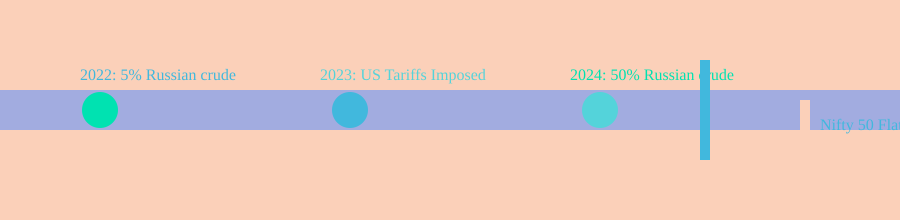
In short, the market performance analysis shows that policy whims in Washington, Moscow, and Mumbai can sling-shot your returns in unexpected directions. The tariff soap opera is far from over—and as an investor, you’re along for the ride, U-turns and all.
2. Gold, The Dollar, and the Ghost of Hyperinflation: Where to Run When Things Get Shaky
Ditching the Dollar: China, Russia, and the BRICS Currency Playbook
When global markets get jittery, the old question resurfaces: where do you run when things get shaky? For decades, the answer was simple—run to the US dollar. But the tide is turning. In recent years, countries like China and Russia have openly challenged the dollar’s dominance, pushing for a new world order in trade. The 2023 BRICS summit was a turning point, with talk of an alternative currency gaining traction. This dedollarization trend is more than just political posturing; it’s a strategic move to break free from the dollar monopoly and diversify reserves.
Central Banks Hoard Gold as Dollar Power Wanes
As the dollar’s grip loosens, central banks are quietly stacking up gold. India, China, and Russia are leading the charge, boosting their gold reserves to hedge against currency risk and geopolitical shocks. The logic is simple: if the dollar’s value wobbles, gold stands firm. For Indian investors, this global gold rush is more than just headlines—it’s a signal. When foreign institutional investors (FIIs) pull out, as seen in September 2024, gold demand in India spikes. It’s a classic move in portfolio diversification strategies, and it’s happening at both the household and central bank level.
Gold vs. Nifty: The Relay Race Winner
Let’s talk numbers. Over the past decade, gold has outperformed the Nifty 50 index in 8 out of 10 measured periods. As one market observer put it:
“You could have just taken any point of time and invested in gold, it would have done better. Eight out of ten times, gold has outperformed the Nifty.”This isn’t just a fluke. Every time global trade tensions flare or FIIs exit, gold shines brighter. It’s the safe haven asset that Indian households have trusted for generations—sometimes outperforming even the most disciplined SIP plans.
Why Gold Fever Strikes in Every Economic Panic
There’s a reason gold fever sweeps through India every time the world gets anxious. When the dollar gets shaky, or when the rupee slides from 40 to 80 against the greenback, gold becomes the go-to hedge. It’s not just about fear; it’s about smart hedging. But beware the FOMO. Not every gold rush leads to riches—sometimes, it’s just a herd mentality. Still, the data speaks: gold hedging remains a tried-and-true method for Indian investors during macro uncertainty.
Personal Tangent: Grandma’s Gold Bangle vs. My SIP
On a personal note, I once compared my childhood SIP plan to my grandmother’s gold bangle. Guess what? Her gold outperformed my carefully chosen mutual funds. It’s a reminder that sometimes, the simplest portfolio diversification strategies—like holding a bit of gold—can quietly beat the market.
Comparative Visual: Nifty vs. Gold, 2014–2024
If you’re an armchair investor, the numbers might surprise you. Here’s a line chart comparing Nifty 50 and gold performance over the past decade:
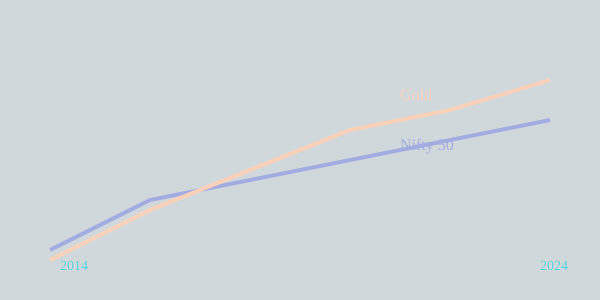
The takeaway? Gold’s steady climb often outpaces the market, especially when the world’s economic weather turns stormy. For Indian stock market analysis, this is a lesson worth remembering.
3. Inside the Fickle Market: FII Exodus, SIP Boom, and India’s Mixed Returns
If you’ve been watching the Indian stock market lately, you might feel like you’re on a rollercoaster that’s suddenly stopped mid-air. After a spectacular bull run through 2022 and early 2024, the last 12 months have delivered a grand total of 0.0% return. Yes, you read that right—zero. So, what’s really happening beneath the surface? Let’s break down this market performance analysis from both a global and local perspective.
Foreign Institutional Investors: The Great Escape
Foreign Institutional Investors (FIIs) have always been a powerful force in the Indian stock market. But lately, they’ve been heading for the exits. Why? FIIs hate volatility, and from September 2024 to March 2025, the world got a heavy dose of it—think Iran-Israel tensions, Indo-Pak skirmishes, and global economic uncertainty. As a result, FIIs pulled billions out of Indian equities, redirecting their money into safer assets like bonds and gold. This exodus left a noticeable void in the market, contributing to the stagnation we’re seeing now.
Domestic Surge: SIP Boom and Retail Resilience
But here’s the twist: while foreign money was flowing out, Indian retail investors were rushing in. Systematic Investment Plans (SIPs) hit record highs in 2024–2025, and new Demat account registrations soared. The average Indian investor didn’t flinch—instead, they doubled down, pouring money into mutual funds and stocks every month. This surge in SIP inflows has become a defining feature of India’s unique investment ecosystem, even as the pros went cold.
| Year | FII Net Flow (₹ Cr) | DII Net Flow (₹ Cr) | SIP Inflows (₹ Cr/month) | Retail Demat Accounts (million) |
|---|---|---|---|---|
| 2022 | +1,20,000 | +90,000 | 11,000 | 90 |
| 2023 | -35,000 | +1,10,000 | 14,000 | 110 |
| 2024 | -1,10,000 | +1,25,000 | 18,000 | 130 |
Mutual Funds vs. Active Investing: Who’s Steering the Ship?
Even as retail investors kept the faith, Domestic Institutional Investors (DIIs)—mainly mutual funds—remained cautious. Instead of going all-in, they sat on large cash reserves, waiting for clearer signals. This defensive posture stands in stark contrast to the bold moves you might see at your family’s Diwali cards night. Why don’t mutual funds ever seem as bold as my uncle when he’s on a winning streak? Maybe it’s the responsibility of managing other people’s money, or maybe it’s just institutional caution—but it means that even with record SIP inflows, much of that cash is still waiting on the sidelines.
India’s Mixed Returns: Stagnation Amid the Tug-of-War
The result? Despite all this activity, the market has gone nowhere. As one investor put it:
“Now if I go back 12 months to right now the market has given exactly a grand total of 0.0% 0% return.”
This sharp divergence between foreign outflows and resilient domestic retail interest highlights a tug-of-war for control. The Nifty 50 and BSE Sensex hit new highs, only to stagnate. For your portfolio diversification strategies, this means balancing between the caution of institutions and the optimism of retail investors—because right now, no one’s quite sure who’s steering the ship.
4. India’s Oil Playbook: Why Cooking Up a Petro-Profit Made Uncle Sam Jealous
When you look at the recent tariff effects on the Indian economy and the global oil trade, India’s approach stands out for its boldness and pragmatism. In just two years, India’s oil import policy turned a global crisis into a national windfall, leaving even the US watching with envy.
Jamnagar’s Crude Switch: From 5% to 50% Russian Oil
Back in 2022, Reliance’s Jamnagar refinery—the world’s largest—sourced only about 5% of its crude oil from Russia. Fast forward to 2024, and that number has skyrocketed to 50%. This wasn’t just a Reliance story; other public sector giants like BPCL joined in, though not at the same scale. What triggered this shift? The answer lies in the global fallout from the Russia-Ukraine conflict and the sanctions that followed.
Discounted Russian Oil: The Ultimate Arbitrage
As Western sanctions squeezed Russia, Russian crude became cheaper than Saudi oil. India saw an opportunity: buy discounted Russian oil, refine it at Jamnagar, and export high-value products—like diesel—right back to Europe and even Ukraine. In fact, recent data shows India is now the largest diesel supplier to Ukraine. This is classic arbitrage at a nation-state level, where India leveraged global sanctions for its own gain.
"94,000 crores was the number that came out recently. So we made a good amount of money as in India and India is very clear. If you see J Shankar had said this, Dr. Jh Shankar had said this that we are being opportunistic about it. We have to look at our national security and our energy resources."
US Tariffs and Pressure: More About Market Share Than Morals
The impact of US tariffs on India and the pressure to reduce Russian imports wasn’t just about geopolitics. The US wanted India to buy more American oil. But as Dr. S. Jaishankar, India’s External Affairs Minister, put it, India’s economic response is simple: “We are being opportunistic about it. We have to look at our national security and our energy resources.” Why pay more for US oil when Russian crude is cheaper?
This unapologetic stance has ruffled feathers in Washington. The US sanctions, while aimed at hurting Russia and China, ended up pushing India into a position of profit. India became a key player in the global oil market, not by following the crowd, but by making its own rules.
Profits Flow: ₹94,000 Crore and Counting
The numbers tell the story. India’s estimated profit from these oil maneuvers is a staggering ₹94,000 crore—a sum that’s more than just “small change” in the global macro casino. This revenue boost has strengthened India’s fiscal health and provided a buffer against global economic shocks. It’s a clear example of how a flexible, opportunistic national strategy can pay off, especially when the world order is in flux.
India’s Stock Market Analysis: Bulls, Bears, and Oil Windfalls
India’s oil playbook has had ripple effects on the Indian stock market. Energy sector stocks have seen bullish trends, while the broader market has benefited from improved trade balances and stronger government revenues. The Sankey diagram of global oil trade flows now shows India as a central hub, with crude coming in at a discount and refined products flowing out at a premium.
If Countries Were Companies: The Ultimate Game of Arbitrage
Think of it this way: if countries were companies, India just pulled off the ultimate arbitrage—buying low, selling high, and pocketing the difference while the world’s biggest players watched. In a world of high stakes and bigger egos, India’s oil game is a masterclass in economic strategy and opportunism.
5. When Whisky Whispers, Markets Listen: Weird Consumer Shifts and Their Economic Ripples
If you want to understand the pulse of the Indian economy, sometimes you need to look beyond the stock charts and into the glasses at a Friday night party. Current trends in alcohol consumption in India are quietly telling a bigger story about sector rotation investment strategies, portfolio diversification strategies, and the future of the Indian stock market. What seems like a simple shift in drinking habits is actually a signal of deeper economic and societal changes.
Gen Z Delivers a Surprise: Whiskey Down, Vodka Up
For decades, whiskey was the undisputed king of Indian celebrations and social gatherings. But today, you’re witnessing a dramatic shift. As quoted in recent market analysis,
'Whiskey drinking capacity of 60% was there in India. Now it's come down to 39%. Beer is at 33% and vodka's become the fastest growing market.'This isn’t just trivia for party conversations—it’s a signal that Gen Z and urban consumers are rewriting the rules of discretionary spending.
| Beverage | Market Share (2010s) | Market Share (2024) | Trend |
|---|---|---|---|
| Whiskey | 60% | 39% | Declining |
| Beer | — | 33% | Stable |
| Vodka | — | Fastest-growing | Rising |
Changing Vices and Virtues: Lifestyle Trends as Economic Signals
Why does it matter if whiskey is losing ground to vodka? Because these shifts reflect broader changes in aspirations, urbanization, and consumer preferences. The decline of whiskey at weddings and the rise of ‘Friday night vodka’ diaries among young professionals are more than anecdotes—they’re micro-level clues to macro-level trends. In a volatile market, these lifestyle changes often precede structural rotations in the consumer discretionary sector.
Consumption Spending: The Engine of India’s Growth
Here’s a powerful fact: Over 60% of India’s GDP in 2024-2025 is tied to how you and your peers spend, sip, and splurge. That’s a higher share than most global peers, making India’s urban and luxury consumption a major economic driver. When you see new categories like vodka surging, it’s a sign that consumer discretionary and urban spending are maintaining India’s growth appeal—an essential insight for Indian stock market analysis.
Micro Habits, Macro Shifts: Investment Implications
For investors, sometimes the most unglamorous consumer data—like alcohol trends—can indicate underlying sector rotation. If you’re considering portfolio diversification strategies, these shifts suggest it’s time to look beyond traditional staples. The rise of new beverage categories hints at opportunities in urban lifestyle brands, premium retail, and even logistics and supply chain companies serving these evolving tastes.
- Sector rotation investment strategies: Track shifts in consumer preferences to anticipate which sectors may outperform.
- Portfolio diversification strategies: Consider exposure to emerging categories within consumer discretionary and staples.
- Indian stock market analysis: Use micro-level consumption data to spot early signals of macroeconomic change.
In summary, the next time you notice fewer whiskey bottles at a wedding or more vodka at a rooftop bar, remember: these aren’t just lifestyle choices—they’re economic signals. Macro shifts often begin with micro habits, sometimes in your glass, not your spreadsheet.
6. Wild Cards and What-Ifs: The Hypothetical Guide to Surviving Delulu Land
Dedollarization Trends and Implications: What If India Dumped Its US Bonds?
Imagine waking up to the headline: “India Sells All US Treasuries Overnight.” Would the rupee dance with joy, or weep in chaos? In the world of dedollarization trends and implications, this is not just a wild fantasy. As BRICS nations push for a new currency and global trade inches away from the dollar, the old game of printing money and exporting inflation is under threat. If India made such a bold move, the immediate effect might be a stronger rupee—at least in theory. But in reality, global markets could panic, US yields could spike, and India’s export sector might face a sudden chill. In Delulu Land, every action has a ripple effect, and your investment strategies during stagnation need to account for these wild cards.
If Gold and Vodka Become the New Indices: Your Saturday Shopping Strategy
Let’s get creative. What if tomorrow’s stock market indices were based on gold and vodka? With dedollarization, gold is already back in fashion. But what about vodka? As quirky as it sounds, consumer trends can shift overnight—especially when traditional assets lose their shine. If you’re shopping for your portfolio on a Saturday, maybe you’re picking up a little gold ETF, a dash of green energy, and, yes, a splash of wheat vodka ETF. This is where sector rotation investment strategies come into play: moving between commodities, renewables, and even “alternative” consumer staples to stay ahead of the curve.
Imagining the Future: BRICS Currency, US Defense Cuts, and New Alliances
With US defense spending declining as of 2024 and troop redeployments underway, the global balance is shifting. BRICS, China, and Russia are accelerating dedollarization moves post-2023. As one observer put it,
“Countries by themselves are companies. All of these things that are happening, tariff war and all of that, is just business wars being played out.”In this new world, alliances are fluid, and economic power is up for grabs. Your portfolio diversification strategies must reflect this reality—think gold, rare earths, green energy, and maybe even a little exposure to emerging market currencies.
The Portfolio of the Future: Gold, Green Energy, and Wheat Vodka ETFs
In Delulu Land, the “portfolio of the future” is anything but conventional. Here’s a sample allocation:
- Gold: A hedge against currency volatility and dedollarization.
- Green Energy: As fossil fuel geopolitics get messier, renewables offer stability.
- Wheat Vodka ETF: A playful nod to shifting consumer preferences and commodity cycles.
- Rare Earths & Commodities: China’s dominance means these are strategic assets.
Blending gold, commodity, and sector bets may be the next adaptive advantage. Creative risk-taking and contrarian thinking are essential as global investment themes shift.
Personal Tale: When I Misread the Market
Once, I tried to play both sides—investing in gold and local breweries, convinced I’d found the perfect hedge. Gold soared, but my brewery stocks fizzled. The lesson? In a world of wild cards, keeping an open mind and a diversified portfolio is your best defense. Multi-front uncertainties—trade wars, dedollarization, quirky consumer changes—demand unusual flexibility and mental models from modern investors.
7. Conclusion: Samosas, Arbitrage, and the Search for Sensible Strategies
When you step into the world of Indian stock market analysis, you quickly realize that investing here is less about finding certainty and more about learning to thrive amid chaos. Think of it like navigating a bustling Indian street food market—where the aroma of fresh samosas mixes with the unpredictability of the crowd. The best rewards? They go to those who are agile, have local insight, and aren’t afraid to take a calculated risk.
In today’s global landscape, with tariff wars, shifting alliances, and the dollar’s waning power, the only constant is change. As the U.S. pulls back troops and rethinks its global strategy, you—whether a seasoned investor or a curious newcomer—must recognize that adaptability, not certainty, is the cornerstone of contemporary investing. This is especially true for India, where market performance analysis reveals both wild swings and golden opportunities.
Markets: A Game of Outwitting Volatility
Markets aren’t about guarantees. They’re about outwitting volatility and unpredictability. Just as street vendors adjust their menus based on the day’s crowd, you need to adjust your investment strategies India to reflect changing global and local realities. The most successful investors are those who can pivot quickly, spot emerging trends, and aren’t afraid to rotate sectors or rebalance their portfolios.
Portfolio Diversification Strategies: Embrace the Unexpected
- Sector Rotation: Don’t get stuck in yesterday’s winners. As we’ve seen, sectors like IT, pharma, and energy can take turns leading the market. Keep your eyes open for shifts and be ready to move.
- Don’t Ignore Gold: In times of uncertainty, gold remains a reliable hedge. With global de-dollarization and currency fluctuations, gold’s role in portfolio diversification strategies is more important than ever.
- Expect the Unexpected: Sometimes, the most revealing data comes from the quirkiest places—like vodka consumption trends or samosa price spikes. These oddball indicators can offer real insight into consumer sentiment and economic health.
From Power Ties to Retail Disruptors
If world leaders are just CEOs in power ties, making deals and playing business wars, then you—the retail investor—are the ultimate disruptor. You have access to information, tools, and global trends that were once reserved for the elite. By combining personal savvy, sectoral awareness, and a keen eye on global developments, you can refine your portfolio and build resilience against shocks.
Actionable Lessons from Market Chaos
| Strategy | Why It Matters | Example |
|---|---|---|
| Agility | Quick response to market shifts | Moving from tech to energy as trends change |
| Diversification | Reduces risk from sector-specific shocks | Mix of stocks, gold, and international funds |
| Local Insight | Spotting unique, India-specific opportunities | Investing in companies benefiting from tariff changes |
“Being a nimble investor beats being a passive spectator—especially in macro-chaos.”
So, as you savor your next samosa, remember: the Indian market’s quirks and volatility are not obstacles—they’re opportunities. Embrace the randomness, stay flexible, and let your investment strategies evolve with the times. Sometimes, the oddest data points can lead to the most sensible strategies.
FAQ: All Your Burning and Half-Baked Indian Market Questions Answered
Why did gold outperform the stock market so often in India?
If you’ve ever wondered why your grandmother’s gold bangles seem to do better than your Nifty index fund, you’re not alone. Historically, gold as a safe haven asset has shined brightest when global uncertainty peaks. When foreign investors (FIIs) pull out due to tariff wars or geopolitical shocks, Indian equities get volatile, but gold tends to hold or even gain value. In fact, eight out of ten times, gold has outperformed the Nifty—especially during periods of global turmoil and currency depreciation. So, while gold won’t pay you dividends, it sure does help you sleep better when the world’s on fire.
How do tariffs impact my Nifty index fund?
Tariffs might sound like something only politicians and economists care about, but they can hit your portfolio too. When the US slaps tariffs on Indian goods (or vice versa), it’s not just a headline—it’s a direct attack on trade flows. That means export-heavy sectors like IT, textiles, and auto parts can take a hit, dragging down the Nifty. Tariffs also trigger risk-off sentiment among FIIs, leading to outflows and increased volatility. In short, your Nifty index fund isn’t immune to global trade drama, so keep an eye on those tariff headlines.
Which sectors actually benefit from these wild global moves—any surprise winners?
Believe it or not, not every sector suffers when the world goes haywire. For instance, defense stocks often rally during geopolitical tensions, and gold-related businesses (think jewelers and refiners) see a boost when gold prices surge. Even vodka and beer brands are seeing a shift—Gen Z’s changing tastes mean vodka is now the fastest-growing segment in India’s alcohol market. So, while tariffs and wars can spook most sectors, there are always a few surprise winners if you look closely.
Is this a good time to shift from equity to gold, real estate, or fixed deposits?
The classic question: should you move your money? If the market’s flatlining and gold is glittering, it’s tempting to jump ship. But remember, portfolio diversification strategies exist for a reason. Gold and fixed deposits add stability, but equities offer long-term growth. Real estate can be a hedge, but it’s illiquid. The smart move? Don’t go all-in on any one asset. Instead, rebalance gradually based on your risk appetite and goals. And yes, sometimes doing nothing is the best strategy.
How do I read FII and DII flows in the news?
Think of FII (Foreign Institutional Investor) flows as the big whales—when they move, the tide changes. If FIIs are selling, it usually means global investors are nervous, often due to US tariffs or geopolitical shocks. DII (Domestic Institutional Investor) flows—that’s your mutual funds and insurance companies—are more like steady elephants, often buying when FIIs sell. Watching these flows gives you a sense of market mood, but don’t obsess over daily numbers; look for sustained trends.
Is vodka really an investment (asking for a friend)?
Unless you’re buying shares in a vodka company, probably not. But hey, with vodka now the fastest-growing alcohol segment in India, maybe your next party is a micro-investment in market research. Cheers!
Should I worry about dedollarization as an Indian investor?
Dedollarization sounds scary, but for most retail investors, it’s a slow-moving macro trend. As the world shifts away from the US dollar, gold and other real assets may gain importance. Keep an eye on global currency shifts, but don’t panic—focus on a diversified portfolio and let the central banks worry about the big stuff.
In conclusion, the Indian stock market analysis landscape is wild, but not unknowable. Whether it’s tariffs, gold rushes, or dedollarization, the best defense is a balanced, informed approach. Stay curious, stay diversified, and remember: sometimes, the quirkiest questions lead to the smartest answers.
TL;DR: The Indian market in 2024-2025 is a grand tangle of tariffs, geopolitical flexing, and investor jitters—but through sector rotation, gold hedges, and understanding macro shenanigans, there’s ample opportunity for the nimble and the curious.
Post a Comment