

Picture yourself standing in front of a massive golden cube, imagining all the gold ever mined—stacked gleaming under the Washington DC sky. Would you expect it to be bigger? I did, until I learned that so much of gold’s power hinges not on its heft, but on the collective stories and beliefs we’ve spun around it. Let’s dig under the glitter to see why gold—cosmic origin and modern price booms alike—refuses to lose its luster. Spoiler: There’s a lot more at play here than raw material value.
1. Stardust to Showdown: Gold’s Out-of-This-World Beginnings
When you think about gold, you might picture glittering jewelry, ancient coins, or massive bars locked away in vaults. But have you ever wondered how all that gold got here in the first place? The story of gold’s journey to Earth is as remarkable as its enduring psychological value and role in historical gold performance during times of macroeconomic uncertainty.
Cosmic Origins: Gold’s Arrival from the Stars
Gold isn’t just another metal dug up from the ground—it’s a true cosmic traveler. Billions of years ago, gold was forged in the heart of exploding stars, known as supernovae. These cataclysmic events created heavy metals, including gold, which later hitched a ride to Earth on asteroids. Imagine: every gold ring, coin, or bar you’ve ever seen is the result of ancient stardust delivered by meteoritic impacts. That’s cosmic luck on a grand scale.
| Fact | Details |
|---|---|
| Gold in Earth’s crust | ~0.003 parts per million |
| Electron speed in gold atoms | Close to the speed of light (unique among metals) |
Atomic Magic: Why Gold Shines Like No Other
What makes gold so visually captivating? It’s all about the electrons. In gold atoms, electrons zip around at nearly the speed of light. This unique atomic property absorbs blue light and reflects yellow and red, giving gold its unmistakable warm glow. No other metal shines quite like this. That’s why, from the moment humans first spotted it, gold stood out as something truly special—almost magical.
Hidden for Eons, Revealed by Curiosity
For billions of years, gold deposits slept deep in Earth’s crust, undisturbed and unseen. Over time, rivers carved through rock and soil, exposing these hidden treasures. Imagine the first person who stumbled upon a gleaming yellow nugget in a riverbed—unlike anything else, it didn’t rust or tarnish. It was soft yet dense, easy to shape, and seemed almost eternal. No wonder ancient people couldn’t help but call it “eternal.”
Gold’s Allure Across Civilizations
Gold’s rarity and endurance have made it uniquely valuable across time and cultures. From the solid gold Buddha statues of Asia to the intricate Egyptian coffins, and even the world’s largest gold coin (with a kangaroo, no less), gold has been used for much more than currency. About 45% of all gold ever mined is used for decoration and jewelry—necklaces, earrings, statues, and more. A smaller portion finds its way into industry, powering electronics and even dental fillings, thanks to gold’s special chemical properties.
The Chemistry Behind the Spell
Gold’s chemical blend is a big part of its enduring appeal:
- Purity: Gold is one of the least reactive chemical elements, so it doesn’t tarnish or corrode.
- Density: It’s heavy for its size, giving it a satisfying heft.
- Malleability: You can shape gold into almost anything—it’s incredibly workable.
- Indestructibility: Gold doesn’t rust, making it seem almost eternal.
- Sheer Shine: Its unique luster is instantly recognizable and deeply alluring.
From China to the Andes, people independently fell under gold’s spell.
Gold’s story is a blend of cosmic chance, unique atomic properties, and a universal human fascination. Its journey from stardust to the center of human civilization is why, even today, gold remains at the heart of our collective imagination and economic systems.
2. Gold’s Triple Life: Decoration, Industry, and the Great Vault Heist
Gold Jewelry Demand: Where Beauty Meets Obsession
If you picture gold, chances are you’re thinking of something beautiful—necklaces, rings, earrings, or even a giant Buddha statue shimmering in a temple. You’re not alone. About 45% of all the gold ever mined is transformed into jewelry and ornamental objects. From ancient Egyptian coffins crafted in pure gold to the world’s largest gold coin (the Australian Kangaroo, weighing a full ton), gold’s allure as decoration is timeless and global. This massive demand for gold jewelry isn’t just about fashion; it’s a deep-rooted tradition and a symbol of wealth and status in many cultures.
Industrial Gold Uses: The Hidden Workhorse
While jewelry steals the spotlight, a much smaller slice of the gold pie goes to industry. Gold’s unique properties—resistance to corrosion, excellent conductivity, and biocompatibility—make it invaluable in places you might not expect. Think about the tiny connectors in your smartphone, the fillings in your teeth, or specialized medical equipment. These industrial gold uses account for only a fraction of global demand, but they’re critical to modern technology and healthcare. Next time you use your phone or visit the dentist, remember: there’s a little bit of gold magic at work.
The Great Vault Heist: Gold Reserves and Safe Haven Status
But the real story of gold’s value is hidden away, deep beneath cities like New York and London. Here, in fortified vaults, lies a staggering portion of the world’s gold—stacked in bars, gathering dust, and waiting for the next financial storm. These gold reserves are held by central banks, governments, and mega-investors as a safe haven asset. Unlike cows or salt, gold’s value isn’t about practical use; it’s about trust. These vaults are less like warehouses and more like temples—places where faith in gold’s power is stored for the future.
Central Bank Buying and the Gold Price Rally
In recent years, the world has witnessed a central bank buying spree. Countries like Russia and China have been snapping up gold bars, boosting their reserves and fueling a global gold price rally. In fact, after political uncertainty and criticism of the Federal Reserve by President Trump,
Gold prices soared to a record high after US President Donald Trump criticized the Federal Reserve.This surge has pushed gold prices over 50% higher in 2025, breaking above $4,000 per ounce. Investors and governments alike are turning to gold as inflation fears and geopolitical tensions rise.
Gold as Legal Tender: Florida’s Golden Experiment
Some places, like Florida, are even considering making gold legal tender again. But for most of the world, gold is simply kept as a hedge—a financial anchor in uncertain times. When you look at the numbers, it’s clear: jewelry and vault reserves consistently drive the bulk of gold demand, while industrial uses, though essential, remain a small but mighty slice of the pie.
Gold’s Real Value: Faith in a Shiny Metal
Unlike commodities you can eat or use up, gold’s true worth comes from our collective belief in its power. Vaults full of gold are less about utility and more about psychology. They’re monuments to our trust that, no matter what happens in the world, gold will hold its value.
3. When Money Was Cows: The Weird Roots of Our Financial Faith
Before gold became the anchor of our financial systems, human societies built value on things that were practical and essential for survival. In the earliest days, money wasn’t a shiny coin or a digital number—it was something you could eat, plant, or milk. The invention of money is one of the most significant psychological leaps in human history, and understanding its evolution helps explain the psychological value that still drives historical gold performance and today’s gold price drivers.
From Barter to Cattle: The First “Money”
Imagine a world where your wealth was measured in cows, sacks of barley, or blocks of salt. These were the original currencies, chosen because they were useful, widely needed, and relatively easy to trade. Cattle, in particular, were a favorite. Why? They provided food, could transport themselves (no need for a wagon!), and were easy to keep alive as long as there was grass. This made cows a practical form of money—at least at first.
- Barley: Essential for food and brewing.
- Salt: Vital for preserving food and seasoning.
- Cattle: Provided milk, meat, and labor.
But cows had their quirks. They were hard to divide (try splitting a cow for change), tricky to transport long distances, and, let’s be honest, a bit messy for everyday transactions. As trade expanded, people needed something more portable, durable, and universally accepted.
Gold’s Shiny Appeal: More Than Just a Pretty Face
Enter gold. Unlike cows, gold doesn’t spoil, moo, or require pasture. It’s rare (but not too rare), easy to carry, and can be divided into small pieces without losing value. Plus, humans have always been drawn to shiny things—gold’s visual appeal was a bonus. These qualities helped gold rise above other commodities and become the world’s favorite currency.
| Early Currency | Advantages | Drawbacks |
|---|---|---|
| Barley | Edible, widely needed | Spoils, bulky |
| Salt | Preserves food, portable | Can dissolve, not rare |
| Cattle | Food, transport, labor | Hard to divide, not portable |
| Gold | Durable, divisible, portable, attractive | Not directly useful for survival |
The Magic Ingredient: Collective Belief
Here’s where the story gets interesting. Gold doesn’t feed you, keep you warm, or shelter you. Its true power comes from a very human ingredient: belief. As one observer put it:
It’s a very human ingredient called belief.
When enough people agree that gold is valuable, it becomes a universal connector—a currency that everyone trusts. This leap from practical utility (like cows) to psychological value (like gold) is what makes money work. Gold’s value isn’t in what it does, but in what we believe it means. This collective confidence is the secret sauce behind every currency, and it’s why gold’s role as “money” has lasted for centuries.
Gold, Silver, and the Wizard of Oz
Even pop culture has weighed in on the gold-versus-silver debate. Some say The Wizard of Oz is a hidden allegory about America’s monetary system, with Dorothy’s journey symbolizing the gold standard and the silver shoes (not ruby in the book) representing the silver standard. Whether or not you buy that theory, it shows how deeply these ideas run in our culture.
From cows to gold, the journey of money reveals that our financial faith is built on more than just practicality—it’s a shared leap of belief that turns ordinary things into extraordinary symbols of value.
4. Mania and Mayhem: The Dangerous Allure—Gold Rushes, Conquests, and Pirates
When you look back at gold rush history, you see a story that’s as much about obsession as it is about wealth. Gold’s spell didn’t just move markets—it moved entire civilizations, sparking frenzies that shaped continents and toppled empires. The journey from sacred temple ornaments to treasure chests and stamped coins is a tale of both wonder and warning.
From Temples to Treasure: The Spanish Conquest and the Aztec Gold
It all began in earnest when the Spanish landed on the shores of what is now Mexico in 1519. Meeting the Aztec civilization, the Spanish were dazzled by gold—statues, masks, jewelry, and even blades. For the Aztecs, gold was not currency but a material for worship and decoration. To the Spanish, though, gold was pure economic power—a safe haven asset and a symbol of wealth. As one conquistador famously put it:
We suffer from a disease of the heart that can only be cured by gold.
The Spanish response was brutal. They massacred the Aztecs, seized their gold, and melted it into coins. This wasn’t just about treasure; it was about reshaping the world’s economic order. The gold they took helped build cathedrals and fund wars, fueling a macroeconomic uncertainty that would ripple across continents for centuries.
Legends, Myths, and the Race for El Dorado
Gold’s allure didn’t stop with the Aztecs. The Spanish and other European empires chased every rumor of golden cities—El Dorado, Siola, and more. These legends sent waves of explorers and soldiers into the unknown, each hoping to strike it rich. The fever for gold was so intense that it inspired grand stories of adventure and greed, inflaming the imagination of entire generations.
Gold Rushes: Migration, Mayhem, and the Universal Dream
By the 1800s, the belief in gold as the universal money was complete. Now it was the turn of ordinary people—the dreamers, risk-takers, and desperate souls. The California Gold Rush of 1849 drew thousands of “49ers” westward, while others braved the freezing wilds of Canada’s Klondike, the mines of South Africa, and the outback of Australia. Everywhere, the story was the same: men intoxicated by the hope of instant riches, willing to do anything—including exploiting labor and displacing populations—to get their hands on gold.
- California: The 49ers flood west, transforming the region overnight.
- Klondike: Prospectors endure brutal cold for a shot at fortune.
- South Africa & Australia: Gold rushes spark population booms and fierce competition.
This was gold fever—a social movement so powerful it could build cities, spark violence, and ignite migration on a massive scale. Historians call it “a murderous, cruel, intoxicating, brutal adventure that swallowed an entire generation.”
Pirates and the Myth of Buried Treasure
Of course, no story of gold’s allure is complete without pirates. You might picture renegade sailors chasing Spanish galleons, hoping to intercept chests overflowing with gold. But here’s the twist: most pirates weren’t after gold at all. They usually targeted more practical cargo—lumber, food, or textiles. The classic “X marks the spot” map is mostly a myth, but it shows how gold’s mystique inspired endless tales of adventure and jackpot dreams.
Still, who hasn’t daydreamed about stumbling upon a secret stash of gold, ready to turn a peasant into a count? That fantasy, as much as any historical fact, kept the world chasing gold through centuries of mania and mayhem.
5. Paper Promises: Trust, Abstraction, and the Birth of Modern Money
Imagine carrying bags of gold every time you wanted to buy something big. As trade expanded and economies grew, the sheer weight and inconvenience of gold became a real problem. Gold’s physicality—once its greatest strength—became its main weakness in a world moving toward global commerce. This challenge set the stage for a new era in money, one where trust and abstraction would become the foundation of value.
From Metal to Paper: The Practical Shift
Gold’s spell over the world was powerful, but it wasn’t practical for everyday transactions or large-scale trade. The solution? Banks began offering a simple swap: you could deposit your gold in their vaults and receive a paper IOU—a banknote—representing your claim on that gold. These notes were much easier to carry and exchange. In the United States, by the late 19th century, a $20 bill was equivalent to 1 ounce of gold. You could walk into a bank, hand over your note, and walk out with real gold. This system made trade smoother and more efficient, setting a new gold price milestone for trust and convenience.
The Leap of Faith: Trusting Paper, Trusting Banks
With this new system, the belief that once centered on gold itself shifted to the banks and their vaults. You no longer needed to see or touch gold to believe in its value—you just needed to trust that the bank’s paper truly represented gold held safely somewhere. As long as everyone agreed on this abstraction, the paper became powerful. It was a leap, but a logical one: if everyone believes in the promise, the promise becomes reality.
Gold’s journey from utility to abstract symbol echoes in modern monetary policy debates.
Most people never redeemed their notes for gold; they simply used the paper as money. As long as the banks honored their promises, and the system held firm, the economy thrived. But this trust was fragile. When rumors or doubts arose—when macroeconomic uncertainty crept in—people rushed to exchange their paper for gold, sometimes triggering economic crises. These moments revealed how much the system depended on collective belief.
Silver’s Challenge and the Politics of Value
Gold wasn’t the only metal in the monetary spotlight. Many economies, including the U.S., tried to balance both gold and silver as the basis for their currencies. Each metal was assigned a fixed value, but this dual system was tricky. For example, a large silver discovery (like Nevada’s Comstock Lode) could flood the market, disrupting the gold-silver ratio and inviting arbitrage. The debate over which metal should anchor the economy became intensely political—so much so that some believe The Wizard of Oz is an allegory for this very struggle.
The Gold Standard: Setting the Benchmark
By 1900, the U.S. and many other nations settled the debate by choosing gold as their monetary anchor. The gold standard was born: $20 equaled 1 ounce of gold, and the total supply of money was tied to the gold in national vaults. This system created stability and set clear gold price drivers, but it also meant that economic growth was limited by the amount of gold available. The Federal Reserve policy and other central banks’ actions would later test the limits of this system.
Modern Echoes: From Paper to Code
The psychological leap from trusting physical gold to trusting paper money set the template for today’s financial abstractions. Now, as we move from cash to digital currencies and cryptocurrencies, the same questions of trust, belief, and macroeconomic uncertainty remain. The journey that began with gold’s stardust origins continues to shape every new gold price milestone—and every new form of money.
6. The Psychology of Value: Why Gold Still Rules When Markets Panic
When the world feels uncertain, you might notice a familiar pattern: investors, governments, and everyday people all rush toward gold. Despite the rise of digital assets and countless investment alternatives, gold remains the ultimate safe haven during times of crisis. This isn’t just tradition—it’s psychology, reinforced by recent history and the data behind every gold price surge.
Why Gold Still Feels Safe When Everything Else Feels Risky
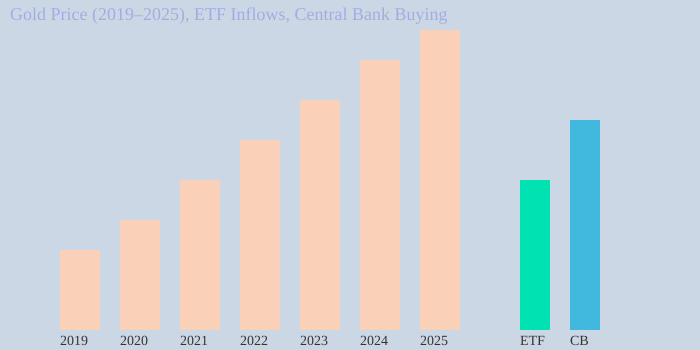
Gold’s reputation as a crisis asset is centuries old, but its appeal is more relevant than ever. When markets panic—whether from inflation, geopolitical shocks, or a sliding dollar—gold’s value as an inflation hedge becomes clear. In 2025, gold prices shattered records, surging over 50% to reach $4,000 per ounce. Analysts now forecast a gold price of $5,000 by 2026 and even $10,000 by 2028, citing persistent volatility and global instability.
ETF Demand and Central Bank Buying: The Anxiety Index
You can see the world’s anxiety in the numbers. Gold ETF demand is near all-time highs, with investors pouring money into funds that track physical gold. At the same time, central bank buying—especially from countries like China—has accelerated, as governments seek to diversify away from the dollar and shield reserves from systemic risk. These trends aren’t just technical; they’re psychological. When the future looks uncertain, gold feels like the only thing you can trust.
Gold is increasingly viewed as a hedge against inflation and systemic risk.
Modern Panic: Why Digital Alternatives Haven’t Broken Gold’s Spell
You might hear Bitcoin called “digital gold,” and it’s true that cryptocurrencies are gaining attention as alternative stores of value. But when markets truly panic, gold still dominates. During the post-pandemic era, with inflation surging and political tensions rising, gold’s symbolism as real, tangible wealth has only grown stronger. ETF inflows and central bank stockpiling reinforce this trend, reflecting escalating investor anxiety.
Thought Experiment: What Would You Hold If the System Collapsed?
Imagine a true systemic meltdown. Would you rather hold gold bars, paper assets, or cryptocurrency? For most, the answer is still gold. Its physical presence, universal recognition, and historical track record make it the ultimate “just in case” asset. Every era’s upheaval reinvents gold’s meaning, but never erases its core appeal.
Key Drivers of Gold’s 2025 Price Surge
- Macroeconomic uncertainty: Trade wars, inflation, and political instability fuel demand.
- ETF demand: Investors seek easy access to gold exposure during volatile times.
- Central bank buying: Countries diversify reserves and hedge against currency risk.
- Inflation hedge: Gold’s value rises as fiat currencies lose purchasing power.
Gold’s Enduring Spell: A Historical Constant
From ancient stardust origins to the digital age, gold’s role as a crisis safe haven endures. Every global shock—be it war, pandemic, or financial collapse—reinforces gold’s psychological value. The world may flirt with new alternatives, but when it comes to protecting wealth in uncertain times, gold’s spell remains unbroken.
7. The Next Chapter: Can Gold’s Magic Survive Digital Disruption?
As we enter a new era shaped by cryptocurrencies, AI-driven markets, and rapid fintech innovation, the age-old question resurfaces: Can gold’s spell withstand the digital storm? For centuries, gold has been the anchor of value—physical, beautiful, and universally trusted. But now, in a world of code and cloud, its role is being tested like never before.
Gold vs. Digital: A Battle of Belief and Tangibility
Consider the rise of bitcoin as gold. Bitcoin is often called “digital gold” because, like gold, it’s scarce, decentralized, and seen as a hedge against fiat currency instability. In times of market volatility and macroeconomic uncertainty, both assets attract attention as safe havens. Yet, no digital alternative has fully rivaled gold’s psychological and economic clout. Why?
- Physical Presence: Gold is tangible. You can hold it, wear it, or store it in a vault. This physicality reassures people in ways digital assets can’t.
- Symbolic Weight: Gold’s history is woven into human culture, from wedding rings to royal crowns. Its symbolism is hard to replicate with code.
- Universal Trust: Across continents and centuries, gold has been accepted as money. Digital currencies, while growing, still face skepticism and regulatory hurdles.
Wild Card: 3D-Printed Gold?
Imagine a world where you could 3D-print gold—or anything—at home. Would gold still shine? The answer isn’t simple. Gold’s value isn’t just in its atoms, but in the shared belief that it’s special. If gold became as easy to make as plastic, its magic might fade. But as history shows, every time technology threatens gold’s status, it adapts and endures.
History Repeats: Hype, Fear, and Endurance
Every financial revolution brings new hype for gold, followed by fears of its demise. The early 1900s saw banks issue paper notes backed by gold, sparking debates about trust and value. Today, digital currencies and central bank digital currencies (CBDCs) pose fresh competition. Yet, gold’s price outlook remains resilient, especially when uncertainty spikes. Human emotion—not just economics—keeps gold king during seismic shifts.
Personal Reflection: The Power of the Simple Gold Ring
Sometimes, a simple gold ring can mesmerize and reassure more than any blockchain code. There’s a comfort in holding something real, especially when the world feels uncertain. In a sea of bits and bytes, the real power may lie in what you can touch—or what you believe.
If everyone believes it, then it works.
The Safe-Haven Story: What Do We Really Trust?
Gold’s greatest value may be reminding us that money—like meaning—is whatever we agree it is. In times of macroeconomic uncertainty, people seek anchors. For some, it’s bitcoin as gold; for others, it’s the timeless shine of a gold coin. Belief and tradition matter more than ever in the face of innovation.
As new technologies challenge old assumptions, gold’s evolving symbolism and role are tested—but it has outlasted every wave of digital disruption so far. The next chapter is unwritten, but the spell of gold continues to captivate, reminding us that value is as much about trust as it is about technology.
FAQs: Everything You Wondered About Gold’s Unbreakable Spell
Why did gold become money—and not, say, platinum?
Gold’s rise as the world’s preferred money isn’t just about its shine. While platinum is rarer, gold’s unique chemical properties made it the perfect candidate for early money. Gold doesn’t rust or tarnish, is soft enough to shape, and is rare—but not too rare. Unlike platinum, which melts at a much higher temperature and is harder to work with, gold could be easily turned into coins, jewelry, and artifacts. Its beauty, durability, and the fact that it could be divided and carried made it practical for trade. But above all, it was the collective belief in gold’s value that transformed it from a shiny rock into a universal currency—a belief that has lasted for thousands of years.
What’s behind the wild swings in gold’s price lately?
Gold price forecasts have become a hot topic as the metal’s value swings with global events. The main drivers are uncertainty and fear—economic crises, inflation, geopolitical tensions, and changes in interest rates all push investors toward gold as a safe haven asset. When central banks buy more gold, or when investors worry about the stability of currencies and stock markets, gold prices often surge. Conversely, when economies stabilize or interest rates rise, gold can fall out of favor. In short, gold’s price is a reflection of the world’s collective anxiety and hope.
How much gold is left in the world to mine?
If you gathered all the gold ever mined, it would fit into a giant cube—smaller than you might expect. Most estimates say about 205,000 metric tons have been extracted. While new deposits are still being found, the easy-to-reach gold is mostly gone. Experts believe only about 20% of the world’s gold remains unmined, and what’s left is harder and more expensive to access. This scarcity is a key reason why gold retains its value and why gold price forecasts remain bullish over the long term.
Are digital currencies a realistic replacement for gold as a safe haven?
Digital currencies like Bitcoin are often called “digital gold,” but they haven’t fully replaced gold as a safe haven asset. Gold has thousands of years of trust behind it, while cryptocurrencies are still new and highly volatile. Digital currencies are easy to transfer and store, but they lack the physical presence and universal acceptance of gold. In times of crisis, central banks and investors still turn to gold for stability. For now, digital currencies are more of a complement than a replacement.
Is gold’s future really tied to human psychology—or is it just hype?
Gold’s value is deeply rooted in human psychology. Its usefulness as money comes not from what it does, but from what we believe it represents: security, permanence, and universal value. This collective belief has survived wars, economic collapses, and technological revolutions. While some call it hype, history shows that gold’s spell is unbreakable as long as people trust in its worth. The gold price forecast is as much about our shared mindset as it is about supply and demand.
Which countries currently buy the most gold, and why are central banks stockpiling more?
Today, countries like China, Russia, India, and Turkey are leading the charge in gold buying. Central bank buying has surged as nations seek to diversify their reserves and reduce reliance on the US dollar. Gold acts as a hedge against currency risk and economic instability. As global tensions rise, central banks view gold as a strategic asset—one that offers security when other investments look shaky. This trend is a major factor in recent gold price surges and is likely to continue shaping the market.
In the end, gold’s unbreakable spell is a blend of science, history, and psychology. From stardust origins to modern vaults, its journey is a testament to humanity’s search for meaning, security, and value. As long as belief in gold persists, its role as a safe haven and its allure in the global economy will endure—no matter what the next price surge brings.
TL;DR: Gold’s journey from star-borne metal to a global economic driver is anything but straightforward. Its worth lives in human belief as much as in vaults or jewelry cases—so, even as tech and currencies evolve, gold’s story continues, unpredictable as ever.
Post a Comment