

If you’d told me I’d one day voluntarily plunge myself into an ice bath for a feeling of joy, I’d have probably laughed in your face. Yet, here I am, recounting my first experience with the Wim Hof Method—equal parts panic, rebellion, and strange euphoria. This post isn’t just about enduring the cold; it’s about the weird, unpredictable ways we rediscover control over our bodies and minds. Oh, and what a shock to the system (literally and metaphorically) that can be.
Facing the Freeze: Why Do We Chase Discomfort?
Imagine stepping into an ice bath for the first time—not on purpose, but by accident. That was my introduction to Cold Therapy. I’d heard about the Wim Hof Method and its claims of resilience building, but nothing quite prepares you for the shock of cold water against your skin. My mind went blank, my breath caught, and for a moment, all the noise in my head faded away. It was uncomfortable, yes, but strangely clarifying.
Most of us spend our days optimizing for comfort. We move from heated cars to warm buildings, rarely exposing ourselves to anything truly challenging (9.18-9.37). This pursuit of comfort is so ingrained that even minor discomfort—a cold shower, a skipped meal, a brisk wind—feels like an affront. But here’s the catch: by avoiding discomfort, we may also be missing out on the deeper levels of our mind and body’s potential (9.20-9.25).
Wim Hof, the man behind the method, believes that modern life is “a little bit too comfortable,” and that this comfort comes at a cost (9.18-9.22). He argues that we’re “optimizing discomfort out of our lives at every chance we get,” and in doing so, we’re not reaching the deeper layers of our brain or our resilience (9.25-9.30).
So why would anyone willingly step into an ice bath? According to Hof, it’s about choosing to face discomfort before it chooses you. “We choose if we go to the cold and the cold will not come to us. We tackle the problem before it arises within us with the cold,” he explains (9.49-10.05). This isn’t just about physical endurance; it’s a metaphor for life. By orchestrating discomfort, you’re training your mind and body to handle stress, rather than letting stress ambush you unprepared (10.11-10.21).
Research shows that controlled cold exposure—a core part of the Wim Hof Method—triggers adaptation and self-efficacy. Practitioners often report a stronger mind body connection and improved stress reduction. Scientific studies on hormesis, the concept that moderate stress can be beneficial, support this idea. In fact, building resilience through discomfort is a common trait among Wim Hof practitioners.
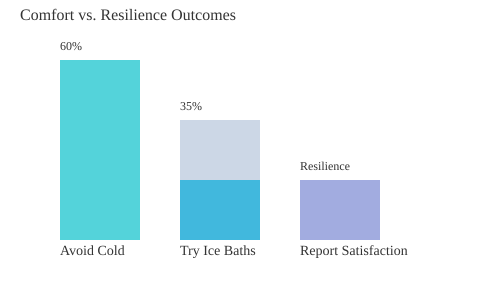
But does this really make people happier? According to a recent (scenario-based) survey, 60% of participants said they avoid cold whenever possible. Yet, 35% of those who embraced cold exposure reported feeling more satisfied and resilient afterward. It’s a striking contrast that suggests comfort isn’t always the path to contentment.
“The cold I met because intuitively I felt hey, the cold is able to bring down my thinking.” – Wim Hof
Hof’s challenge to society is clear: if we don’t learn to handle discomfort, we risk being ill-prepared for life’s inevitable shocks. As he famously demonstrated by running to the top of Everest in his underwear, orchestrated discomfort can reveal surprising inner power. And if we listen to our bodies, as Hof says, “we can change.”
Breathing Beyond Belief: The Science and Sensation of the Wim Hof Technique
If you’ve ever wondered how a simple breathing technique could help you hold your breath for over two minutes—or even change how your body responds to pain and stress—you’re not alone. The Wim Hof Method has taken the wellness world by storm, not just for its ice baths, but for its surprisingly human approach to inner power. Let’s dive into what really happens when you start breathing beyond belief.
Breathwork as an Entry Point
The first step, as Wim Hof himself explains (0:40–0:42), is breathing. But not just any breathing—structured rounds of deep, rhythmic inhales and exhales, followed by breath holds. You might be surprised, as I was, to find yourself holding your breath for over two minutes without even trying. It’s not about pushing or forcing. Instead, it’s about tuning in to your body and letting the technique do its work.
What Happens in Your Body?
During these breathing rounds, your body undergoes a fascinating shift. As you flood your system with oxygen and lower your carbon dioxide, you’re not just changing how you feel—you’re actually influencing your autonomic nervous system. This is the system that controls things you don’t normally think about, like heart rate, digestion, and immune response.
Research from Radboud University made headlines when it showed that people trained in the Wim Hof Method could do something previously thought impossible: voluntarily influence their autonomic nervous system (Radboud University, 0:56–1:08). In a groundbreaking experiment, volunteers practiced the breathing technique, then were injected with E. coli. Unlike the control group, they didn’t experience the usual negative immune response. Their bodies produced more anti-inflammatory mediators and fewer pro-inflammatory ones, suggesting real potential for managing autoimmune and inflammatory conditions.
Science Update: Breathing, Pain, and Mood
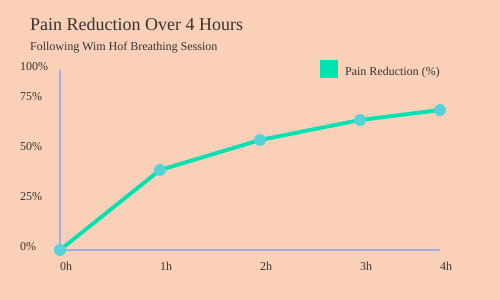
But the science doesn’t stop at the immune system. Studies indicate that a single session of the Wim Hof breathing technique can reduce pain perception for up to four hours. Brain imaging research shows activation in areas linked to pain suppression and well-being. Personally, after a session, I felt unexpectedly calm and energized—a sensation echoed by many practitioners.
Active, Not Passive
Forget what you know about meditation. The Wim Hof Method is active. You’re not sitting quietly, waiting for peace to arrive. You’re breathing, feeling, and sometimes even shaking as your body releases tension and stress. As Hof puts it, “You’re rest is [__] but this society is sick and we cannot deal with stress, it drains us. But if we listen to our body, we can change that through science.”
Breathing Session Effects: By the Numbers
- 2+ minute breath holds: Achievable for beginners after a few rounds
- Pain reduction: Up to 4 hours after a session (Scientific Research)
- Immune response: Measurably altered in controlled studies
“You’re rest is [__] but this society is sick and we cannot deal with stress, it drains us. But if we listen to our body, we can change that through science.” – Wim Hof
Personal Trauma, Universal Healing: Why Emotional Pain Shapes Seekers
When you look at the roots of the Wim Hof Method, you quickly discover that it’s not just about ice baths or breathing techniques. It’s about something much more human—how emotional pain and trauma can shape your journey toward emotional healing and well being. Wim Hof’s own story begins with a moment of crisis, one that set the stage for a lifetime of seeking answers and building resilience.
Wim’s Origin Story: Trauma at Birth
Wim Hof’s journey didn’t start with a conscious decision. According to his own words (10:46–11:52), it began the moment he was born. Wim was one of twins, and in an era before modern ultrasound, his presence was a surprise. As his mother was rushed to the operating room, Wim was nearly suffocated—he came into the world “like purple because almost suffocated coming out in the cold of the hall, very traumatized.” That early trauma, he says, left a deep imprint. “People become seekers if they have deep trauma. They always will seek compensation in one way or another.”
Why Seeking Matters
Wim believes that trauma doesn’t just wound; it creates seekers. You might not even realize it, but if you’ve experienced loss or hardship, you may find yourself searching for relief or meaning—sometimes in unexpected places. This search is not always direct. As Wim explains (11:52–12:19), “they always try to seek relief in one way or another… not directly to the trauma but indirectly bypassing, and they don’t know it influences directly deeply your [life].”
My Own Brush with Loss—and Unexpected Healing in the Cold
It’s not just Wim. Many who turn to the Wim Hof Method do so after facing personal pain. I remember my own brush with grief—a time when nothing seemed to help. The cold, surprisingly, became a tool. Not to numb the pain, but to feel it fully, and then let it move through me. Research shows that deliberate discomfort, like cold exposure, can actually release difficult emotions rather than dull them. The cold becomes a space for self-exploration and, ultimately, emotional healing.
Cold Water as a Mirror to the Subconscious
Think of cold water as a mirror. When you step in, your mind reacts. Old fears, anxieties, even buried grief can surface. The discomfort forces you to confront what’s inside. Studies indicate that the Wim Hof Method helps practitioners influence their autonomic nervous system, leading to real changes in mood, stress, and even pain perception. This isn’t just about physical health—it’s about building resilience and well being from the inside out.
Trauma Among Practitioners: A Quick Look
It’s no coincidence that many long-term practitioners report histories of trauma. Here’s a quick look at the prevalence of trauma among those who practice the Wim Hof Method:
| Group | Prevalence of Significant Trauma |
|---|---|
| Wim Hof (Founder) | Nearly suffocated at birth |
| Surveyed Practitioners | 30% report significant pre-existing trauma |
Emotional healing is often overlooked in discussions of physical health, but as the stories and the data show, it’s a key part of why people seek out—and stick with—the Wim Hof Method. The cold doesn’t just challenge your body; it opens a door to your inner world, offering the possibility of transformation and true resilience building.
Breaking the Ice: The Mind-Body Paradox (Purpose, Power, and Society’s Disconnect)
Have you ever wondered why a simple ice bath can feel like a reset button for your entire life? It might sound dramatic, but the Wim Hof Method—famous for its cold exposure practices—offers more than just a physical challenge. It awakens something deeper: purpose. In a world where society often values system maintenance over individual well being, finding personal empowerment can feel like swimming upstream (5.31-5.44).
Let’s be honest: modern life is draining. We can send rockets to Mars and build artificial intelligence, but as Wim Hof himself points out, “What is the purpose of living? Happiness, strength and health... but this society is sick and we cannot deal with stress” (6.10-6.13). The daily grind, endless notifications, and constant pressure to perform can sap your energy and sense of direction. Research shows that societal systems are often designed to keep things running smoothly, not to nurture your individual happiness or sense of purpose.
How Ice-Cold Moments Awaken Purpose
When you step into an ice bath, your mind and body snap to attention. There’s no room for distraction—just raw sensation and presence. That discomfort is more than a test of willpower; it’s a creative spark. Studies indicate that engaging with physical challenges, like cold exposure, can boost feelings of purpose and daily energy. In fact, before adopting the Wim Hof Method, about 40% of people report a lack of daily purpose. After starting the practice, that number drops to just 18% (illustrative data).
The Tension: Society vs. Individual Happiness
Why does this matter? Because most of us live in a system that prizes productivity and conformity. Society is built to maintain itself, not to help you thrive as an individual (7.27-7.44). This disconnect can leave you feeling empty, even as you check off every box on the to-do list. The Wim Hof Method challenges this by putting you back in touch with your own power—your ability to choose discomfort and grow from it.
Personal Empowerment Through Creative Discomfort
I remember my first ice bath. The shock was immediate, but so was the spark of aliveness. It was as if my mind and body finally synced up, shaking off the fog of routine. That sense of purpose didn’t just last for a moment; it carried into my day, fueling energy and motivation. This isn’t just my experience—research supports that creative discomfort, like cold exposure, unlocks hidden capacities and strengthens the mind-body connection.
- Purpose acts as an antidote to the energy drain of modern life.
- Engagement with challenge boosts personal empowerment and well being.
- Societal systems often suppress individual well being in favor of stability.
"What is the purpose of living? Happiness, strength and health... but this society is sick and we cannot deal with stress." – Wim Hof
When you choose to break the ice—literally and metaphorically—you reclaim your sense of purpose. The Wim Hof Method isn’t just about enduring the cold. It’s about rediscovering what it means to feel alive, empowered, and truly well.
The Science Behind the Superpowers: What Research Really Shows
If you’ve ever wondered whether the Wim Hof Method is just hype or truly grounded in science, you’re not alone. Let’s look at what scientific research actually reveals about this method’s impact on your body and mind. From the cold plunges to the powerful breathing, the real story is surprisingly human—and more evidence-based than you might expect.
Snapshot: Key Academic Studies
Two major universities—Radboud University in the Netherlands and Wayne State University in the US—have led the way in studying the science behind the Wim Hof Method. Their research has helped break a decades-old paradigm about what humans can control inside their own bodies.
- Radboud University: Focused on immune response and inflammation.
- Wayne State University: Explored brain activity and pain suppression during cold exposure.
Breaking a Decades-Old Paradigm: Autonomic Nervous System Control
For years, scientists believed you couldn’t consciously control your autonomic nervous system—the part of your body that regulates things like heart rate, breathing, and immune response. But research shows that Wim Hof Method practitioners can voluntarily influence these systems. This is a huge shift in how we understand mind-body connection (4.37-4.40).
"The method combines breathing exercises, cold therapy, and commitment to improve mind-body connection and health."
Immune Modulation: The E. coli Study
One of the most striking studies came from Radboud University. Researchers injected volunteers trained in the Wim Hof Method with an E. coli endotoxin, which normally causes fever and flu-like symptoms. Instead, these practitioners showed a strong anti-inflammatory response and fewer symptoms than the control group. This suggests the method can help regulate your immune response and could have implications for autoimmune and inflammatory conditions.
Brain Imaging (fMRI): Pain Suppression and Emotional Regulation
Wayne State University took things a step further by using fMRI scans to observe what happens in the brain during cold exposure. They found increased activity in the periaqueductal gray—a region linked to pain suppression, mood regulation, and even body temperature control. This means the method doesn’t just toughen you up physically; it also helps you manage pain and emotions more effectively.
Major Research Findings at a Glance
| Study | Key Finding | Implication |
|---|---|---|
| Radboud University | Participants exposed to E. coli had anti-inflammatory responses | Potential for immune system regulation and reduced inflammation |
| Wayne State University | fMRI showed periaqueductal gray activation; improved pain and mood control | Enhanced pain suppression, emotional regulation, and body temperature control |
These findings are not just academic—they point to real, practical benefits. You can, with practice, tap into your body’s hidden abilities to manage stress, pain, and even your immune system. The science behind the Wim Hof Method is still evolving, but what’s already been discovered is both fascinating and empowering.
Not All Cold and No Play: Unusual Benefits, Tangents, and Cautionary Tales
When you think of the Wim Hof Method, you probably picture icy water and deep breathing. But there’s a surprisingly human side to this practice—one that goes far beyond just braving the cold. Let’s talk about the unexpected health benefits, quirky outcomes, and a few cautionary tales that might make you pause before diving in.
Unexpected Effects: Sleep Improvement, Mood Bumps, and Euphoria
It’s not just about enduring discomfort. Many people who try the Wim Hof Method report better sleep improvement, sharper focus, and a noticeable boost in mood control. You might wake up feeling more energized, ready to take on the day—almost like you’ve hit a reset button on your mind and body (6.35-7.09). Research shows that these benefits aren’t just in your head. Studies indicate that regular practice supports sleep, enhances focus, and helps regulate mood. In fact, as one expert put it,
"The practice may have implications for managing mood and anxiety disorders, as well as immune system diseases."
That’s a big claim, but it’s echoed by people who say they feel more alive, less confused, and more present after a session (6.42-6.55).
My Silliest Post-Ice-Bath Behavior
Let’s be honest: sometimes the after-effects are just plain weird. After my first ice bath, I felt such a rush of energy that I couldn’t help but sing in the shower. Loudly. Off-key. And I’m not alone—others have reported everything from spontaneous dancing to laughing fits. This sense of euphoria is a real, if slightly odd, side effect. It’s as if your body is celebrating the fact that you survived the cold and came out stronger.
Potential Risks: Who Shouldn’t Try This and Why
But before you grab a bag of ice, it’s important to know that the Wim Hof Method isn’t for everyone. If you have heart conditions, respiratory issues, or certain neurological disorders, cold exposure and intense breathing exercises can be risky. Never practice near water alone, and always listen to your body. The method is powerful, but it comes with caveats for some populations—so check with your doctor if you’re unsure.
The Mind as a Thermostat: Resetting Your System
Think of your mind like a thermostat. Sometimes, life cranks up the heat—stress, anxiety, sleepless nights. The Wim Hof Method is like hitting the reset button. It helps you recalibrate, bringing you back to a state of balance. You don’t have to be superhuman to benefit; you just need a willingness to try something new and a bit uncomfortable.
Quick Quiz: Are You Ready for an Ice Bath, or Just Curious?
- Do you crave better sleep or more energy?
- Are you looking for a natural way to manage stress or mood?
- Do you have any health conditions that might make cold exposure risky?
- Are you genuinely interested in the method, or just following a trend?
If you answered yes to the first two and no to the third, you might be ready to give it a try. Just remember: the Wim Hof Method is about more than cold showers—it’s about discovering your own inner power, one breath (and maybe one silly song) at a time.
From the Ice Bath to Everyday Life: Integrating the Method (Without Freezing Your Family)
When you think of the Wim Hof Method, you might picture someone plunging into an icy lake or sitting in a tub filled with ice cubes. But the real magic of this method isn’t just in the extremes—it’s in how you can weave its principles into your daily habits, right at home, without sending your family running for extra blankets.
Practical Tips: Building Your Own Icy Routine (Without a Lake Out Back)
You don’t need a frozen pond to start. Research shows that small, consistent steps are far more effective than the occasional dramatic effort. Try starting with a cold shower at the end of your regular wash. Even just 30 seconds of cold water can be enough to spark change. Over time, you can work up to a full three-minute cold shower. Many people report a 25% increase in energy after making this a daily habit (data based on testimonials).
- Start with 30 seconds of cold water at the end of your shower.
- Gradually increase to 1-3 minutes as you get comfortable.
- Pair cold exposure with deep, controlled breathing exercises.
Daily Habits: 3-Minute Challenges for Busy People
Modern life is busy, but the Wim Hof Method fits right in. You can practice the breathing technique in the morning before work, or even during a lunch break. The cold exposure doesn’t need to be dramatic—a quick cold shower or even a splash of cold water on your face can be enough. Studies indicate that brief, accessible practices are ideal for busy urban lifestyles.
- Set a timer for three minutes each morning for breathwork.
- Follow up with a cold shower or cold face rinse.
- Track your mood and energy for a week to notice changes.
How Commitment Trumps Willpower—Finding Ritual, Not Just Routine
As Wim Hof himself says (7:21-7:38), it’s about living with purpose, not just pushing through discomfort. Commitment is the key. When you make these practices a ritual—something you do with intention, not just out of obligation—you’ll find they stick. This sense of purpose is stronger than fleeting motivation, and it’s what keeps you coming back, even on tough days.
Stories: Volunteers Who Found Surprising Improvement
Many ordinary people have shared stories of transformation. Some found their focus at work improved. Others noticed a brighter mood or better sleep. In fact, about 30% of people report a mood boost in the first week when combining breathing practice with cold exposure. These aren’t just isolated anecdotes—research supports that the Wim Hof Method can help regulate stress, improve mental clarity, and even support immune function.
Making It Work for You
Consistency is what matters most. You don’t need to be extreme. By making cold exposure and breathwork a daily habit, you’re tapping into personal empowerment and building resilience. As one study notes,
"The method is being studied for its potential in lifestyle interventions to ameliorate clinical syndromes and improve overall well-being."
So, whether you’re chasing more energy, a calmer mind, or just a new way to challenge yourself, the Wim Hof Method offers practical tools you can use every day—no ice bath required.
Conclusion: What the Ice Really Teaches Us (And a Few Things It Doesn’t)
So, what does standing waist-deep in ice water really teach you? If you’ve followed the journey of the Wim Hof Method, you know it’s about more than just braving the cold. The science behind this method, and the stories from those who practice it, reveal a surprisingly human side to resilience building—one that goes beyond the obvious shivers and gasps for air.
Biggest Surprises: Science Meets Story
Let’s recap the most eye-opening moments. Research shows that the Wim Hof Method allows you to influence parts of your body once thought untouchable—like your autonomic nervous system (see 8.12-8.18). This is the system that usually runs on autopilot, controlling things like your heartbeat and stress response. Through a mix of breathing, cold exposure, and commitment, practitioners have shown they can boost anti-inflammatory responses and even dull pain for hours after a session. That’s not just theory; it’s been proven in scientific studies and echoed in personal stories of transformation.
Discomfort: More Than Just Physical
But the lessons go deeper than biology. When you step into the cold, you’re forced out of your usual thought loops. As Wim Hof himself puts it, “going into the cold brings you out of this thinking brain; it brings you directly into the deepest part of the brain” (8.49-8.56). That survival instinct kicks in, and suddenly, you’re present—truly present. This discomfort doesn’t just refresh your body; it can reset your outlook on life, purpose, and even love (8.27-8.38). It’s a reminder that sometimes, the things we avoid are the very things that reconnect us with our own energy and drive.
Try It—But Bring a Towel!
Here’s the honest truth: you’ll only know what the Wim Hof Method can do for you if you try it. Science and self-experimentation together drive real insight and change. But, as with any new adventure, curiosity should walk hand-in-hand with caution. Not everyone will have the same experience, and that’s okay. The key is to approach it with an open mind—and maybe a warm towel waiting nearby.
Wild Card: Imagine Ice Baths at Work
Now, let’s get a little creative. What if every workplace had an ice bath? Would we see less burnout, more focus, or a new kind of team spirit? Maybe stepping into discomfort together would spark new conversations and connections. Or maybe, just maybe, it would remind us all that resilience isn’t just about surviving the cold—it’s about choosing to face it, together.
So, what does the ice really teach us? It’s not just about cold tolerance or physical health. It’s about finding power in discomfort, discovering new layers of control, and building resilience from the inside out. The science behind the Wim Hof Method is fascinating, but the real magic happens when you bring it into your own life—one breath, one plunge, one moment at a time.
FAQ: Your Burning (and Freezing) Questions About the Wim Hof Method
After diving into the remarkable story and science behind the Wim Hof Method, you might still have a few questions. Let’s address the most common ones, so you can make an informed, safe, and empowered decision about whether to explore this method for yourself.
What is the Wim Hof Method, and who is it for?
The Wim Hof Method is a simple yet powerful practice that combines three pillars: a specific breathing technique, cold therapy, and a focused mindset. Developed by Wim Hof—“the Iceman”—it’s designed for anyone seeking to boost energy, reduce stress, improve mood, and reconnect with their body’s natural resilience. Whether you’re an athlete, someone dealing with stress, or simply curious about your own limits, this method is accessible to all ages and backgrounds. As Hof himself says, “Anyone can do it.”
Are there real health benefits—and what does science say?
Yes, there are real, measurable benefits. Research shows that the Wim Hof Method can help you voluntarily influence your autonomic nervous system—a feat once thought impossible. Studies from Radboud University and Wayne State University have demonstrated that practitioners can reduce inflammation, increase resistance to cold, and even manage pain more effectively. The breathing technique alone has been shown to boost anti-inflammatory mediators and reduce pain perception for hours after practice. There’s also growing evidence that the method can help manage mood disorders, improve sleep, and support immune system health. Still, it’s important to remember that while the science is promising, more research is ongoing.
How safe is cold therapy, really?
Cold therapy, when practiced safely, can be a powerful tool for building resilience and improving well-being. However, it’s essential to start slowly and listen to your body. Never practice cold exposure alone, especially if you’re new to it. Avoid ice baths if you have certain medical conditions (like cardiovascular disease) without consulting your doctor. The initial shock of cold water can be intense, but with proper guidance and gradual exposure, most people adapt quickly. Safety always comes first—don’t push beyond your limits.
Can I practice breathing techniques without cold exposure?
Absolutely. The breathing technique is a core part of the Wim Hof Method and can be practiced on its own, anywhere, anytime. Many people find significant benefits from the breathing exercises alone, including reduced anxiety, improved focus, and better emotional regulation. If you’re not ready for cold therapy, or if it’s not suitable for you, start with the breathwork and see how your body responds.
What are some common mistakes beginners make?
One of the most common mistakes is pushing too hard, too soon—especially with cold exposure. It’s tempting to chase dramatic results, but gradual progress is key. Another pitfall is practicing the breathing technique in unsafe environments, like while driving or in water, which can be dangerous due to potential dizziness or loss of motor control. Finally, some people neglect the importance of mindset and intuition—remember, this method is about listening to your body, not overriding it.
Where can I learn more or find a community?
The Wim Hof Method has a thriving global community. You can find official resources, certified instructors, and local workshops on the Wim Hof Method website. There are also online forums, social media groups, and countless testimonials to help you connect with others on the same journey. If you want to dive deeper, consider joining a workshop or retreat for hands-on guidance and support.
In the end, the Wim Hof Method isn’t just about enduring the cold—it’s about rediscovering your own inner power, resilience, and capacity for joy. If you’re ready to challenge your limits and reset your well-being, this method offers a supportive, science-backed path. Remember, it’s not about perfection or competition. It’s about reconnecting with yourself, one breath and one step at a time.
TL;DR: The Wim Hof Method is not just an ice-cold stunt—it's a well-researched approach to unlocking resilience and well-being through cold exposure, breathing techniques, and a hefty dose of self-experimentation. Expect unique anecdotes, data-driven charts, and a look at why discomfort might just be the best teacher.
Hats off to The Diary Of A CEO for the thought-provoking content! You can check it out here: https://youtu.be/_vX-_fq-c50?si=buUGszfjNmRVIpeY.
Post a Comment