

About a year ago, I went to an outdoor concert with friends. The lights were wild, the music was pulsing, and, for once, nobody reached for their phones. It struck me—how rare it is nowadays to just be in a moment without the urge to document it for followers or strangers. Fast-forward to now: we live in a world where not posting on social media almost feels like rebellion. So why do some people choose silence? What is gained by stepping away from digital spotlight? Let's unravel the hidden psychology and unexpected freedom in choosing not to post—sometimes, the loudest statements are made through quiet.
Identity Crafting or Self-Discovery? The Fine Line of Social Media Posting Psychology
Social media is more than just a tool for communication; it has become a stage for identity crafting online. Every post, photo, and status update is a subtle performance, a way of saying,
“This is who I am, do you approve?”In today’s digital world, the psychology behind what we choose to share—or not share—reveals much about our sense of self and our need for belonging.
Curating Identity: The Unseen Audition
Most of us don’t realize how much of our social media posting psychology is about seeking approval. Research shows that harsh social media posts can worsen self-evaluation, while idealized posts have less impact on how we see ourselves. The act of posting becomes an unconscious audition for acceptance. We craft captions, select the best angles, and filter our lives, hoping for digital applause. Social media is rarely just about sharing news; it’s about shaping how others see us—and, over time, how we see ourselves.
The Subtle Shift: Detaching Self-Worth from Digital Applause
But what happens when you stop posting? There’s a subtle but powerful shift. You begin to detach your self-worth from likes and comments. You stop thinking in captions. I remember catching myself mid-hike, mentally composing a witty post about the view, instead of simply enjoying it. When you step back, you start experiencing moments for yourself again, not for an audience. This is the secret psychology behind many who rarely post: they crave authenticity in a world that often feels staged.
Craving Authenticity in a World of Performances
It’s not about being anti-technology or anti-social. It’s about refusing to reduce your life to a highlight reel. Many quieter users on social media are not hiding; they’re seeking a deeper presence in their lives. They want their experiences to belong to them, not to their followers. In fact, Pew Research (2023) found that while 76% of US adults use social media, only about 40% post actively. This leaves a silent majority who observe, reflect, and often feel more satisfied with their self-expression offline.
Psychological Ownership and Sharing: When Moments Become Public Property
There’s a unique feeling of psychological ownership when an experience is yours alone. But the moment you share it online, something changes. Research suggests that sharing personal experiences can create a conflict: your private moment becomes public property. The congruence between your inner self and your online self can be disrupted. A special dinner, a quiet sunrise, or a personal achievement—once posted, these moments are no longer just yours. They are open for judgment, approval, or even criticism.
The Ripple Effect: From Private to Public
This ripple effect is a key part of social media identity crafting. When you share, you invite others into your experience, but you also risk losing the deep sense of ownership that comes from keeping something private. Over time, this can impact your self-worth and how genuine your self-expression feels. Studies show that frequent posters often report lower satisfaction with their self-expression compared to those who post rarely, highlighting the complex relationship between sharing and self-discovery.
When Does Not Posting Mean More? Emotional Effects of Social Media Silence
The emotional effects of social media are often discussed in terms of what we share, but there is a growing conversation about the meaning behind not posting at all. For some, the decision to step back from sharing isn’t about apathy or indifference. As one user put it,
“For some, the decision not to post comes after a kind of emotional burnout.”This emotional burnout from social media can arise after years of feeling pressure to perform, to outdo previous posts, and to curate a life that looks perfect online.
Emotional Burnout: The Invisible Pressure to Outperform
Many people start out sharing freely, posting every beautiful moment or achievement. Over time, though, the act of sharing can start to feel less authentic and more like a performance. Research shows that problematic social media use is significantly associated with symptoms of depression, anxiety, and stress. The constant need to impress or keep up with others can lead to emotional exhaustion. When posting stops feeling real, and every new update feels like it must top the last, the joy of sharing fades. This is often when people quietly step away, reducing their online presence without any announcement—just a slow disappearance from the feed.
Protecting What’s Sacred: Privacy Over Highlight Reels
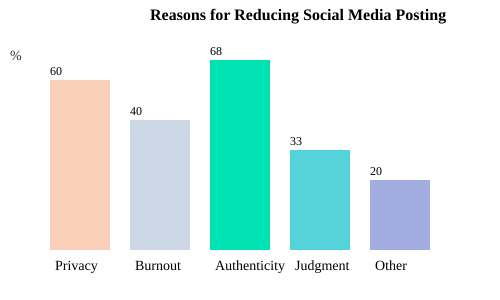
Choosing not to post can be an act of self-preservation. Instead of broadcasting every detail, some individuals decide to protect what feels sacred. This isn’t about hiding or withdrawing; it’s about valuing presence and meaning over public approval. In fact, a recent survey found that 68% of users who reduced posting cited “feeling more authentic” as their main reason, while 33% wanted to avoid negative judgment.
Silence, Depth, and Reclaiming Experiences
There is a unique depth in silence. By not posting, you reclaim your experiences from external judgment and keep them untouched by the opinions of others. This is especially important for those who have felt the sting of misinterpretation or mockery online. The benefits of not posting include a stronger sense of psychological well-being and a renewed connection to what feels real.
Not Apathy, But Deep Care for Presence and Meaning
It’s easy to mistake social media silence for a lack of interest. In reality, many silent users care deeply—sometimes too much—about presence, meaning, and protecting what’s sacred. There is a psychological concept called psychological ownership: the feeling that a thought, memory, or experience truly belongs to you. When you share it online, that sense of ownership can fade, as the moment becomes open to judgment and public property. By choosing privacy, you guard your sense of self-worth and authenticity.
The Quiet Quit: Misunderstood Social Media Silence
The act of quietly quitting social feeds is often misunderstood. Not posting doesn’t mean not feeling. It can be a sign of emotional burnout from social media, a desire to protect private moments, or simply a preference for living in the present. In fact, daily posters report higher rates of emotional burnout compared to those who post less or not at all. The impact on self-worth is significant: silence can be a way to reclaim your narrative and protect your mental health.
The Dopamine Loop: How Social Media Programs Our Craving for Validation
If you’ve ever felt a rush after seeing likes or comments on your post, you’re not alone. This feeling is rooted in the brain’s reward system, specifically in what psychologists call dopamine loops social media creates. Every time you receive positive feedback online—likes, hearts, shares—your brain releases dopamine, a chemical linked to pleasure and motivation. As one expert puts it:
"Every time we post something online and it gets attention, likes, comments, hearts, our brain releases dopamine."
The Science Behind Social Media Addiction
Social media platforms are designed to keep you coming back. The unpredictable nature of feedback—sometimes you get lots of likes, sometimes just a few—triggers the same reward pathways as gambling. Over time, this cycle can lead to social media addiction. You may find yourself checking your phone repeatedly, waiting for that next notification, and feeling anxious or disappointed when it doesn’t come.
In fact, 72% of surveyed users report feeling a “rush” from social approval online. This is a clear symptom of social media addiction—the craving for validation becomes a habit, and the absence of feedback can even cause distress.
From Living to Curating: The Shift in Experience
Over time, the dopamine loop changes how you experience life. Instead of simply enjoying a meal, a sunset, or a moment with friends, you might start thinking about how to present it online. The need to display isn’t natural; it’s conditioned. Years of likes and shares have trained your brain to equate validation with value. You begin to curate your life for an imaginary audience, sometimes losing touch with your own enjoyment in the process.
Breaking the Cycle: Silence as Rebellion and Healing
Choosing not to post can feel strange at first. In a world where everyone shares, silence can seem like rebellion. But stepping outside the dopamine loop is also healing. When you stop chasing online validation, you start rediscovering the simple joy of doing things for yourself—cooking without photographing it, traveling without tagging it, feeling without explaining it. This is more than just a break; it’s a way to reconnect with your own values and desires.
The Joy of Doing Things Just for You
There’s a weird, almost secret joy in resisting the urge to share everything. You might find yourself savoring a moment more deeply when you know it’s just for you. This act of self-discipline is not aloofness—it’s a conscious effort to escape the addictive feedback loops and reclaim your attention.
Addictive Design: How Platforms Hook You
Social media platforms use psychological hooks—notifications, infinite scrolling, and unpredictable rewards—to keep you engaged. These features are not accidental; they’re designed to exploit your brain’s reward system. Recognizing these psychological effects of social media can help you make more mindful choices about your online behavior.
Research Snapshot: The Benefits of Taking a Break
Studies show that taking a break from posting can have real benefits. After just two weeks off social media, users report a 23% increase in emotional stability and higher life satisfaction. This measurable improvement highlights how powerful it can be to step away from the dopamine-driven cycle.
| Data Point | Statistic | Source/Note |
|---|---|---|
| Dopamine release with social media engagement | Confirmed by reward system studies | Neuroscience research |
| Users feeling a 'rush' from social approval | 72% | Surveyed users |
| Emotional stability increase after 2-week break | +23% | Sample data |
Private Moments vs. Public Performance: What We Lose When We Share Everything
You’ve probably heard the phrase, “Not everything you experience is meant to be witnessed.” In a world where private experiences become public sharing at the tap of a button, it’s easy to forget the value of keeping some moments just for yourself. When you post a memory online, it transforms from something deeply personal into a piece of content open to judgment, misinterpretation, and even comparison. Suddenly, what was once yours alone becomes part of a social media highlight reel—curated, filtered, and sometimes stripped of its original meaning.
The Transformation: From Private to Public Property
Think about the last time you achieved something meaningful. Maybe you overcame a fear, reached a personal goal, or simply enjoyed a quiet moment of happiness. Now, imagine posting that moment online. Instantly, it’s no longer just your victory—it’s a performance. Others can like, comment, or scroll past, but their reactions can subtly change how you remember the event. The psychological 'ownership' of the memory fades as it becomes public property, open to judgment and social comparison.
Validation, Comparison, and the Loss of Specialness
When you share everything, moments can become less 'yours.' The urge for validation—measured in likes and comments—can overshadow the original joy. This is the danger of the social media highlight reel: it encourages chronic comparison, where you measure your life against the best moments of others. Research shows that 82% of social media users admit to posting only their ‘positive highlights’. This selective sharing creates a distorted reality, fueling social comparison and self-esteem issues. In fact, studies consistently link social comparison and self-esteem dips to increased time spent viewing others’ highlight reels, leading to negative mental health outcomes on social media.
Emotional Contagion and the Pressure to Perform
The constant exposure to others’ curated lives doesn’t just affect how you see yourself—it can also shape your emotions. Emotional contagion is real: seeing only the best parts of others’ lives can make you feel less satisfied with your own. The pressure to keep up, to perform rather than simply be present, can erode your sense of authenticity and well-being. Chronic sharing can even distance you from your own experiences, making it harder to connect with what truly matters.
Anecdote: The Forgotten Victory
I once celebrated a personal victory—a quiet, hard-won success that meant the world to me. Weeks later, a friend asked why I hadn’t posted about it. For a moment, I questioned whether the achievement was real if it wasn’t shared. But then I realized: the moment was mine. Its value didn’t depend on public recognition. This is what we lose when we share everything—the psychological ownership and sense of specialness that comes from keeping some things private.
What If Every Moment Was Shared?
Imagine a future where every moment is automatically posted. What happens to your sense of self? When identity is always performed for an audience, it’s easy to lose touch with who you are when no one is watching. Presence, not performance, is what builds true connection and authenticity. When you step back from sharing, you notice who checks in without needing updates, and who remembers you without reminders. These raw, unbroadcasted connections feel heavier, warmer, and infinitely more real.
Quiet Rebellion: The Unexpected Benefits of Withdrawing from Social Media
Online Silence as Self-Defense: Preserving Identity and Sanity in a World of Noise
In a world where every moment is shared, liked, and commented on, choosing not to post can feel like a quiet rebellion. But this silence is not about hiding—it's about protecting your sense of self. Social media withdrawal benefits include preserving your identity and mental clarity, especially when the digital world feels overwhelming. When you step back, you’re not losing your voice; you’re reclaiming it from the constant noise.
Invisibility Online: Peace, Not Loneliness
There’s a common myth that being invisible online means you’re disconnected or lonely. In reality, many people find that the absence of digital attention brings peace, not isolation. Privacy becomes a form of intimacy with yourself. You’re no longer performing for an audience, and you start reconnecting with the parts of you that got lost in the noise, your quiet desires, your unspoken fears, your inner compass.
Benefits of Absence: Deeper Real-World Connections and Richer Experiences
One of the most profound social media withdrawal effects is how the world starts to look and feel different. Colors seem richer, time slows down, and conversations become more meaningful. Without the pressure to document everything, you experience moments fully—no need to think about angles, lighting, or captions. You’re simply present, living authentically without social media. This presence leads to stronger, more genuine relationships offline. Research shows that people who take breaks from posting often report increased intimacy and authenticity in their real-life connections.
Case Study: From Anxious to Alive—A Friend’s Story
Consider a friend who decided to unplug from social media for a month. At first, she worried about missing out. But as days passed, she noticed her anxiety fading. She became more present with family, rediscovered old hobbies, and felt happier overall. She described it as “stepping out of the noise and into real life.” Her story is not unique—many who step away report similar benefits of not posting, including less stress and more joy in everyday moments.
Comparative Benefits: Digital Detoxes and Social Media Breaks
| Benefit | Reported Improvement |
|---|---|
| Emotional Stability | +23% (after 2-week break) |
| Genuine Offline Connections | +19% |
| Self-Reported Stress Reduction | 30% |
Chart: Emotional Stability Improvements After Withdrawal
Wild Card: The Paradox of Being More 'Seen' When You’re Quieter Online
Here’s the paradox: when you stop broadcasting every detail, the people who matter notice you more. Your presence becomes more meaningful in real life. You’re not just a highlight reel—they see the real you. This is one of the most surprising social media withdrawal benefits: being more authentically ‘seen’ by those who truly care.
"You start reconnecting with the parts of you that got lost in the noise, your quiet desires, your unspoken fears, your inner compass."
Withdrawing from online posting is not a sign of weakness or disinterest. It’s a conscious act of discipline and self-awareness. Studies show that people who take extended breaks from social media experience measurable increases in emotional stability and life satisfaction. The benefits of not posting are real—and they’re waiting for you in the quiet.
Debunking Myths: Not Posting Isn’t Always Anti-Social or Lonely
In a world where sharing online is often seen as proof of social well-being, silence on social media can be misunderstood. Many assume that if you’re not posting, you must be lonely, withdrawn, or missing out. But the reality is far more nuanced. Not all social media silence is a cry for help—it can signal inner peace, contentment, or simply a different approach to connection. Let’s explore how personality traits and social media habits shape this quiet presence, and why peace in online invisibility is often misunderstood.
Privacy Isn’t Loneliness—It’s Intimacy With Yourself
Choosing not to broadcast every moment doesn’t mean you’re isolated. In fact, it can be a sign of security and self-awareness. As one insightful perspective puts it:
"Maybe they're just living, maybe they found peace in the quiet corners of existence."
For many, privacy is not about shutting others out, but about reconnecting with themselves. When you stop broadcasting every thought, you start hearing your own again. This is a form of intimacy that’s often lost in the constant noise of online sharing.
Personality Traits and Social Media: Introverts, Processors, and the Quietly Content
Not everyone feels the need to share instantly or constantly. Introverted or private personalities may prefer to process experiences before sharing—or choose not to share at all. For them, social media silence is not emptiness, but a space for reflection and genuine self-connection. Research shows that non-posters often experience deeper face-to-face connections, as they invest more energy in meaningful offline interactions.
Quiet Online, Full Life Offline
It’s a myth that a quiet online presence means an empty offline life. Sometimes, it’s the opposite. Many people find that reducing online sharing actually strengthens their in-person relationships. In fact, 58% of people report feeling more genuine connections offline after reducing their online sharing. When you’re not distracted by curating your digital persona, you can be more present in real-life moments.
The Odd Comfort of Being ‘Mysterious’
There’s a strange comfort in being seen as ‘mysterious’ for not posting. You become the friend people wonder about, the one whose story isn’t always on display. This can create a sense of intrigue, but more importantly, it allows you to define your own boundaries and protect your peace.
Social Well-Being and Social Media: Real Connections Go Beyond Posts
What happens to your social life when you stop posting? Real friends check in regardless of your online updates. They call, text, or invite you out—not because of what you post, but because of who you are. Social well-being is not measured by likes or comments, but by the quality of your genuine connections.
Creative Analogy: The Quiet Corners of a Loud Coffee Shop
Think of non-posters as the quiet corners of a bustling coffee shop. These spaces are full of life—conversations, ideas, and moments—just not always broadcast to the whole room. There’s something profoundly spiritual about this choice. It’s not a withdrawal, but a homecoming to yourself. You reconnect with the parts of you that got lost in the noise: your quiet desires, your unspoken fears, your inner compass.
Of course, silence isn’t always peaceful. There can be moments of doubt—wondering if you’re invisible, or if you’re falling behind while everyone else performs their progress. But often, this quiet is where you find your truest self, and where the most genuine connections grow.
FAQs: The (Unposted) Questions About Why People Go Quiet Online
Does not posting mean someone is hiding something?
It’s a common assumption that silence on social media means someone is hiding, avoiding, or withdrawing. But in reality, not posting is often a conscious choice. Many people understand that not every truth is meant for the crowd. Some experiences, thoughts, and feelings are too personal or sacred to share publicly. Once you post something, it’s open to interpretation, judgment, and trends. Choosing silence can be a way to protect your sense of self from the pressures of online validation and scrutiny. It’s not about hiding; it’s about keeping some parts of yourself untouched by algorithms and opinions.
Can social media silence help with anxiety or stress?
Absolutely. Research shows that stepping back from posting can be protective for your mental health. The constant cycle of sharing and waiting for likes or comments can increase social media and anxiety. When you choose not to post, you remove yourself from the loop of comparison and expectation. This helps lower stress and allows you to focus on real-life connections and experiences. Social media silence can be a healthy boundary, giving you space to process your thoughts without the noise of external feedback.
Are non-posters missing out on opportunities or connections?
It’s easy to think that if you’re not posting, you’re missing out. But posting frequency doesn’t correlate with self-worth or true social well-being. Many people who don’t post are still deeply engaged in their communities, both online and offline. They may choose to connect privately, through direct messages or in person, rather than broadcasting every moment. In fact, some find that not posting helps them build more meaningful, authentic relationships, free from the pressure to perform or present a certain image.
How does posting (or not) affect authenticity and mental health?
There is a strong link between authenticity in social media use and mental health. When you feel pressured to share, you might start curating your life to fit what you think others want to see. This can lead to self-presentational pressure online, which often results in anxiety, stress, and a sense of disconnect from your true self. By choosing not to post, you protect your authenticity. You keep some moments just for yourself, which can boost self-esteem and help you feel more grounded. Remember, being unseen doesn’t mean being alone, and being quiet doesn’t mean being empty.
What might drive someone to step away from sharing and self-presentation pressure?
- Desire for privacy: Some people value keeping parts of their life untouched by public opinion.
- Mental health protection: Avoiding the stress of constant feedback and comparison can be freeing.
- Seeking authenticity: Not posting allows for experiences to remain personal and meaningful.
- Reducing self-presentational pressure online: Stepping away from the need to curate an image brings peace.
- Living in the moment: Some simply prefer to experience life without the filter of a screen.
Next time you notice someone who never posts, remember: they may have found peace in the quiet corners of existence, away from the blue glow of the screen. Their silence often speaks of self-respect, authenticity, and a healthy relationship with social media.
Conclusion: The Beautiful Paradox—Finding Yourself Where No One is Watching
Living authentically without social media is not about hiding or missing out. It’s about returning to who you are when no one is watching. In a world that often equates worth with visibility, stepping away from the constant need to post and perform is not a retreat—it’s a homecoming. You are not escaping life; you are reclaiming it. The paradox is that by choosing silence, you may actually hear yourself more clearly than ever before.
Presence has become the rarest—and most valuable—currency in the attention economy. Every scroll, like, and share can make you feel seen, but it can also pull you away from your own experience. When you stop measuring your days in posts and notifications, you begin to notice the richness of the moments that pass quietly, without an audience. These are the moments where authenticity and self-expression thrive, not for the sake of applause, but simply for the joy of being real.
Research shows that offline living can increase self-worth and well-being, sometimes precisely because your life is not being broadcast. When you are not performing for others, you can focus on what truly matters to you. This kind of living fosters deeper self-awareness and peace. The mental health outcomes of social media are complex, but many people find that taking breaks—or even stepping away entirely—can reduce anxiety, boost confidence, and allow for a more stable sense of self.
Offline silence offers something that no number of likes can provide: clarity. When you are not distracted by the need to share every thought or achievement, you have space to reflect and grow. You are not less visible; you are more whole. You are living life for yourself, not for the algorithm. In these quiet spaces, you discover that your value does not depend on being seen. You are enough, even when no one else is watching.
There is a beautiful paradox here: unseen does not mean unlived—or unloved. In fact, some of the most meaningful moments in life happen away from the spotlight. True meaning and identity often arise in private, unshared moments. When you are content in your own company, you find a kind of confidence that is unshakable. You realize that you do not need an audience to validate your experiences or your worth.
As you move forward, remember that the people who choose not to post remind us of something essential. We are not meant to be performances; we are meant to be people. The greatest freedom comes from being able to express yourself honestly, even if that expression is silence. As the saying goes,
Sometimes the truest expression of who you are is silence.
So, if you find yourself living more quietly, away from the noise of social media, know that you are not missing out. You are finding yourself where no one is watching—and that is where the deepest joy, confidence, and connection can be found. In the end, living authentically without social media is not about being less; it’s about being more fully yourself.
TL;DR: Not posting on social media isn't apathy—it's a conscious, and sometimes courageous, act to protect mental health, authenticity, and real-life connections. Stepping away from the feed can be healing, offering greater emotional stability, richer experiences, and truer self-worth than any amount of likes or comments.
Post a Comment