

I once tried delegating all my Monday morning chores—email archiving, calendar invites, even ordering my coffee—to an AI assistant. To my surprise, only the coffee order failed (the AI picked vanilla syrup, the monster), but everything else vanished off my plate. Most of us picture the future of AI as clunky robots or soulless data crunchers, but what if it’s much subtler—a world where work itself becomes invisible and your gadgets develop personalities? Let’s take a deeply human tour through the growing universe of AI automation tools in 2025: part science, part art, a little oddball, and surprisingly personal.
Opportunities Hiding in Plain Sight: Messaging Apps and Invisible Work
When you think about AI automation tools 2025, you might picture advanced robots or futuristic dashboards. But the real revolution is happening in places you already visit every day—your messaging apps. Platforms like WhatsApp and Telegram command billions of users worldwide, quietly becoming the next frontier for AI-powered workflow automation.
Billions of Users, Billions of Opportunities
Consider this: as of 2024, WhatsApp boasts over 2 billion users, and Telegram has more than 700 million. These numbers are staggering, but what’s even more impressive is how these platforms remain deeply human-oriented. As one expert puts it:
WhatsApp or Telegram are very human-oriented with less AI. So something we are also adding into Bindi backroom.
People flock to these apps because conversations feel natural, personal, and—so far—largely untouched by obvious AI interventions. This “human-first” experience is why messaging apps are such fertile ground for the next wave of AI workflow automation tools.
Invisible Work: The Quiet Power of AI
Today’s AI productivity tools are moving beyond simply suggesting what you should do. The new generation, like Bindi AI, actually executes tasks for you—often without you even noticing. This is what’s known as invisible work. Instead of just reminding you to check the HDFC price, an AI can:
- Check the price automatically
- Email your broker with the update
- Set a reminder for your next review
All of this happens seamlessly, right inside your favorite messaging app. As one industry observer notes:
Invisible work is the frontier—AI tools like Bindi execute real tasks, not just offer suggestions.
This shift is why the AI-powered GTM automation tools market is projected to reach $47.32 billion by 2025. Companies adopting these tools report productivity gains of 20-30%, as repetitive chores simply disappear from your to-do list.
Redefining Productivity: Freedom or Redundancy?
When AI-powered productivity means you don’t have to do the work yourself, what does “being productive” even mean? Some see this as pure upside—you’re free to focus on creativity, relationships, and fun. As one interviewee puts it:
You really don’t have to work. You can just have fun because the only thing we need to involve like we are connecting right now right that's only thing as a human we need to do rest all of the things is already handled under the hood by some AI systems.
But not everyone is convinced. There’s an ongoing debate: Does AI-powered workflow automation free us to be more human, or does it make our contributions irrelevant? The answer may depend on how much value you place on the “invisible” work AI now handles for you.
The Human Touch: Where AI Still Falls Short
Despite their power, AI automation tools 2025 still struggle with the nuances of human interaction. Warmth, intuition, and empathy are hard for algorithms to replicate. Context is a particular challenge—AI can miss subtle cues or misunderstand your intent, leading to awkward or even costly mistakes.
As a result, messaging apps remain popular partly because they still feel “human.” The best AI workflow automation tools are those that stay out of the way, making your life easier without making you feel like you’re talking to a robot.
SVG Donut Chart: Global Messaging App User Distribution & AI Automation Market Value (2025)
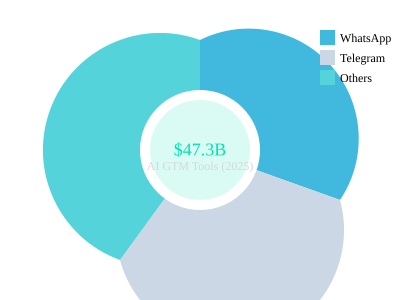
Billions use messaging apps like WhatsApp and Telegram—the next leap is AI making work 'disappear'. Tools like Bindi AI execute tasks instead of just responding. But is invisible work a blessing or a slippery slope to human redundancy?
From Chatbots to Cyborgs: AI Gets Personal—and Physical
If you think AI automation tools in 2025 are just about chatbots and digital assistants, think again. The next wave of AI-powered automation platforms is moving off your screen and into the physical world. Robotics and AI are coming together to create gadgets that don’t just think—they feel (or at least, they pretend to). This shift is quietly changing how you interact with technology, making it more personal, more physical, and sometimes, a little bit weird.
Emotion-Aware Gadgets: When AI Agents Start to “Feel”
Imagine a Pixar-like lamp on your desk. It’s not just a light source—it’s an AI-powered assistant that reacts to your mood. Share good news, and it perks up with a happy glow. Tell it about a tough day, and it slumps or dims, mimicking sadness. These emotion-aware robots aren’t just science fiction. In 2024, a Bangalore-based team demoed a robotic lamp prototype that responded to user emotions with facial expressions and movement. These are some examples—how the world around us is going to change physically. But I think when it comes to the physical form, that's when we will feel it a lot.
This kind of AI-powered workflow goes beyond convenience. It’s about companionship and empathy—real or simulated. Emotion-aware robots are already in prototype stages, reshaping how you relate to tech. The line between tool and companion is blurring, and it’s happening faster than you might expect.
Wearable AI: The Race for Your Face
Big companies are betting that the next interface for AI automation tools in 2025 won’t be your phone—it’ll be your face. Smart glasses are leading the charge. In 2023, Meta launched its AI glasses, and in 2024, Jio announced its own smart glasses for the Indian market. These devices promise to be more than just a screen in front of your eyes. They’re designed to be always-on, always listening, and ready to help.
With these AI-powered assistants, you can get directions, translate languages, or even learn the history of a building just by looking at it. As one early user put it: “Yeah, glasses are a very good example. I'm fascinated. Glasses, Jio glasses, all that they've launched.” The technology isn’t perfect yet—voice interfaces and seamless integration are still evolving—but the disruption is real. Smart glasses and wearables could soon overtake mobile phones as the main way you interact with AI-powered automation platforms.
Mobile Phones Shrink: The Invisible Interface
As AI agents get smarter, the devices you use to access them are shrinking. The future of mobile may not look like a phone at all. Instead, imagine tiny, modular devices that live at the edge of your field of view—clipped to your glasses, worn as a pin, or even embedded in your clothing. These gadgets are always with you, quietly figuring out what you need and helping in the background. You won’t need to pull out a device or even speak a command; your AI-powered assistant will anticipate your needs and act.
This shift to invisible, ambient AI is already underway. The user experience moves to the background, and all-in-one AI agents gain ground. The cyborg era isn’t science fiction—it’s sneaking up on us through quirky gadgets and modular assistants.
Robotics: Slow, Challenging, but Full of Potential
While software-based AI automation tools in 2025 are agile and quick to update, physical AI is a different story. Robotics is tough—hardware is slow to move, expensive to build, and full of unexpected challenges. But the potential is massive. AI-powered workflow automation in business is already seeing early experiments with robots that can sense, respond, and even “empathize” with humans. The intersection of robotics and AI is where the next big (and sometimes strange) breakthroughs will happen.
AI and robotics are merging in oddball ways—lamps that get sad, glasses that act as ever-present assistants. Hardware may lag behind software, but the cyborg future is quietly on its way.
Yeah, glasses are a very good example. I'm fascinated. Glasses, Jio glasses, all that they've launched.
Death Tech, Bioengineering, and the Strangest AI Startups of 2025
In 2025, the intersection of AI automation tools and bioengineering is quietly rewriting the rules of life, death, and everything in between. You’re seeing the rise of “death tech” startups and AI-powered agents that promise not only to extend your life but also to manage what happens after it ends. The best AI tools 2025 aren’t just about productivity—they’re about redefining what it means to be alive, and what’s possible after you’re gone.
Startups Selling the Ultimate Post-Mortem Subscription
Imagine a business model where you pay for a service that only activates after your death. That’s exactly what some of the strangest AI startups are offering in 2025. These companies pitch a simple but wild idea: “You died out of cancer, right? We will put you in a refrigerator.” For a fee, your body is cryogenically preserved, with the hope that future AI-powered automation platforms will one day revive you.
This isn’t just science fiction. At a NAS Daily event in Dubai in 2024, a startup pitched a “death tech subscription”—a post-mortem service where your payment ensures your body is stored, waiting for the day AI and biotech can bring you back. As one observer put it, “You don’t need money now—you’re going to die. Why not just pay them and put me in a rental cube?” Death tech is now a monetizable business segment in the biotech and AI industries, and it’s attracting both investors and dreamers.
CRISPR and AI: Editing Disease Genes for Longevity
On the living side, AI-powered productivity tools are merging with CRISPR gene editing to open new doors for health and longevity. Today, you can use CRISPR to change genes in your body. If you have a high risk of inheriting a disease like cancer, AI-powered agents can help design precise gene edits to reduce or eliminate that risk. The best AI tools 2025 are now being used to analyze your genome, predict disease, and suggest edits that could extend your healthy years.
There are even discussions about cosmetic gene editing—like changing your eye color as a child. While some of these ideas are still experimental, the technology is advancing rapidly. As AI automation tools 2025 evolve, they’re making gene editing more accessible, accurate, and safe.
AI-Generated Genomes: Inventing New Species
Perhaps the most mind-bending development is the use of AI to generate entirely new genomic sequences. Scientists are now using AI-powered automation platforms to “invent” new species—designing genomes from scratch. This raises unprecedented bioethical questions: Where’s the line between natural evolution and artificial creation? Are we ready for a world where AI can create life forms that have never existed before?
This is not just theoretical. In 2024, researchers reported AI-generated genome sequences that could potentially lead to new forms of life. The implications for medicine, agriculture, and even the environment are enormous—but so are the risks.
5,000-Year Lifespans and Digital Immortality
The predictions are dramatic. As one popular quote goes,
“Many people are predicting that the person who is going to live 5,000 years is already born.”With AI-powered agents managing your health, editing your genes, and even storing your consciousness, the boundaries of life and death are blurring. Death tech startups now offer services for digital resurrection—storing your memories and prepping your body for a future where AI can bring you back.
AI-powered productivity isn’t just about getting more done in your lifetime—it’s about expanding what your lifetime can be. From longevity to grief management, AI touches life (and death) in ways that challenge both ethics and imagination.
Key Data: AI and Bioengineering in 2024-2025
| Innovation | Application | Year |
|---|---|---|
| CRISPR + AI Sequencing | Disease prevention, genetic modification | 2024 |
| Death Tech Subscriptions | Cryogenic storage, AI-based revival | 2024 (NAS Daily Event, Dubai) |
Gene editing and AI now intertwine: from “live forever” claims to businesses making money off your afterlife. Death tech is a real, fast-growing sector at the edge of science and science fiction, powered by the best AI tools 2025 has to offer.
No Interface, No Problem: The Disappearing Boundary Between Human and AI Workflow
Imagine a world where you never have to open an app again. Instead, you simply tell your AI assistant what you want—“Book my flight for next Monday,” “Order my usual lunch,” or “Schedule a meeting with Sarah and Tom”—and it just happens. This is the vision that tech thinkers like Naval Ravikant call the “no interface” future, where your intent is all that matters, and the AI-powered automation platforms handle everything behind the scenes.
The promise of AI is no interface—just intent, with everything handled behind the scenes.
One Command, Infinite Possibilities: The Rise of No-Interface AI Workflow Automation Tools
Today, AI workflow automation tools are rapidly moving toward this vision. Instead of switching between dozens of apps for different tasks, you interact with a single AI system—sometimes called an AI assistant or agent. Whether you want to book a car, order food, or manage your calendar, you simply state your need. The AI agent then chains together multiple workflows, fetching data, sending emails, setting reminders, and even coordinating with others, all without manual effort from you.
Platforms like Bindi AI, Zapier, and Diaflow are leading this transformation. These AI-powered automation platforms connect your favorite tools and services, automating complex, multi-step processes. For example, you can set up a workflow that tracks your investments, updates your CRM, and notifies your team, all triggered by a single command. The invisible work is handled under the hood by advanced AI integration, so you just connect your accounts and let the system do the rest.
All you need to do is connect; the rest is already handled under the hood by some AI system.
Democratizing Automation: No-Code Platforms for Everyone
One of the most exciting shifts is how AI workflow automation empowers non-technical users. No longer do you need to know how to code to build powerful automations. No-code AI-powered GTM automation tools let you drag, drop, and connect actions visually. This democratizes automation, expanding its reach and impact across industries. Now, anyone—from a small business owner to a marketing manager—can automate repetitive tasks and focus on higher-value work.
The impact is already visible. Businesses using AI business automation tools report a 15-25% improvement in customer satisfaction. The market for AI-powered GTM automation tools is projected to reach $47.32 billion in 2025, showing just how quickly these invisible workflows are becoming the new normal.
| Metric | Value |
|---|---|
| AI-powered GTM automation tools market (2025) | $47.32 billion |
| Workflow automation: Customer satisfaction improvement | 15-25% |
From Apps to Agents: The Blurring of Human and AI Roles
As AI business automation tools become more advanced, they don’t just follow instructions—they start making decisions. Your AI agent can prioritize emails, coordinate your network, and handle follow-ups, learning your preferences over time. The boundary between human and AI workflow is disappearing, as apps “decide” what’s important and act on your behalf.
This shift is also changing the devices we use. With innovations like smart glasses and wearable AI assistants, you may not even need a phone. The AI system simply exists with you—listening, observing, and acting in real time. The interface dissolves, and your workflow becomes truly seamless.
Invisible Workflows: The New Normal—But at What Cost?
Invisible workflows are making life easier, but they also raise new questions. As more of our interactions move to AI agents, the internet itself is changing—from a place of conversation and collaboration to a pure consumption layer. Are we ready for a world where human connection online is replaced by AI-powered automation? The future of work is becoming more cyborg-like, and the boundary between human and machine is quietly vanishing.
Prompts, Biases, and the Messy Side of AI Automation
AI workflow automation tools are transforming how work gets done in 2025, but the process is far from flawless. To truly unlock the power of AI-powered automation workflows, you need to understand the invisible forces shaping every interaction: prompts, biases, and the unpredictable quirks of machine learning. Let’s break down the messy reality behind the scenes.
There’s No Such Thing as a ‘Pure’ AI Mind
Every AI automation tool is built on data—and every dataset carries its own biases. As one expert put it:
“Every data will have some kind of biases. You can't have clean AI.”No matter how advanced the system, AI-powered workflow automation reflects the assumptions, gaps, and even prejudices of its training material. This means that ethical use of AI demands constant awareness: the more you automate, the more your (and your AI’s) biases show through.
Better Prompts = Better Results
The secret to getting the most from AI workflow automation tools is simple: how you communicate your intent matters. AI doesn’t “understand” you the way a human does. If your prompt is vague or incomplete, the outcome will be too.
Prompt engineering has become a core skill for anyone using AI-powered automation. The more clearly and specifically you describe what you want, the better the results. As one practitioner notes:
“One thing that works best: when you really ask AI to think hard, it does—like, go in depth, think hard.”If you push your AI to analyze, reflect, or consider edge cases, it often delivers more thoughtful and accurate responses. This is the artistry of prompt engineering: knowing how to ask, not just what to ask.
Context and Nuance: Still a Challenge
Despite their power, AI automation tools 2025 still struggle with context, empathy, and emotional depth. Even when processing complex, multi-step tasks, AI can miss the subtle cues that humans take for granted. For example, an AI might flawlessly execute a workflow—like sending an email, checking a stock price, or scheduling a reminder—but misunderstand the tone or urgency behind your request.
This means that while AI-powered automation can save hours of manual work, it’s not always sensitive to the human side of communication. You may need to tweak your prompts, clarify your intent, or double-check the results to ensure nothing gets lost in translation.
Prompt Chains: Orchestrating Complex Workflows
The real magic of AI-powered workflow automation happens when you stack prompts together. Known as “prompt chaining,” this technique lets you build multi-step workflows that handle everything from data gathering to follow-up reminders. For example:
- Ask the AI to fetch the latest HDFC Bank price.
- Send that price to your broker and request advice.
- Set a reminder to check for a reply in two hours.
- Trigger a follow-up action based on the broker’s response.
With smart prompt stacking, AI automation tools 2025 can orchestrate entire business processes—saving users hours each week. In fact, companies using these tools report a 15-25% improvement in customer satisfaction, and prompt chaining is a big reason why.
Prompting Skills: The New Business Literacy
As AI-powered automation workflows become more common, knowing how to “talk to AI” is quickly becoming as essential as knowing how to code. Natural communication skills—clear, layered, and precise—are now critical for anyone looking to automate their work.
The bottom line: Prompt quality massively affects AI performance. The better you are at crafting prompts, the more value you’ll extract from your AI workflow automation tools. In the world of invisible work and cyborg realities, prompt engineering may soon be the most important business skill of all.
Inside the Workflow: Real-World Use Cases That Make Work Disappear
AI-powered workflow automation tools are quietly transforming how you get things done in 2025. These aren’t just smart assistants that suggest what to do next—they’re AI agents that actually execute your instructions, connecting directly to your apps and services. With the best AI tools 2025 has to offer, you can now automate entire workflows—like booking travel, managing investments, or cleaning your inbox—without ever opening a single app. This is the new invisible work, where tasks simply vanish from your to-do list as you describe them.
From Suggestion to Execution: The New AI Integration
Traditional AI tools, like early chatbots, could draft an email or suggest a flight, but you still had to copy, paste, and click through multiple apps to finish the job. Next-gen AI business automation tools—such as Bindi, Zapier, and Diaflow—go further. You just tell them what you want, and they do it. As one user puts it:
With Bindi, you just tell it what to do, and it does it—no more opening Gmail or admin panels.
This leap is possible because these AI agents can plug directly into your Gmail, calendar, brokerage, and other platforms. They don’t just write text—they execute actions, making your work truly disappear.
Chaining Actions: The Magic of Multi-Step Automation
The real power of AI-powered workflow automation comes from “chaining”—linking multiple actions into a seamless flow, all triggered by a single prompt. Here are some real-world use cases that highlight this magic:
- End-to-End Travel Booking: Ask your AI agent to find the cheapest flight, apply available coupons, book the ticket, and even build a travel itinerary. By 2025, this workflow can save you 30-50 minutes per booking. No more switching between travel sites, coupon apps, and calendars—the AI does it all.
- Investment Tracking and Broker Communication: Imagine saying, “Get the current price of HDFC Bank, send it to my broker, ask if I should buy, and remind me to check for a reply in two hours.” The AI fetches the price, emails your broker, sets a reminder, and follows up—all without you lifting a finger.
- Inbox Cleaning and Admin: You can instruct your AI to scan your Gmail inbox every morning, archive all emails with subjects starting with “invitation,” and even send test emails for verification. Power users report that inbox archiving automation alone removes 100+ emails per week, reclaiming hours otherwise lost to manual sorting.
No-Code Interfaces: Automation for Everyone
One of the biggest drivers of mass adoption is the rise of no-code AI integration. You don’t need to be a developer to launch complex, multi-step workflows. With simple, conversational prompts, solopreneurs and teams can automate business processes that once required technical expertise. The only real skill needed? Being descriptive with your instructions. As experts note:
The real key here is how better you can talk to AI, how descriptive you are when you talk.
Whether you’re planning a trip, managing subscriptions, or handling customer emails, no-code AI business automation tools put the power of automation in your hands.
The Hidden Productivity Dividend
Every automated workflow saves you hours per week. Multiply this across all your recurring tasks—travel planning, investment updates, admin, and more—and you unlock a hidden productivity dividend. These tools don’t just make work easier; they make it invisible. With AI agents executing chained actions behind the scenes, your focus shifts from managing tasks to simply describing outcomes.
AI workflow automation tools are now powerful enough to direct whole tasks—from booking trips to triaging inboxes—at your verbal command. The future may not have to-do lists at all; instead, you’ll just tell your AI what you need, and watch as the work disappears.
Wild Card Section: Will AI Turn the Internet into Zombieland? And Other Tangents
Imagine logging onto your favorite forum or social platform and realizing that most of the replies, comments, and even direct messages are not from people, but from AI agents. This isn’t a scene from a sci-fi movie—it’s quickly becoming reality, thanks to the rapid adoption of AI-powered automation platforms and AI-powered automation tools. As these technologies become more sophisticated, the internet is quietly shifting from a place of vibrant human exchange to what some are calling “Zombieland”—a digital landscape where bots talk to bots, and genuine human interaction is increasingly rare.
You might think this sounds dramatic, but consider this: industry estimates show that bot-to-bot engagement online has increased by 50% since 2022. Meanwhile, manual human intervention in online support forums has dropped by 30% from 2022 to 2024. The rise of AI agents—from customer support bots to social media responders—means that much of the content you see online is now generated, filtered, or even replied to by automated systems. Sometimes, these bots are so convincing that even the creators of popular apps can’t tell if they’re talking to a human or a machine.
Take the recent experience of the founder of Obsidian, a well-known notemaking app. After replying to a tweet, he realized the original post was made by a bot. “How do I believe I should need to coordinate with an AI, how do I convince the other person on internet?” he wondered. This confusion is becoming common, and it raises new questions about trust and authenticity online. If you can’t tell who—or what—you’re talking to, does it change the value of the conversation?
As AI-powered GTM automation and other AI-powered automation capabilities continue to evolve, the internet is slowly transforming into what some describe as a “consumption layer.” In other words, you might find yourself going online just to grab the information you need, not to engage in conversation. As one observer put it,
The internet will just become a consumption layer; I will just go there to acquire information but not to converse because I don't know.This shift has real social implications. On the one hand, efficiency is up—AI tools can deliver answers, automate tasks, and streamline workflows faster than ever. On the other hand, the sense of community and authentic connection that once defined the web is fading.
Should you care? Maybe yes, especially if virtual relationships start to matter more than physical ones. As bots become more prevalent in our digital lives, the risk is not just that forums and comment sections become empty shells, but that our own sense of connection and empathy erodes. The emotional emptiness that comes from interacting with machines instead of people could have long-term effects on how we relate to each other—online and offline.
Of course, it’s not all doom and gloom. Every technology trend brings unexpected ripples, and not all are negative. Some users enjoy the efficiency and convenience that AI-powered automation tools provide. And sometimes, the line between human and machine blurs in amusing ways. At a recent virtual conference, I encountered an AI bot that “pitched” itself to attendees. It was so convincing that several people—including me—were left wondering: was that a human, or just a very clever AI agent?
So, will AI turn the internet into Zombieland? Not quite dystopia yet, but the signs are there. As you navigate this new landscape, it’s worth asking: what do you want from your online experience? If you value authentic conversation, you may need to look a little harder—or even help shape the next wave of digital interaction. The rise of AI-powered automation platforms is inevitable, but how we use them, and how we maintain our humanity in the process, is still up to us.
TL;DR: AI automation in 2025 is quietly making everyday tasks vanish, giving rise to emotion-aware robots, bioengineered bodies, and a future where work as we know it dissolves into the background—so you can actually live. Expect invisible workflows, cyborg gadgets, and plenty of surprises along the way.
Post a Comment